Fraction identification Worksheets for Ages 3-7
8 filtered results
-
From - To
Discover our engaging Fraction Identification Worksheets designed specifically for children ages 3-7! These interactive and colorful printable worksheets help young learners grasp the fundamentals of fractions through fun, age-appropriate activities. Kids will joyfully explore concepts such as whole parts, halves, quarters, and more, enhancing their mathematical understanding and boosting their confidence. Each worksheet encourages hands-on practice that makes learning fractions enjoyable and accessible. Perfect for teachers, parents, and homeschoolers, our worksheets foster critical thinking and set a strong foundation for future math success. Download now to inspire your little mathematicians and make learning fractions a fun adventure!
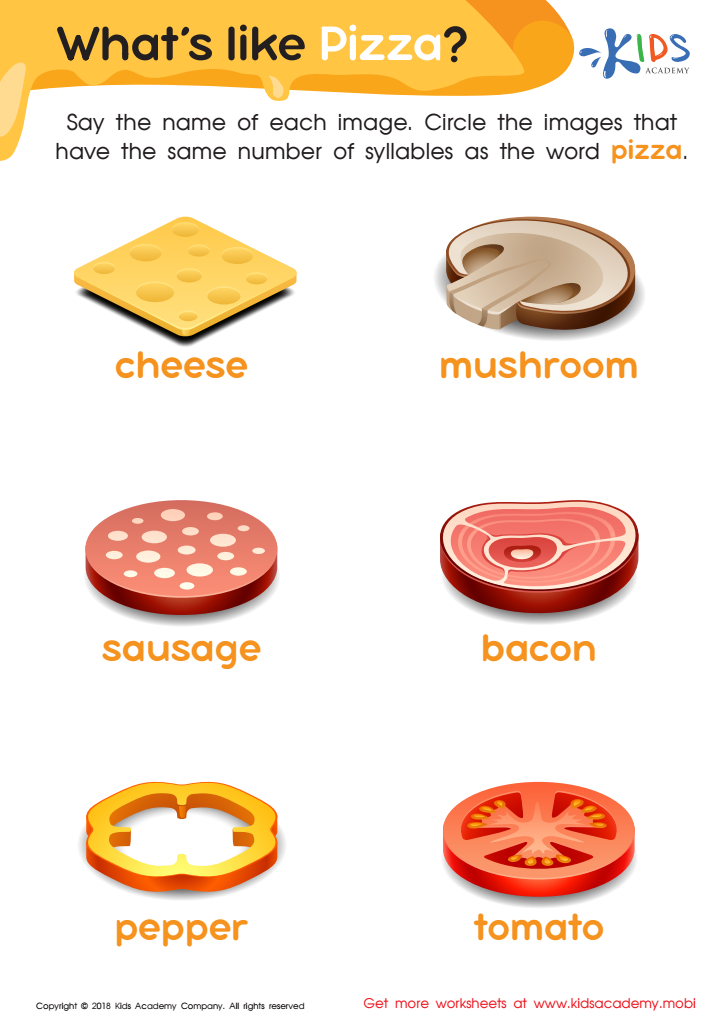
What's Like Pizza? Worksheet
 Assign to My Students
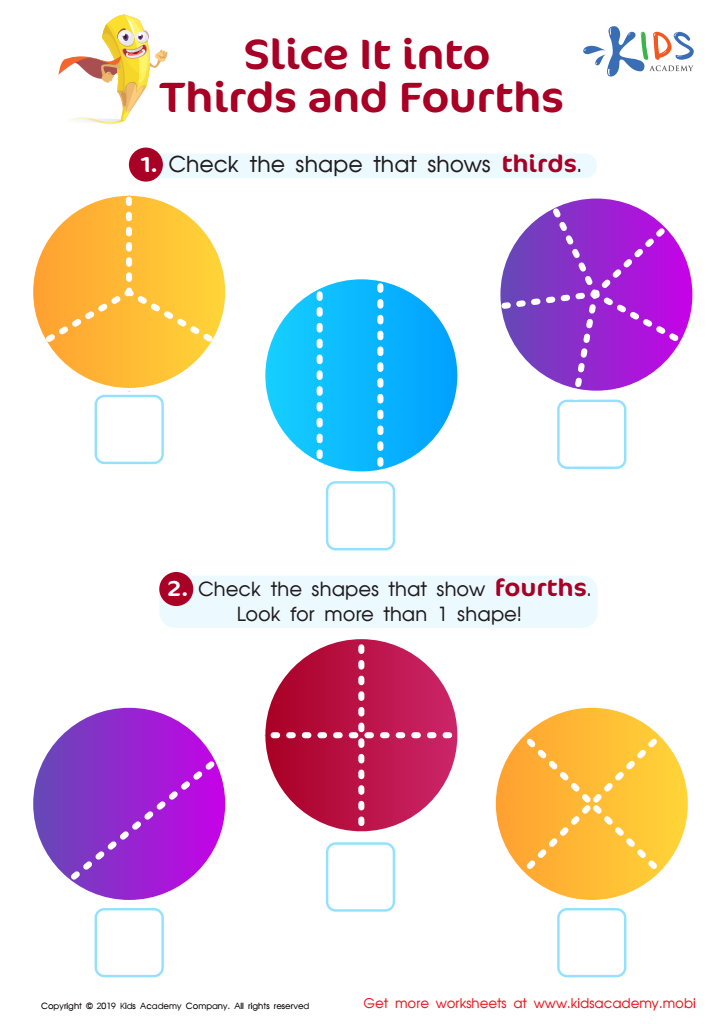
Slice in Thirds Fourths Worksheet





Fraction identification is a crucial skill for children ages 3-7, laying the foundation for their understanding of mathematics. During these formative years, grasping the concept of fractions equips young learners with essential problem-solving and critical-thinking skills. Recognition of fractions teaches children to understand parts of a whole, promoting early spatial awareness and cognitive development.
For parents and teachers, fostering a solid understanding of fractions can enhance children's ability to engage with real-world situations. Whether cooking, sharing snacks, or understanding scores in games, recognizing fractions is part of everyday life. Moreover, introducing fractions at a young age supports mathematical fluency, making their future studies in arithmetic and advanced mathematics smoother and more intuitive.
By investing time in fraction identification, adults not only bolster children's academic skills but also cultivate a positive attitude towards math, reducing anxiety around mathematical concepts down the line. Engaging activities such as cooking and art projects provide practical applications of fractions, making learning both enjoyable and relevant. Overall, early fraction education promotes a sense of accomplishment and confidence in young learners, yielding long-term benefits as they progress in their academic journeys.








