
Fraction visualization Worksheets for Ages 3-7
8 filtered results
Difficulty Level
Grade
Age
-
From - To
Subject
Activity
Standards
Explore our Fraction Visualization Worksheets, perfect for kids ages 3-7. These engaging and colorful worksheets help young learners understand fractions through fun visuals and hands-on activities. Designed to meet early learning standards, our resources boost fraction comprehension in a playful way. Kids will enjoy piecing together parts of a whole, paving the way for future math success. Download now from Kids Academy, and make learning fractions an exciting adventure for your little ones! Enhance their educational journey with our easy-to-use, printable materials that are tailored for early grade students. Start exploring fractions today!
Favorites
With answer key
Interactive
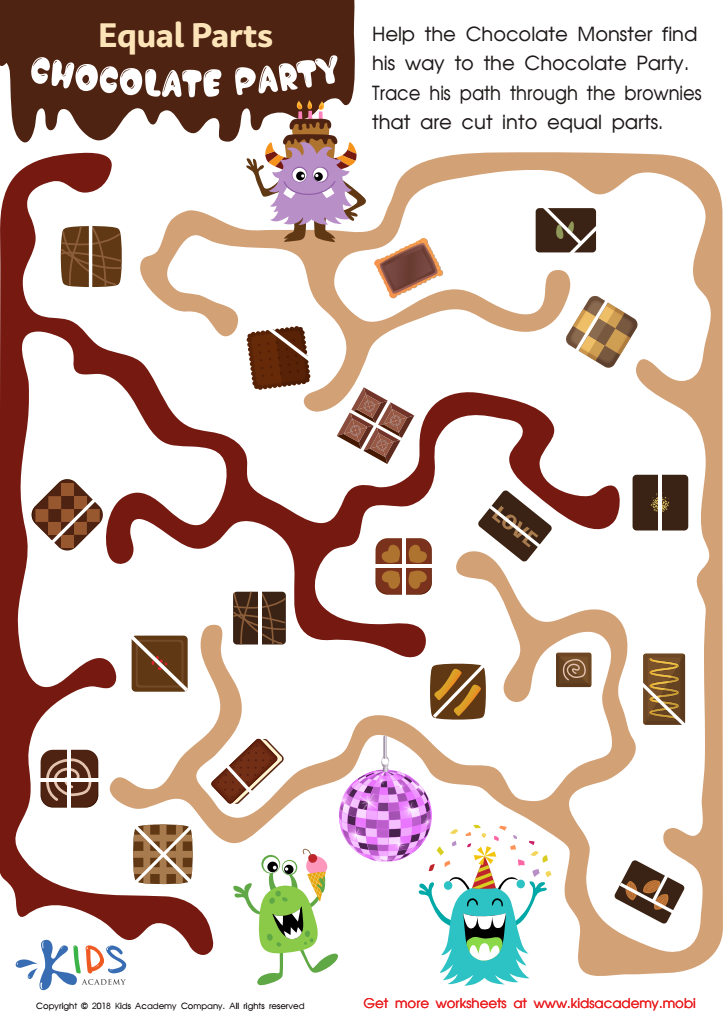
Equal Parts: Chocolate Party Worksheet
Mention "chocolate" and watch your kids' excitement soar! Learning can go hand-in-hand with that sugary treat. This worksheet helps kids guide the Chocolate Monster to the Chocolate Party, following a trail of brownie halves. It's an easy, tasty way to have fun!
 Assign to My Students
Equal Parts: Chocolate Party Worksheet
Worksheet
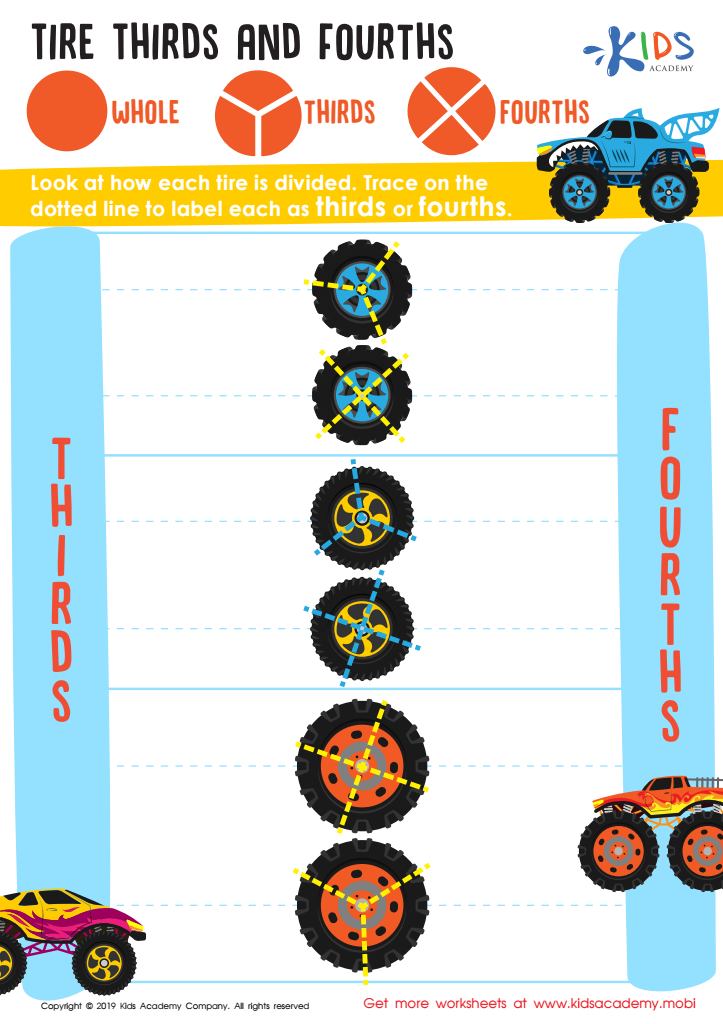
Tire Thirds and Fourths Worksheet
Learning geometry is key in your child's education. Have them identify and name shapes cut into 2, 3 and 4 parts. Test their knowledge with this worksheet - trace the dotted line to label each as third or fourth. Encourage them to keep learning!
Tire Thirds and Fourths Worksheet
Worksheet
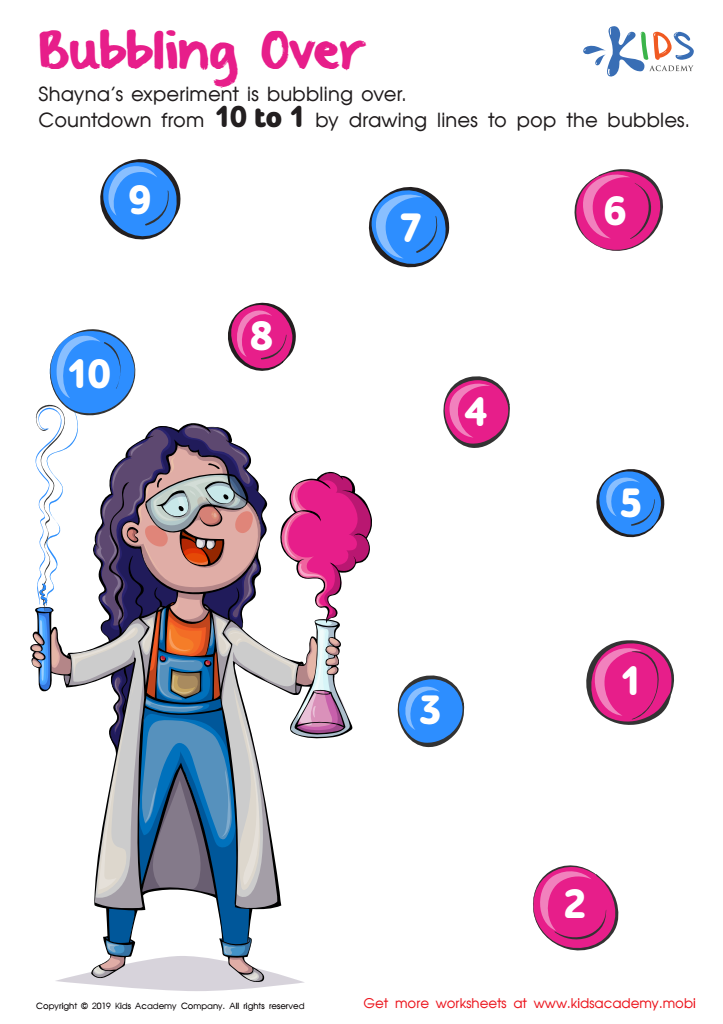
Bubbling Over Worksheet
Students love science experiments at the lab! They get to practice their counting skills while creating a masterpiece or an unexpected catastrophe! Ask them to count down from 10 to 1 by drawing lines to 'pop' the bubbles coming out of Shayna's experiment in the worksheet.
Bubbling Over Worksheet
Worksheet
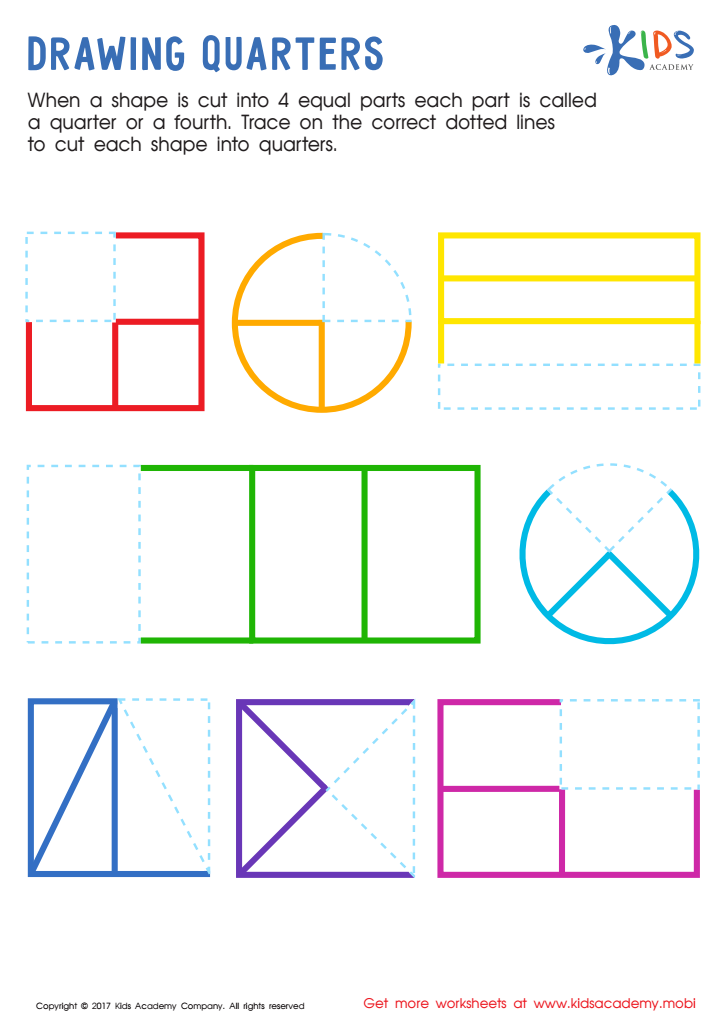
Drawing Quarters Worksheet
Help your kids divide shapes into quarters! Have them trace dotted lines to cut each shape into 4 equal parts. Each of the 4 parts is called a quarter or a fourth. This worksheet will help kids learn more about dividing shapes into four equal parts.
Drawing Quarters Worksheet
Worksheet
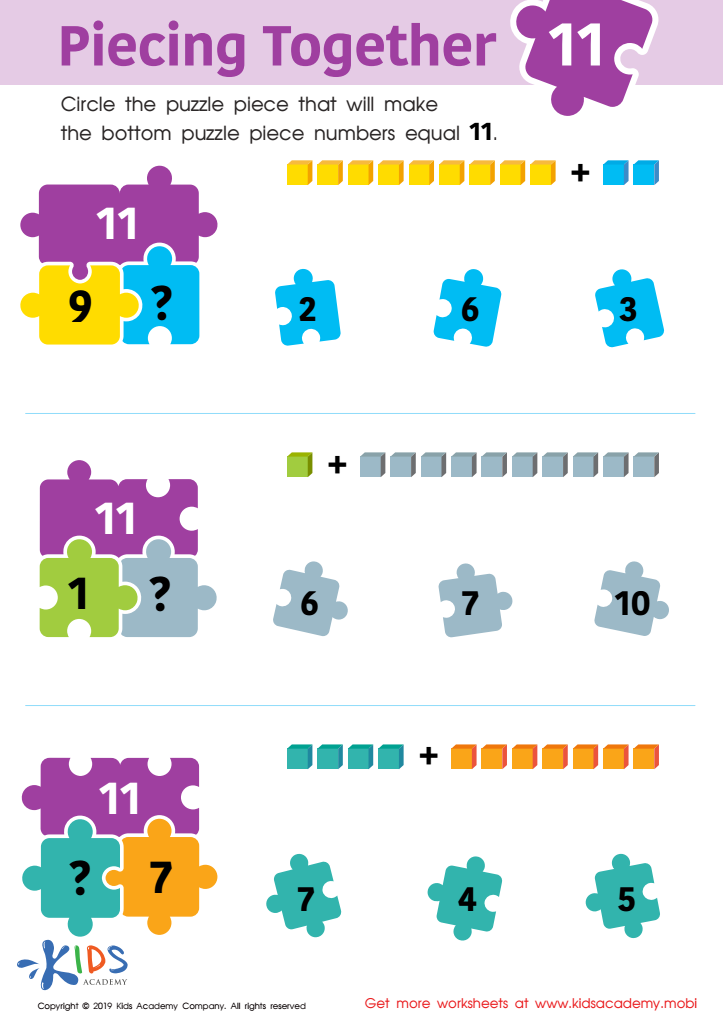
Piecing Together 11 Worksheet
Engage your preschoolers with learning-filled fun! Show them this colorful worksheet, and ask them to identify the figures. Each puzzle piece features an equation, except one which is missing. Help the kids solve the problems and circle the piece that'll make the numbers equal 11. It's a surefire way to make learning enjoyable!
Piecing Together 11 Worksheet
Worksheet
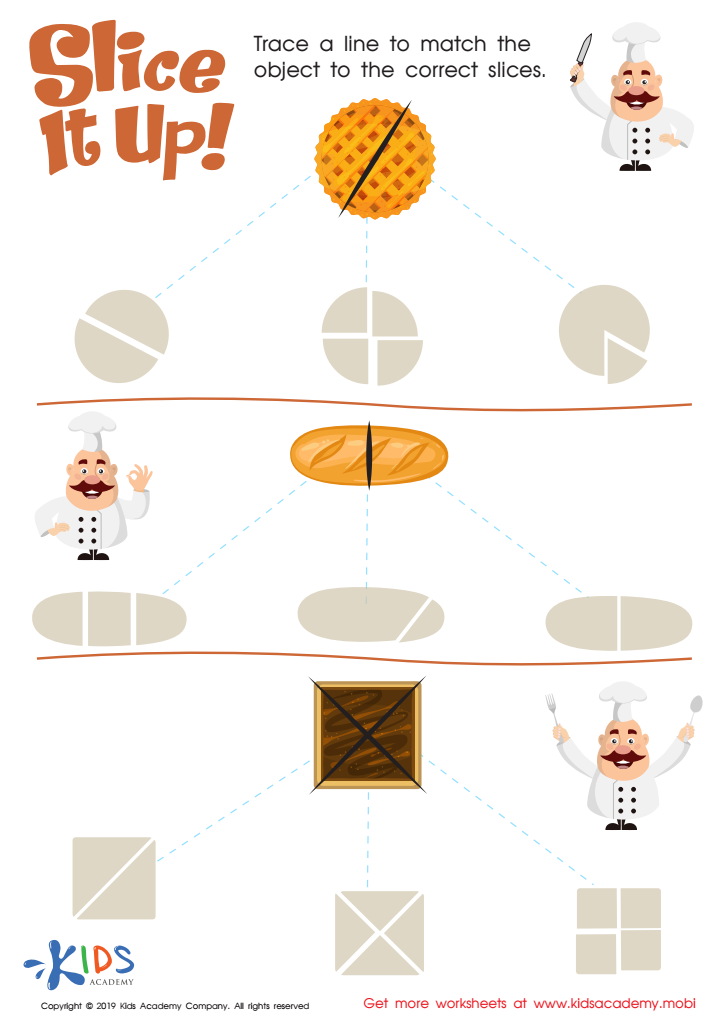
Slice It Up Worksheet
Try this fun math, reading and writing worksheet with your kids! They will love the colorful activities that perfect coordination and tracing. Engaging learning exercises help keep young minds sharp and boost skills. With these worksheets, your kids will be academically ahead of the curve!
Slice It Up Worksheet
Worksheet
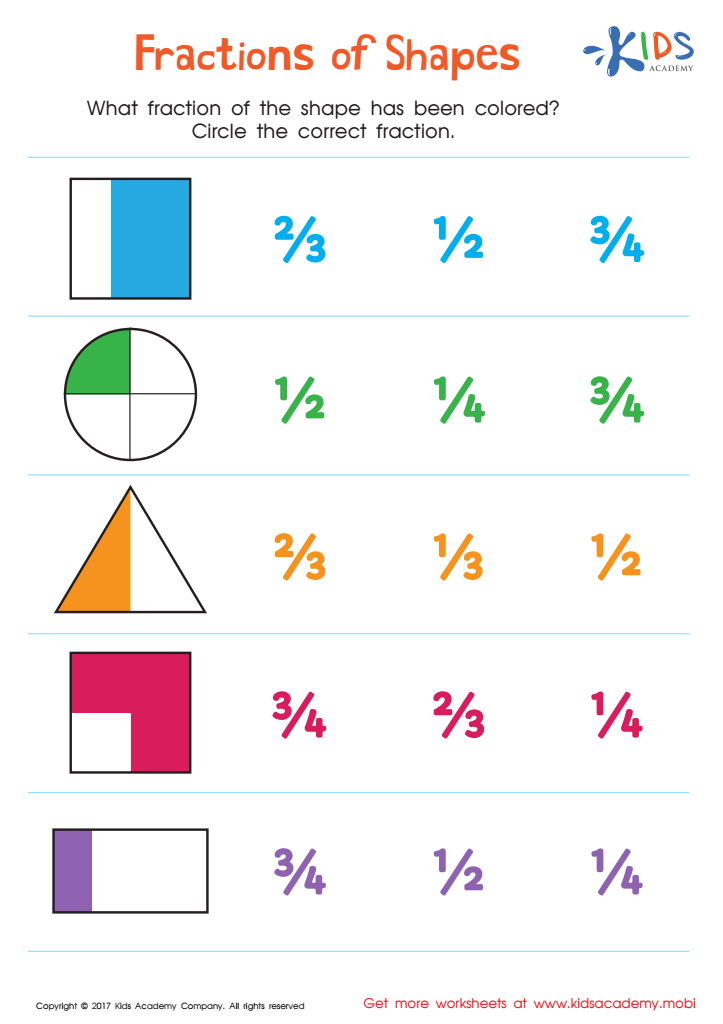
Fractions of Shapes: Math Concept Worksheet
Fractions can be tricky, but with pictures to illustrate them, they become much easier to understand. Our fractions of shapes worksheet is a great way to help children visualize fractions and gain a better understanding of them.
Fractions of Shapes: Math Concept Worksheet
Worksheet
Join Kids Academy for Free
Who is primarily going to use this learning content?



.jpg)

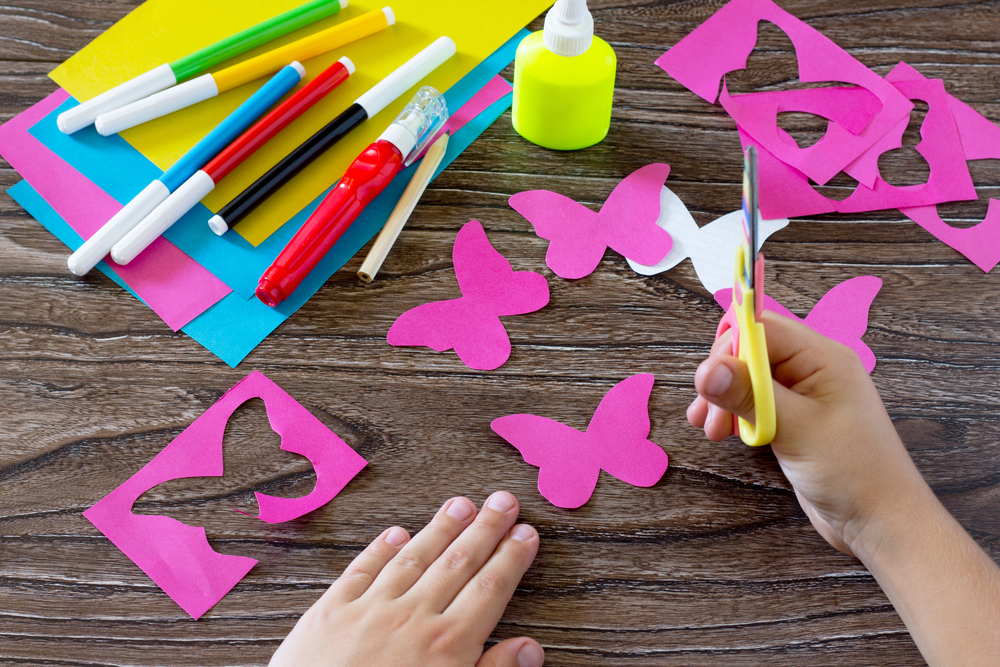

Fraction visualization is critical in the early years for laying a strong mathematical foundation. For children aged 3-7, who are concrete thinkers, visual aids are invaluable because they transform abstract concepts into understandable and tangible forms. When teachers and parents employ visual tools like pie charts, fraction strips, and even simple manipulatives like toys or food items, they make learning fractions engaging and accessible.
Through visualization, young learners begin to grasp essential concepts such as how parts make up a whole and how fractions can be equal even if they look different (e.g., 1/2 can be the same as 2/4). This early exposure demystifies mathematics and helps children develop number sense, spatial reasoning, and problem-solving skills.
Visualization also aids in comparing fractions, adding and subtracting them, and understanding division and multiplication in an intuitive manner. When children see fractions as parts of real-world objects, they are able to relate these abstract concepts to their everyday lives, laying the groundwork for future mathematical success.
Moreover, early competence in fractions boosts children's confidence in their mathematical abilities, fostering a positive attitude towards learning. This confidence and understanding are crucial as they progress to more complex mathematical concepts in later years. By prioritizing fraction visualization, teachers and parents are essentially investing in a child’s long-term academic journey and cognitive development.








