Graph interpretation Worksheets for Ages 3-7
3 filtered results
-
From - To
Explore our engaging Graph Interpretation Worksheets designed specifically for children ages 3-7. These interactive resources help young learners develop essential visual literacy skills by introducing them to various types of graphs, including bar graphs and pictographs. With a focus on hands-on activities, children can practice interpreting and analyzing data in a fun and enjoyable way. Our worksheets support early math development while enhancing critical thinking and problem-solving abilities. Perfect for classrooms or at-home learning, these graph interpretation activities provide a strong foundation for future mathematical concepts. Start your child's journey into data literacy today with our playful and educational worksheets!
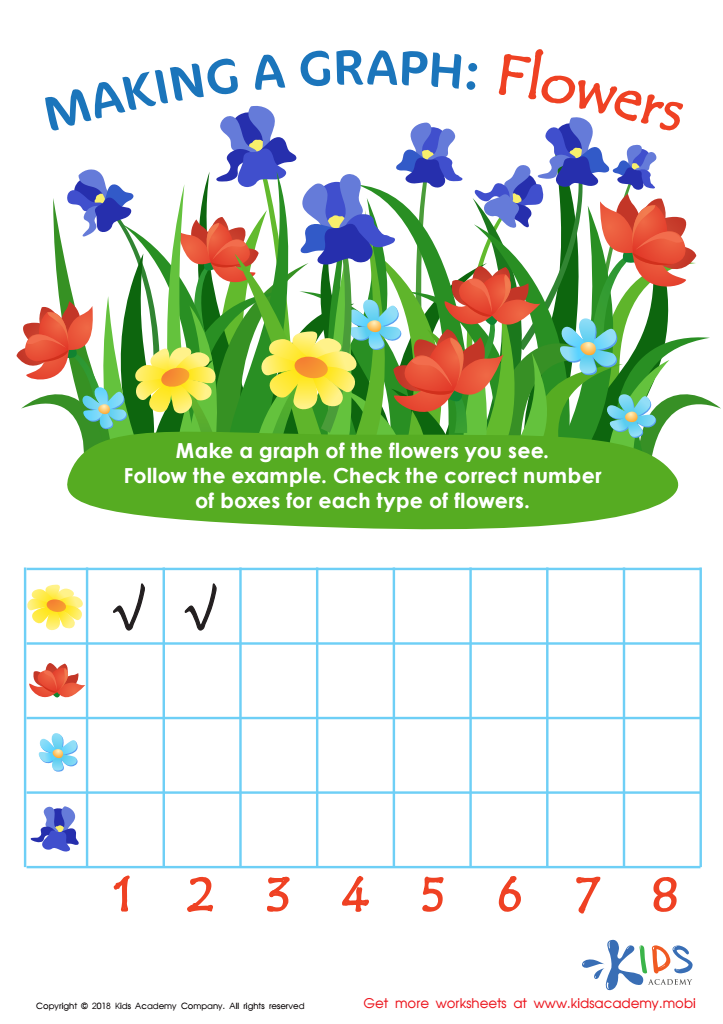
Making a Graph: Flowers Worksheet
 Assign to My Students
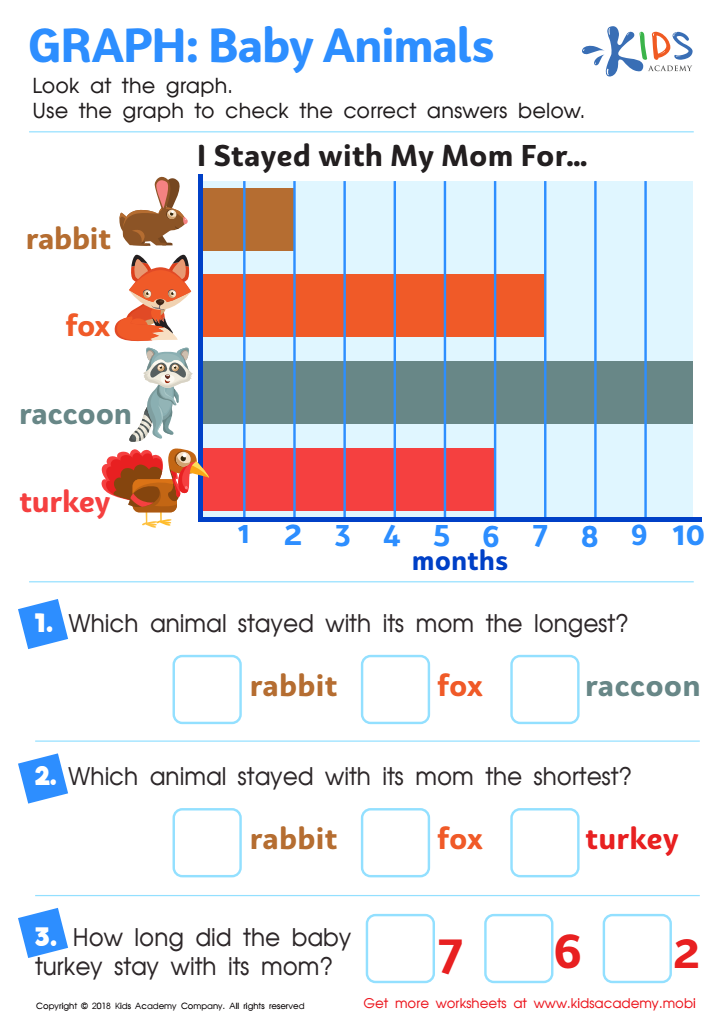
Graph: Baby Animals Worksheet
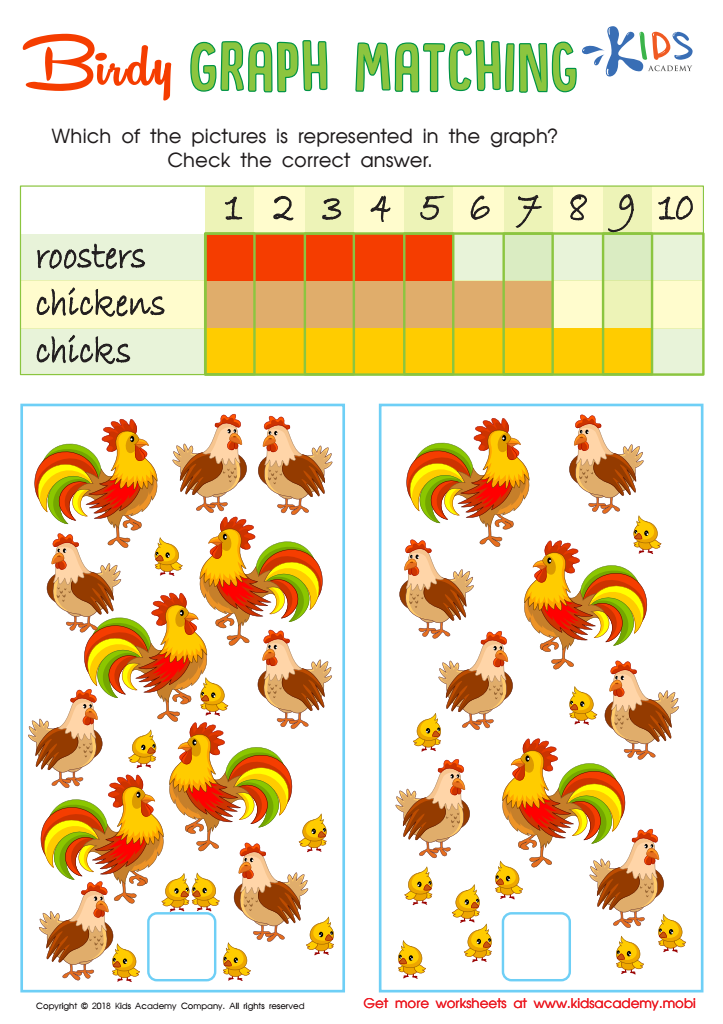
Birdy Graph Matching Worksheet


.jpg)



Graph interpretation is a vital skill for young children aged 3-7, as it lays the groundwork for critical thinking and mathematical understanding. Parents and teachers should care about this skill for several reasons.
Firstly, graph interpretation nurtures analytical skills. By learning to read and understand graphs, children practice the art of analyzing information, which strengthens their ability to make informed decisions. This early exposure helps them grasp basic mathematical concepts like counting, comparing, and categorizing data.
Secondly, it enhances communication skills. Graphs transform complex information into a visual format, making it easier for children to discuss and express their thoughts. This fosters language development, as they learn to articulate their interpretations.
Furthermore, engaging with graphs promotes curiosity. When children see data represented visually, they often ask questions and explore relationships, sparking a love for learning and discovery.
Lastly, early graph literacy prepares children for future academic success. As they progress in school, the ability to interpret graphs will be crucial in subjects such as science and social studies.
In summary, introducing graph interpretation to young learners fosters analytical thinking, enhances communication, encourages curiosity, and sets the foundation for future learning. Parents and teachers play a pivotal role in nurturing these essential skills.








