
Improve spelling skills Worksheets for Ages 3-7
3 filtered results
Difficulty Level
Grade
Age
-
From - To
Subject
Activity
Standards
Unlock your child's potential with our "Improve Spelling Skills Worksheets" designed for ages 3-7! These engaging and printable worksheets focus on enhancing your little one's spelling abilities through fun activities. Children will enjoy exploring letters and sounds, completing interactive exercises, and honing their vocabulary in an enjoyable way. Our worksheets support early literacy development, making learning to spell a delightful experience. Ideal for parents and educators alike, these resources foster confidence and independence in young learners. Start their spelling journey today and watch as they progress in their learning adventure with our expertly crafted worksheets!
Favorites
With answer key
Interactive
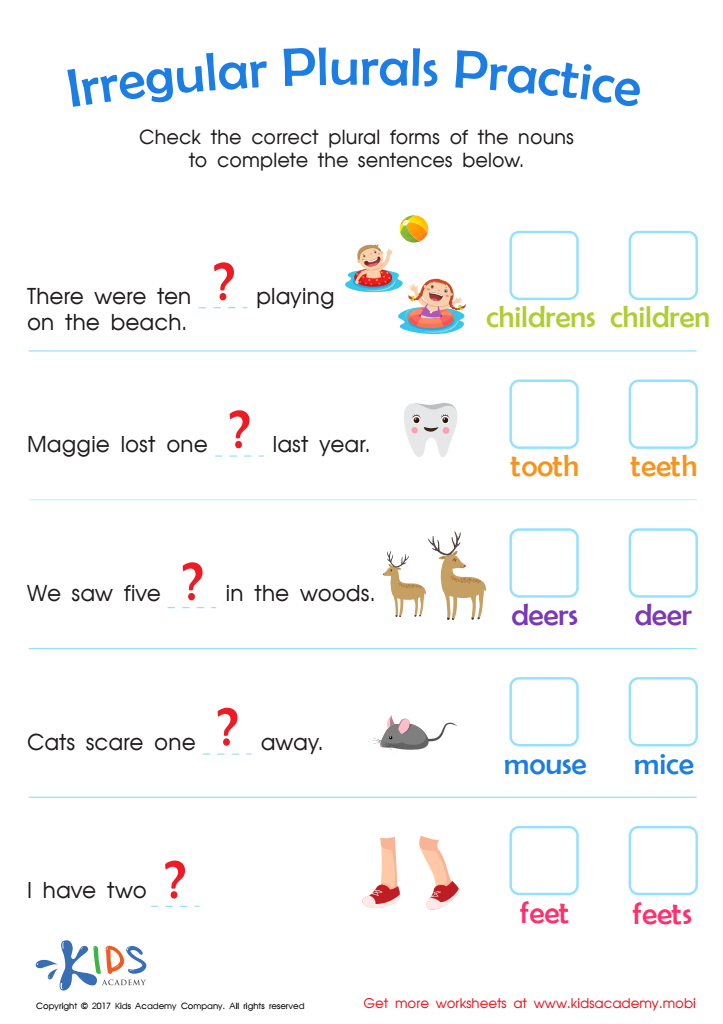
Irregular Plural Nouns Worksheet
This worksheet for 2nd graders offers an engaging activity for practicing irregular nouns by choosing the right option. It covers the most common irregular plurals, making it a quick, easy, and effective way to learn.
Irregular Plural Nouns Worksheet
Worksheet
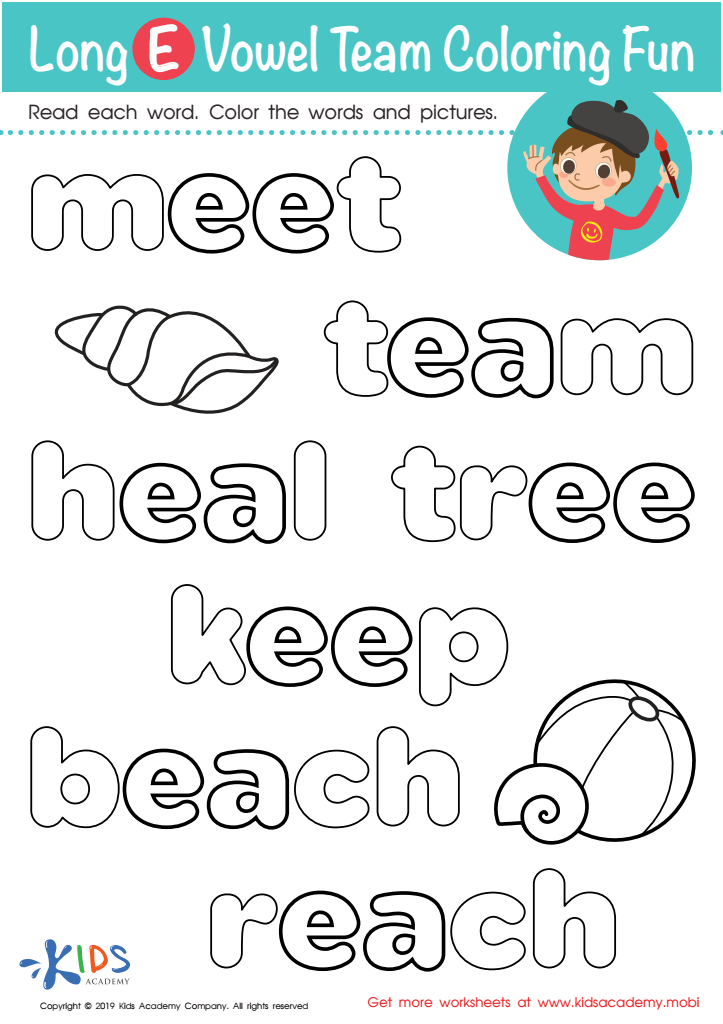
Long E Vowel Team Coloring Worksheet
Divide your students into teams and have them read words with long E sounds, such as "meet" and "team." Let them recognize that the sound can be created with either "ee" or "ea" letter pairings. Then, have the teams color words and pictures with the appropriate letters. This will make your phonics lesson fun and effective.
Download (PDF)
 Assign to My Students
Assign to My Students
Long E Vowel Team Coloring Worksheet
Worksheet
Join Kids Academy for Free
Who is primarily going to use this learning content?








Improving spelling skills in children aged 3 to 7 is crucial for their overall language development and academic success. At this age, children are not only learning to read but also starting to write and express their thoughts more independently. Mastering spelling lays the foundation for proficient reading and writing, enhancing their ability to communicate effectively.
When children develop strong spelling skills early on, they gain confidence in their language abilities, which encourages them to participate in classroom discussions and share their ideas. This promotes engagement and a love for learning. Furthermore, spelling is interconnected with phonics and vocabulary—skills that are all essential for literacy. By emphasizing spelling, parents and teachers can help children improve their phonemic awareness, aiding them in recognizing and decoding words faster.
Moreover, early spelling skills can contribute to better academic performance across subjects, as written communication is important in all areas of learning. Children who struggle with spelling may experience frustration, which can affect their self-esteem and willingness to learn. Therefore, fostering spelling skills is not just about the mechanics of writing; it's about building a solid foundation for future educational endeavors and fostering a lifelong love for learning among young children.








