Improving fine motor skills Worksheets for Ages 3-7
3 filtered results
-
From - To
Enhance your child's fine motor skills with our expertly designed worksheets tailored for ages 3-7. These printable activities at Kids Academy blend fun with learning to strengthen hand-eye coordination, dexterity, and precision. Our broad range of exercises encompasses tracing, cutting, coloring, and more to develop essential skills for writing and everyday tasks. Each worksheet is crafted by education specialists to ensure age-appropriate and engaging content. Equip your child with the tools they need for academic success and life skills through our interactive and enjoyable fine motor skills worksheets. Start your child's developmental journey today!
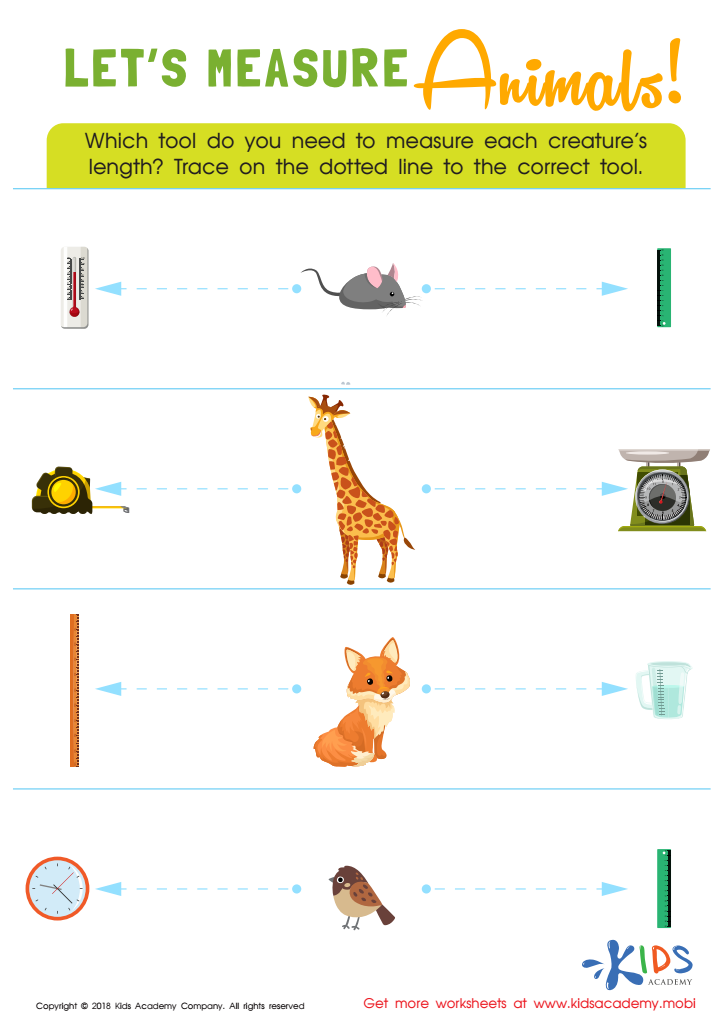
Let's Measure Animals! Worksheet
 Assign to My Students








Improving fine motor skills in children aged 3-7 is vital for their overall development and future learning success. Fine motor skills involve the use of small muscles in the hands and fingers, essential for daily tasks such as writing, buttoning clothes, and using utensils. For children in this age group, enhancing these skills lays a crucial foundation for academic activities like drawing and handwriting, which are critical for classroom participation and self-expression.
Moreover, developing fine motor skills boosts hand-eye coordination and increases children's independence in self-care tasks. This not only builds self-confidence but also reduces frustration, leading to better emotional well-being. Properly developed fine motor skills also have a direct impact on cognitive development. Engaging in activities that refine these skills, such as puzzles, cutting shapes, and playing with building blocks, promotes problem-solving abilities and enhances spatial awareness and creativity.
Parents and teachers should proactively encourage activities that help improve fine motor skills to ensure children achieve developmental milestones, progressively gaining the dexterity and control essential for more complex tasks. This focused effort will aid in smoother transitions as children advance in their educational journey, setting a strong foundation for lifelong learning and functional independence.








