Improving math skills Worksheets for Ages 3-7 - Page 2
36 filtered results
-
From - To
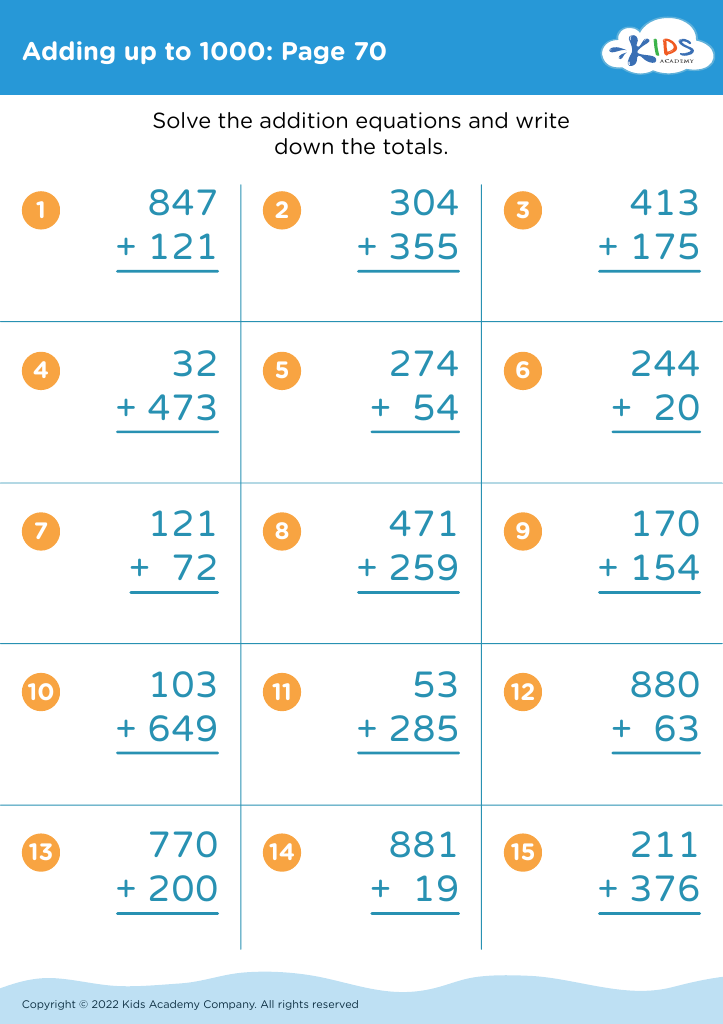
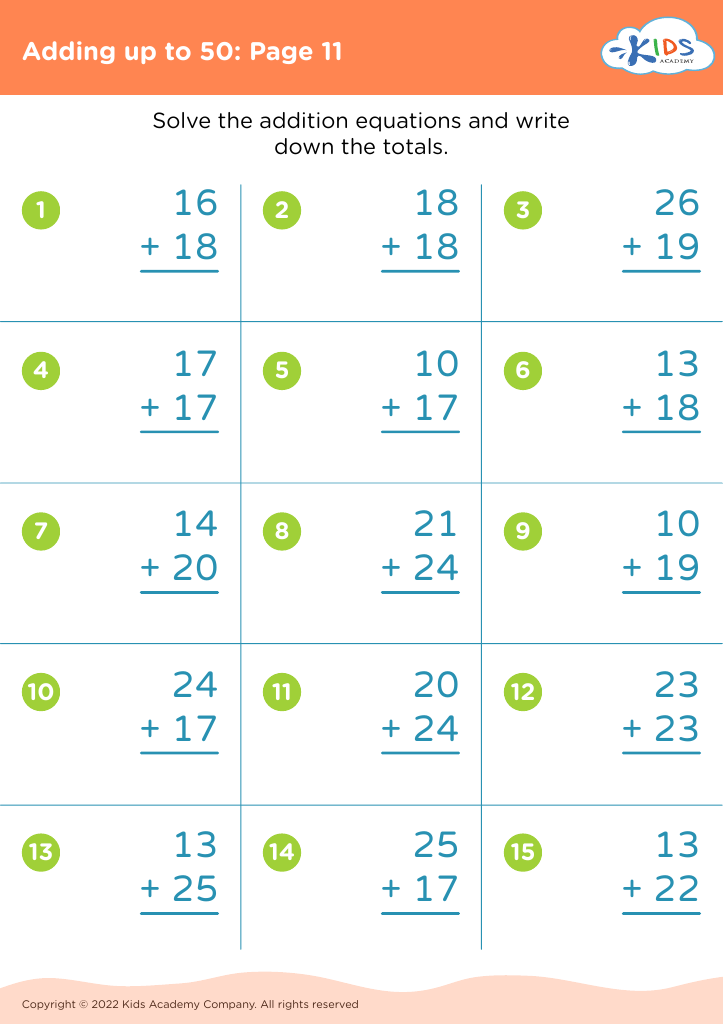
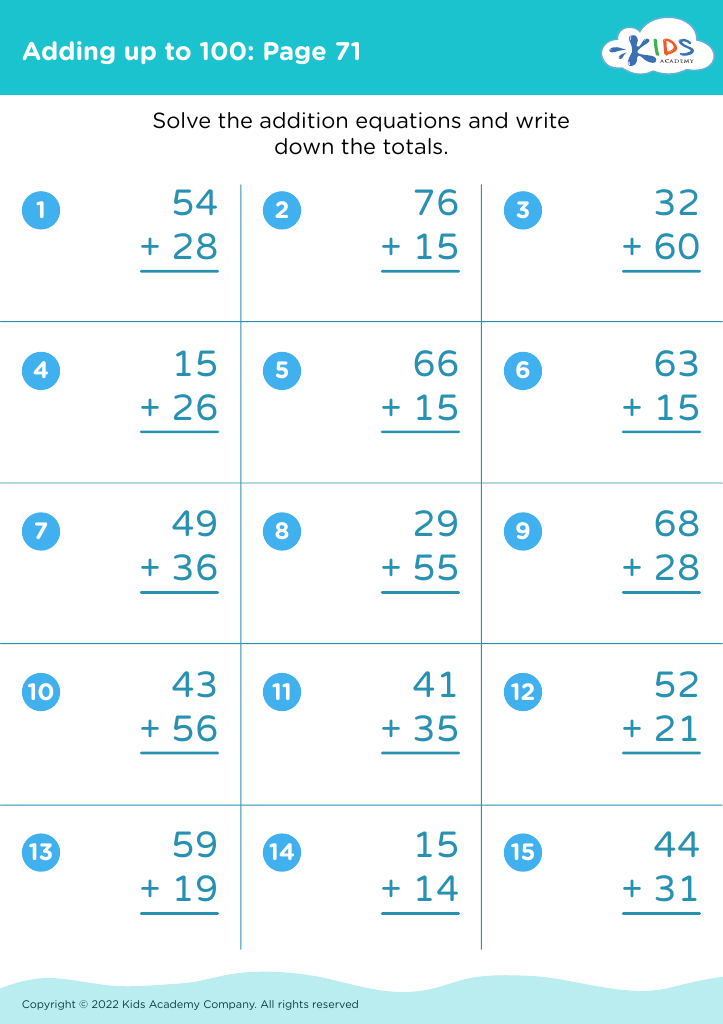
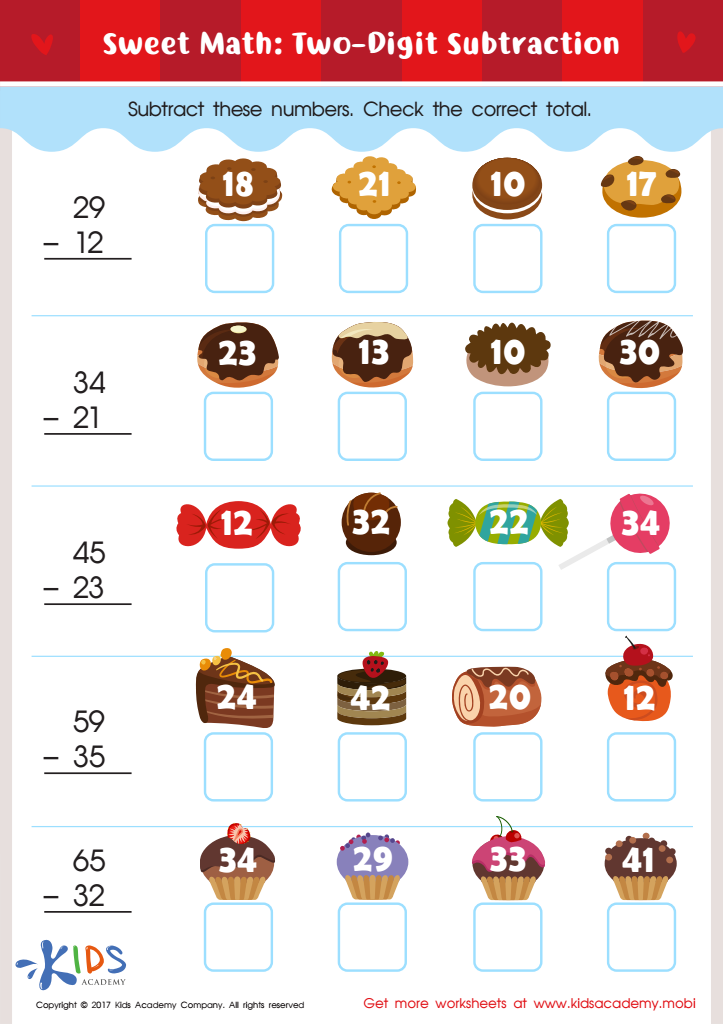
Two Digit Subtraction Worksheet
 Assign to My Students


.jpg)



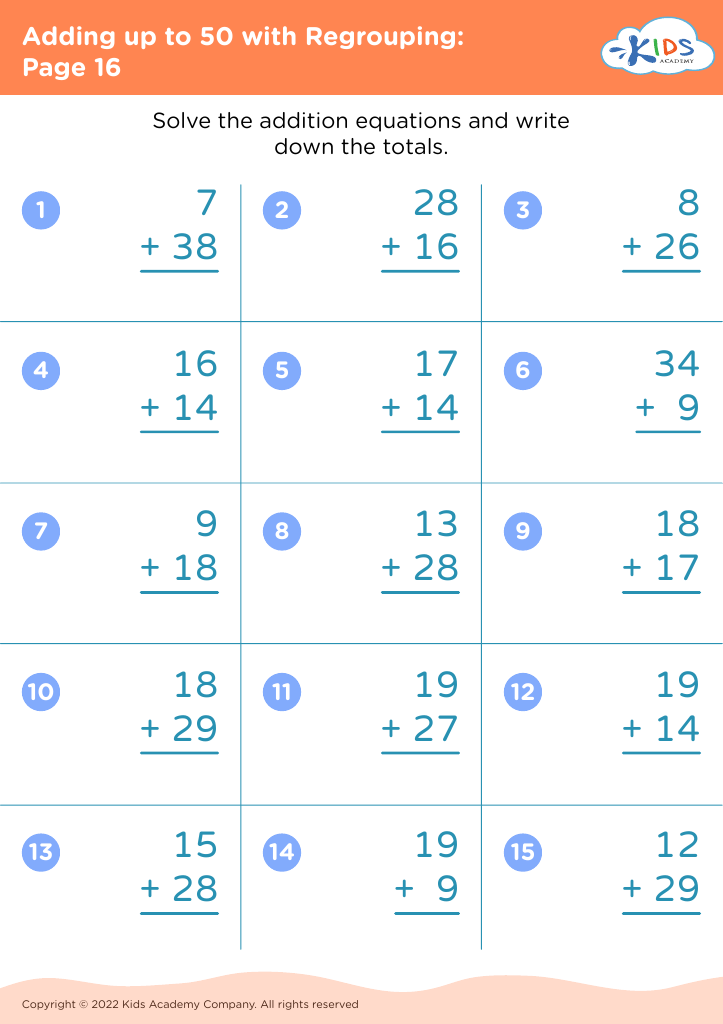
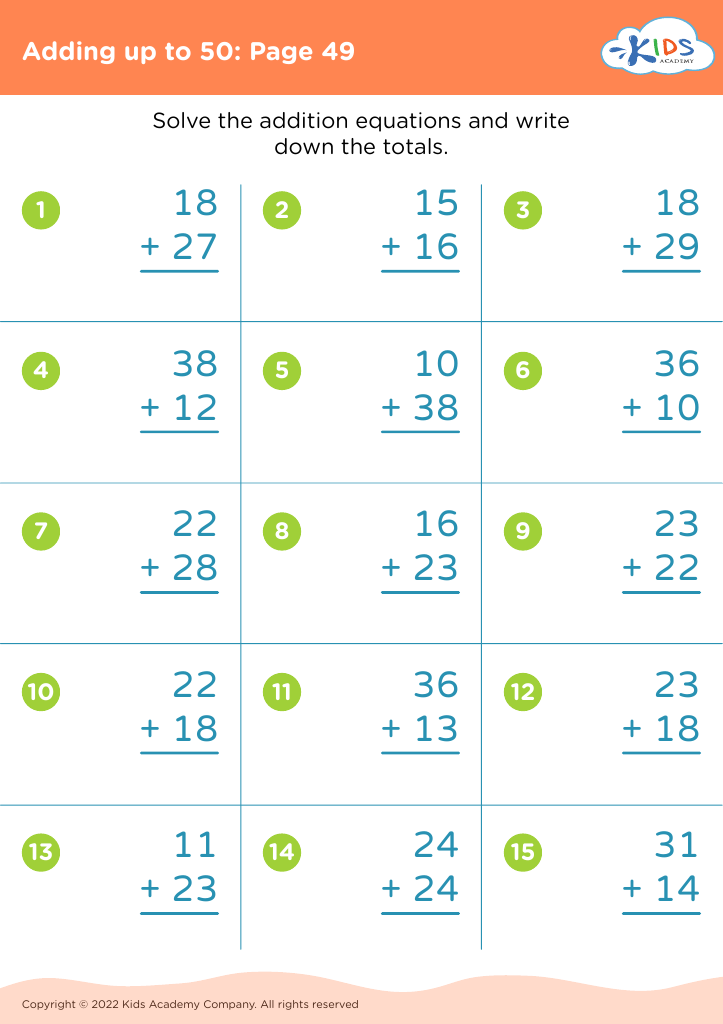
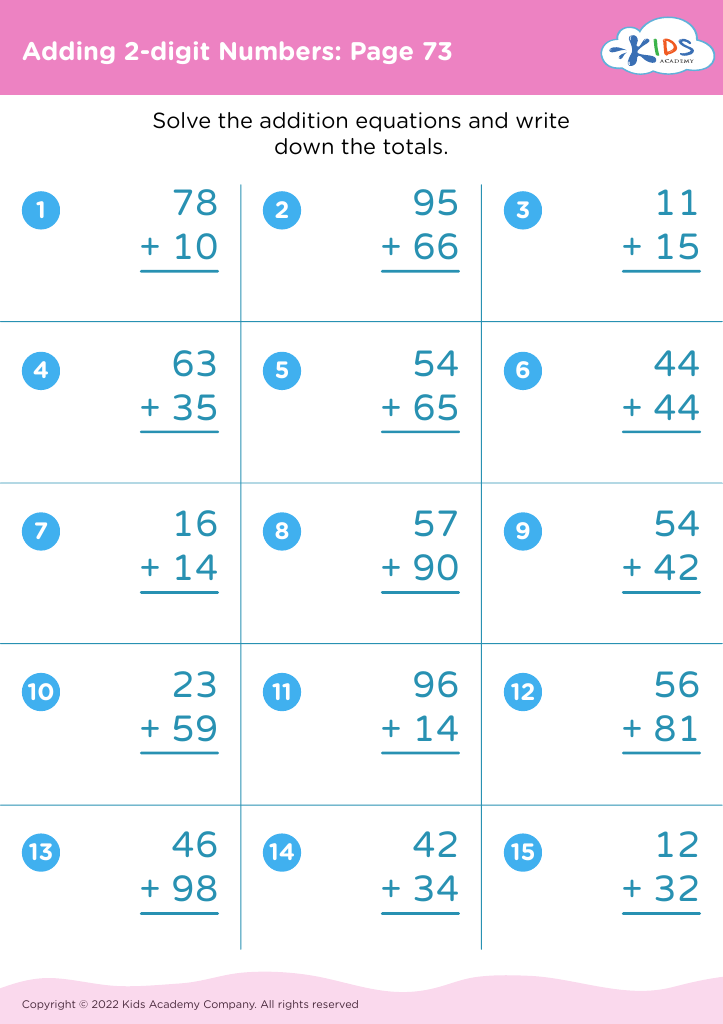
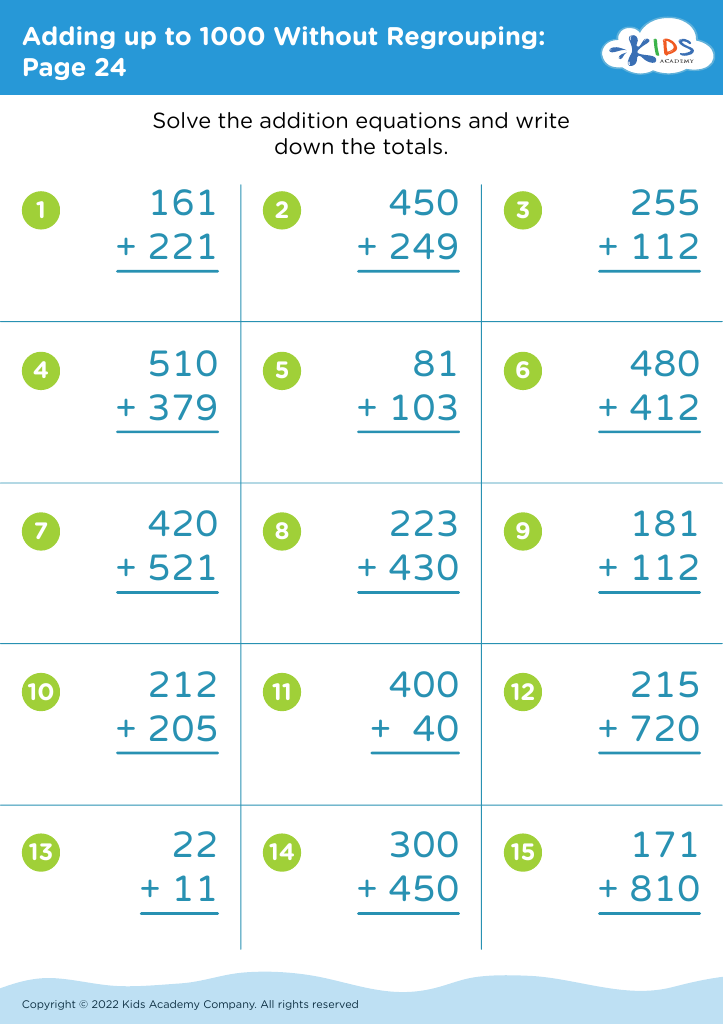
Improving math skills for children aged 3-7 is crucial for their cognitive development and future academic success. Early childhood is a vital period for brain growth, where foundational math concepts can significantly shape a child's learning trajectory. At this age, children begin to form an understanding of numbers, patterns, and basic operations, which are essential for more complex mathematical concepts later on.
Parents and teachers should prioritize early math skills because they contribute to critical thinking and problem-solving abilities. Engaging young learners with fun and interactive math activities fosters a positive attitude toward math, mitigating the anxiety many students face as they progress through school. Additionally, research shows that a strong grounding in early math correlates with success in later grades and performance in academics overall.
Moreover, foundational math skills are linked to daily life skills—helping children learn about measurement, time, and money. By participating in and supporting math discovery, parents and teachers not only enhance a child's math fluency but also build confidence and resilience. Overall, investing in early math education is a promising step toward nurturing well-rounded learners who are equipped to tackle future challenges.








