Math comprehension Worksheets for Ages 3-7
3 filtered results
-
From - To
Unlock your child's potential with our engaging Math Comprehension Worksheets for ages 3-7 at Kids Academy! Our expertly designed printables encourage critical thinking and problem-solving, laying a strong foundation in key mathematical concepts. These fun, interactive activities ensure learning is both effective and enjoyable, catering to preschoolers and early elementary students. From counting and number recognition to basic addition and subtraction, our worksheets are perfect for reinforcing classroom lessons or supporting homeschooling. Give your child the confidence and skills they need to succeed in math. Start their learning journey today with Kids Academy!
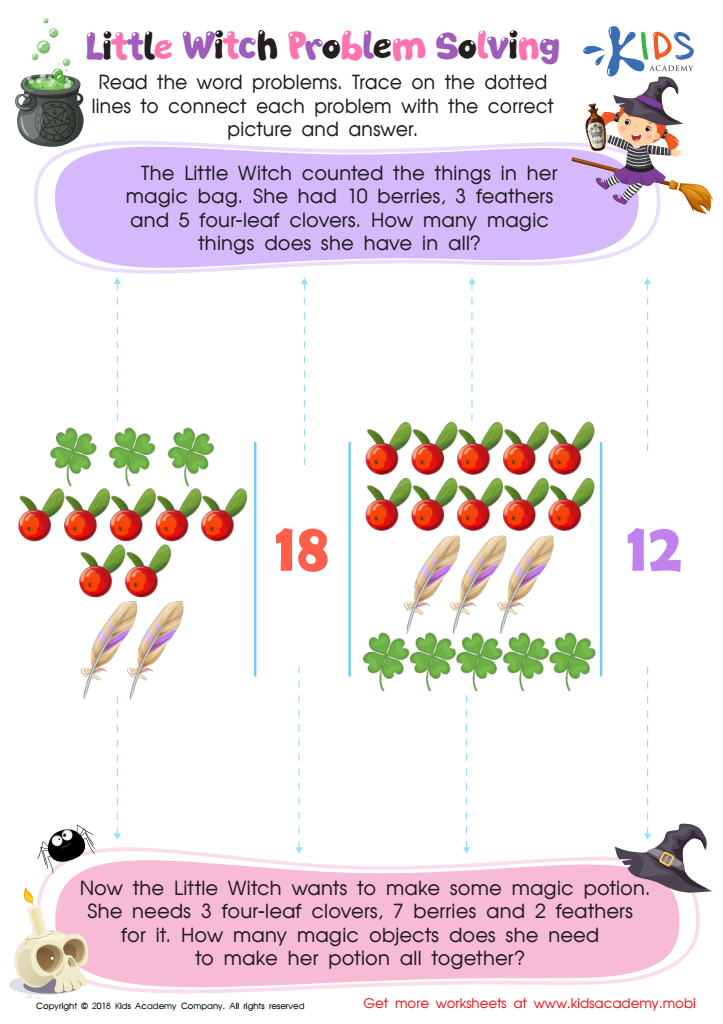
Little Witch Problem Solving Worksheet
 Assign to My Students
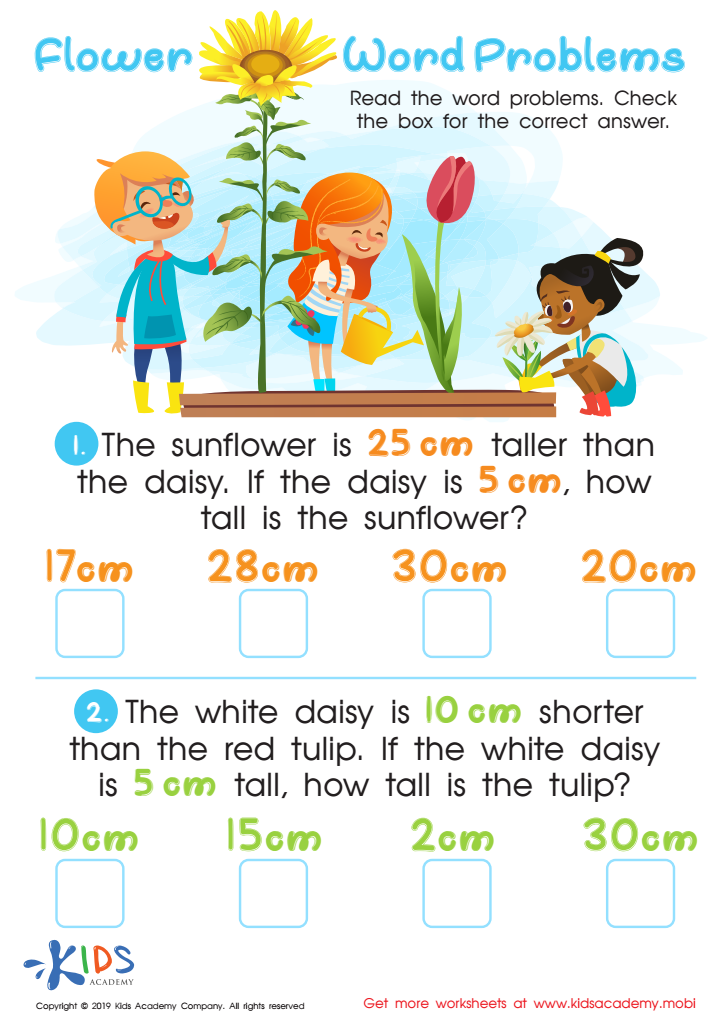
Flower Word Problems Worksheet








Math comprehension for ages 3-7 is fundamentally important because these early years set the foundation for a child’s entire educational journey and their cognitive development. During this formative period, children's brains are highly receptive to learning new concepts, and introducing them to math helps build critical reasoning and problem-solving skills. Understanding basic math concepts like counting, number recognition, and simple addition and subtraction operates as building blocks for more complex math topics they will encounter in later grades.
Parents and teachers should care about early math comprehension because it fosters a positive attitude towards learning and curiosity. When children are comfortable with numbers and patterns, they become more confident learners. This confidence transcends math, influencing their ability and eagerness to tackle new challenges in various subjects.
Additionally, research indicates that early math skills are strong predictors of academic success, not only in mathematics but in subjects like science and reading as well. Early math comprehension helps develop organizational and planning skills, as well as the ability to follow instructions and engage in higher-order thinking.
Therefore, investing time and resources to nurture math comprehension in young children equips them with essential life skills, sets them on a path of academic achievement, and opens opportunities for future success in a rapidly evolving, tech-driven world.








