Mathematical operations Worksheets for Ages 3-7
4 filtered results
-
From - To
Discover a wide range of engaging and educational mathematical operations worksheets designed specifically for children ages 3-7! These printable worksheets help young learners build a strong foundation in essential math skills, including addition, subtraction, multiplication, and division. Featuring adorable graphics and enjoyable activities, our worksheets make learning enjoyable and effective. Whether practicing counting, solving word problems, or exploring basic math concepts, children will gain confidence and proficiency. Perfect for use at home or in the classroom, these resources support early learners in a structured and fun environment, nurturing a lifelong love for mathematics. Download and start learning today!
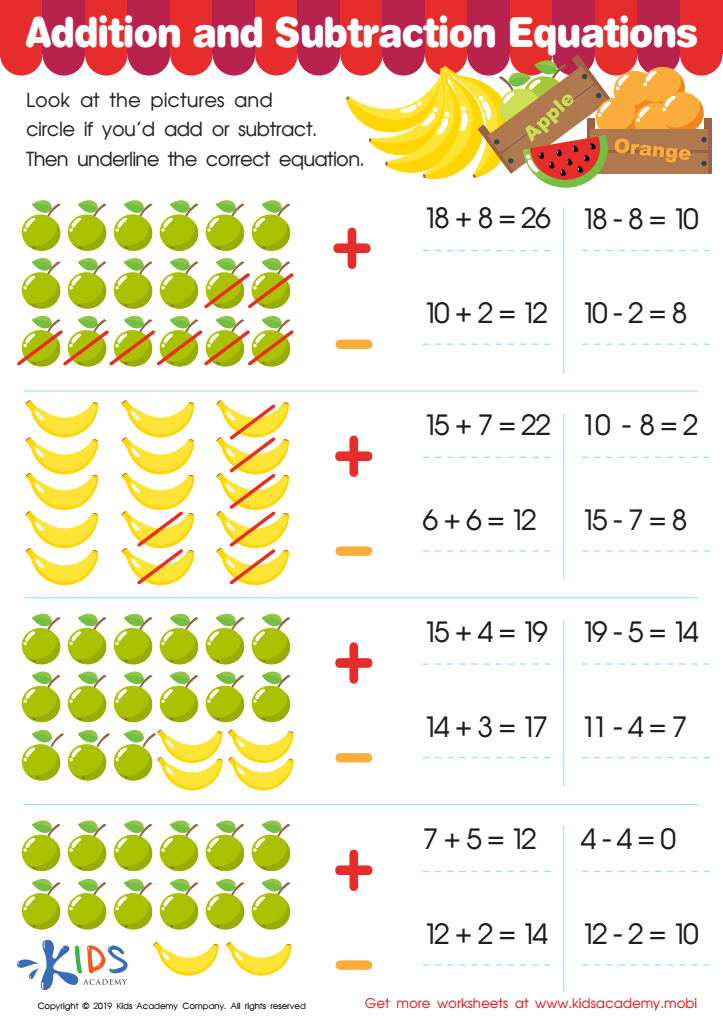
Addition and Subtraction: Equations Worksheet
 Assign to My Students
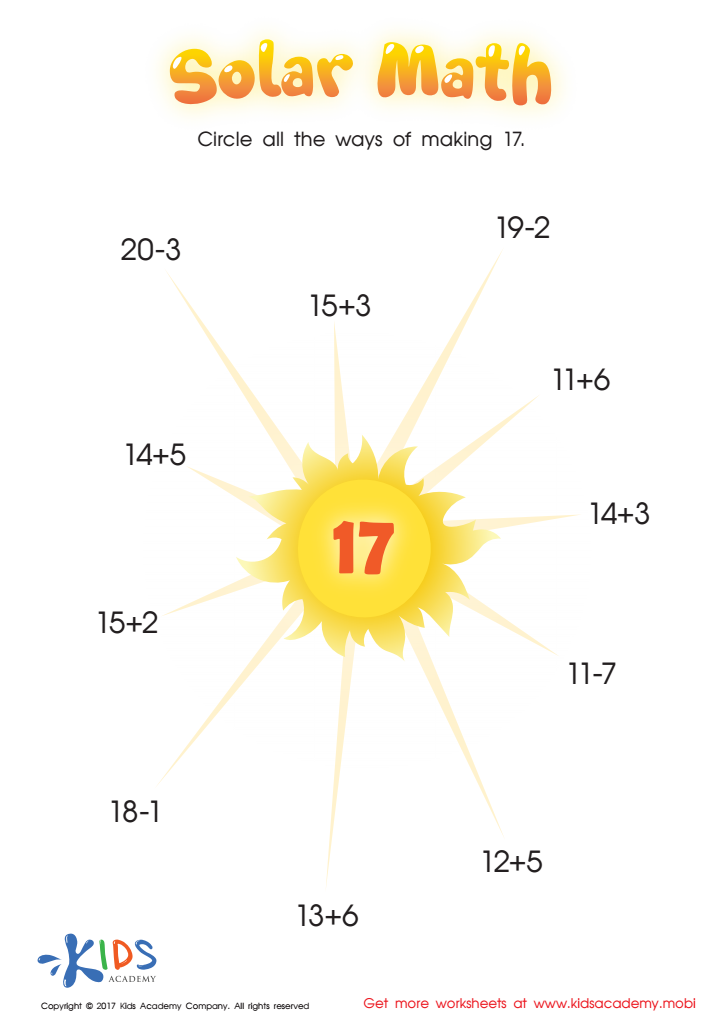
Solar Math Substraction Worksheet
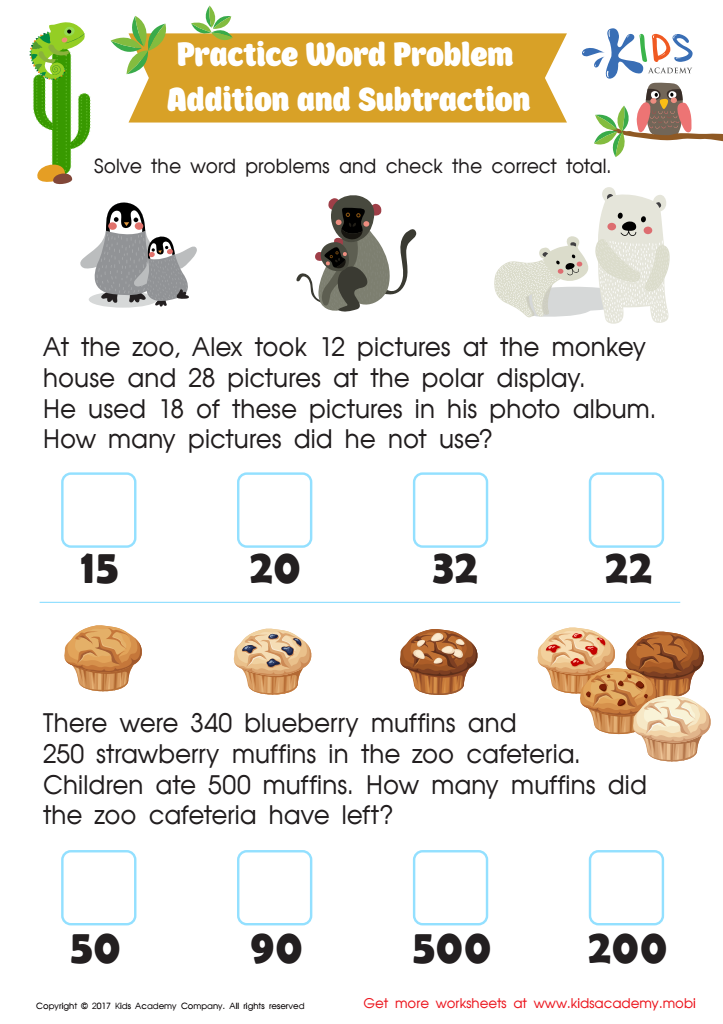
Addition and Subtraction: Word Problems Worksheet
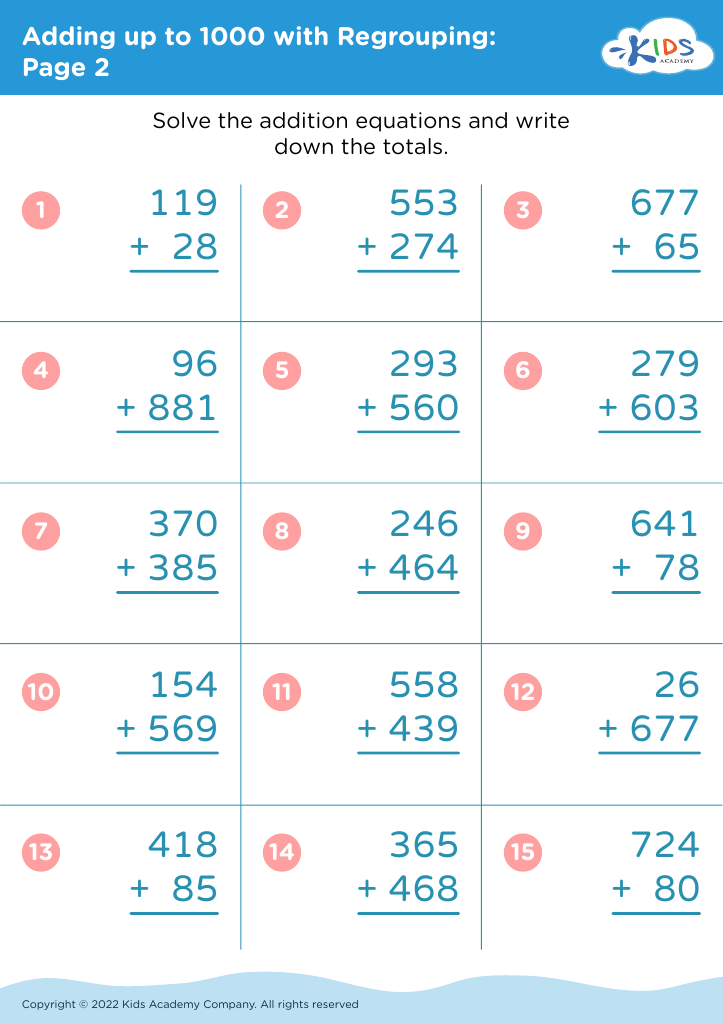







Parents and teachers should place importance on mathematical operations for children aged 3-7, as these formative years are crucial for cognitive development. Early exposure to math concepts like addition, subtraction, multiplication, and division lays the groundwork for numerical literacy and logical thinking. Engaging young learners in math activities enhances problem-solving skills, critical reasoning, and the ability to recognize patterns, all of which are essential for academic success.
Moreover, cultivating a positive attitude toward mathematics from an early age can prevent the common math anxiety seen in older students. When children find enjoyment and confidence in their math abilities, they are more likely to approach challenges with a growth mindset, leading to better performance in school.
Mathematical operations are not just about numbers; they also help in understanding spatial concepts, quantities, and measurements. Real-life applications, such as sharing toys (division) or combining groups of objects (addition), make math tangible and relatable, reinforcing its importance.
Therefore, by nourishing mathematical skills early on, parents and teachers offer children vital tools that translate into better academic outcomes and insightful, analytical mindsets, preparing them for more complex concepts in the future and building a strong foundation for lifelong learning.








