Mental math development Worksheets for Ages 3-7
3 filtered results
-
From - To
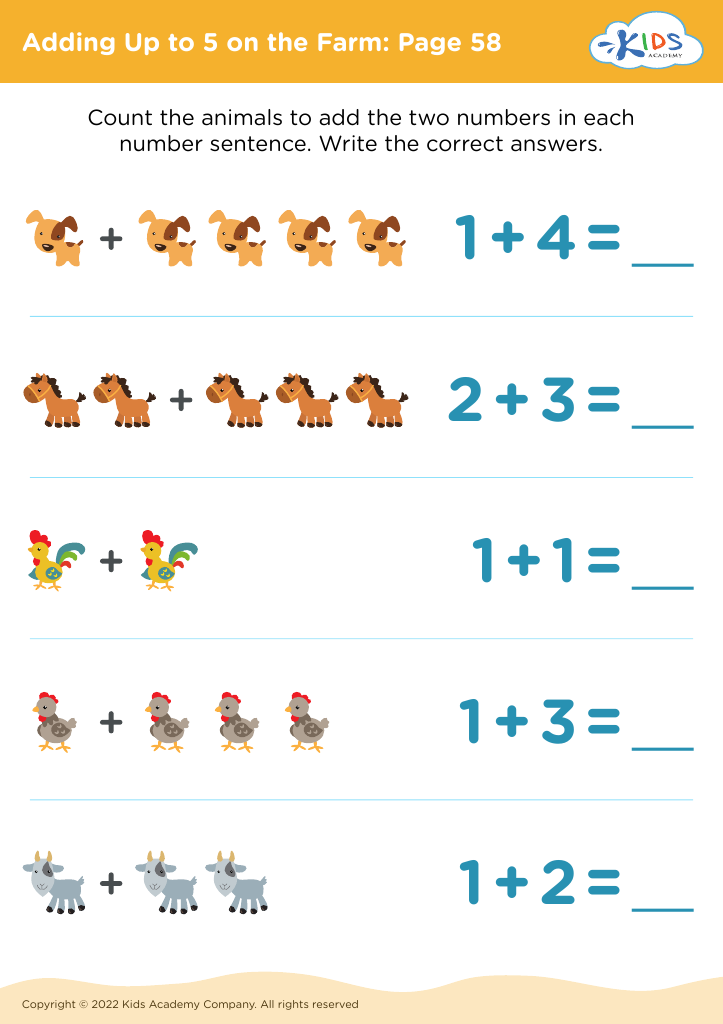
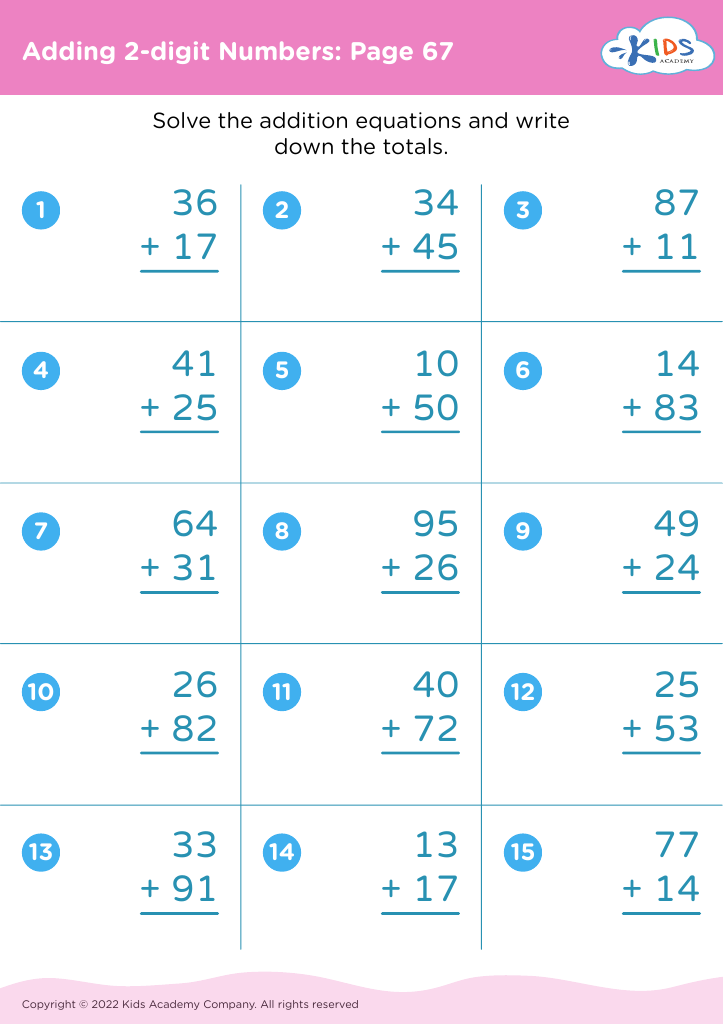
Discover our engaging Mental Math Development Worksheets tailored for children ages 3-7! These interactive resources are designed to build essential mathematical skills in young learners while keeping them entertained. Our worksheets focus on enhancing mental calculation abilities through fun exercises like counting, simple addition and subtraction, and number recognition. Perfect for classrooms or at-home learning, these age-appropriate activities cater to various learning styles. Our thoughtfully crafted worksheets encourage not only cognitive development but also boost confidence as children tackle mathematical challenges. Dive into the world of mental math with our colorful and user-friendly worksheets, ensuring a strong foundation for your child’s educational journey!
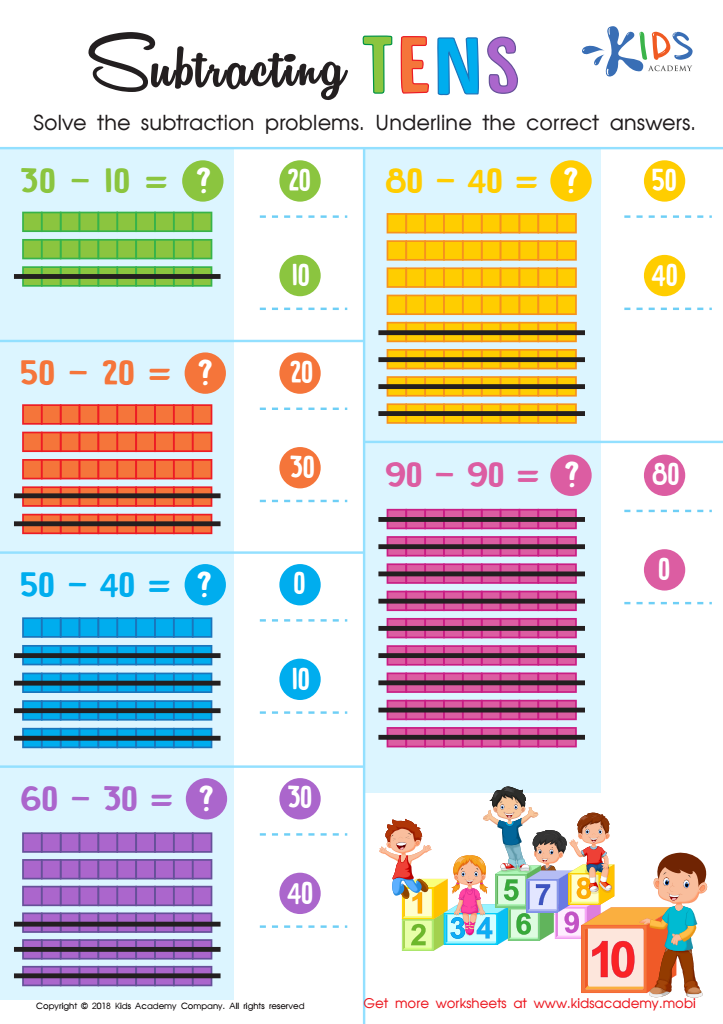
Subtracting Tens Worksheet
 Assign to My Students








Mental math development in children aged 3 to 7 is crucial for their overall mathematical understanding and cognitive skills. At this age, children are naturally curious and absorb information rapidly, making it an ideal time to foster essential math concepts. Mental math encourages children to visualize numbers and develop number sense, enhancing their ability to solve problems without relying solely on written methods or calculators.
Parents and teachers should prioritize mental math as it builds confidence in young learners. When children can perform calculations mentally, they experience a sense of accomplishment that boosts their enthusiasm for learning. Additionally, mental math helps develop critical thinking skills, as children learn to dissect problems and manipulate numbers rather than simply memorizing facts.
Furthermore, strong mental math skills form the foundation for more complex mathematical concepts as children progress in their education. Early intervention promotes long-term success in math, particularly in standardized assessments and real-world applications. Encouraging mental math through engaging games and everyday activities makes learning enjoyable, ensuring that children remain motivated and curious. Ultimately, nurturing this skill set equips children with tools necessary for future academic success and everyday problem-solving.








