Money addition skills Worksheets for Ages 3-7
3 filtered results
-
From - To
Introduce your child to the world of financial literacy with our "Money Addition Skills Worksheets for Ages 3-7". These engaging and interactive exercises are designed to help young learners understand the basics of counting and adding money. Perfect for preschool through early elementary grades, our worksheets foster essential math skills using colorful and fun activities. Whether it's counting coins or practicing simple addition with dollars and cents, these resources make learning about money enjoyable and effective. Prepare your child for future financial success and provide them the confidence to handle everyday math challenges with our expertly crafted worksheets.
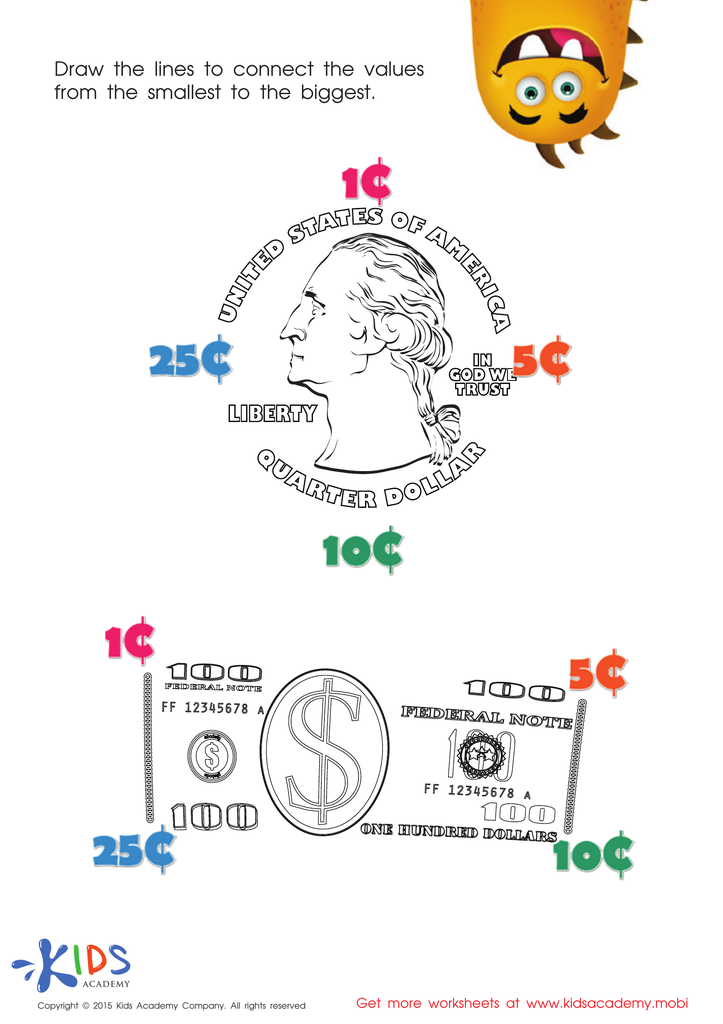
Connecting the Values Money Worksheet
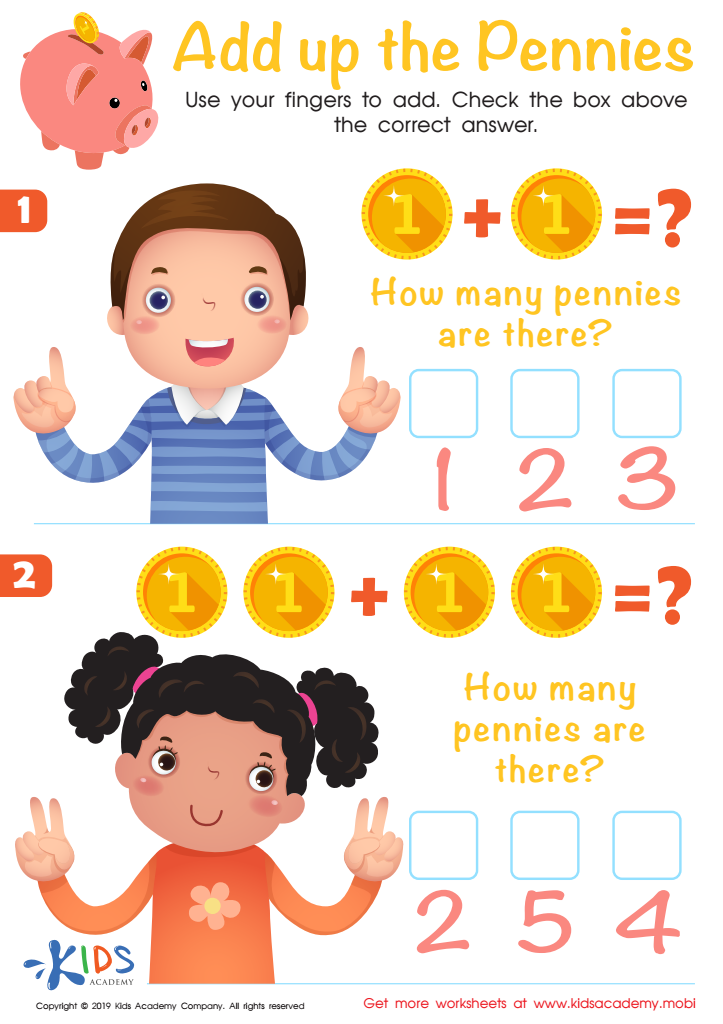
Add up the Pennies Worksheet
 Assign to My Students
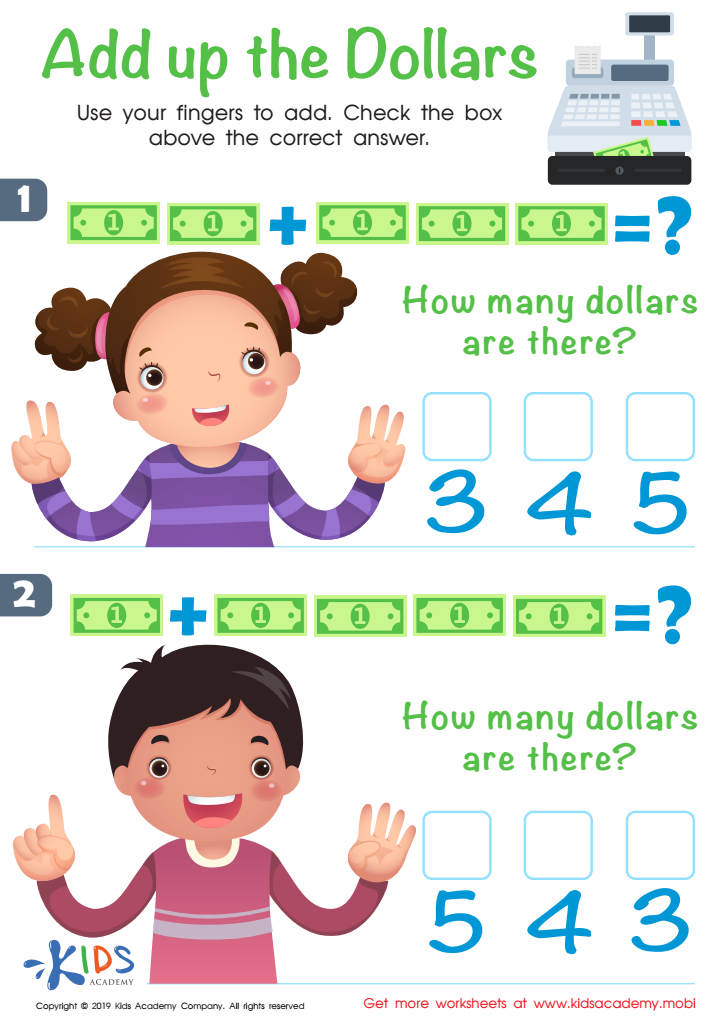
Add up the Dollars Worksheet






.jpg)

Parents and teachers should prioritize fostering money addition skills in children aged 3-7 as an integral part of their early education for several critical reasons. Firstly, early exposure to concepts of money and addition builds a foundation for numeracy, which is essential for daily life and future academic success. Introducing these skills in a fun and engaging manner aids cognitive development, improving memory and reasoning abilities.
Secondly, understanding money and addition helps children grasp the concepts of value and exchange, which promotes financial literacy from an early age. This practical knowledge empowers them to make informed decisions about saving, spending, and giving, forming the basis for responsible money management in the future.
Thirdly, involving young children in money-related activities enhances their social development. Activities that simulate real-life scenarios — like 'playing store' where they use play money to buy and sell items — foster skills such as turn-taking, communication, and cooperation. These situations also impart lessons in fairness and delayed gratification.
Lastly, incorporating money-based lessons also aligns with real-world applications, making learning more relevant and engaging. Children are naturally curious about the world around them and, by linking their innate interests with educational goals, parents and teachers nurture a productive and positive learning environment. In sum, early adoption of money addition skills fosters cognitive, social, and practical competence, setting children on a path towards lifelong success.








