Plant identification Worksheets for Ages 3-7
5 filtered results
-
From - To
Discover the world of plants with our engaging Plant Identification Worksheets designed for children ages 3-7. Perfect for curious young minds, these worksheets combine fun activities with educational content to help kids learn to recognize and identify different plants. Each worksheet features colorful illustrations and simple exercises tailored to early learners, making learning both enjoyable and effective. Supported by educators, our materials foster fine motor skills, enhance vocabulary, and spark a love for nature. Ideal for parents and teachers, these printable worksheets are an excellent resource for cultivating a budding interest in the natural world. Get started today!
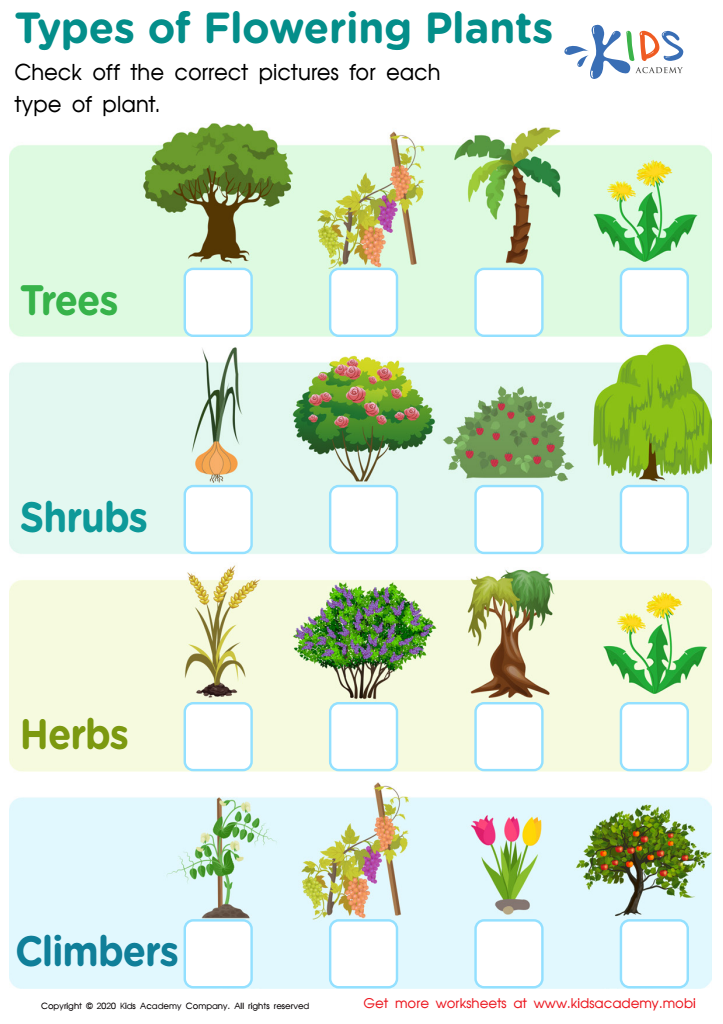
Types of Flowering Plants Worksheet
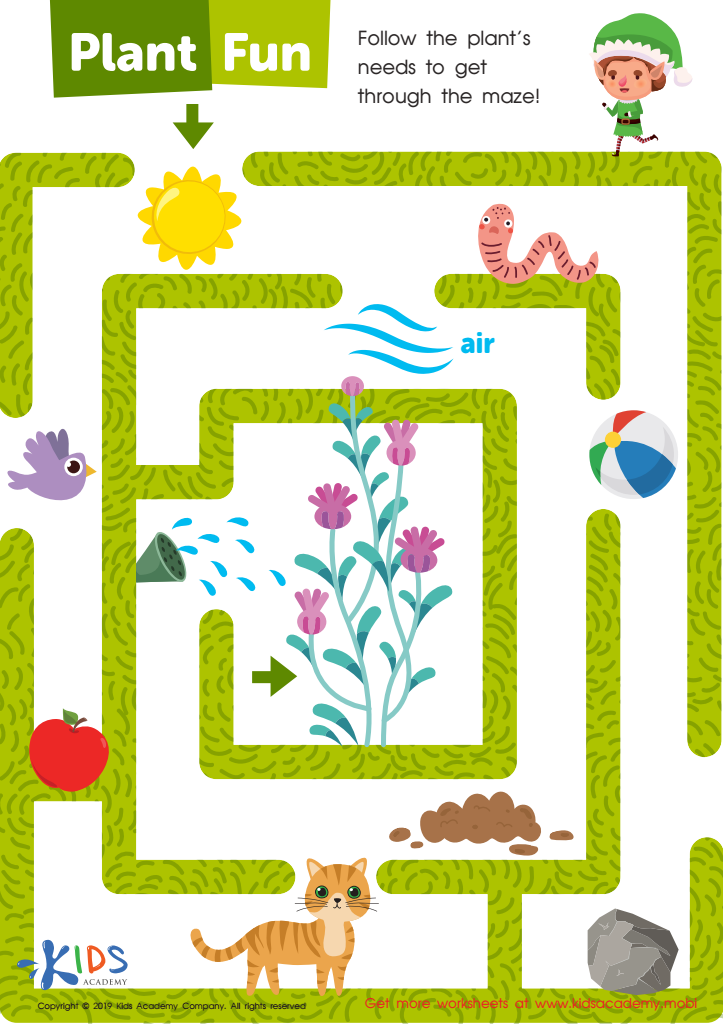
Plant Fun Worksheet
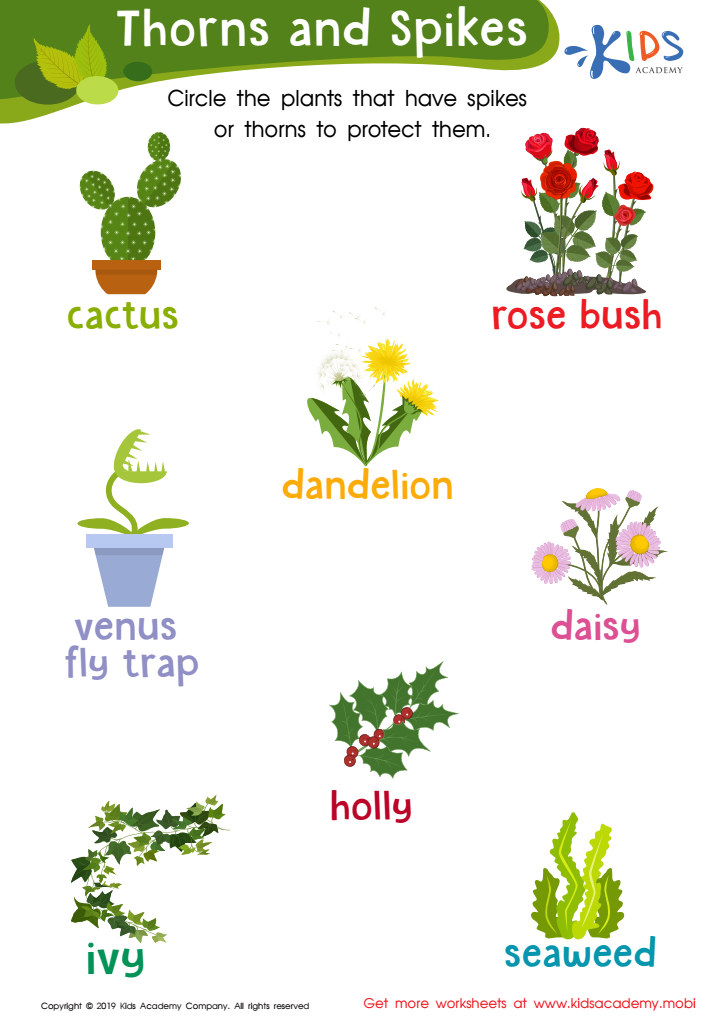
Thorns and Spikes Worksheet
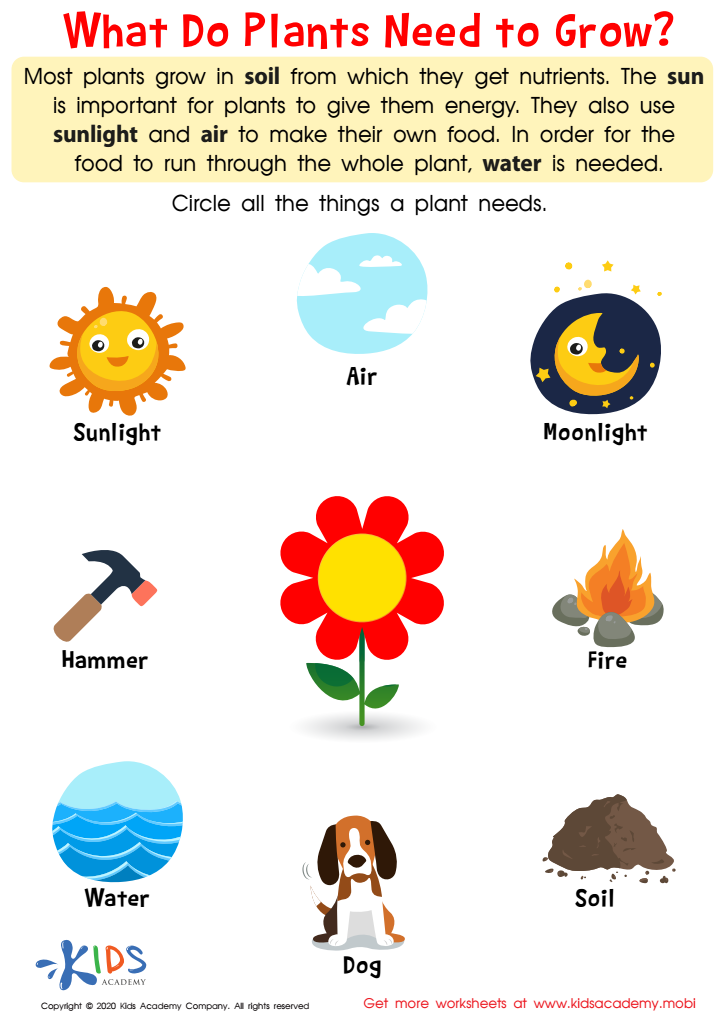
What Do Plants Need to Grow Worksheet
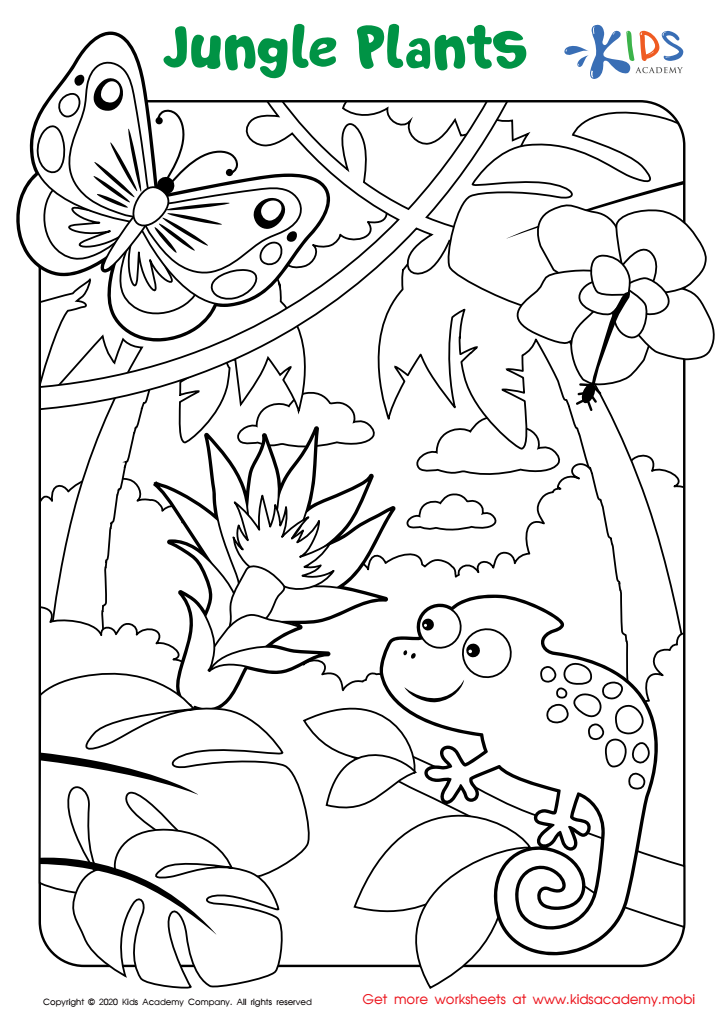
Jungle Plants Worksheet
 Assign to My Students








Plant identification is an enriching activity for young children, crucial for various reasons. Doing this for children aged 3-7 lays a firm foundation for curiosity and understanding of the natural world. Firstly, recognizing different plants fosters a sense of environmental awareness and stewardship, critical in an age of pressing environmental challenges. When children can identify local flora, they develop a deeper connection to their surroundings, nurturing respect for nature.
Additionally, plant identification promotes cognitive development. Memorizing plant features like leaf shape, color, and texture engages children in observation and analytical thinking skills. This activity also enhances vocabulary as students learn names and descriptive terms, supporting language development and literacy.
Moreover, early exposure to plant life can have health benefits. Spending time outdoors has been linked to increased physical activity and reduced stress levels. When coupled with learning, it encourages exploratory and hands-on experiences, which can boost overall well-being and foster a sense of adventure and curiosity.
Socially, plant identification can be a group activity, improving collaborative skills and encouraging sharing of knowledge and enthusiasm among peers. Parents and teachers, therefore, play pivotal roles in guiding young learners to appreciate and understand the intricacies of plant life, fostering a holistic and enduring appreciation for the biosphere.








