Recognizing equal parts Worksheets for Ages 3-7
3 filtered results
-
From - To
Welcome to our "Recognizing Equal Parts Worksheets" page designed for young learners aged 3-7! These engaging and colorful worksheets help children understand the concept of equal parts through a variety of fun activities. By identifying halves, quarters, and more, children will develop foundational math skills while improving their understanding of fractions in a hands-on way. Perfect for home or classroom use, our worksheets are designed to make learning enjoyable, fostering a love for math. Download these resources today and watch your little ones gain confidence in recognizing equal parts as they embark on their educational journey!
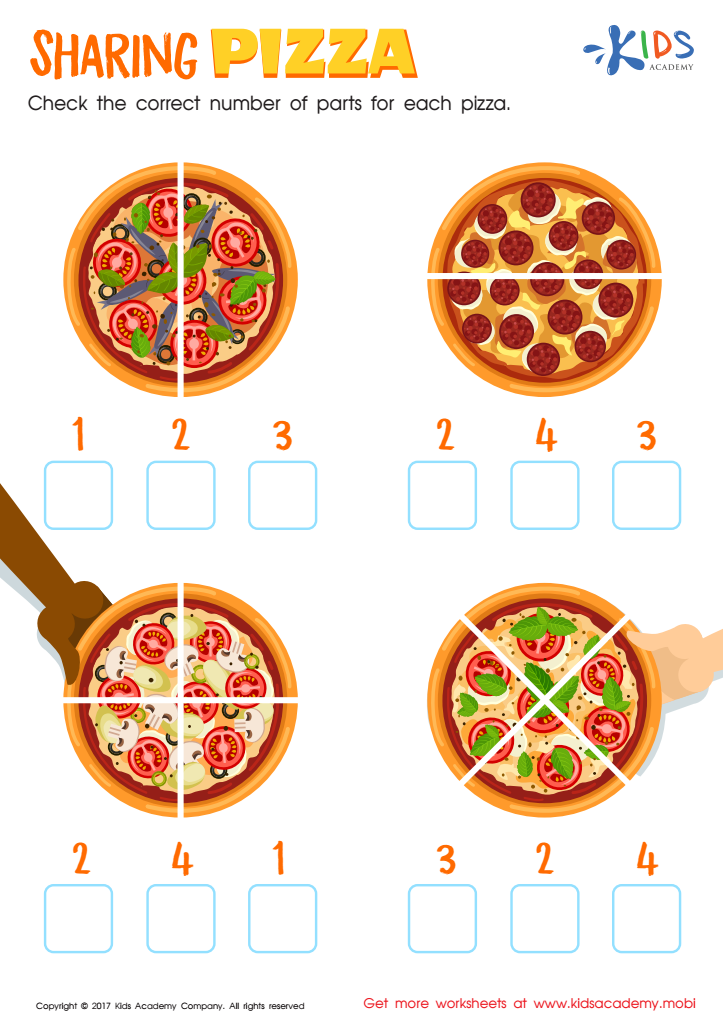
Sharing Pizza Worksheet
 Assign to My Students
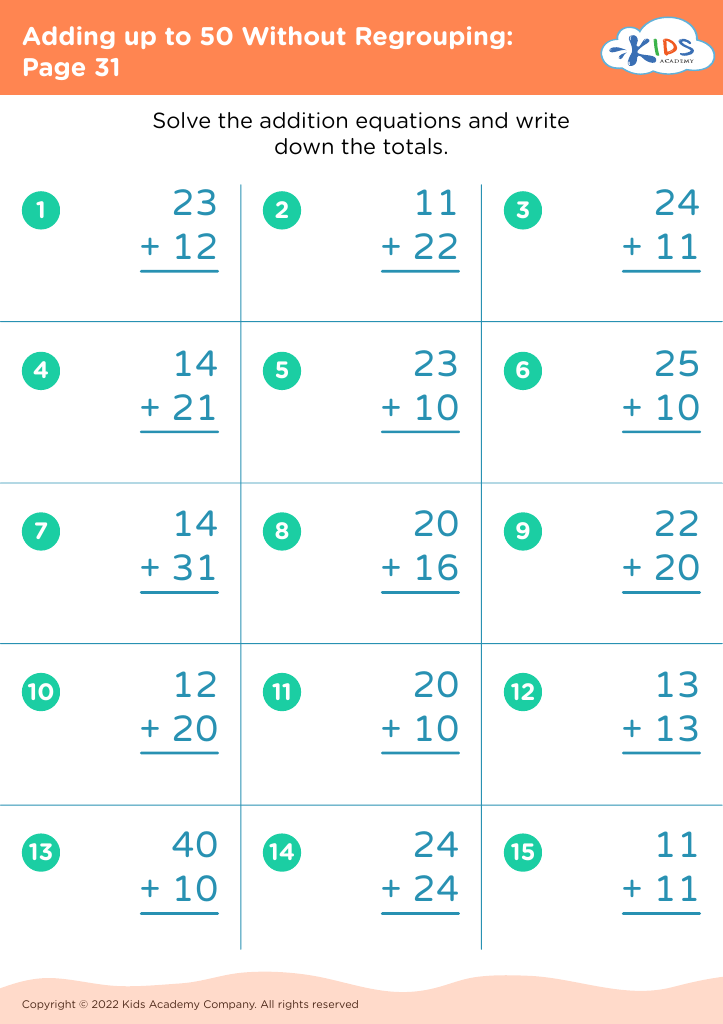
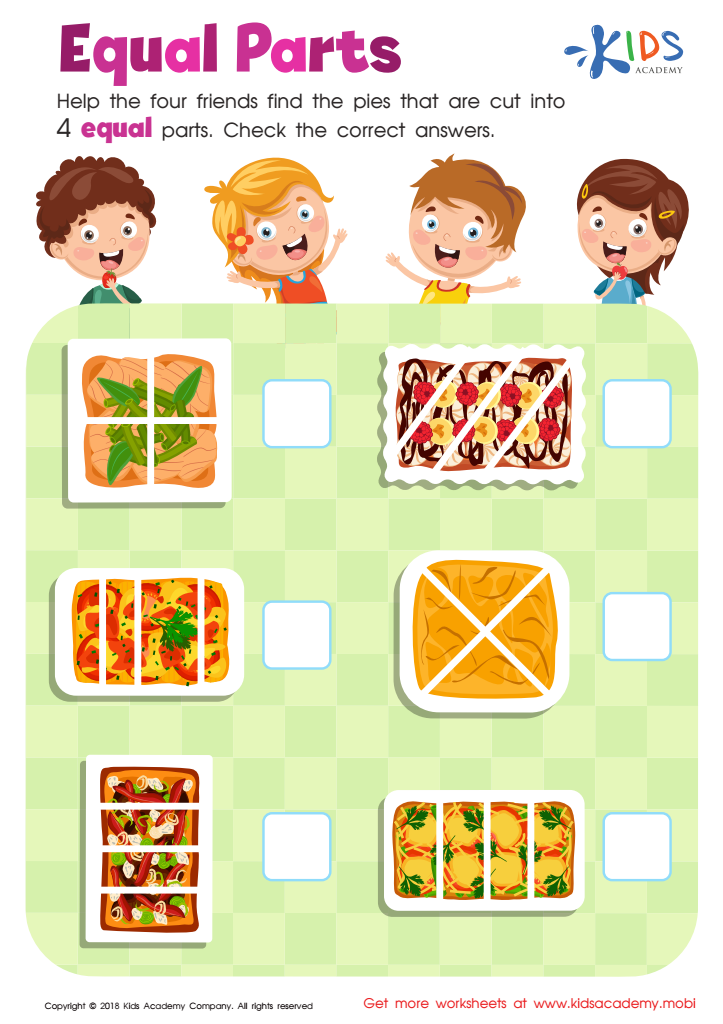
Equal Parts: Food Worksheet


.jpg)
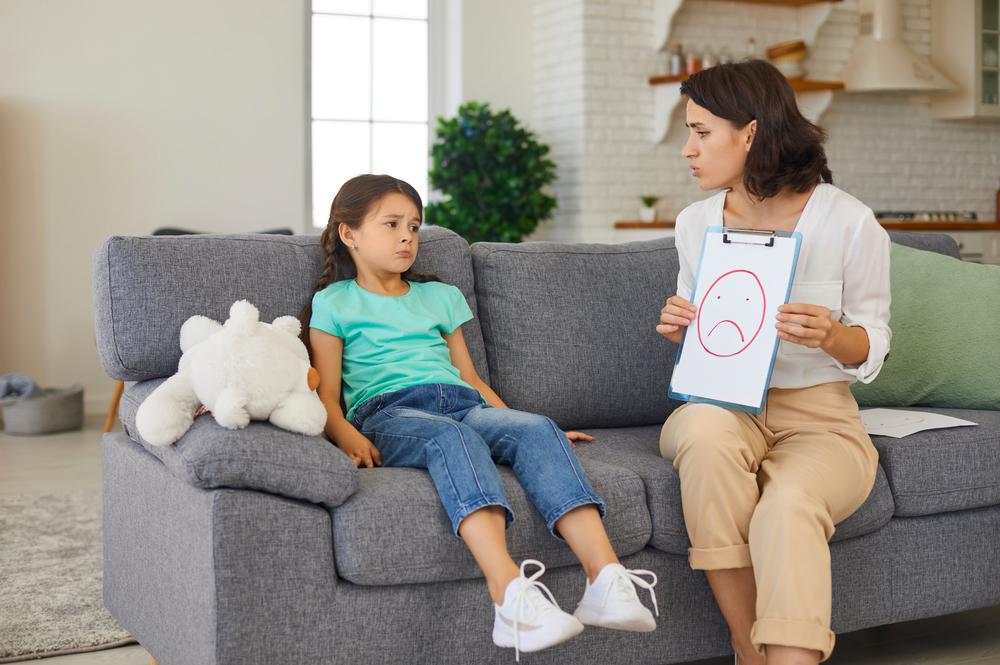


Recognizing equal parts is a foundational concept in early childhood education that plays a crucial role in a child's understanding of mathematics and the world around them. For parents and teachers of children ages 3-7, acknowledging the significance of equal parts fosters critical thinking and problem-solving skills essential for lifelong learning.
Understanding equal parts helps children grasp the concept of fractions, leading to greater mathematical fluency as they progress in their education. It ignites curiosity and encourages exploration as children engage in activities involving sharing and dividing objects. For example, when children divide a pizza or share candies, they learn about fairness and equality, which builds social skills and promotes collaboration.
Moreover, recognizing equal parts is interwoven with various subjects beyond math, including art, science, and cultural awareness. It can inspire concepts of balance, symmetry, and proportions, enriching a child's overall learning experience. By emphasizing this concept, parents and teachers empower children to develop a deeper comprehension of fairness and share valuable life lessons, preparing them for more complex mathematical ideas in the future. Encouraging these skills at an early age sets a positive approach toward learning in a supportive environment.








