Recognizing equivalent fractions Worksheets for Ages 3-7
5 filtered results
-
From - To
Discover the exciting world of fractions with our engaging worksheets designed for kids aged 3 to 7. Our "Recognizing Equivalent Fractions" worksheets use fun, colorful activities to help young learners identify and understand equivalent fractions. These printables are perfect for developing early math skills and building a strong foundation in fractions. From matching games to visual diagrams, your child will enjoy learning through our interactive approach. Ideal for parents, teachers, and homeschooling, these resources make teaching equivalent fractions easy and enjoyable for everyone. Unlock your child's math potential today with our expertly crafted worksheets!
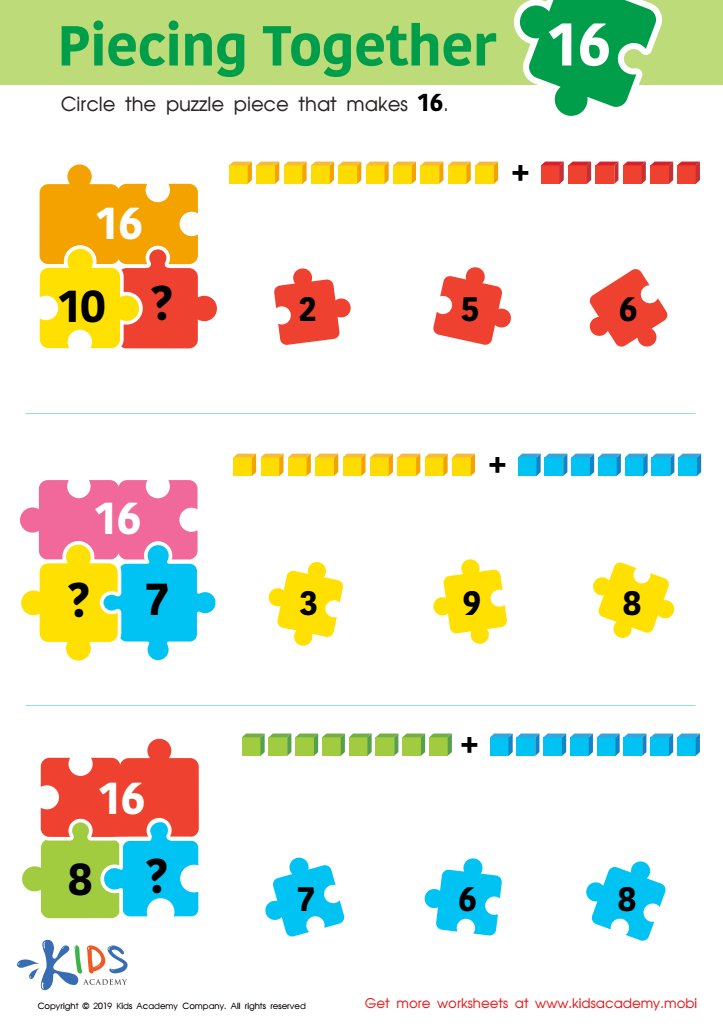
Piecing Together 16 Worksheet
 Assign to My Students
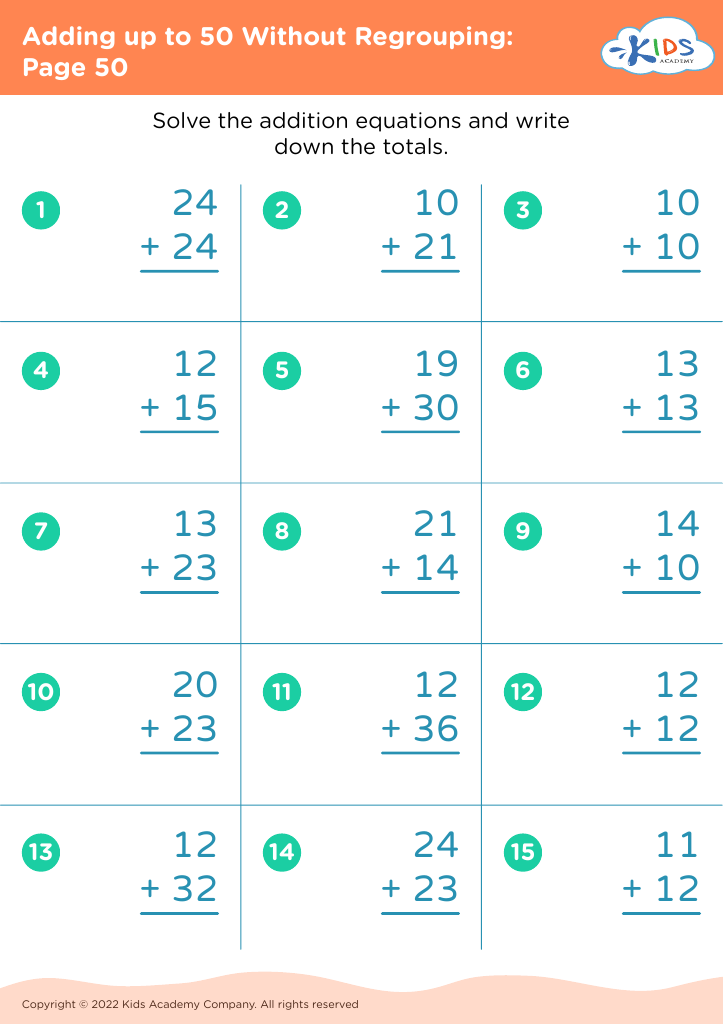



.jpg)


Recognizing equivalent fractions is an essential foundational skill for children aged 3-7, setting the groundwork for advanced mathematical concepts. At this critical developmental stage, children are forming their basic understanding of numbers and how they relate to one another.
Equivalent fractions, which are different fractions that represent the same value, help children grasp the idea that a single whole can be divided into many parts, and that there are multiple ways to describe equal quantities. By identifying equivalents, kids learn flexibility in thinking and enhance their numerical sense, skills that are crucial not just for math, but for problem-solving and logical reasoning in everyday life.
Engaging with fractions early on promotes visual spatial skills and enables children to make connections between different representations of a problem. These abilities can make complex mathematical topics more accessible in the future, such as algebra, geometry, and even calculus.
For parents and teachers, focusing on this area means supporting children in developing confidence with numbers. It cultivates a positive relationship with math, setting up a strong base that will benefit the child in their educational journey. Thus, recognizing equivalent fractions is more than just a math lesson—it’s an investment in a child’s cognitive development and a step towards lifelong learning success.








