
Solving word problems Worksheets for Ages 3-7
5 filtered results
Difficulty Level
Grade
Age
-
From - To
Subject
Activity
Standards
Discover our engaging Solving Word Problems Worksheets designed specifically for children aged 3-7! These interactive resources help young learners develop critical thinking and problem-solving skills in a fun and relatable way. Each worksheet presents age-appropriate scenarios that encourage kids to apply math concepts in real-life situations, fostering both comprehension and confidence. Ideal for home or classroom use, our worksheets cater to varying skill levels, ensuring that every child can enhance their abilities at their own pace. Empower your little ones with the tools they need to excel in math while honing their logical reasoning skills. Start their learning adventure today!
Favorites
With answer key
Interactive
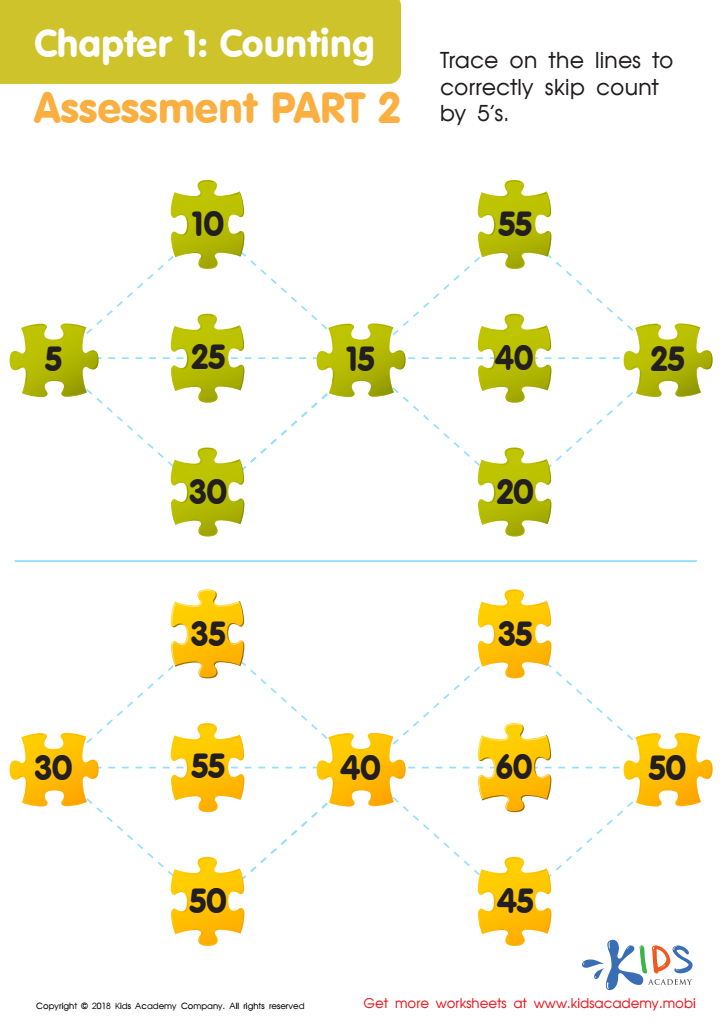
Counting: Assessment 2 Worksheet
By now, your child should be able to count up to the hundreds. If they're still learning the tens, that's okay - as long as they're going at their own pace. This worksheet will be easy if they can count to ten. Ask them to trace the lines and skip count by 5's.
 Assign to My Students
Counting: Assessment 2 Worksheet
Worksheet
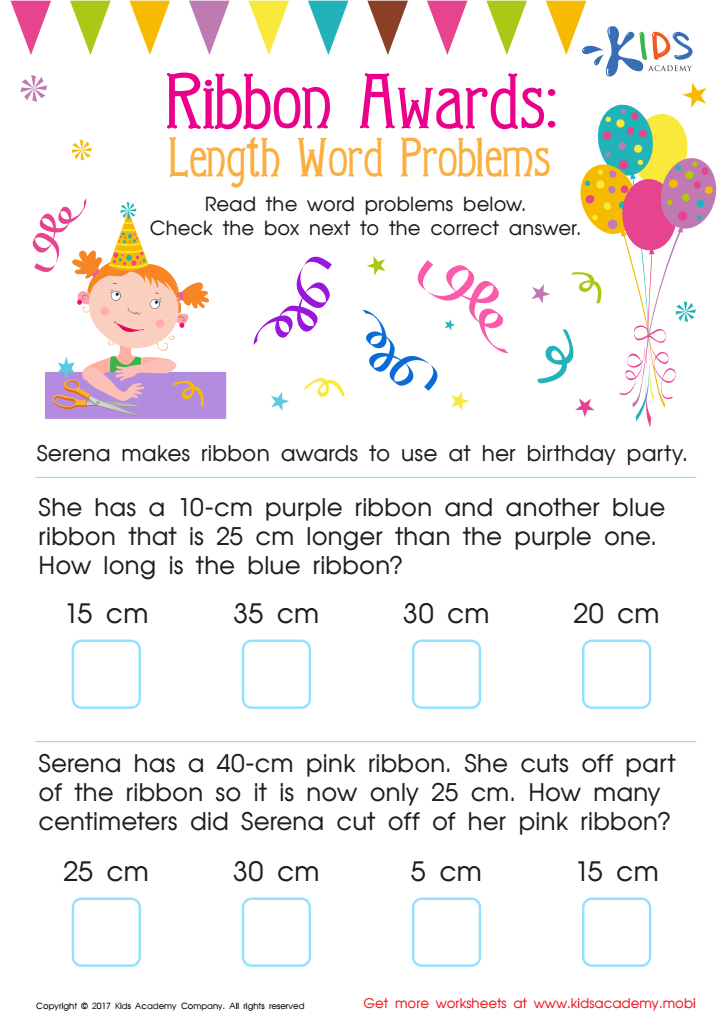
Length Word Problems Worksheet
Word problems help grade 2 students practice measurement using everyday scenarios. This worksheet provides practice in working with centimeters and inches, like measuring ribbon. It's a great way to learn and apply math skills.
Length Word Problems Worksheet
Worksheet
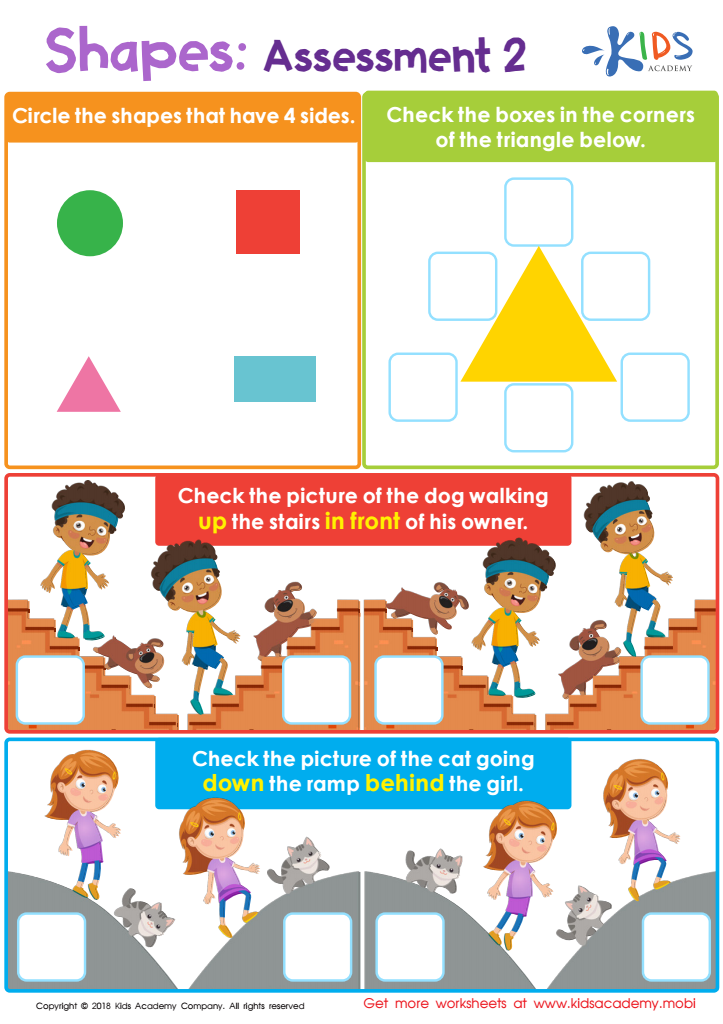
Shapes: Assessment 2 Worksheet
This geometry worksheet assesses a student's knowledge of shapes and positional words. They must identify shapes with 4 sides and corners on a triangle. The worksheet also tests understanding of words like "up", "front", "down" and "behind". Easily determine what your student knows about these concepts with this downloadable worksheet!
Shapes: Assessment 2 Worksheet
Worksheet
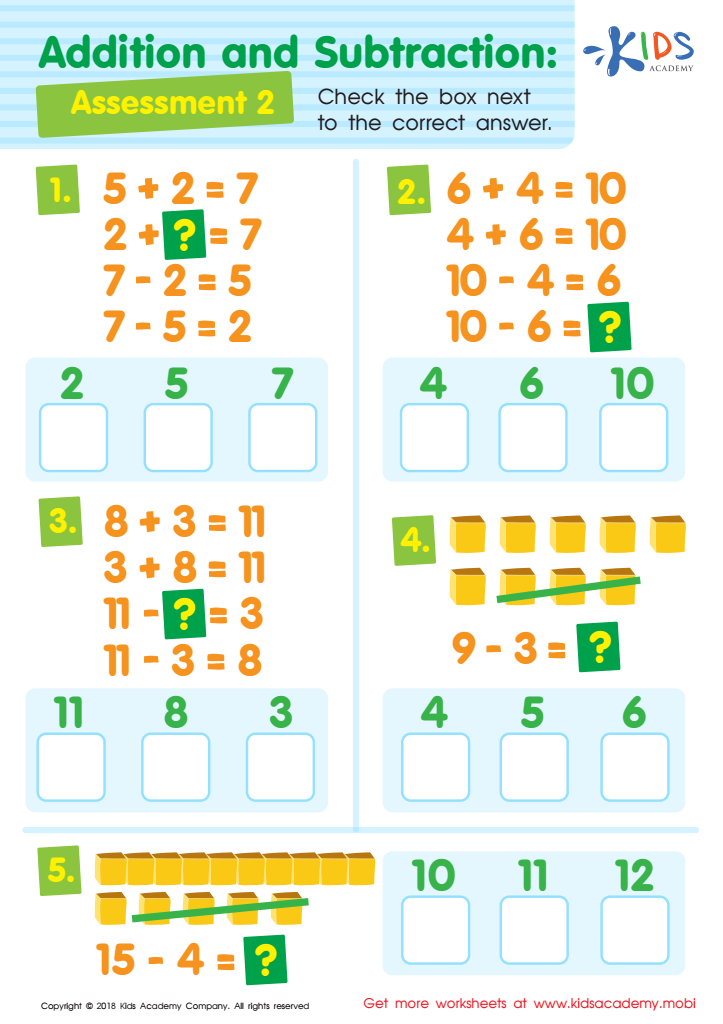
Addition and Subtraction Assessment 2 Worksheet
As your child grows, math problems become harder. To keep their brains active and provide extra help if needed, use this math worksheet. It'll help them become more familiar with equations. Go through each one carefully with your child and have them check the box next to the right answer.
Addition and Subtraction Assessment 2 Worksheet
Worksheet
Join Kids Academy for Free
Who is primarily going to use this learning content?





.jpg)

Solving word problems is a critical skill for children aged 3-7, as it lays the foundation for their mathematical understanding and problem-solving abilities.
Firstly, engaging with word problems encourages children to think critically and analytically. By interpreting sentences and translating them into mathematical equations, they develop comprehension skills that extend beyond math. This cross-disciplinary benefit aids literacy as they learn to dissect and understand the context of a story.
Furthermore, word problems cultivate essential life skills, such as reasoning and logic. They teach children to identify solutions, make connections, and develop strategies – skills they will rely on throughout their educational journey.
For parents and teachers, fostering problem-solving abilities is key to preparing students for future academics. Encouraging children to verbalize their thought processes enhances their communication skills and confidence.
Additionally, involving children in discussions about everyday situations where math applies can make learning relevant and fun, strengthening their interest in the subject. By caring about and prioritizing time spent on word problems, adults can empower young learners to become resilient problem solvers, paving the way for success in math and beyond, setting the stage for lifelong learning.








