Sound-letter correlation Worksheets for Ages 3-7
4 filtered results
-
From - To
Unlock the power of reading with our Sound-Letter Correlation Worksheets designed for ages 3-7! Our expertly crafted worksheets enable young children to link sounds with their corresponding letters, fostering essential reading and phonics skills. These engaging activities make learning fun, incorporate colorful visuals, and provide guided exercises to reinforce sound-letter relationships. Perfect for preschool to early elementary students, our worksheets support individualized learning paces, ensure skill mastery, and lay a solid literacy foundation. Parents and educators will find these resources invaluable for developing early reading proficiency and confidence in young learners. Download today and start the journey to successful reading!
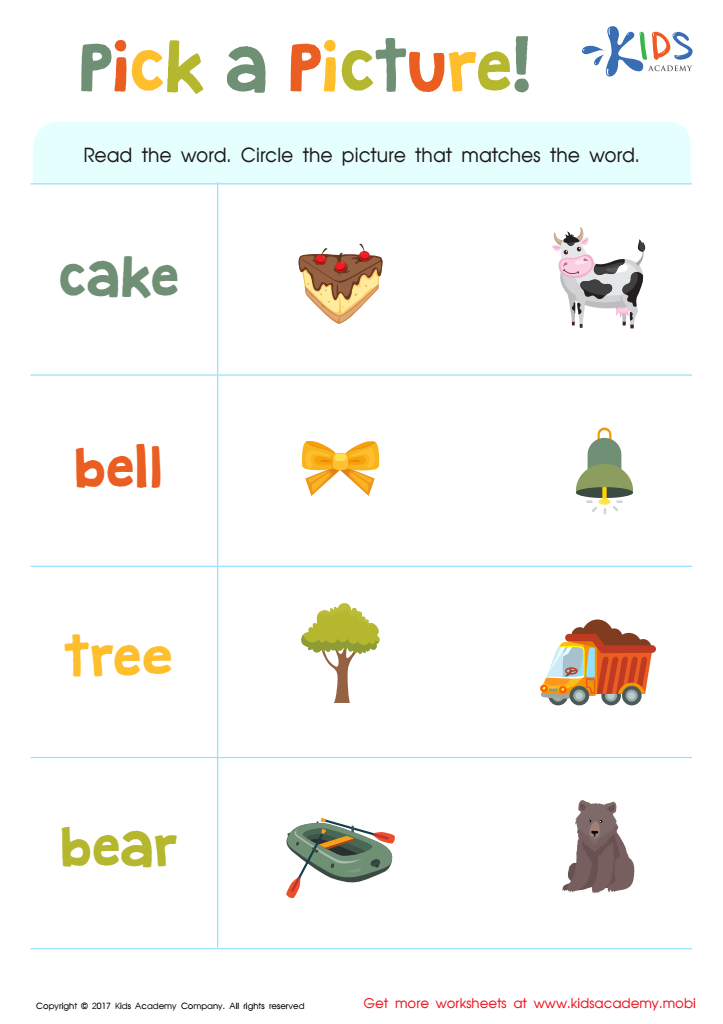
Pick a Picture Word Recognition Worksheet
 Assign to My Students
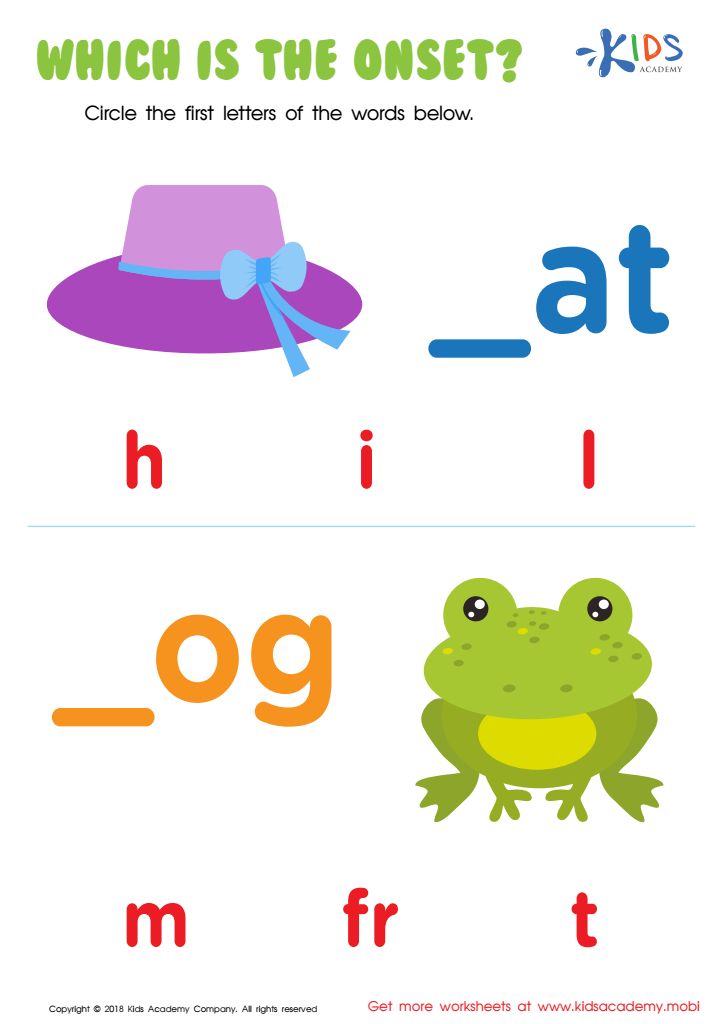
Which Is the Onset? Worksheet
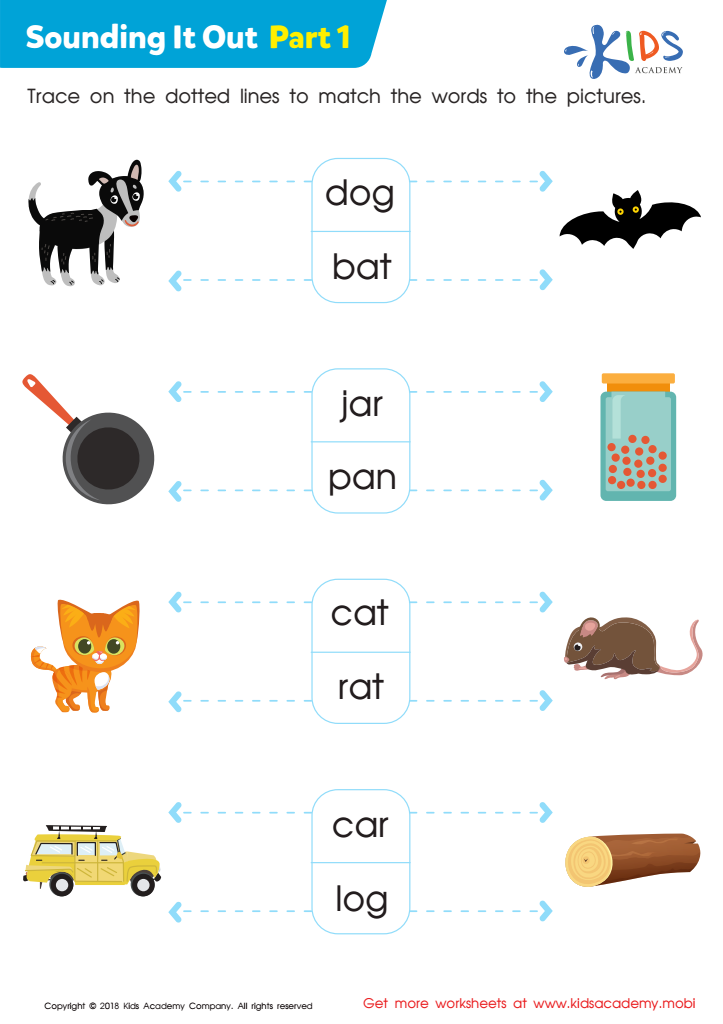
Sounding it Out: Part 1 Worksheet
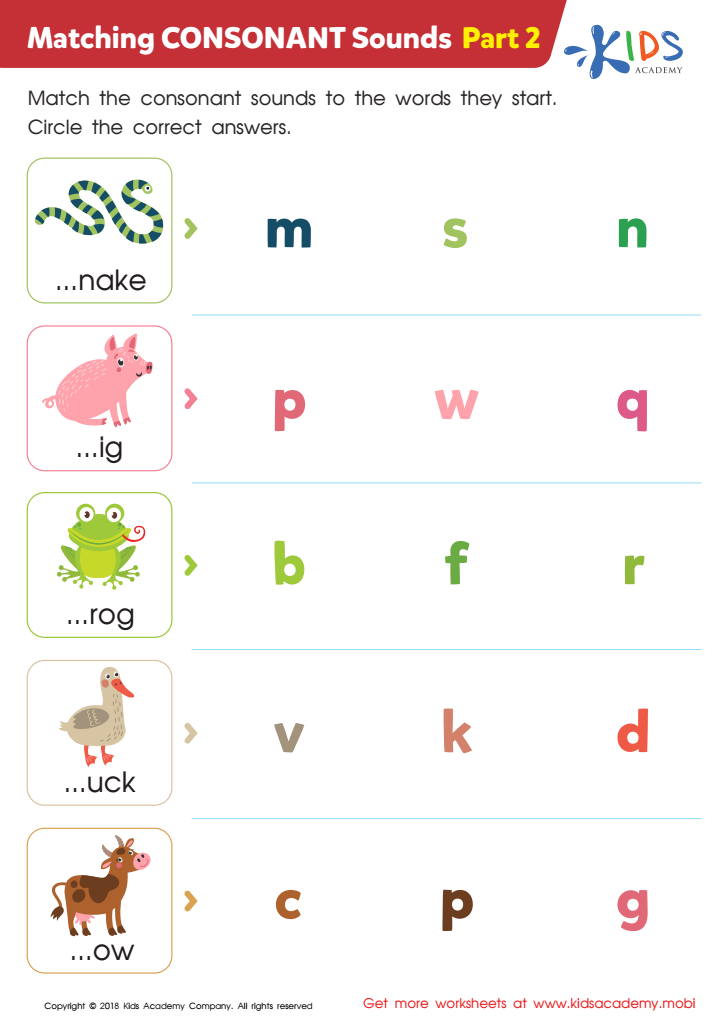
Matching Consonant Sounds: Part 2 Worksheet








Sound-letter correlation, also known as phonics, is crucial for young children aged 3-7 because it forms the foundation for reading and writing skills. Understanding that letters represent specific sounds (phonemes) helps children decode words during reading and spell words during writing. This skill is fundamental in promoting literacy, which is essential for academic success.
When children grasp sound-letter relationships, they can sound out unfamiliar words, enhancing their reading fluency and comprehension. It allows them to read with greater accuracy and confidence, fostering a love for reading. Early mastery of phonics also influences vocabulary development, as children can decipher and understand new words.
Moreover, strong sound-letter correlation skills benefit writing by assisting in the ability to spell words correctly. This reduces frustration and builds self-efficacy in writing endeavors.
Phonics instruction supports cognitive development by engaging skills such as memory, attention, and auditory processing. For children facing learning difficulties, early phonics intervention can be particularly beneficial.
Ultimately, parents and teachers prioritizing phonics during early childhood ensure children have the necessary tools to become proficient readers and writers. This paves the way for future academic achievements and life-long learning, underscoring the importance of sound-letter correlation at this formative age.








