Spatial Orientation Worksheets for Ages 3-7
6 filtered results
-
From - To
Discover our engaging Spatial Orientation Worksheets designed specifically for children ages 3-7! These resources help young learners develop essential skills in understanding spatial relationships and navigational concepts through fun and interactive activities. Your child will explore directions, position words, and object placement, fostering critical thinking and problem-solving abilities. Our worksheets cater to various learning styles, offering opportunities for both independent practice and guided learning. Perfect for home or classroom use, these worksheets encourage exploration and creativity while building a strong foundation in spatial awareness. Start your child's journey towards mastering spatial orientation today with our vibrant and stimulating worksheets!
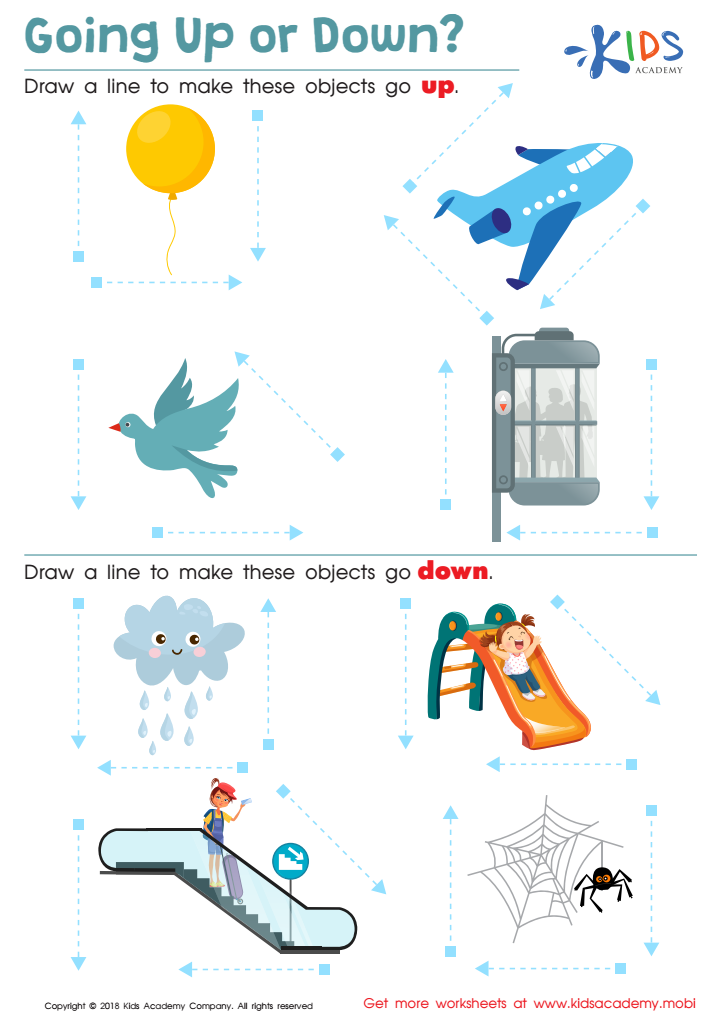
Going up or Down? Worksheet
 Assign to My Students
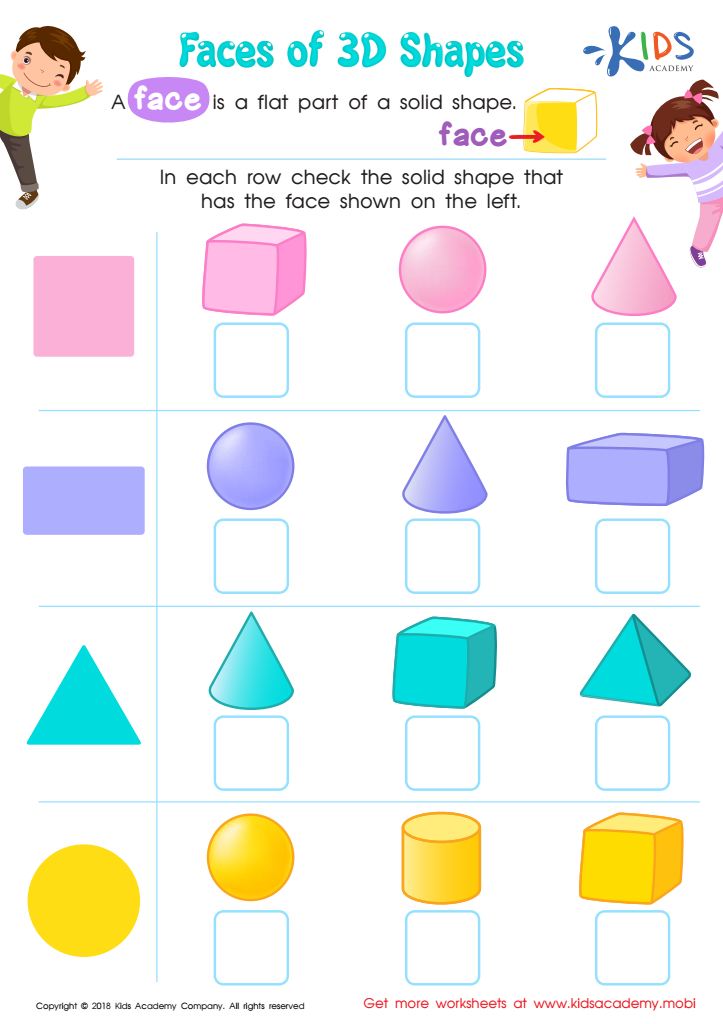
Faces of 3D Shapes Worksheet
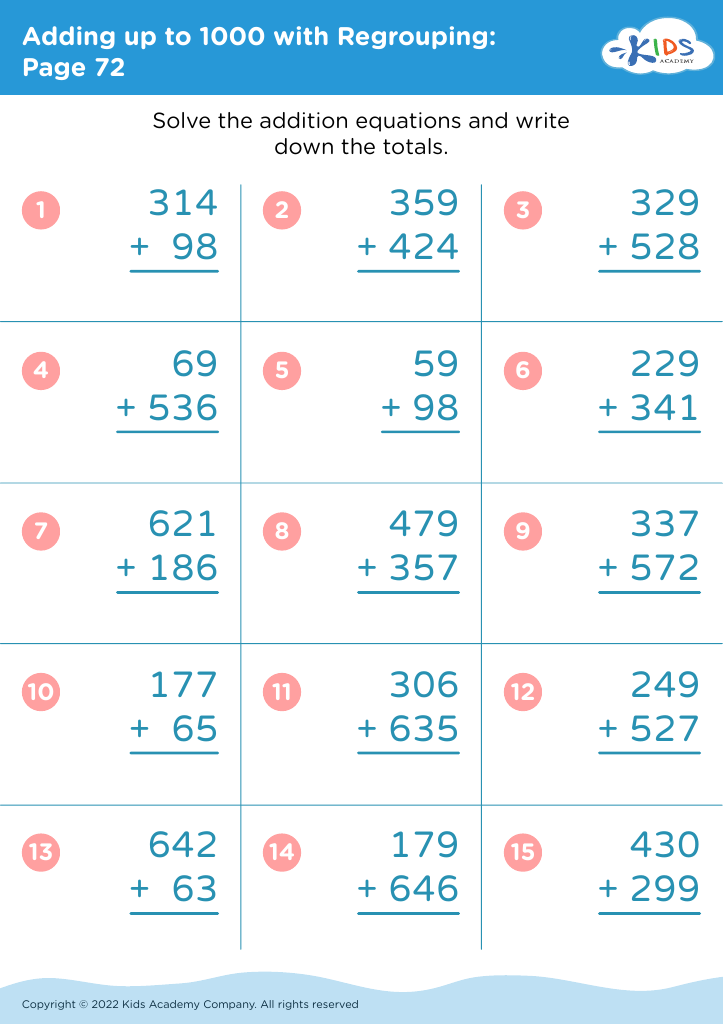
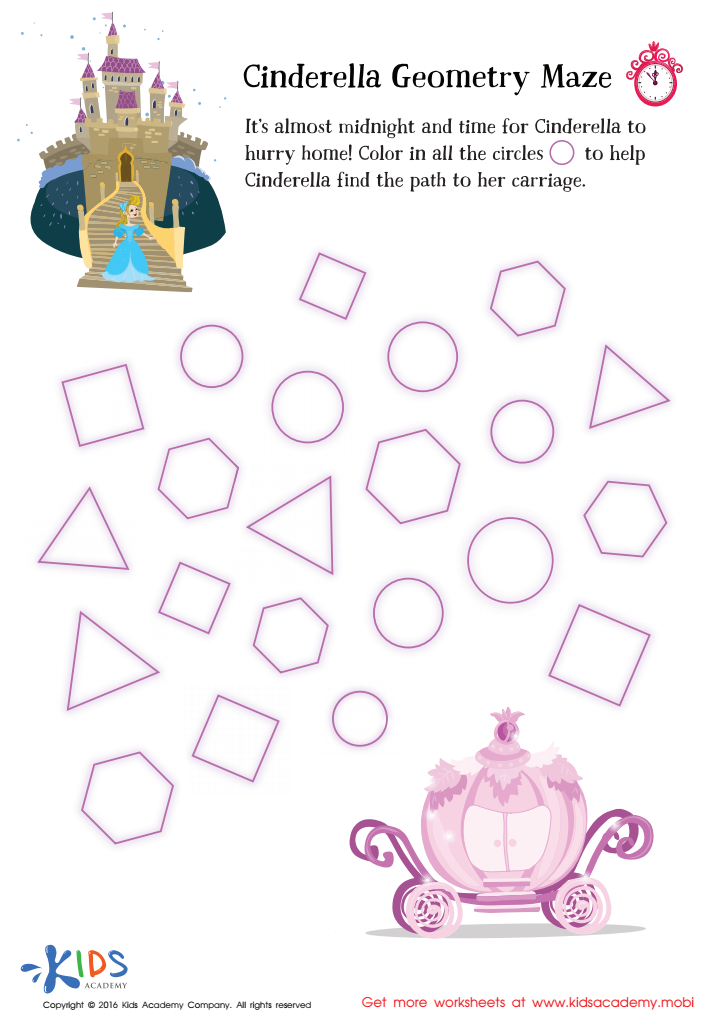
Cinderella Geometry Maze Worksheet
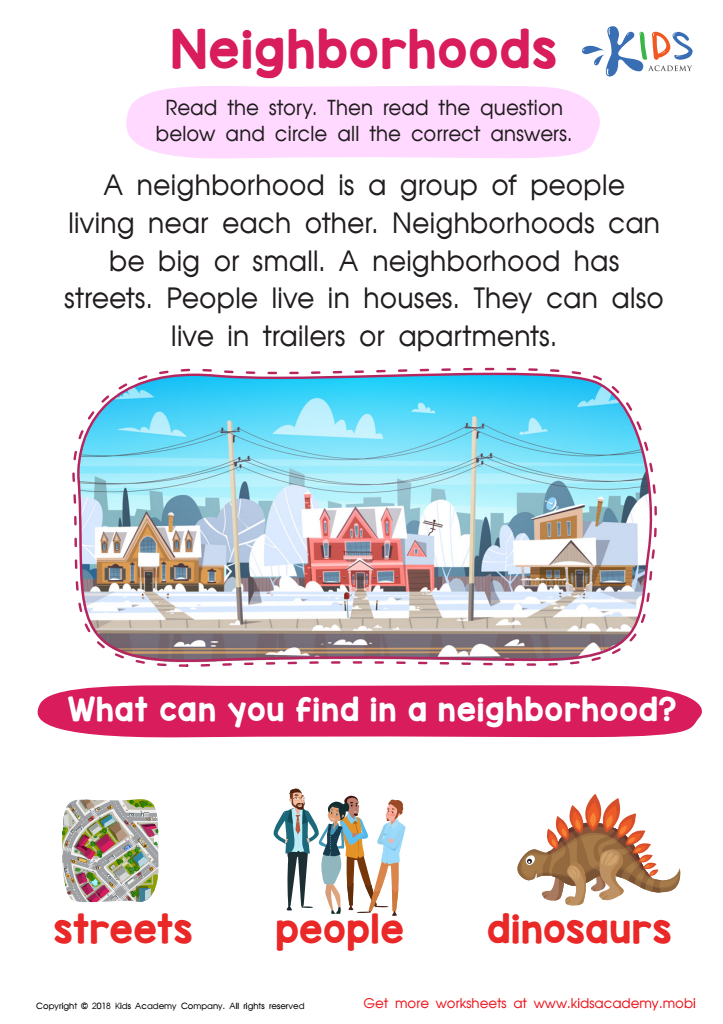
Neighborhoods Worksheet
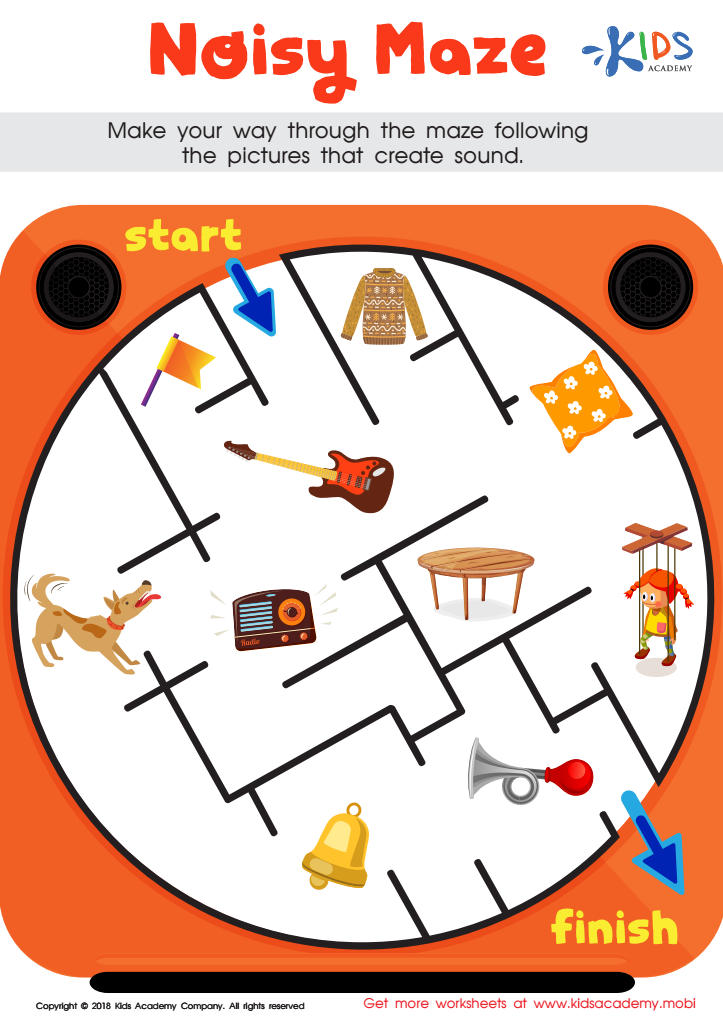
Noisy Maze Worksheet








Spatial orientation is a crucial developmental skill for children aged 3-7, as it significantly impacts their overall learning, social interactions, and daily activities. During these formative years, children's brains are rapidly developing and they begin to understand their position in relation to space and objects around them. This skill influences their ability to navigate their environment, which is essential for tasks like reading maps, solving puzzles, or even following directions.
Parents and teachers should care about spatial orientation because it lays the foundation for more complex skills such as math and science concepts, including geometry and algebra. Engaging children in activities like block building, outdoor play, and simple navigation games fosters these skills while keeping learning fun and interactive.
Moreover, strong spatial orientation can enhance a child's confidence and independence. Children who can effectively orient themselves in space are better equipped to explore their surroundings, engage with peers, and participate in group activities. Overall, by focusing on spatial orientation, parents and educators not only enrich children’s cognitive development but also empower them socially and emotionally, preparing them for future academic challenges and everyday problem-solving.








