Understanding biodiversity Worksheets for Ages 3-7
3 filtered results
-
From - To
Discover our engaging "Understanding Biodiversity Worksheets" designed specifically for ages 3-7! These printable resources help young learners explore the rich variety of life on Earth in a fun and interactive way. With captivating visuals and simple, age-appropriate activities, children will learn about plants, animals, ecosystems, and their importance to our planet. Our worksheets promote critical thinking and creativity while fostering a connection to nature. Perfect for home or classroom use, these activities align with early educational standards, making learning about biodiversity both enjoyable and informative. Equip your little explorers with the tools to appreciate the wonders of the natural world today!
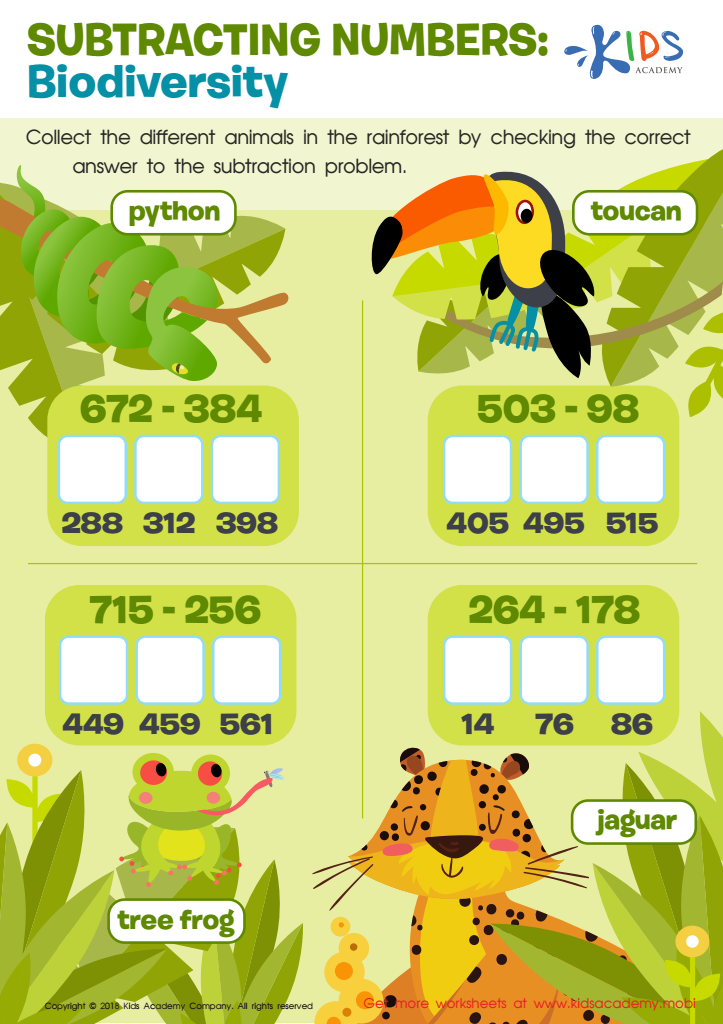
Subtracting Numbers: Biodiversity Worksheet
 Assign to My Students
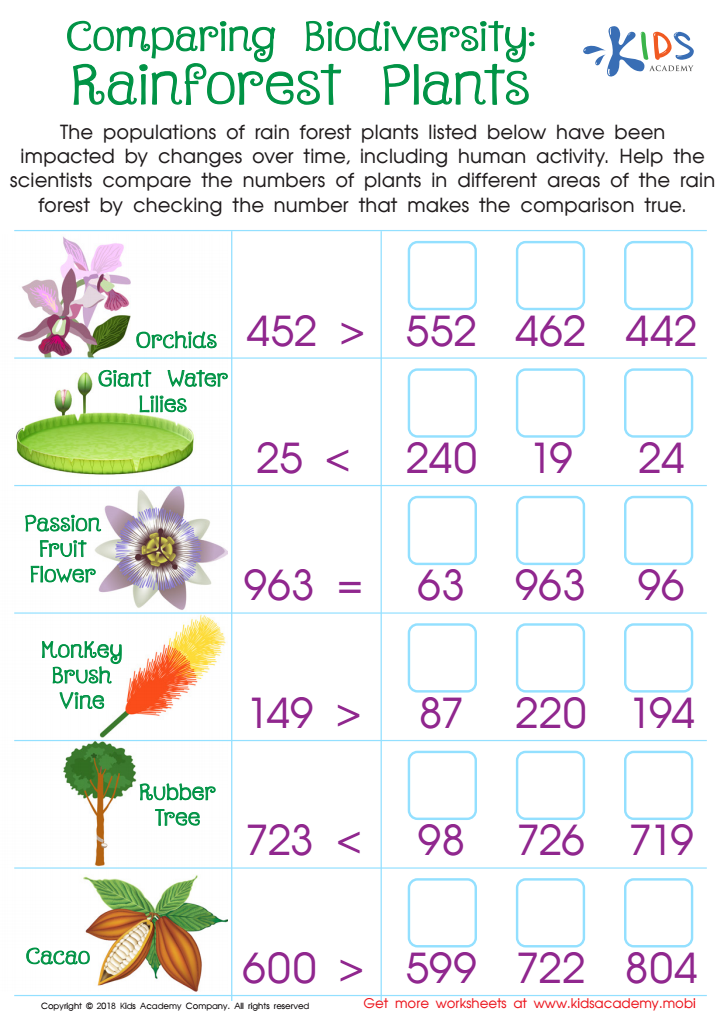
Comparing Biodiversity: Rainforest Plants Worksheet
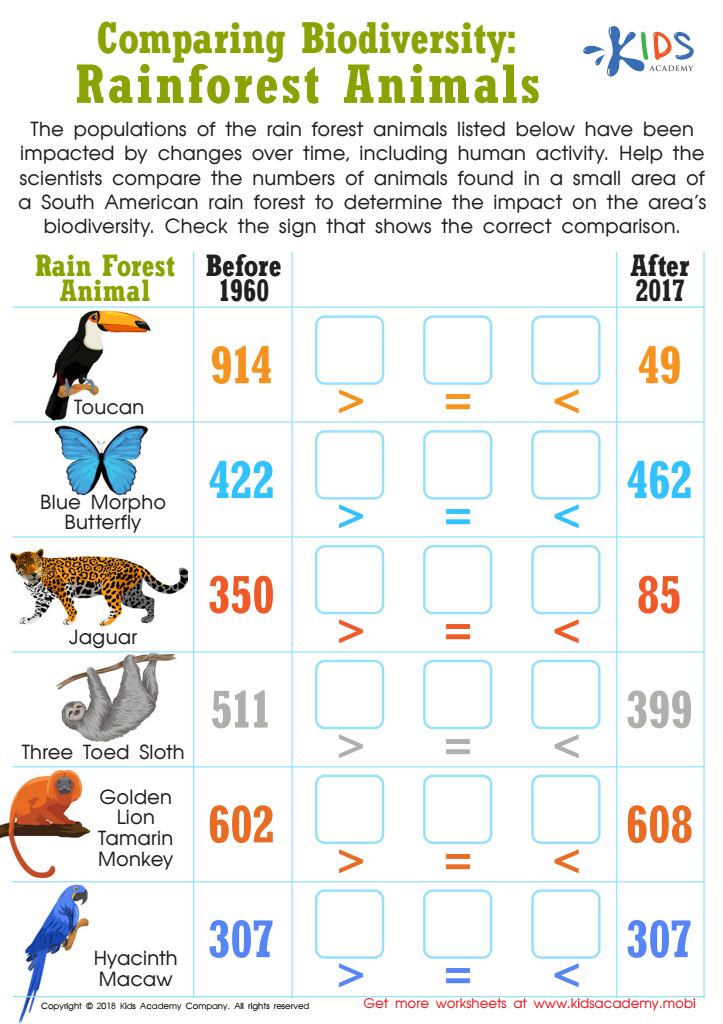
Comparing Biodiversity: Rainforest Animals Worksheet







Understanding biodiversity is crucial for children aged 3-7 as it lays the foundation for their connection to nature and fosters a sense of responsibility for the environment. At this early age, children are naturally curious and eager to explore the world around them. By teaching them about the variety of living organisms—from plants and animals to insects—educators and parents can nurture this curiosity into a lifelong appreciation for the planet.
Introducing concepts of biodiversity helps children comprehend the interdependence of life; every organism has a role in its ecosystem. This knowledge encourages empathy towards animals and plants, enhancing their social skills. Activities centered around exploring local biodiversity, such as nature walks or gardening, stimulate hands-on learning, which is vital in early years education.
Furthermore, understanding biodiversity fosters critical thinking and problem-solving skills. As children observe nature, they learn to make connections, ask questions, and promote sustainability. Ultimately, educating young children about biodiversity can instill a sense of stewardship, empowering them to become environmentally conscious citizens who value and protect the world’s diverse ecosystems for generations to come. By prioritizing this understanding, parents and teachers can effectively cultivate a more harmonious relationship between children and nature.








