Understanding chess rules Worksheets for Ages 3-7
7 filtered results
-
From - To
Introduce your little ones to the fascinating world of chess with our "Understanding Chess Rules Worksheets for Ages 3-7." Designed specifically for young learners, these engaging worksheets simplify chess rules and concepts, making it easy and fun for children to grasp the basics of this classic game. Through captivating illustrations and interactive activities, kids can explore pieces, movements, and essential strategies while enhancing their critical thinking and problem-solving skills. Ideal for parents and educators, these resources foster a love for chess from an early age. Download the worksheets today and inspire your child’s journey into strategic thinking and concentration!
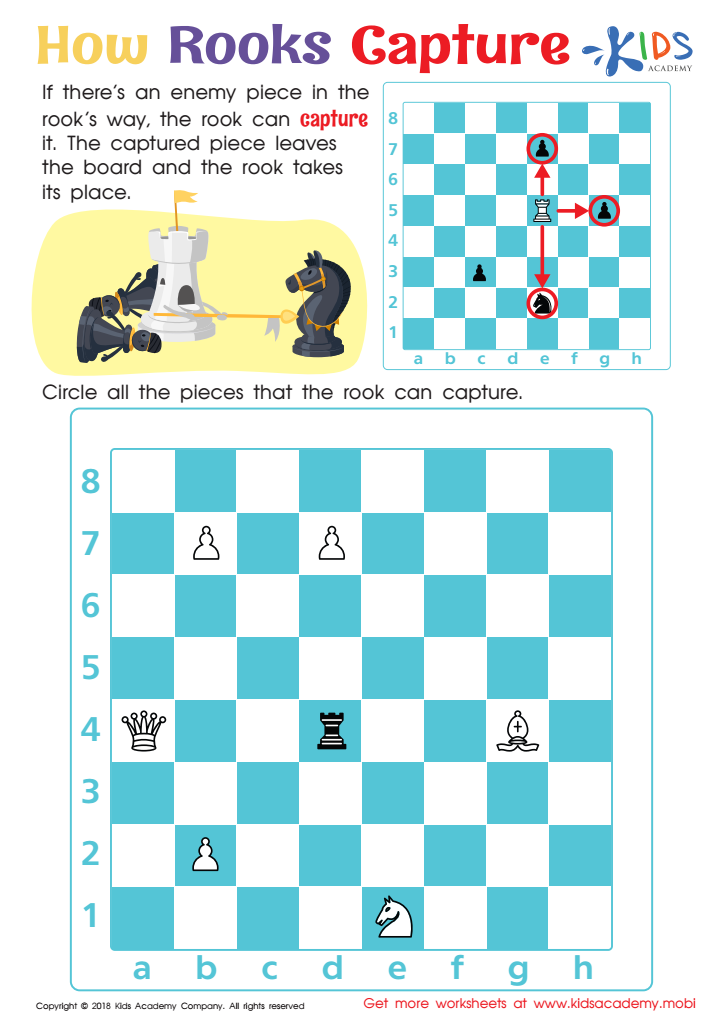
How Rooks Capture Worksheet
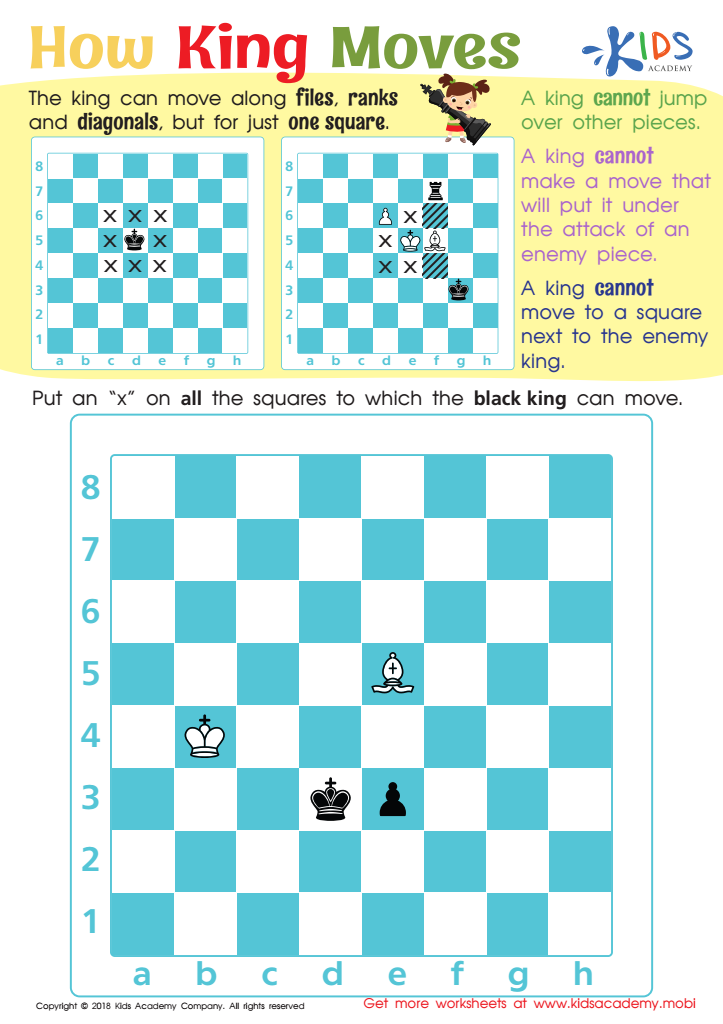
How King Moves Worksheet
 Assign to My Students
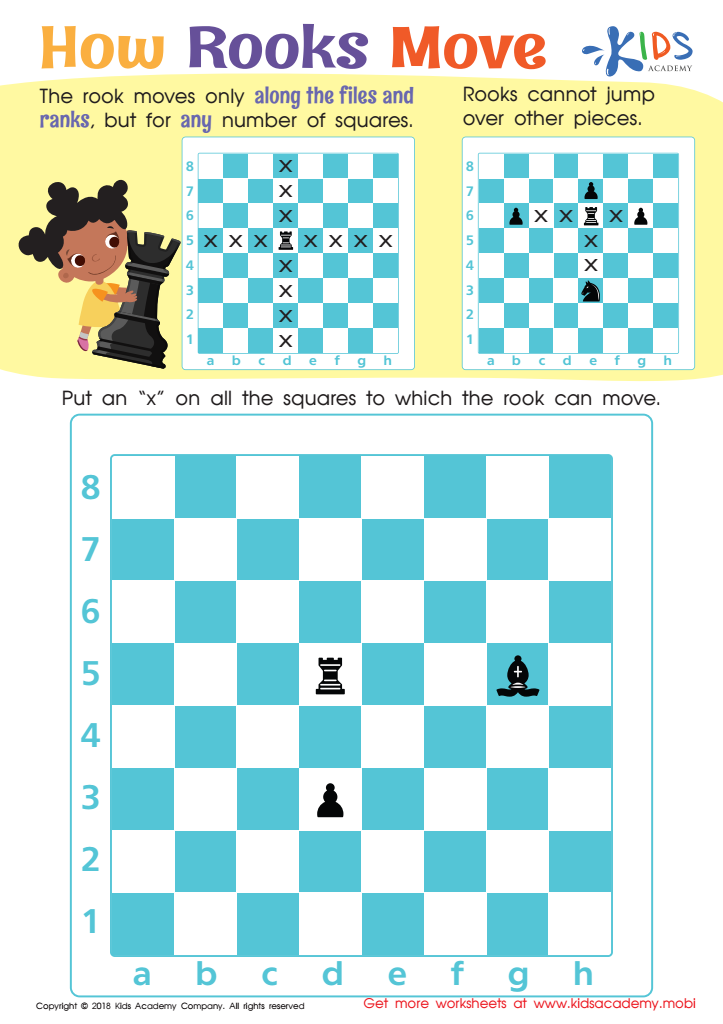
How Rooks Move Worksheet
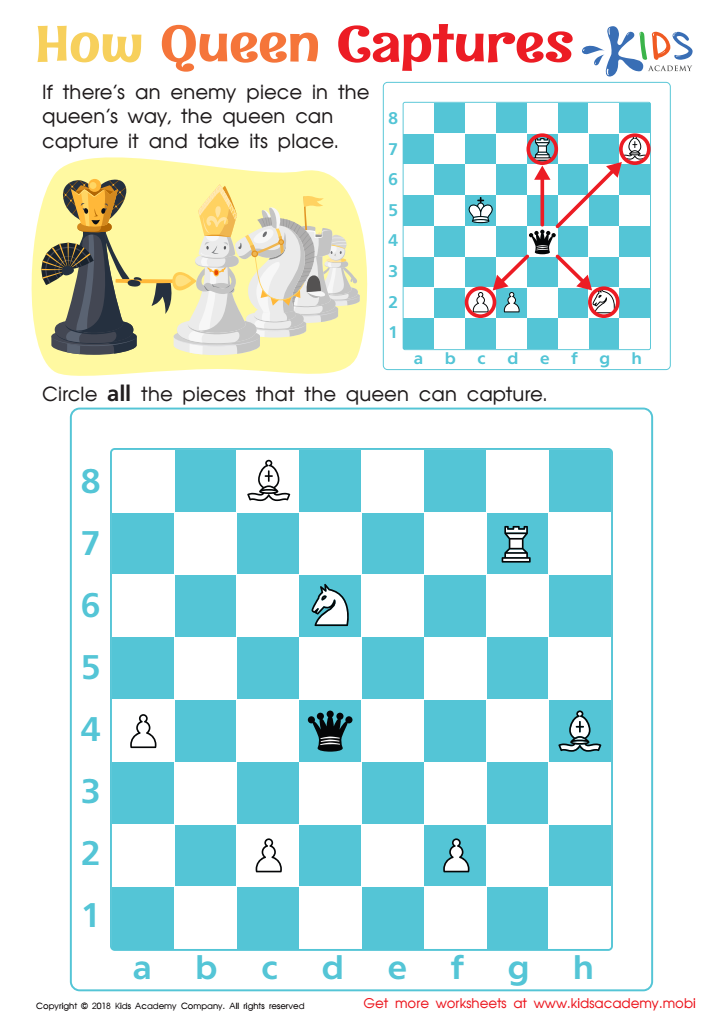
How Queen Captures Worksheet
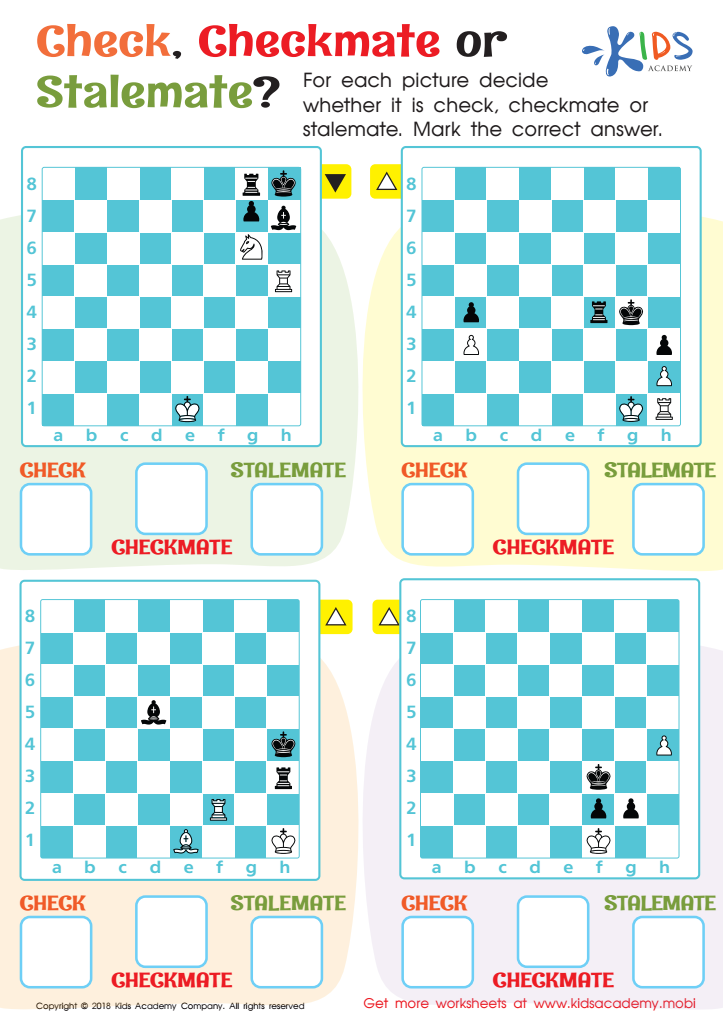
Check. Checkmate or Stalemate? Worksheet
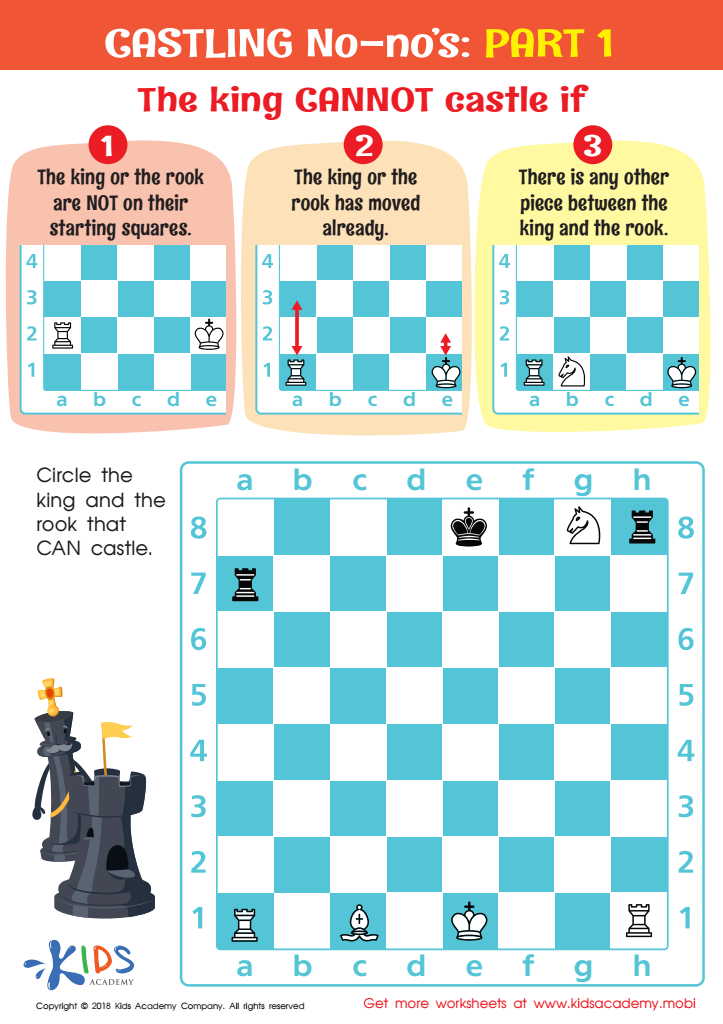
Castling No–no's: Part 1 Worksheet
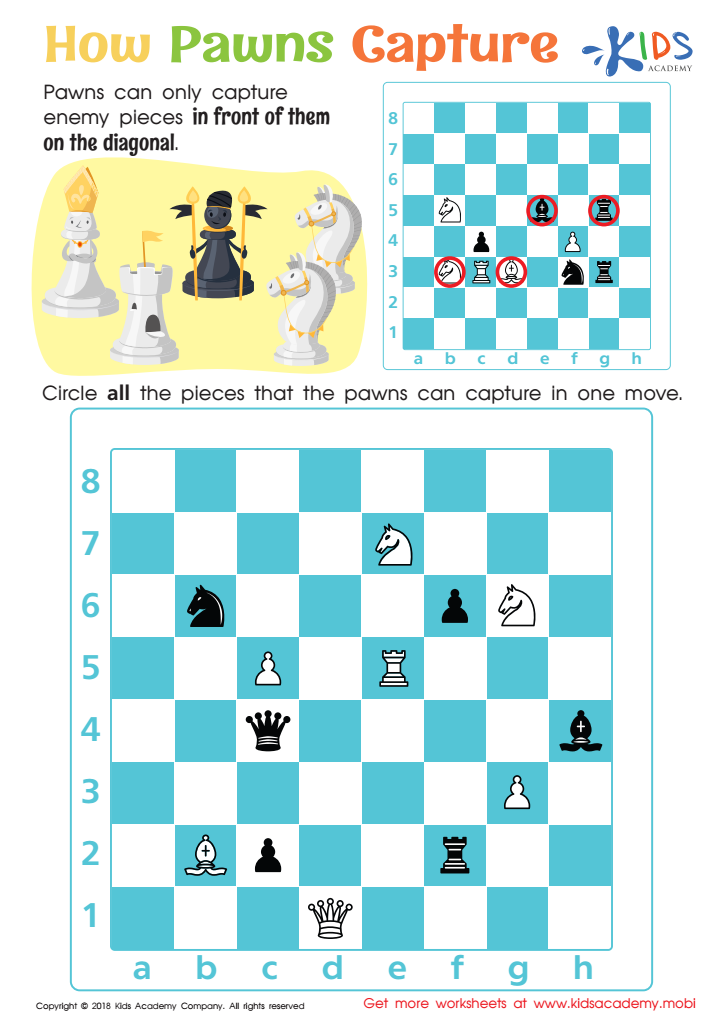
How Pawns Capture Worksheet







Understanding chess rules for ages 3-7 is crucial for both parents and teachers because it fosters essential cognitive and social skills in children. Learning chess at an early age helps develop critical thinking, problem-solving abilities, and strategic planning. As children engage with the game, they enhance their concentration and memory, learning to anticipate opponents' moves and develop their own strategies.
Moreover, chess introduces children to the concept of rules and fair play. By grasping the rules of chess, they learn to appreciate order, discipline, and the importance of following guidelines. This not only translates to better behavior in other structured activities but also teaches them respect for others and their decisions.
Socially, chess encourages communication and collaboration. Playing with peers opens opportunities for social interaction, building friendships and a sense of community. It provides families with a shared activity that can be both educational and enjoyable, strengthening bonds through shared learning experiences.
Ultimately, teaching young children about chess rules sets a strong foundation for lifelong skills that extend beyond the chessboard, preparing them for challenges in academics and personal relationships. For these reasons, parents and teachers should prioritize introducing chess to the youngest learners.








