Understanding communities Worksheets for Ages 3-7
6 filtered results
-
From - To
Discover our "Understanding Communities Worksheets for Ages 3-7," designed to spark curiosity and learning in early learners. These printable worksheets from Kids Academy help children explore neighborhoods, roles, and the dynamics of different communities. With engaging activities, kids can practice social skills, understand community helpers, and develop a sense of belonging and cooperation. Perfect for preschool to early elementary, our resources foster cognitive and emotional growth, preparing children for meaningful social interactions. Download today to encourage curiosity and creativity.
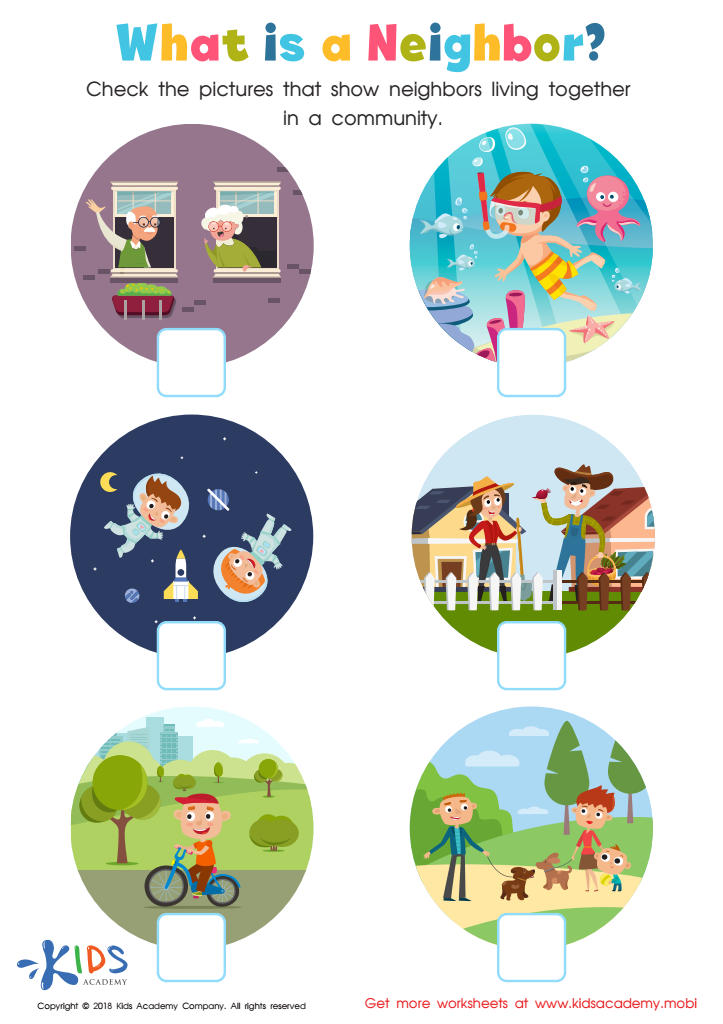
What is a neighbor Worksheet
 Assign to My Students
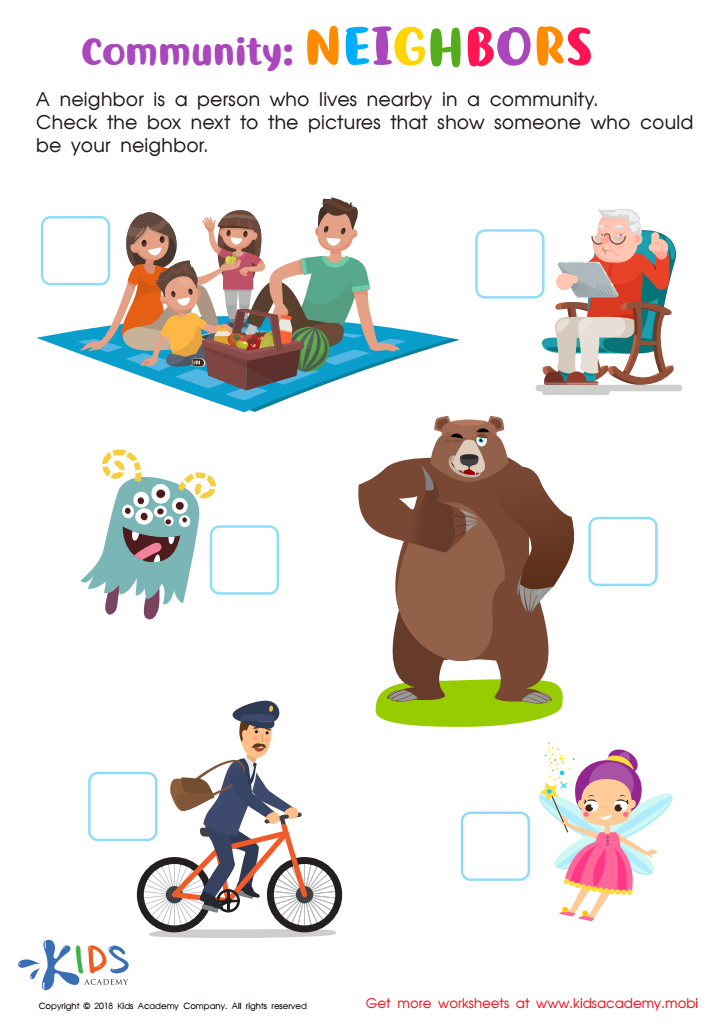
Community: Neighbors Worksheet
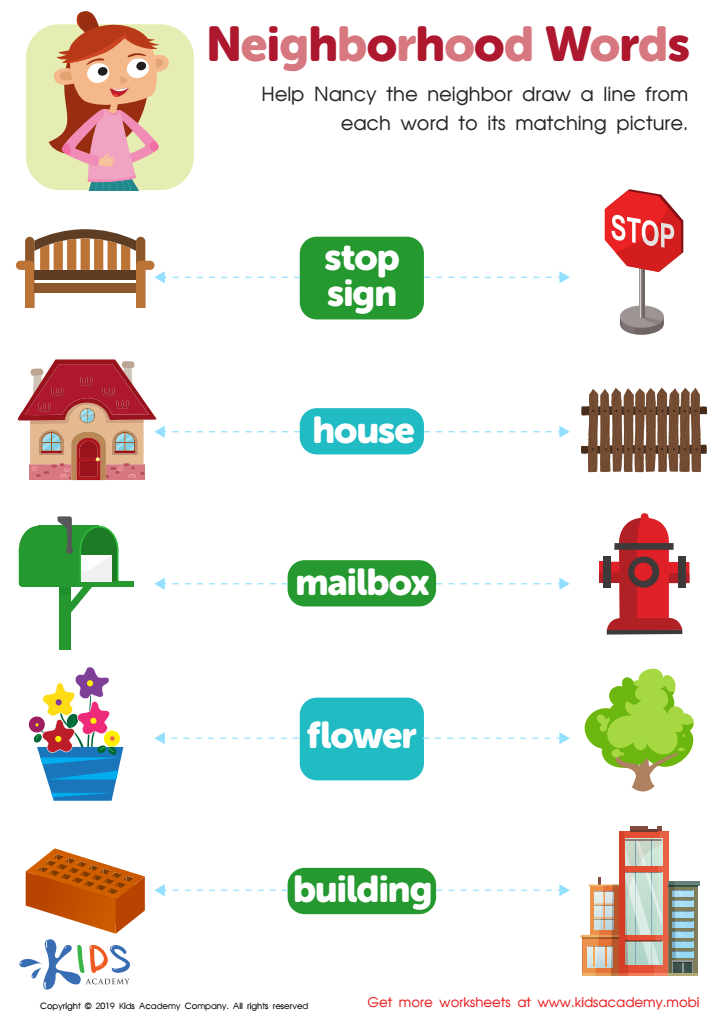
Neighborhood Words Worksheet
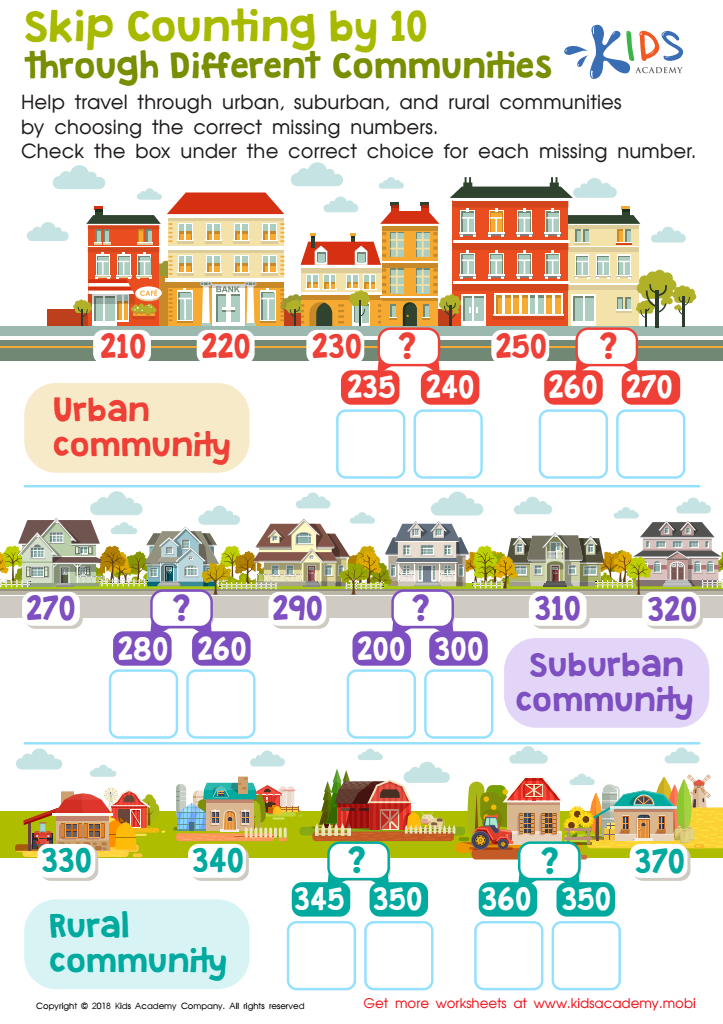
Skip Counting by 10 through Different Communities Worksheet
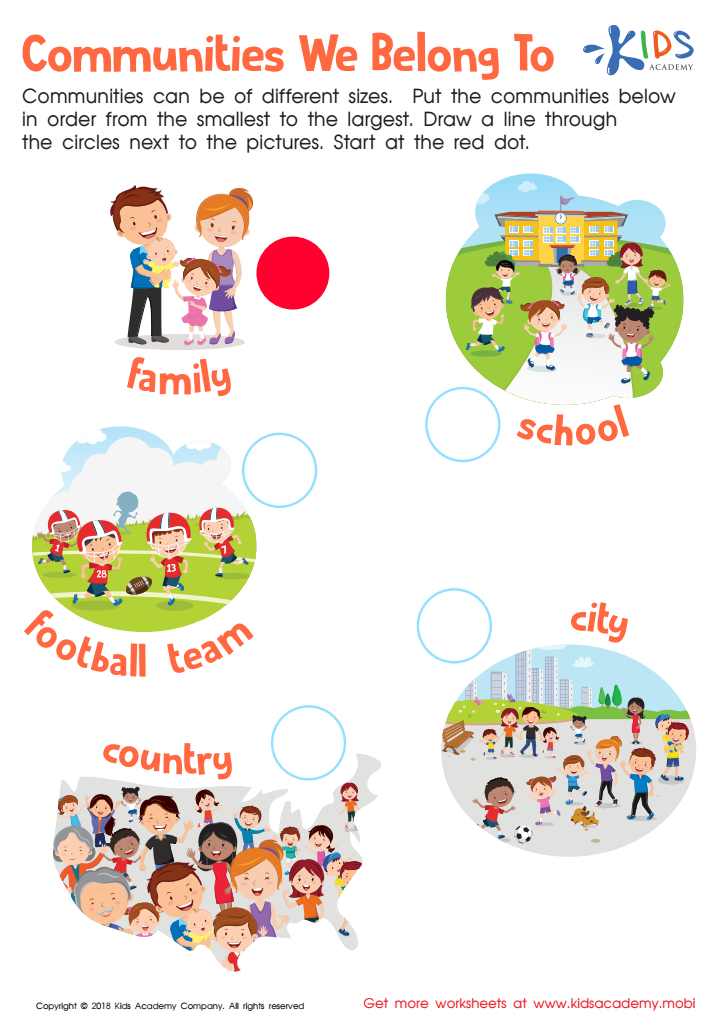
Communities We Belong to Worksheet
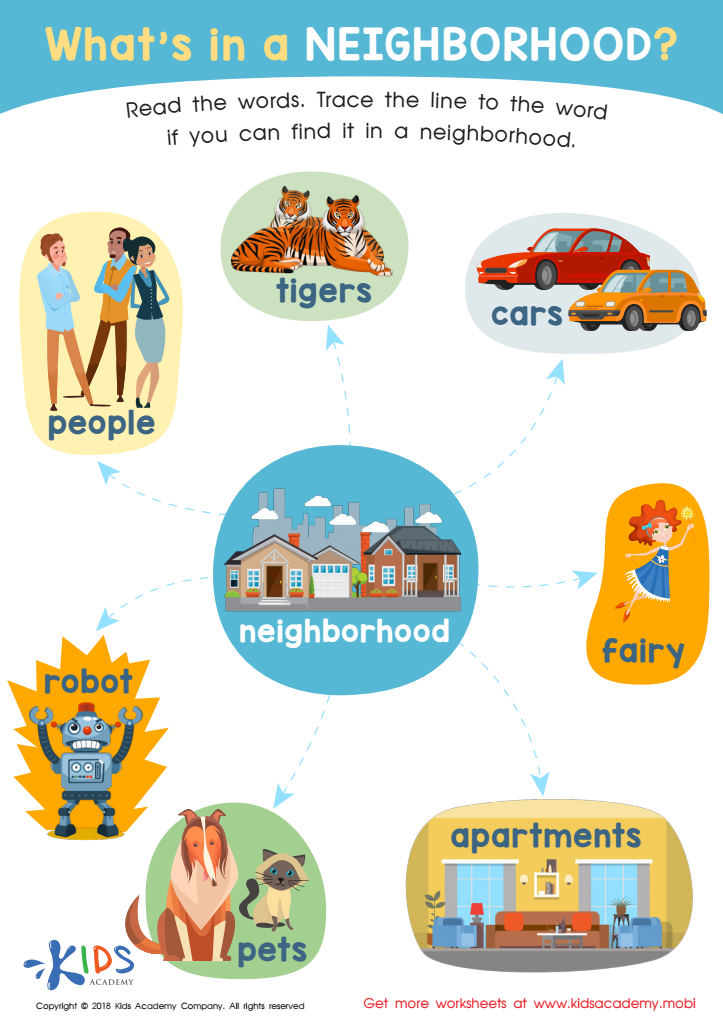
What's in a Neighborhood? Worksheet





.jpg)
Understanding communities for children ages 3-7 is essential for several reasons. During these formative years, kids are building the foundation for social, emotional, and cognitive development. Learning about their communities helps children grasp concepts like cooperation, sharing, empathy, and diversity, all of which are key to becoming thoughtful, engaged citizens.
Firstly, communities provide children with a sense of belonging and security. Knowing about the people and places that make up their surroundings allows kids to feel connected and safe, which is crucial for healthy emotional development. For example, visiting local parks, libraries, or fire stations can teach them about the roles different people play in maintaining their community's wellbeing.
Furthermore, understanding communities encourages empathy and respect for others. When children learn about the diverse backgrounds and perspectives within their community, they are more likely to appreciate and respect these differences. This is important for building inclusive, compassionate attitudes from an early age.
Lastly, an understanding of community helps children see the value of teamwork and collective effort. Knowing how community members collaborate to solve problems or celebrate achievements can inspire kids to contribute positively to their environment.
In summary, fostering an understanding of communities in young children sets the stage for emotional security, empathy, respect, and a sense of social responsibility, forming the cornerstone of good citizenship.








