Understanding plant growth Worksheets for Ages 3-7
3 filtered results
-
From - To
Explore our "Understanding Plant Growth" worksheets designed specifically for children ages 3-7. These engaging resources introduce young learners to the fascinating world of plants, covering concepts such as the life cycle, essential needs for growth, and the importance of nature in our lives. Each worksheet features fun, age-appropriate activities that promote motor skills, creativity, and critical thinking. Perfect for home or classroom use, these worksheets encourage curiosity and environmental awareness. Empower your little ones to connect with nature and understand the vital role plants play in our ecosystem through interactive learning and delightful illustrations. Discover the joy of plant growth today!
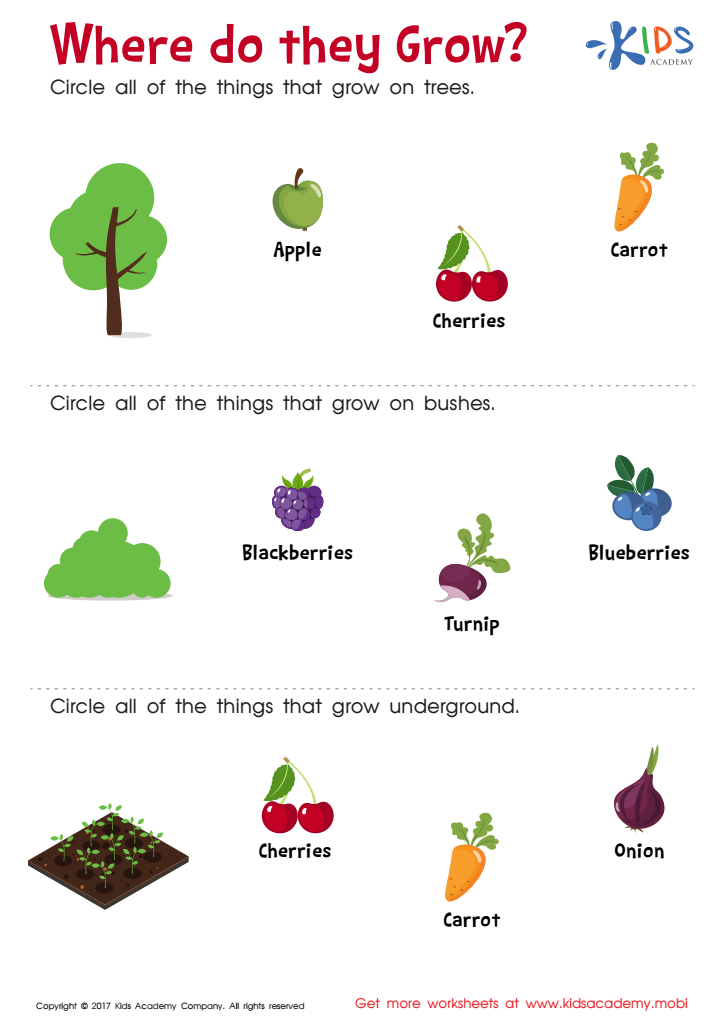
Where Do They Grow Worksheet
 Assign to My Students
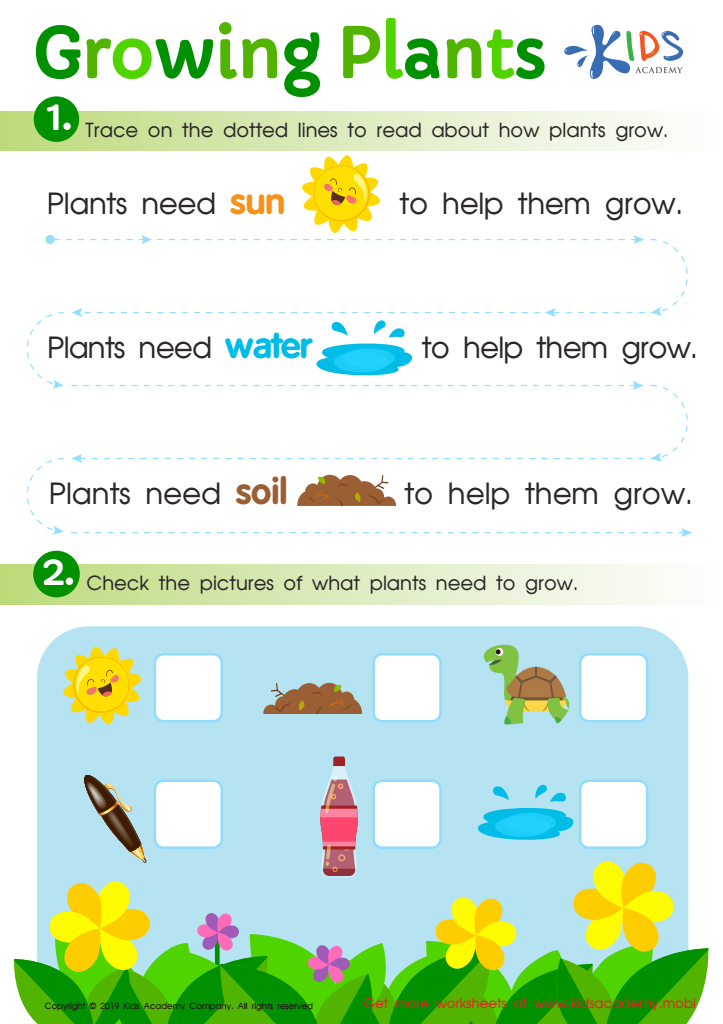
Growing Plants Worksheet
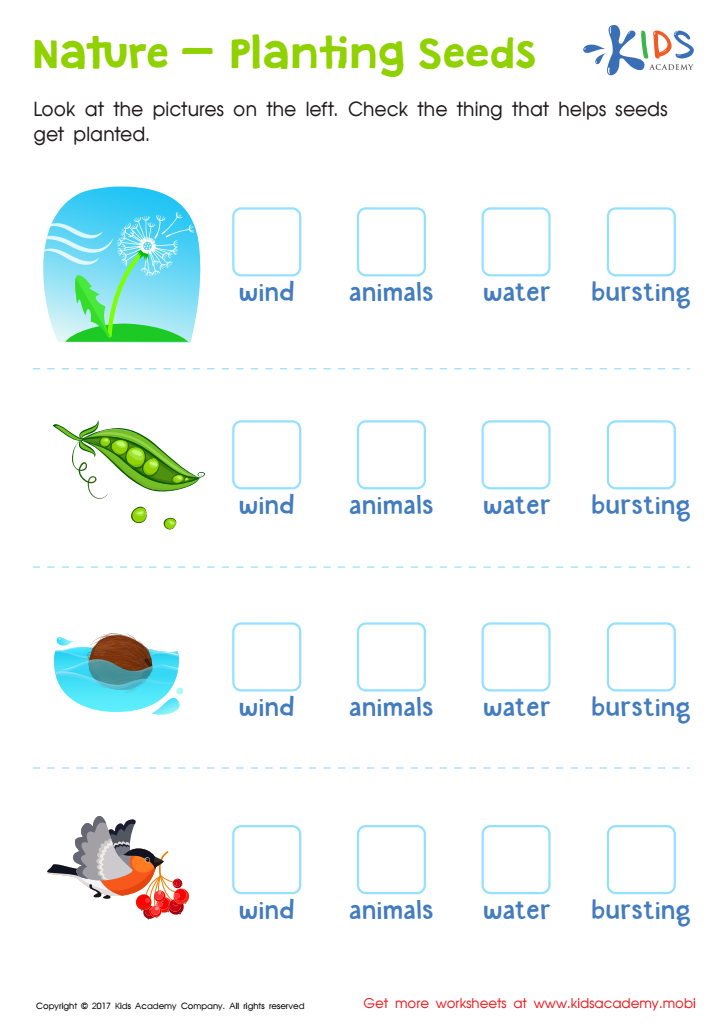
Nature Planting Seeds Worksheet







Understanding plant growth is essential for children aged 3-7 because it nurtures their curiosity and promotes hands-on learning experiences. Early exposure to the life cycle of plants helps ignite a sense of wonder and appreciation for nature, laying the groundwork for environmental stewardship. For young learners, witnessing the transformation from seed to sprout offers an engaging way to grasp basic scientific concepts like observation, measurement, and experimentation.
Learning about plants also supports cognitive development as kids make connections between what they see and how it relates to their world. Engaging with growing plants provides opportunities for vocabulary development and reinforces important skills such as patience, responsibility, and teamwork when participating in activities like gardening.
Furthermore, incorporating plant growth education enhances fine motor skills through tasks like planting seeds or watering plants. It also encourages healthy eating habits when children learn about growing fruits and vegetables.
Additionally, this understanding encourages exploration and inquiry, allowing children to ask questions and seek answers, fostering critical thinking. Overall, teaching young learners about plant growth nurtures essential life skills, scientific reasoning, and a profound respect for the environment, making it a vital area of focus for parents and educators alike.








