Introduce your little ones to the fascinating world of symmetry with our engaging worksheets designed for ages 3-7. Our "Understanding Symmetry" activities help young minds grasp key concepts of balance and proportion in fun, relatable ways. Packed with colorful images and simple exercises, these worksheets enhance fine motor skills, visual perception, and cognitive development while making learning both enjoyable and effective. Perfect for early grade learners, they provide a solid foundation in geometry that paves the way for future math success. Empower your child’s learning journey with our expertly crafted, playful symmetry resources.

Check out this FREE "Understanding symmetry" Trial Lesson for age 3-7!

Objects in the Environment- Circle, Square, Triangle & Rectangle

Favorites
With answer key
Interactive
  • 3-7
  • Understanding symmetry
Preschool geometry worksheet

Geometry Worksheet

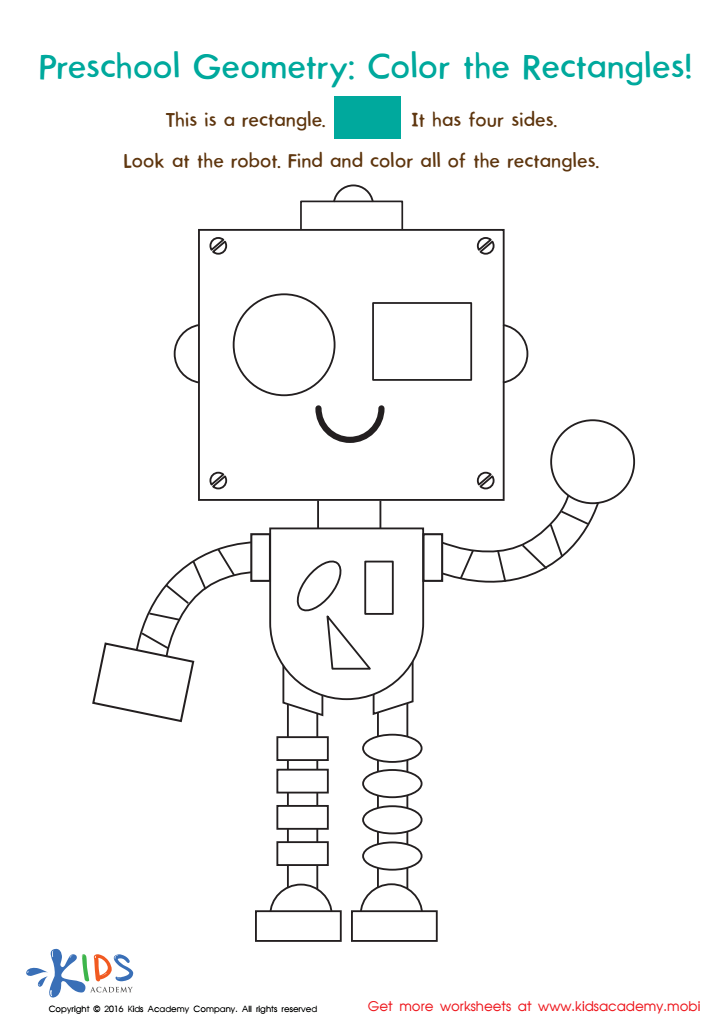
Geometry can be fun for kids! They explore shapes that create their favorite pics and objects. This preschool worksheet explains that rectangles have four sides, then kids color rectangles on a funny robot!
Geometry Worksheet
Worksheet
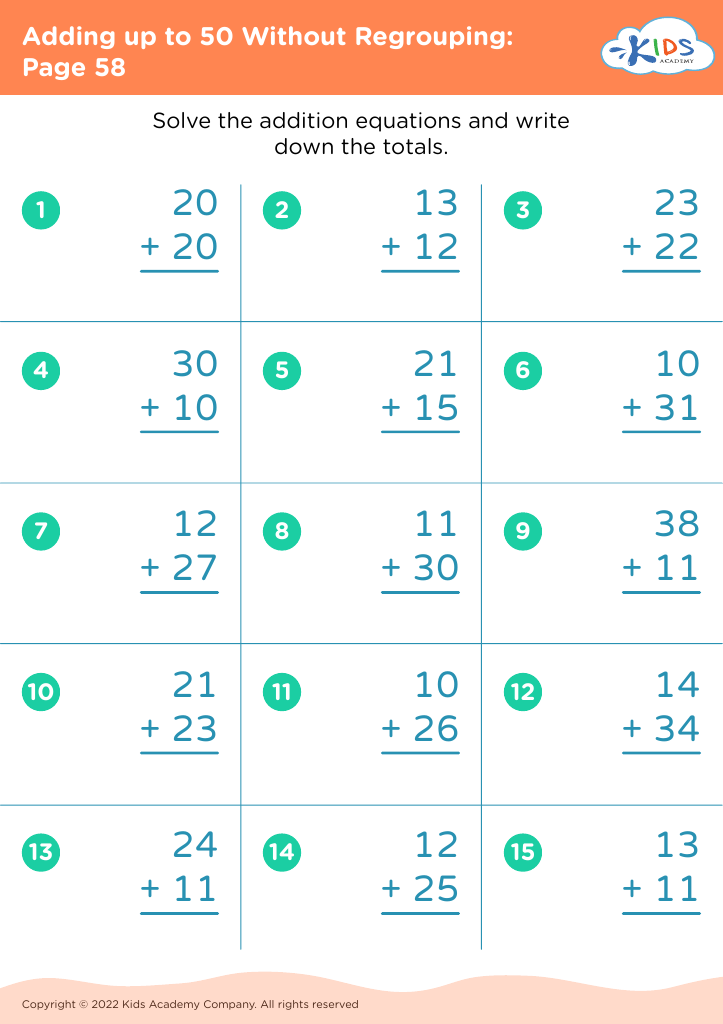
Adding up to 50 Without Regrouping: Page 58
Worksheet
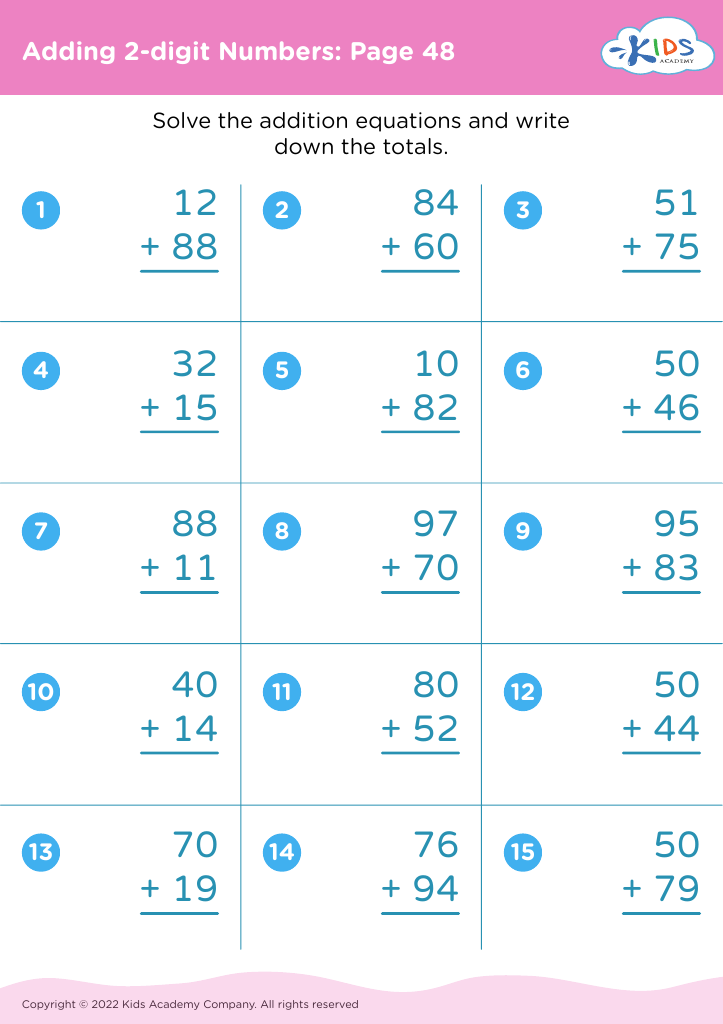
Adding 2-digit Numbers: Page 48

Adding 2-digit Numbers: Page 48

Adding 2-digit Numbers: Page 48
Worksheet
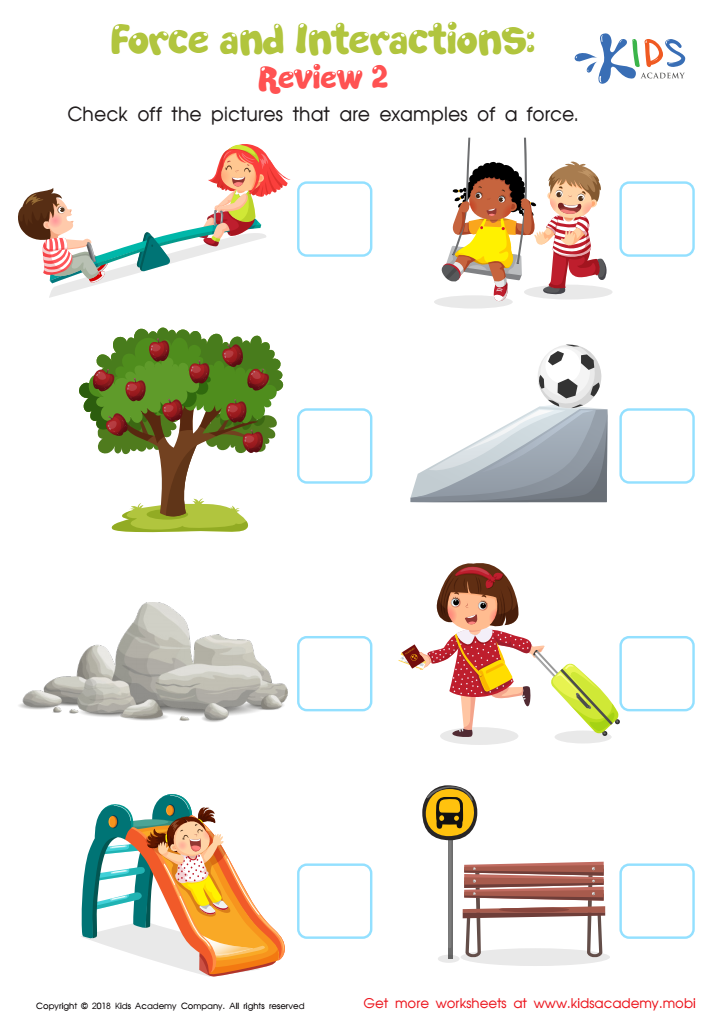
Force and Interactions: Review 2 Worksheet

Force and Interactions: Review 2 Worksheet

Your child can identify force examples by checking the pictures. There are 8 images of kids engaging in activities and objects in motion. Get them to name the activities and objects, or if they know, explain force and interaction.
Force and Interactions: Review 2 Worksheet
Worksheet
Beginning Sound: Find Pairs Worksheet

Beginning Sound: Find Pairs Worksheet

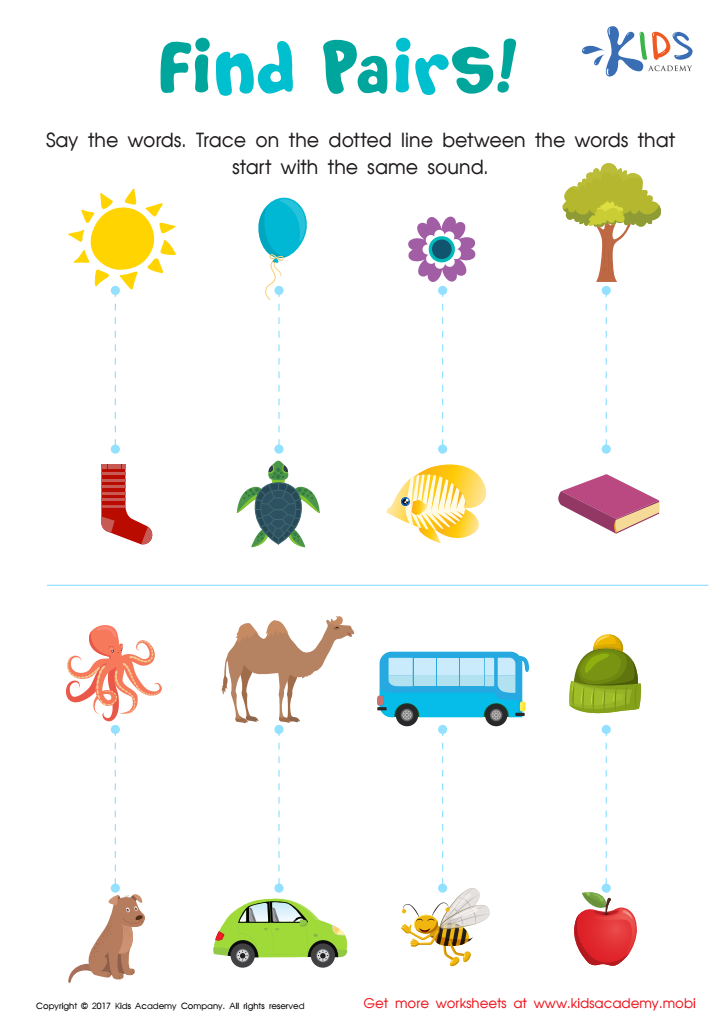
Phonemic awareness is essential for readers to distinguish hard and soft sounds at the start of words. Our printable worksheet helps your child make meaningful connections and provides visuals for recall - a valuable pre-reading strategy. Pictures are easy to identify and match, setting kids up for success with each pairing.
Beginning Sound: Find Pairs Worksheet
Worksheet
Butterfly Addition Worksheet
Butterfly Addition Worksheet
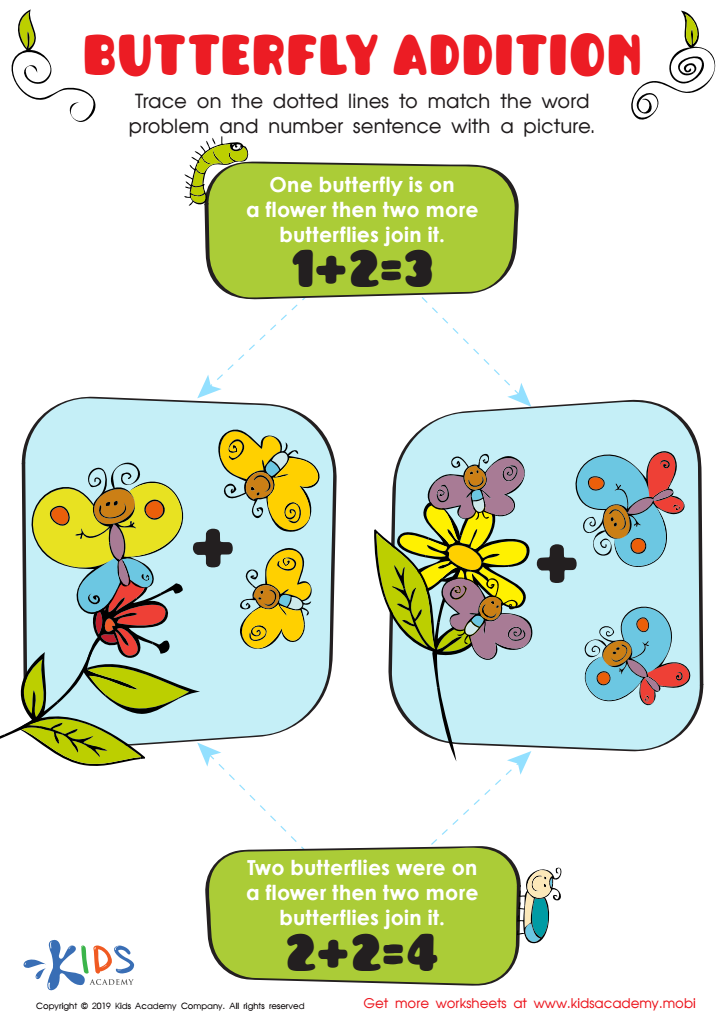
This tracing sheet is great for kids to work on math skills and have fun too. Read the word problems to them, then help them trace the dotted lines to match the problem and number sentence to a picture. Not only is it educational, it's beautiful too - your kids will love learning about butterflies!
Butterfly Addition Worksheet
Worksheet
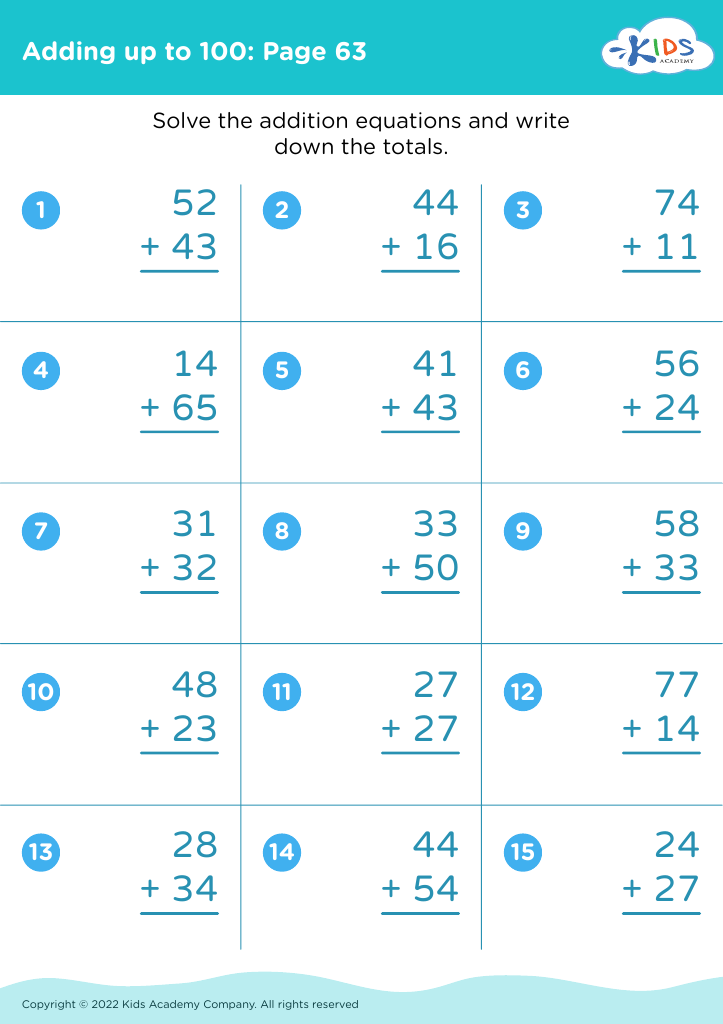
Adding up to 100: Page 63

Adding up to 100: Page 63

Adding up to 100: Page 63
Worksheet
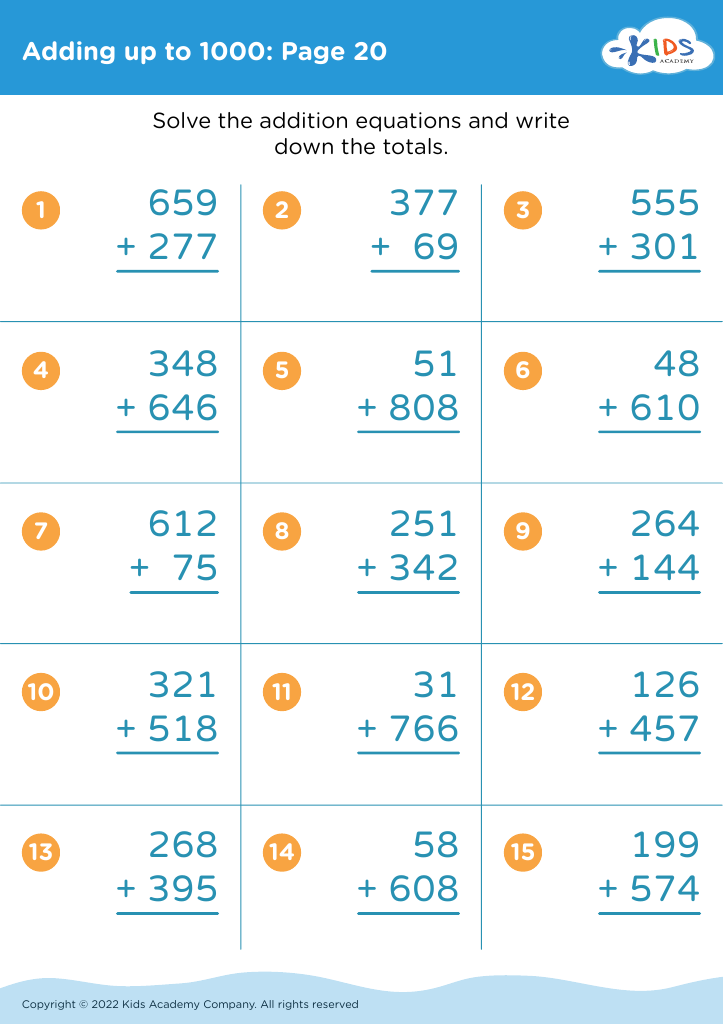
Adding up to 1000: Page 20

Adding up to 1000: Page 20

Adding up to 1000: Page 20
Worksheet
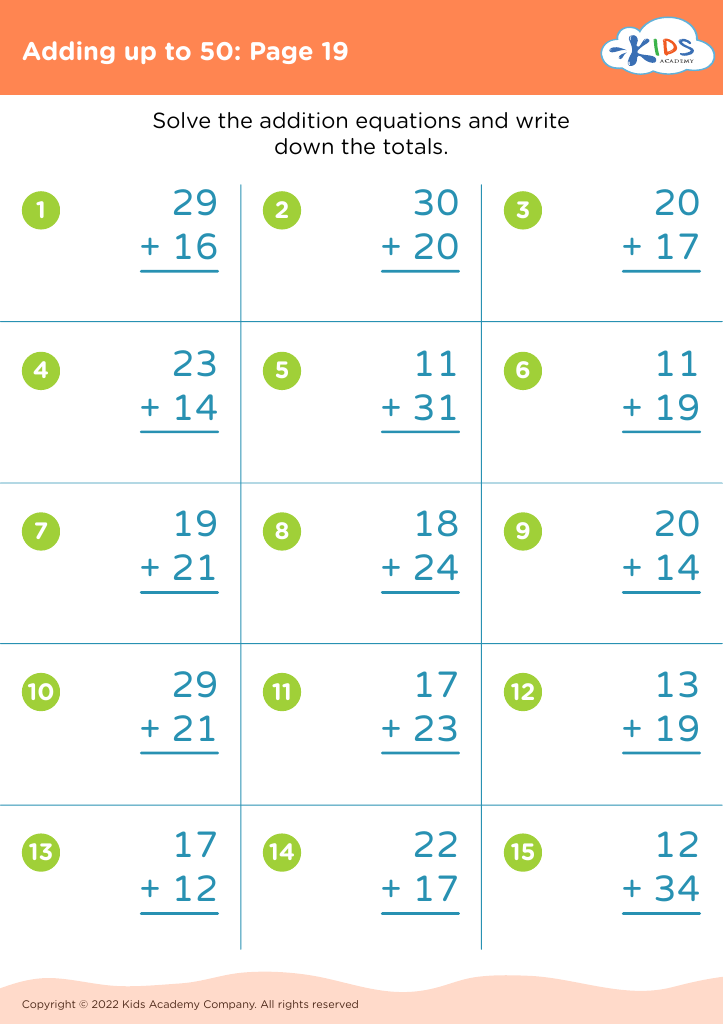
Adding up to 50: Page 19

Adding up to 50: Page 19

Adding up to 50: Page 19
Worksheet
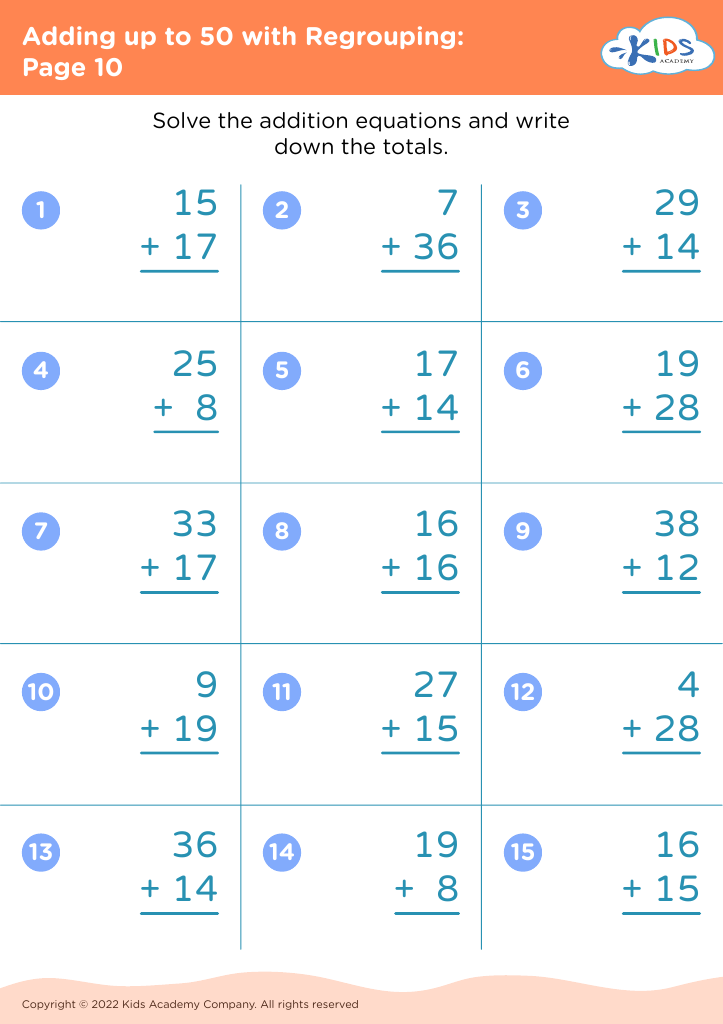
Adding up to 50 with Regrouping: Page 10
Worksheet
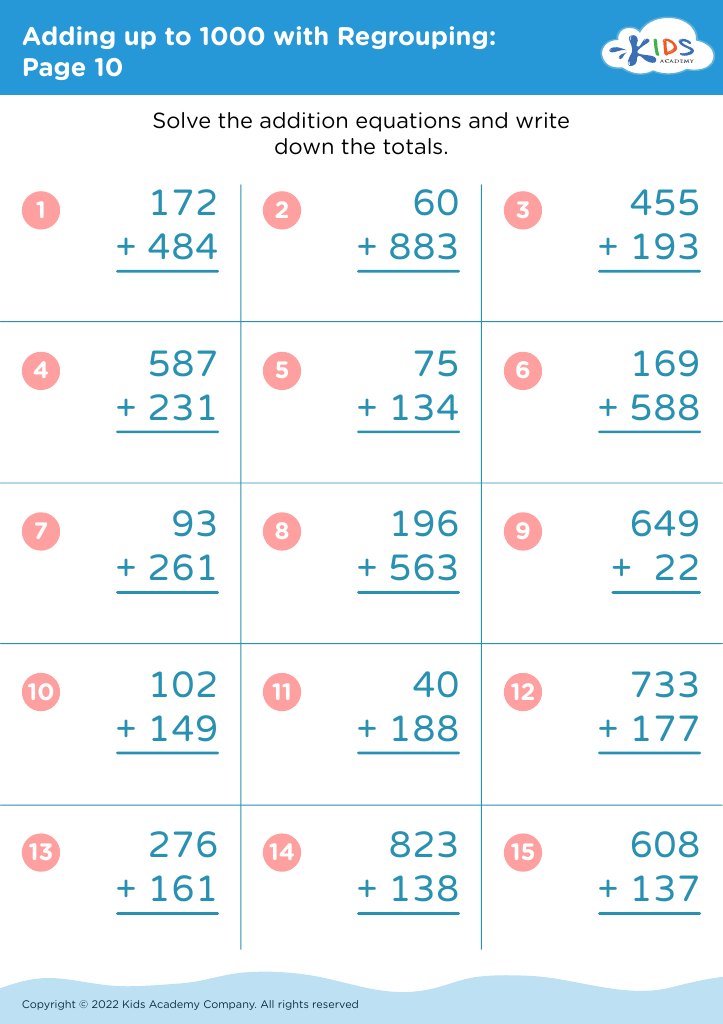
Adding up to 1000 with Regrouping: Page 10
Worksheet
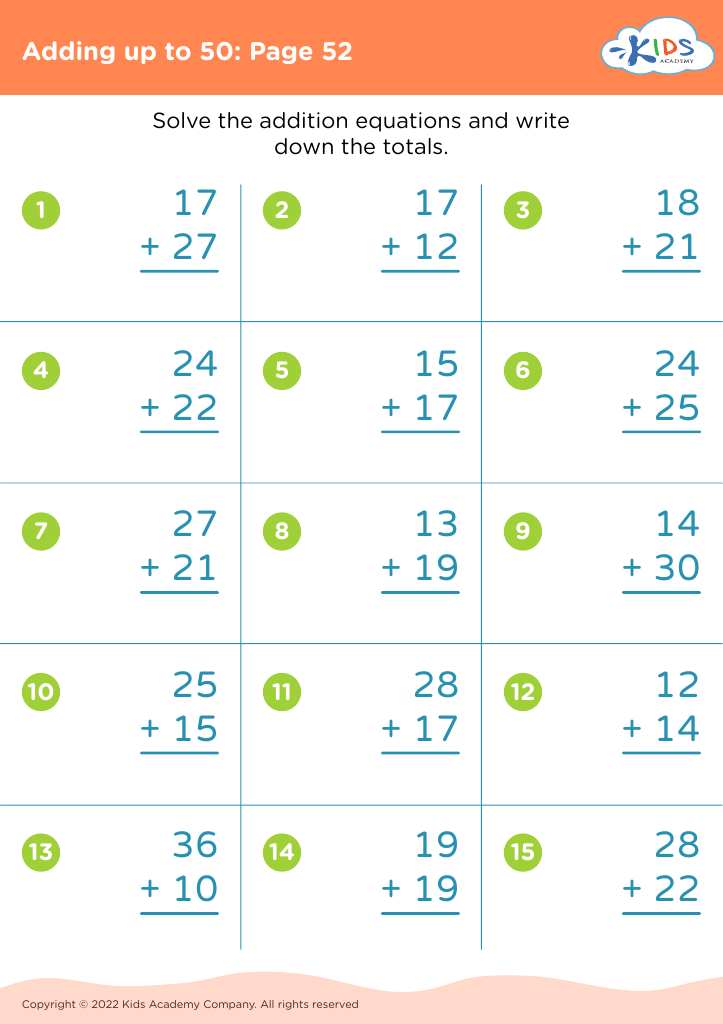
Adding up to 50: Page 52

Adding up to 50: Page 52

Adding up to 50: Page 52
Worksheet
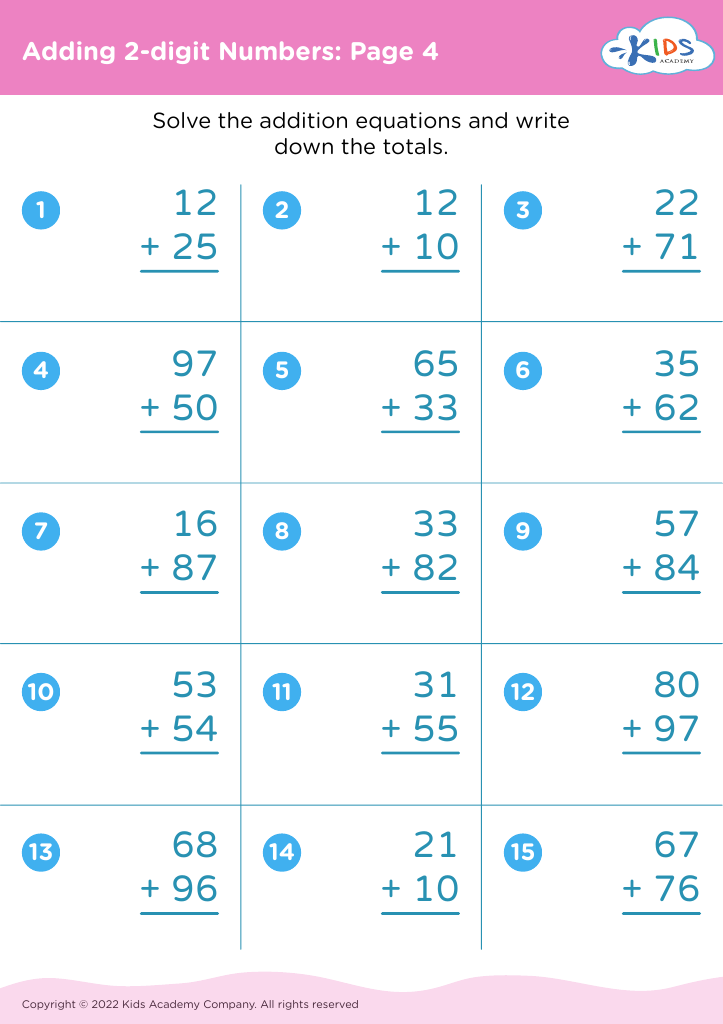
Adding 2-digit Numbers: Page 4

Adding 2-digit Numbers: Page 4

Adding 2-digit Numbers: Page 4
Worksheet
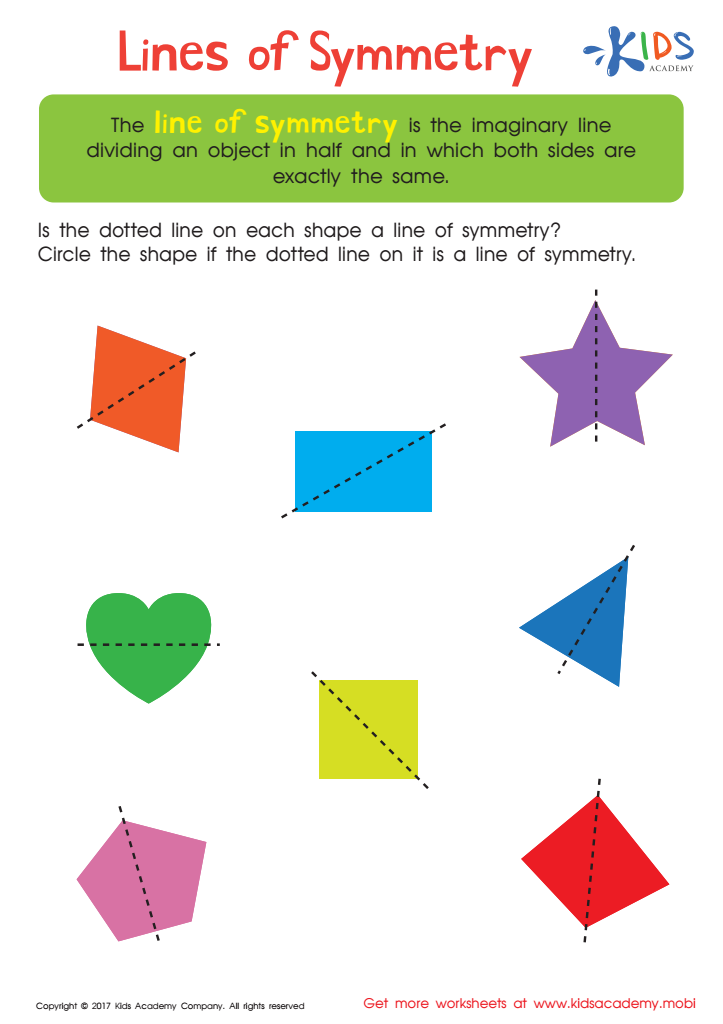
Lines of symmetry worksheet

Lines of Symmetry Printable
Symmetry is a key math concept that kids must learn to develop their geometry skills. This fun worksheet helps build this skill, by encouraging kids to recognize symmetrical shapes and find equal parts.
Lines of Symmetry Printable
Worksheet
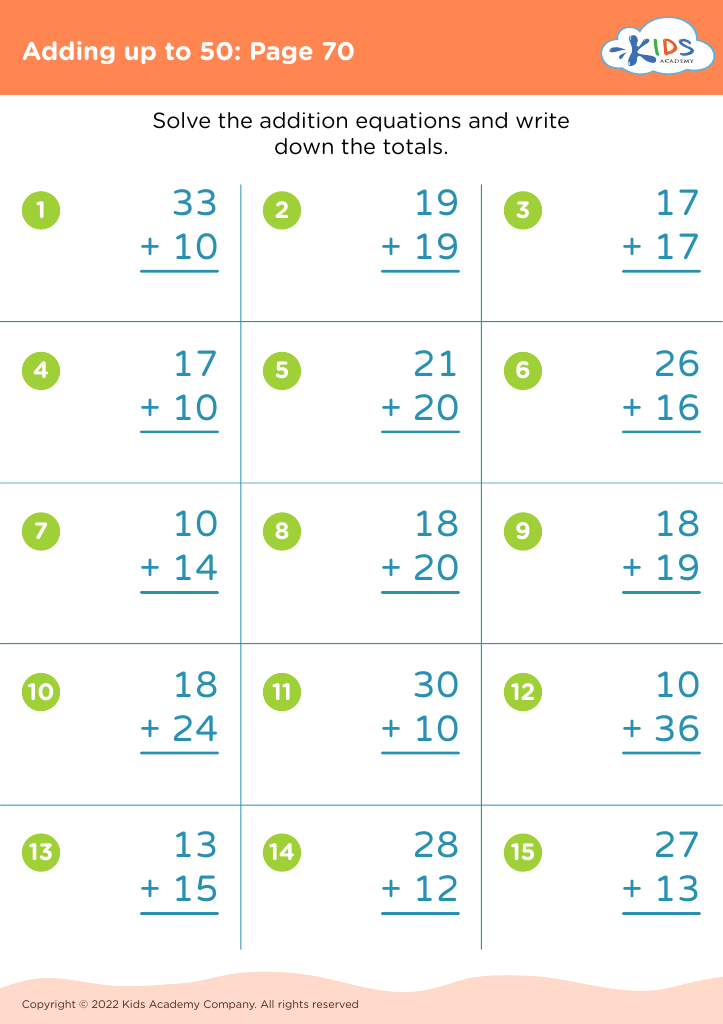
Adding up to 50: Page 70

Adding up to 50: Page 70

Adding up to 50: Page 70
Worksheet
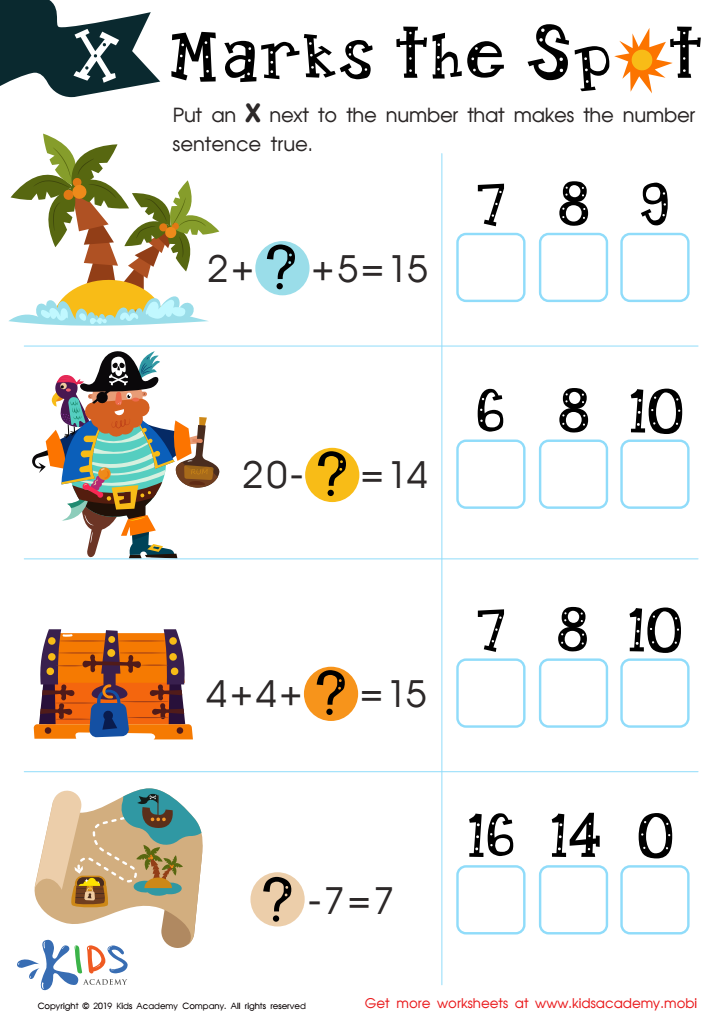
X Marks the Spot Worksheet

X Marks the Spot Worksheet

Let your kids explore the world of pirates! Ask them what they know about them, what they do and the phrases they like. Download the printout and point at the images, asking them to tell you what they see. Help them tick the box for the number that makes the sentence true. Let them have fun learning about pirates! (80 words)
X Marks the Spot Worksheet
Worksheet
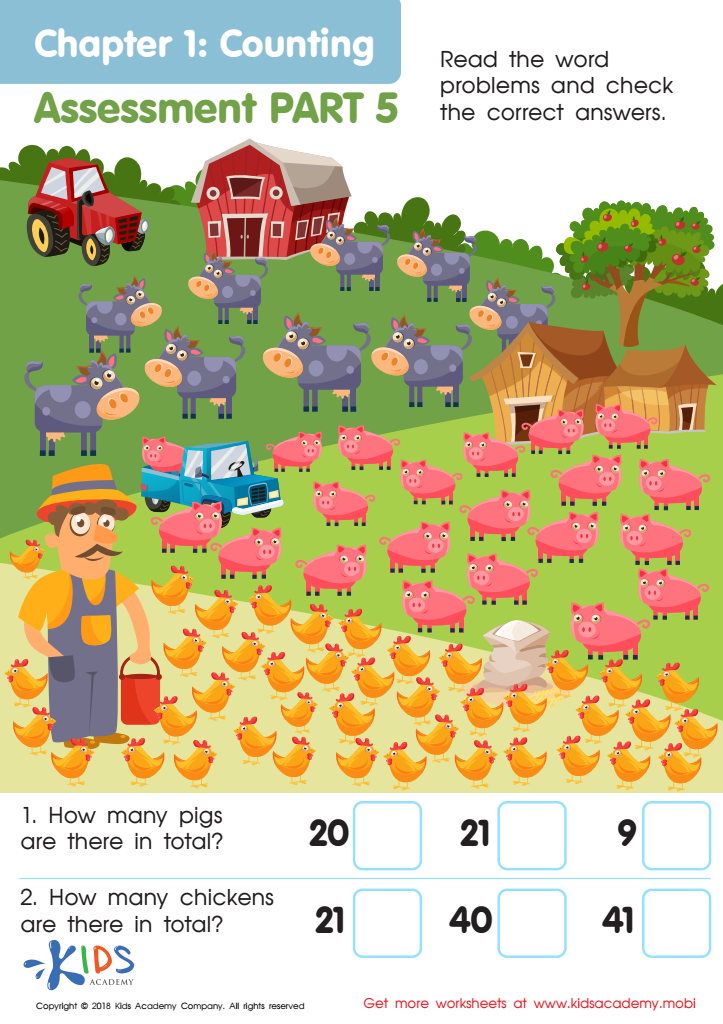
Counting: Assessment 5 Worksheet
Counting: Assessment 5 Worksheet
Let your kids have fun counting farm animals on this worksheet! Help the farmer count the animals and have your child check the answers to assess their counting skills. Read the word problem at the bottom of the page and count the animals together. It's an entertaining way to practice counting and have a great time!
Counting: Assessment 5 Worksheet
Worksheet
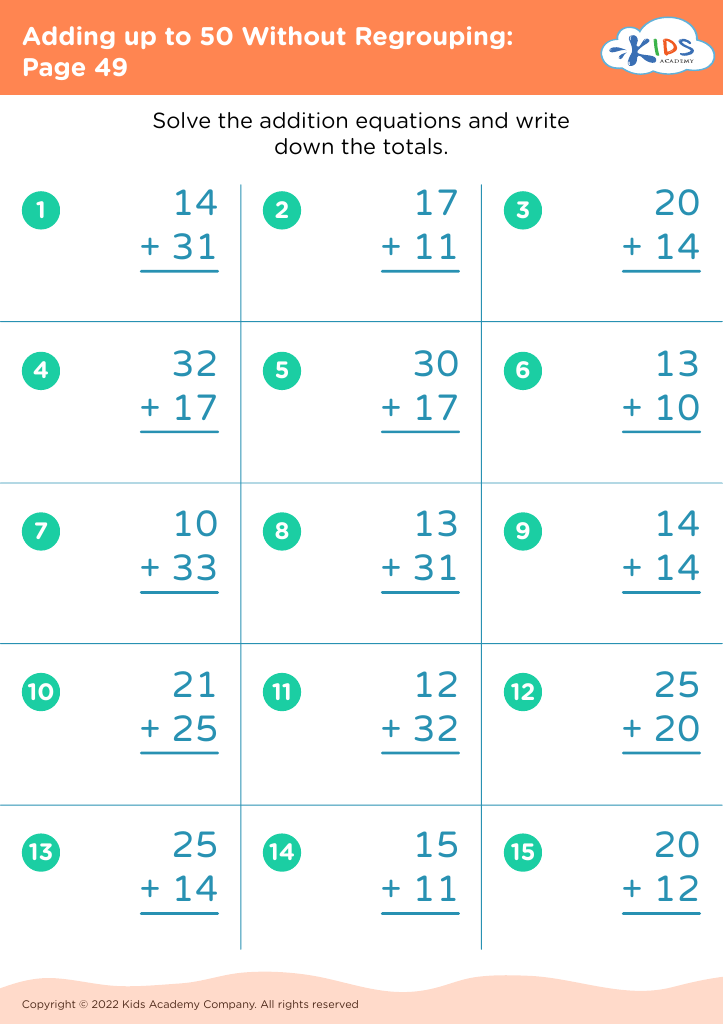
Adding up to 50 Without Regrouping: Page 49
Worksheet
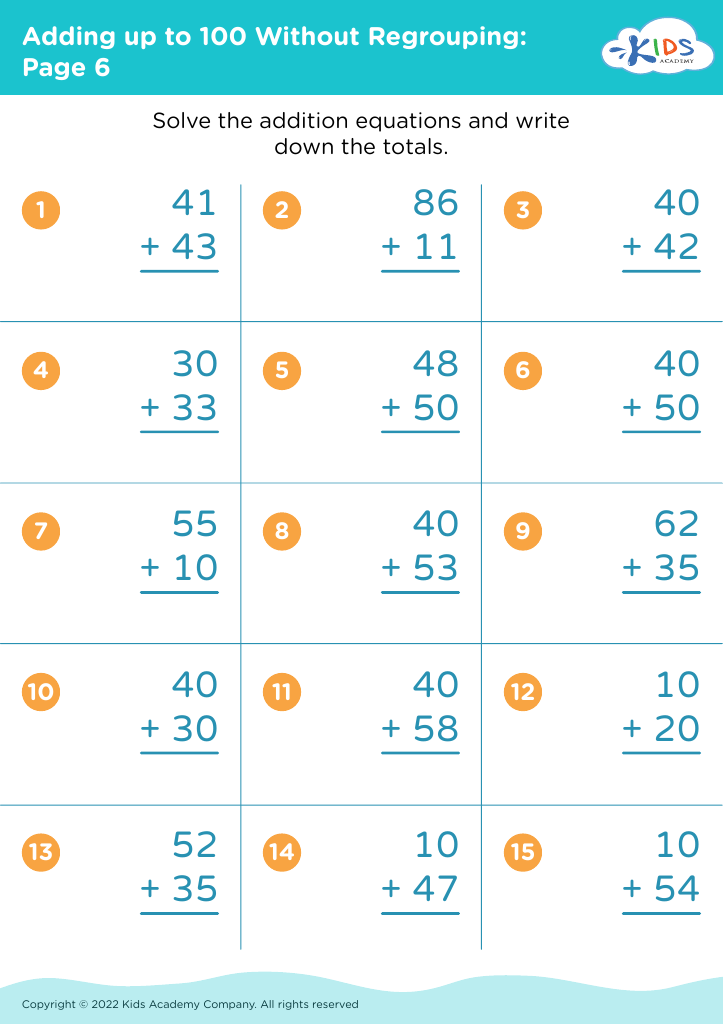
Adding up to 100 Without Regrouping: Page 6
Worksheet
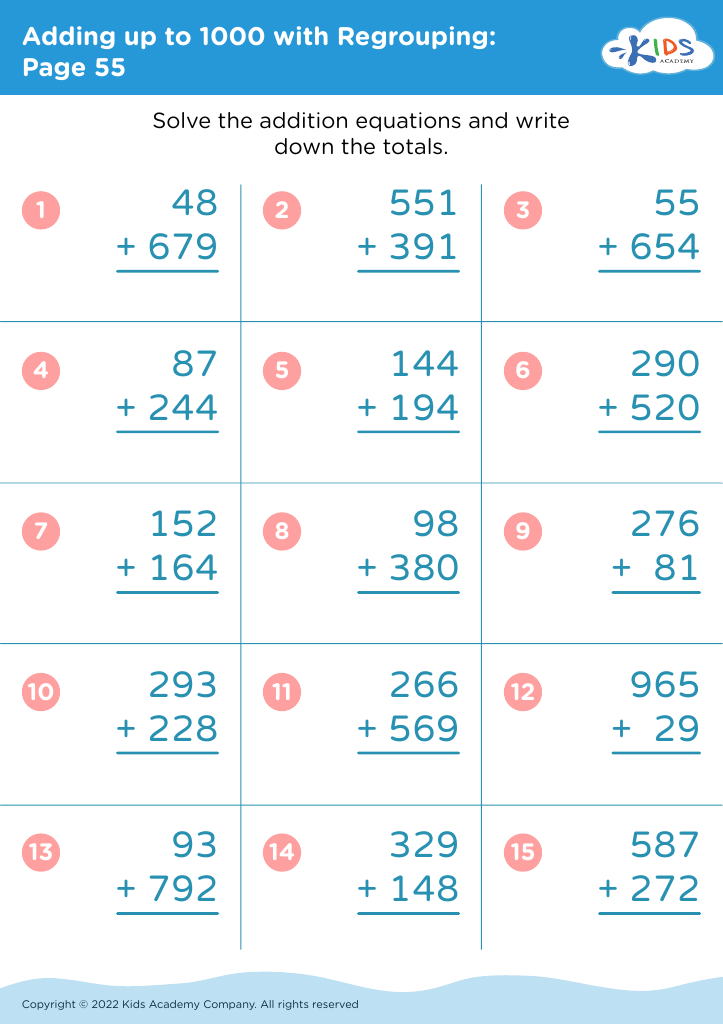
Adding up to 1000 with Regrouping: Page 55
Worksheet
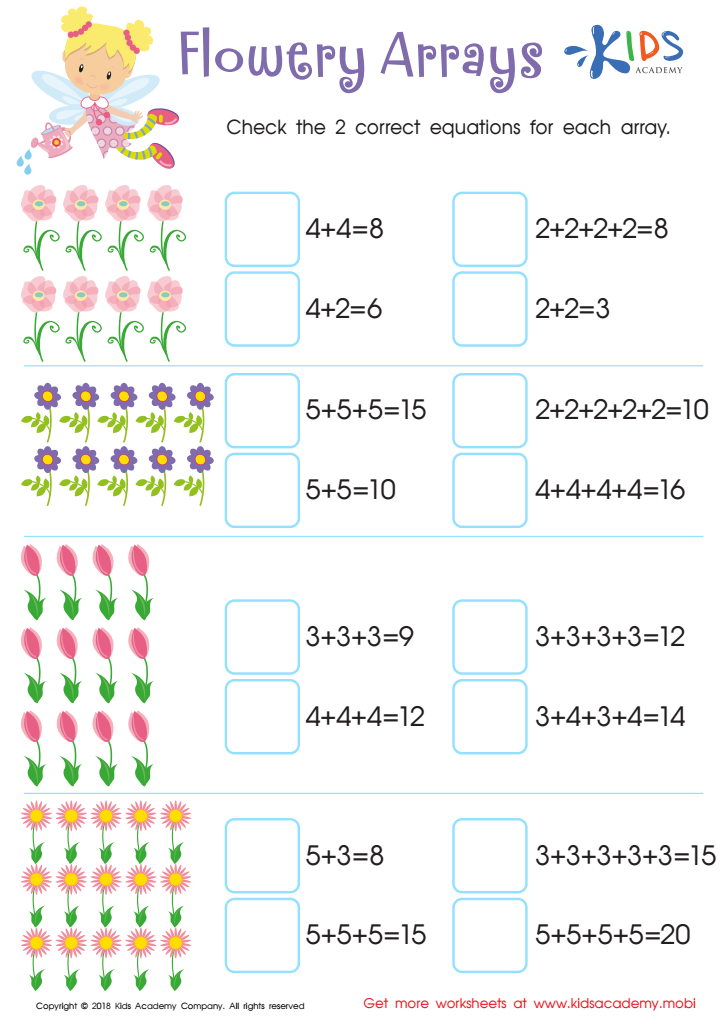
Flowery Arrays Worksheet
Flowery Arrays Worksheet
This worksheet helps your child learn to identify and represent arrays. For example, both 3+3+3+3=12 and 4+4+4=12 are arrays but the first is arranged in rows and the second in columns. Let your child use this knowledge to answer the four questions in this pdf and check the two correct equations.
Flowery Arrays Worksheet
Worksheet
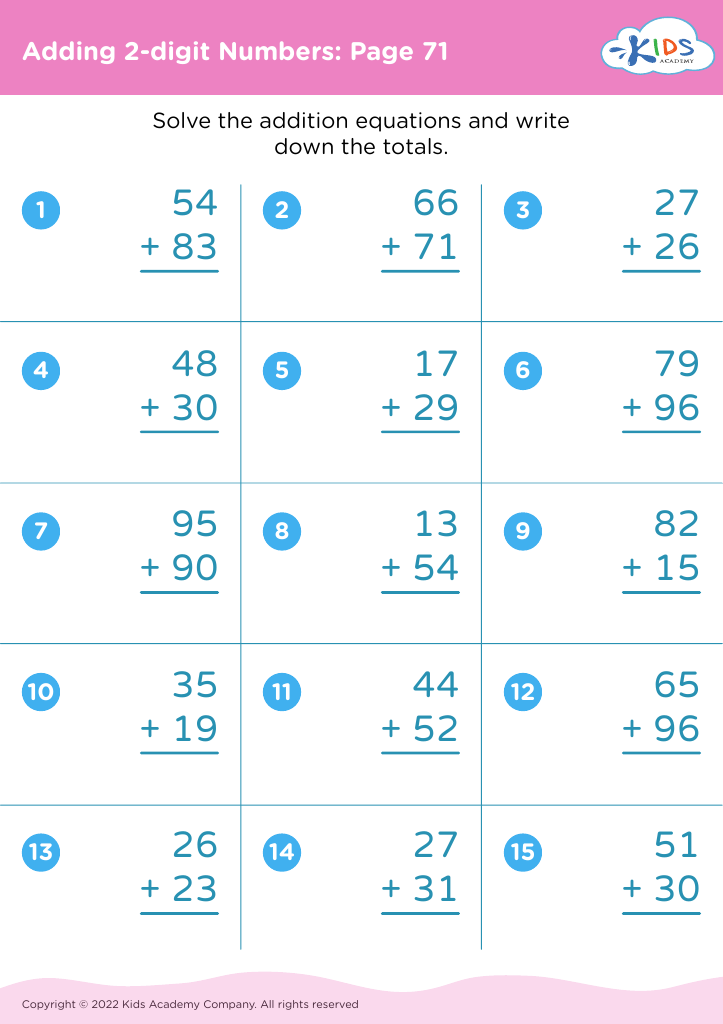
Adding 2-digit Numbers: Page 71

Adding 2-digit Numbers: Page 71

Adding 2-digit Numbers: Page 71
Worksheet
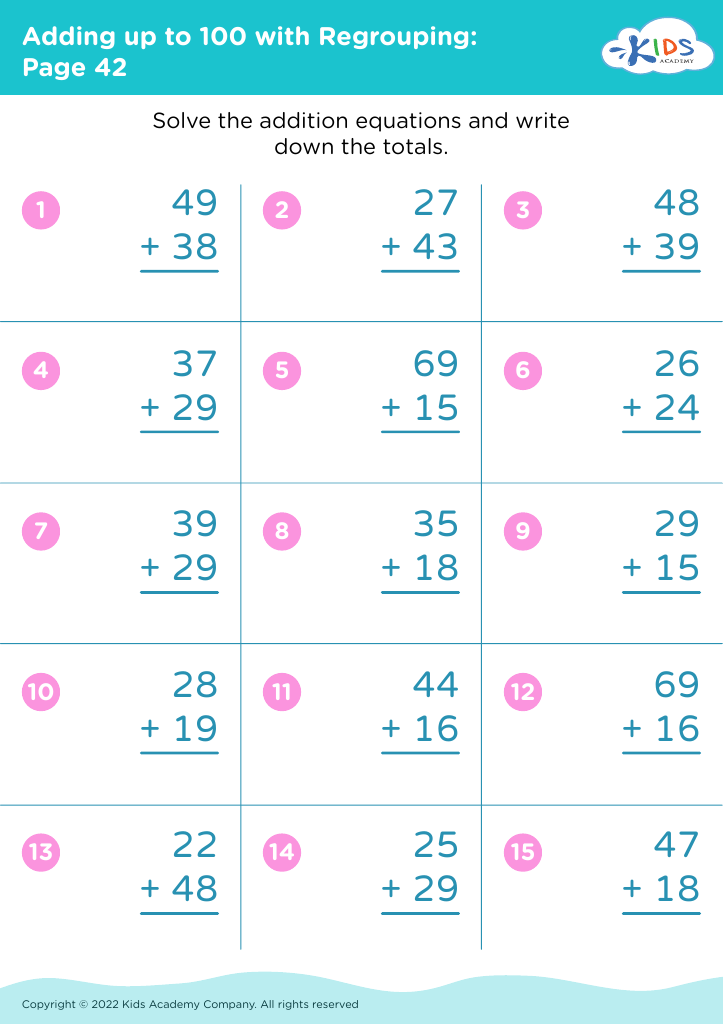
Adding up to 100 with Regrouping: Page 42
Worksheet
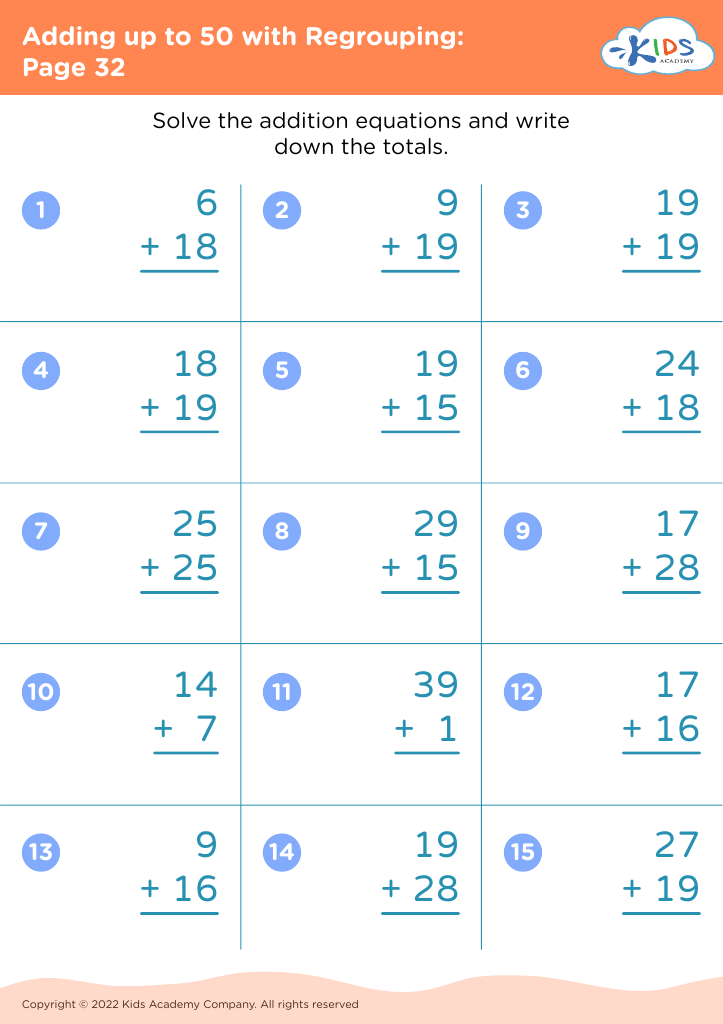
Adding up to 50 with Regrouping: Page 32
Worksheet


Understanding symmetry for ages 3-7 is important because it helps young children develop essential cognitive and motor skills that serve as the foundation for more complex learning. Symmetry introduces children to basic mathematical concepts like balance and proportion, which are crucial for later understanding of geometry and spatial reasoning. These early encounters with symmetry also enhance their pattern recognition skills, essential for problem solving and logical thinking.

Moreover, symmetry lessons often involve hands-on activities like drawing, cutting, and folding paper, which can improve fine motor skills and hand-eye coordination. These activities are not just entertaining; they contribute to the overall development of a child’s brain. Engaging with symmetry also encourages observational skills and attention to detail, because children learn to notice consistent patterns and differences in their environment.

Additionally, understanding symmetry has applications outside of math. In the natural world, children can recognize symmetrical patterns in leaves, flowers, and animals, fostering an appreciation for nature. Art and music also use symmetrical patterns, which can make learning in these areas more intuitive and enjoyable for young learners. Therefore, parents and teachers should value the role of symmetry in early childhood education, as it supports a multitude of developmental milestones.