
Understanding weather conditions Worksheets for Ages 3-7
3 filtered results
Difficulty Level
Grade
Age
-
From - To
Subject
Activity
Standards
Explore our engaging "Understanding Weather Conditions Worksheets" designed for children ages 3-7! These interactive worksheets are crafted to help young learners identify and understand various weather types, from sunny days to rainy spells. Through colorful illustrations and fun activities, children will enhance their observation skills and vocabulary related to weather phenomena. Perfect for both classroom settings and at-home learning, these resources encourage curiosity about the environment while fostering critical thinking and creativity. Download our worksheets today and equip your little ones with essential knowledge about the world around them! Ideal for early education settings to stimulate learning through play.
Favorites
With answer key
Interactive
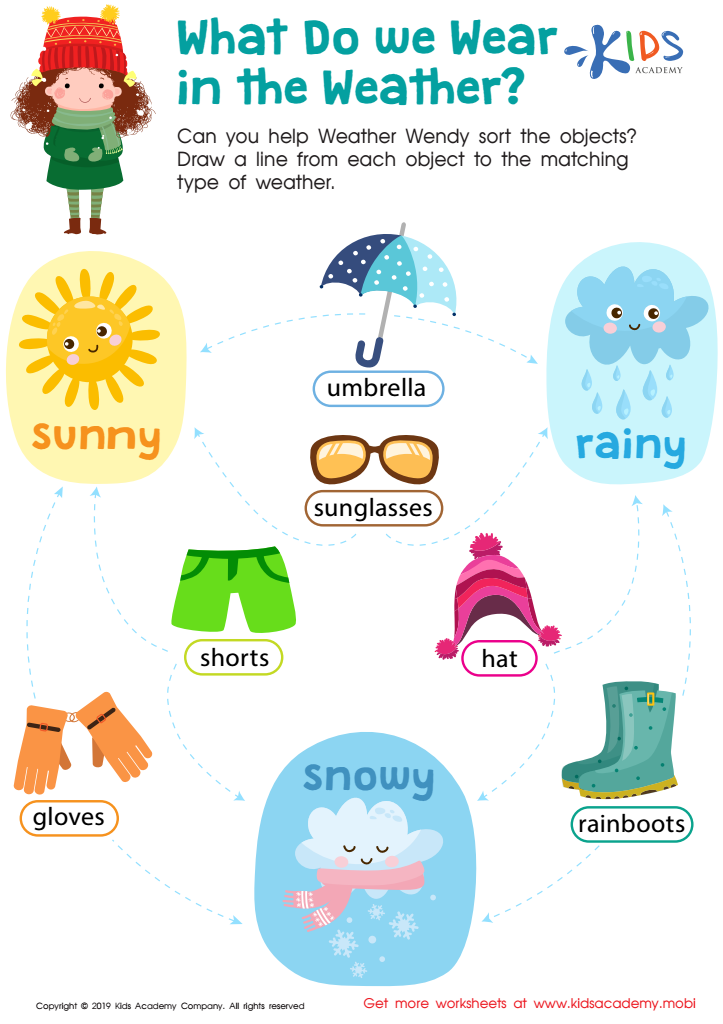
What Do We Wear in the Weather? Worksheet
This worksheet boosts young learners' everyday vocab with fun high-frequency weather words. They'll see and match familiar pictures to the words they read. Plus, it helps them develop fine motor skills. Perfect for preschoolers.
 Assign to My Students
What Do We Wear in the Weather? Worksheet
Worksheet
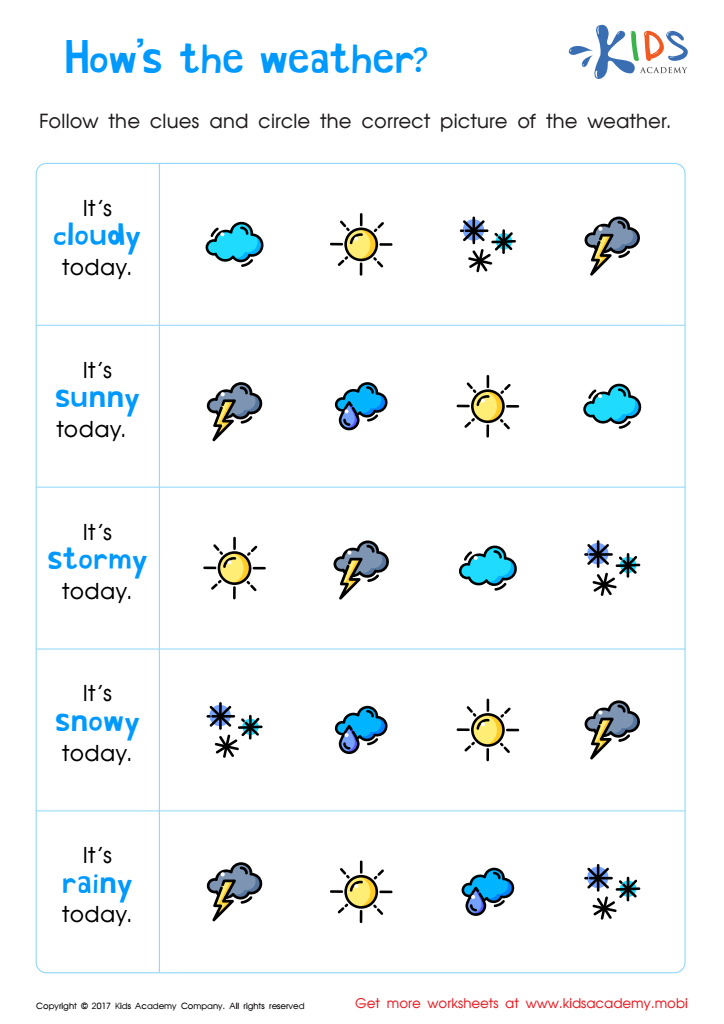
Hows the Weather Worksheet
Teaching kids about weather is a fun way to start science learning. This worksheet helps recognize symbols, literacy skills and make real world connections. Your child will love it!
Hows the Weather Worksheet
Worksheet
Join Kids Academy for Free
Who is primarily going to use this learning content?







Understanding weather conditions is crucial for children aged 3-7 as it plays a significant role in their development and everyday learning. At this age, children are naturally curious, and teaching them about weather can ignite their interest in the world around them. By learning about different weather conditions—such as rain, sun, snow, and wind—children develop observational skills and enhance their vocabulary, which are key components of early literacy.
Additionally, awareness of weather helps children understand safety. By learning about severe weather and appropriate responses, such as seeking shelter during a storm, children are better prepared to protect themselves in various situations.
Weather discussions also promote science concepts like temperature, seasons, and environmental changes, laying the groundwork for future STEM learning. Through activities like storm observation or crafting weather charts, teachers and parents can create engaging lessons that foster critical thinking and hands-on experiences.
Moreover, these lessons provide rich opportunities for social interaction and communication skills, as children share their observations and predictions. Engaging children in weather discussions enhances their cognitive development while also connecting them to nature, encouraging a lifelong appreciation for the environment. Therefore, parents and teachers play a vital role in guiding this exploration.








