
Visual representation of fractions Worksheets for Ages 3-7
6 filtered results
Difficulty Level
Grade
Age
-
From - To
Subject
Activity
Standards
Unlock the world of fractions for young learners with our Visual Representation of Fractions Worksheets for Ages 3-7! These engaging, age-appropriate printables transform abstract fraction concepts into clear, visual forms that children can easily grasp. With colorful images and intuitive designs, kids will learn to identify, compare, and understand parts of a whole, making math fun and accessible. Perfect for early grade teachers and parents, these worksheets build a strong foundation in mathematical skills while boosting their confidence. Give your child a head start in fraction mastery today! Download our free Visual Representation of Fractions Worksheets from Kids Academy.
Favorites
With answer key
Interactive
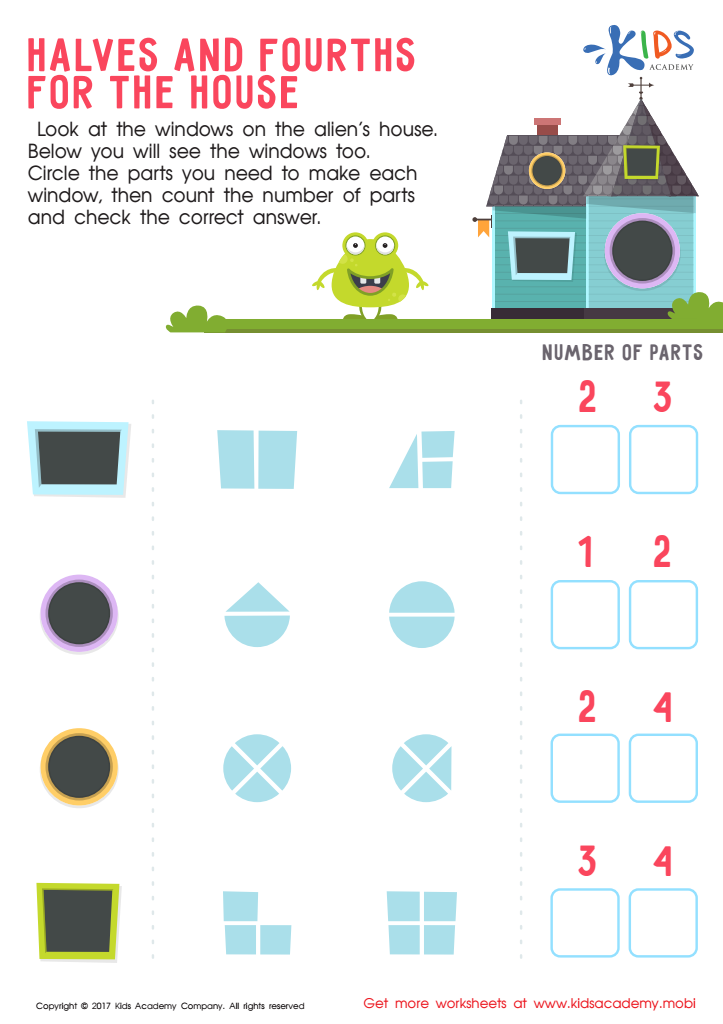
Halves and Fourths for the House Worksheet
Help your child become friends with the alien in this worksheet! If they're fans of alien books and movies, they'll love it. Ask them to circle the parts at the bottom that make each window, then count the number of parts and check the correct answer.
 Assign to My Students
Halves and Fourths for the House Worksheet
Worksheet
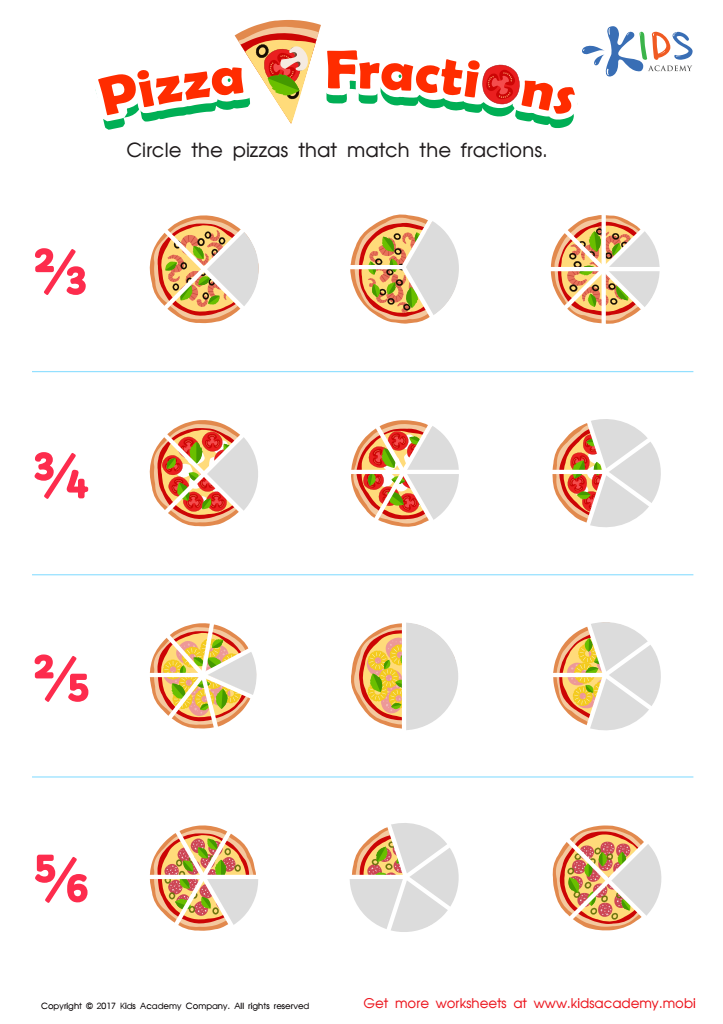
Fractions: Pizza Printable
Fractions can be tricky for kids, but this pizza fractions printable can help! Kids can understand fractions by seeing them, as they use one of their favorite foods. It helps them grasp the concept and gain a deeper understanding of what fractions represent. Extend their learning by quizzing them when you order pizza next time.
Fractions: Pizza Printable
Worksheet
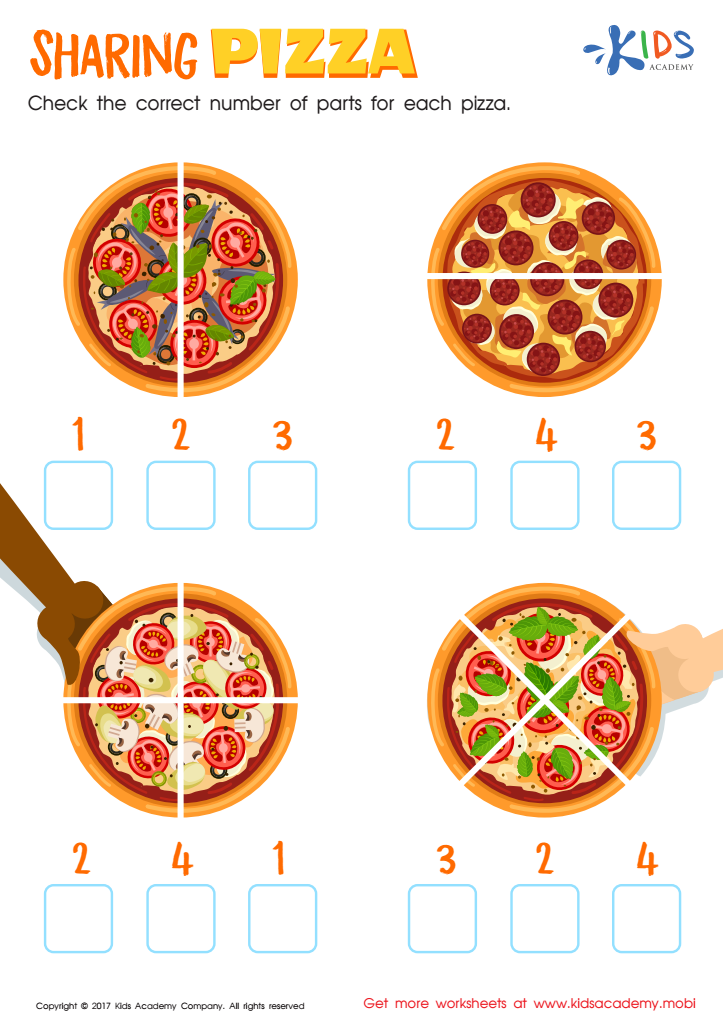
Sharing Pizza Worksheet
Show your child the four pizzas in this worksheet. Ask them to count the number of slices each one has. Help them count and check the answer for the first pizza, then do the same for the rest. Have fun counting the slices and see if they can spot the pizza!
Sharing Pizza Worksheet
Worksheet
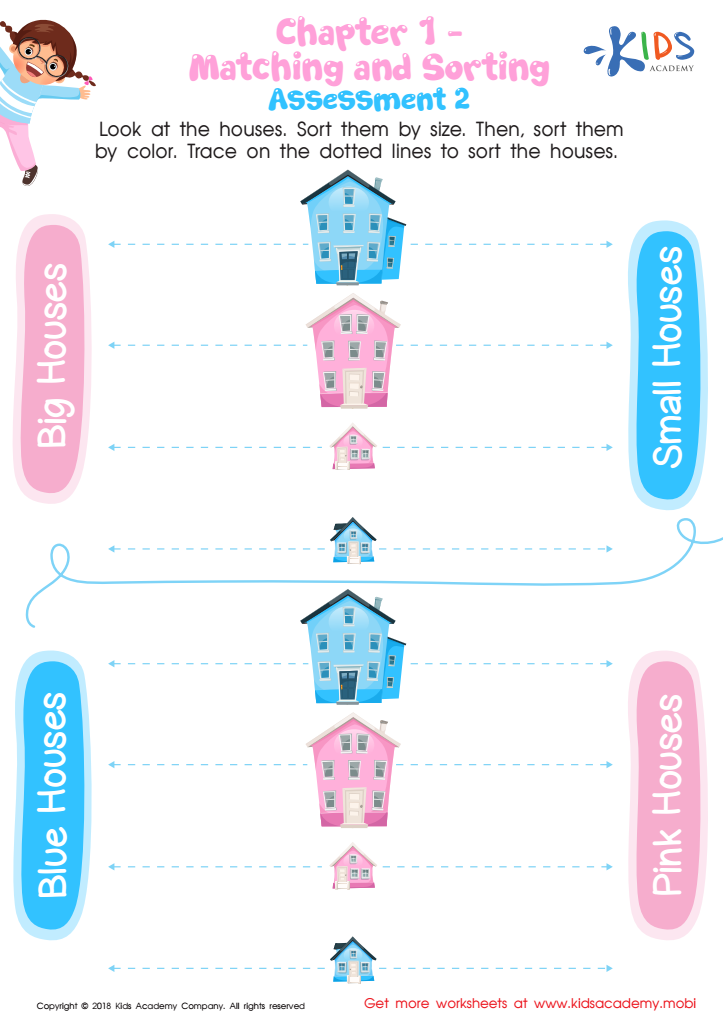
Matching and Sorting for Preschool: Assessment 2 Worksheet
Encourage your kids to take a look at the colorful pictures. Ask them to name the objects. Next, point out any differences between the houses and let them sort them according to color and size. Finally, help them trace the houses on the dotted lines.
Matching and Sorting for Preschool: Assessment 2 Worksheet
Worksheet
Join Kids Academy for Free
Who is primarily going to use this learning content?






Visual representation of fractions is crucial for young learners, especially those aged 3 to 7, as it lays a foundational understanding of mathematical concepts that are vital for their academic progression. At these ages, children are just starting to develop cognitive skills that allow them to grasp abstract concepts. Visual aids, such as pie charts, fraction bars, and physical objects like pizza slices or building blocks, make fractions concrete and comprehensible.
Using visual tools helps children see the parts that make up a whole, fostering an intuitive understanding. This visualization aids in preventing future math anxiety by building confidence and familiarity with mathematical concepts early on. For instance, if a child understands that 1/2 of a pizza is literally half of it, they can more easily grasp how fractions work in more complex scenarios later.
Moreover, visual representation encourages active engagement and makes learning interactive and fun, which is critical for maintaining the interest of young children. When students use coloring activities or manipulatives, they are more likely to retain the information.
Additionally, nurturing these skills early on aligns with educational standards and competence required in later grades, thereby setting up children for long-term success in math education. Engaging both parents and teachers in this process reinforces learning and provides a consistent approach, promoting a deeper and more lasting understanding of fractions.








