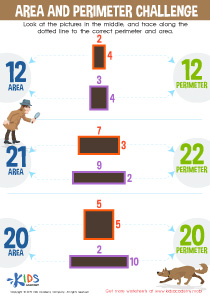
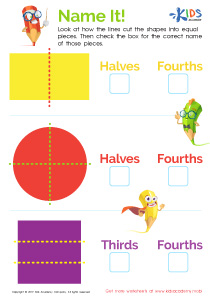
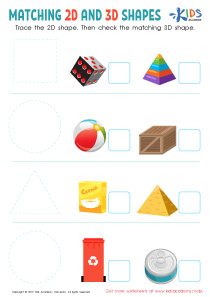
Visual Perception Skills 2D Shapes Worksheets for Ages 3-7
3 filtered results
-
From - To
Unlock your child's potential with our "Visual Perception Skills 2D Shapes Worksheets for Ages 3-7." These engaging, educational worksheets are designed to bolster your child’s visual discrimination, matching, and pattern-recognition abilities while identifying and sorting 2D shapes. Perfect for preschool and early elementary students, our resources support cognitive growth and boost readiness for more complex math concepts. Offering vibrant, kid-friendly activities, the worksheets are both fun and efficient in nurturing essential early learning skills. Help your child excel in their educational journey with these practical, hands-on learning tools.
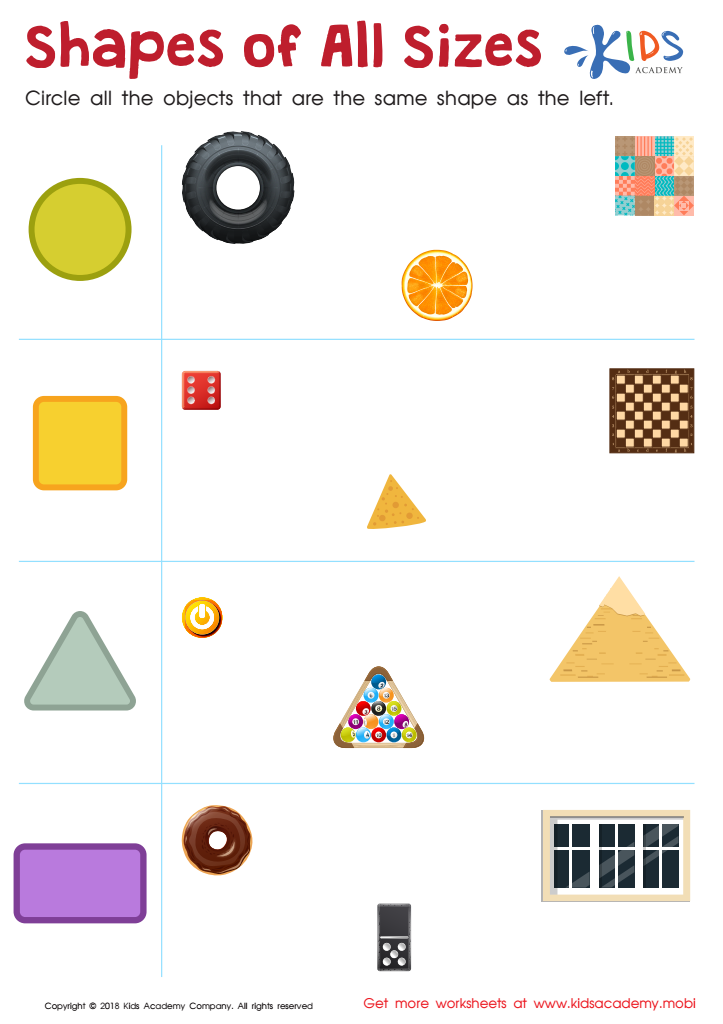
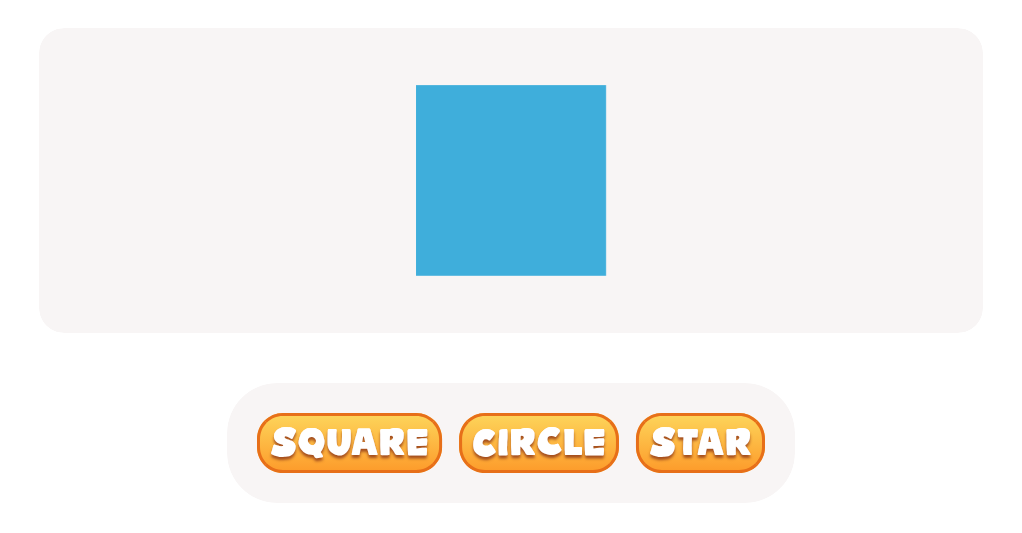
Shapes of All Sizes Worksheet
 Assign to My Students


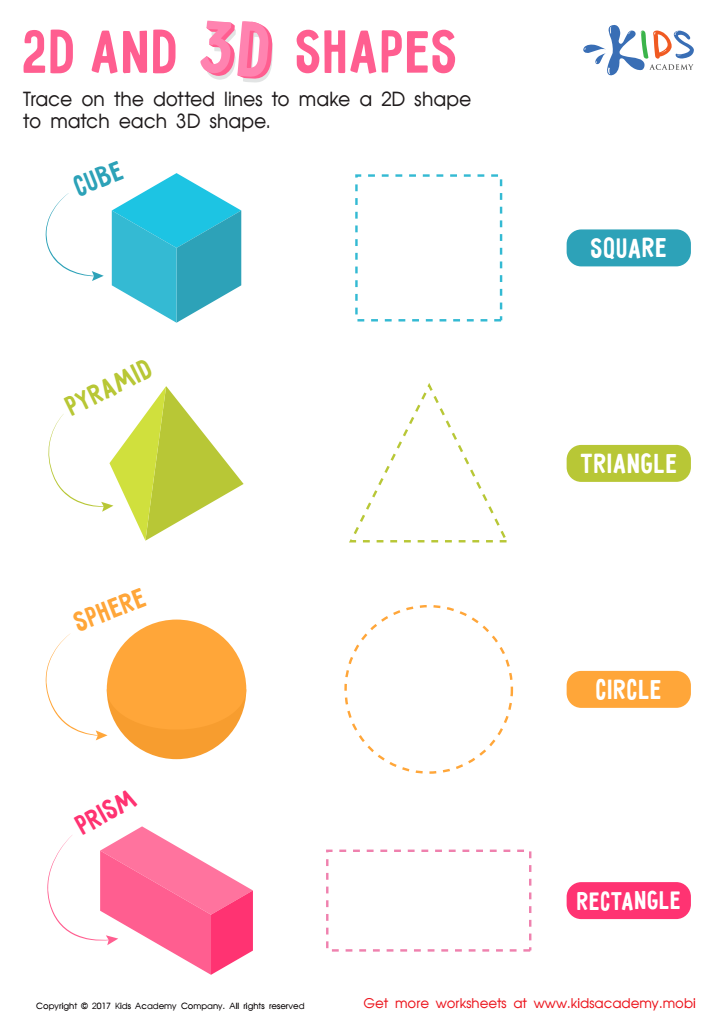
2D and 3D Shapes Worksheet
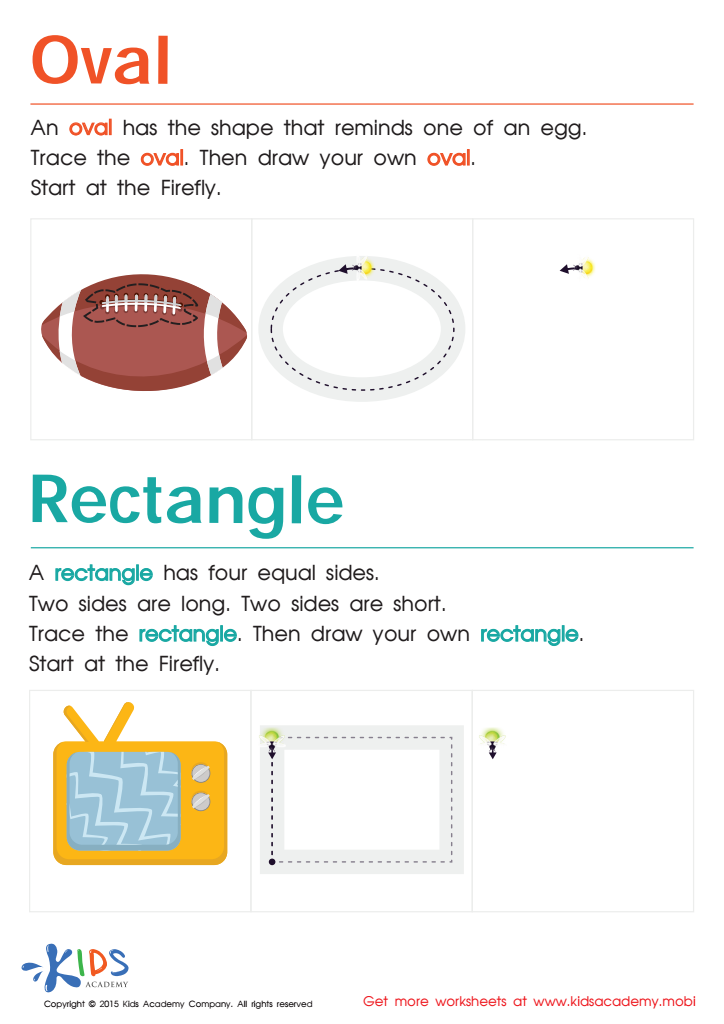
Easy Drawing of Ovals And Rectangles Worksheet








Visual perception skills, particularly the recognition of 2D shapes, are crucial for children aged 3-7, as they lay the foundation for more advanced cognitive and academic tasks. Developing these skills allows children to interpret and organize visual information effectively, which is a key component of early learning.
When children learn to identify and differentiate between various 2D shapes, they strengthen their ability to recognize patterns and make comparisons. This skill is not only essential for learning mathematics, such as geometry, but also for understanding letters and numbers, which are themselves composed of simpler shapes. For example, recognizing the difference between a circle and a square can translate to understanding the resemblance and differences between letters like ‘O’ and ‘Q’ or numbers like ‘6’ and ‘9.’
Moreover, strong visual perception skills enhance hand-eye coordination, essential for writing and drawing. Activities that involve sorting, matching, and tracing shapes also improve fine motor skills, necessary for tasks like buttoning a coat or tying shoelaces.
Finally, recognizing and manipulating 2D shapes encourages problem-solving and creativity. Building blocks, puzzles, and drawing all involve shape manipulation, fostering an environment where children can experiment, conceive unique ideas, and thus, develop confidence and independence in their learning.
Teachers and parents should prioritize visual perception skills to ensure a robust, comprehensive developmental progress that not only supports academic learning but also aids in daily life functions.