Filters

28 filtered results

Clear all filters
Favorites
With answer key
Interactive

28 filtered results

Difficulty Level

Grade


Subject

Enhance your child's cognitive development with our engaging "Adding in the Sea Worksheets" designed for ages 3-7! These interactive worksheets focus on fundamental math skills, promoting addition through vibrant underwater themes. Children will explore the world of numbers while counting and adding sea creatures, boosting their counting abilities and problem-solving skills. Each worksheet is crafted to stimulate young minds, encouraging critical thinking and allowing for playful learning. With colorful illustrations and fun activities, kids will enjoy practicing addition in an exciting and educational way. Perfect for parents and teachers looking to enrich early math education, download them today!
Check out this FREE Trial Lesson on Adding in the Sea for age 3-7!

Match Objects that Fit Together

Favorites
With answer key
Interactive
  • 3-7
  • Cognitive Development
  • Adding in the Sea
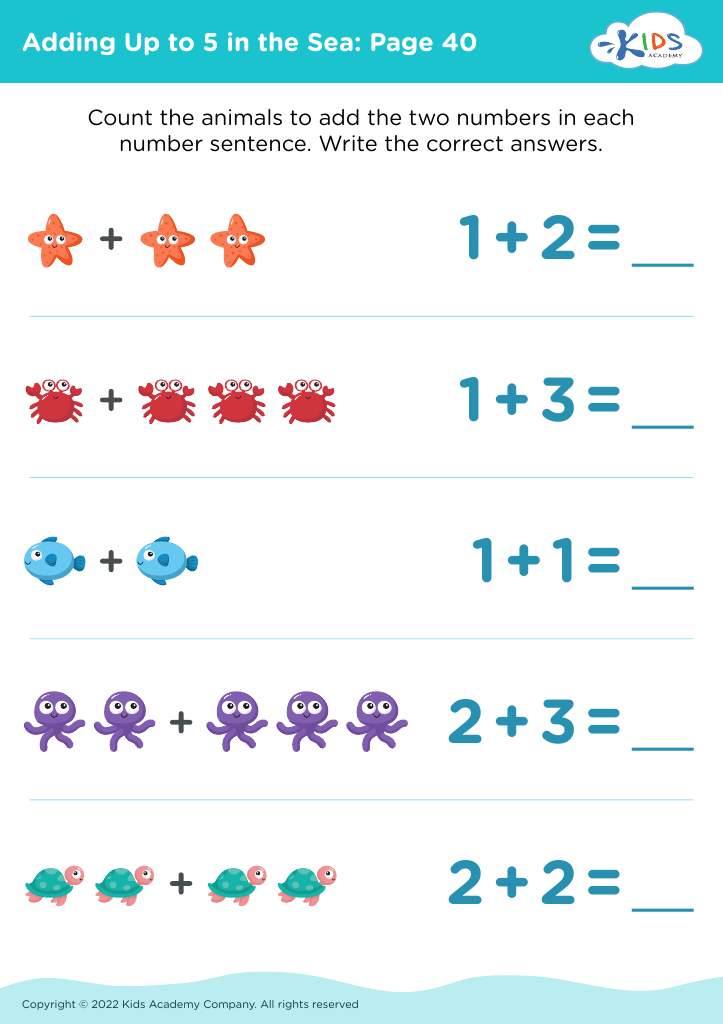
Adding Up to 5 in the Sea: Page 40
Worksheet
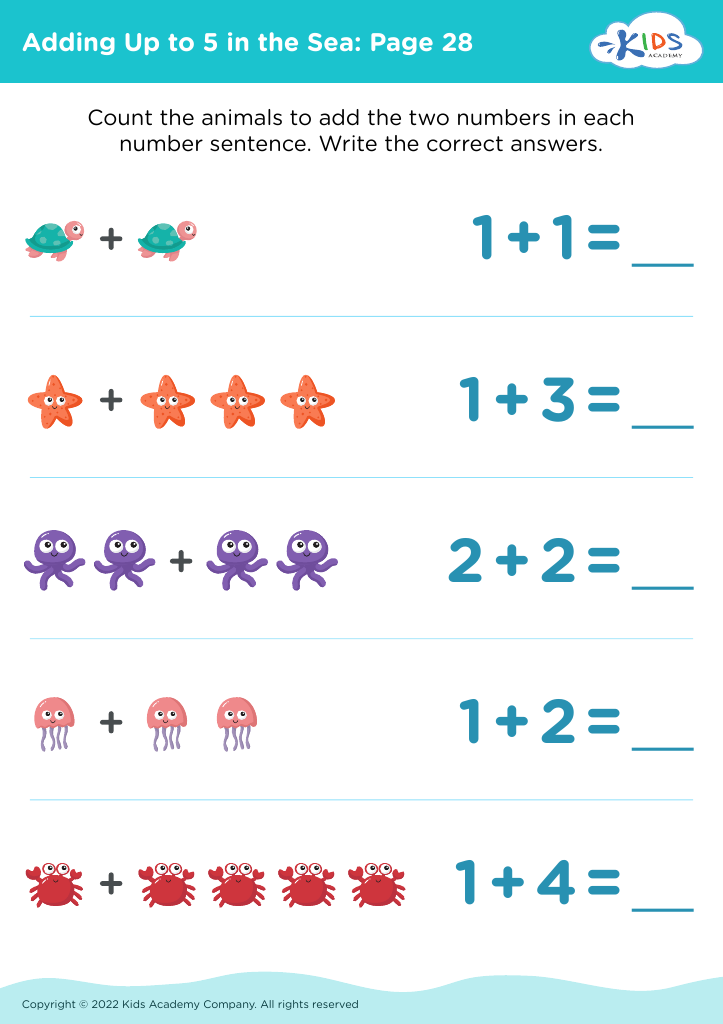
Adding Up to 5 in the Sea: Page 28
Worksheet
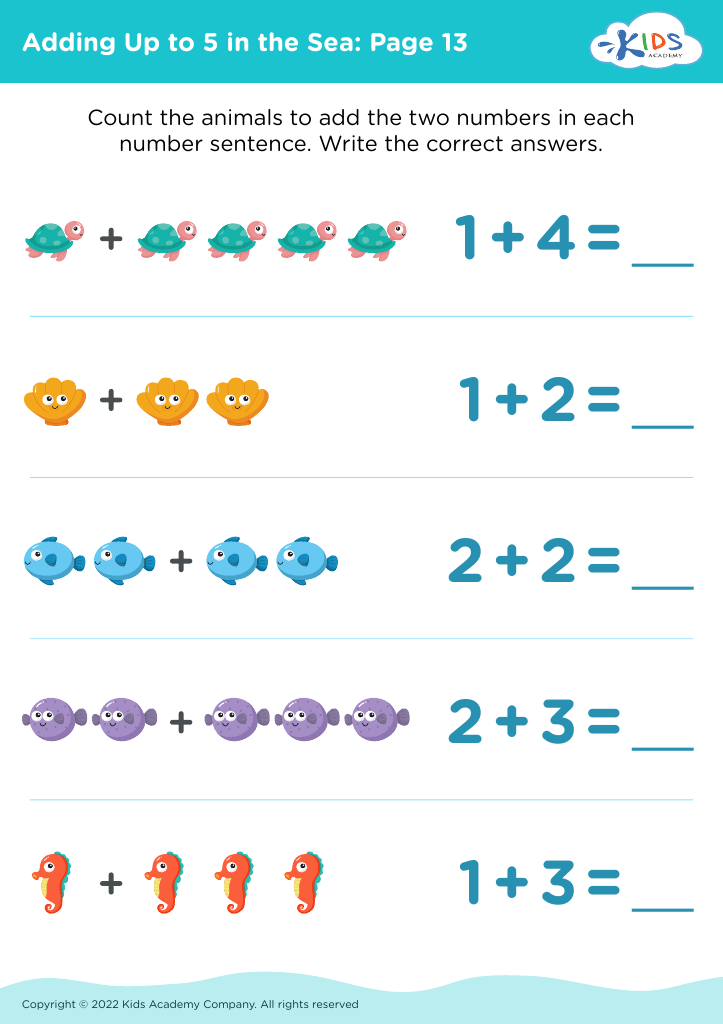
Adding Up to 5 in the Sea: Page 13
Worksheet
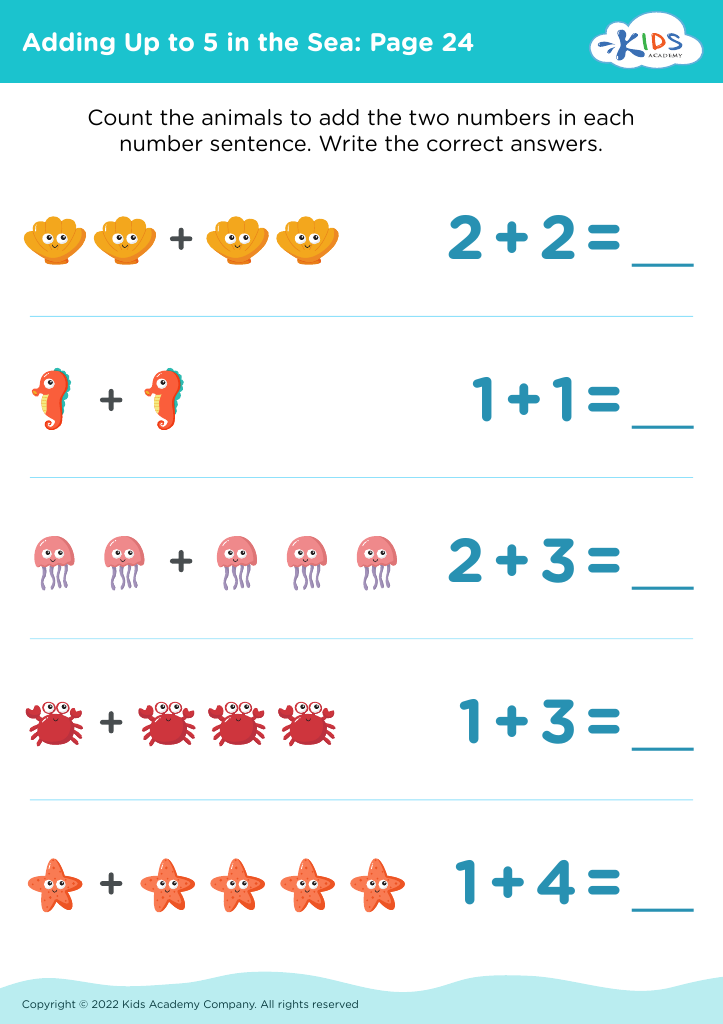
Adding Up to 5 in the Sea: Page 24
Worksheet
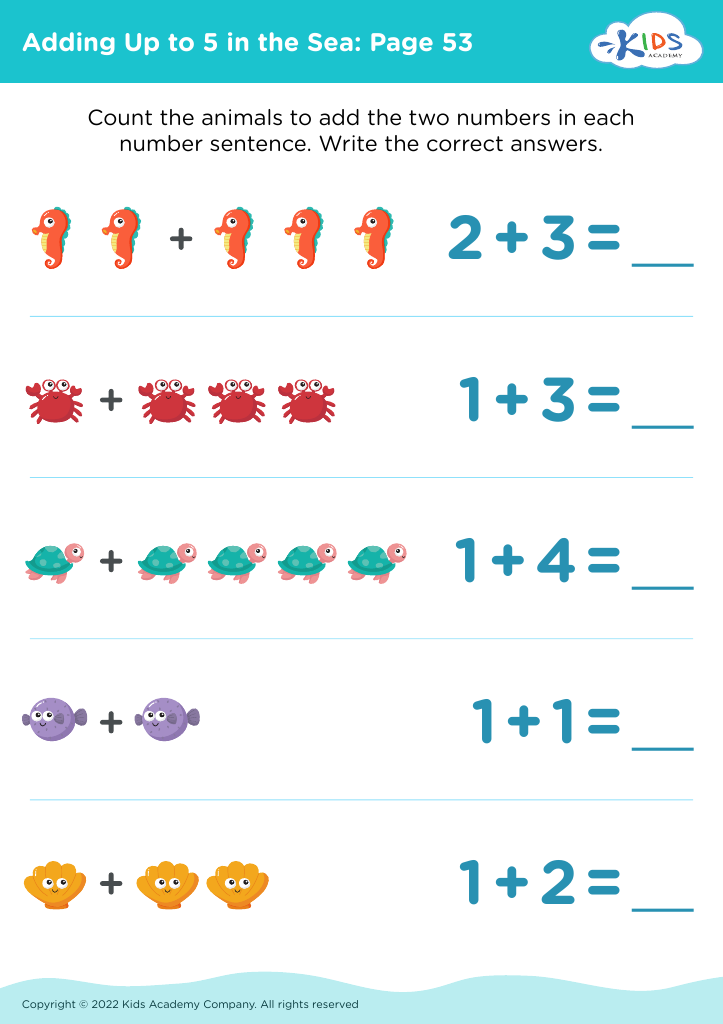
Adding Up to 5 in the Sea: Page 53
Worksheet
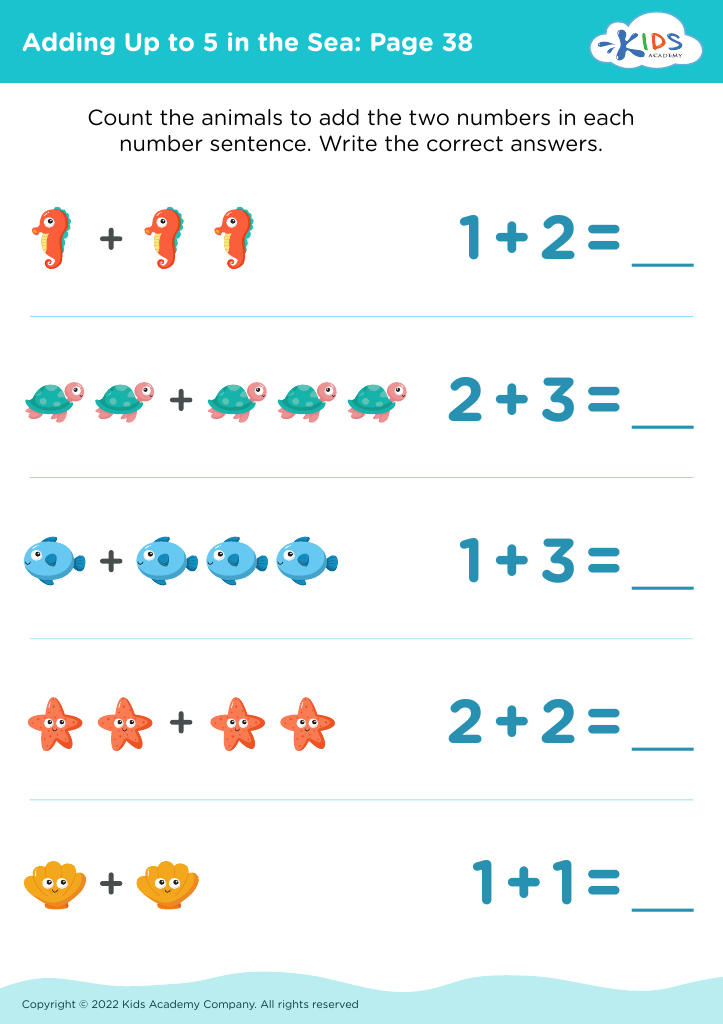
Adding Up to 5 in the Sea: Page 38
Worksheet
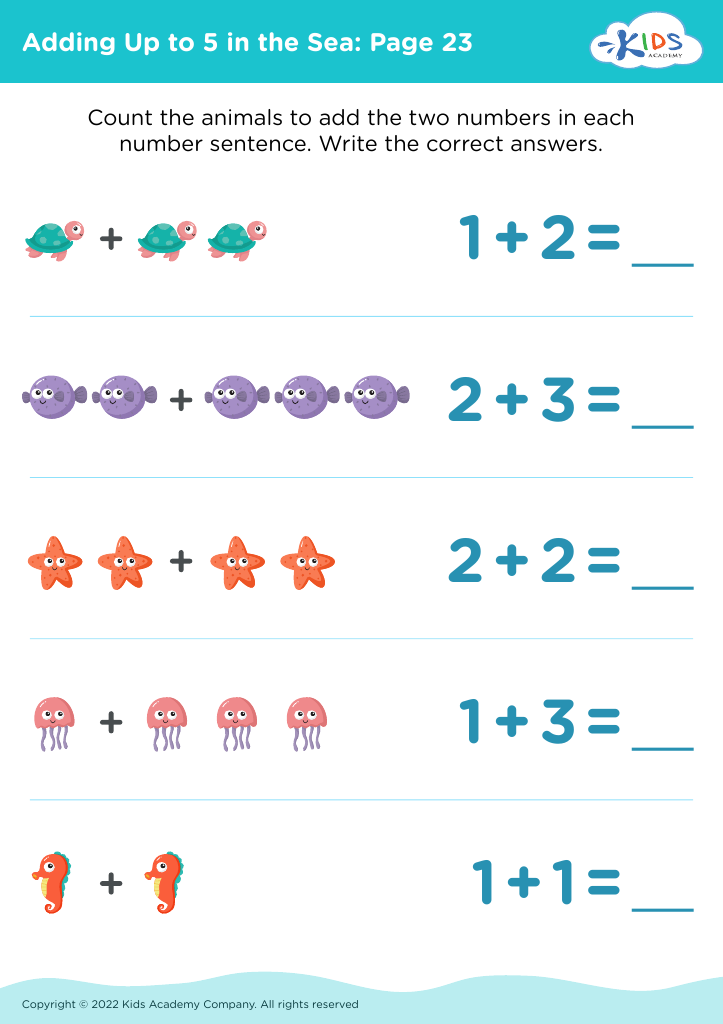
Adding Up to 5 in the Sea: Page 23
Worksheet
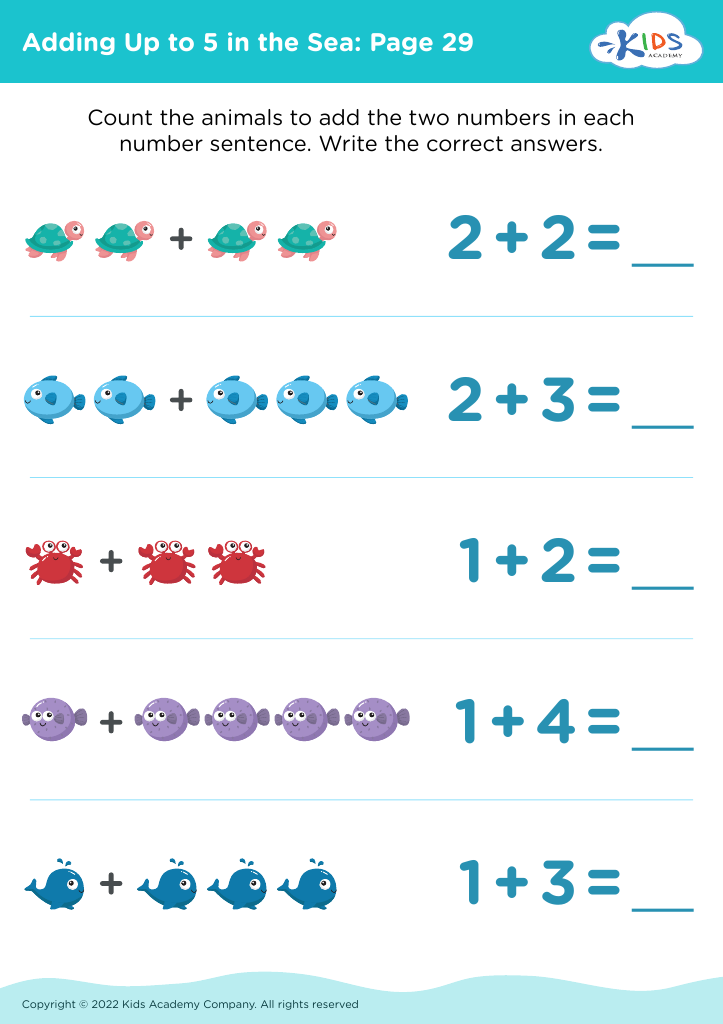
Adding Up to 5 in the Sea: Page 29
Worksheet
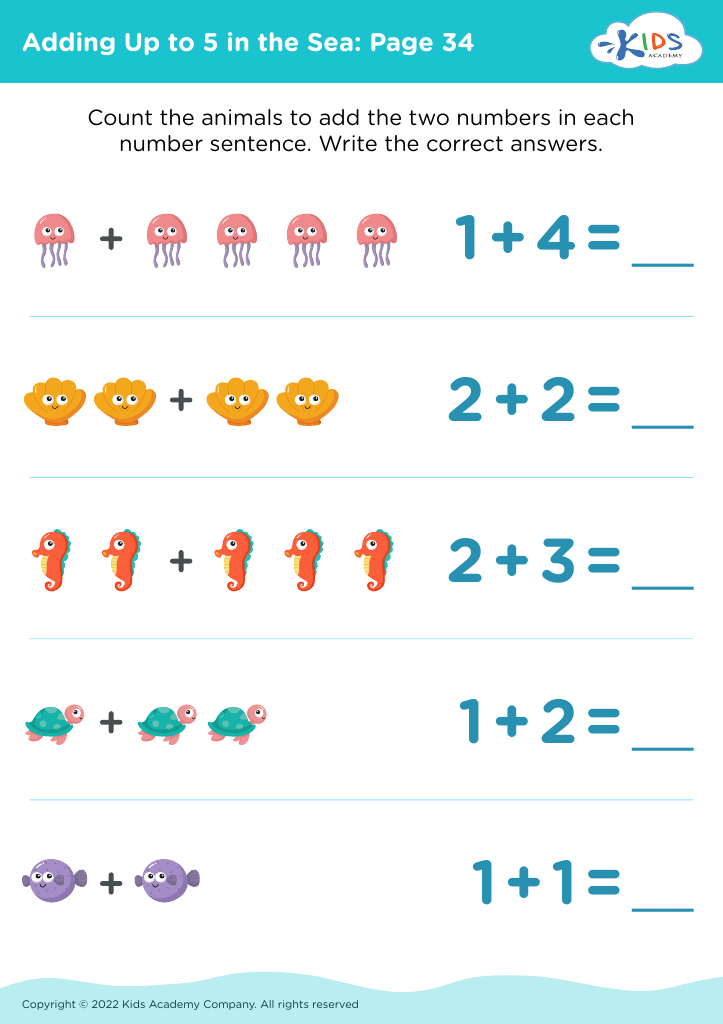
Adding Up to 5 in the Sea: Page 34
Worksheet
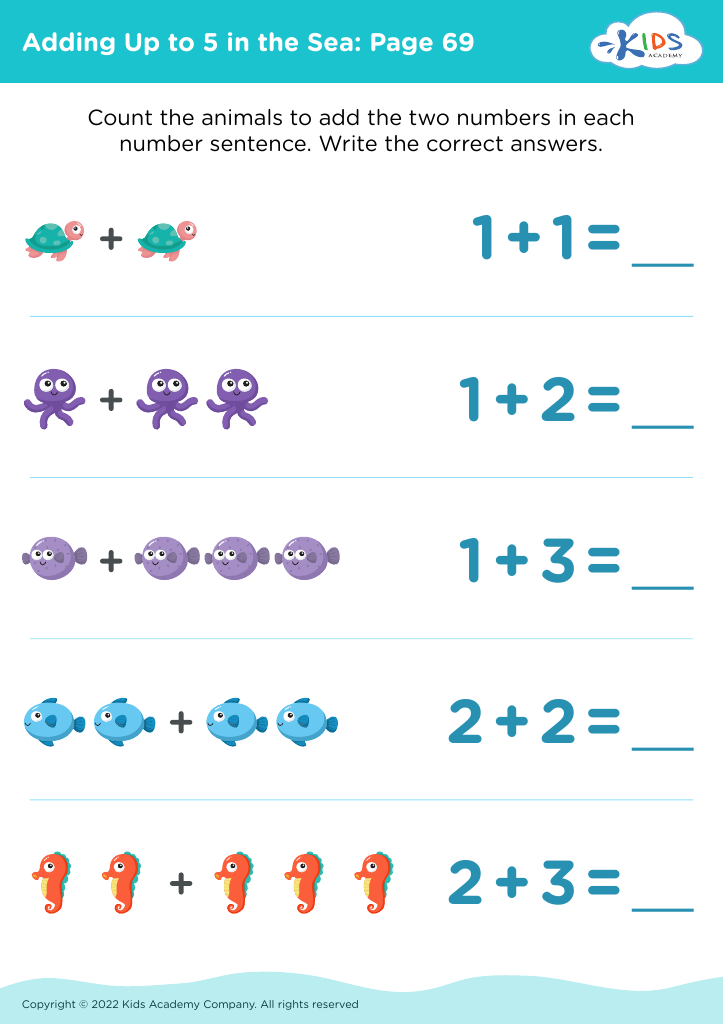
Adding Up to 5 in the Sea: Page 69
Worksheet
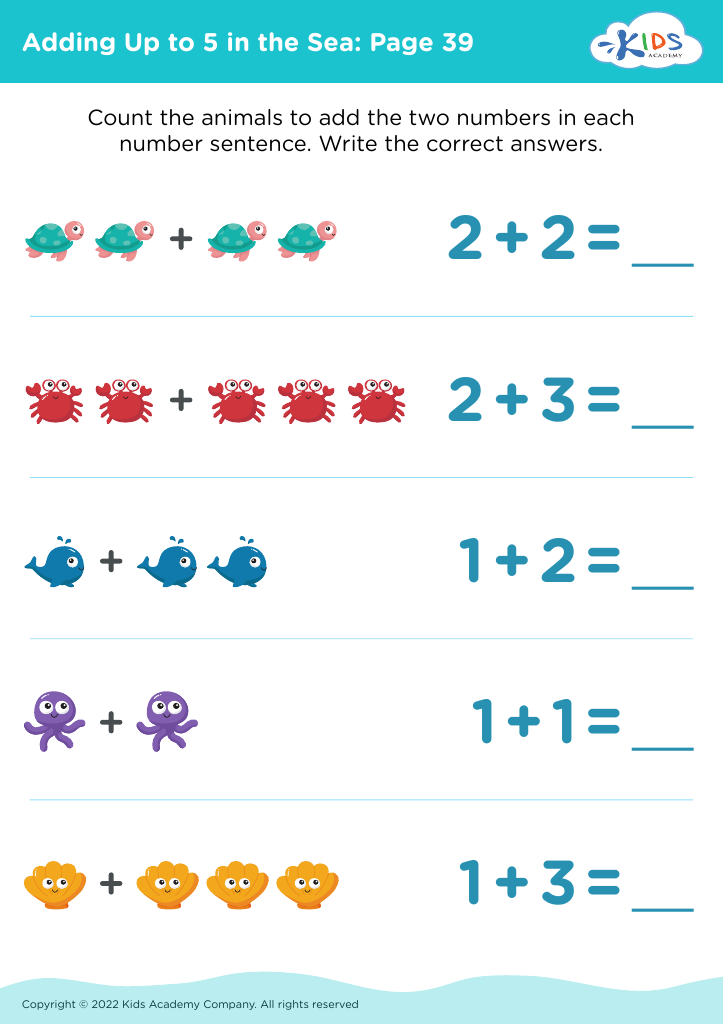
Adding Up to 5 in the Sea: Page 39
Worksheet
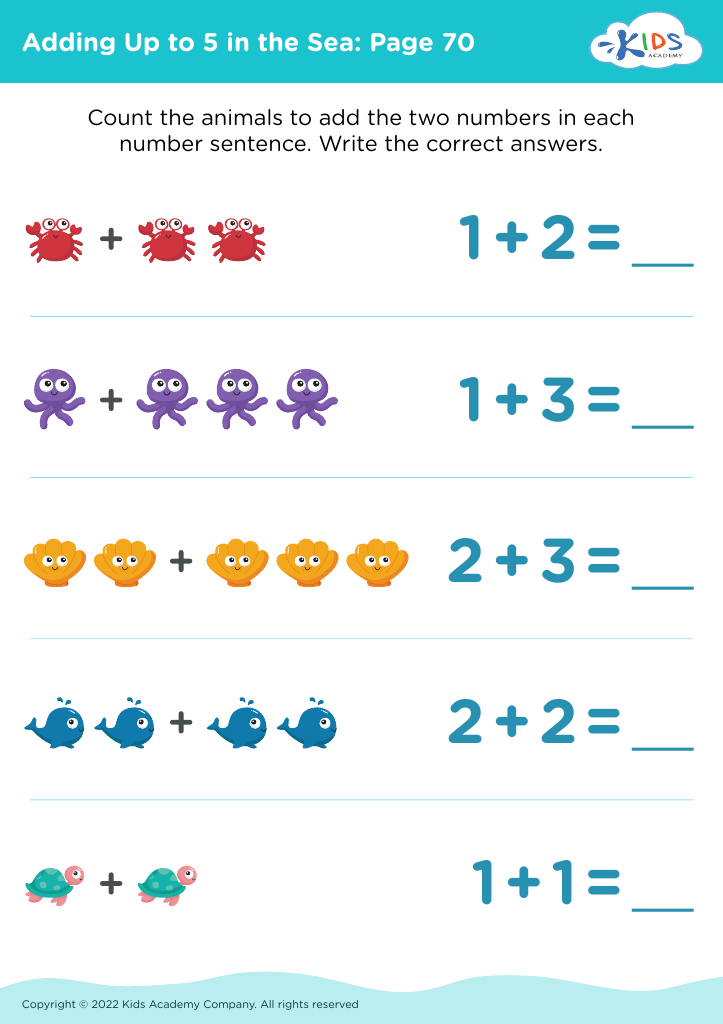
Adding Up to 5 in the Sea: Page 70
Worksheet
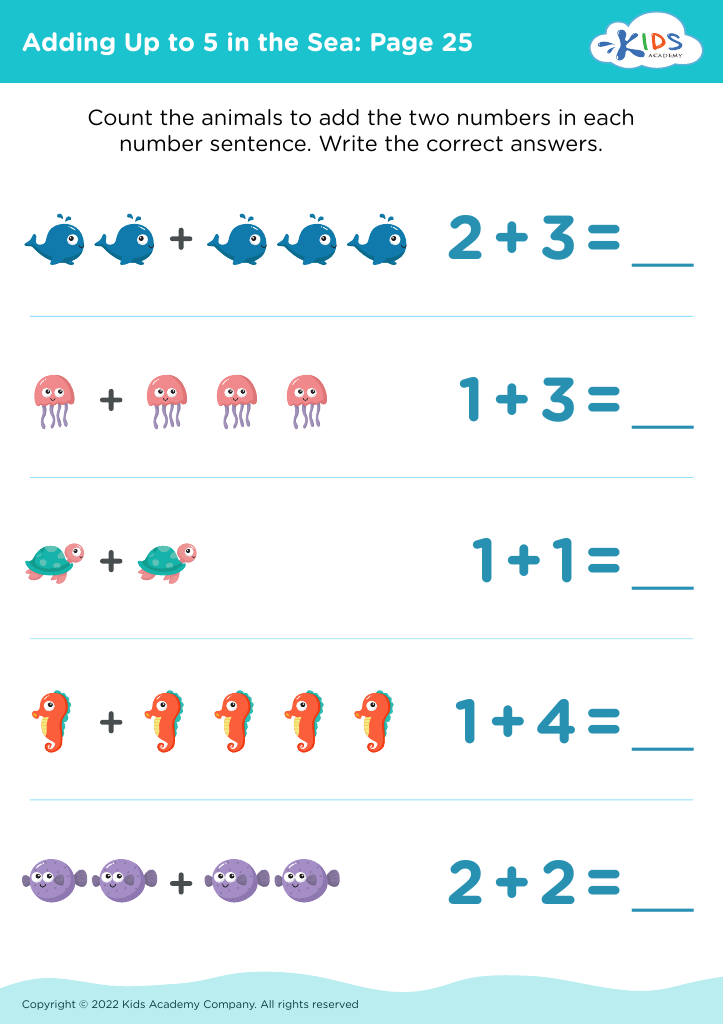
Adding Up to 5 in the Sea: Page 25
Worksheet
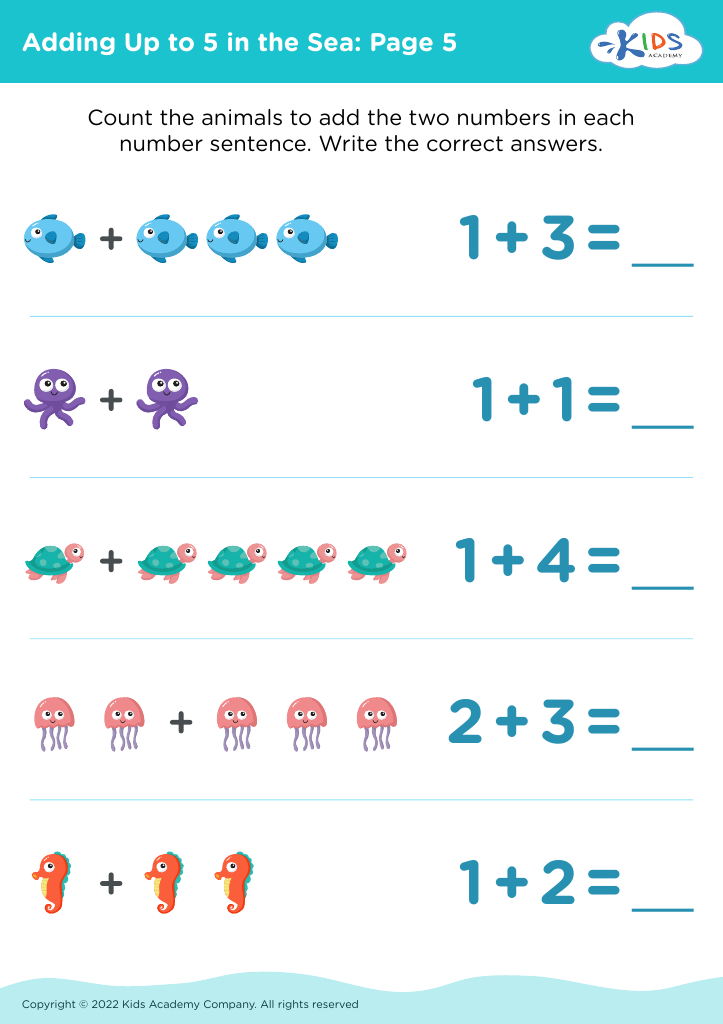
Adding Up to 5 in the Sea: Page 5

Adding Up to 5 in the Sea: Page 5

Adding Up to 5 in the Sea: Page 5
Worksheet
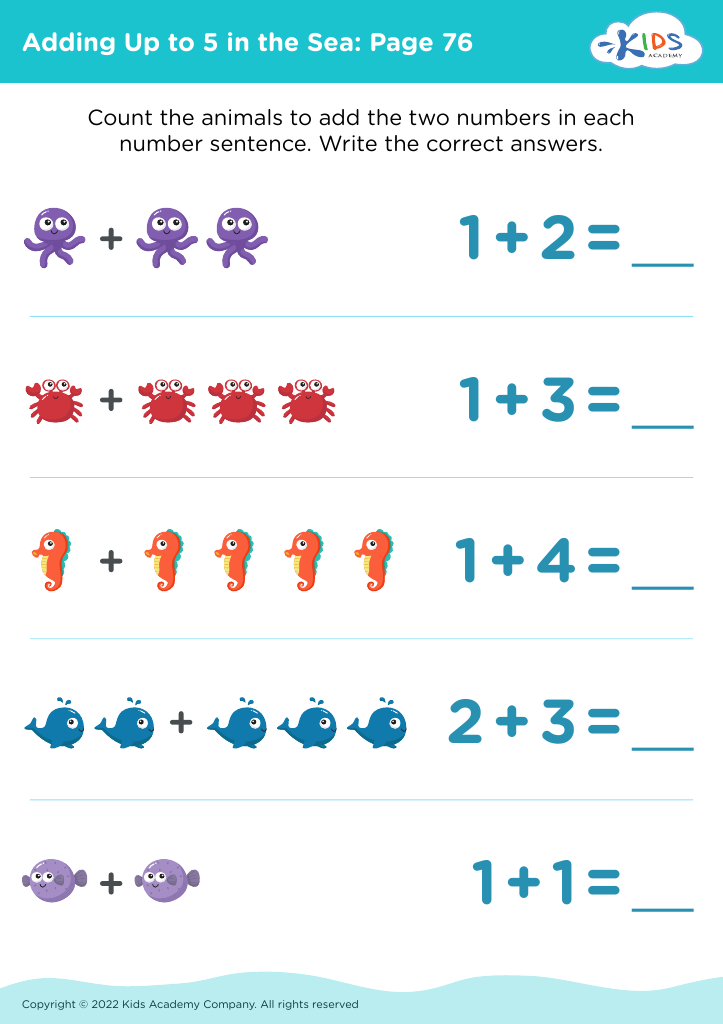
Adding Up to 5 in the Sea: Page 76
Worksheet
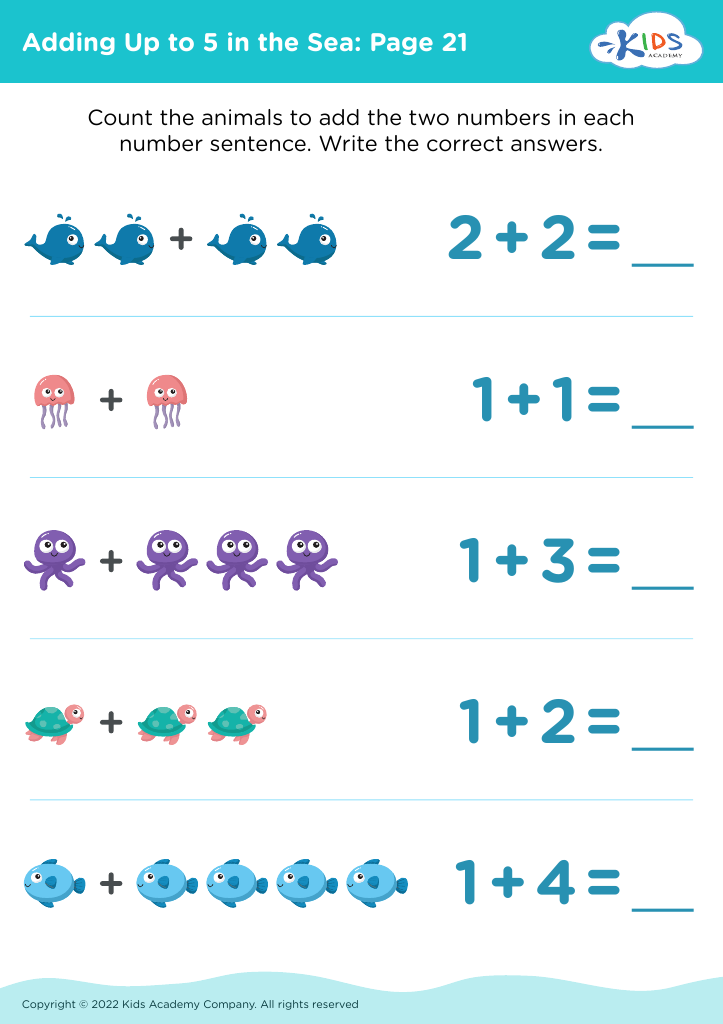
Adding Up to 5 in the Sea: Page 21
Worksheet
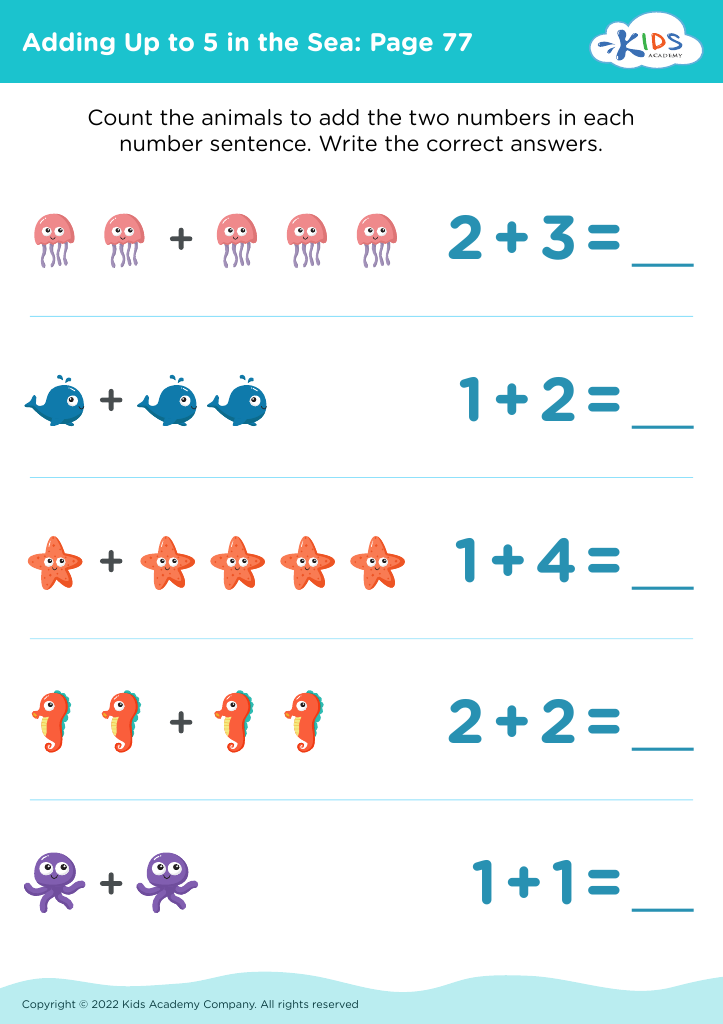
Adding Up to 5 in the Sea: Page 77
Worksheet
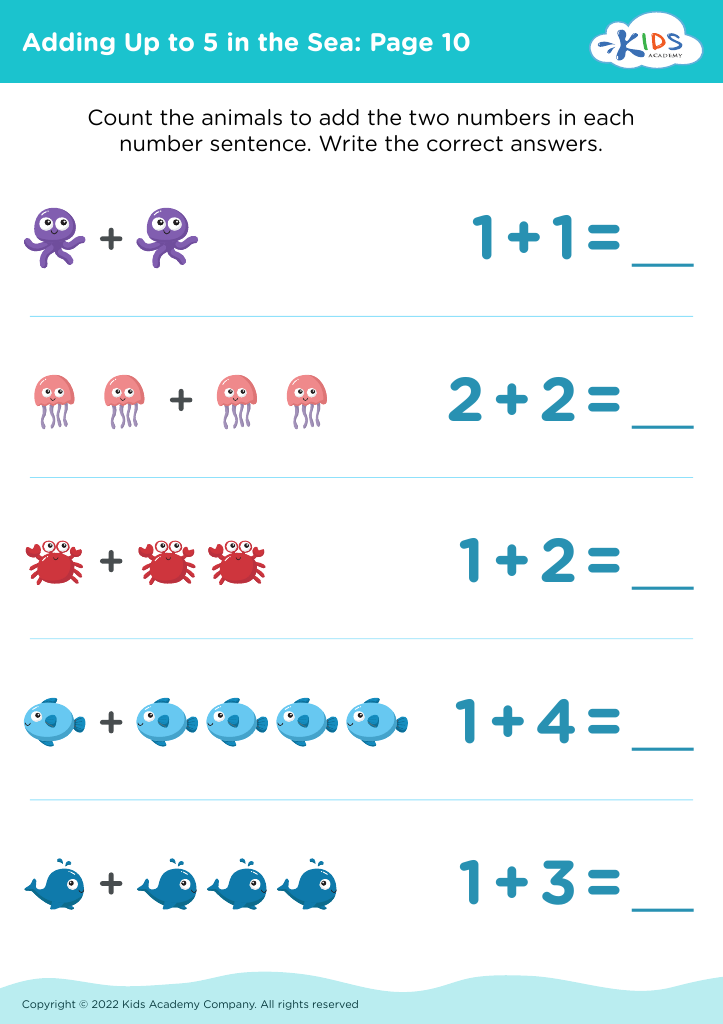
Adding Up to 5 in the Sea: Page 10
Worksheet
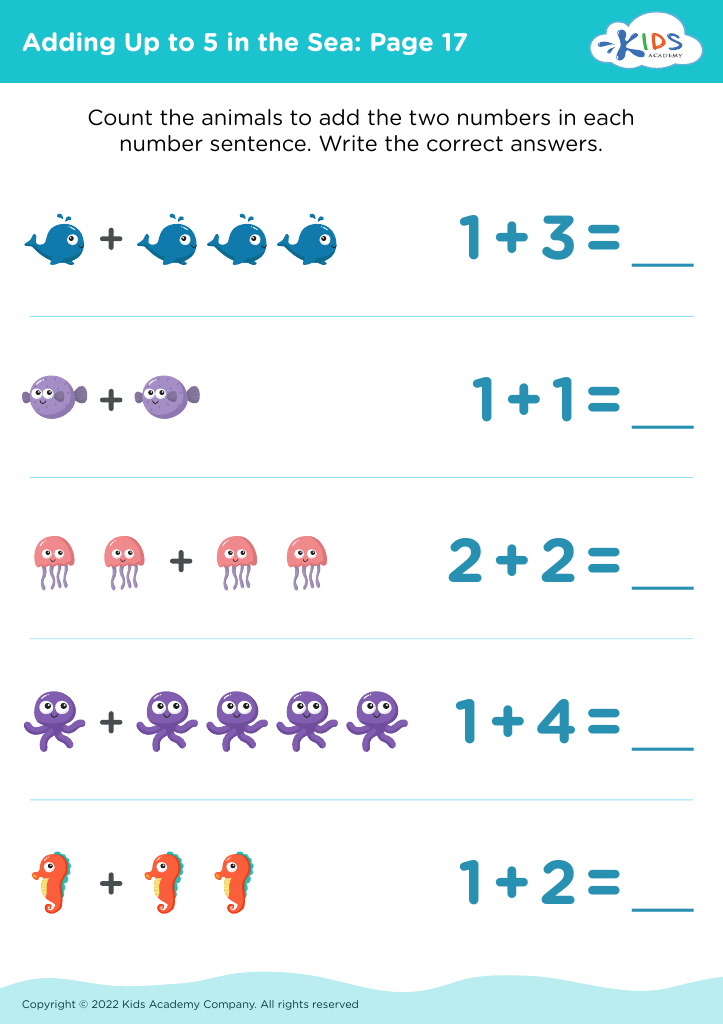
Adding Up to 5 in the Sea: Page 17
Worksheet
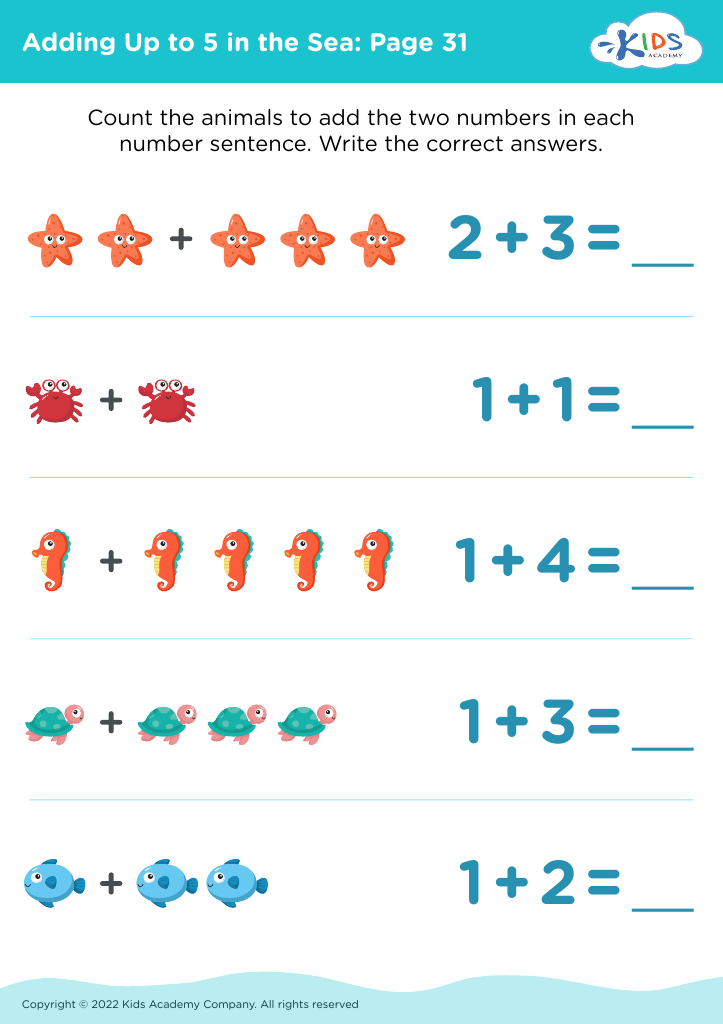
Adding Up to 5 in the Sea: Page 31
Worksheet
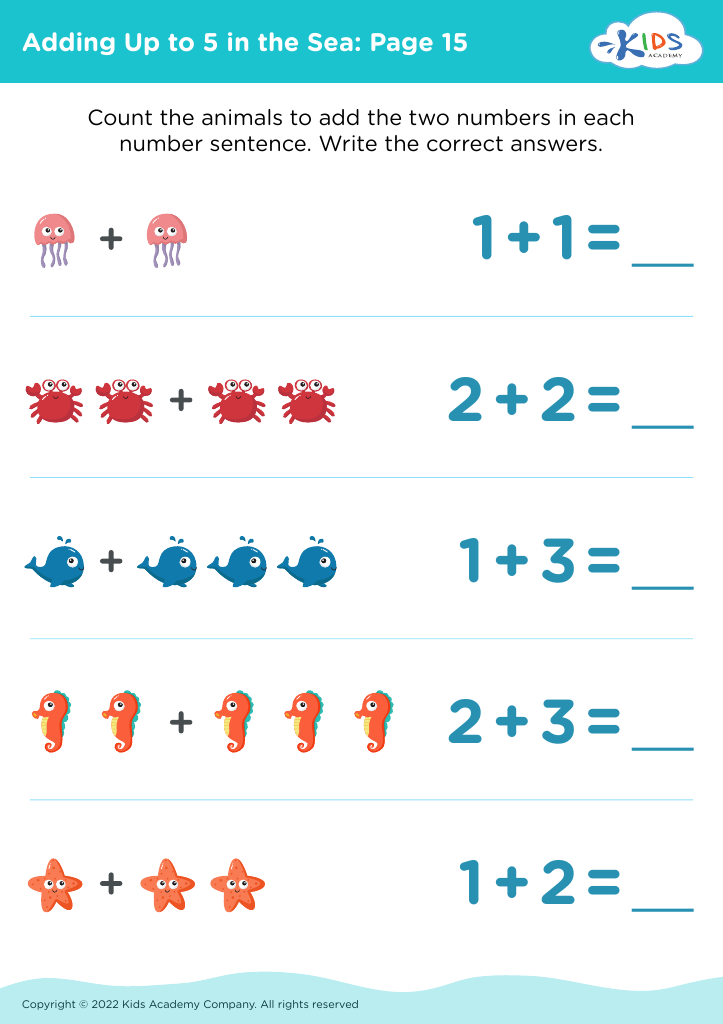
Adding Up to 5 in the Sea: Page 15
Worksheet
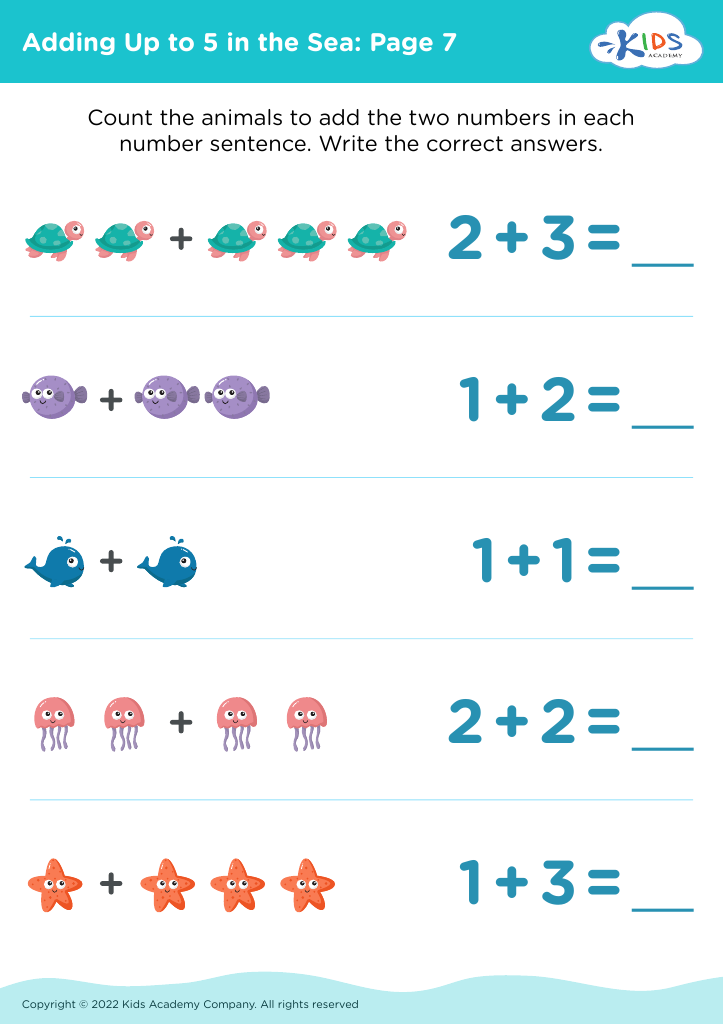
Adding Up to 5 in the Sea: Page 7

Adding Up to 5 in the Sea: Page 7

Adding Up to 5 in the Sea: Page 7
Worksheet
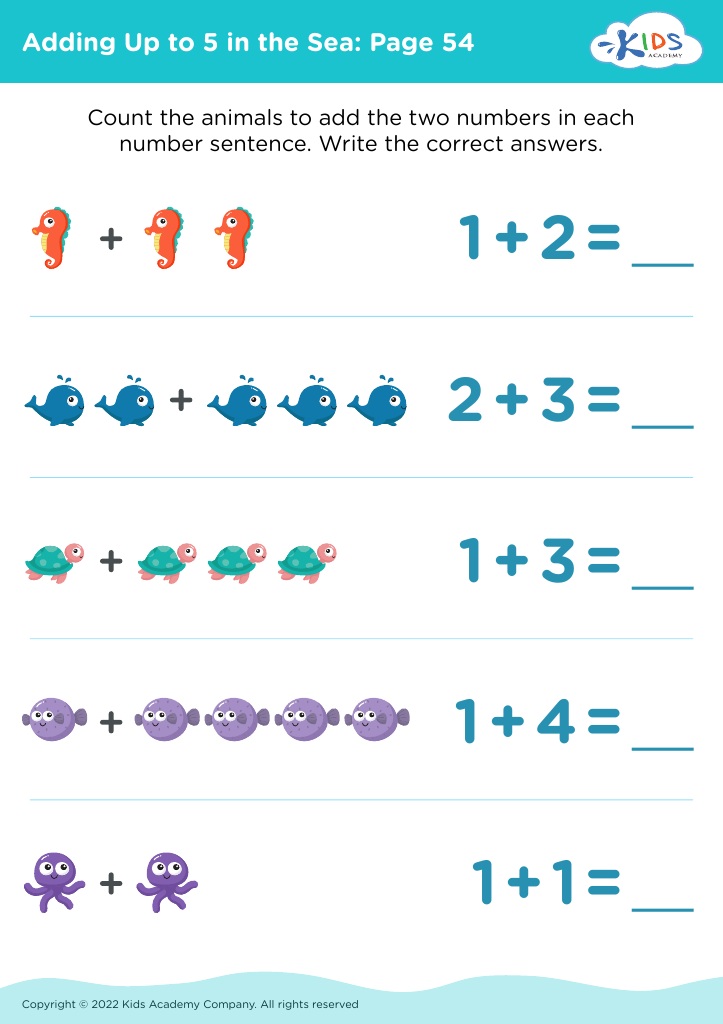
Adding Up to 5 in the Sea: Page 54
Worksheet
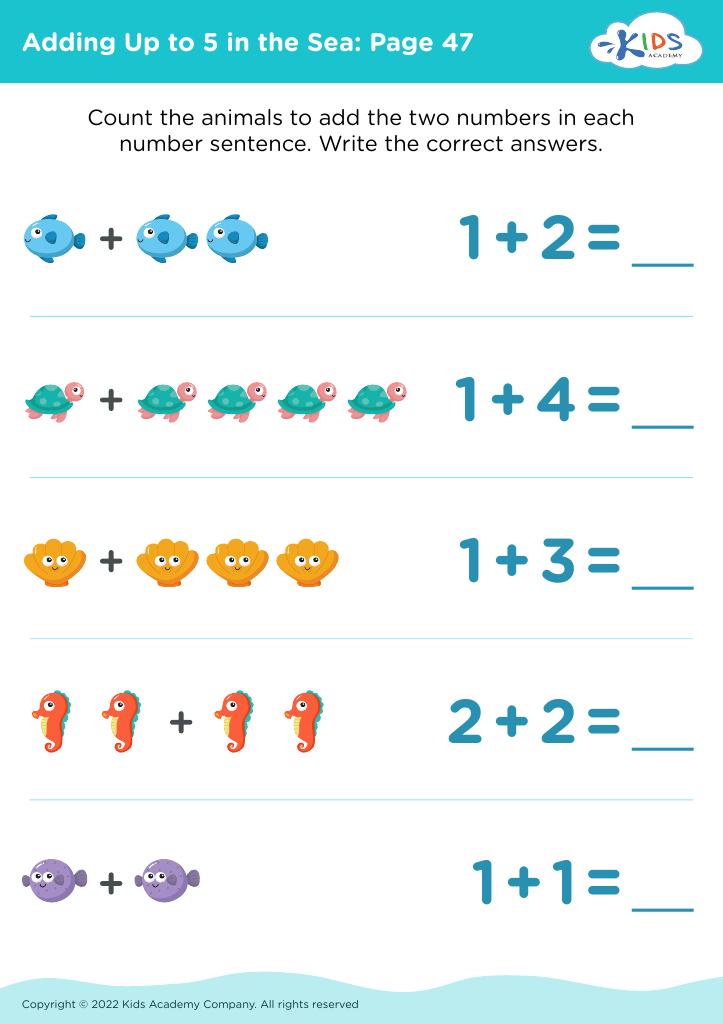
Adding Up to 5 in the Sea: Page 47
Worksheet


Cognitive development is crucial for children aged 3-7, as it lays the foundation for future learning and overall growth. During these early years, children's brains are highly adaptable and responsive, making it the ideal time to nurture their critical thinking, problem-solving, and language skills. Parents and teachers play a vital role in this developmental stage.

Understanding cognitive development helps caregivers create enriching environments that stimulate curiosity and engagement. For instance, incorporating hands-on activities and interactive play allows children to explore concepts and make connections independently. This fosters creativity and enhances their ability to think logically as they tackle various challenges.

Additionally, by focusing on cognitive development in this age group, parents and teachers can recognize potential learning difficulties early on and address them quickly, ensuring that children receive the necessary support. Moreover, a solid cognitive foundation contributes to better academic performance and social-emotional skills, helping children navigate their interpersonal relationships effectively.

Incorporating elements of STEAM (Science, Technology, Engineering, Arts, Mathematics) education into play promotes exploration and imagination, further enhancing cognitive skills. In short, prioritizing cognitive development for children ages 3-7 contributes to their overall well-being, setting them up for lifelong learning.