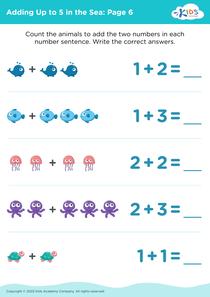
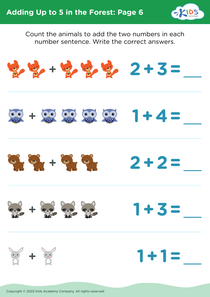
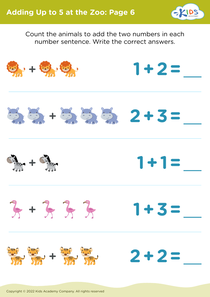
Animal recognition Adding on the Farm Worksheets for Ages 3-7
31 filtered results
-
From - To
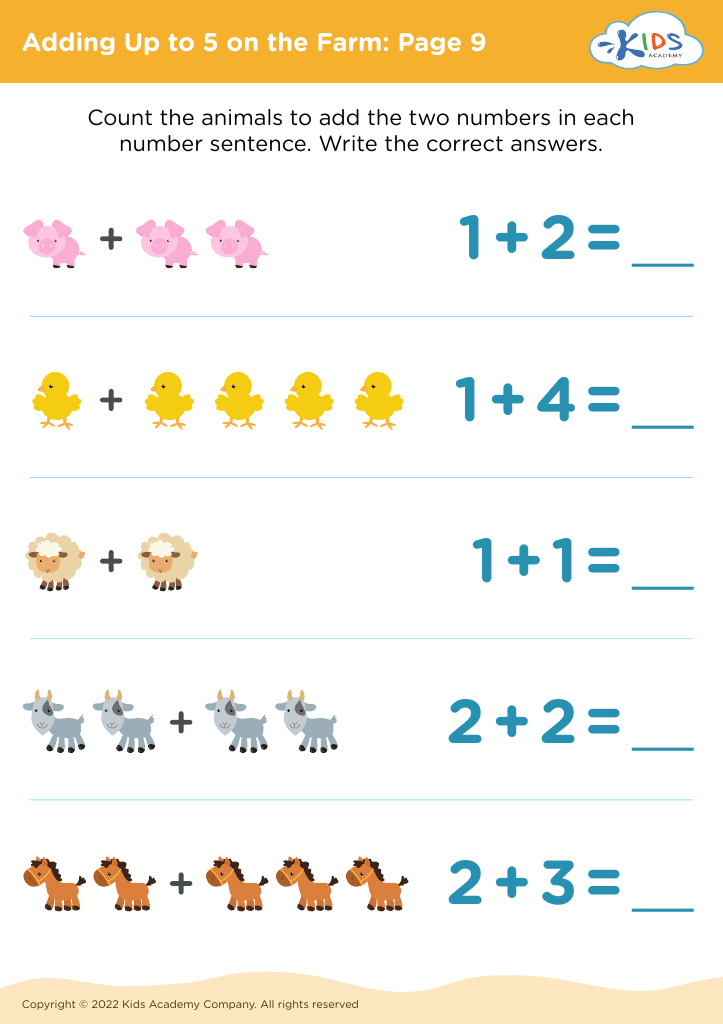
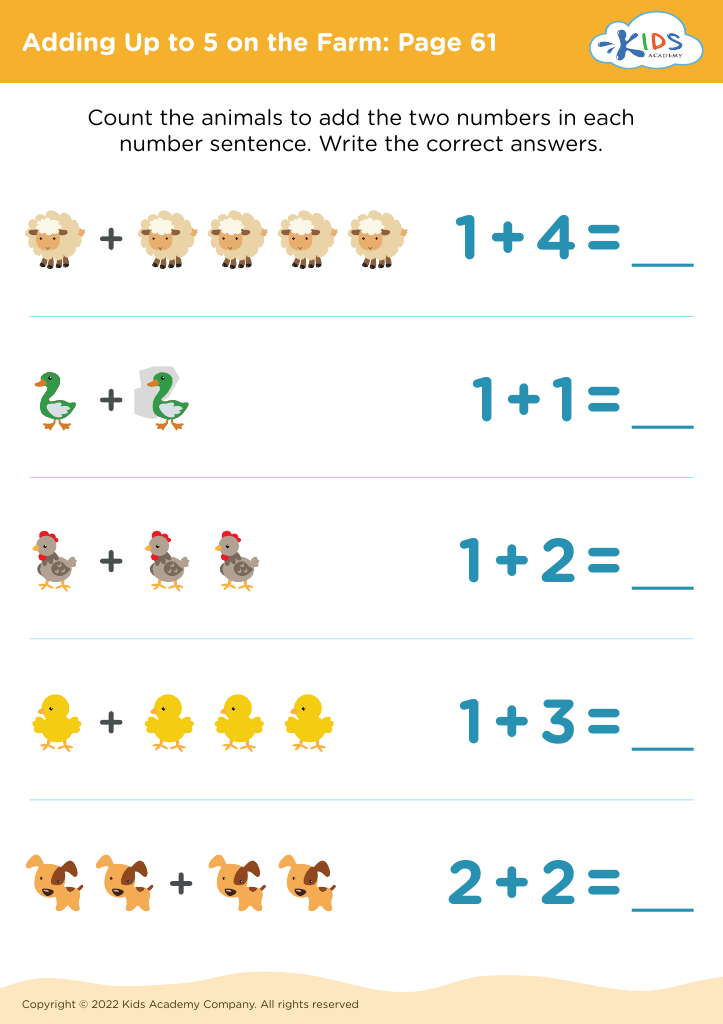
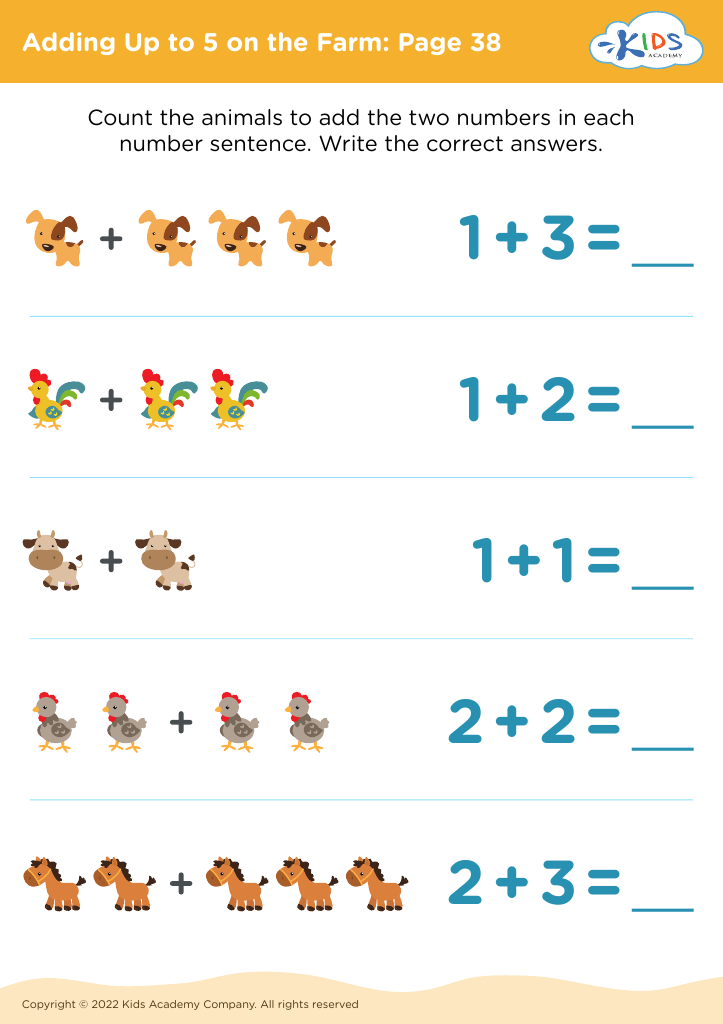
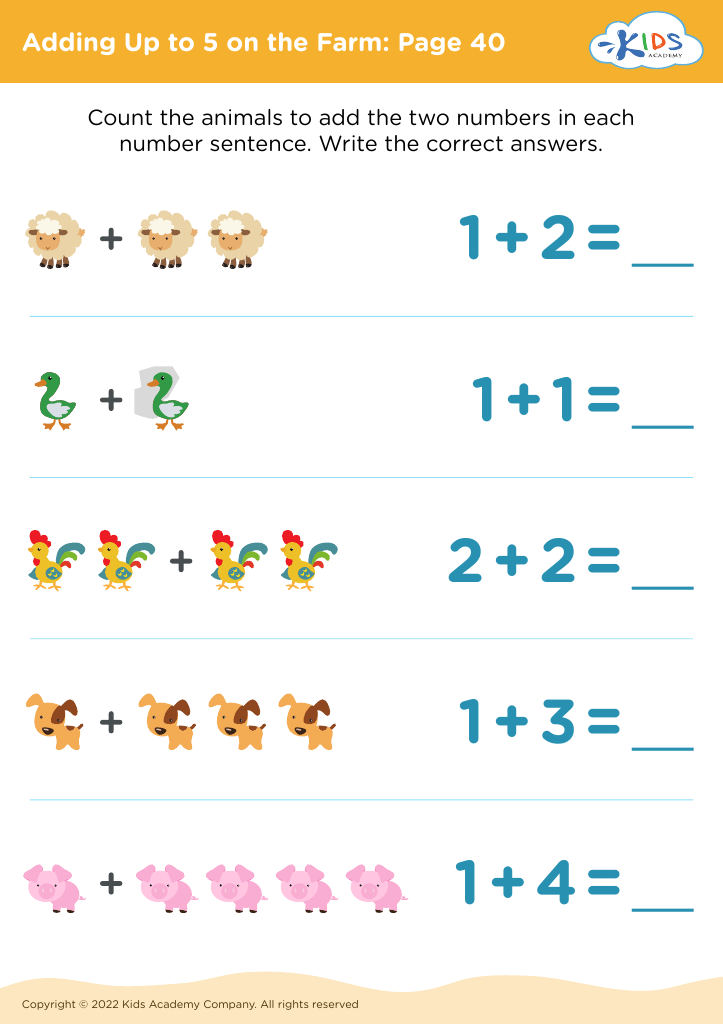
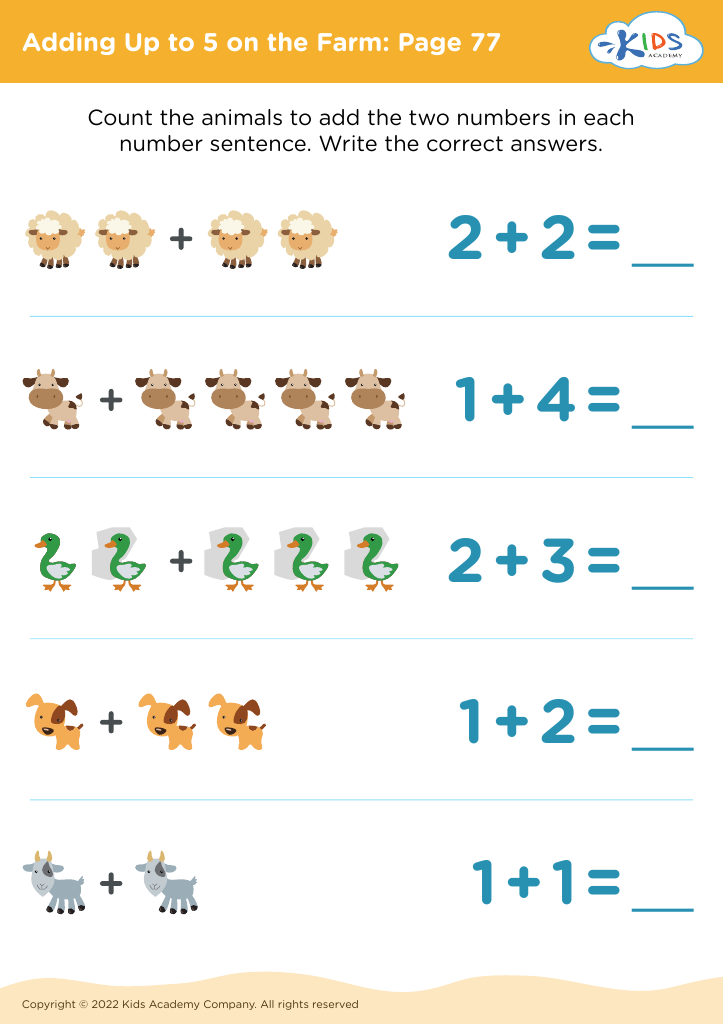
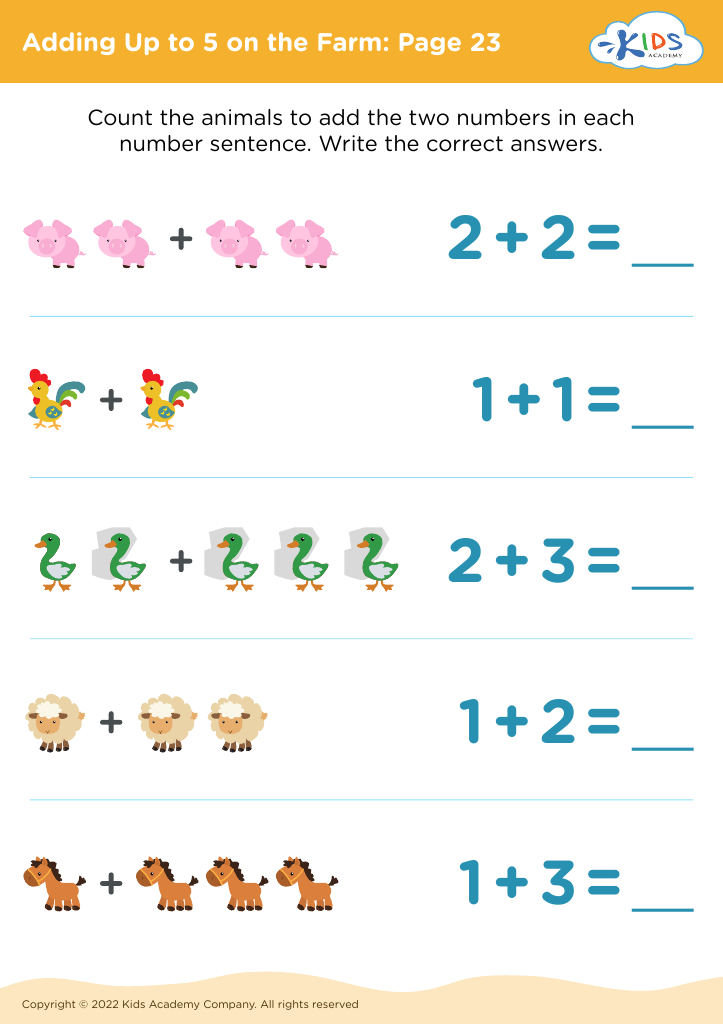
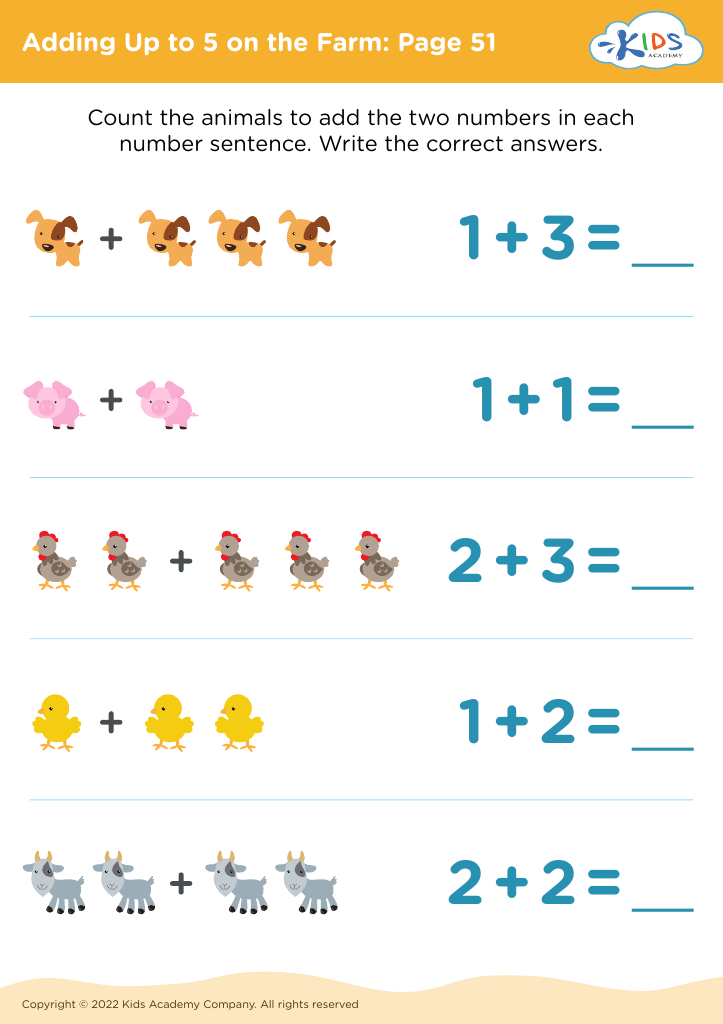
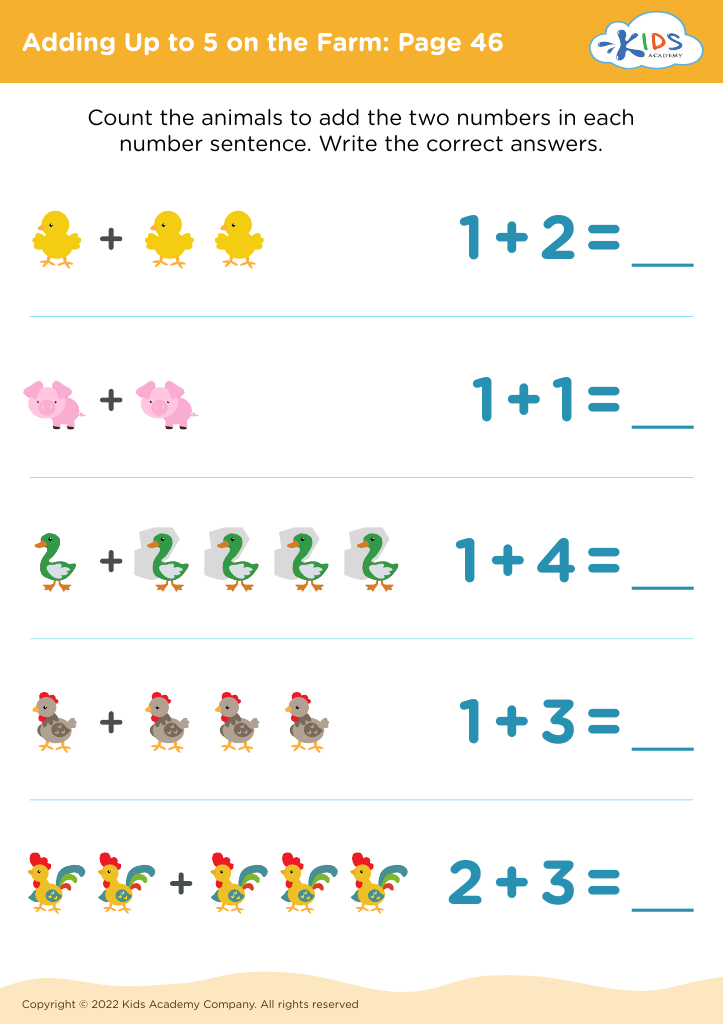
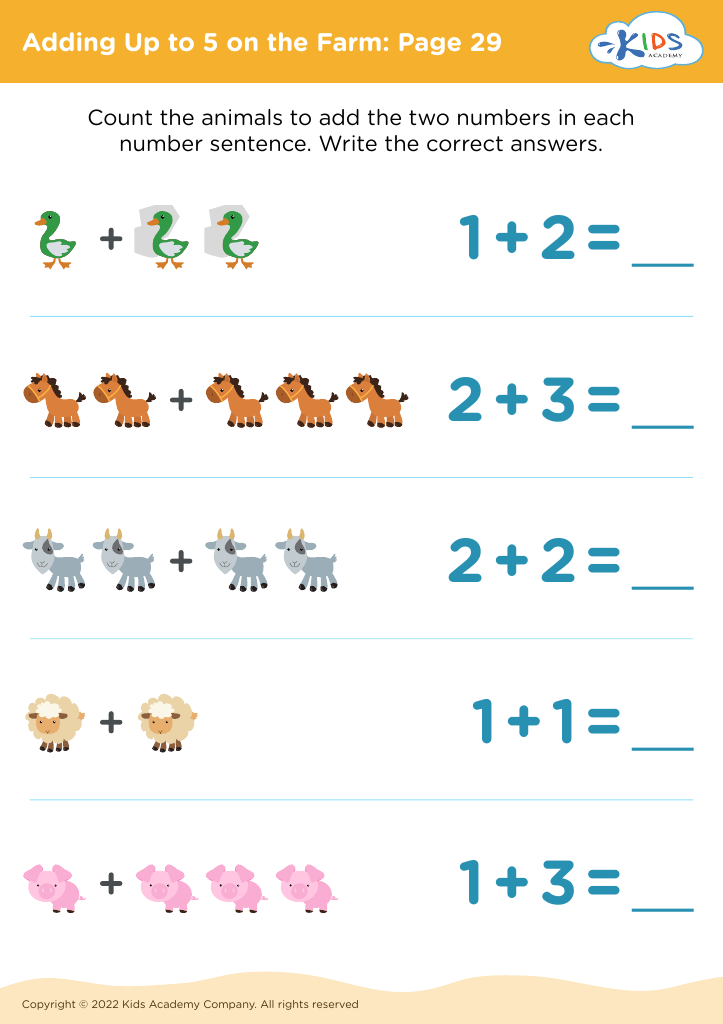
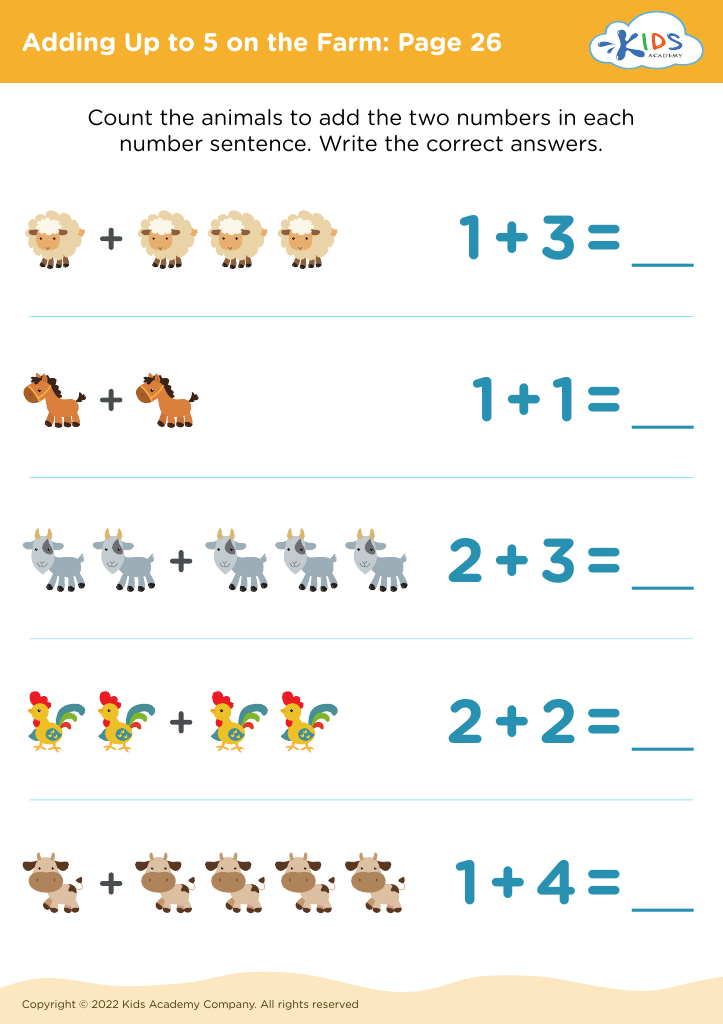
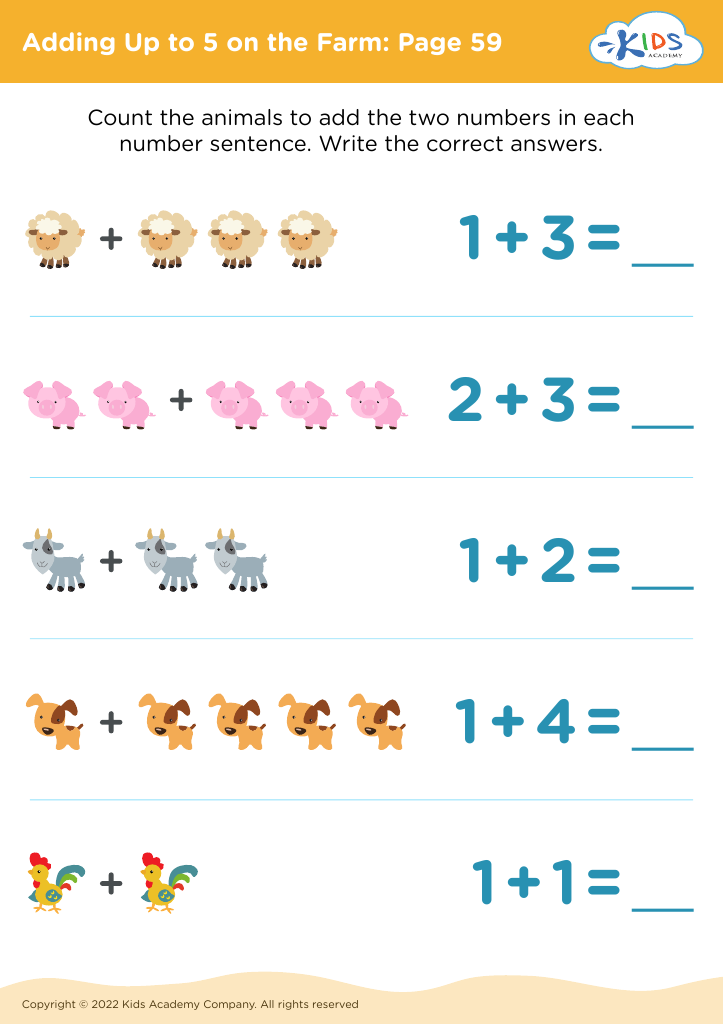
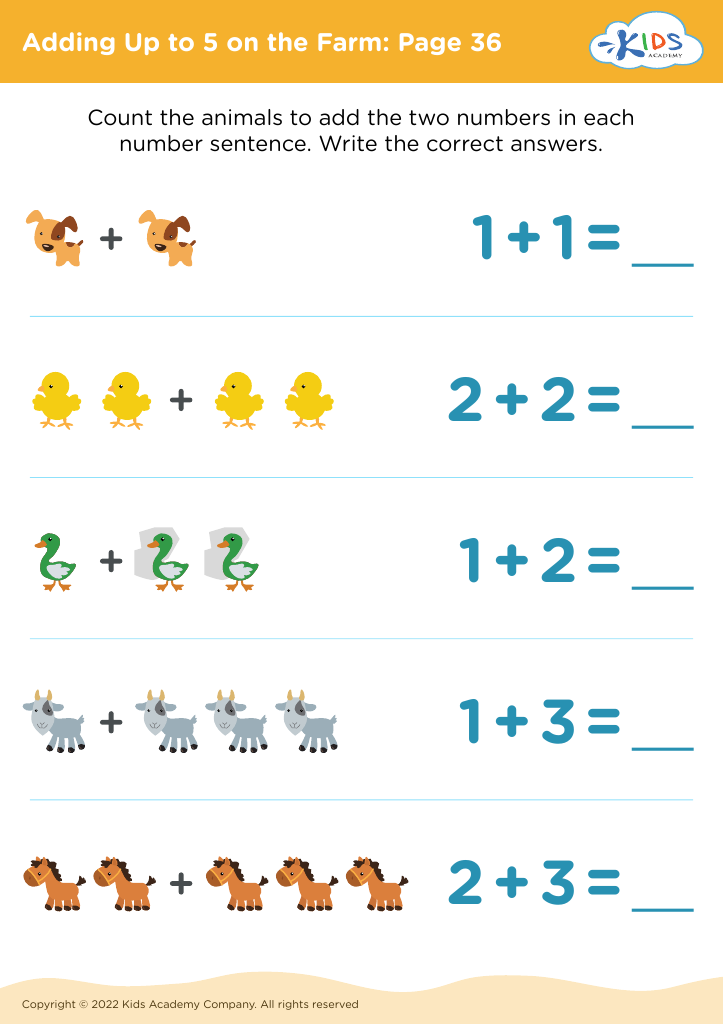
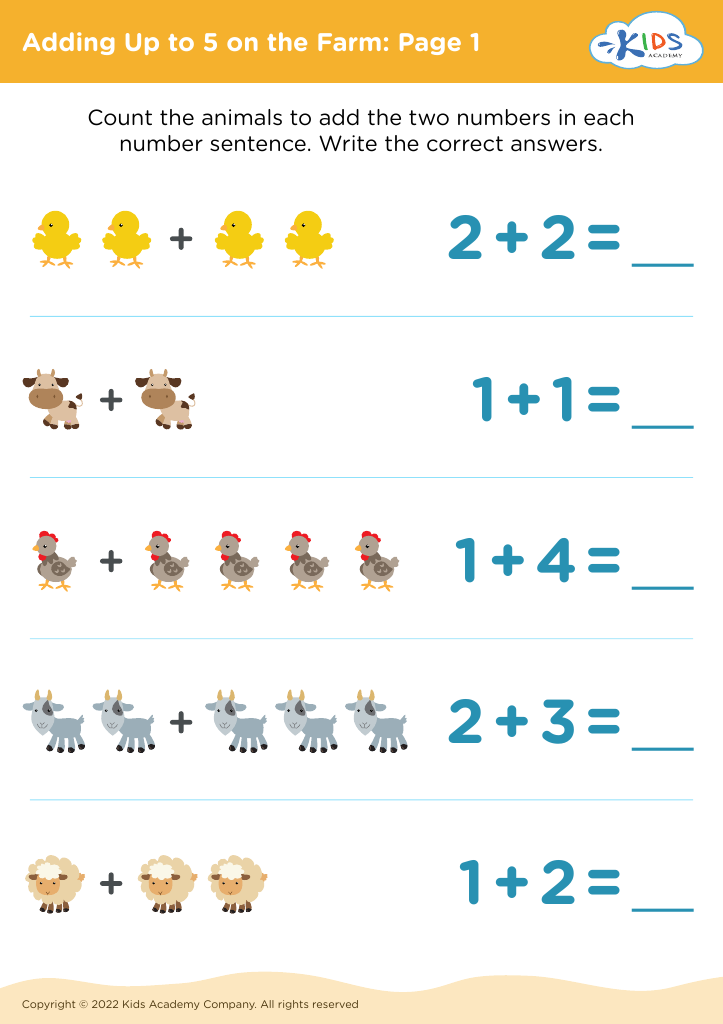
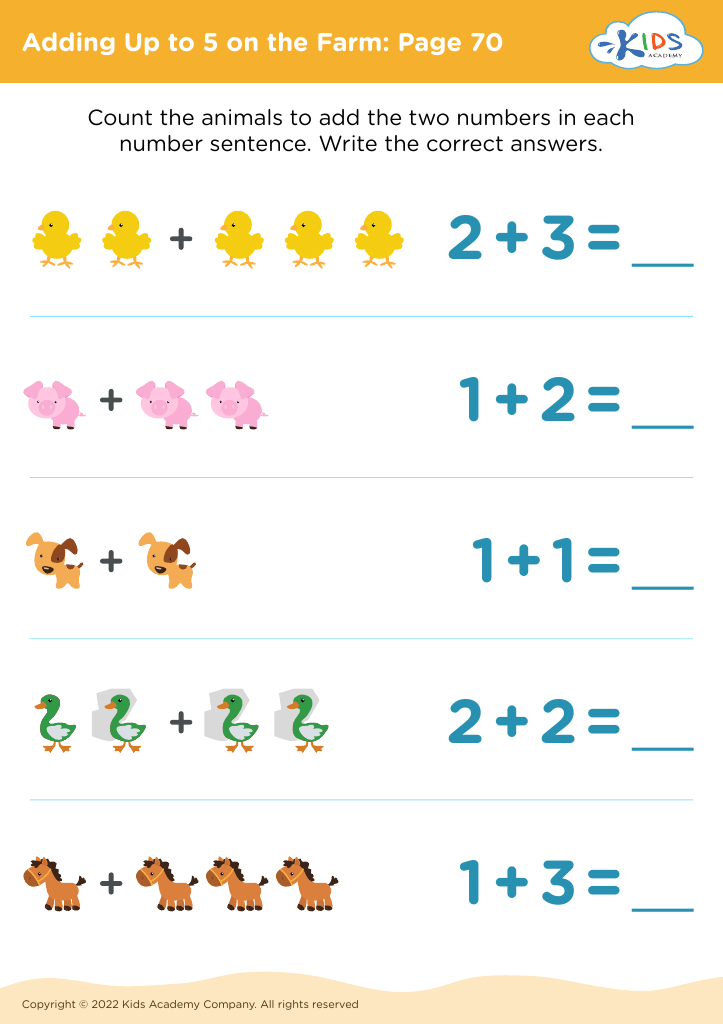
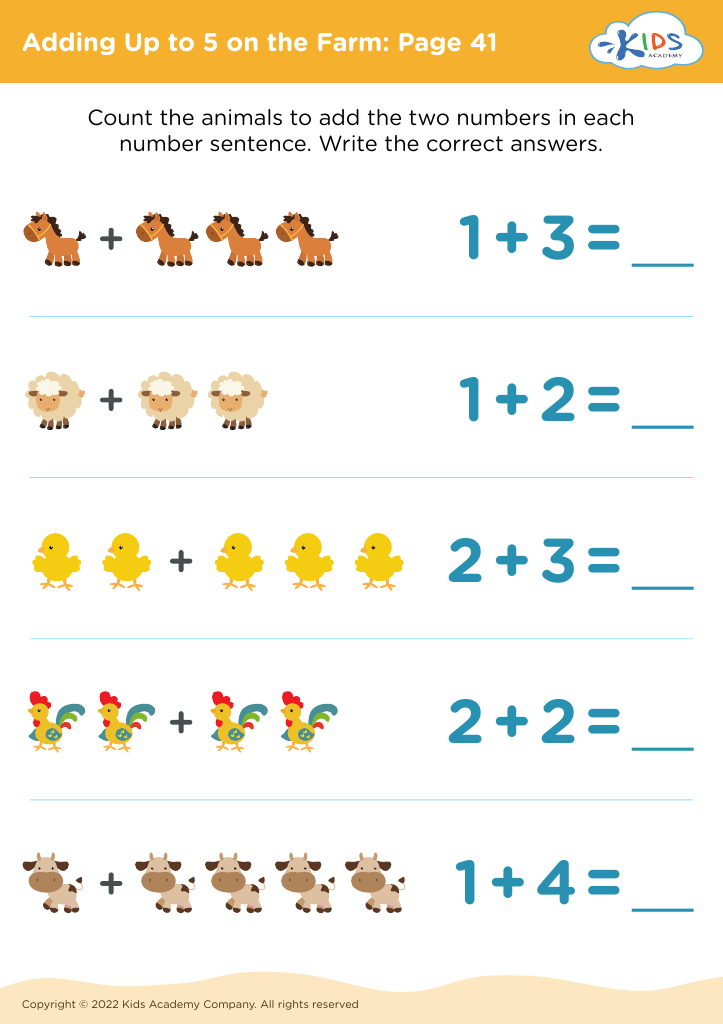
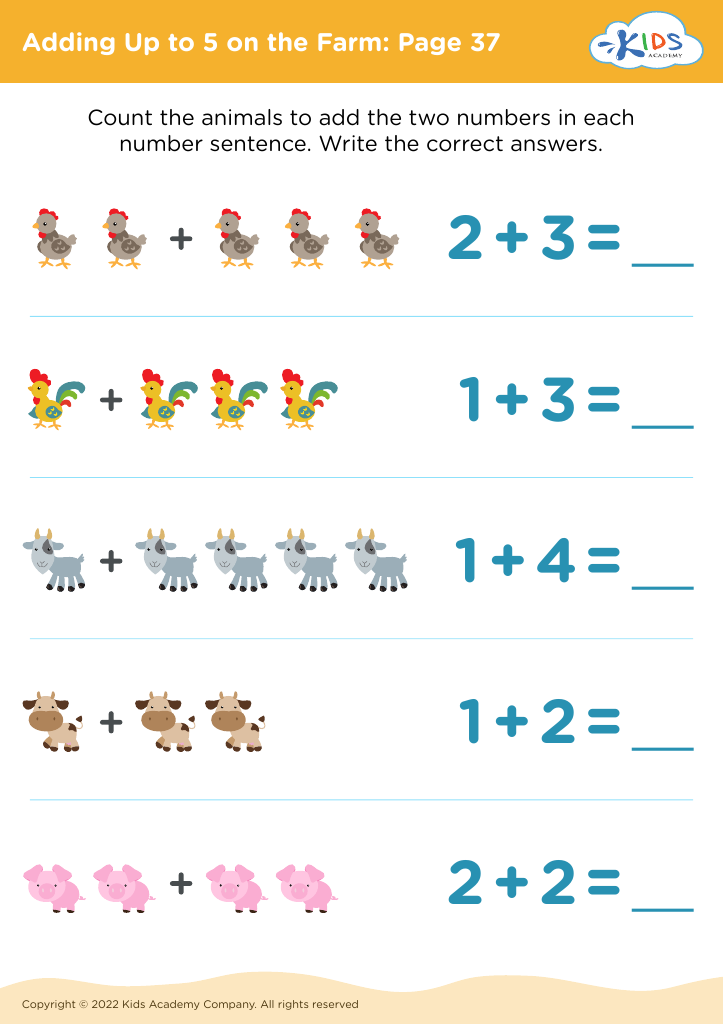
Enhance your child’s learning experience with our "Animal Recognition Adding on the Farm Worksheets" designed for ages 3-7. These engaging worksheets combine fun farm-themed illustrations with essential math skills, helping young learners develop their addition skills while recognizing various animals. Each worksheet encourages children to count, identify, and add different animals, reinforcing both their numerical understanding and animal knowledge. Perfect for preschoolers and early grade learners, these resources are crafted to make learning exciting and interactive. Download our worksheets today and watch your child thrive in math while exploring the lively world of farm animals!
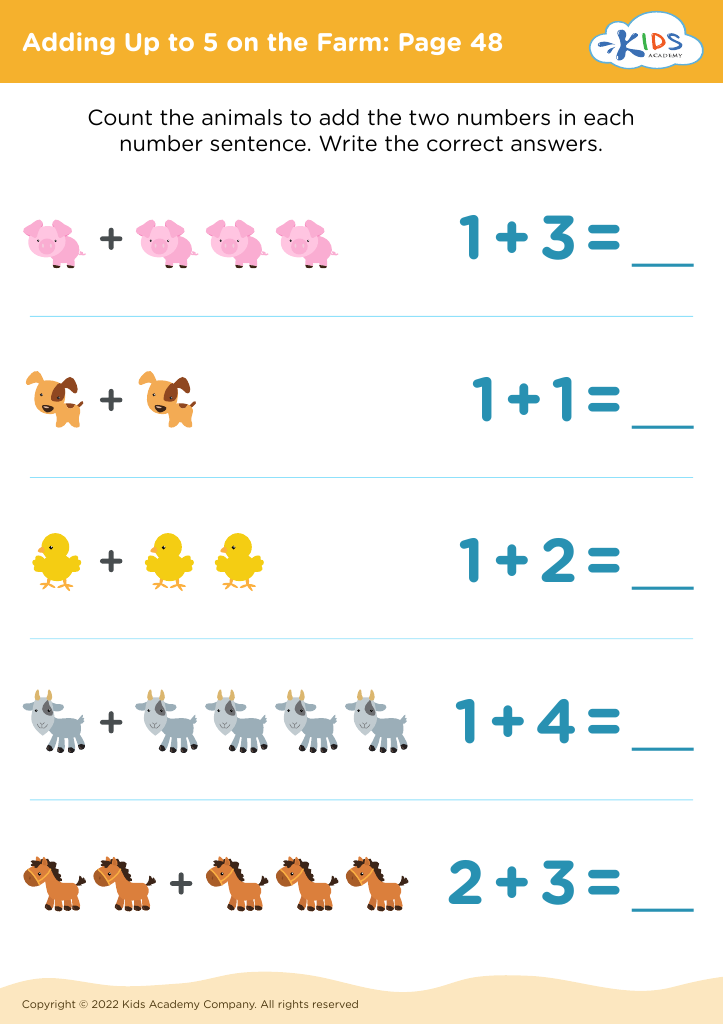
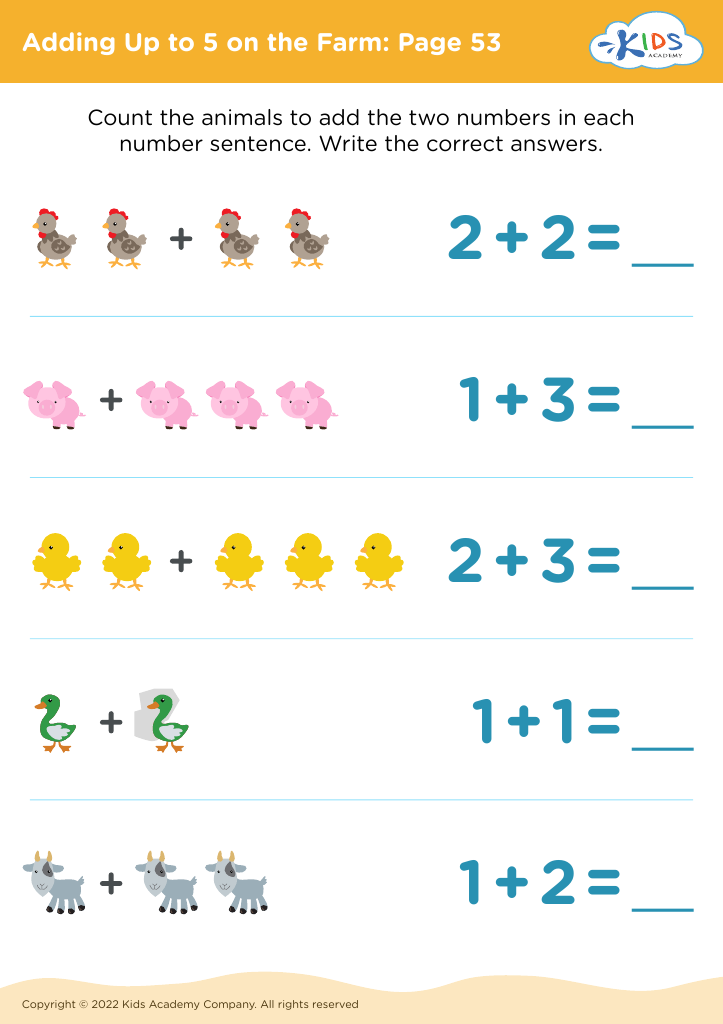
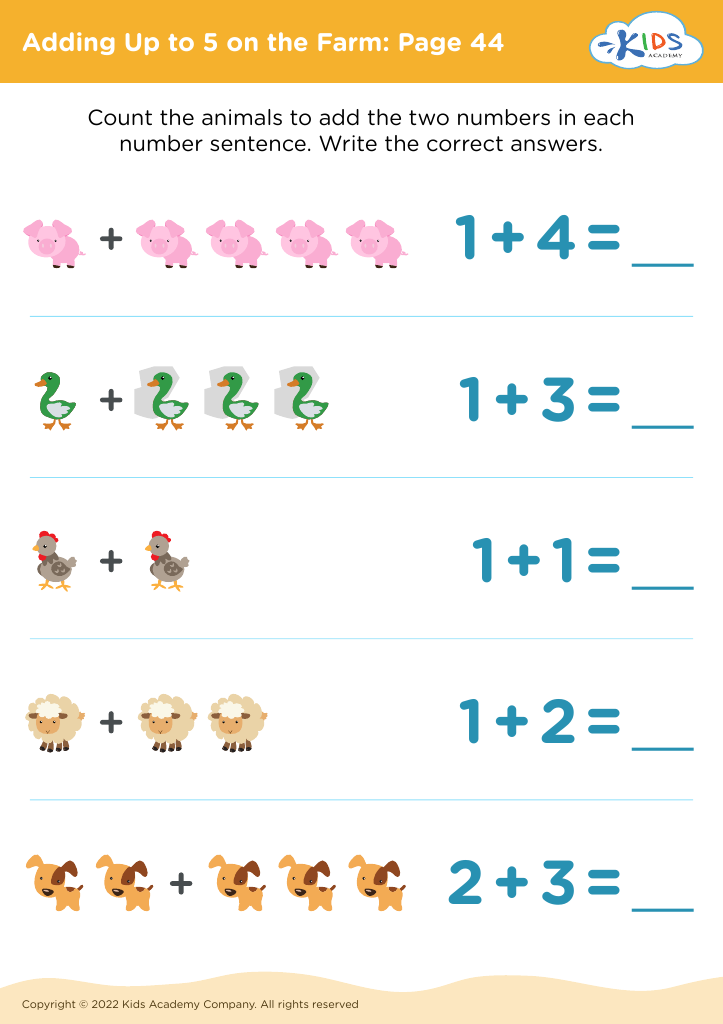
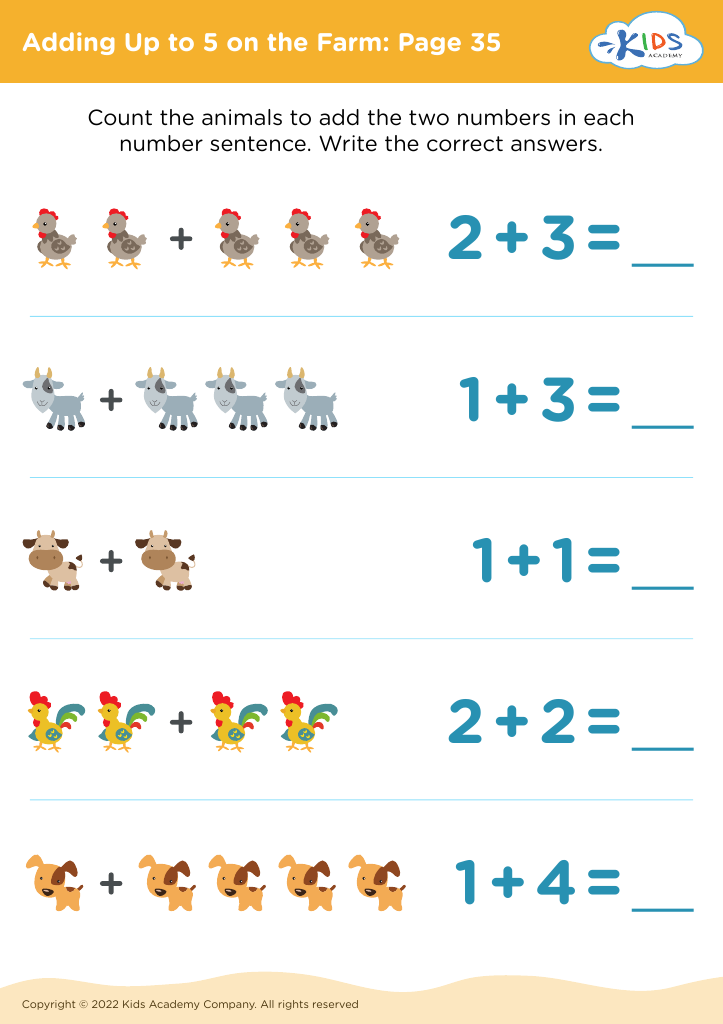
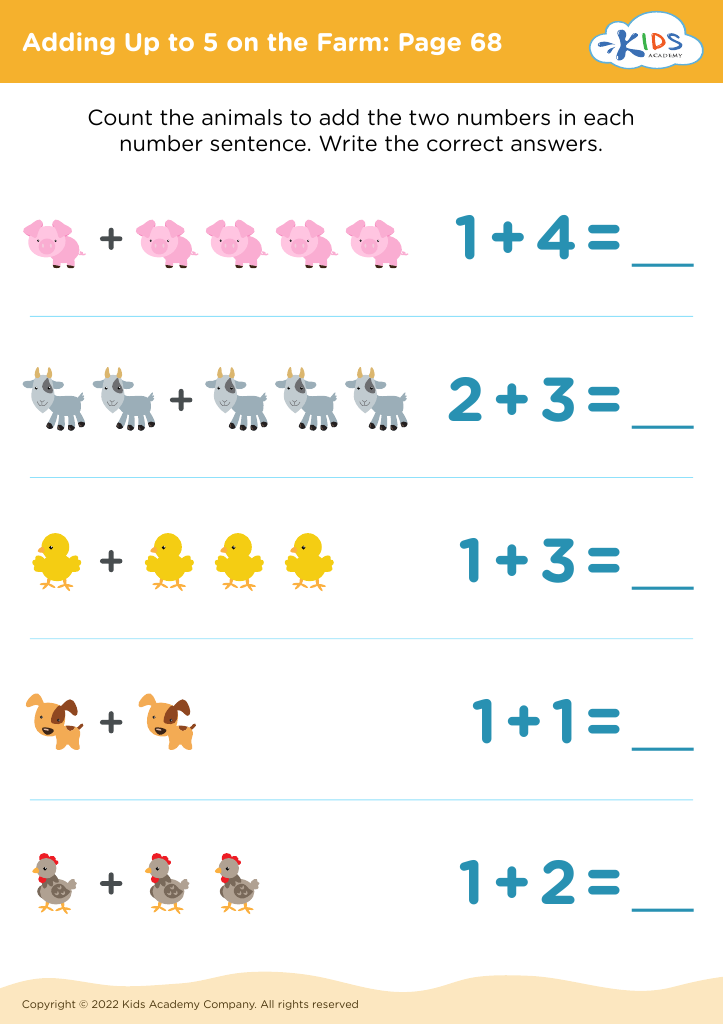
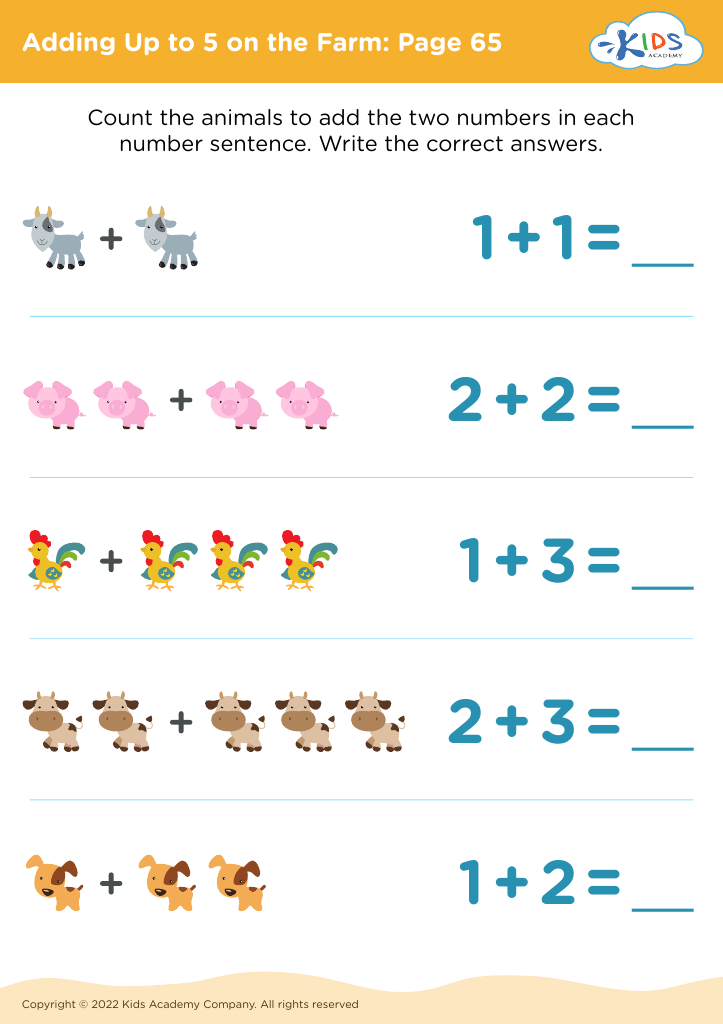
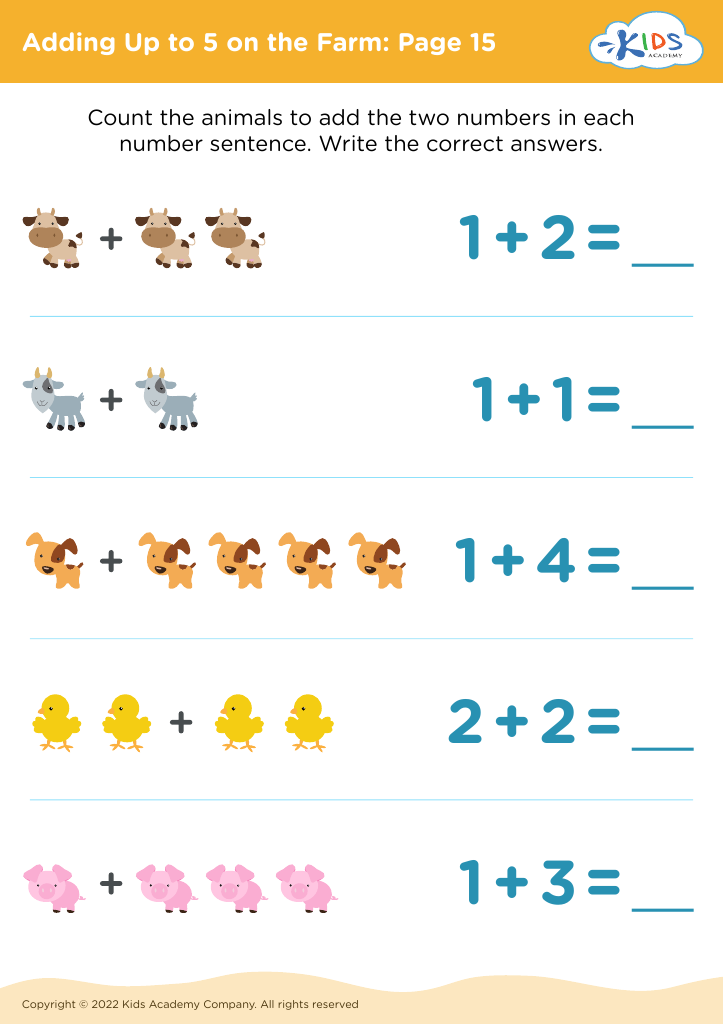
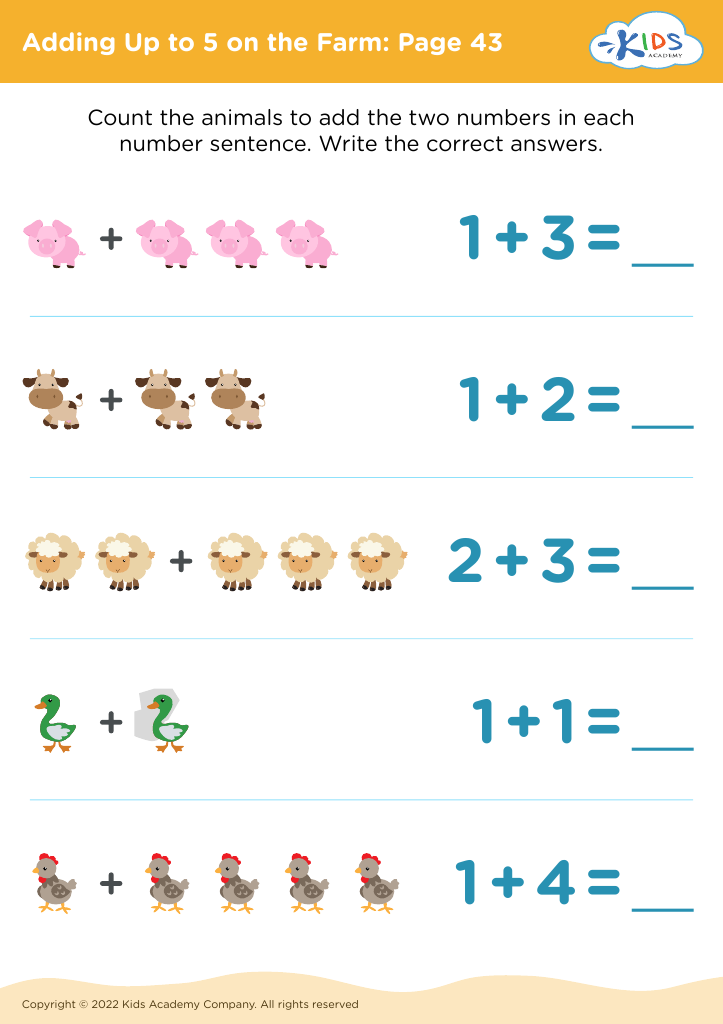



Animal recognition plays a vital role in the early development of children aged 3-7 years, particularly when learning about farm animals. For parents and teachers, engaging children in animal recognition fosters essential cognitive and social skills.
Firstly, identifying various animals enhances vocabulary development. Learning the names and sounds of animals contributes to language growth and comprehension, providing a strong foundation for future communication skills.
Secondly, animal recognition aids in cognitive development as children begin to connect animals with their roles on a farm, like understanding which animals provide milk or eggs. This process promotes critical thinking and curiosity about the world around them.
Additionally, recognizing animals can cultivate emotional skills. Understanding and caring for animals can foster empathy; children learn to appreciate the needs and feelings of living creatures, nurturing a sense of responsibility.
Lastly, activities involving animal recognition often promote social interaction, as children participate in discussions or collaborative games, refining their social skills.
Encouraging early experiences with animal recognition not only prepares children for more complex educational concepts but also instills a lasting love and respect for animals and nature, essential components of holistic development. By integrating these lessons, parents and teachers can play a pivotal role in shaping well-rounded children.