Basic Math Skills Adding up to 100 Worksheets for Ages 3-7
12 filtered results
-
From - To
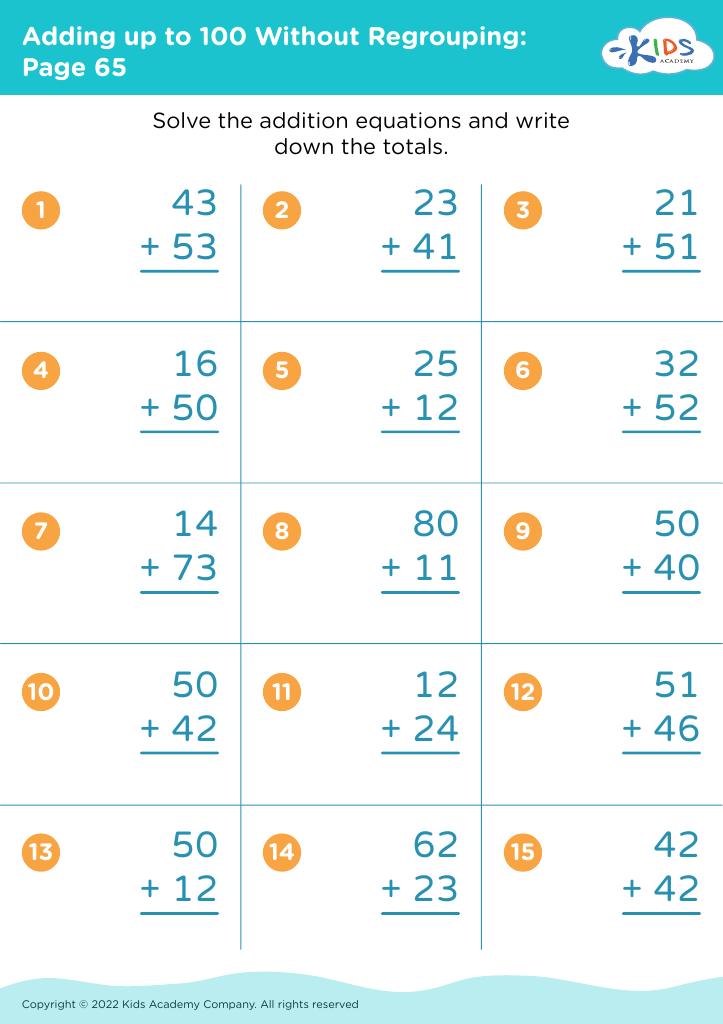
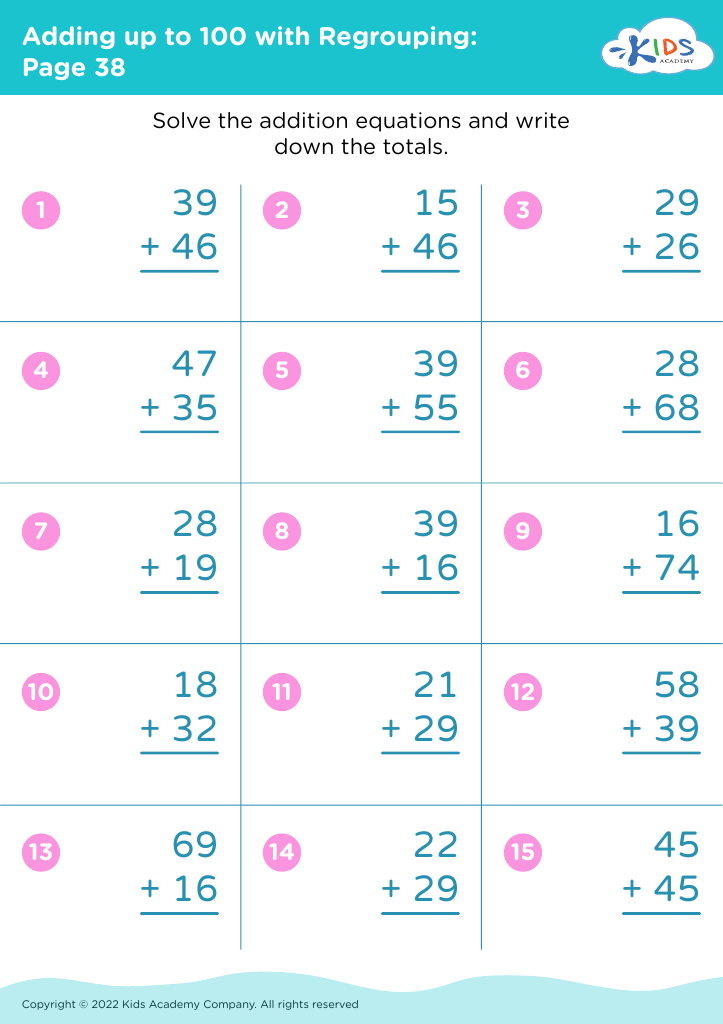
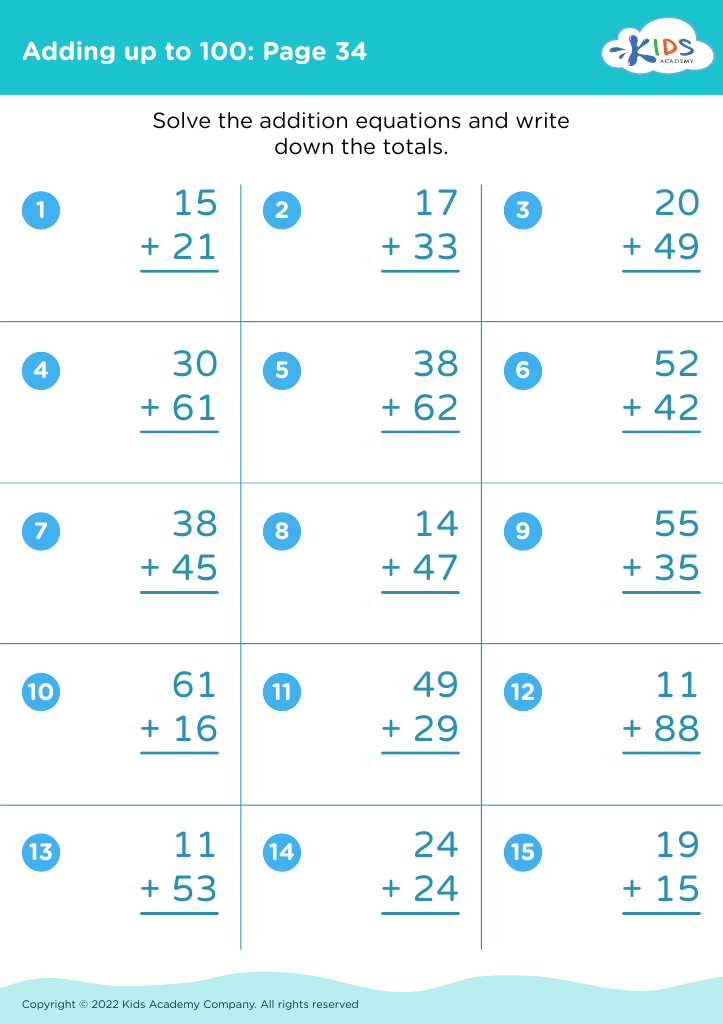
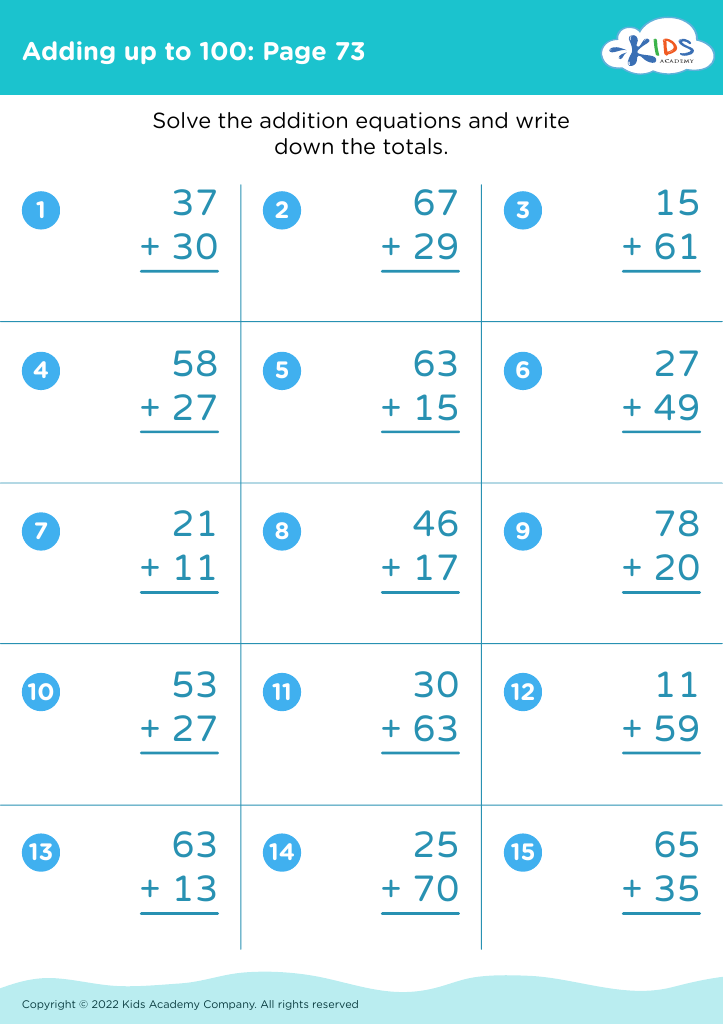
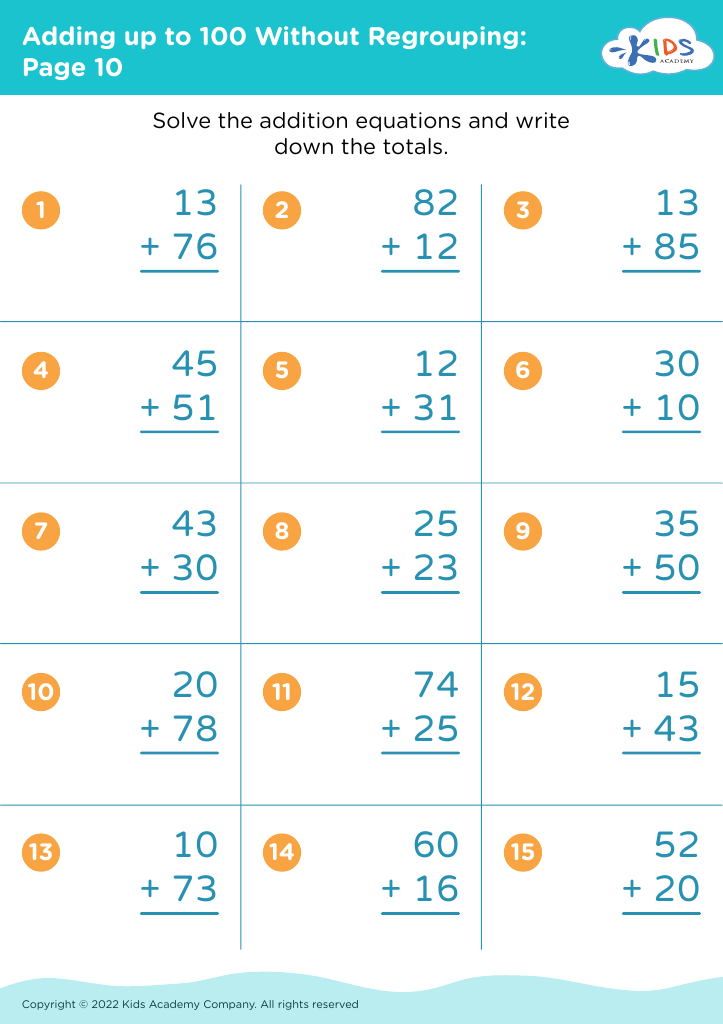
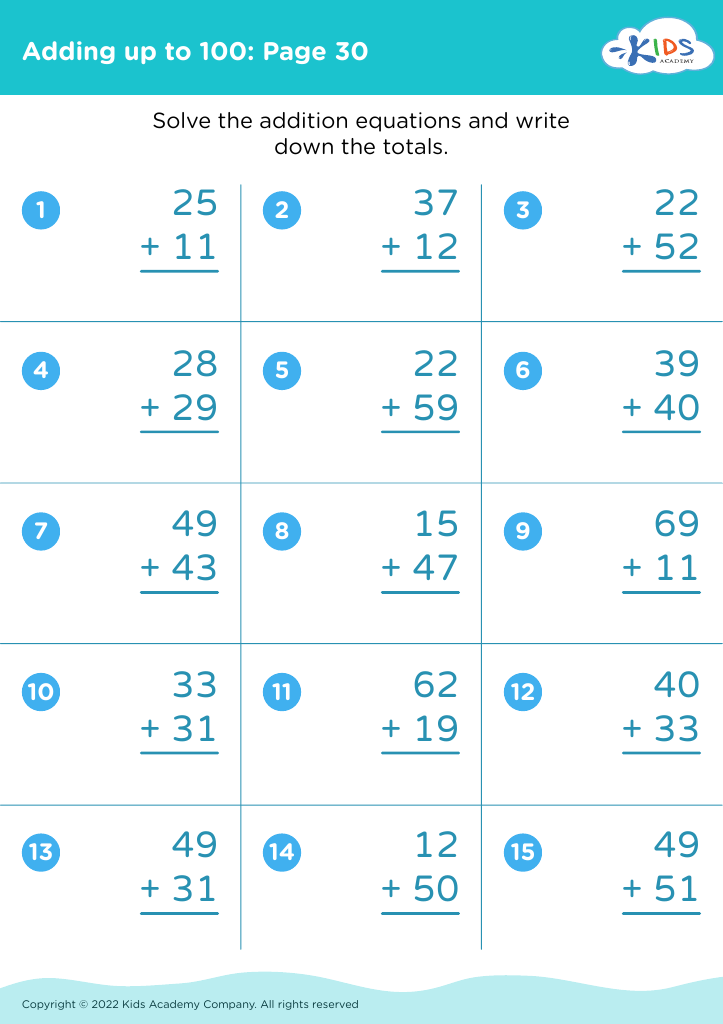
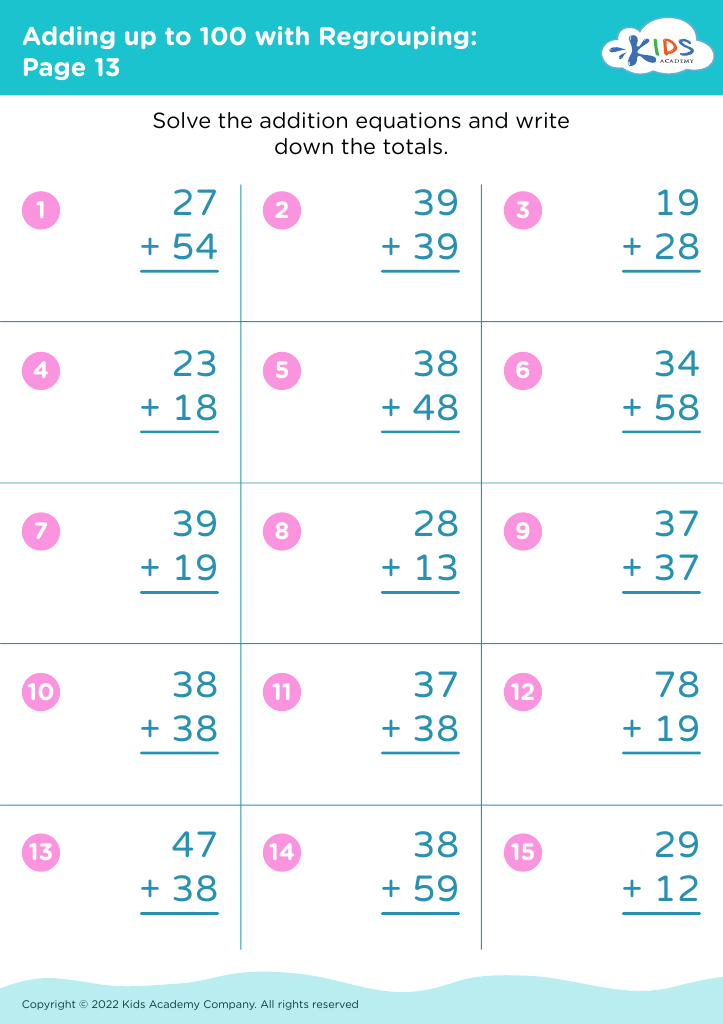
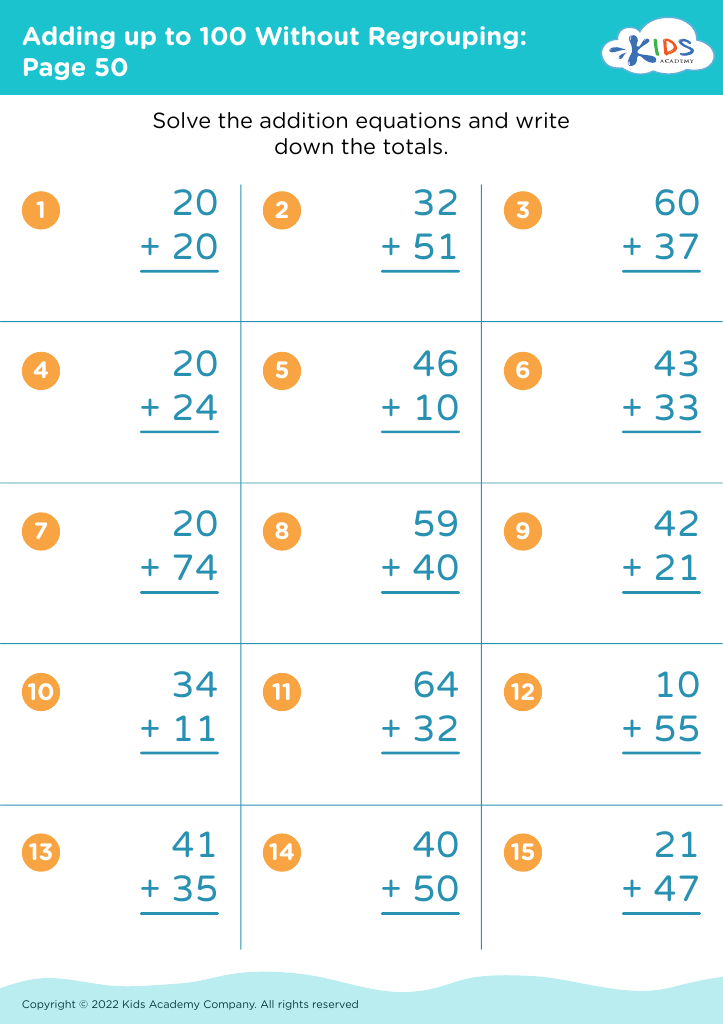
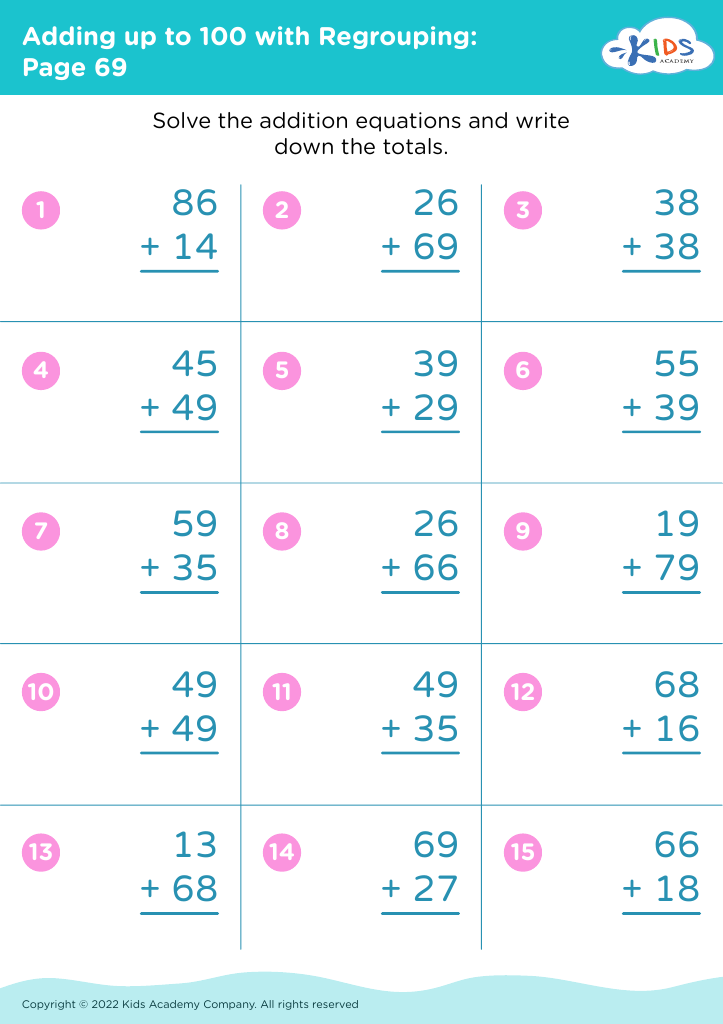
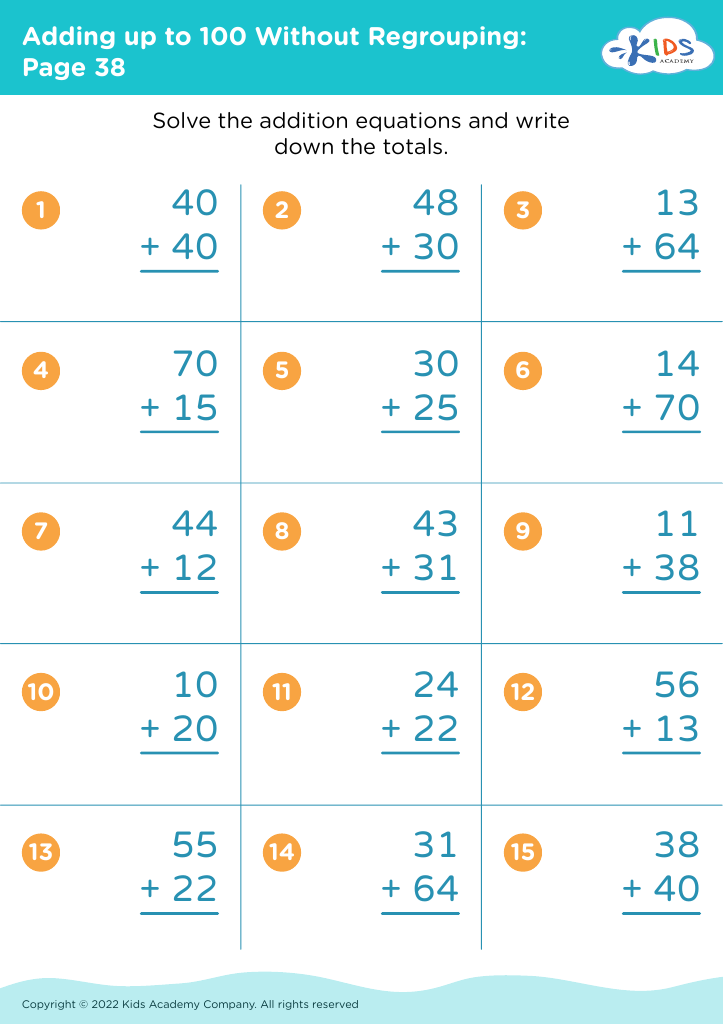
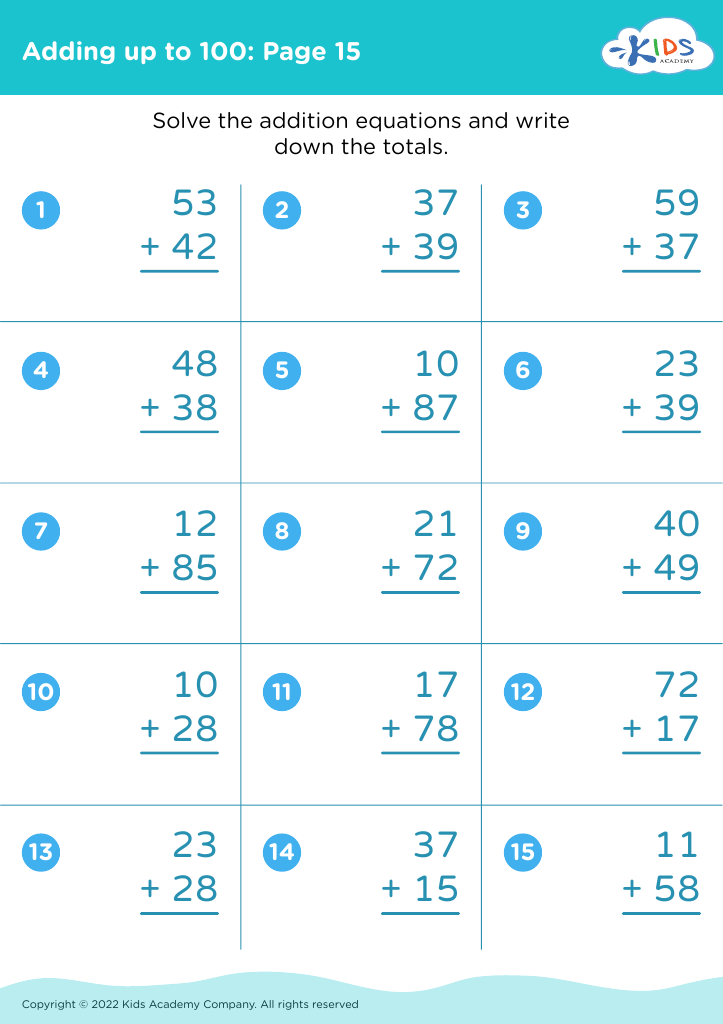
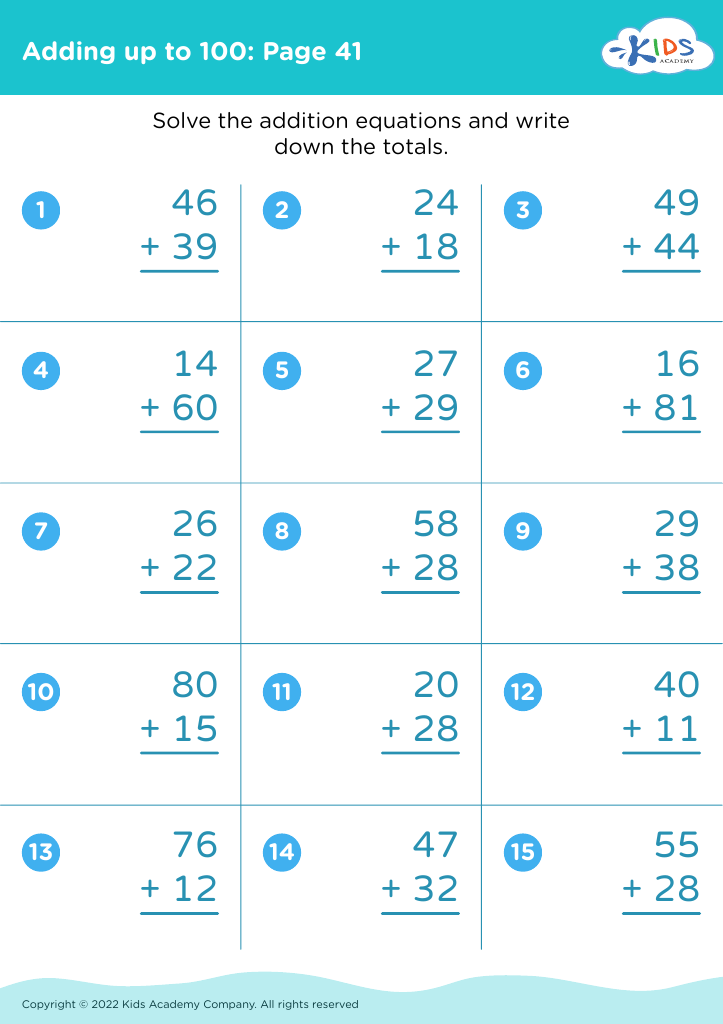
Enhance your child's numerical proficiency with our "Basic Math Skills Adding up to 100 Worksheets" designed for ages 3-7. These engaging worksheets provide a fun and interactive way to master addition, supporting various learning stages. From colorful illustrations to simple exercises, our materials transform math practice into an enjoyable activity. Boosting math confidence, kids learn to handle numbers up to 100 effortlessly, laying a strong foundation for future math skills. Explore our collection at Kids Academy to give your child an exciting start in math and prepare them for more advanced concepts while having fun!


%20(1).jpg)




Parents and teachers should deeply care about children developing basic math skills, such as adding up to 100, particularly between ages 3-7, because these skills lay the crucial groundwork for future academic success and everyday problem-solving abilities. Early math competence is often an indicator of later achievement not only in mathematics but also in other subjects. When children grasp the concept of numbers and operations at a young age, they develop cognitive skills such as critical thinking, logical reasoning, and the ability to recognize patterns.
Proficiency in basic arithmetic fosters a positive attitude towards learning. Children who feel confident in their ability to solve simple math problems are more likely to tackle more complex tasks with enthusiasm and perseverance. Moreover, math is pervasive in everyday life, from basic time-telling to handling money, and being adept at basic math ensures that children can navigate these daily scenarios with ease.
Parents and teachers should integrate fun and interactive methods to teach math, which in turn keeps children engaged and makes learning enjoyable. Activities like counting games, puzzles, and practical exercises reinforce lessons and help children understand abstract concepts in a tangible way. By prioritizing the development of basic math skills early on, we set children on a path of confident and capable lifelong learning.








