Cognitive Development Adding up to 100 Worksheets for Ages 3-7
4 filtered results
-
From - To
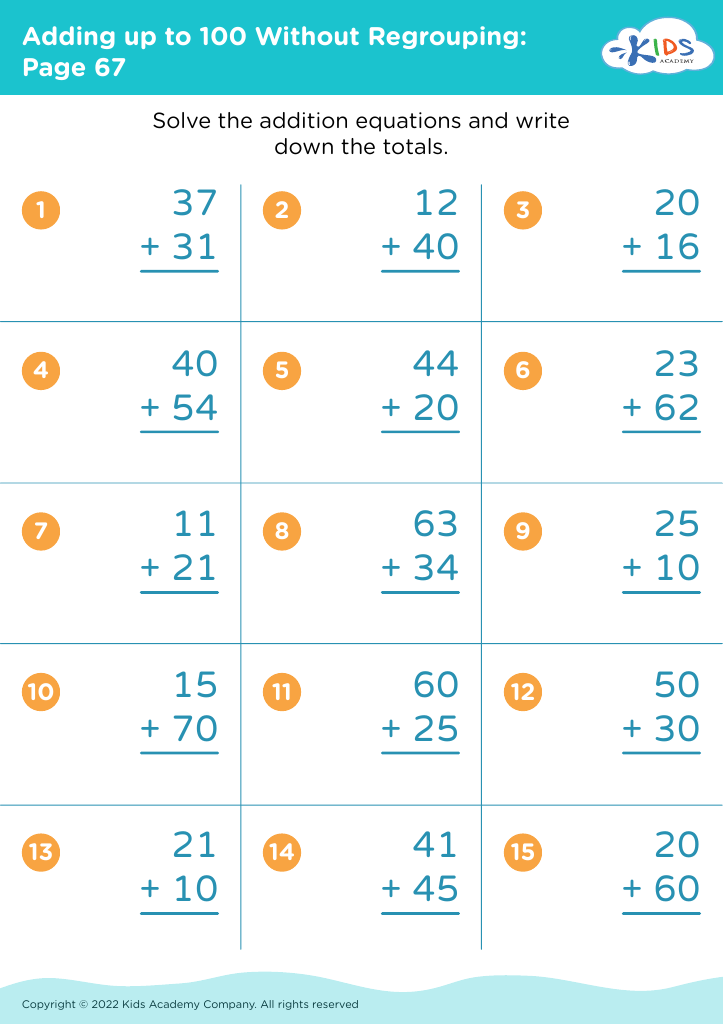
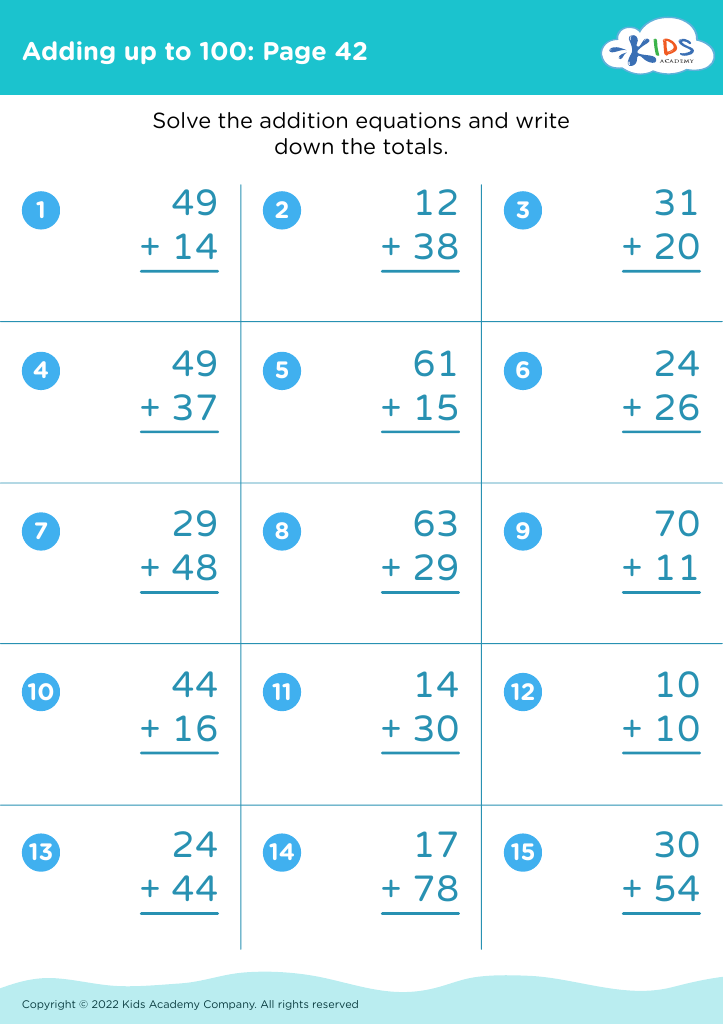
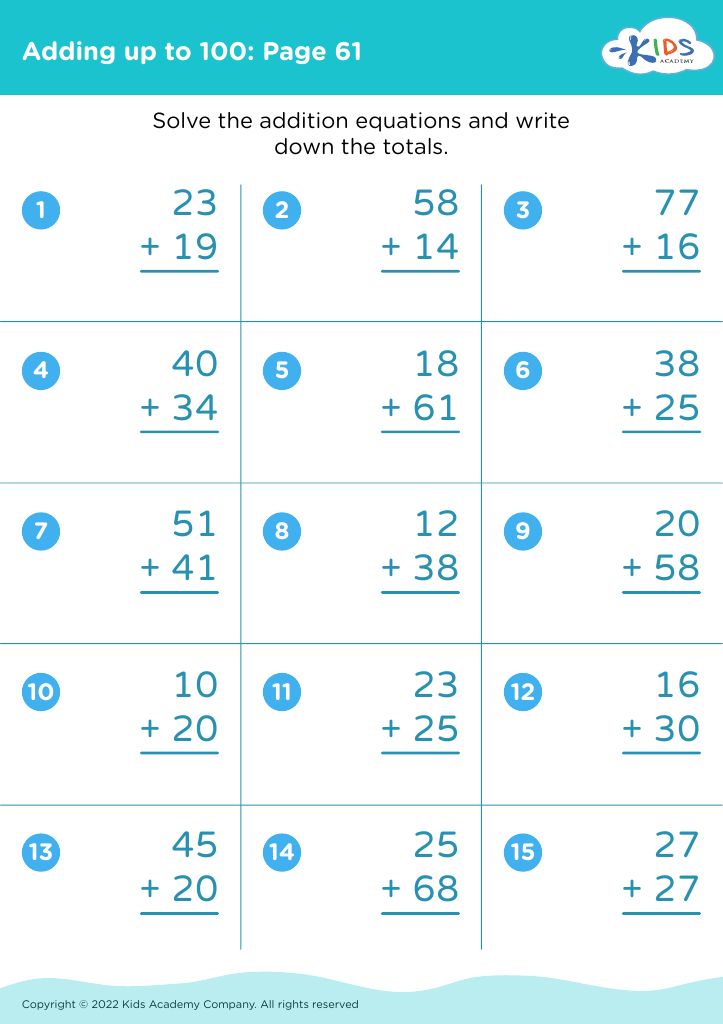
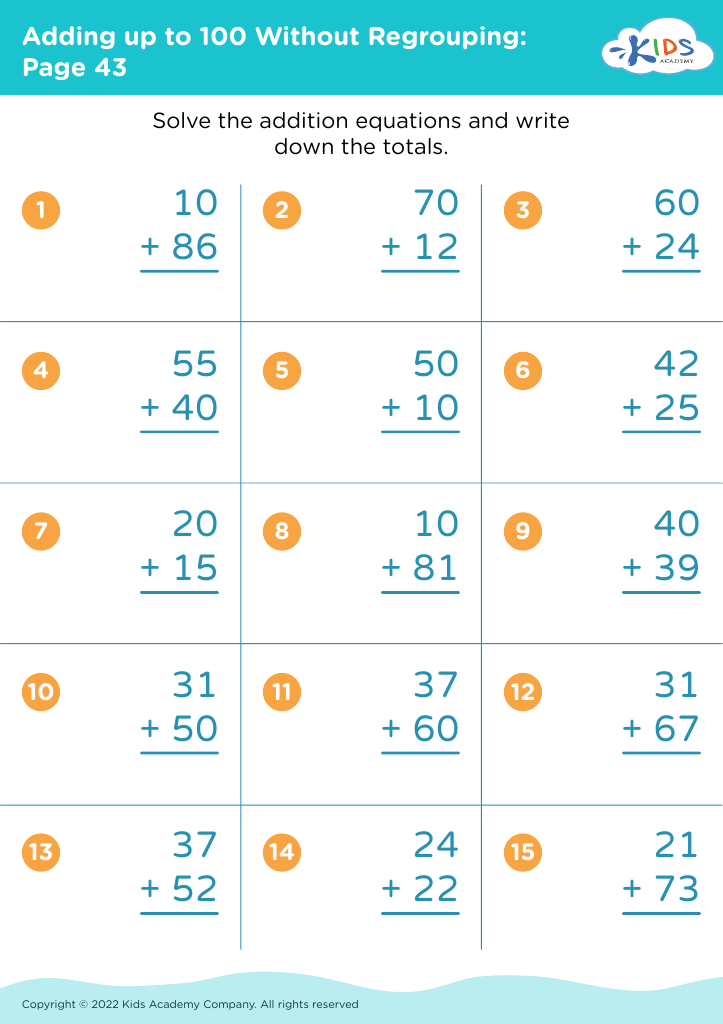
Transform early math learning with our "Cognitive Development Adding up to 100 Worksheets for Ages 3-7." Our expertly designed worksheets aid young learners in mastering essential addition skills while simultaneously boosting their cognitive abilities. Engaging and interactive exercises, featuring colorful illustrations and fun tasks, make learning enjoyable for kids. Perfect for both classroom use and at-home practice, these worksheets support the development of number sense, logical thinking, and problem-solving skills. Aligning with educational standards, this resource prepares children for future academic success while fostering a love for mathematics. Help your child thrive and excel with our tailored addition worksheets!






%20(1).jpg)
Caring about cognitive development, especially the ability to add up to 100, in children ages 3-7 is crucial. This stage in child development is foundational; it's when children build the critical thinking and problem-solving abilities necessary for future academic success. Introducing basic math concepts early on, such as adding up to 100, promotes a love for learning and improves number sense, which is the understanding of numbers and their relationships.
Math skills at this age help children develop logical thinking and foster a stronger grasp of spatial and sequential reasoning. When these cognitive skills are nurtured, children are better prepared for more complex mathematical concepts and tasks. Moreover, early proficiency in math has been linked to improved reading skills because both subjects rely on recognizing patterns and sequences.
Teachers and parents should thus create environments filled with stimulating activities that encourage counting, sorting, and simple arithmetic to promote cognitive gains. Engaging activities, like puzzles and interactive games, not only make learning fun but also enhance memory and attention spans. By investing time in a child's cognitive development through math, parents and teachers not only boost academic readiness but also foster confidence and an intrinsic motivation perceived as key to lifelong learning and problem-solving.








