Identify shapes Adding up to 100 Worksheets for Ages 3-7
4 filtered results
-
From - To
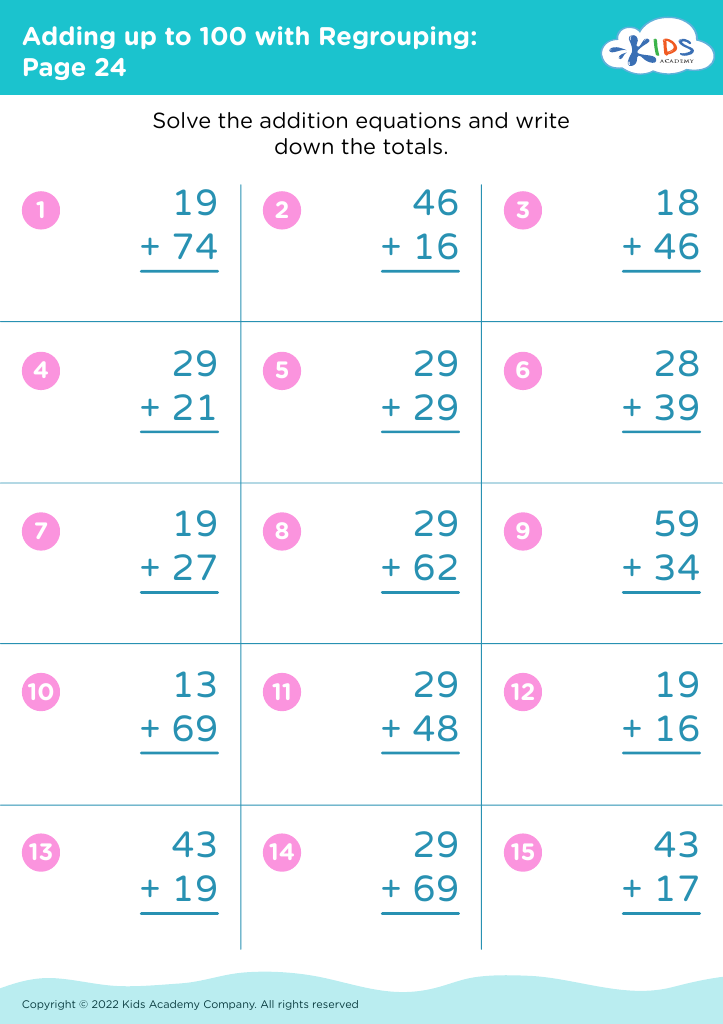
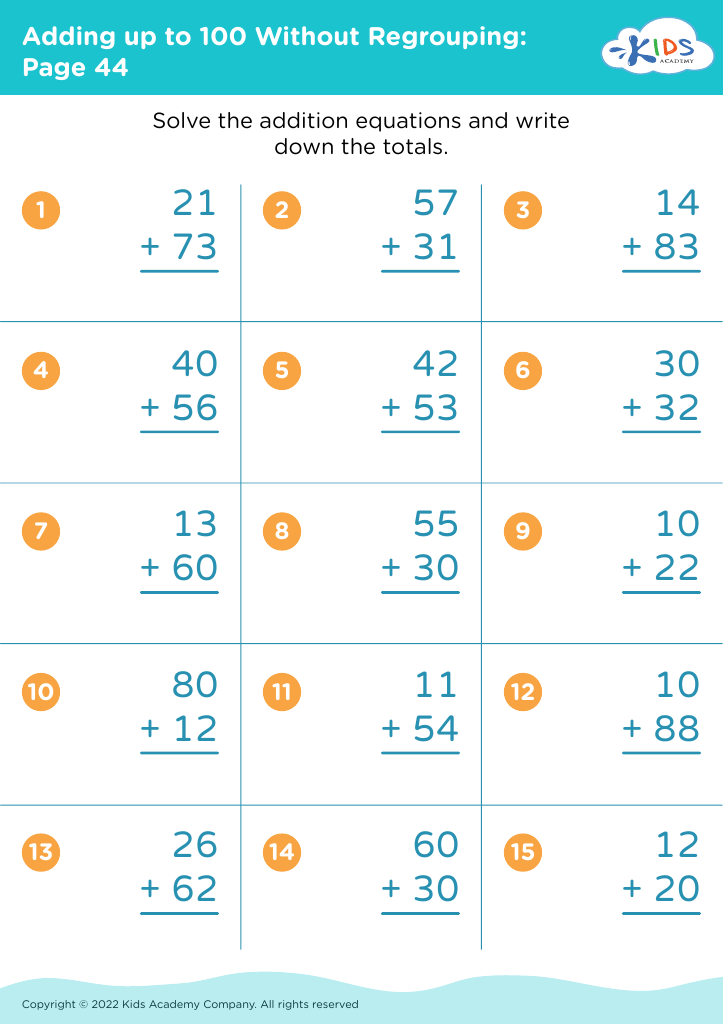
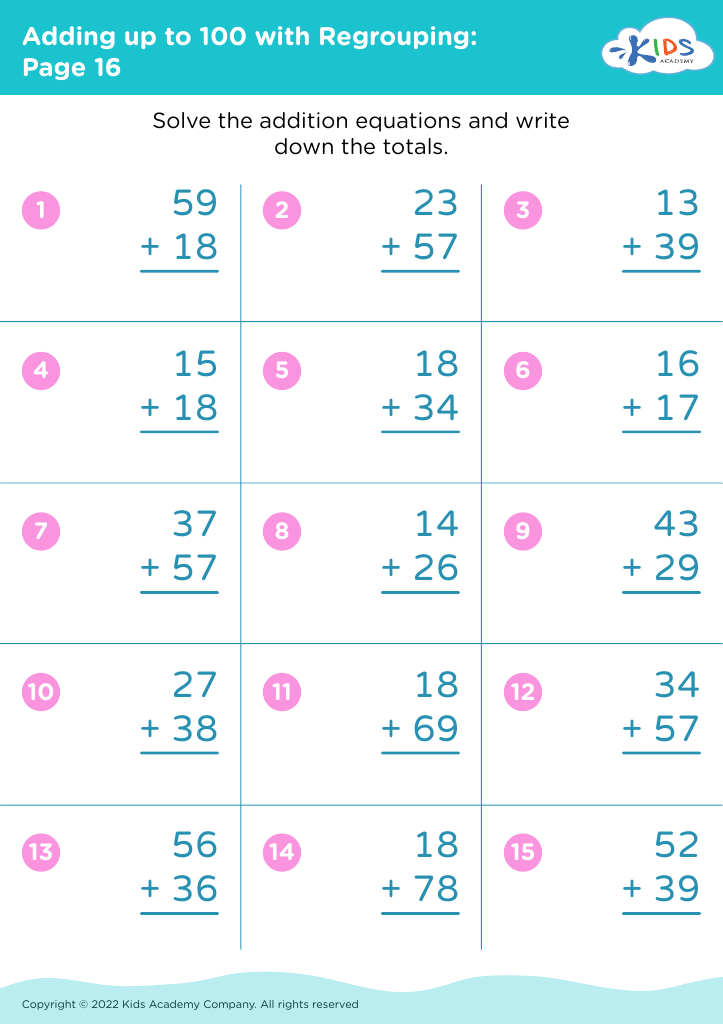
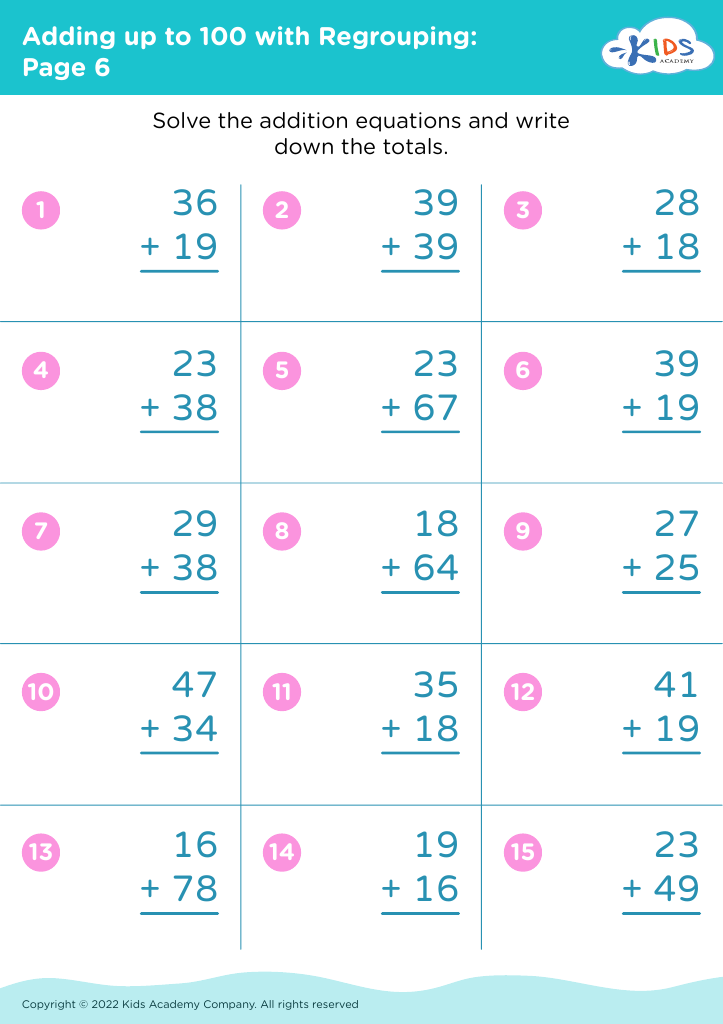
Discover our engaging "Identify Shapes Adding Up to 100 Worksheets" designed for children ages 3-7! These interactive worksheets not only introduce young learners to basic geometric shapes but also incorporate foundational math skills focused on addition up to 100. Perfect for early education settings, our worksheets promote visual recognition and foster cognitive development. As children explore various shapes while practicing addition, they build essential skills in a fun and creative way. Ideal for parents and educators looking to enhance math learning at home or in the classroom, these sheets provide a colorful and enjoyable experience in learning. Download now and spark curiosity!



%20(1).jpg)



Understanding how to identify shapes and perform basic addition up to 100 is crucial for children aged 3-7 for several reasons. First, shape recognition fosters visual-spatial skills, helping children understand their world and develop critical thinking abilities. These skills are foundational for future learning in geometry and design, encouraging creativity and problem-solving.
Second, introducing addition concepts early promotes numerical intuition. Recognizing that shapes can represent numbers lays a groundwork for mathematical literacy. When children grasp that certain shapes can symbolize quantities, they develop a deeper understanding of addition, making future math studies more intuitive.
Additionally, integrating shape identification with basic addition encourages active learning through play. Activities involving physical shapes and counting provide hands-on engagement, making learning enjoyable and memorable. This combination nurtures curiosity and motivates participation.
Lastly, parents and teachers serve as role models in fostering these skills. By emphasizing the importance of shapes and numbers, they prepare children for more complex mathematical concepts in later years, ultimately supporting academic success. In summary, teaching young children to identify shapes and add values promotes cognitive development, nurtures essential skills, and builds a strong mathematical foundation critical for lifelong learning.








