Recognize patterns Adding up to 100 Worksheets for Ages 3-7
4 filtered results
-
From - To
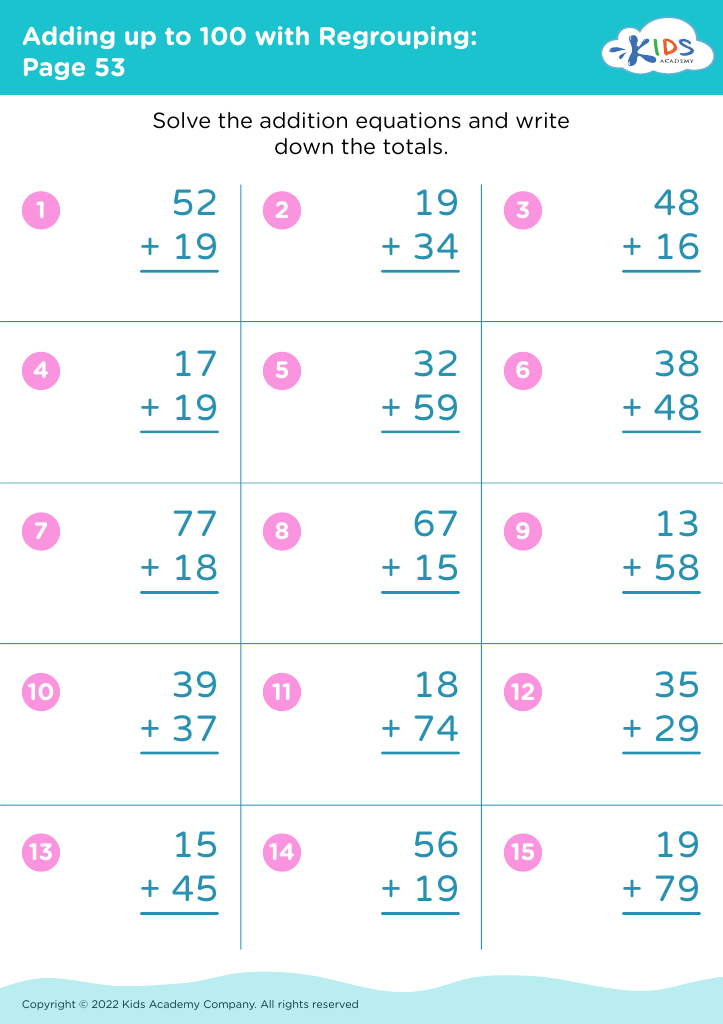
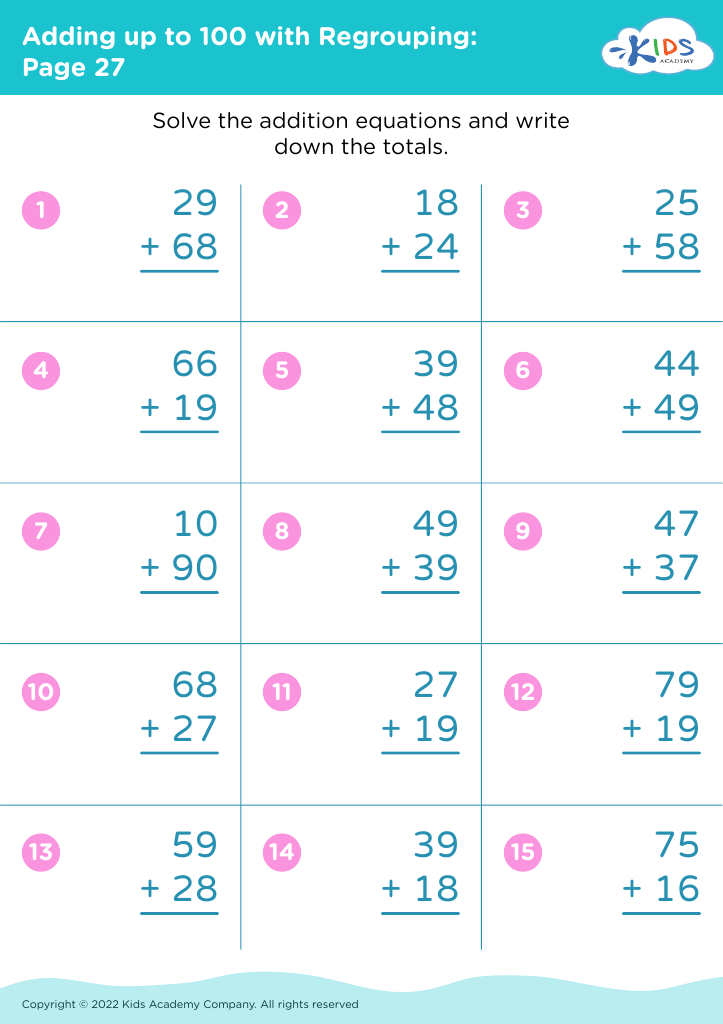
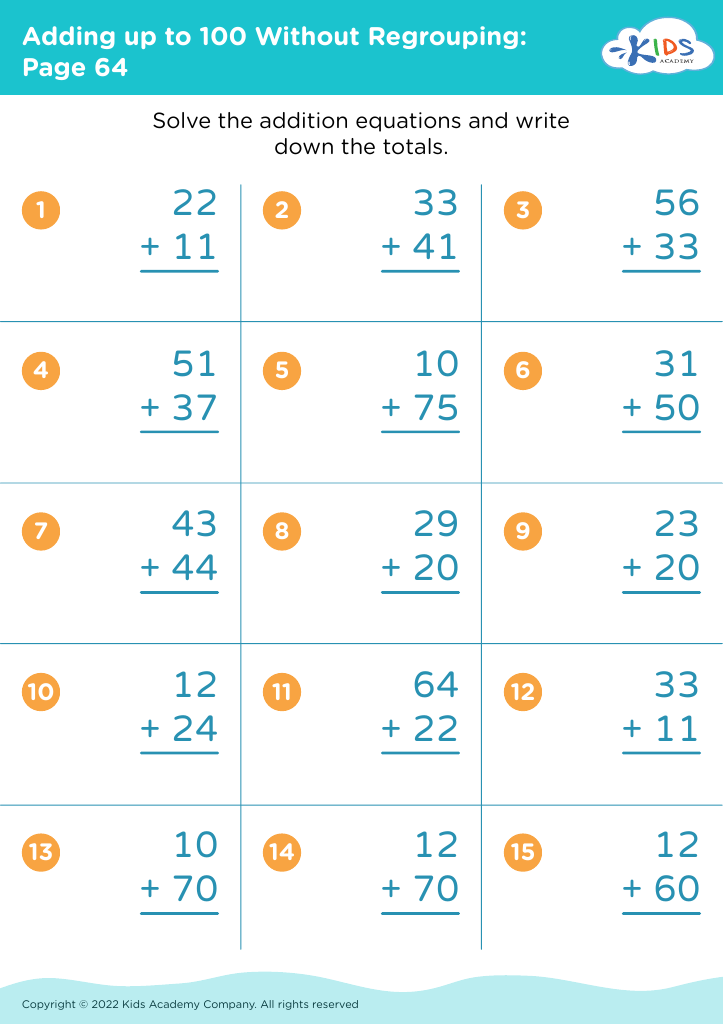
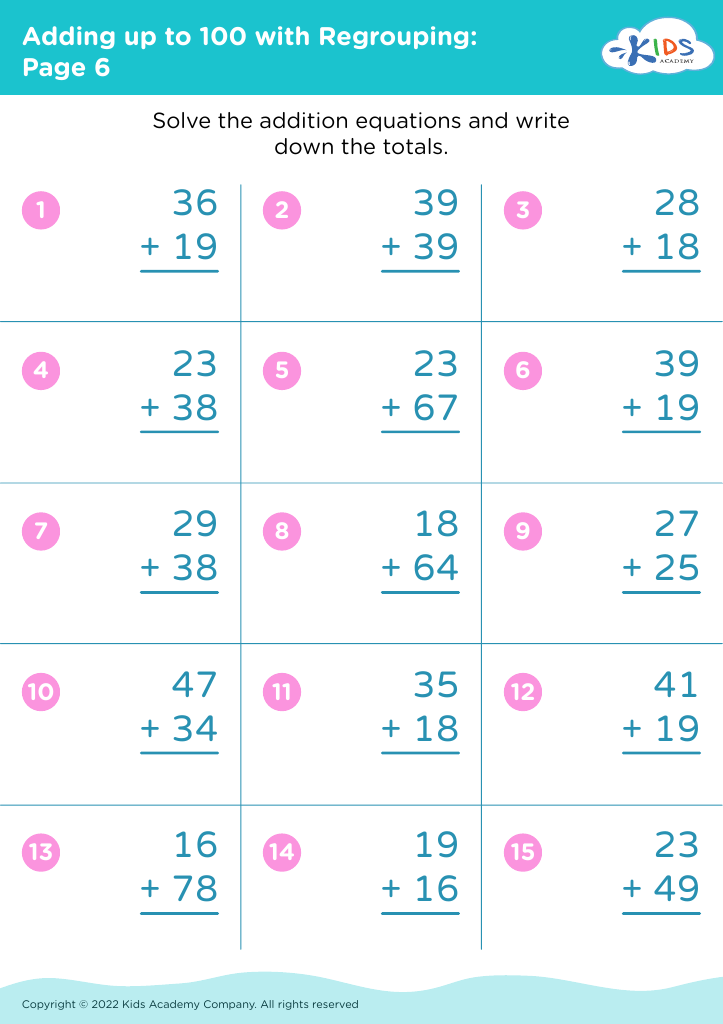
Explore our "Recognize Patterns Adding up to 100 Worksheets" designed for young learners aged 3-7! These engaging worksheets help children develop essential mathematical skills by identifying patterns that contribute to totals of 100. Through fun exercises and visually stimulating activities, kids will enhance their number sense, improve problem-solving abilities, and learn to recognize important mathematical relationships. Perfect for parents and teachers alike, these resources make learning enjoyable and effective. Start fostering a strong mathematical foundation in your child today with our easy-to-use worksheets that encourage pattern recognition and addition skills in a playful way! Download now and inspire your young learners!



%20(1).jpg)



Recognizing patterns and understanding how to add up to 100 are crucial skills that lay the foundation for arithmetic and problem-solving in young learners aged 3 to 7. Developing these skills helps children comprehend mathematical concepts in a meaningful context. Patterns, whether in numbers, shapes, or objects, enhance cognitive abilities and strengthen critical thinking by encouraging exploration and prediction.
Learning to add up to 100 encourages number sense, allowing children to grasp the relationship between numbers more intuitively. It develops their ability to work with larger quantities and sets the stage for fluency in basic calculations, which is essential for future mathematical learning.
For parents and teachers, fostering these skills cultivates confidence and engagement in children. When kids recognize patterns and master addition, they gain motivation to tackle more complex math concepts. Moreover, these skills support other academic areas, such as science and art, where pattern recognition plays a significant role.
Encouraging activities like counting games, pattern recognition puzzles, and hands-on exercises not only make learning fun but also pave the way for life-long skills in an increasingly mathematical world. Investing time in these fundamentals ensures a brighter future for young learners, preparing them for a world where mathematical reasoning is essential.








