Simplifying Fractions Adding up to 100 Worksheets for Ages 3-7
3 filtered results
-
From - To
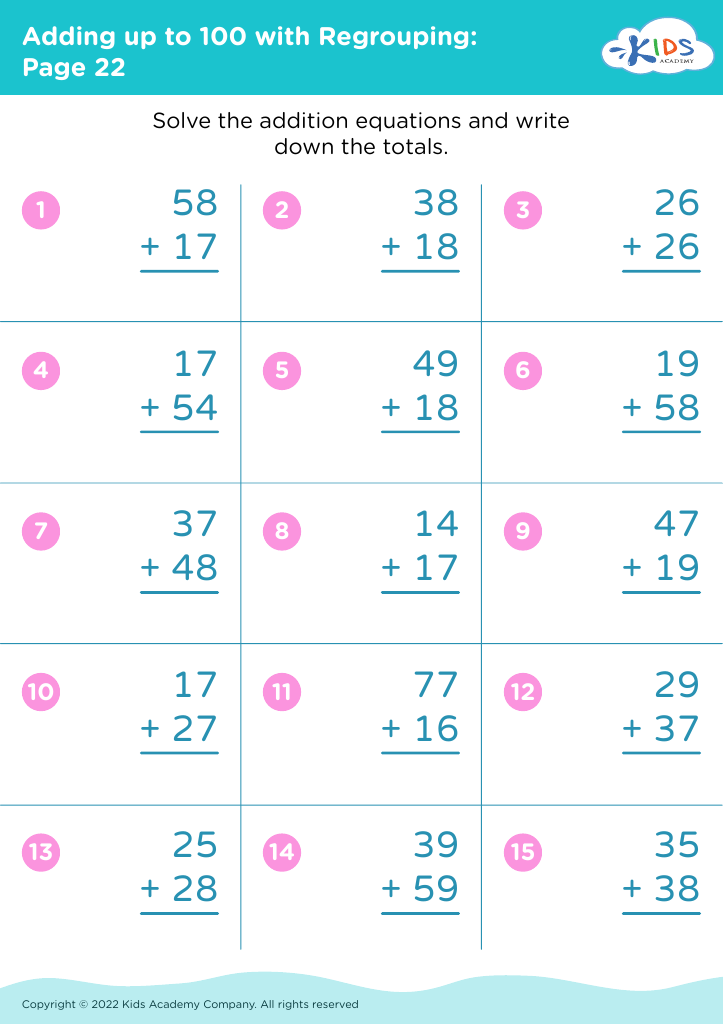
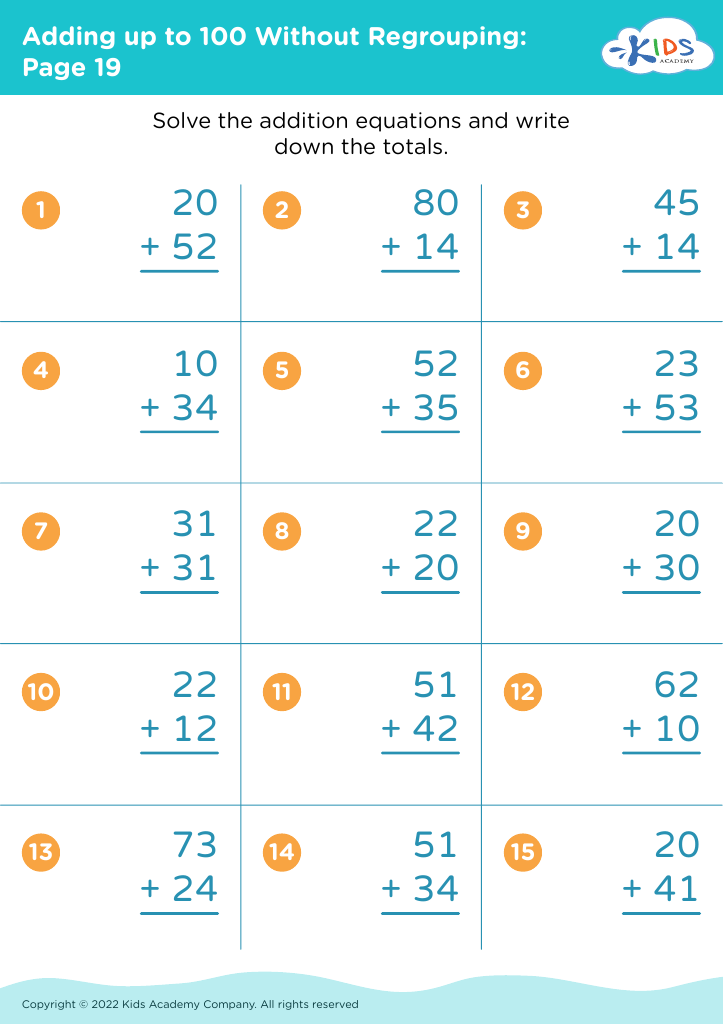
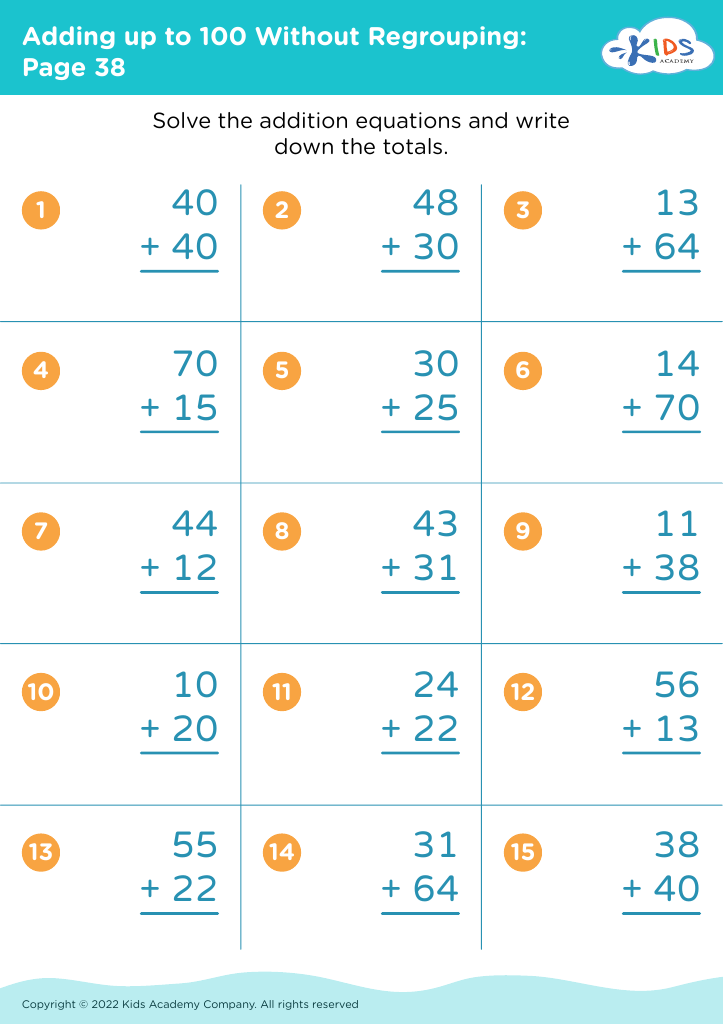
Discover our engaging "Simplifying Fractions Adding up to 100 Worksheets" tailored for ages 3-7! These interactive worksheets help young learners grasp the concept of simplifying fractions while having fun. With colorful designs and child-friendly prompts, children will enhance their math skills as they recognize and reduce fractions to their simplest forms. Our resources promote critical thinking and problem-solving, making learning enjoyable and effective. Perfect for classroom activities or home practice, these worksheets provide a solid foundation in math, fostering confidence in young learners. Start your child’s journey towards becoming a fraction expert today!






%20(1).jpg)
Simplifying Fractions Adding up to 100 offers a meaningful opportunity for young children, aged 3-7, to develop foundational math skills in a fun and engaging way. At this formative stage, fostering a strong understanding of numbers and their relationships sets the groundwork for future mathematical concepts. Simplifying fractions aids in developing crucial problem-solving skills and critical thinking, as children learn to recognize equivalencies and the concept of parts of a whole.
Moreover, engaging with fractions helps reinforce counting skills, enhances their understanding of division, and improves number sense. By dealing with fractions that add up to 100, children can easily visualize and manipulate numbers, relating them to everyday concepts, such as sharing and dividing.
Interactive activities involving fractions also encourage collaboration and communication among peers, promoting social skills. Parents and teachers can play a vital role in facilitating this learning by integrating fraction activities into games or fun classroom projects, making math an enjoyable experience. Ultimately, fostering an early love and understanding of math lays the groundwork for confident learners and encourages a positive attitude toward mathematical challenges in their future education. Simplifying fractions during these formative years builds not only academic skills but also resilience and creativity in approaching problems.








