Filters

51 filtered results

Clear all filters
Favorites
With answer key
Interactive

51 filtered results

Difficulty Level

Grade


Check out this FREE Trial Lesson on Adding up to 100 for age 3-7!

Match Exactly the Same

Favorites
With answer key
Interactive
  • 3-7
  • Understanding fractions
  • Adding up to 100
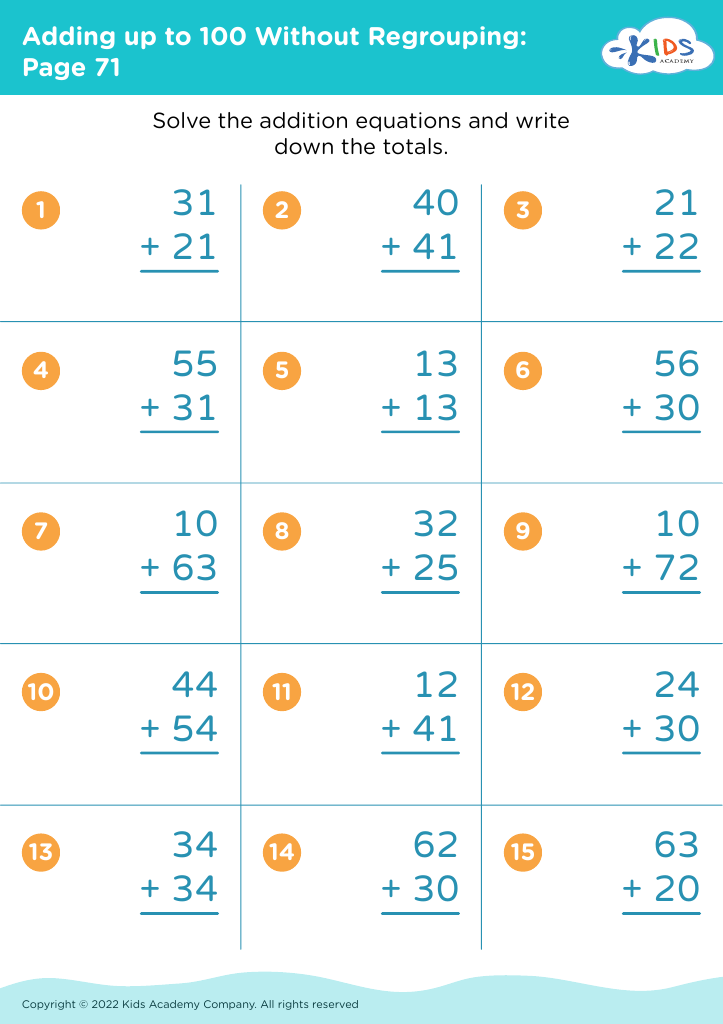
Adding up to 100 Without Regrouping: Page 71
Worksheet
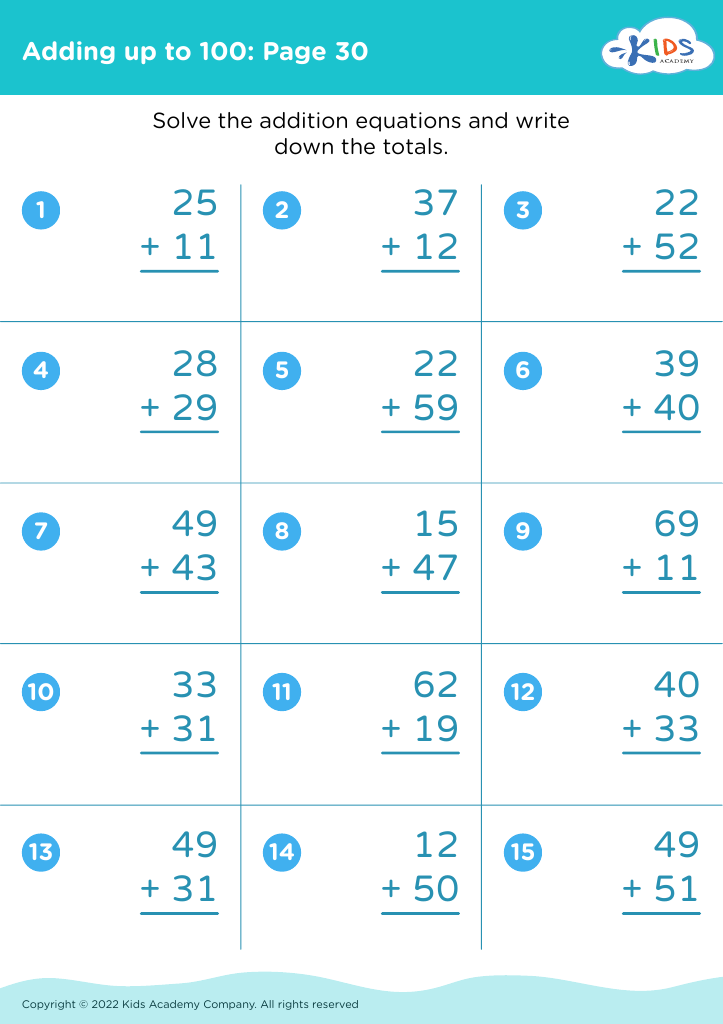
Adding up to 100: Page 30

Adding up to 100: Page 30

Adding up to 100: Page 30
Worksheet
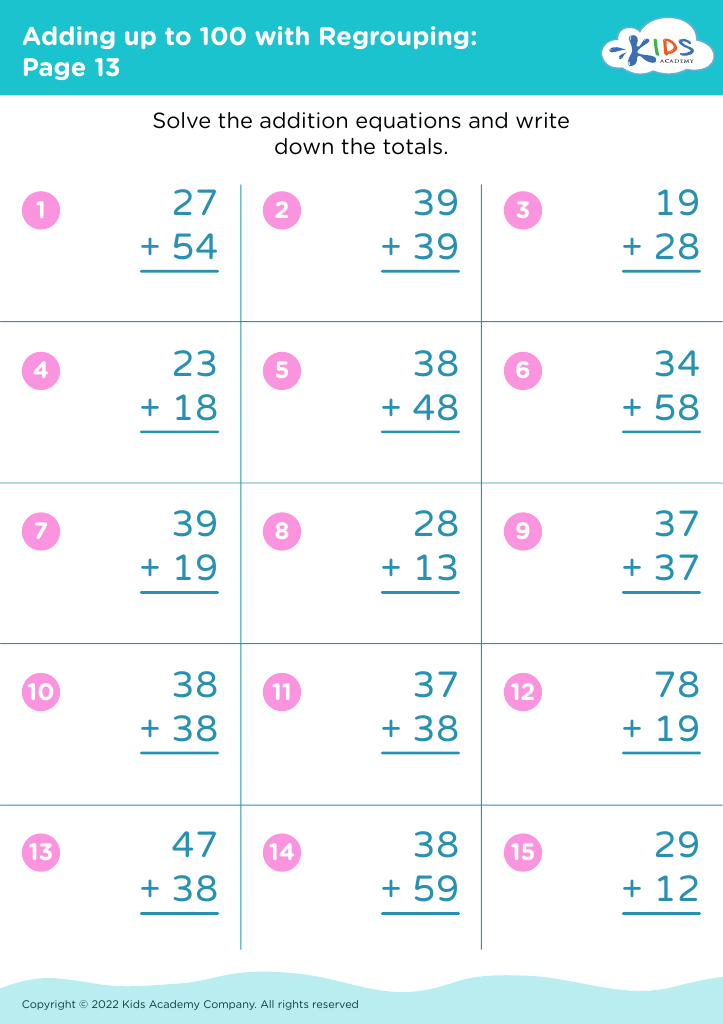
Adding up to 100 with Regrouping: Page 13
Worksheet
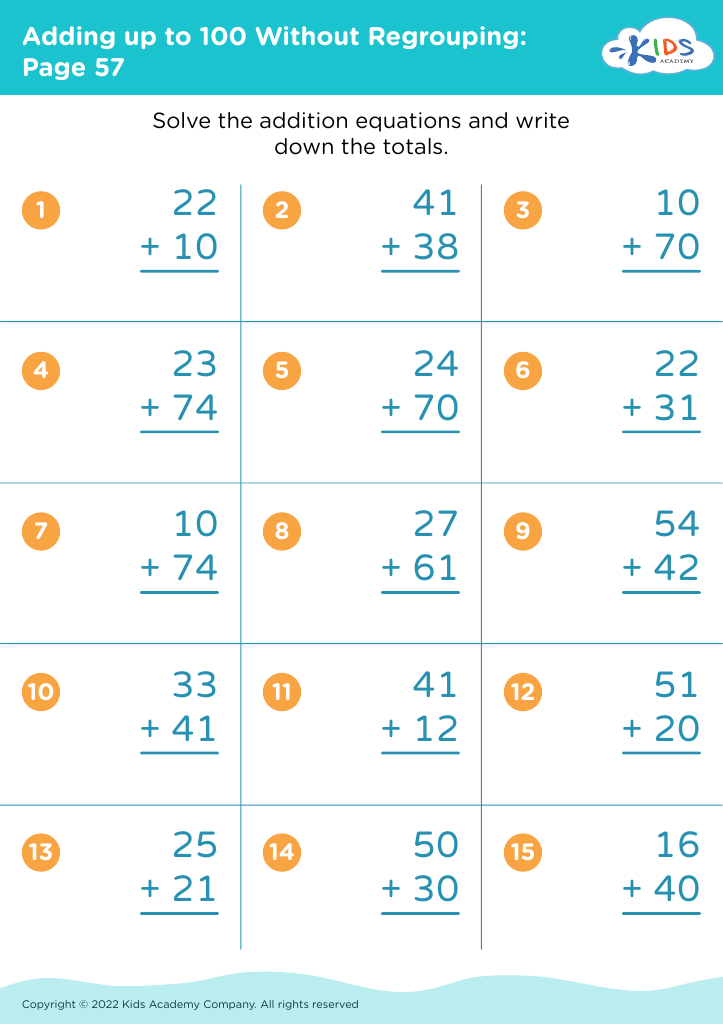
Adding up to 100 Without Regrouping: Page 57
Worksheet
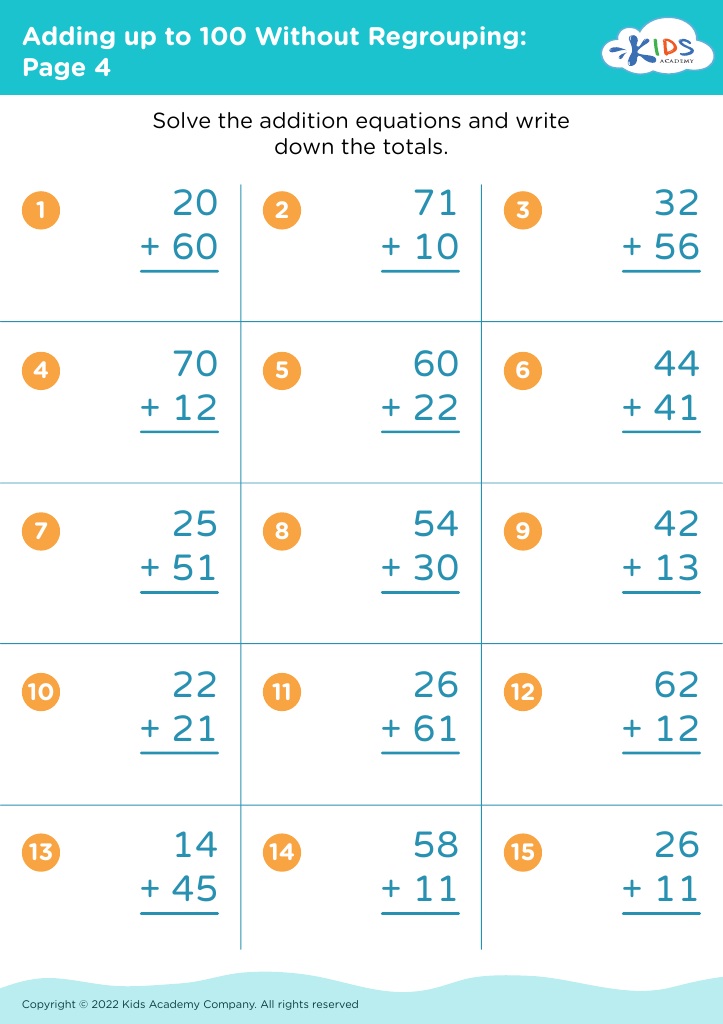
Adding up to 100 Without Regrouping: Page 4
Worksheet
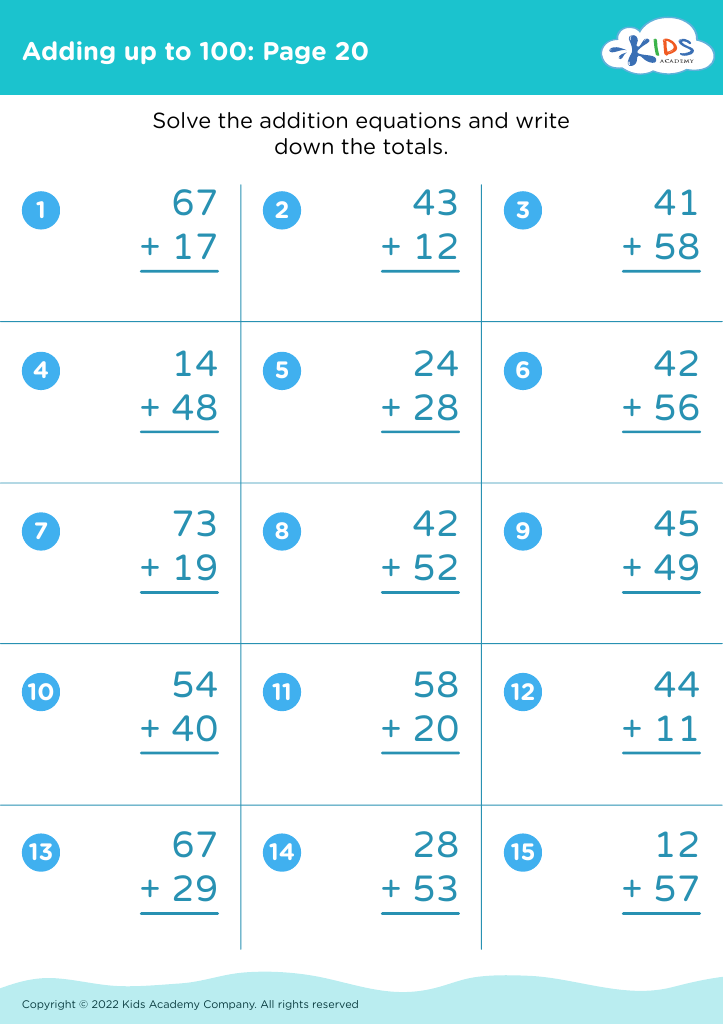
Adding up to 100: Page 20

Adding up to 100: Page 20

Adding up to 100: Page 20
Worksheet
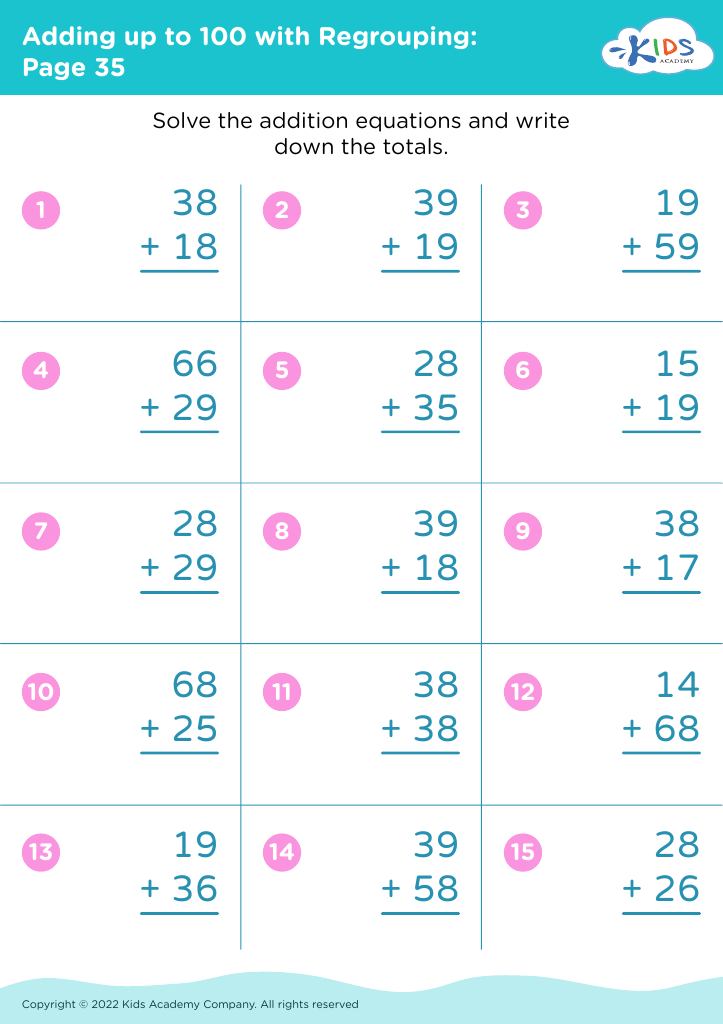
Adding up to 100 with Regrouping: Page 35
Worksheet
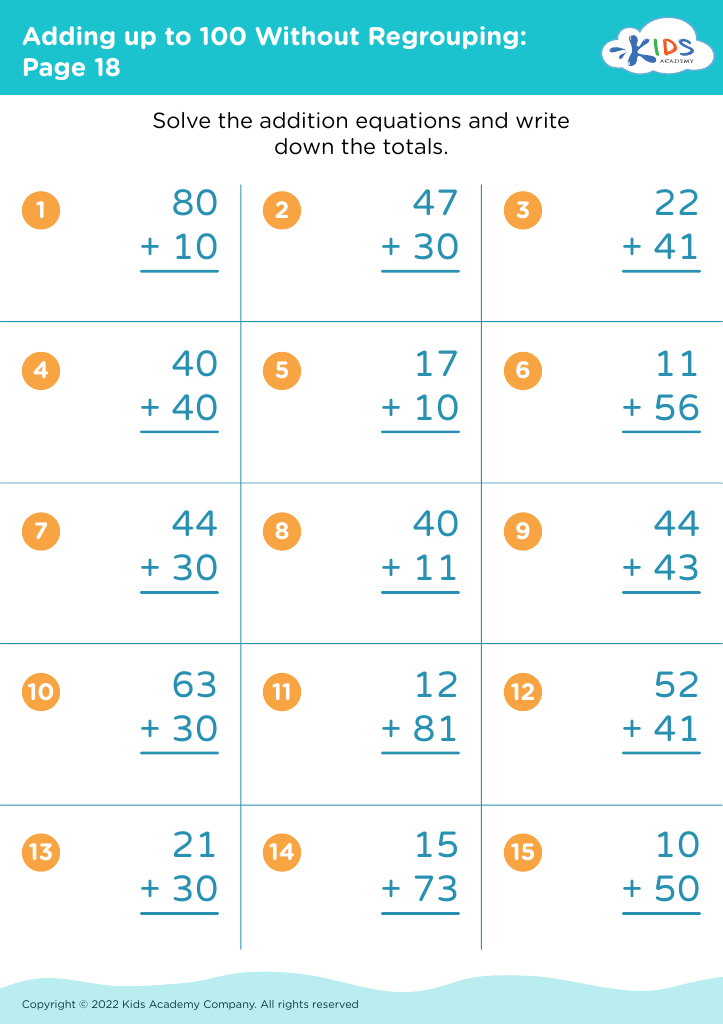
Adding up to 100 Without Regrouping: Page 18
Worksheet
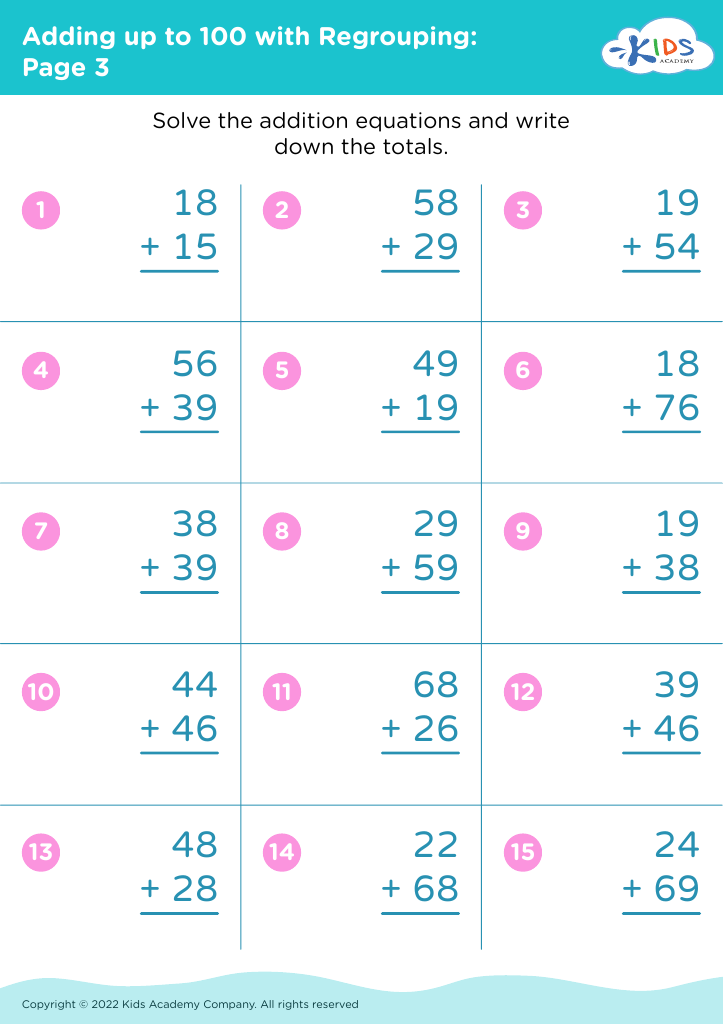
Adding up to 100 with Regrouping: Page 3
Worksheet
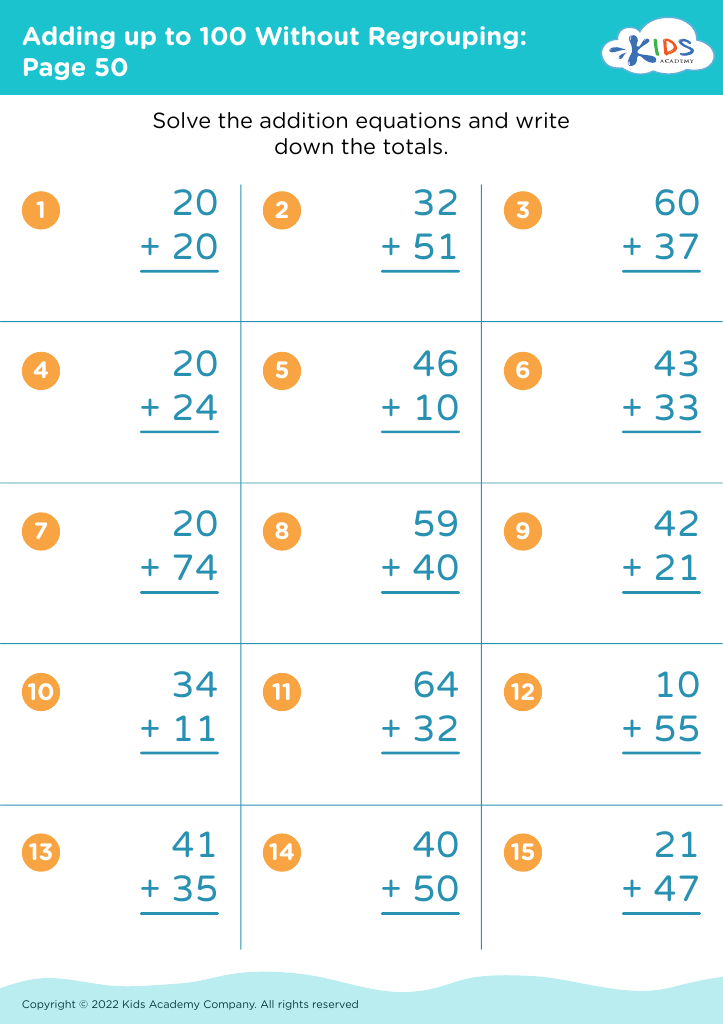
Adding up to 100 Without Regrouping: Page 50
Worksheet
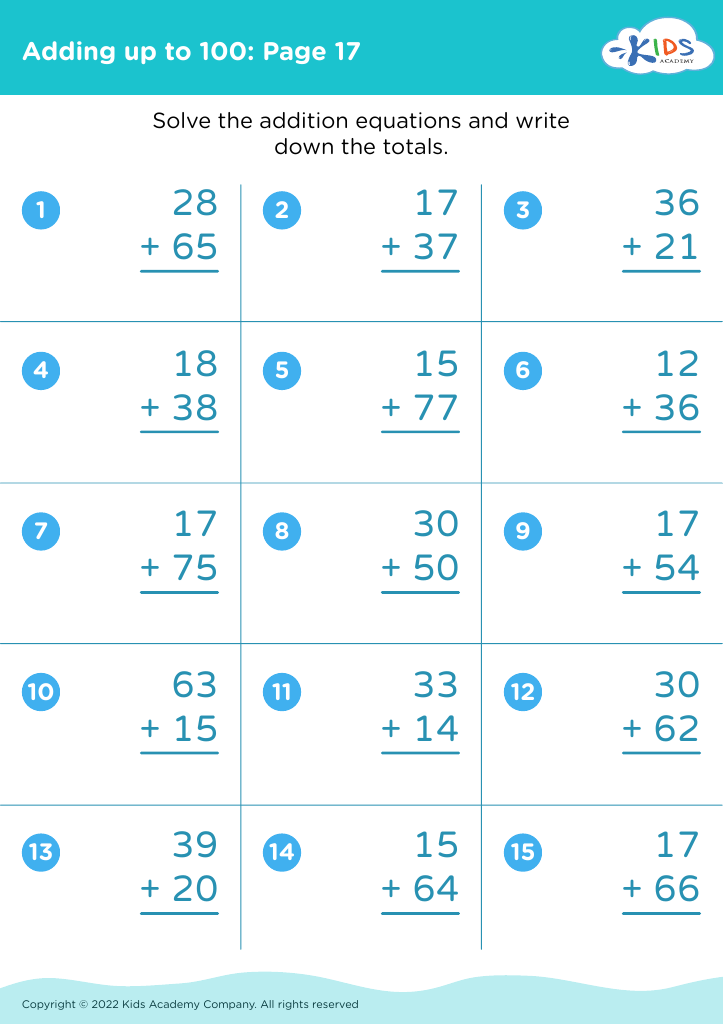
Adding up to 100: Page 17

Adding up to 100: Page 17

Adding up to 100: Page 17
Worksheet
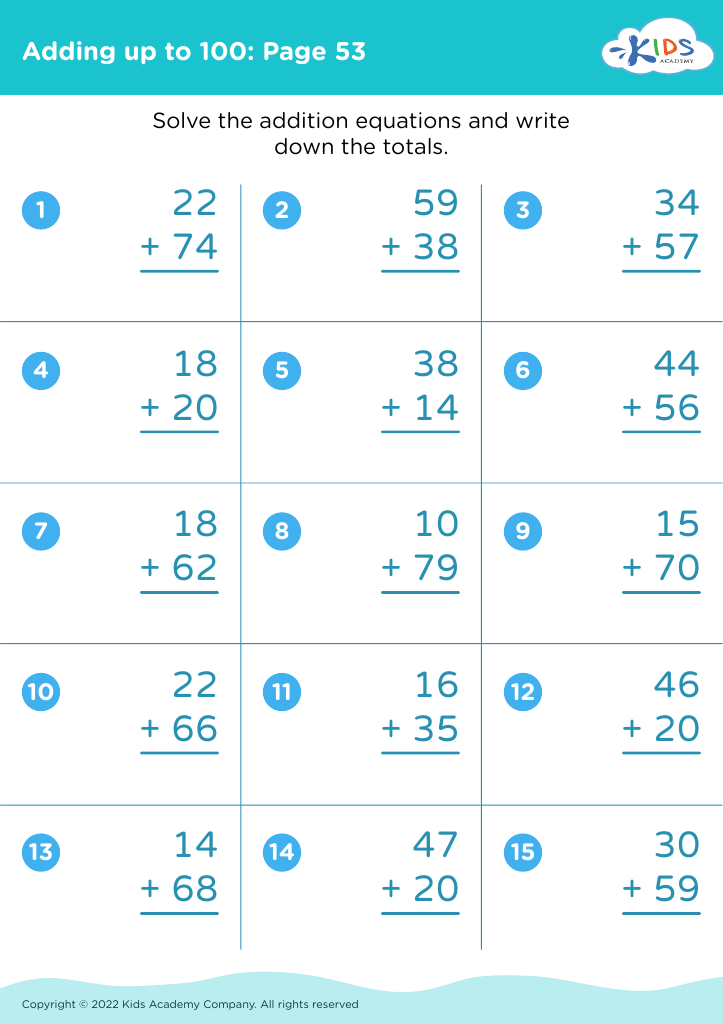
Adding up to 100: Page 53

Adding up to 100: Page 53

Adding up to 100: Page 53
Worksheet
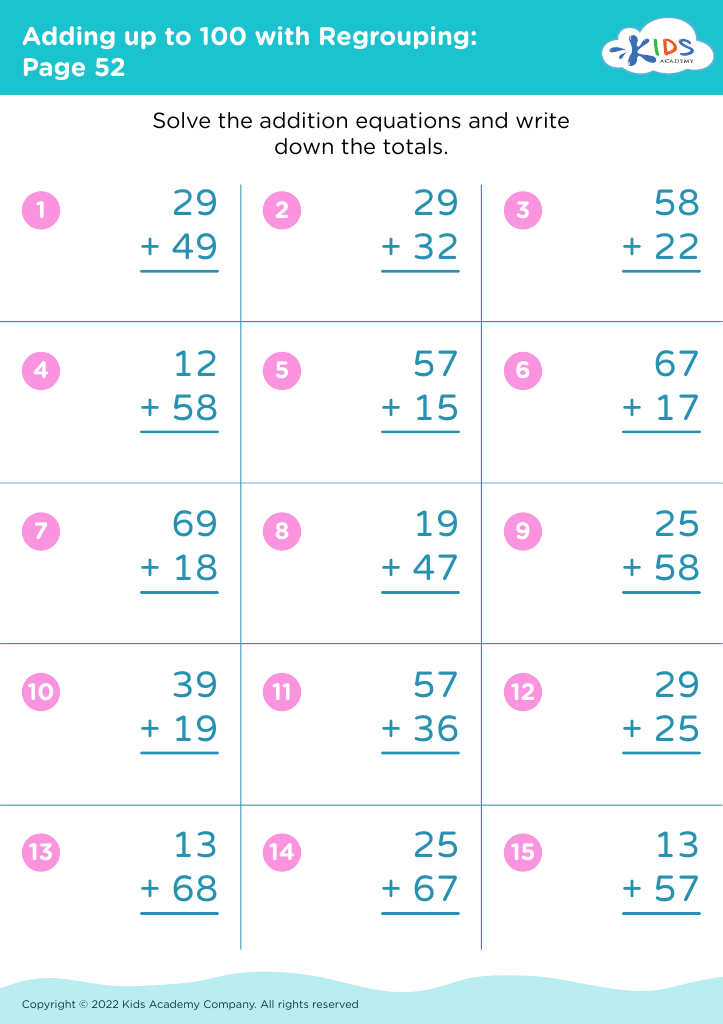
Adding up to 100 with Regrouping: Page 52
Worksheet
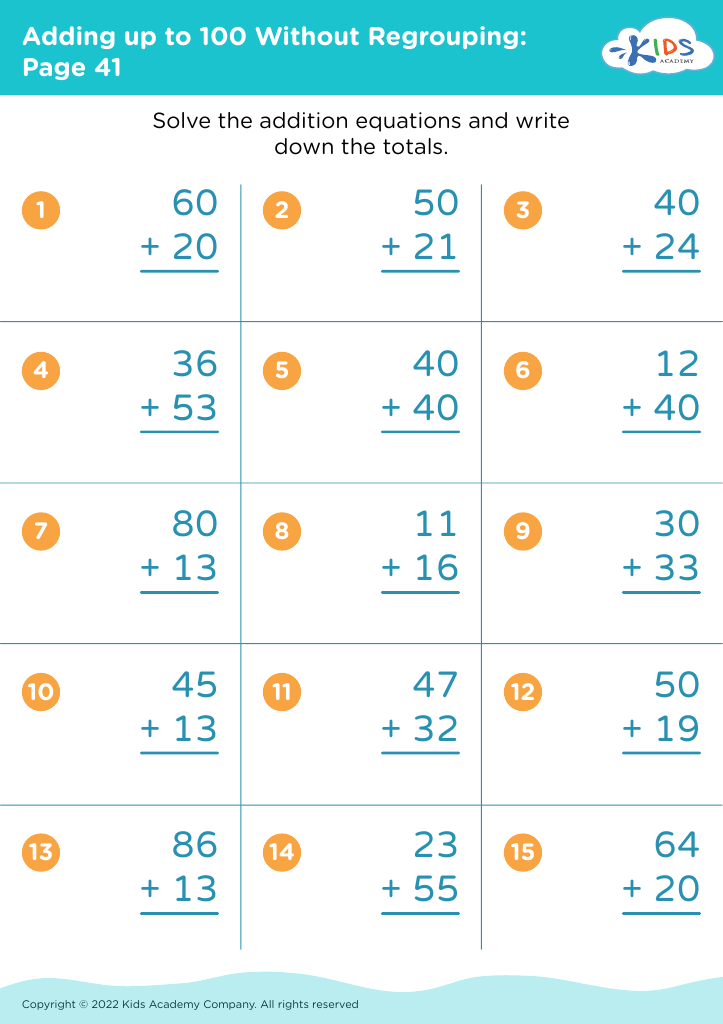
Adding up to 100 Without Regrouping: Page 41
Worksheet
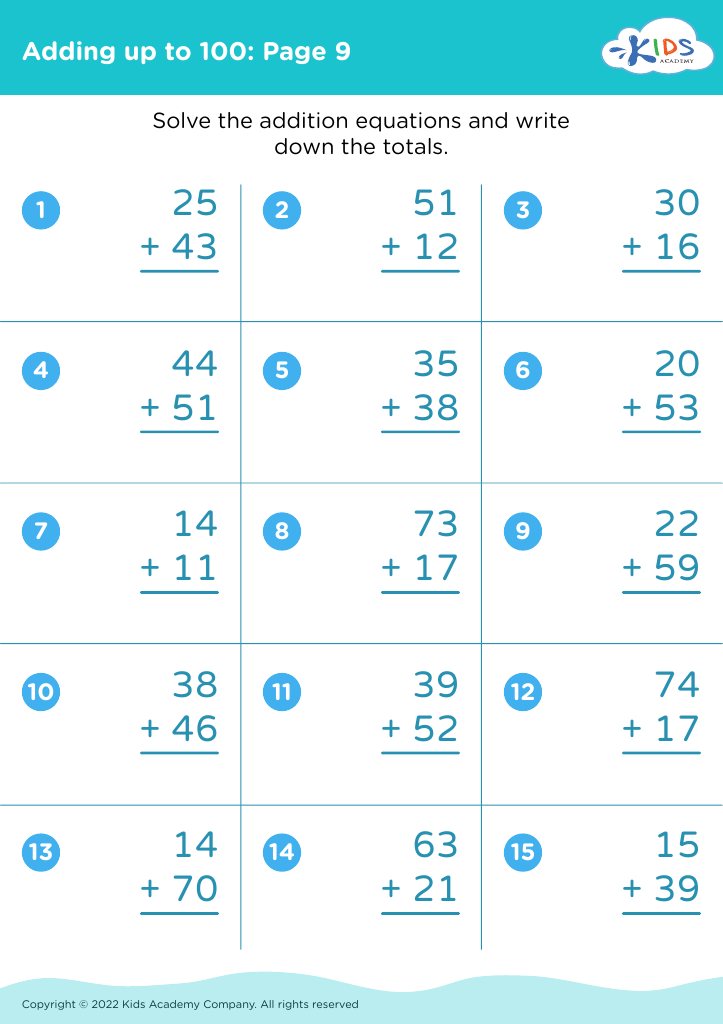
Adding up to 100: Page 9

Adding up to 100: Page 9

Adding up to 100: Page 9
Worksheet
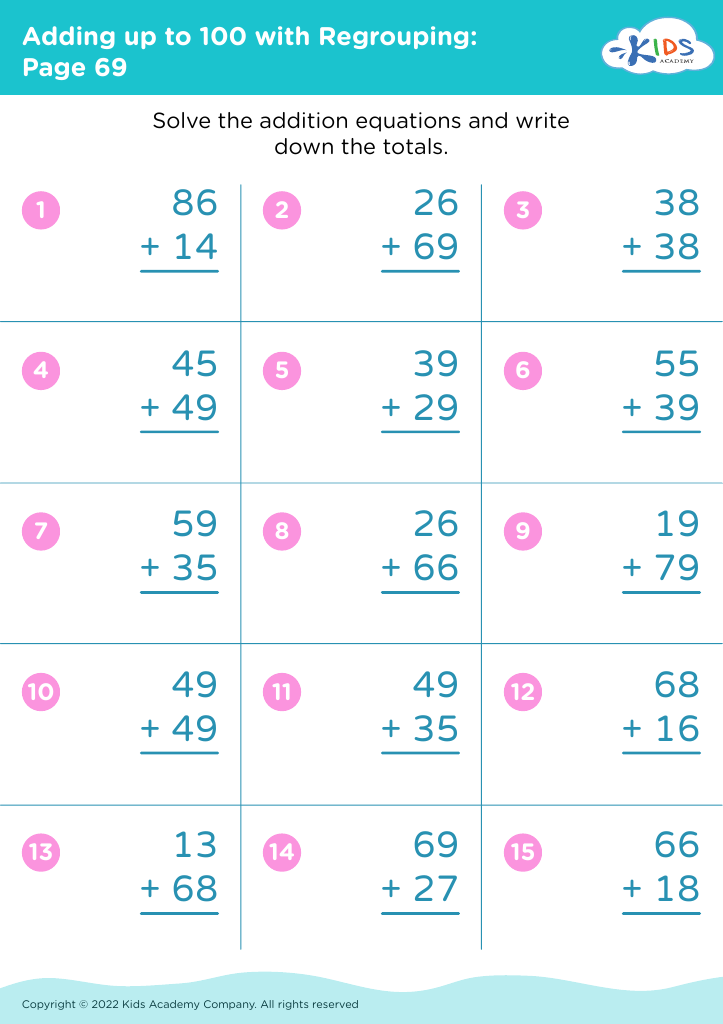
Adding up to 100 with Regrouping: Page 69
Worksheet
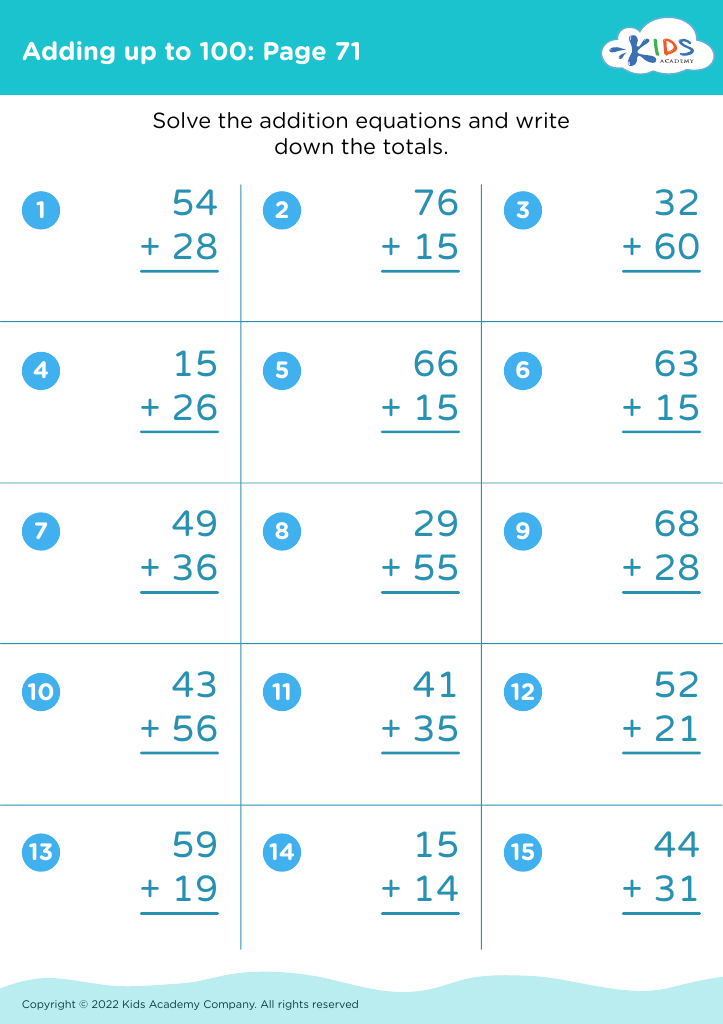
Adding up to 100: Page 71

Adding up to 100: Page 71

Adding up to 100: Page 71
Worksheet
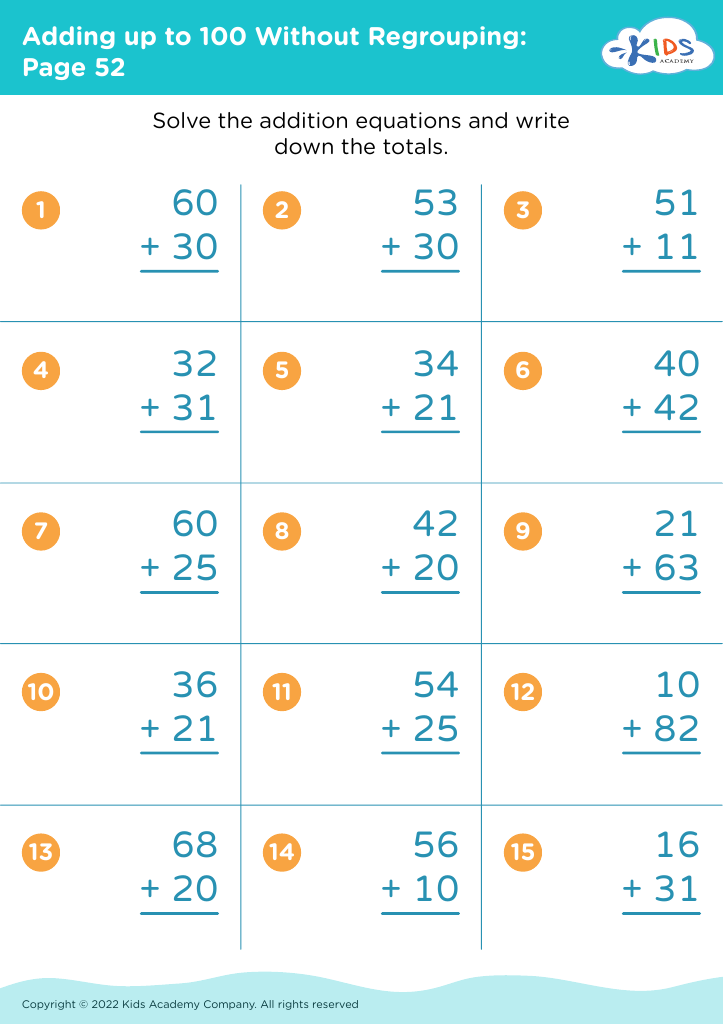
Adding up to 100 Without Regrouping: Page 52
Worksheet
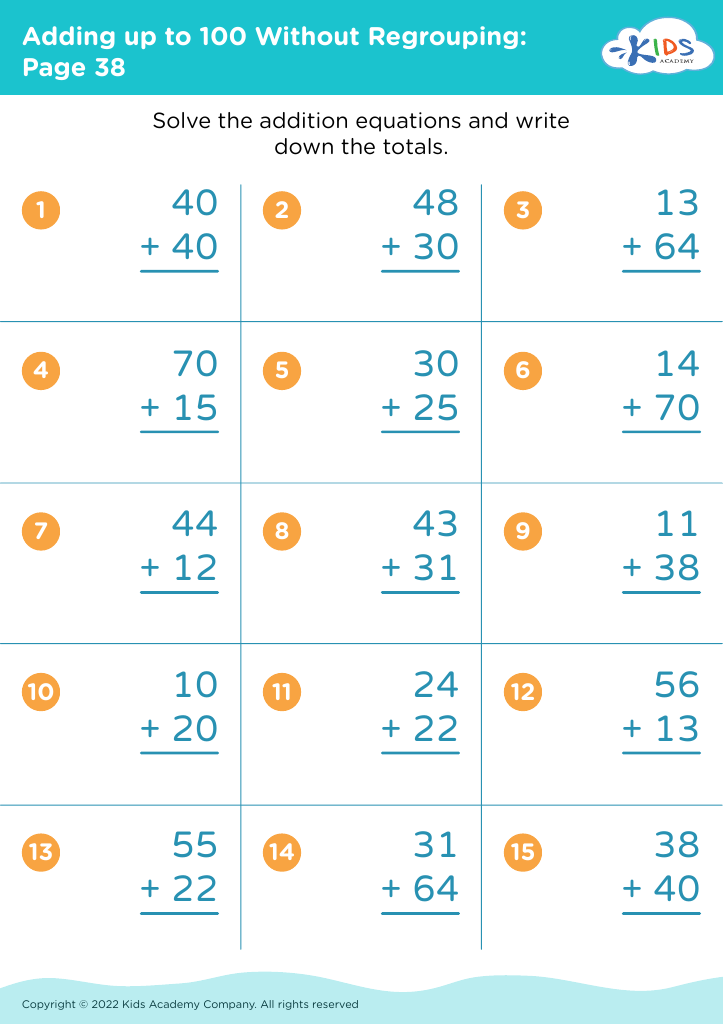
Adding up to 100 Without Regrouping: Page 38
Worksheet
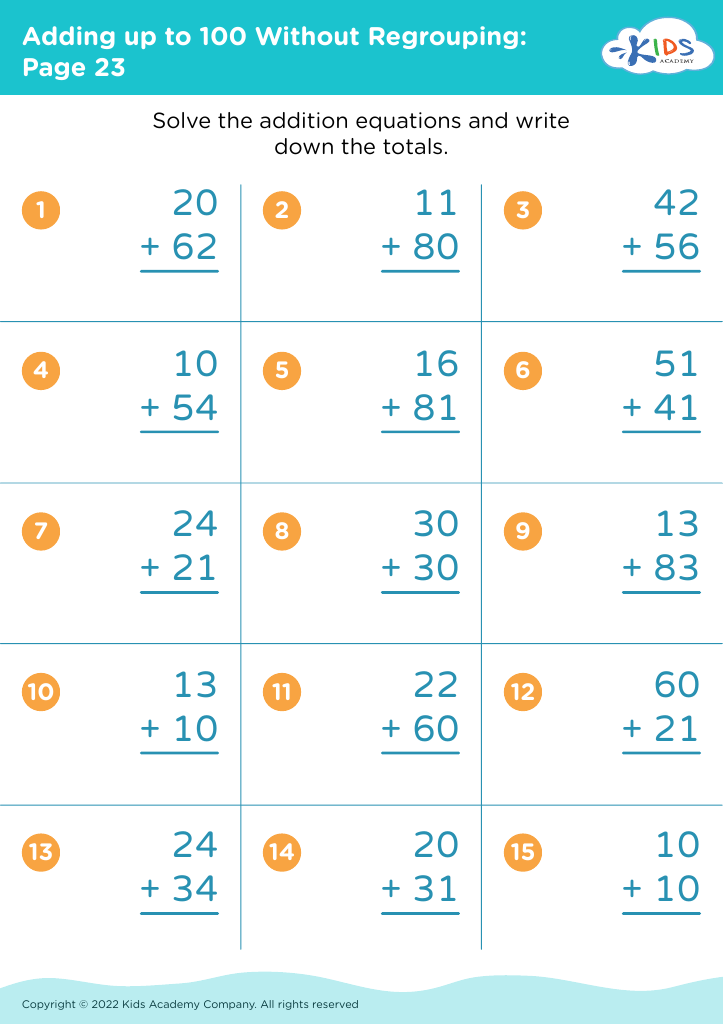
Adding up to 100 Without Regrouping: Page 23
Worksheet
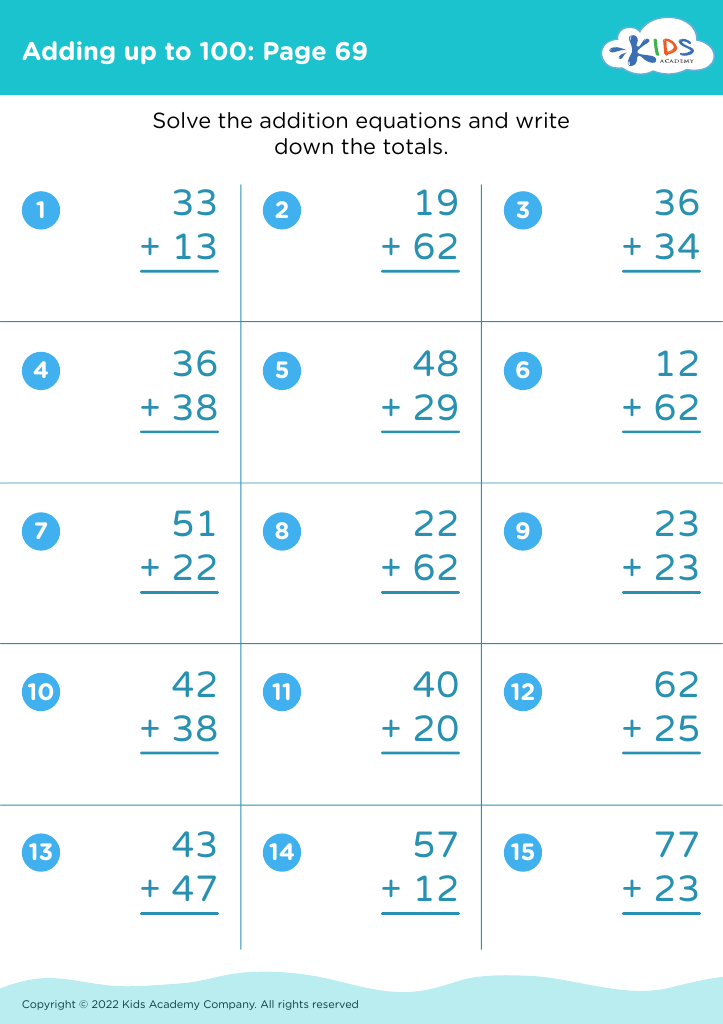
Adding up to 100: Page 69

Adding up to 100: Page 69

Adding up to 100: Page 69
Worksheet
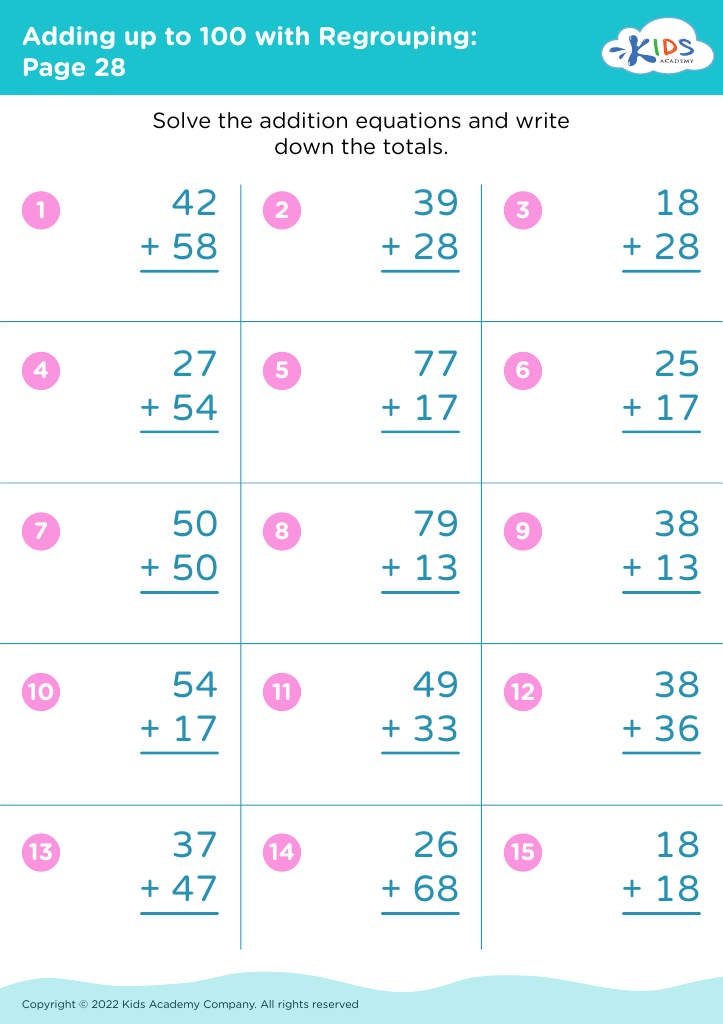
Adding up to 100 with Regrouping: Page 28
Worksheet
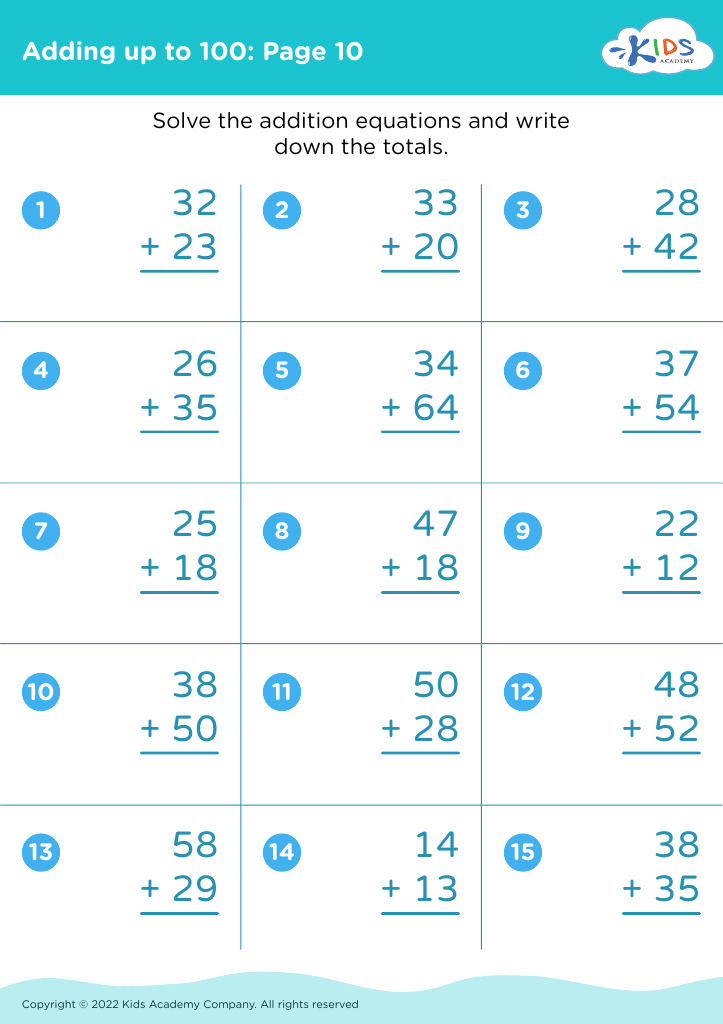
Adding up to 100: Page 10

Adding up to 100: Page 10

Adding up to 100: Page 10
Worksheet
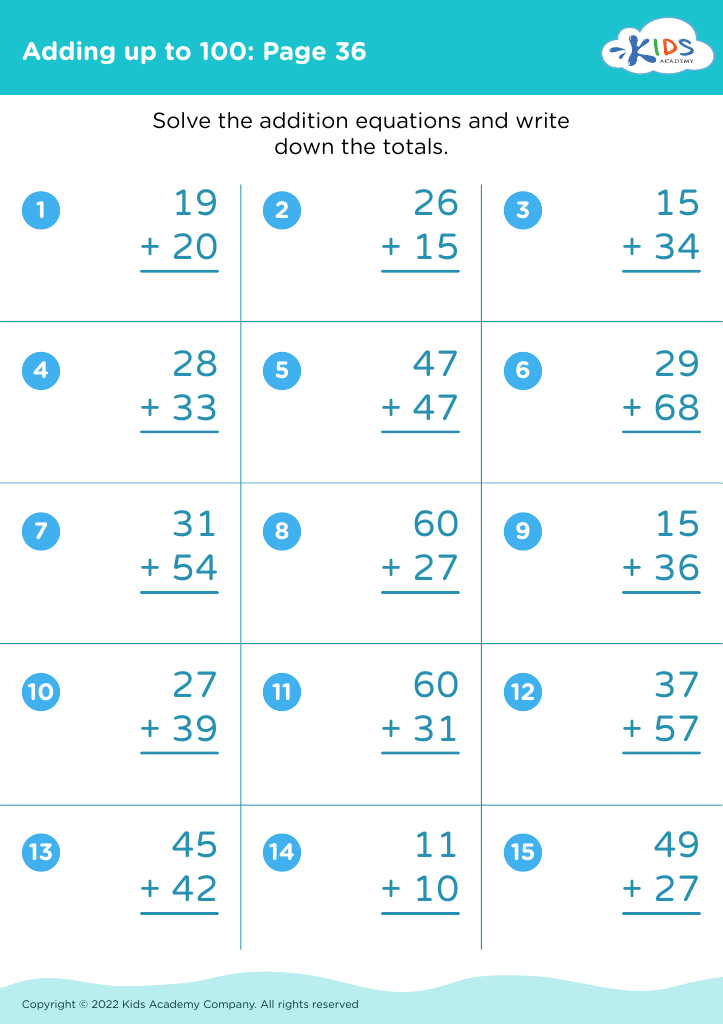
Adding up to 100: Page 36

Adding up to 100: Page 36

Adding up to 100: Page 36
Worksheet


Understanding fractions and their basic concepts at an early age, such as between 3-7 years, can provide critical foundational skills that benefit both academic and everyday life. At this age, children's brains are highly receptive to new information, and introducing foundational math concepts can significantly contribute to their cognitive development. Fractions, along with adding up to 100, help kids build crucial mathematical skills such as number sense, proportionality, and how parts make a whole.

Firstly, understanding fractions establishes a basis for more complex mathematical learning. As students progress to higher grades, they will encounter advanced topics where fractions play a critical role, such as algebra, geometry, and even real-world problem-solving.

Adding up to 100 cultivates counting skills and strengthens understanding of place value, which is essential for mastering more significant computations later on. At ages 3-7, learning to add within a familiar range (up to 100) also sets the context for bigger numbers and operations, contributing to a child's confidence and competence in mathematics.

Moreover, early competence in these areas fosters a positive attitude towards math, reducing future anxiety and increasing the likelihood of academic success. Engaged, math-positive attitudes from parents and teachers during these formative years can truly ignite a lifelong love for learning and problem-solving in children.