Understanding patterns Adding up to 100 Worksheets for Ages 3-7
11 filtered results
-
From - To
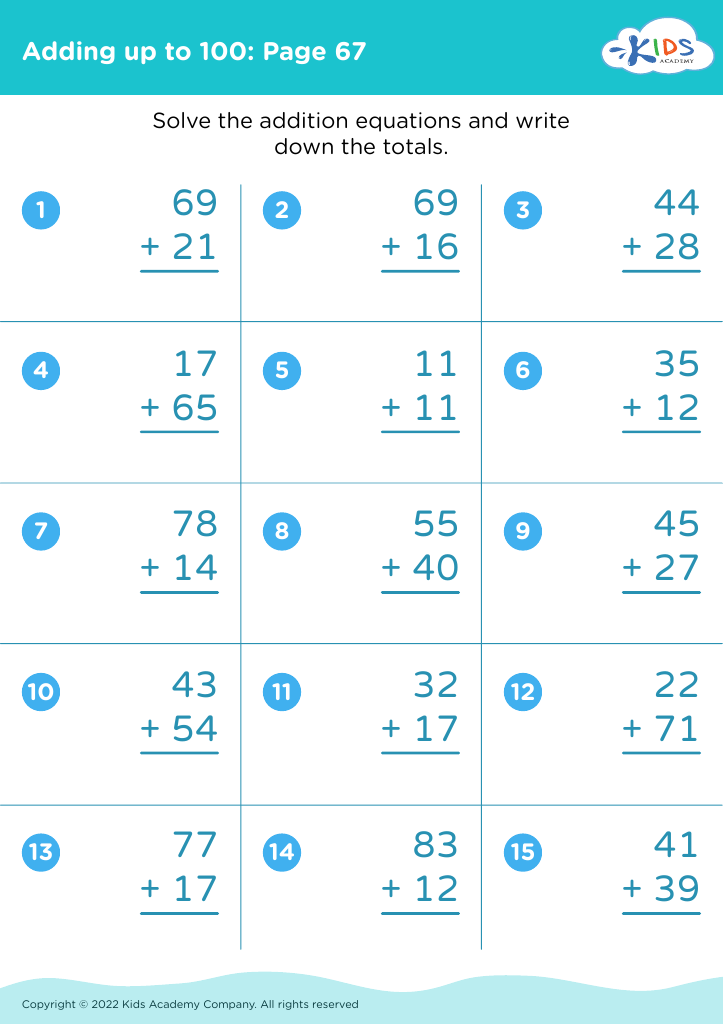
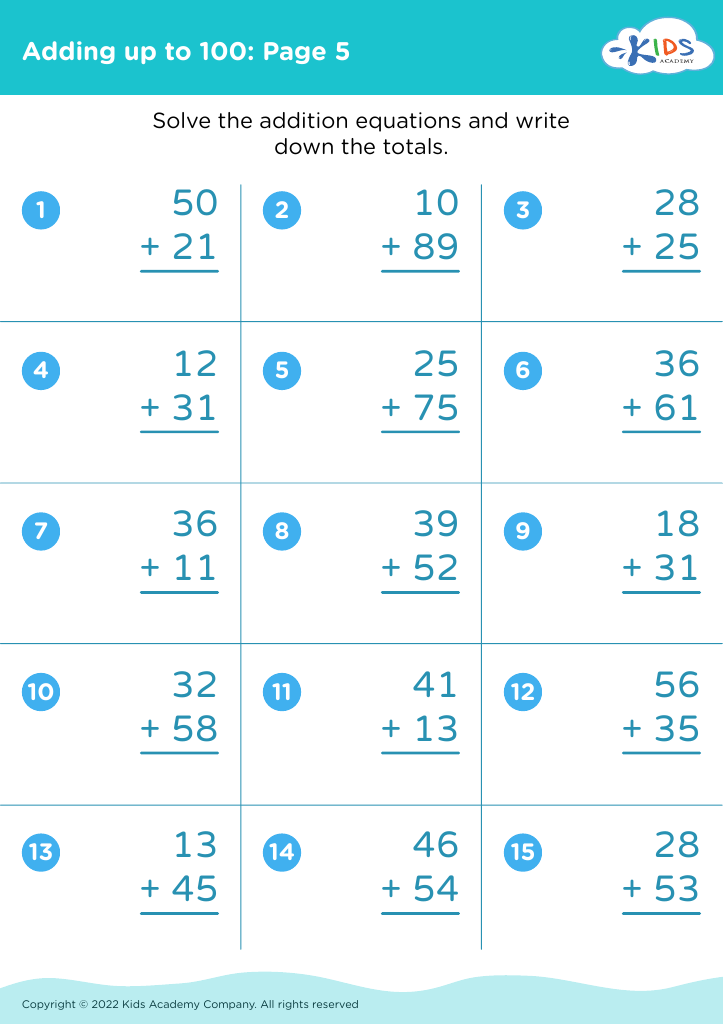
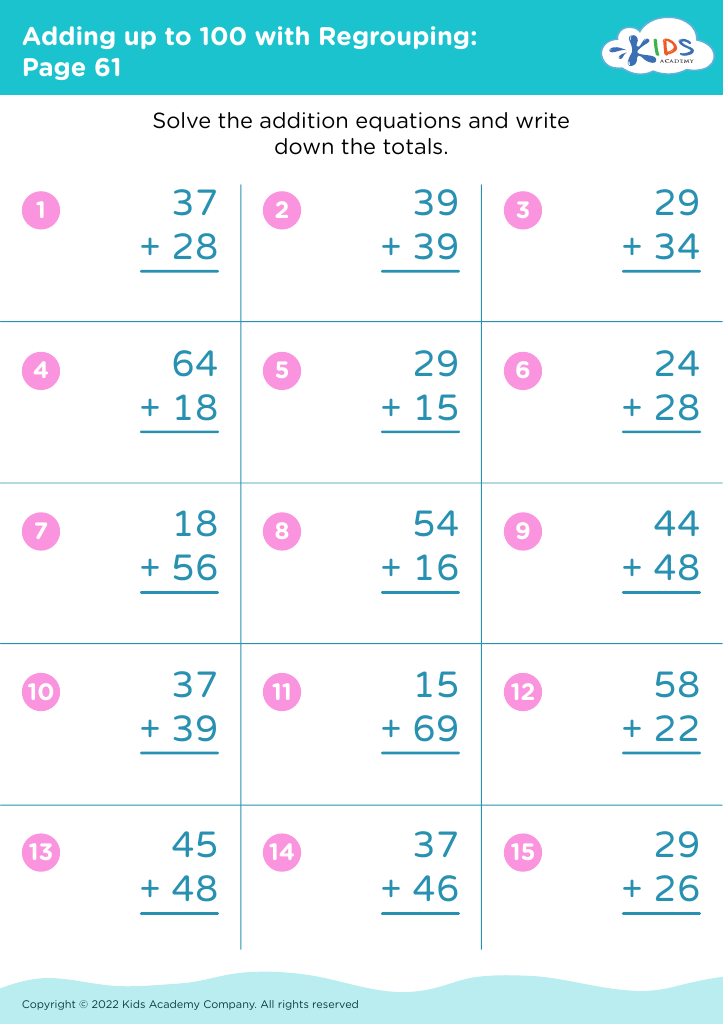
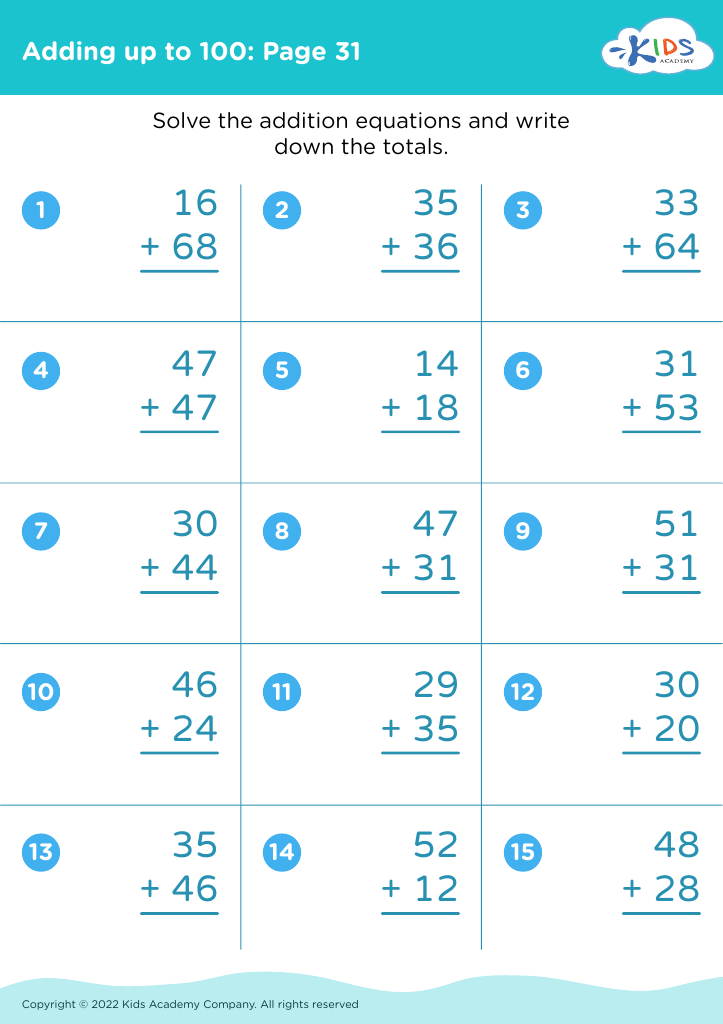
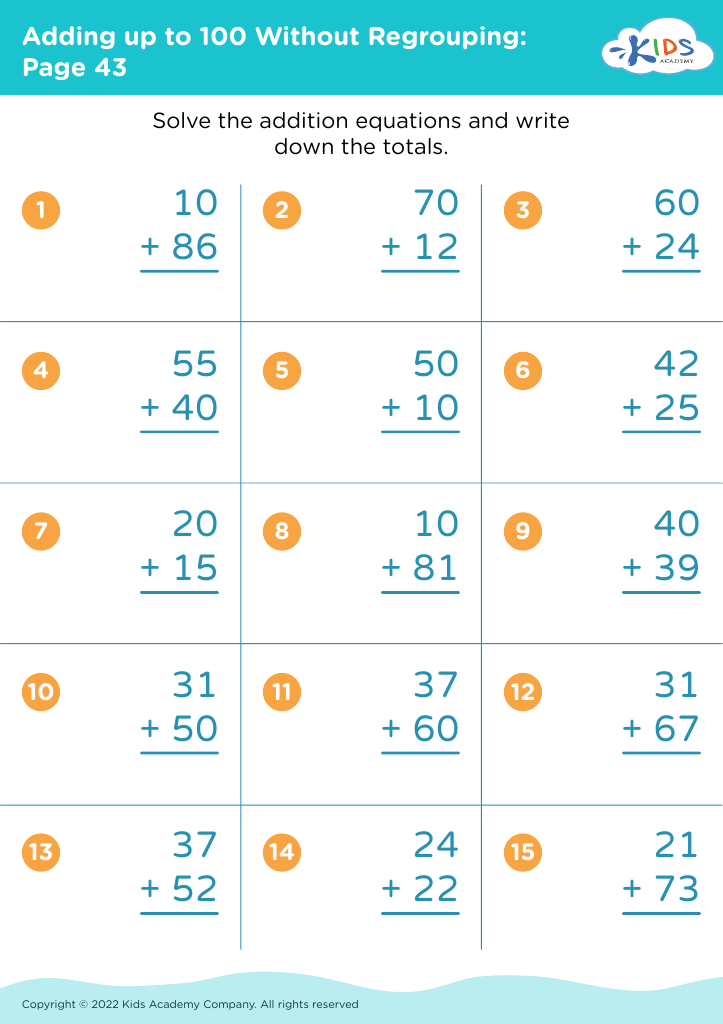
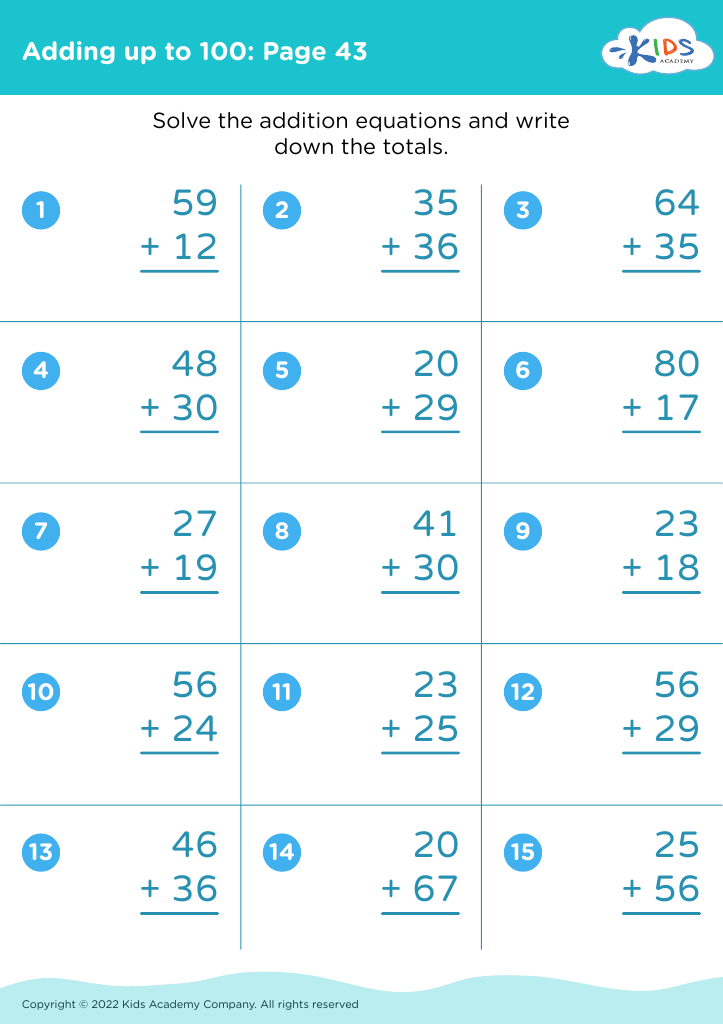
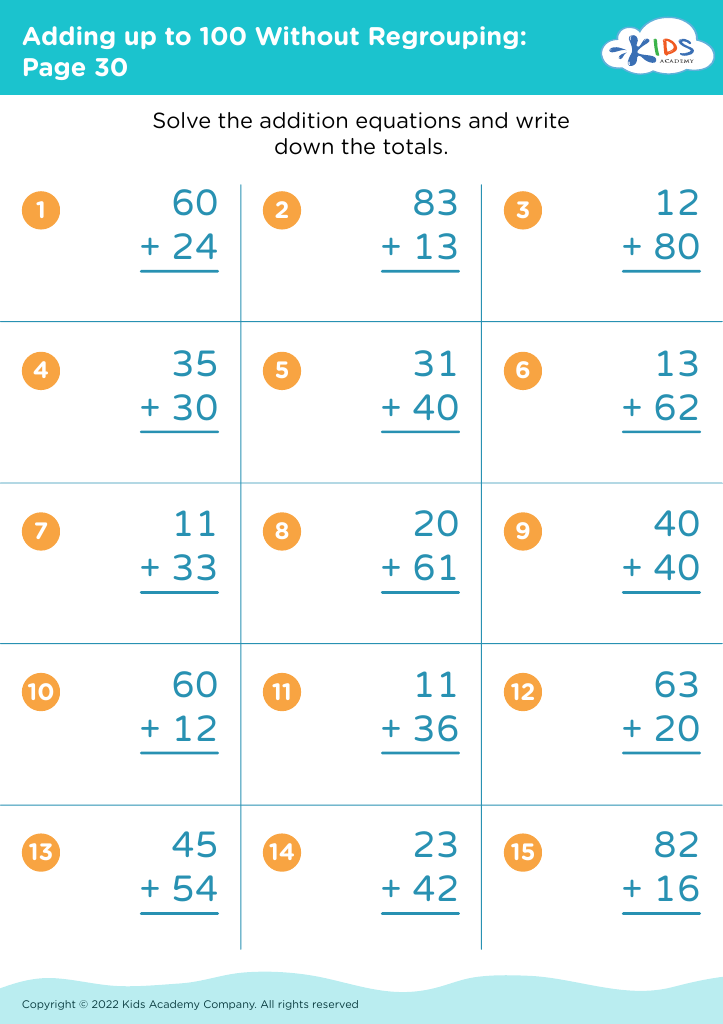
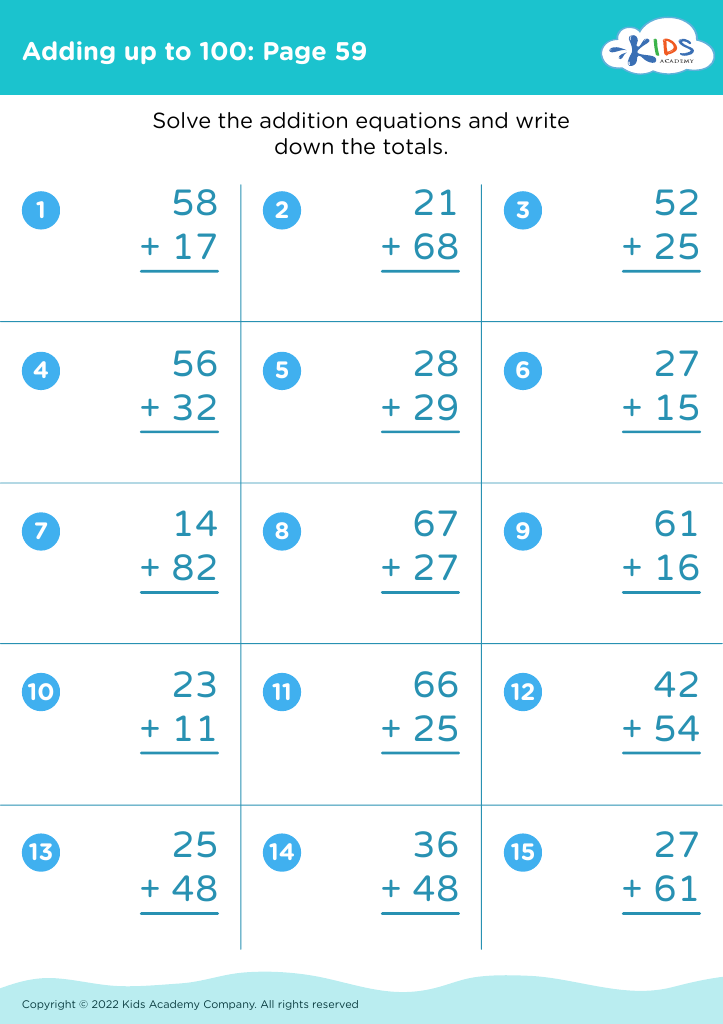
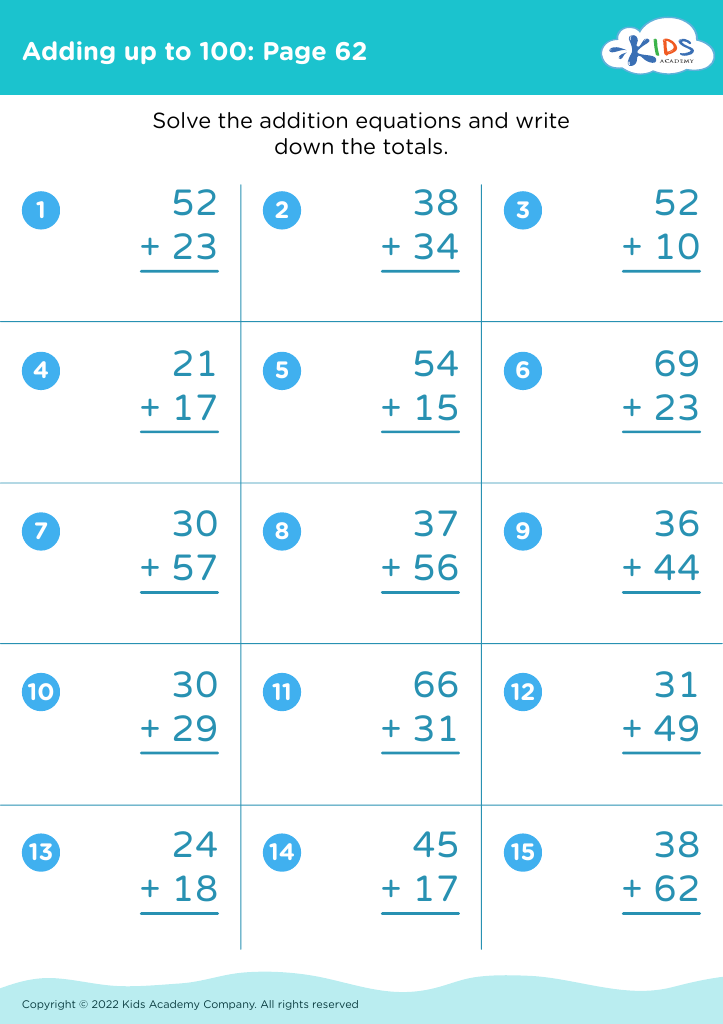
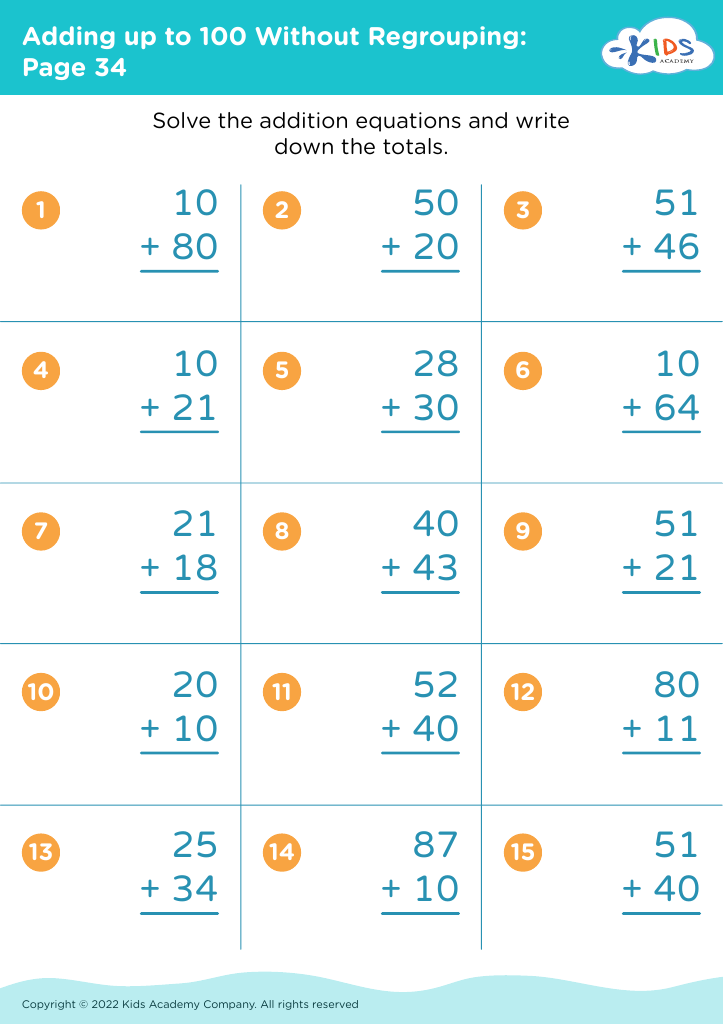
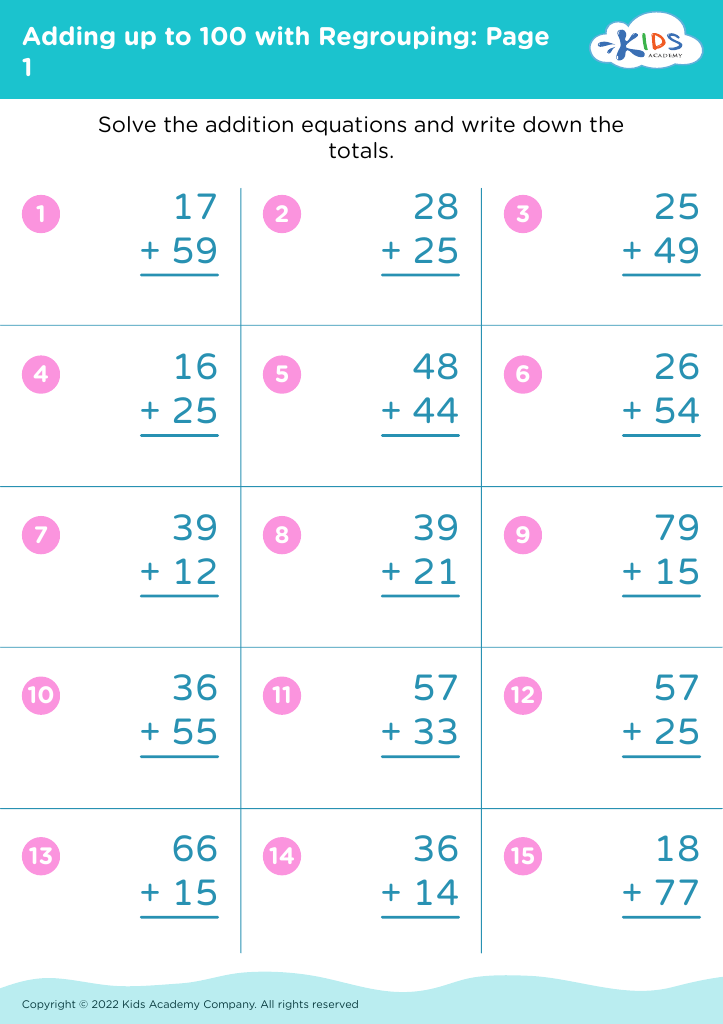
Welcome to our "Understanding Patterns Adding Up to 100 Worksheets" for young learners aged 3-7! Designed to enhance foundational math skills, these engaging worksheets help children recognize and identify patterns through fun and interactive exercises. As kids explore number sequences and relationships, they develop critical thinking and problem-solving abilities. Each activity supports early mathematical understanding, laying a solid groundwork for future learning. With vibrant illustrations and age-appropriate challenges, these worksheets make mastering the concept of adding up to 100 enjoyable. Start your child’s mathematical journey with our thoughtfully crafted resources that inspire curiosity and a love for learning!




%20(1).jpg)


Understanding patterns and the concept of adding up to 100 is crucial for children aged 3-7, as it lays the groundwork for essential mathematical skills. Engaging with patterns helps young learners recognize relationships between numbers and shapes, enhancing their problem-solving abilities. When children discover numerical patterns, they develop critical thinking, enabling them to make predictions and identify sequences, which is fundamental in mathematics.
Moreover, learning to add up to 100 helps children master basic arithmetic operations, boosting their confidence in handling numbers. This foundational knowledge is essential for more advanced math topics they will encounter later in their education, such as multiplication, division, and fractions.
Parents and teachers should be proactive in nurturing these skills because early experiences shape a child’s future learning attitude and aptitude. Creating an environment rich in mathematical language and opportunities for exploration transforms numbers from abstract concepts into tangible ideas, facilitating a deeper understanding.
Lastly, weaving these skills into everyday activities—such as counting objects, playing games, or recognizing patterns in nature—makes learning engaging and fun. By prioritizing understanding patterns and adding up to 100, caregivers promote a lifelong love for mathematics, setting children on a path to academic success.








