Filters

244 filtered results

Clear all filters
Favorites
With answer key
Interactive

244 filtered results

Difficulty Level

Grade


Check out this FREE Trial Lesson on Adding Up to 5 for age 3-7!

P

Favorites
With answer key
Interactive
  • 3-7
  • Basic Addition Skills
  • Adding Up to 5
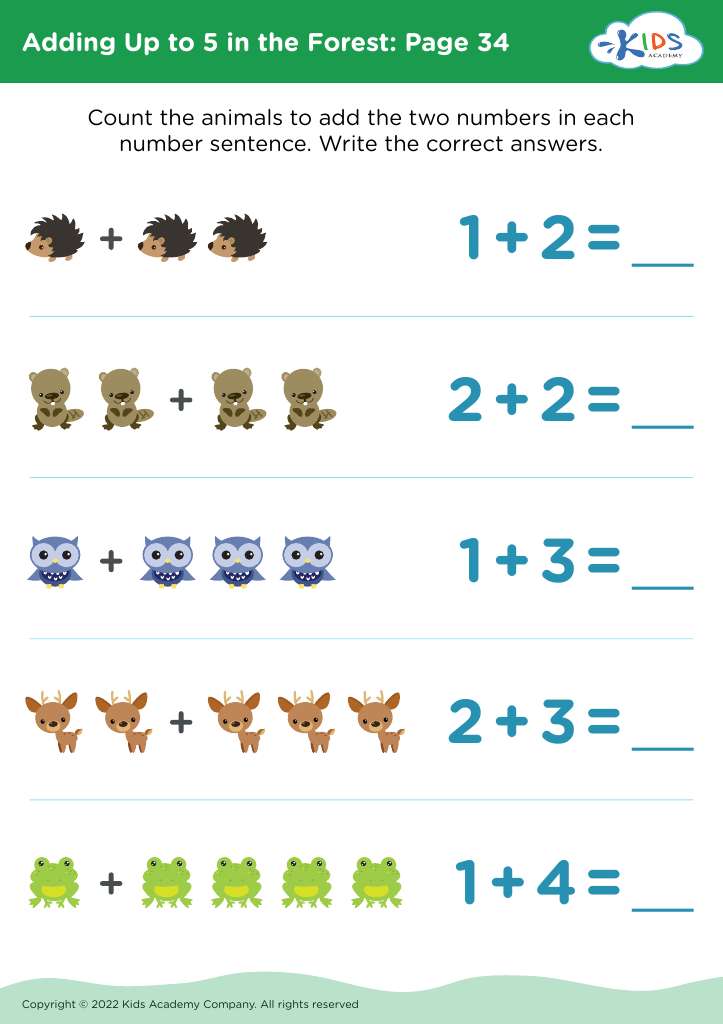
Adding Up to 5 in the Forest: Page 34
Worksheet
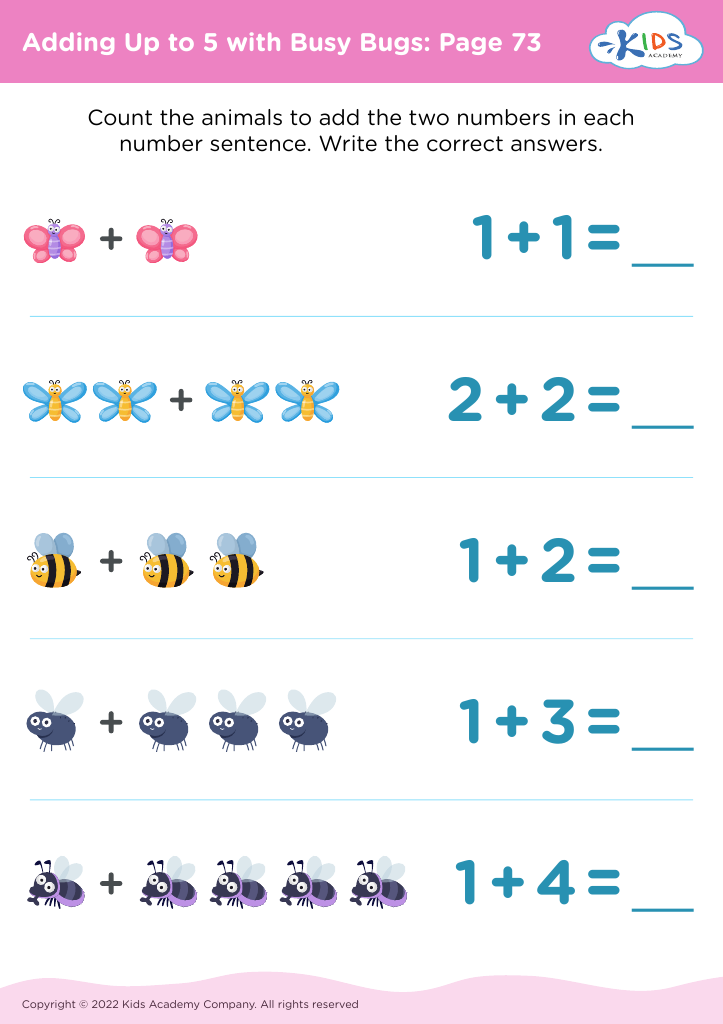
Adding Up to 5 with Busy Bugs: Page 73
Worksheet
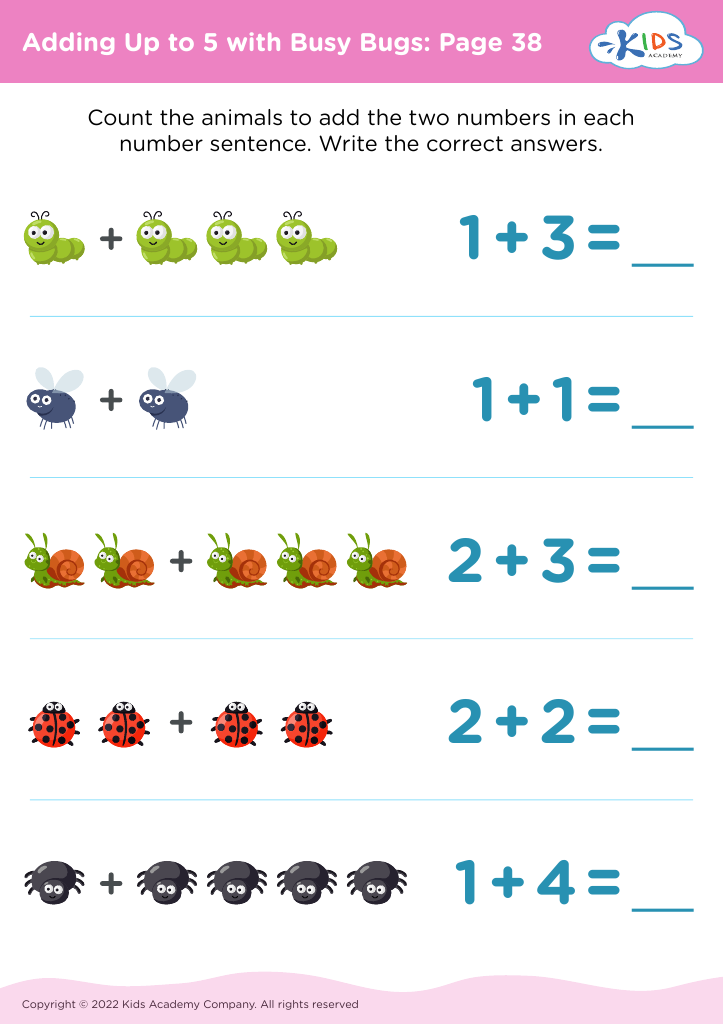
Adding Up to 5 with Busy Bugs: Page 38
Worksheet
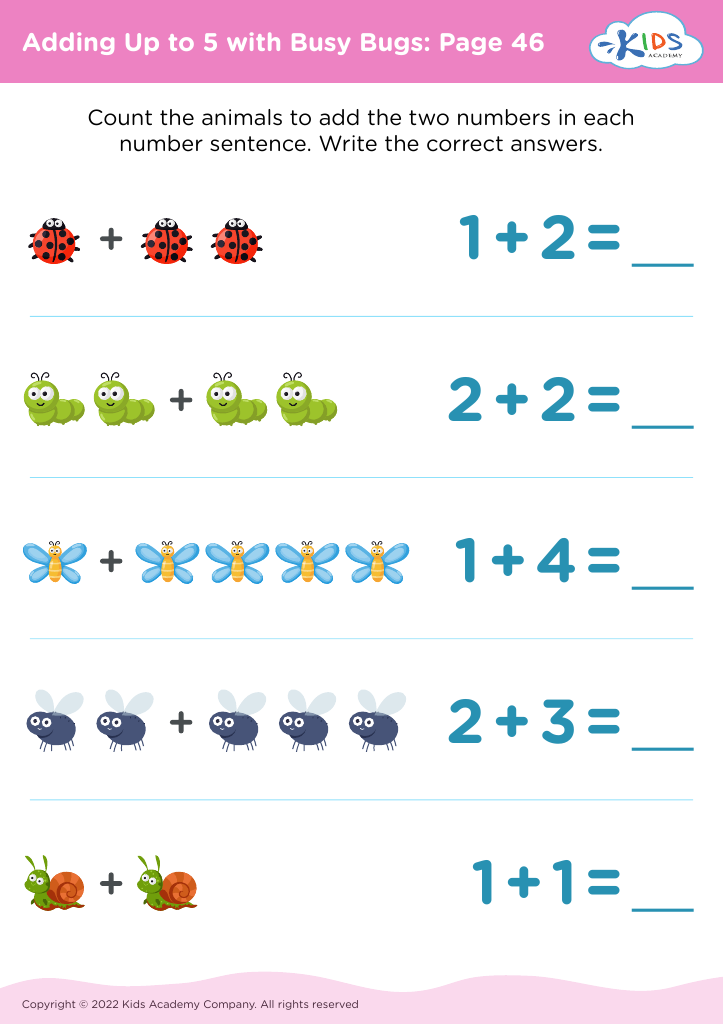
Adding Up to 5 with Busy Bugs: Page 46
Worksheet
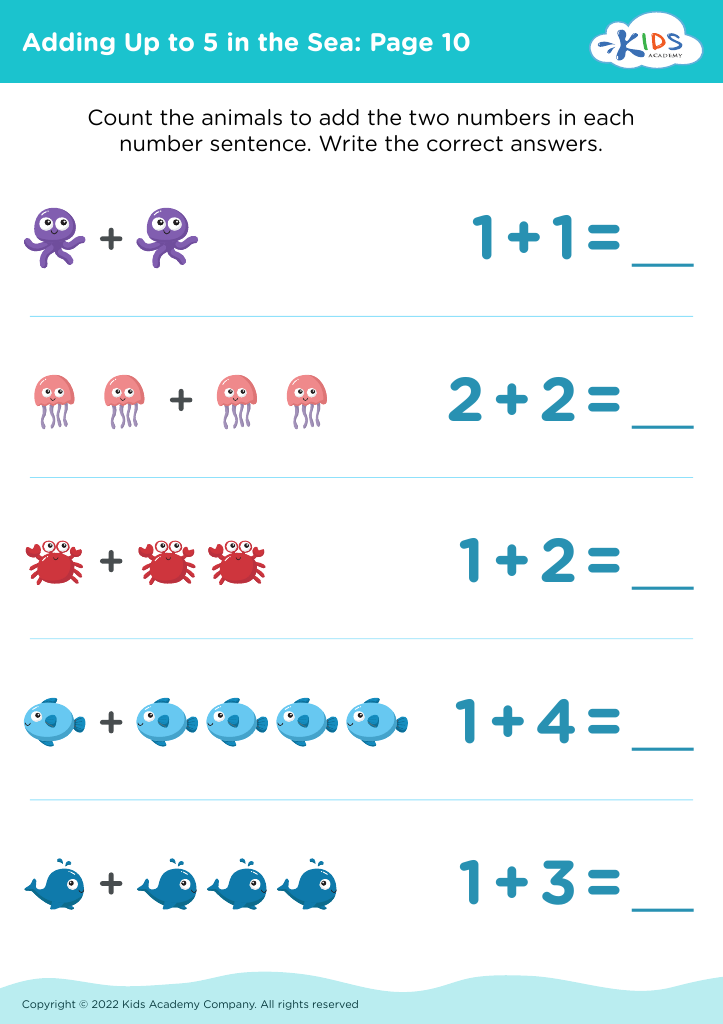
Adding Up to 5 in the Sea: Page 10
Worksheet
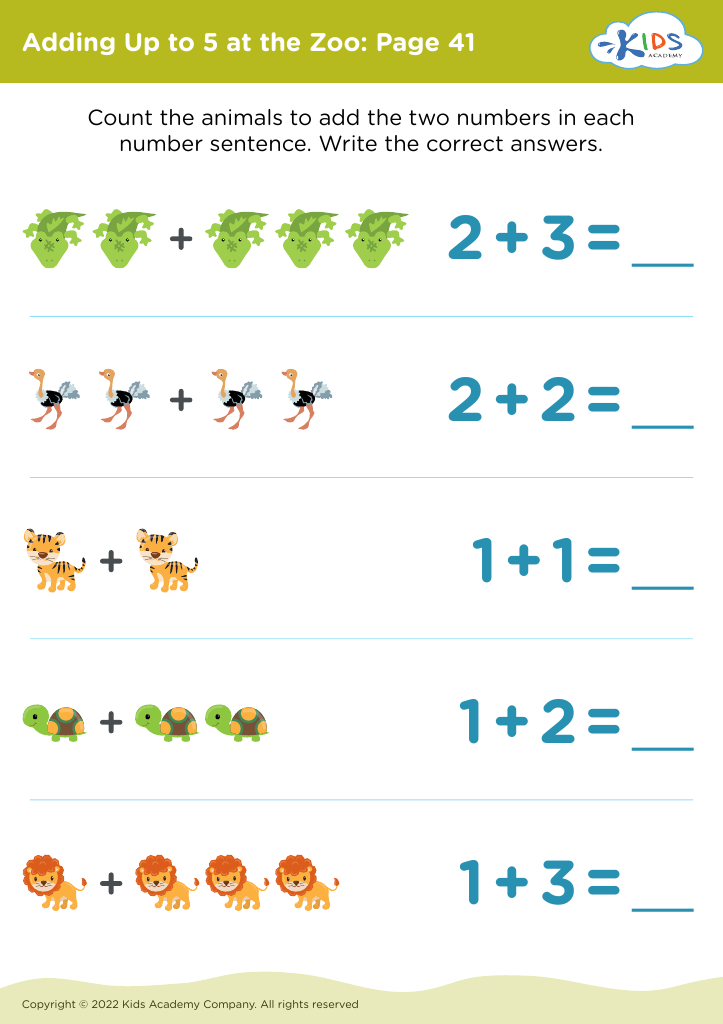
Adding Up to 5 at the Zoo: Page 41
Worksheet
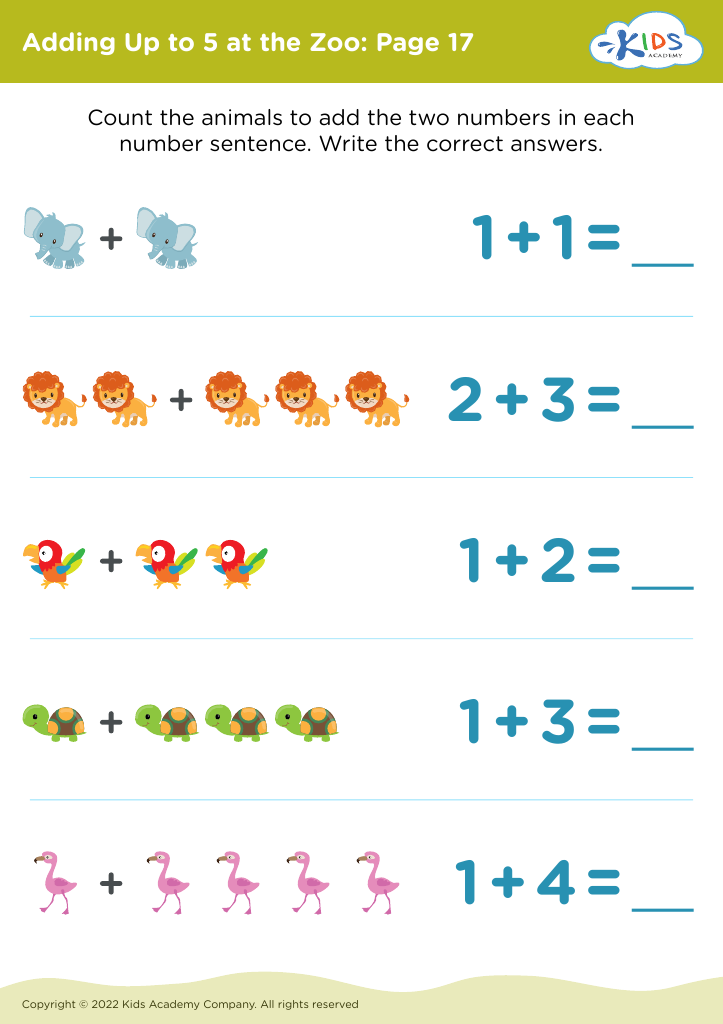
Adding Up to 5 at the Zoo: Page 17
Worksheet
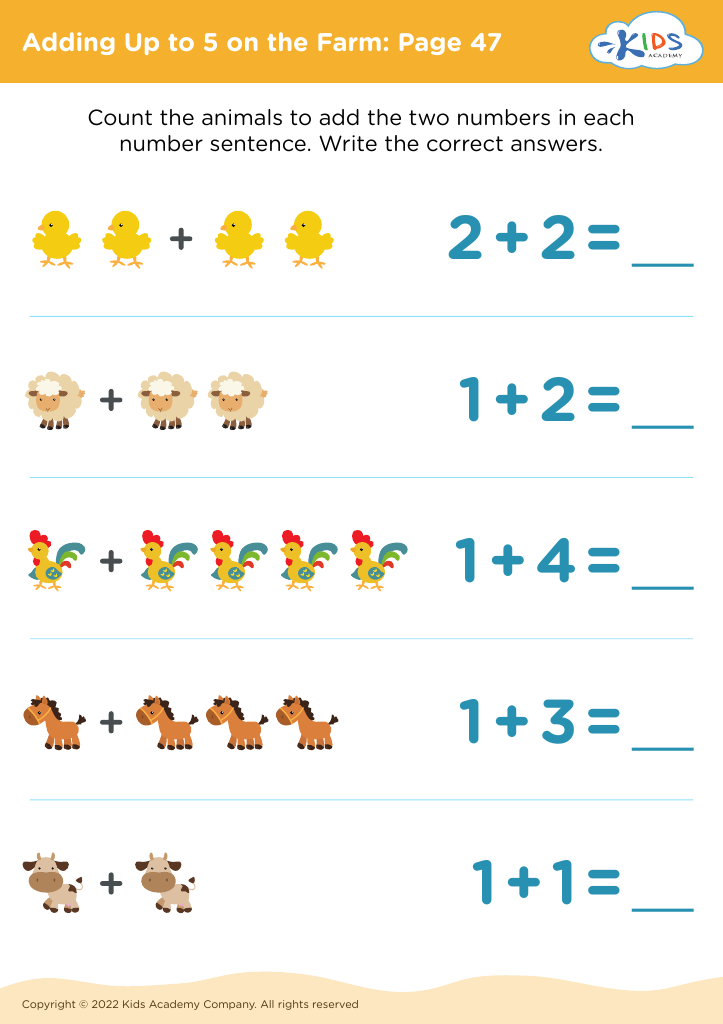
Adding Up to 5 on the Farm: Page 47
Worksheet
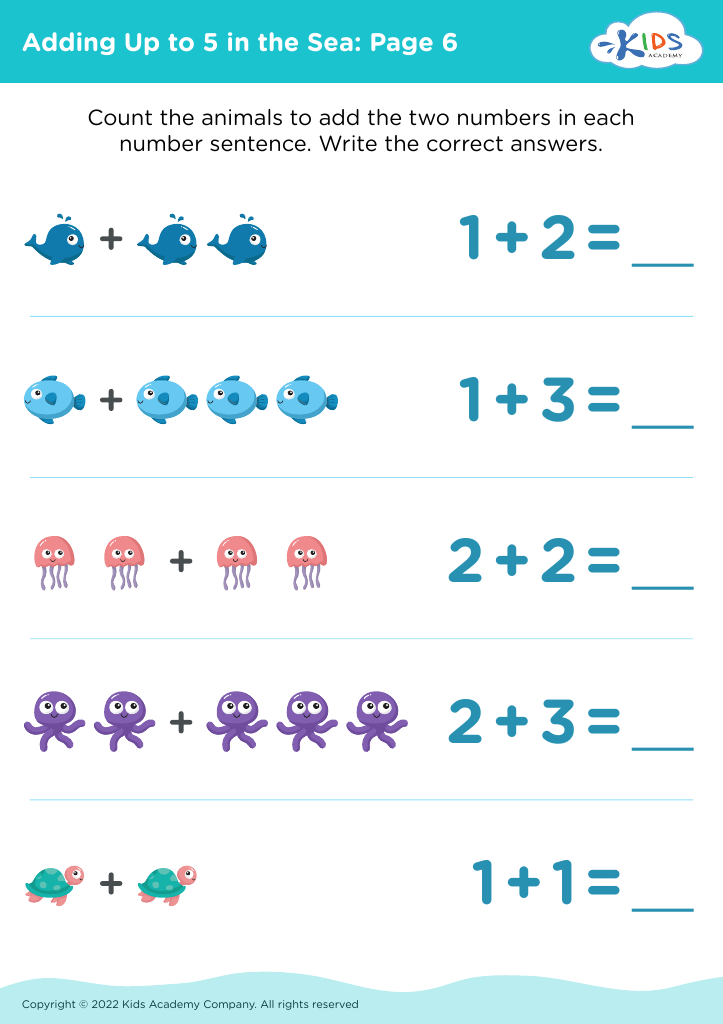
Adding Up to 5 in the Sea: Page 6

Adding Up to 5 in the Sea: Page 6

Adding Up to 5 in the Sea: Page 6
Worksheet
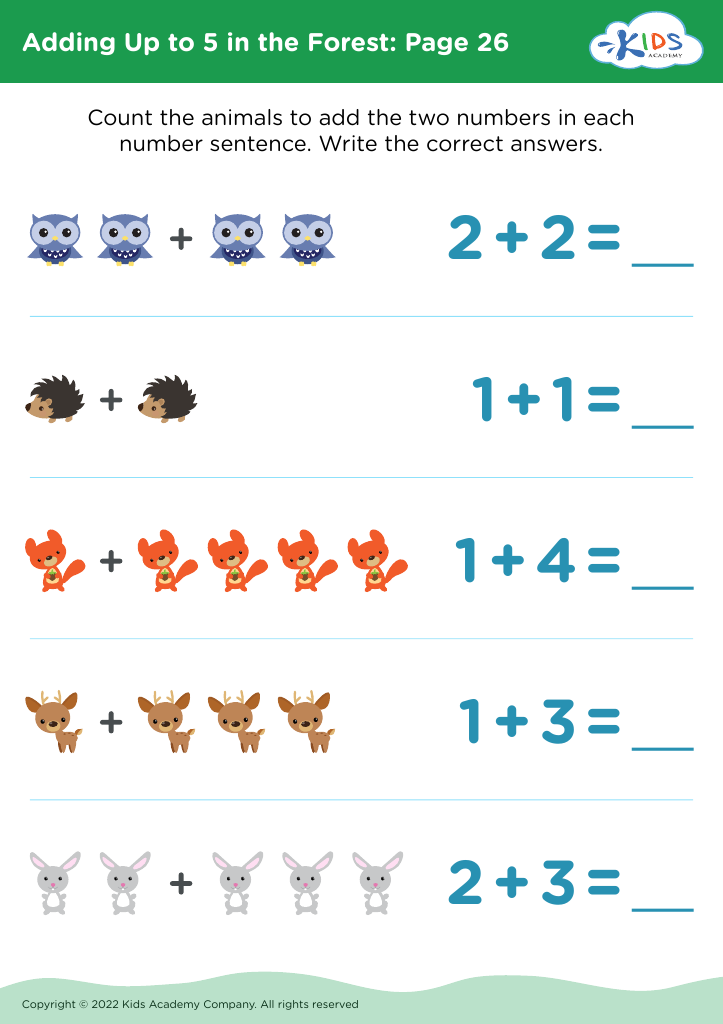
Adding Up to 5 in the Forest: Page 26
Worksheet
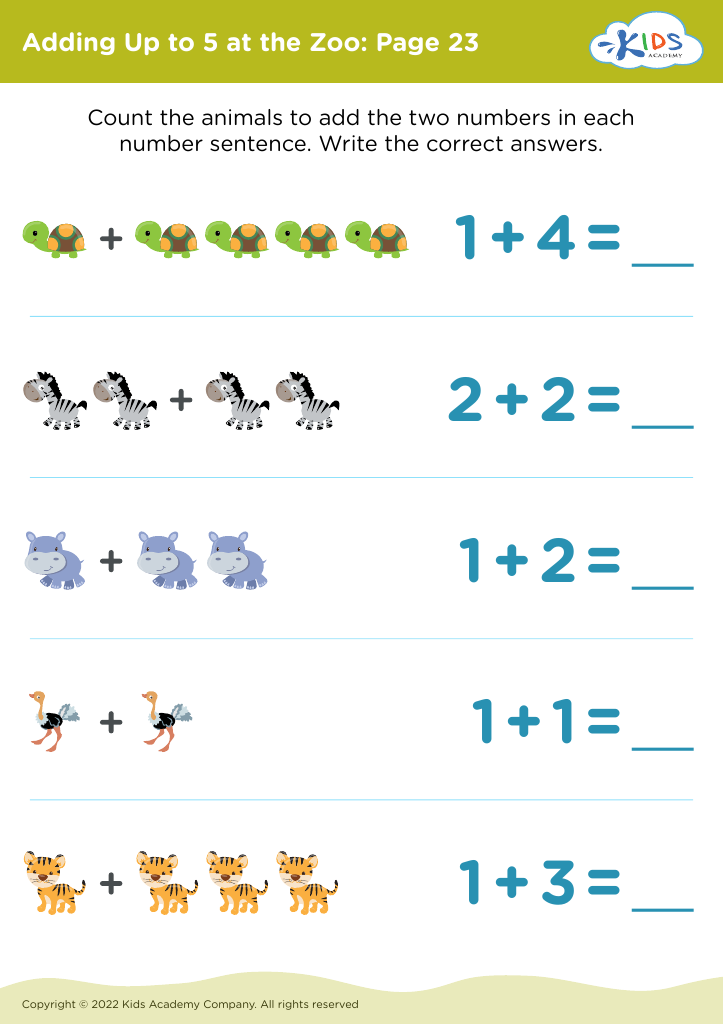
Adding Up to 5 at the Zoo: Page 23
Worksheet
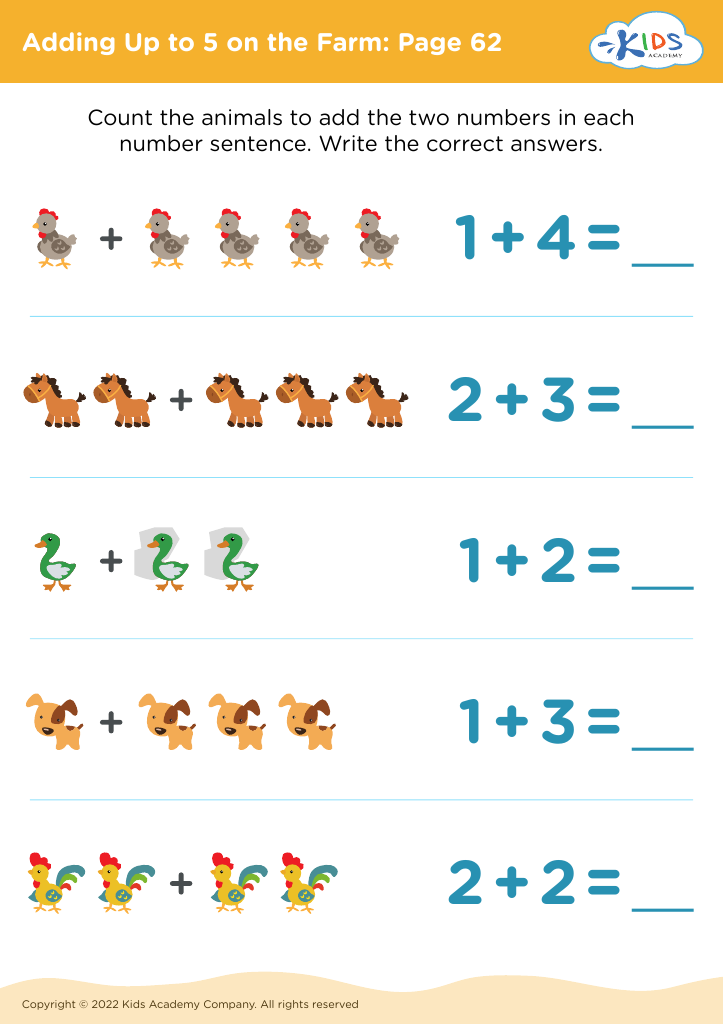
Adding Up to 5 on the Farm: Page 62
Worksheet
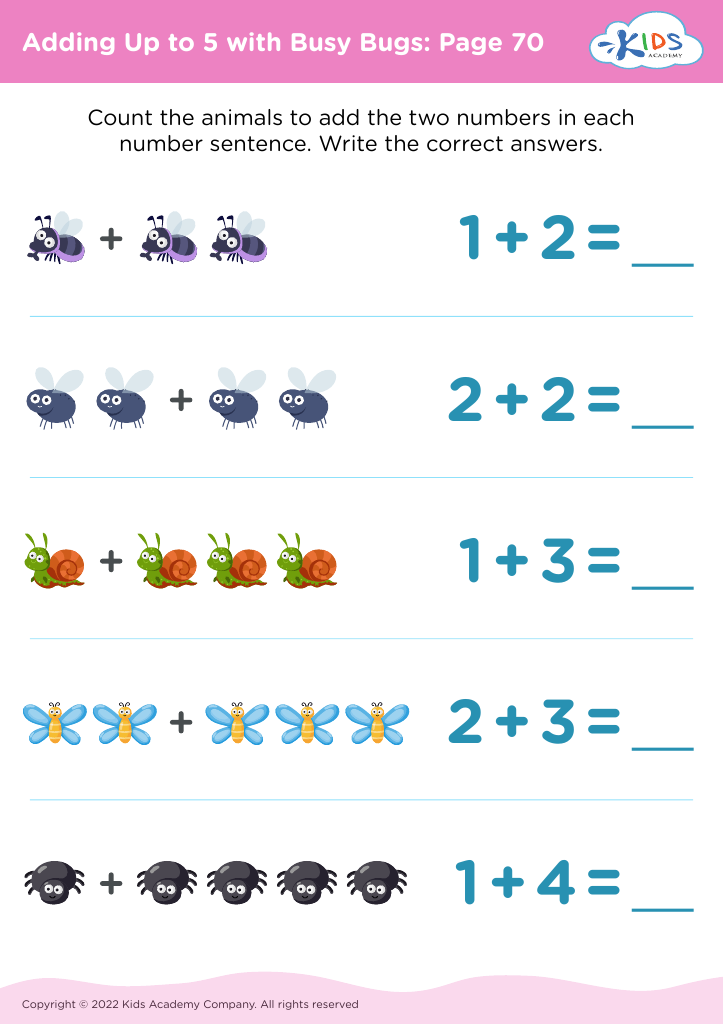
Adding Up to 5 with Busy Bugs: Page 70
Worksheet
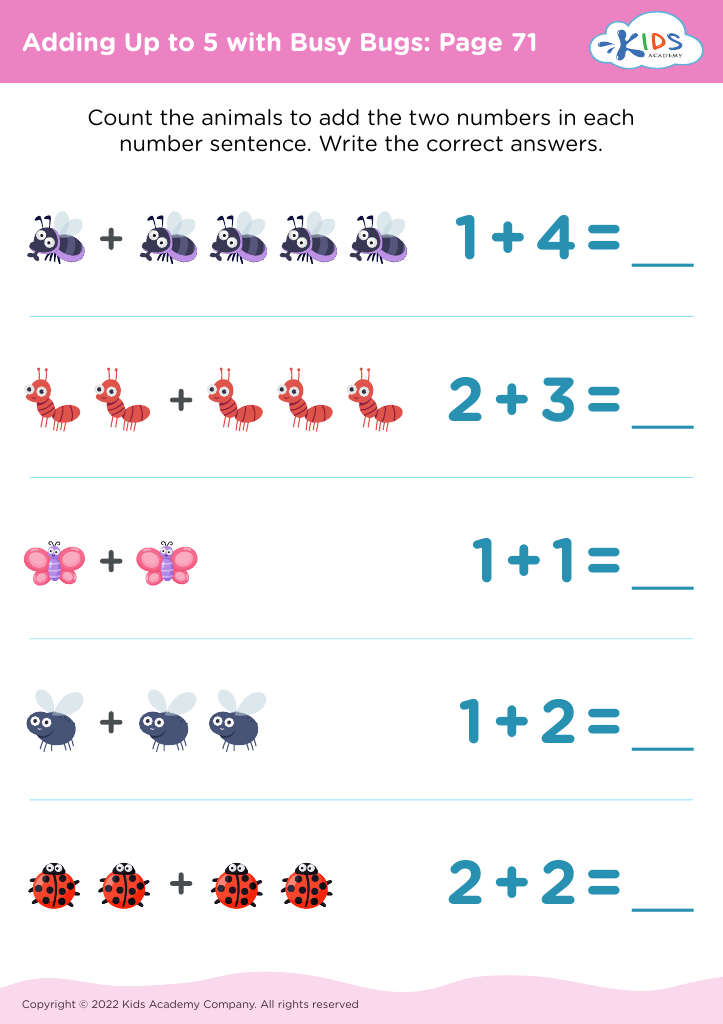
Adding Up to 5 with Busy Bugs: Page 71
Worksheet
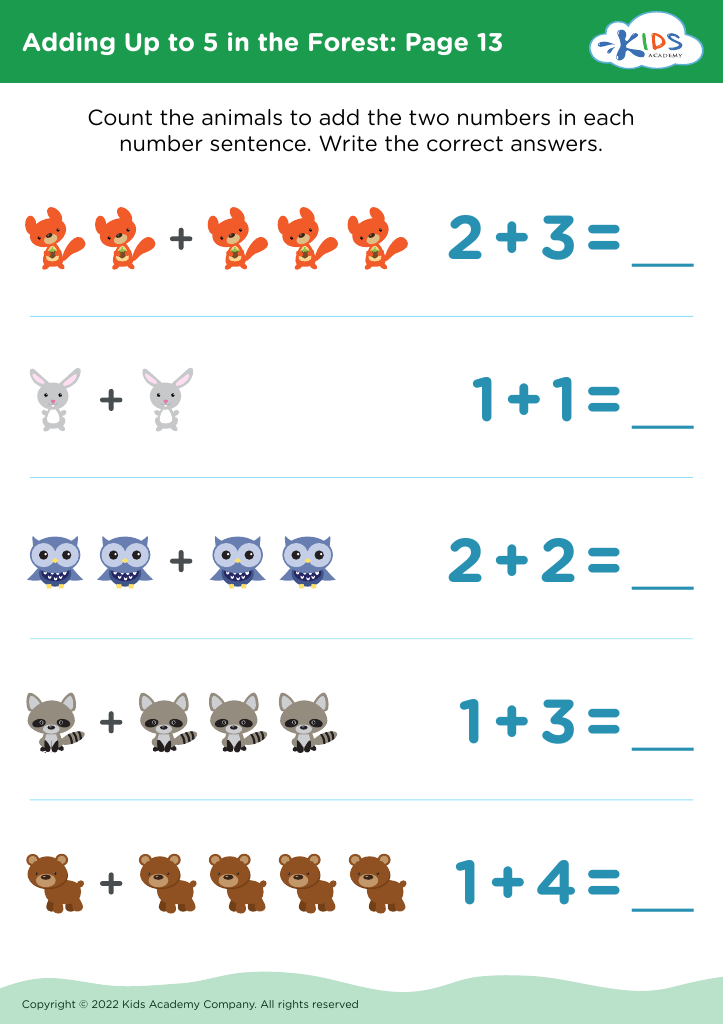
Adding Up to 5 in the Forest: Page 13
Worksheet
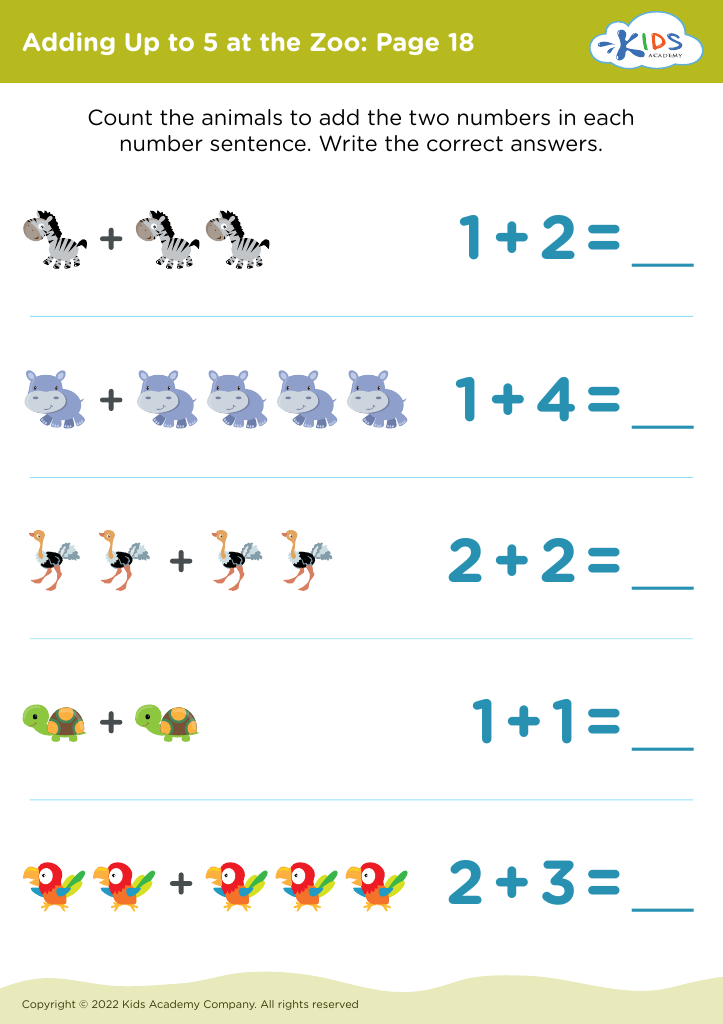
Adding Up to 5 at the Zoo: Page 18
Worksheet
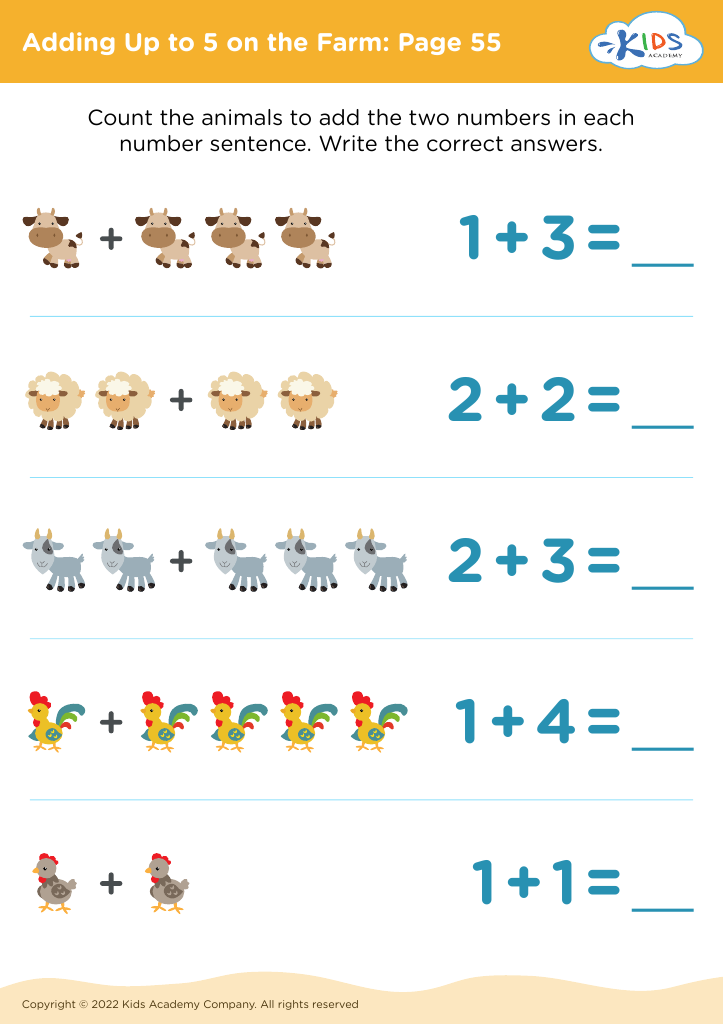
Adding Up to 5 on the Farm: Page 55
Worksheet
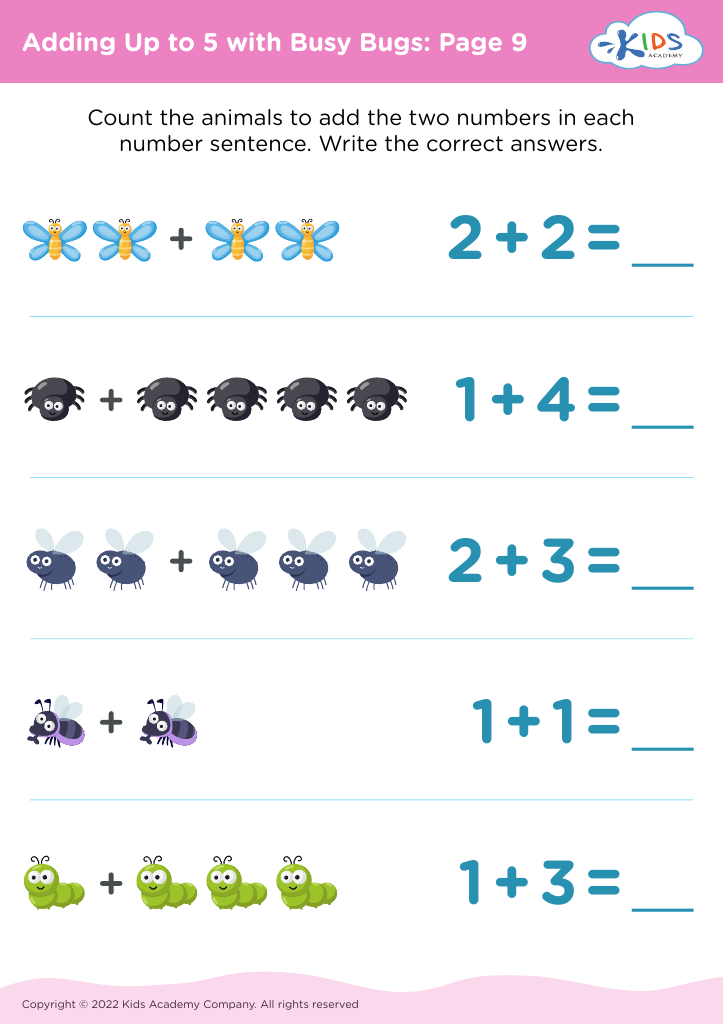
Adding Up to 5 with Busy Bugs: Page 9
Worksheet
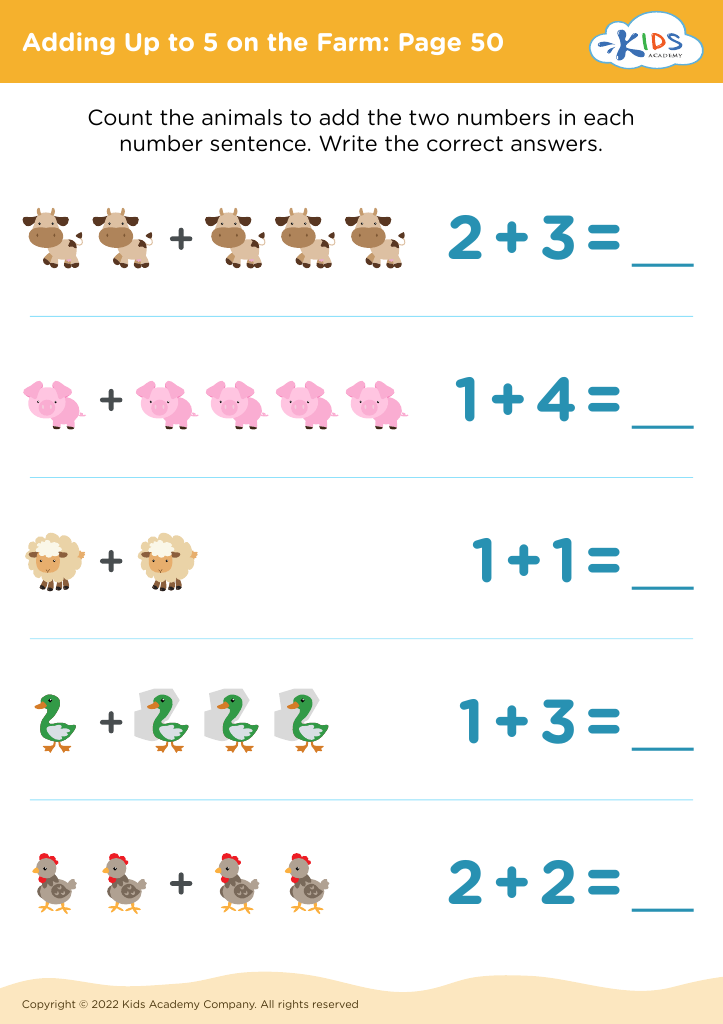
Adding Up to 5 on the Farm: Page 50
Worksheet
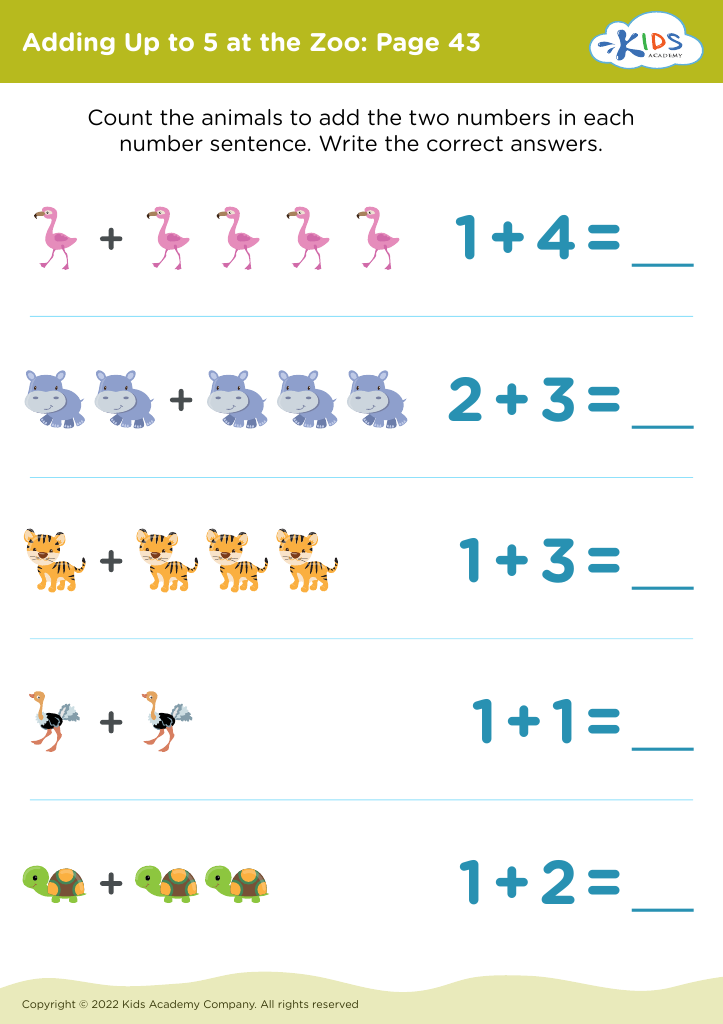
Adding Up to 5 at the Zoo: Page 43
Worksheet
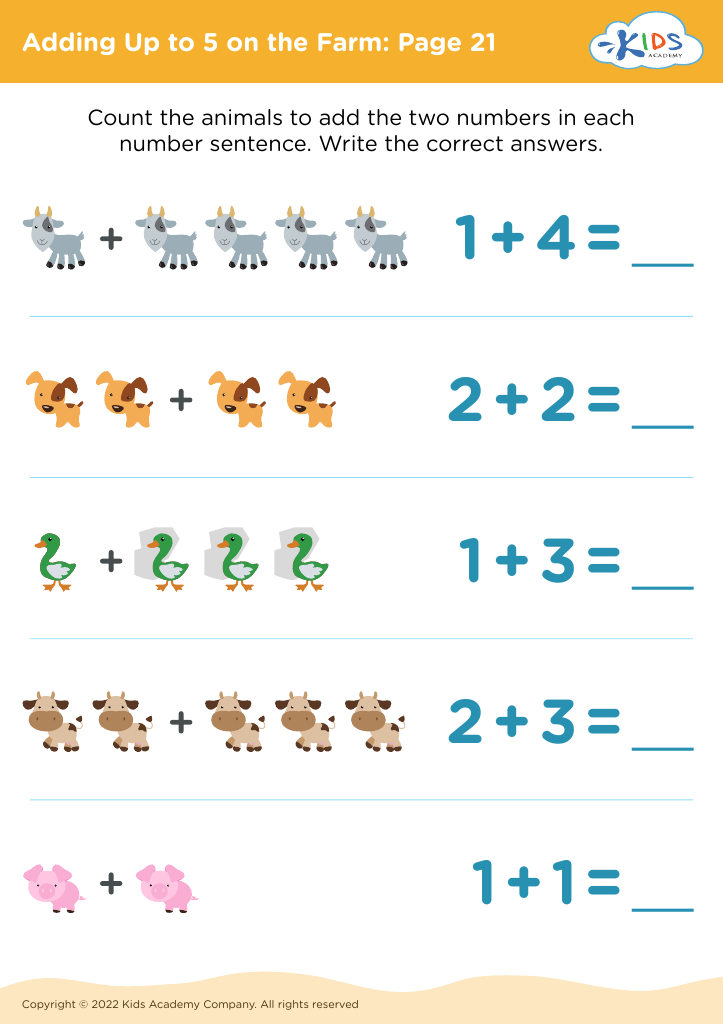
Adding Up to 5 on the Farm: Page 21
Worksheet
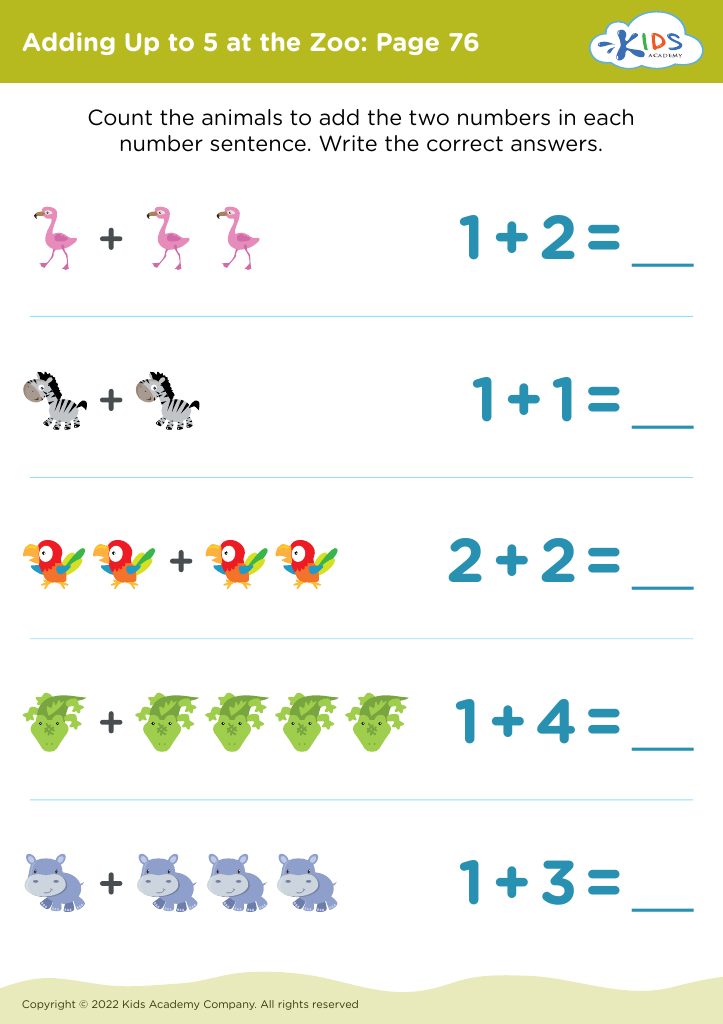
Adding Up to 5 at the Zoo: Page 76
Worksheet
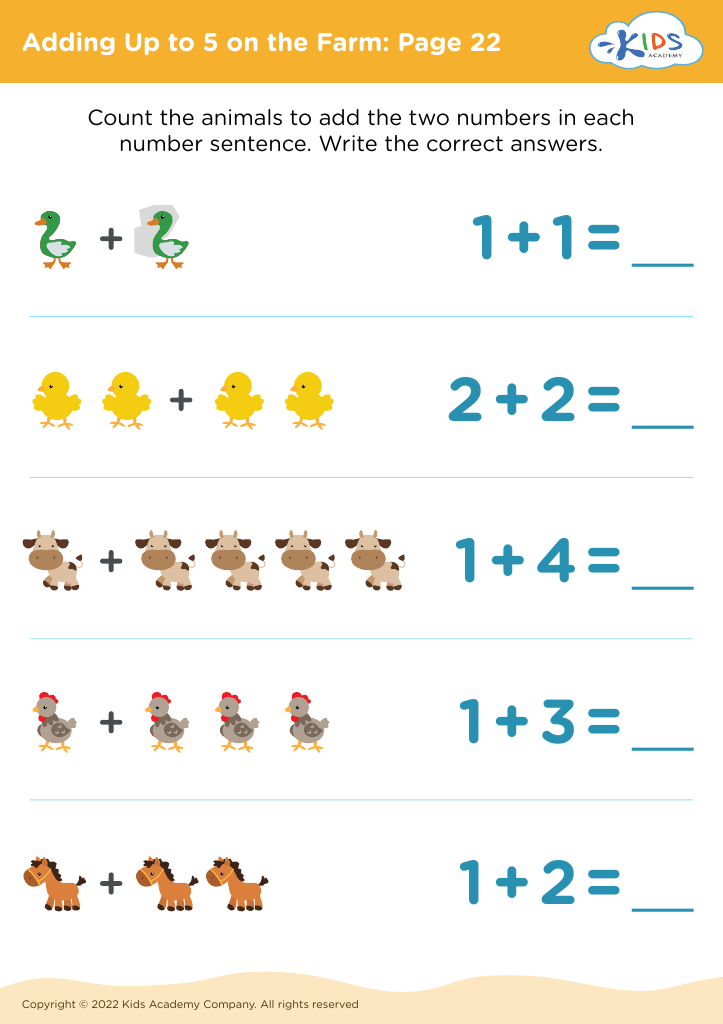
Adding Up to 5 on the Farm: Page 22
Worksheet
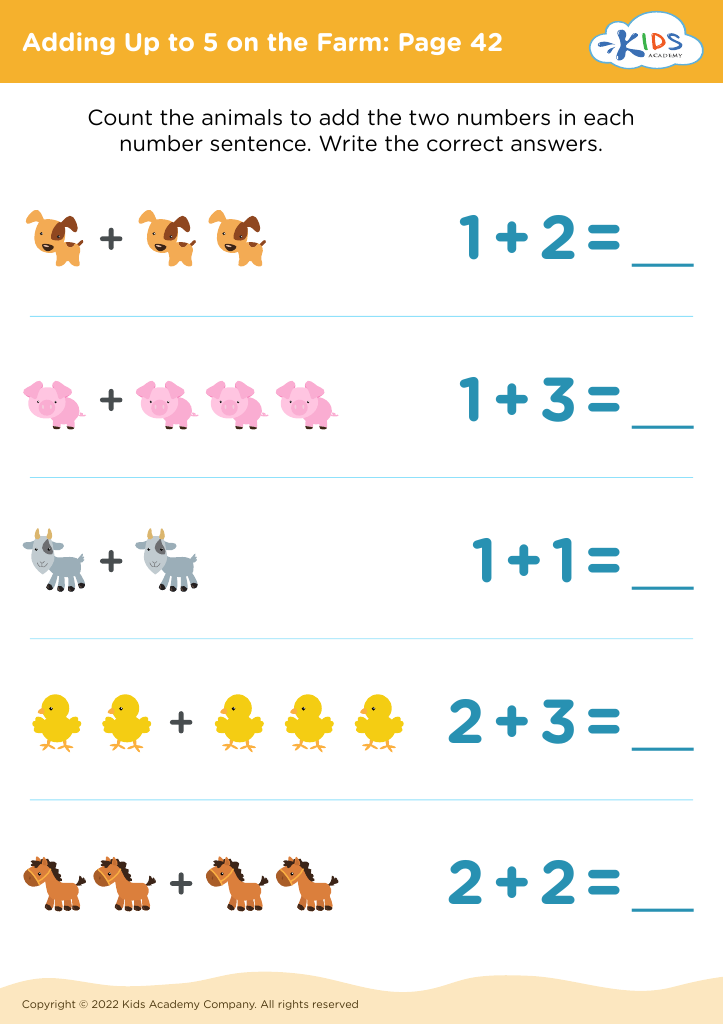
Adding Up to 5 on the Farm: Page 42
Worksheet


Basic addition skills, especially for sums up to 5, are crucial for children aged 3-7. At this developmental stage, children are in a prime learning period, where foundational math skills set the groundwork for future academic success. Understanding addition helps children develop problem-solving abilities and critical thinking, which are essential skills across all areas of learning.

Learning to add objects, fingers, or dots visually reinforces the concept of counting, promoting number sense and spatial awareness. It also fosters confidence; when children learn to add, they gain a sense of achievement that encourages them to engage more profoundly with mathematical concepts.

Furthermore, basic addition lays the groundwork for more complex mathematics in later years. Children who grasp these early skills can easily transition to larger number concepts. When parents or teachers actively engage in teaching addition through interactive activities—like using toys, crafts, or games—they make the learning process enjoyable, enhancing productivity and retention.

Lastly, basic addition skills are fundamental in daily life, such as when dividing snacks or counting playing cards, making math practical and relevant. Investing in these skills ensures children have the tools they need for a successful educational journey and beyond.