Understanding quantity Adding Up to 5 Worksheets for Ages 3-7
17 filtered results
-
From - To
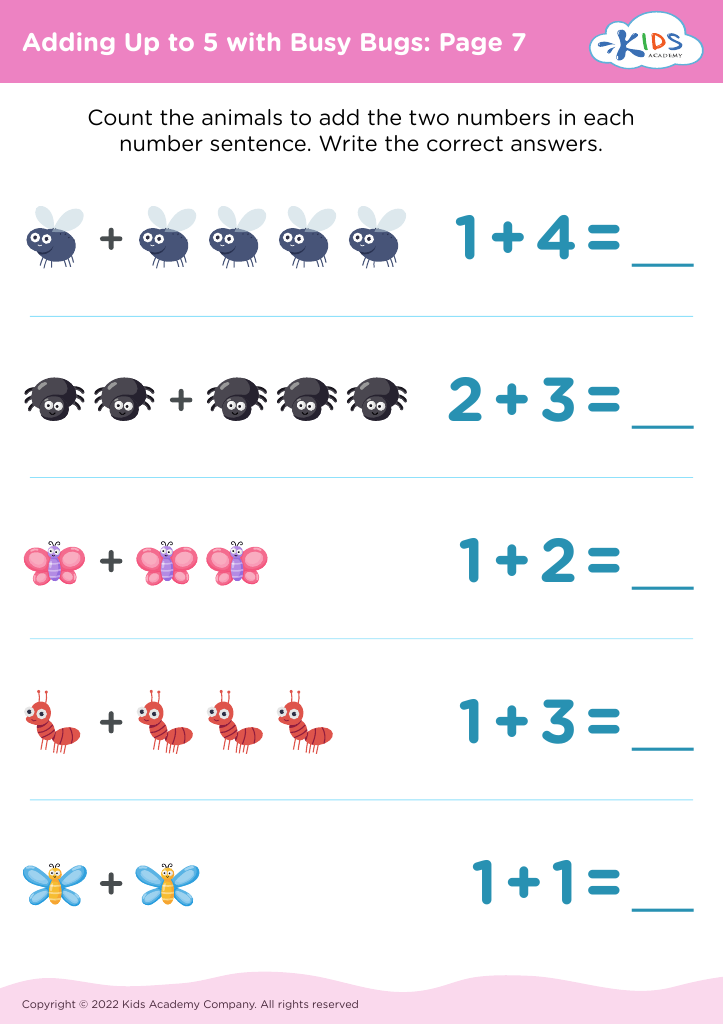
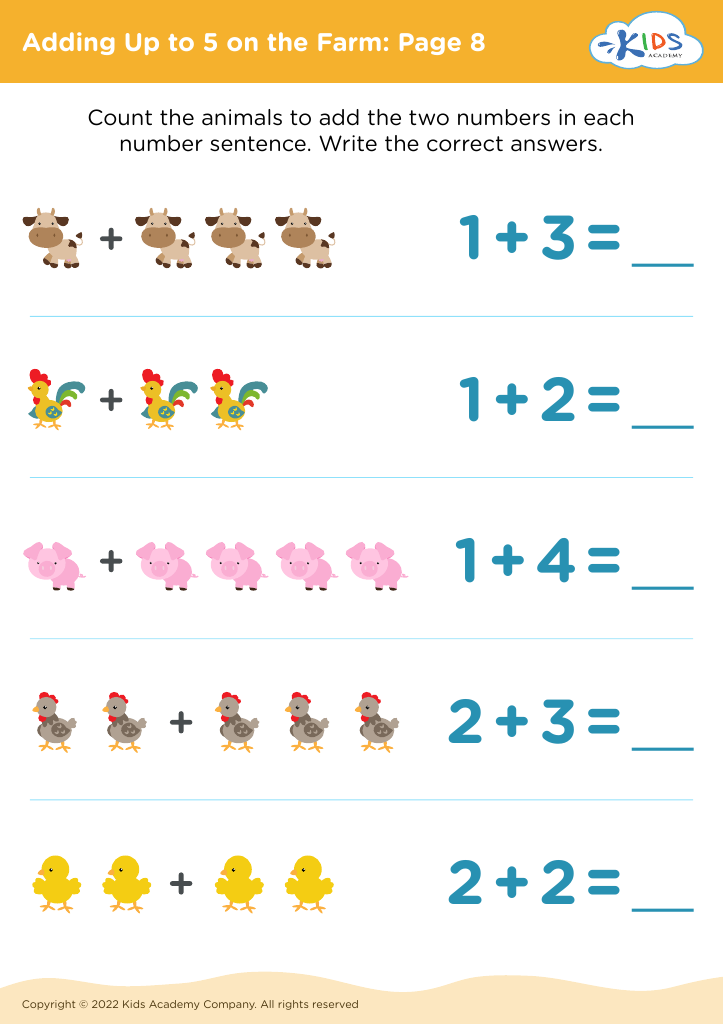
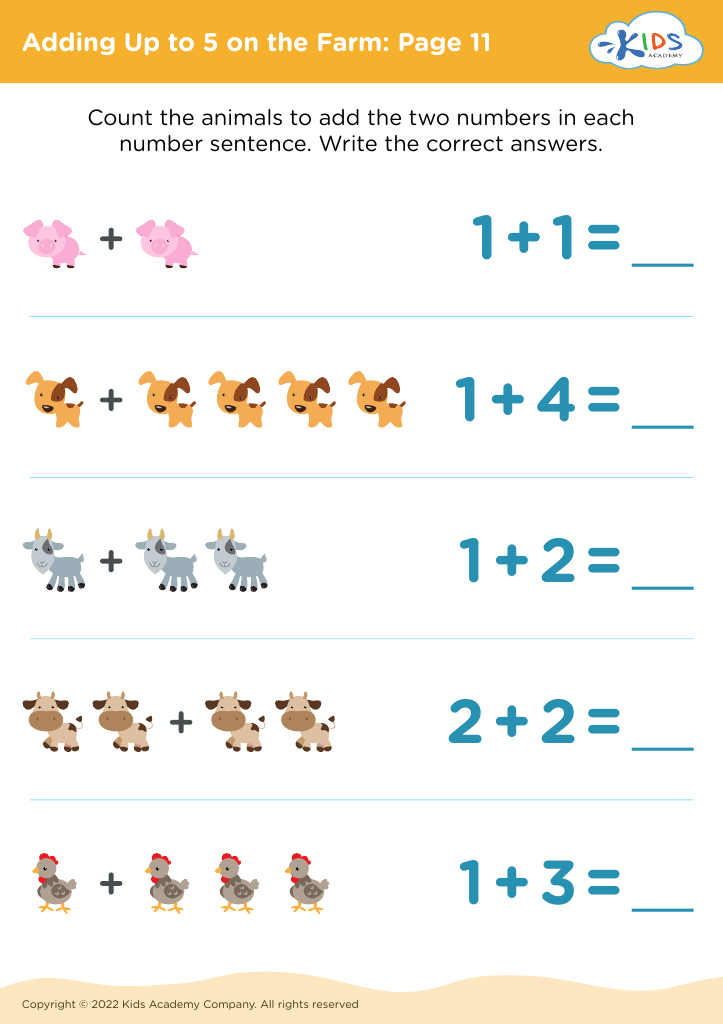
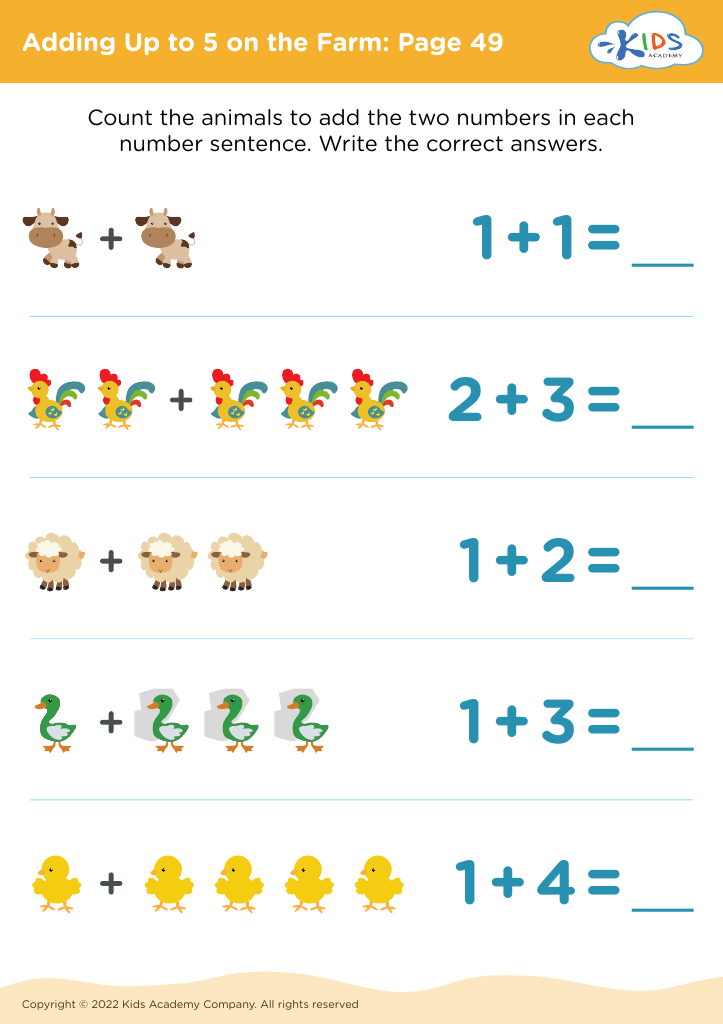
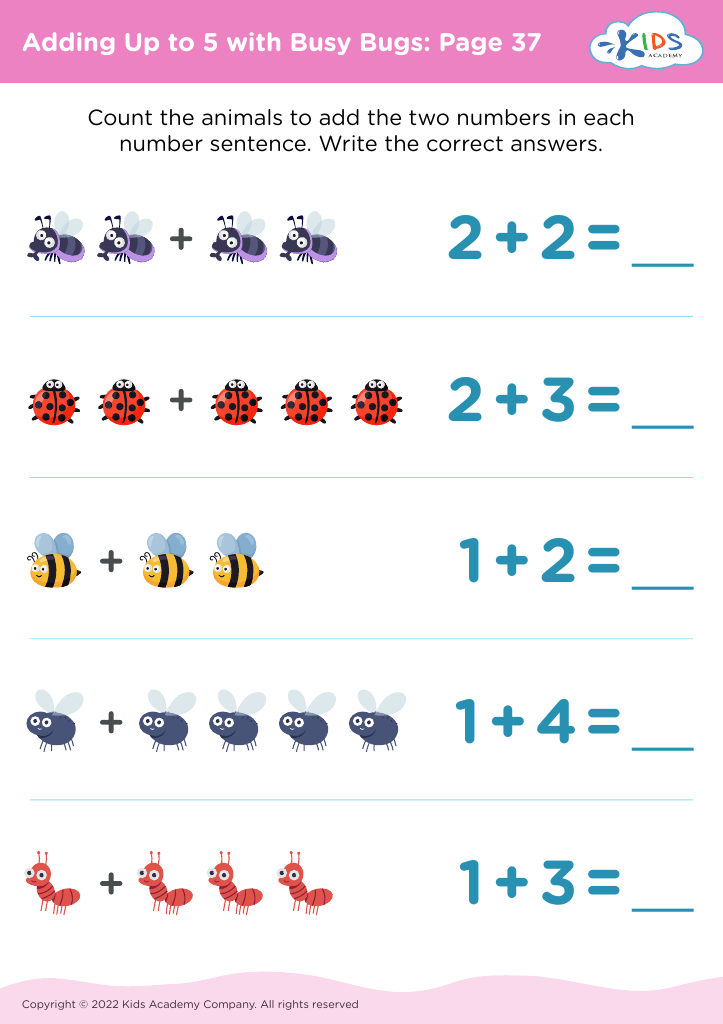
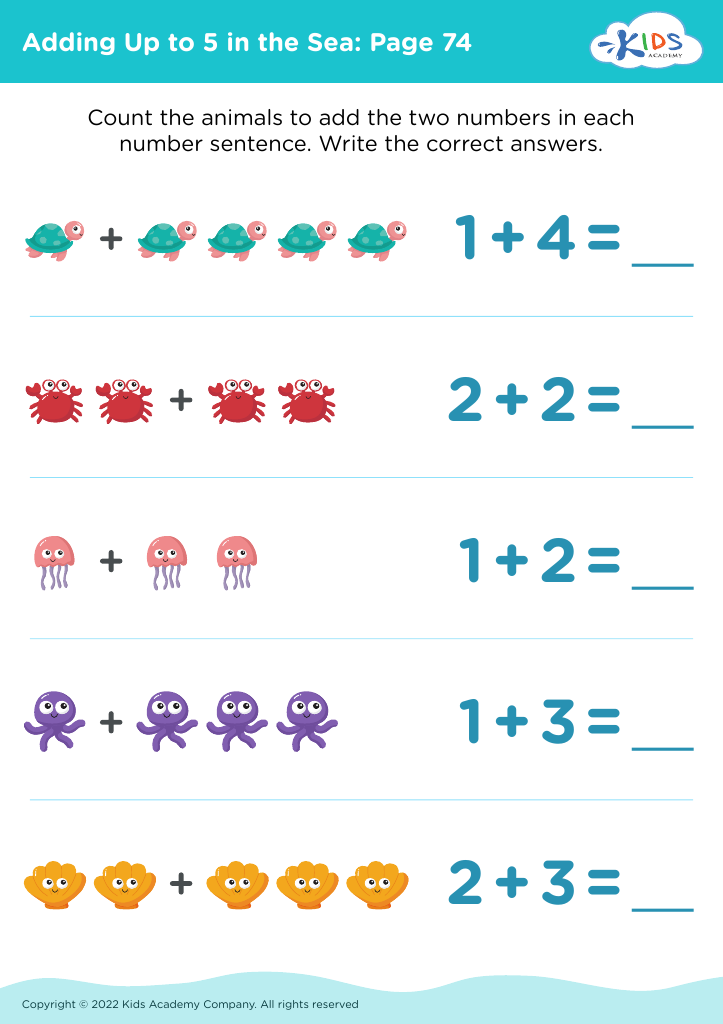
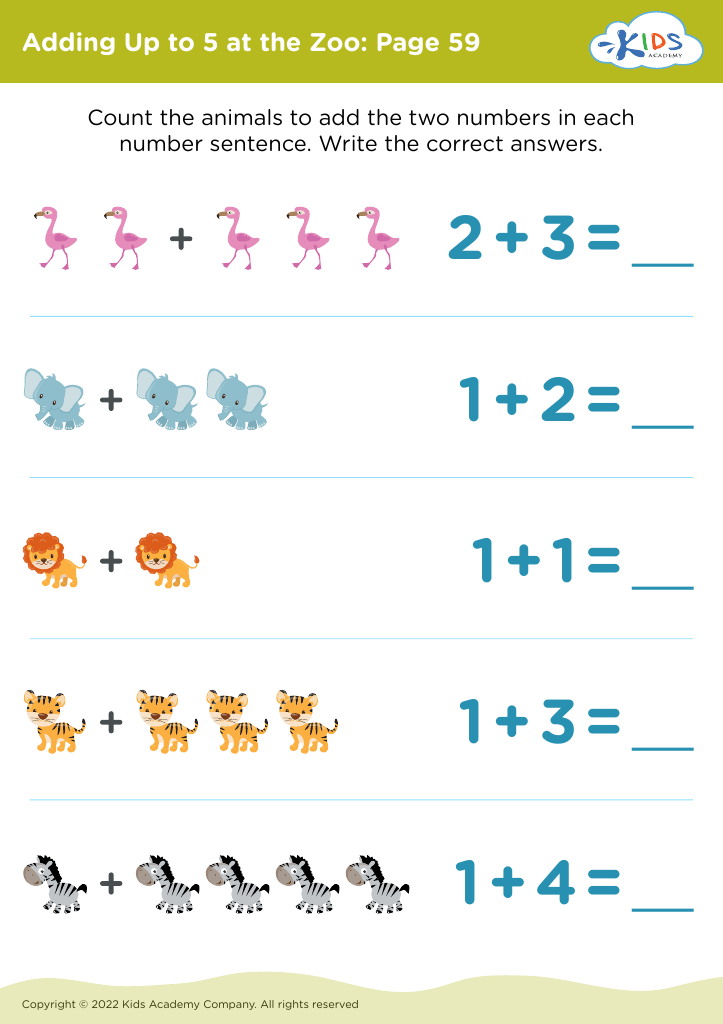
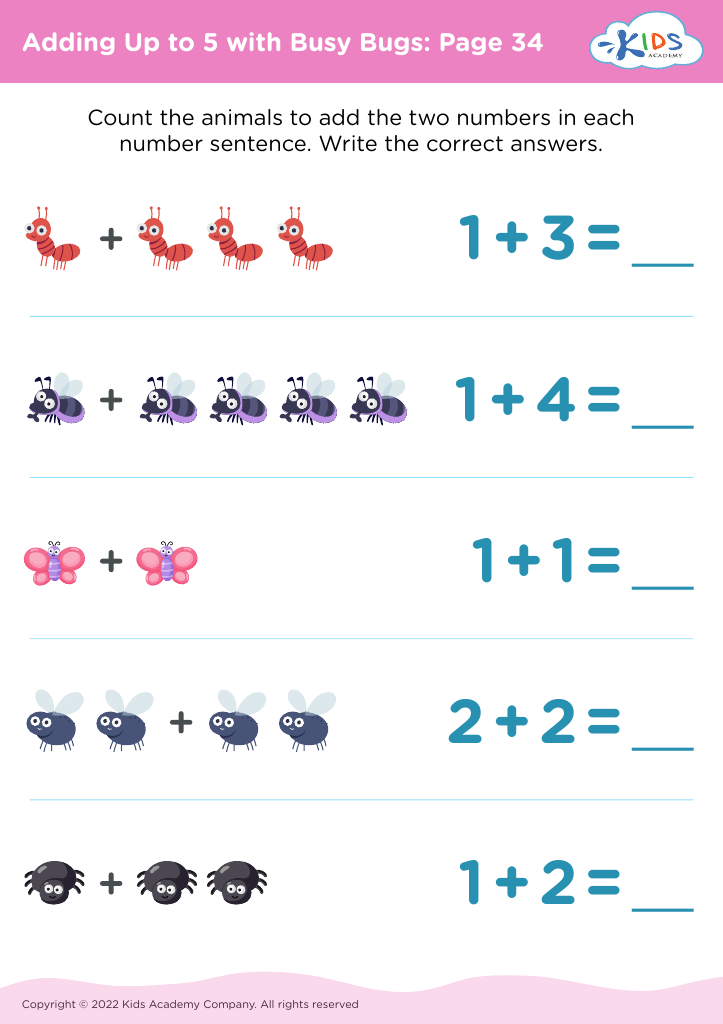
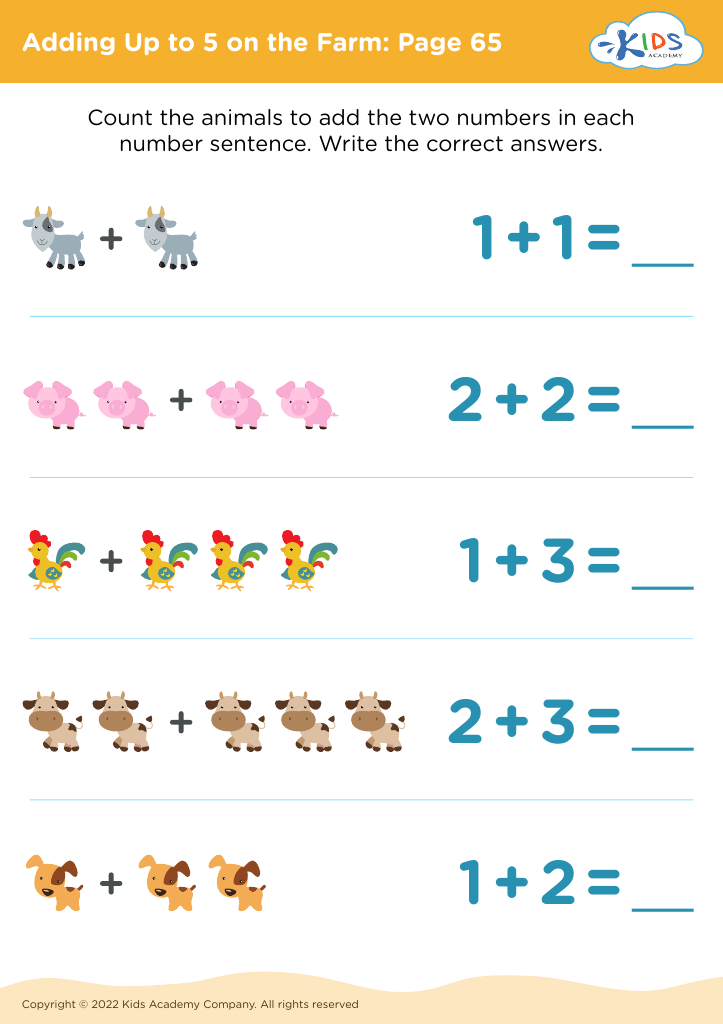
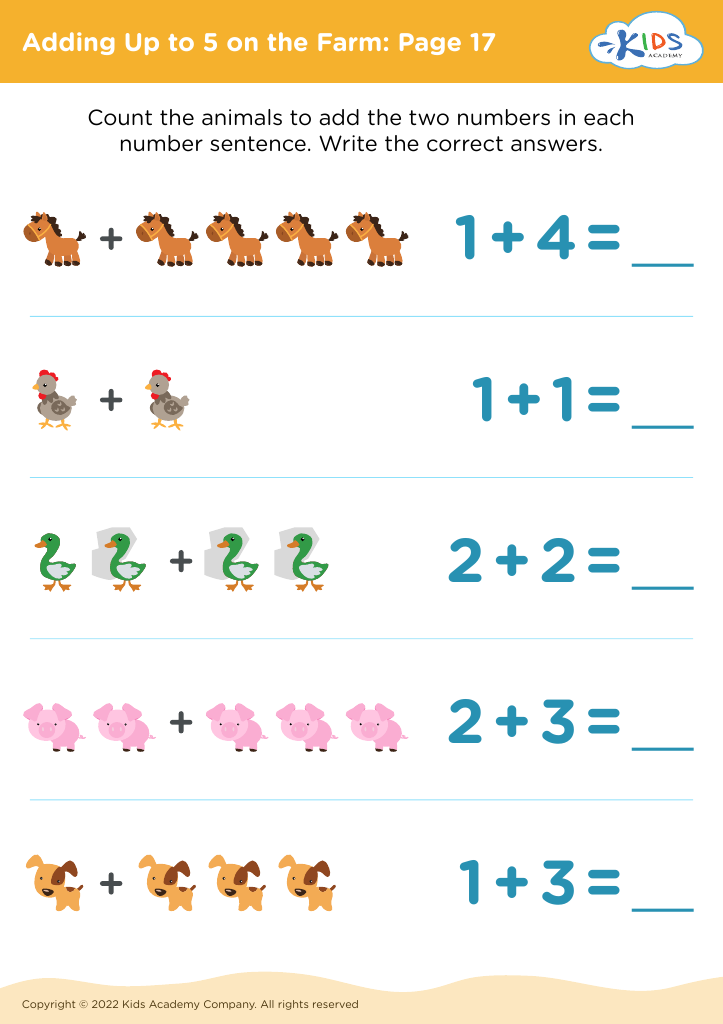
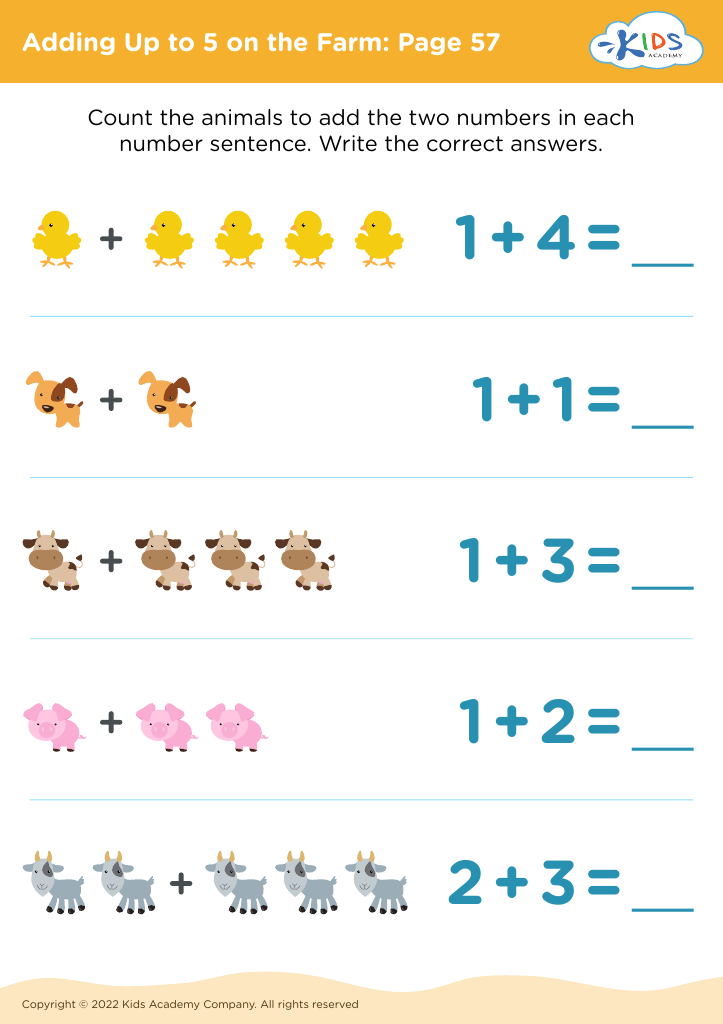
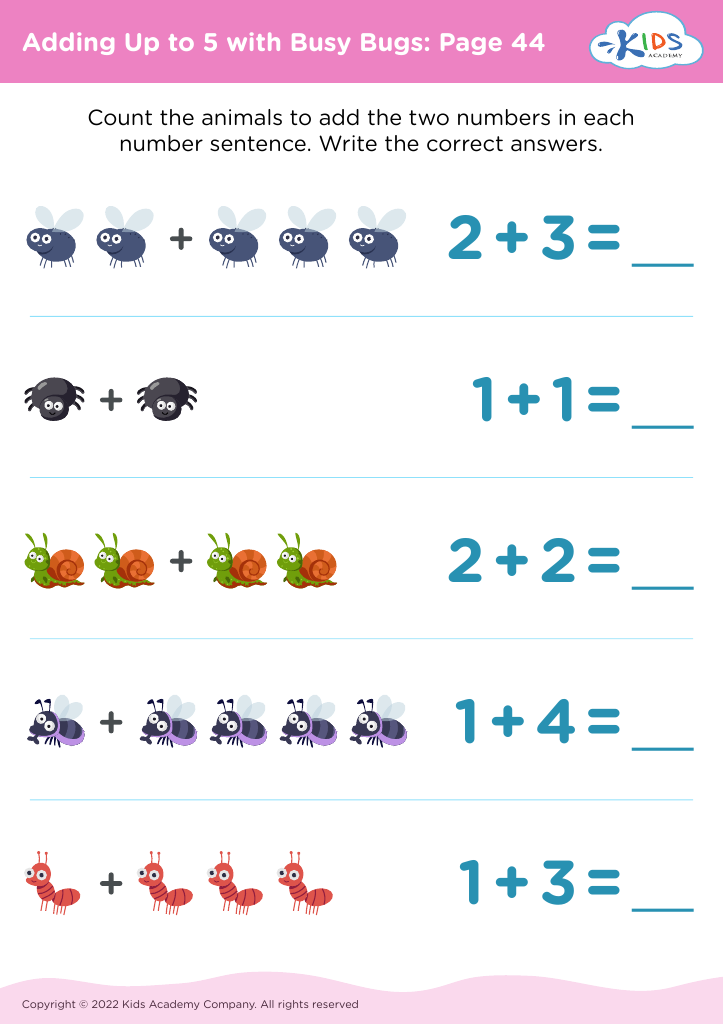
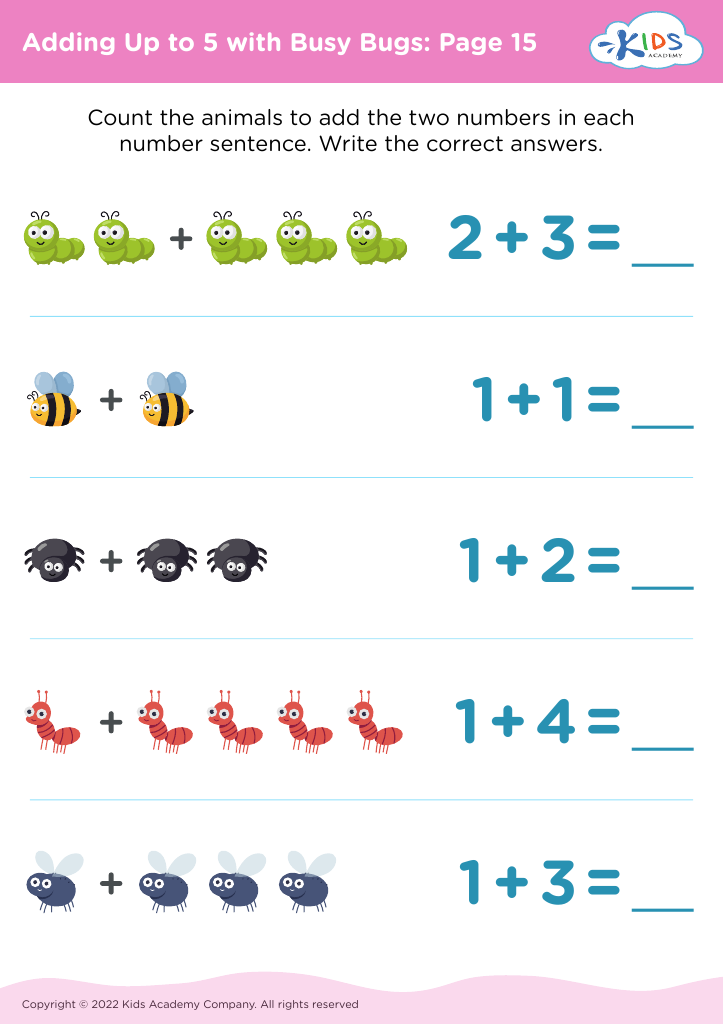
Help young learners grasp the basics of math with our "Understanding Quantity Adding Up to 5" worksheets, designed for ages 3-7. These insightful sheets engage children in fun, educational activities, enhancing their ability to count, understand quantities, and perform simple addition. Perfect for early learners, these worksheets blend colorful illustrations and relatable scenarios to capture attention while reinforcing key mathematical concepts. By focusing on sums up to 5, kids build a solid foundation in numeracy, setting them up for future success in math. Download today to support your child's learning journey with interactive, effective practice.
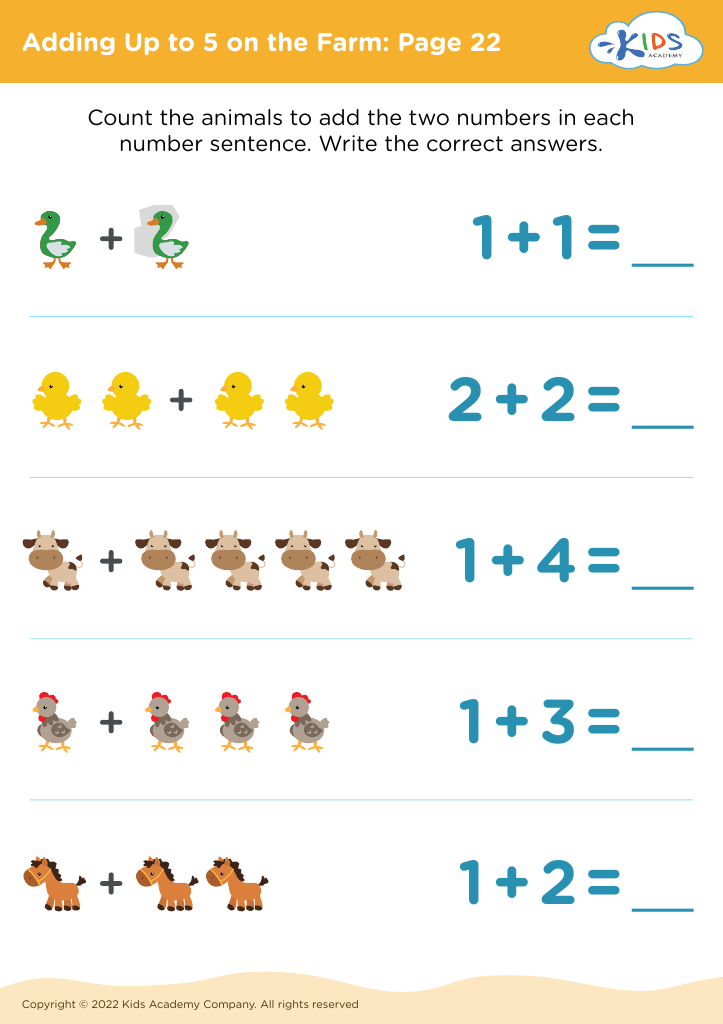
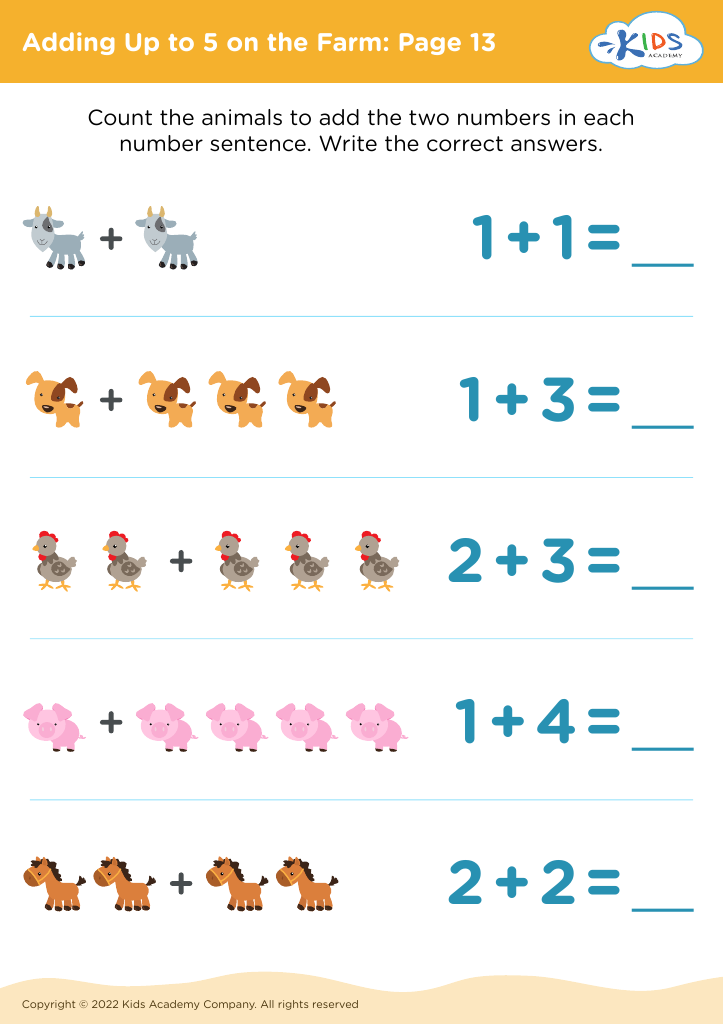
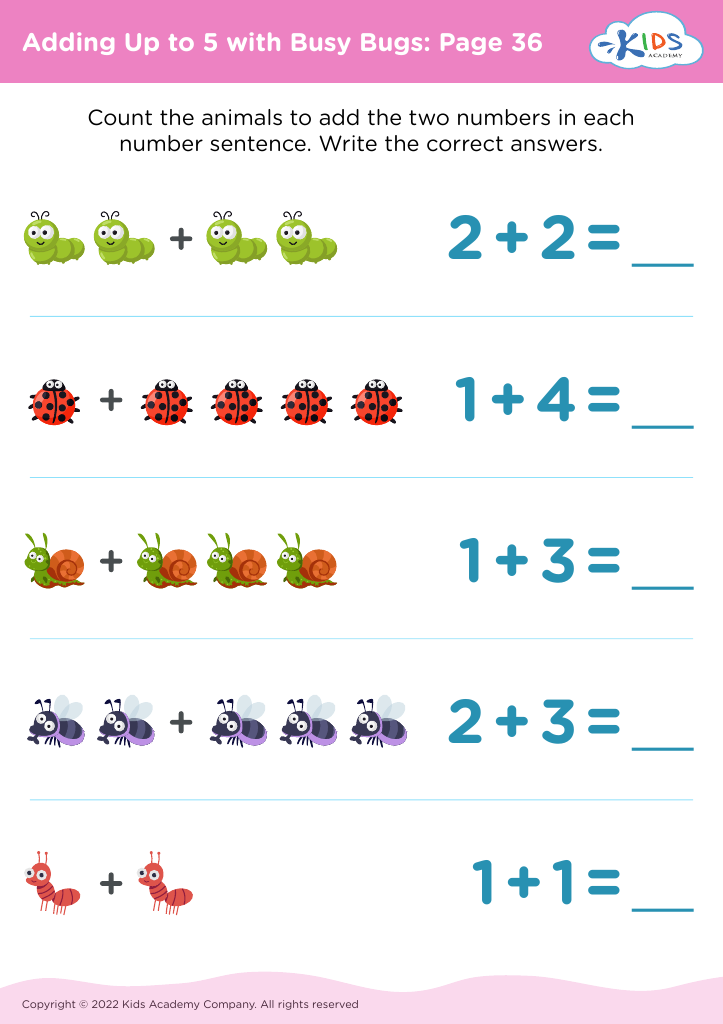
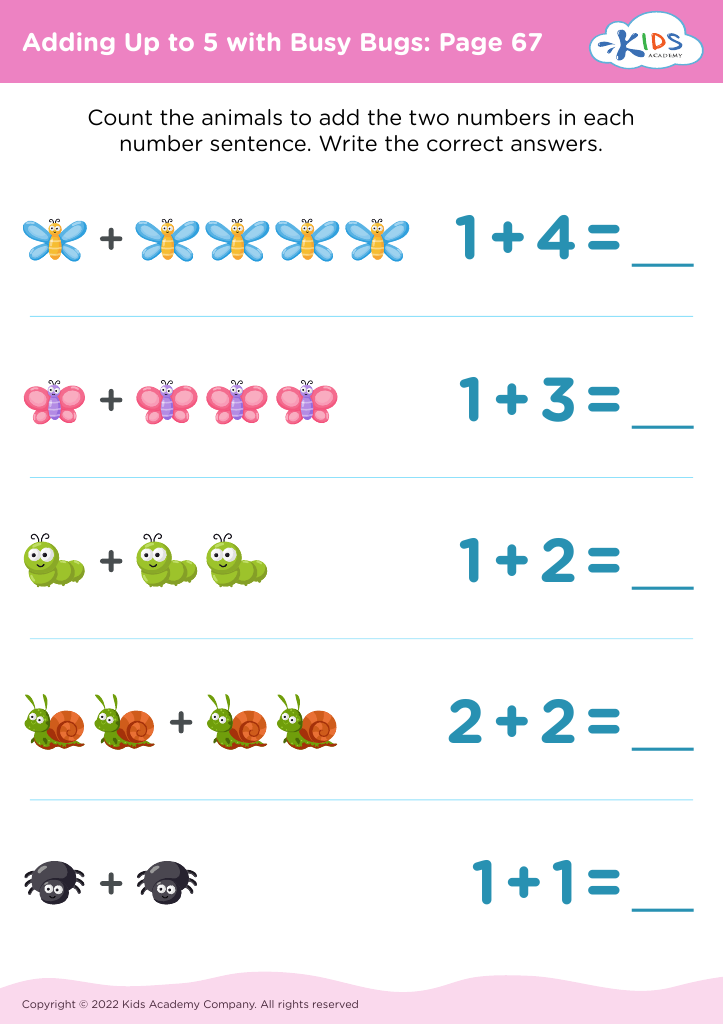







.jpg)
Understanding quantity and learning to add up to 5 for children aged 3-7 is fundamental for their early mathematical development and cognitive growth. During these formative years, children’s brains are highly receptive to new information, and grasping basic concepts like quantity helps lay the groundwork for more complex mathematical reasoning later on. When children learn to identify, understand, and manipulate small quantities, they develop a sense of numbers and how they relate to each other, which is crucial for progressing in math.
Engaging with quantities up to 5 allows young learners to practice counting, recognizing patterns, and performing simple addition, all of which are essential skills in early education. This process also enhances their problem-solving abilities and encourages logical thinking. Furthermore, understanding small quantities and addition creates a positive experience with math, which is important for building confidence and interest in the subject.
Parents and teachers play a pivotal role in this learning process. By introducing fun and interactive activities, such as counting objects, playing with blocks, or using visual aids, adults can create a supportive environment that nurtures children’s curiosity and understanding. Investing time in teaching these foundational skills can set children on a path to future academic success, fostering a love for learning and an aptitude for mathematics from an early age.








