Filters

84 filtered results

Clear all filters
Favorites
With answer key
Interactive

84 filtered results

Difficulty Level

Grade


Check out this FREE Trial Lesson on Adding Up to 5 for age 3-7!

H

Favorites
With answer key
Interactive
  • 3-7
  • Visual Learning
  • Adding Up to 5
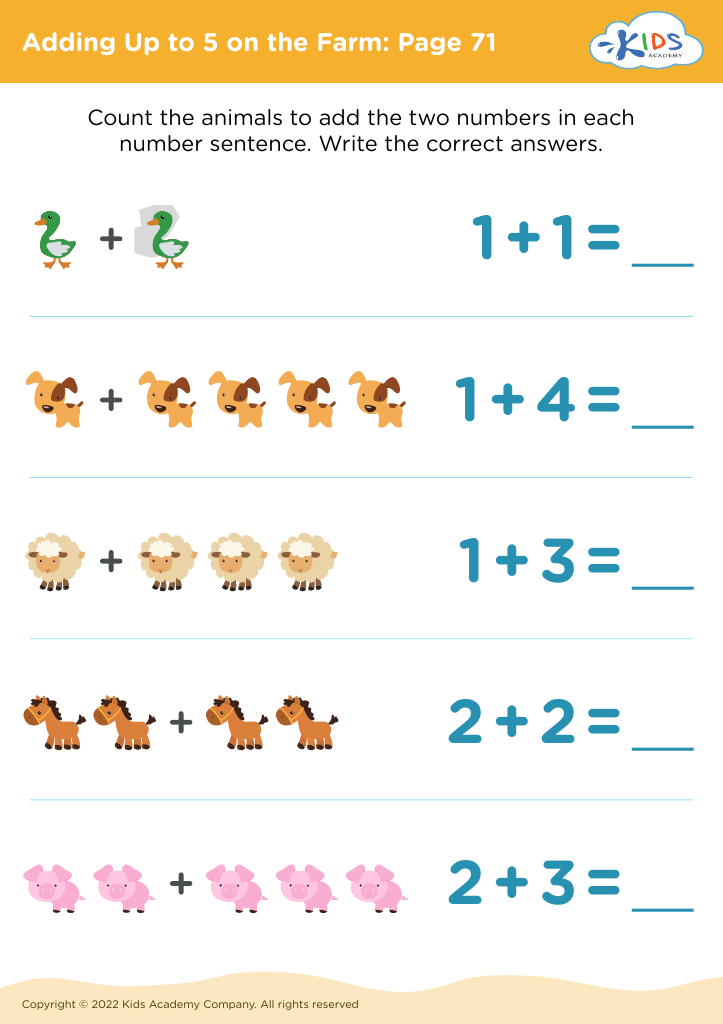
Adding Up to 5 on the Farm: Page 71
Worksheet
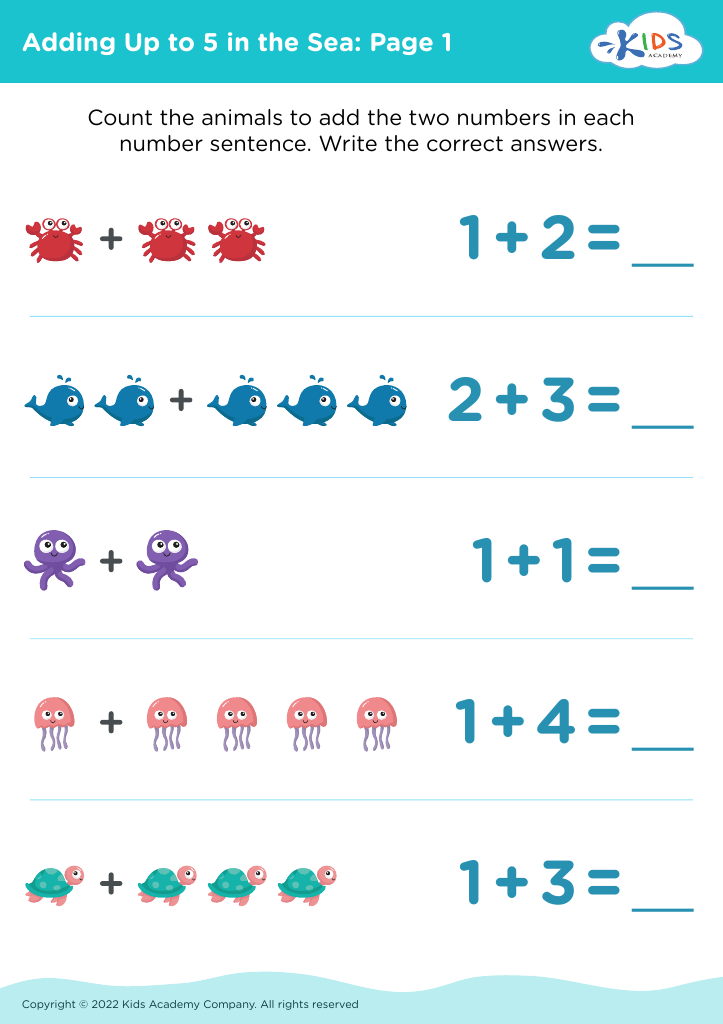
Adding Up to 5 in the Sea: Page 1

Adding Up to 5 in the Sea: Page 1

Adding Up to 5 in the Sea: Page 1
Worksheet
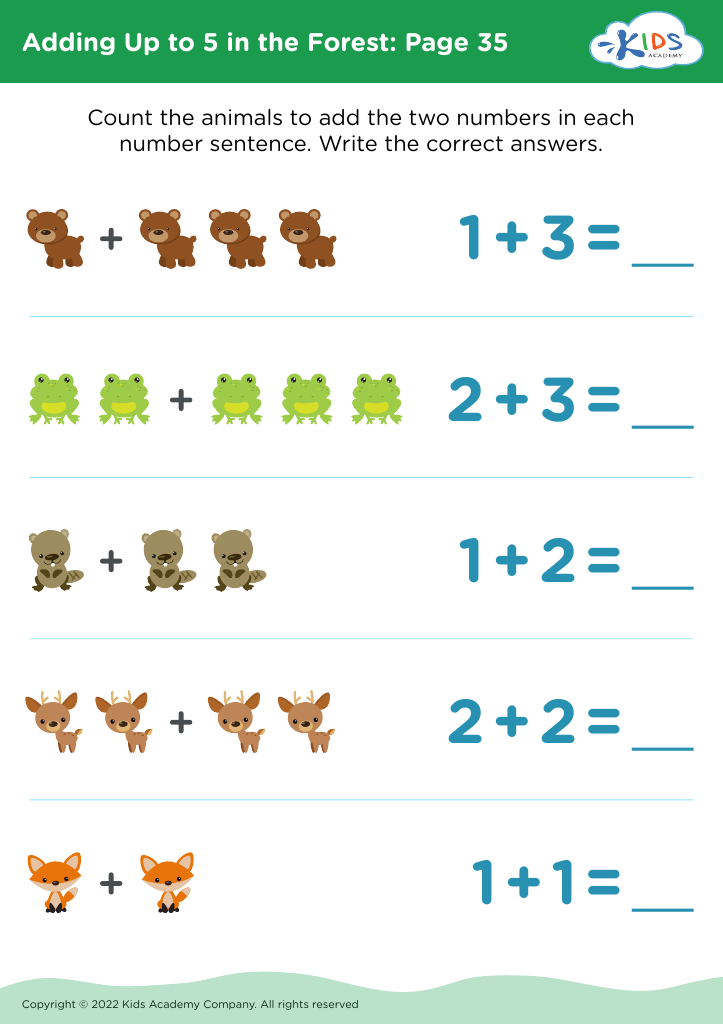
Adding Up to 5 in the Forest: Page 35
Worksheet
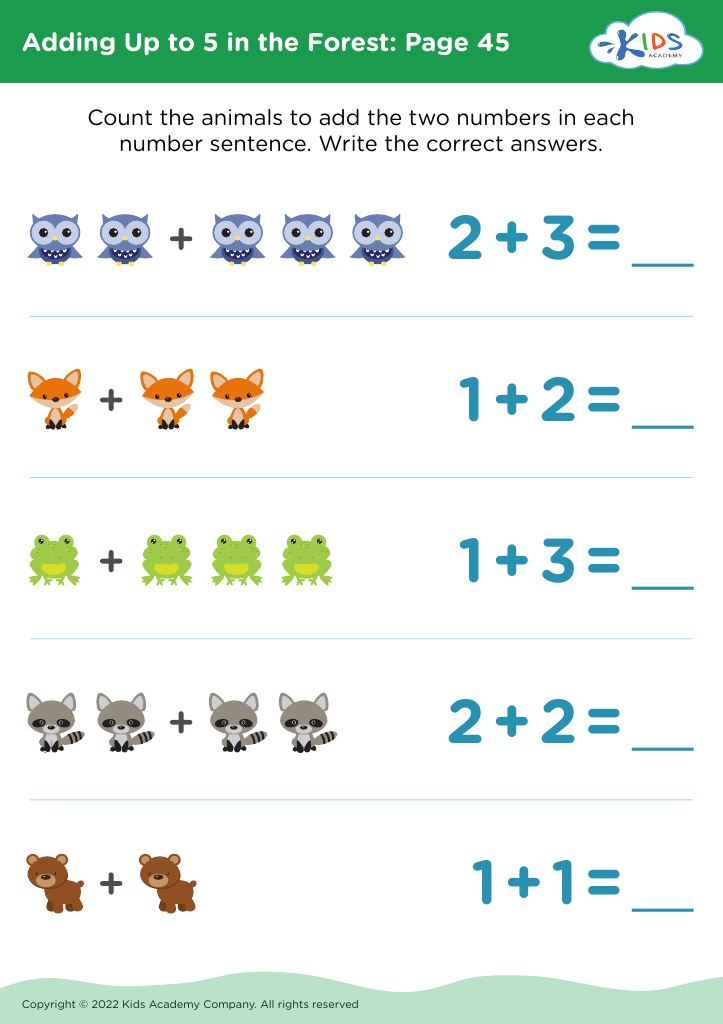
Adding Up to 5 in the Forest: Page 45
Worksheet
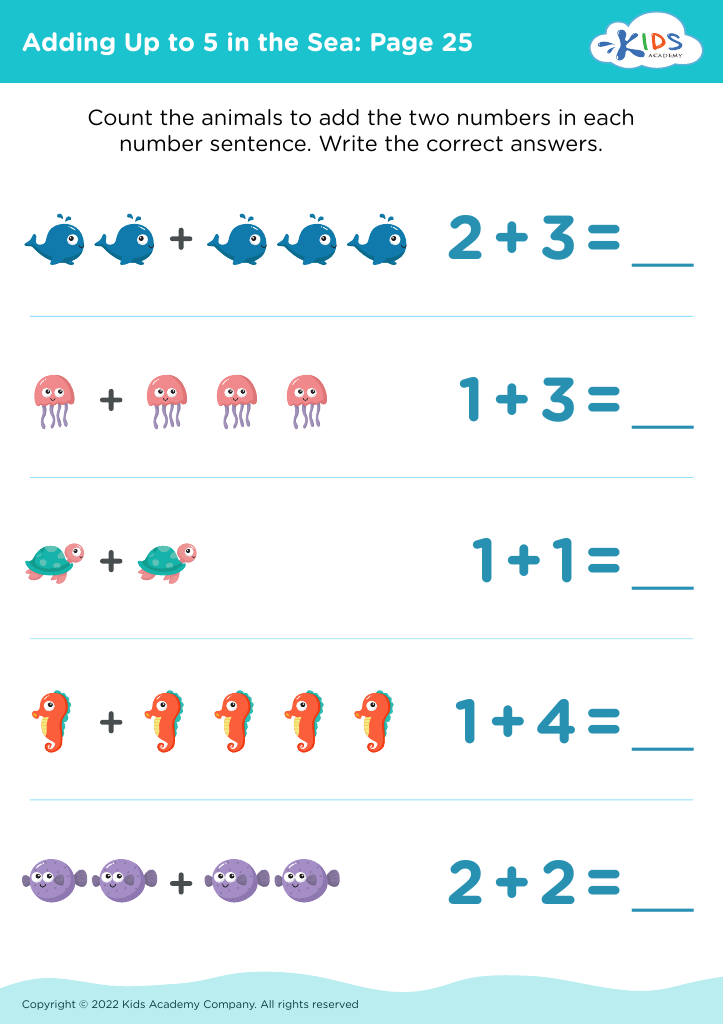
Adding Up to 5 in the Sea: Page 25
Worksheet
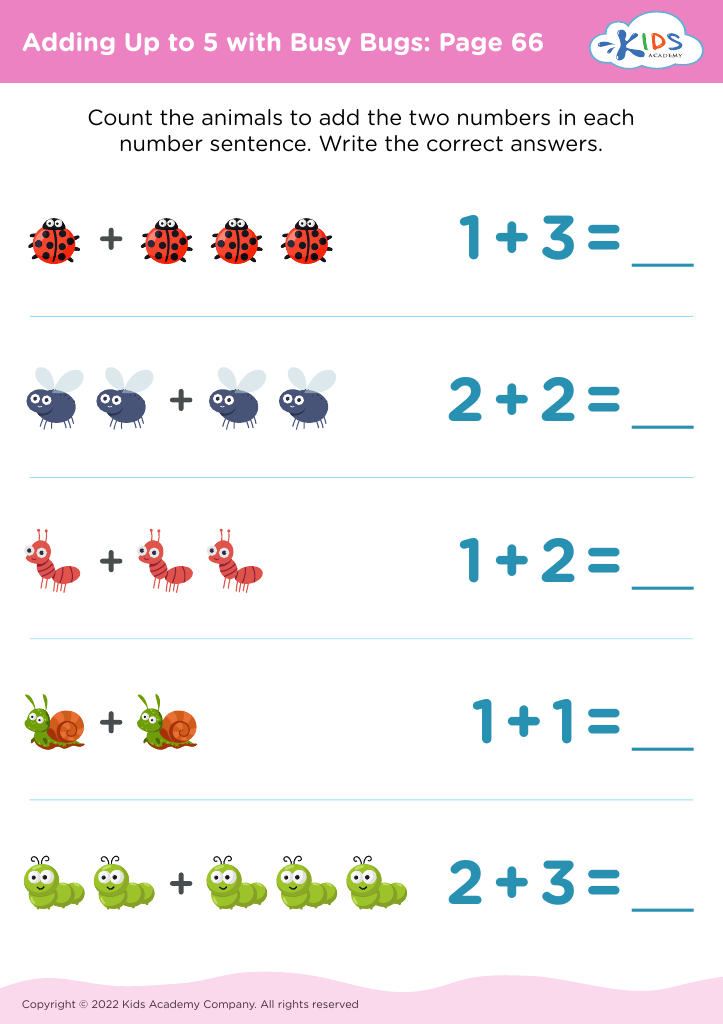
Adding Up to 5 with Busy Bugs: Page 66
Worksheet
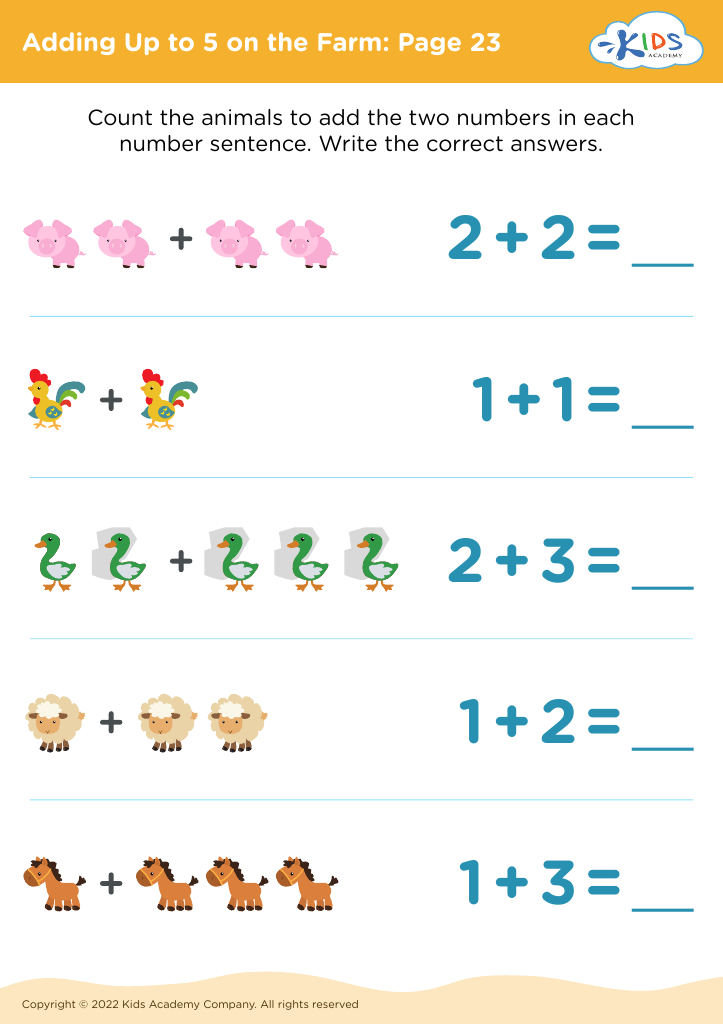
Adding Up to 5 on the Farm: Page 23
Worksheet
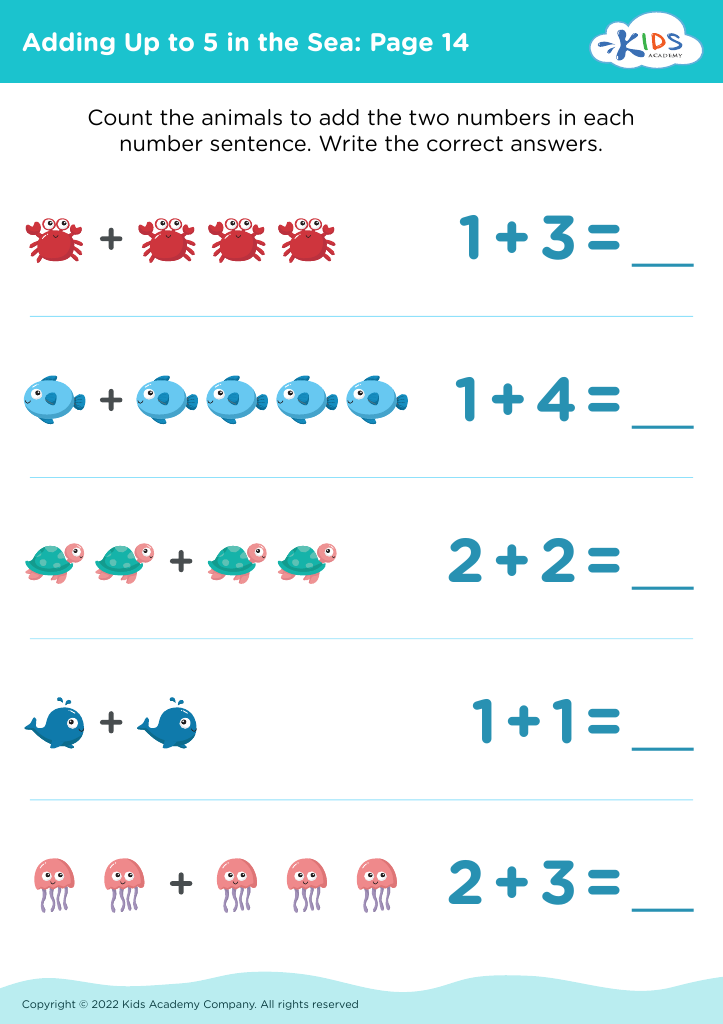
Adding Up to 5 in the Sea: Page 14
Worksheet
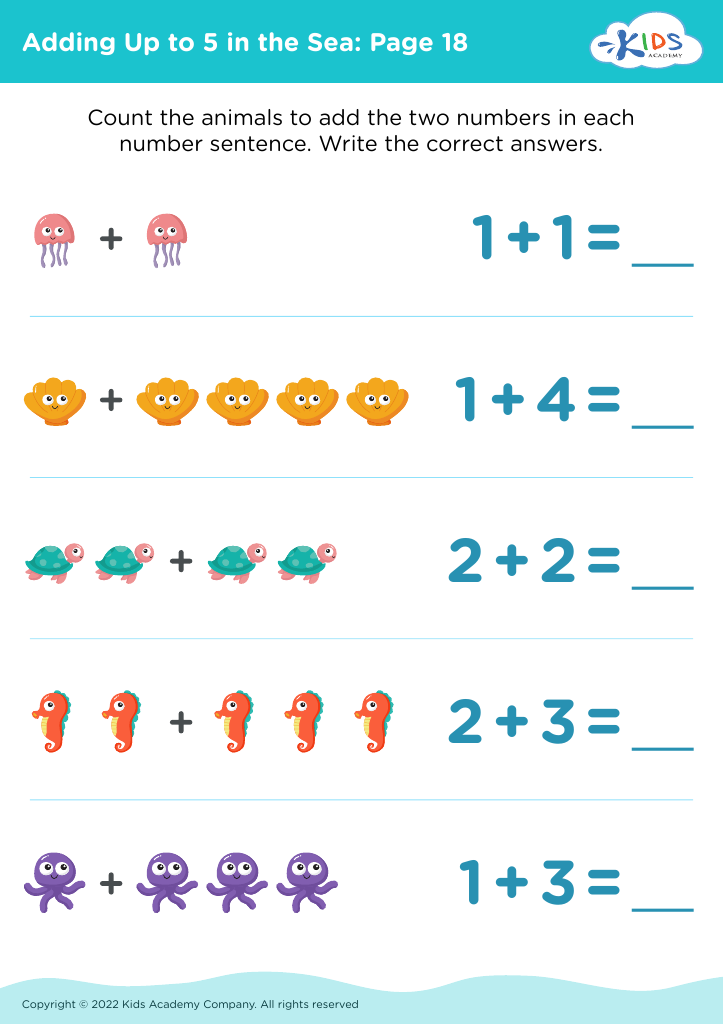
Adding Up to 5 in the Sea: Page 18
Worksheet
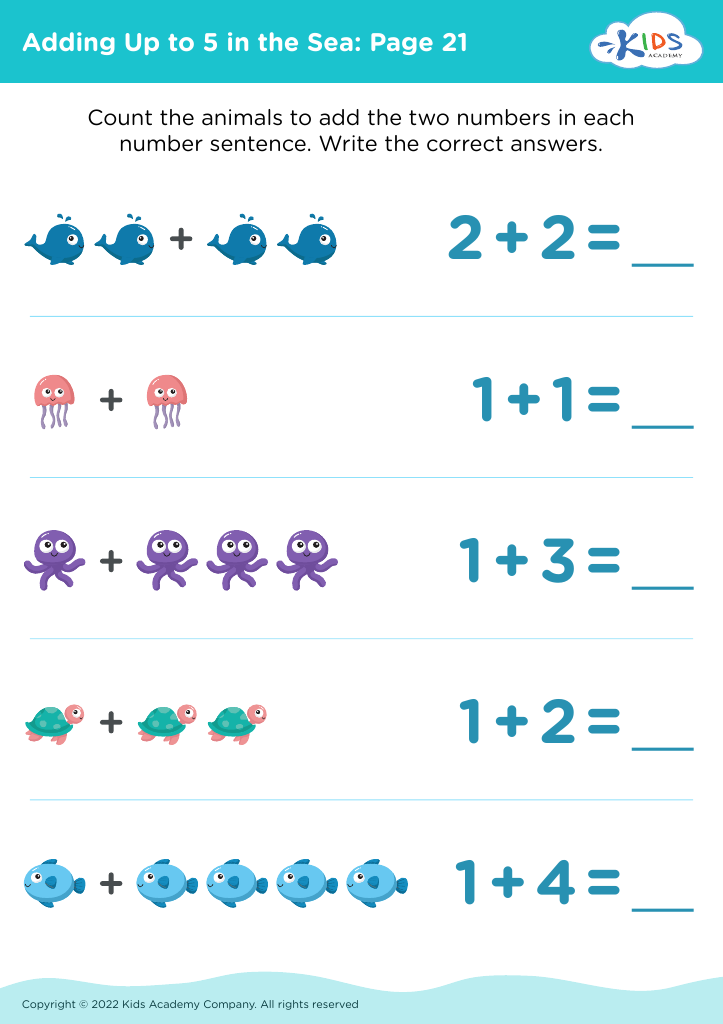
Adding Up to 5 in the Sea: Page 21
Worksheet
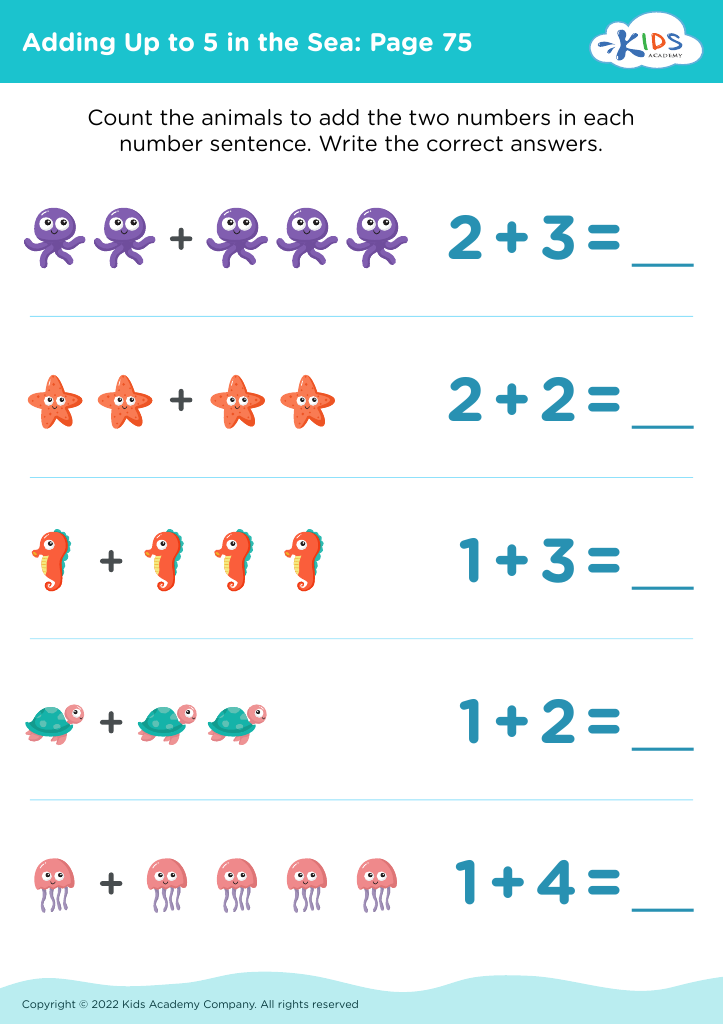
Adding Up to 5 in the Sea: Page 75
Worksheet
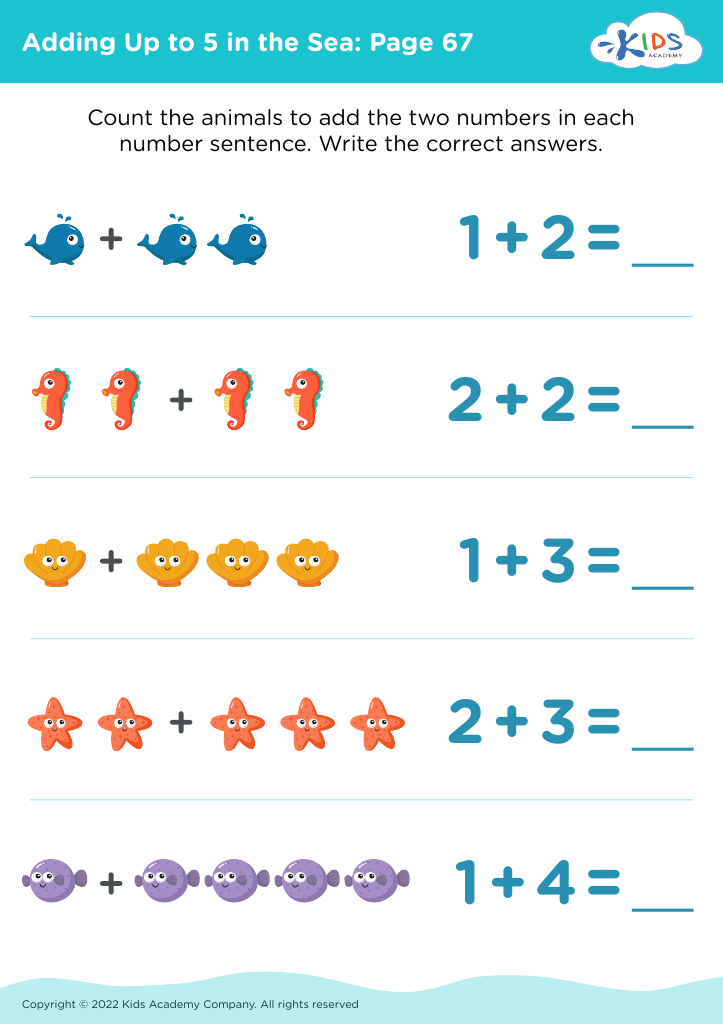
Adding Up to 5 in the Sea: Page 67
Worksheet
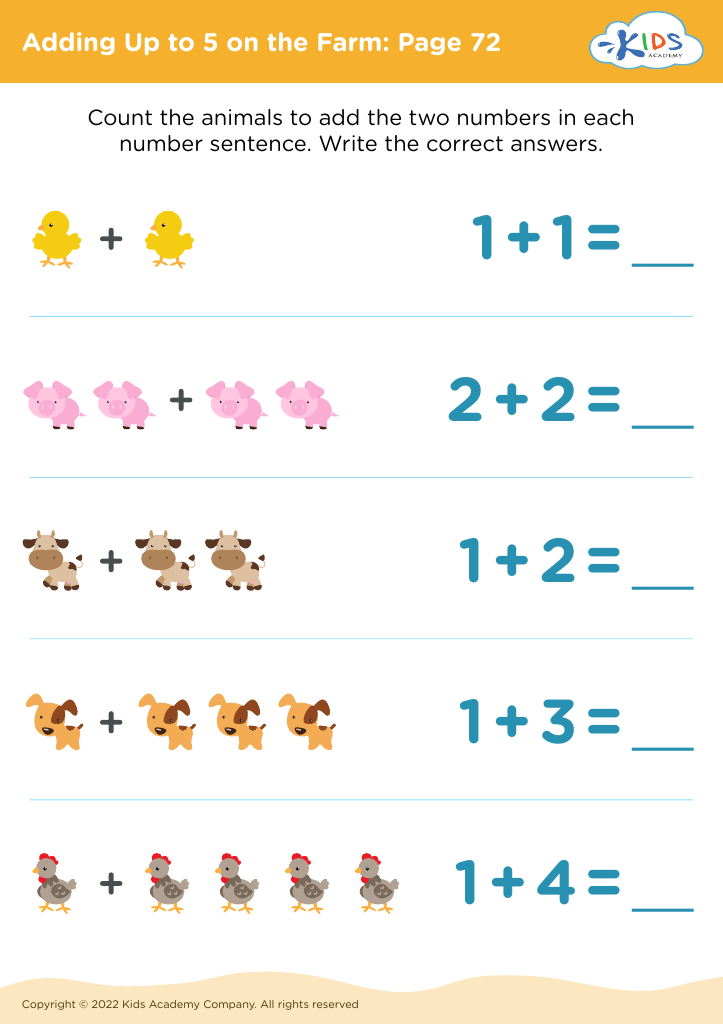
Adding Up to 5 on the Farm: Page 72
Worksheet
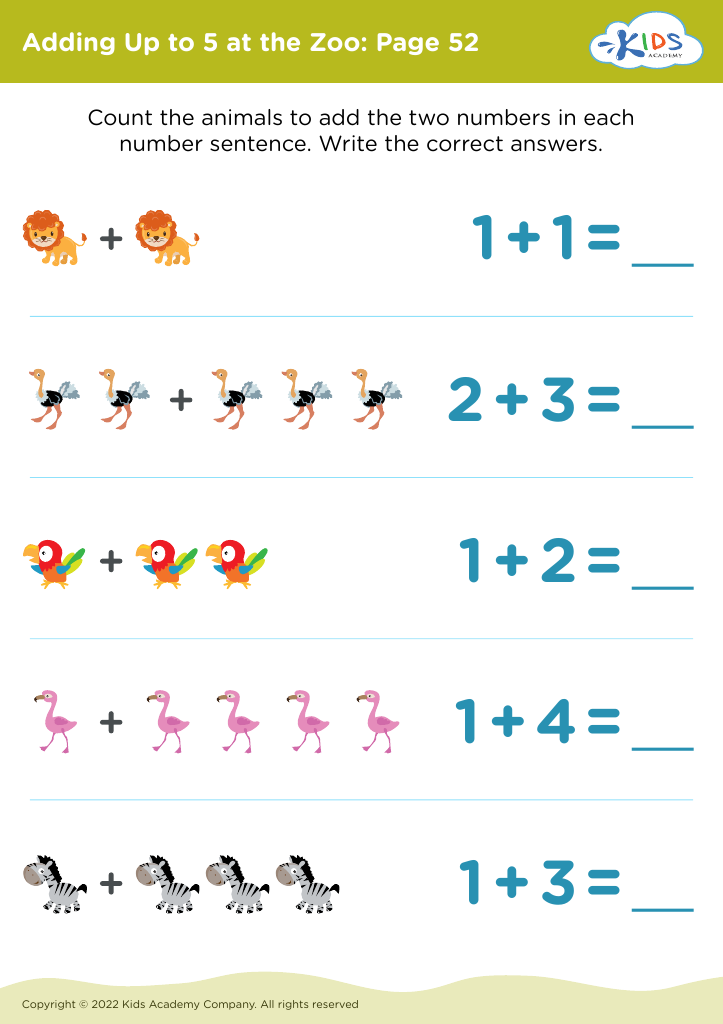
Adding Up to 5 at the Zoo: Page 52
Worksheet
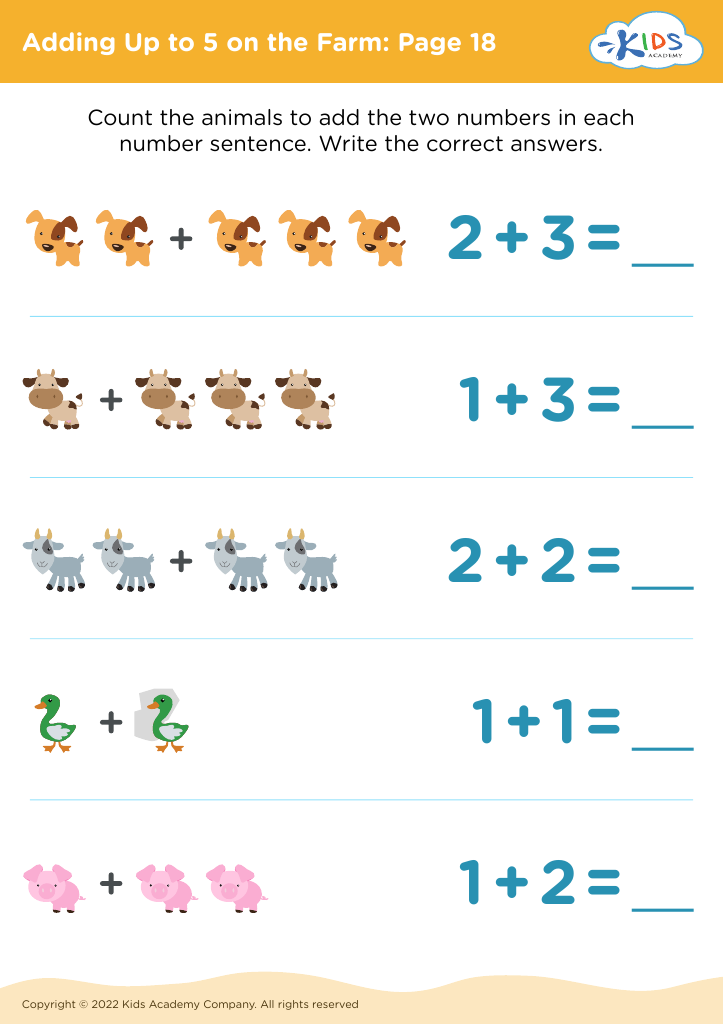
Adding Up to 5 on the Farm: Page 18
Worksheet
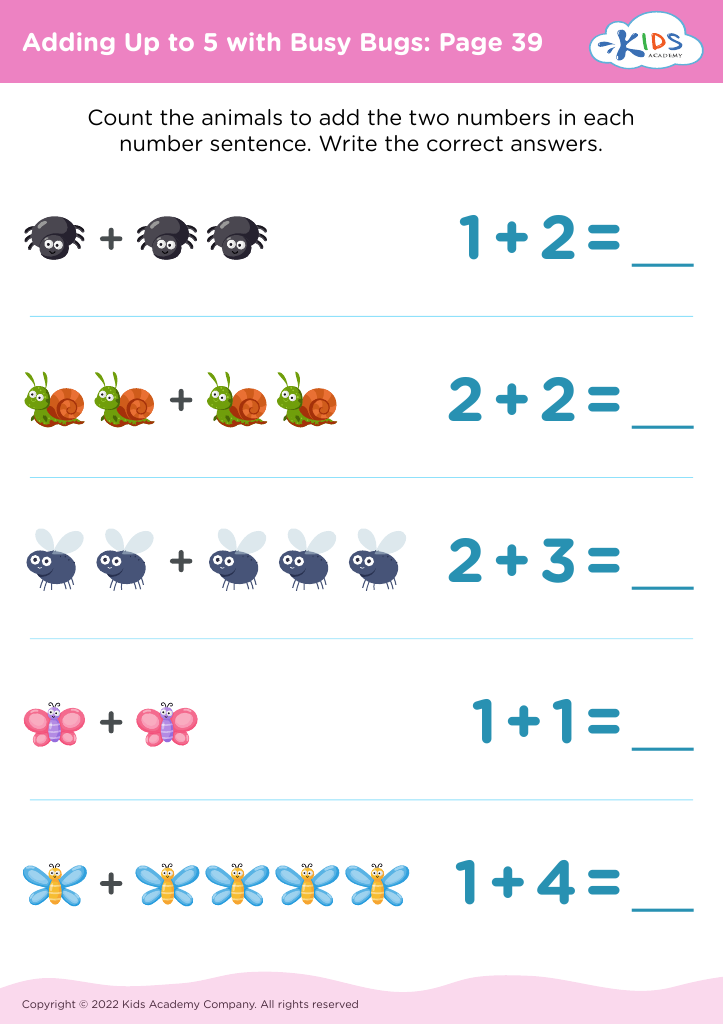
Adding Up to 5 with Busy Bugs: Page 39
Worksheet
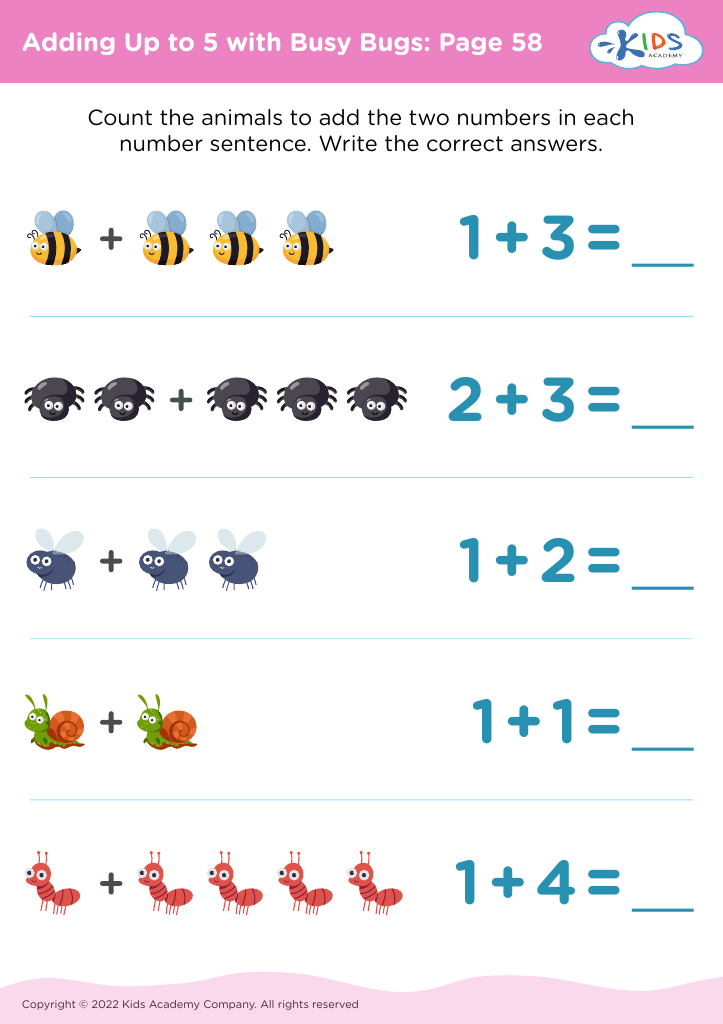
Adding Up to 5 with Busy Bugs: Page 58
Worksheet
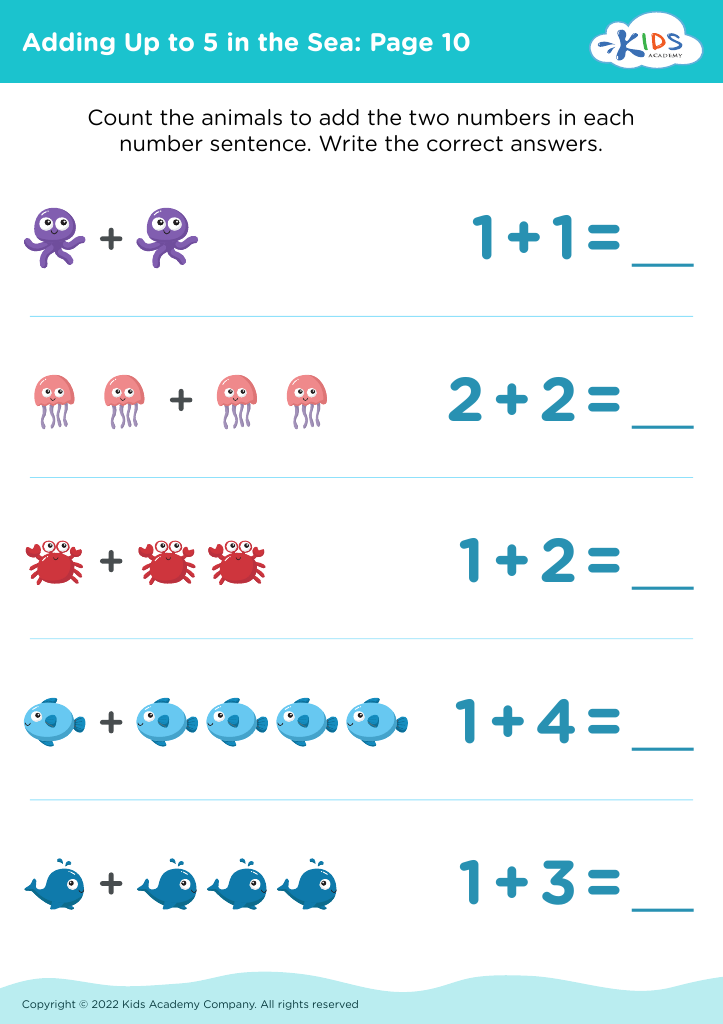
Adding Up to 5 in the Sea: Page 10
Worksheet
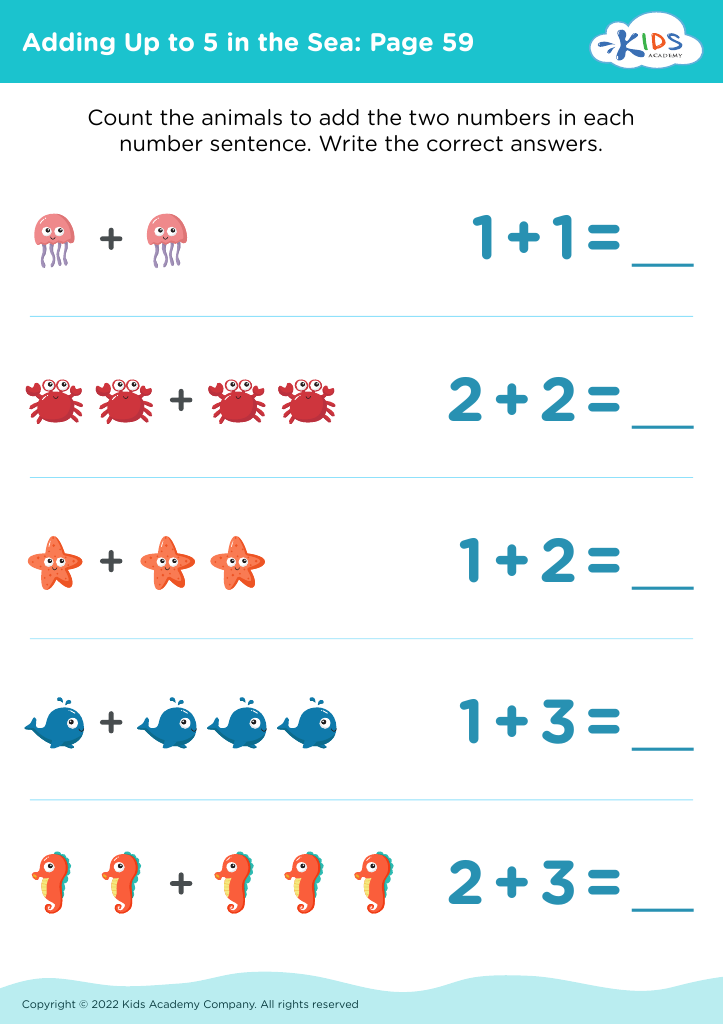
Adding Up to 5 in the Sea: Page 59
Worksheet
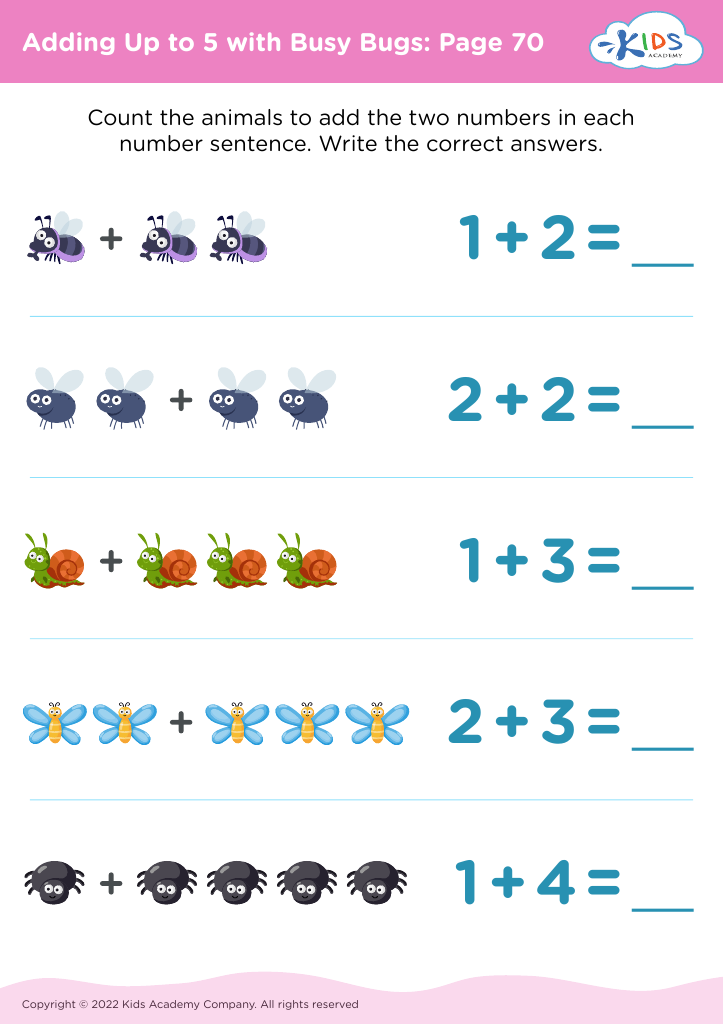
Adding Up to 5 with Busy Bugs: Page 70
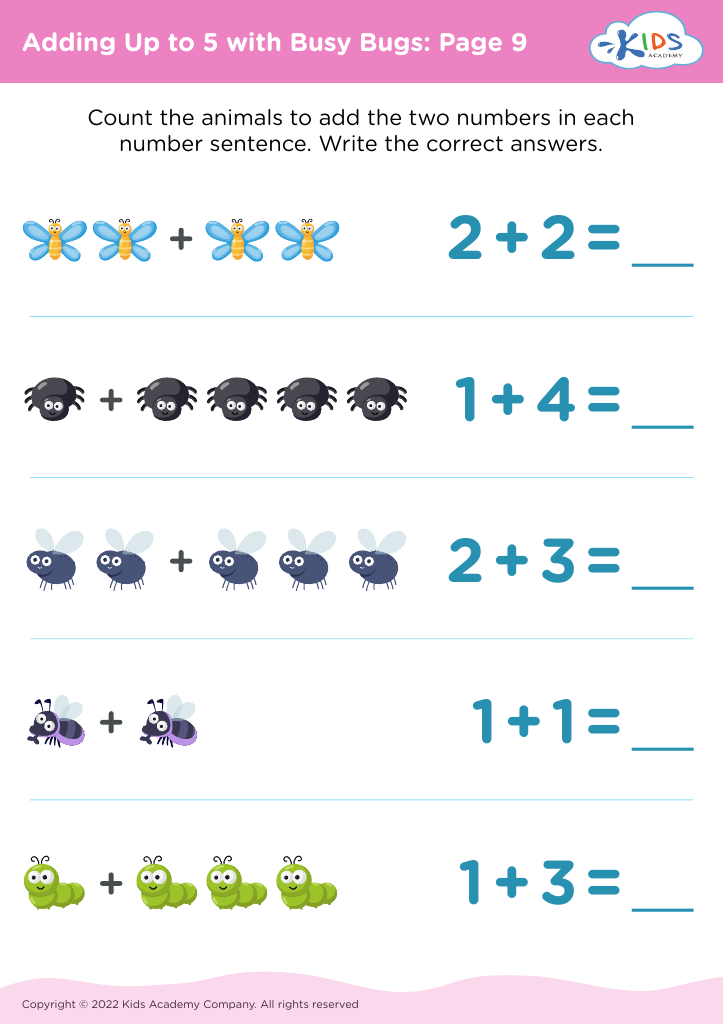
Worksheet
Adding Up to 5 with Busy Bugs: Page 9
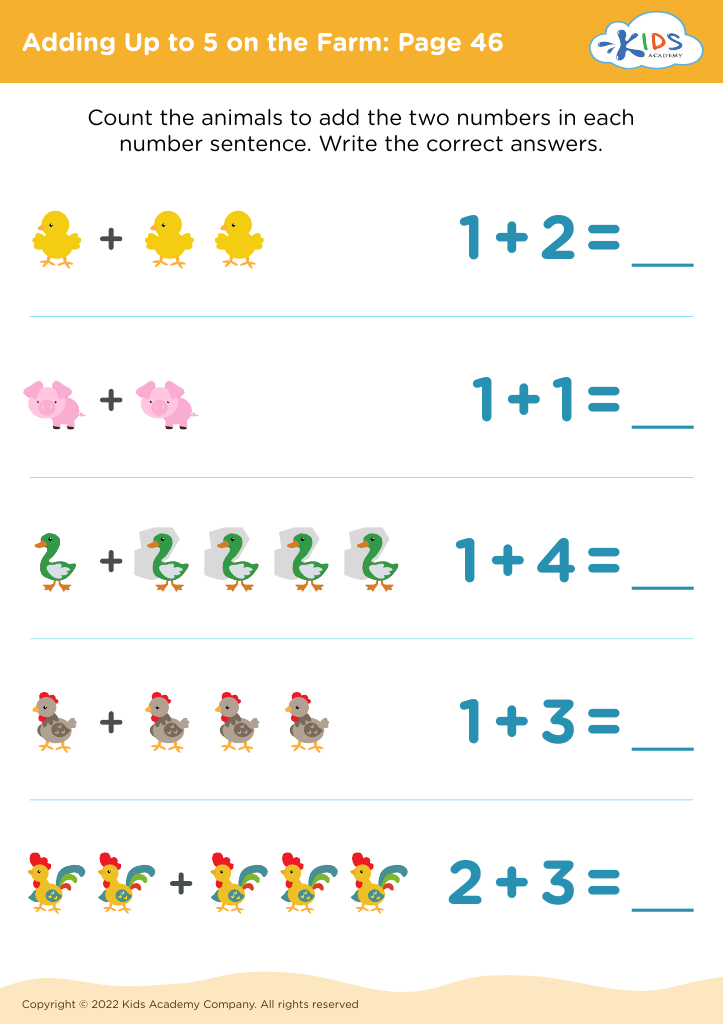
Worksheet
Adding Up to 5 on the Farm: Page 46
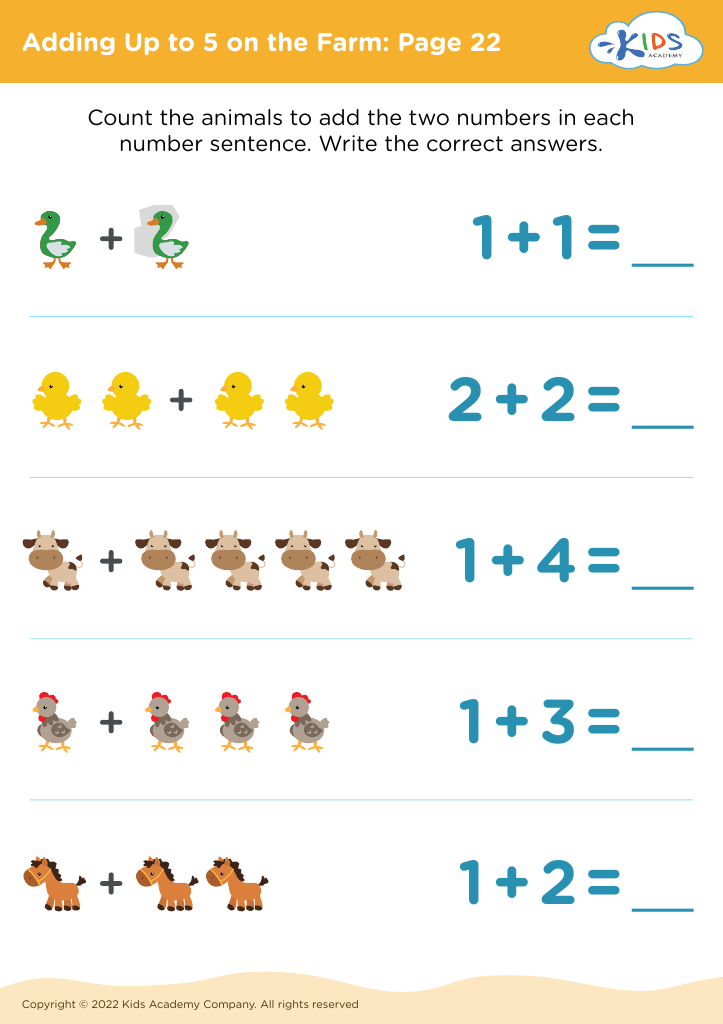
Worksheet
Adding Up to 5 on the Farm: Page 22
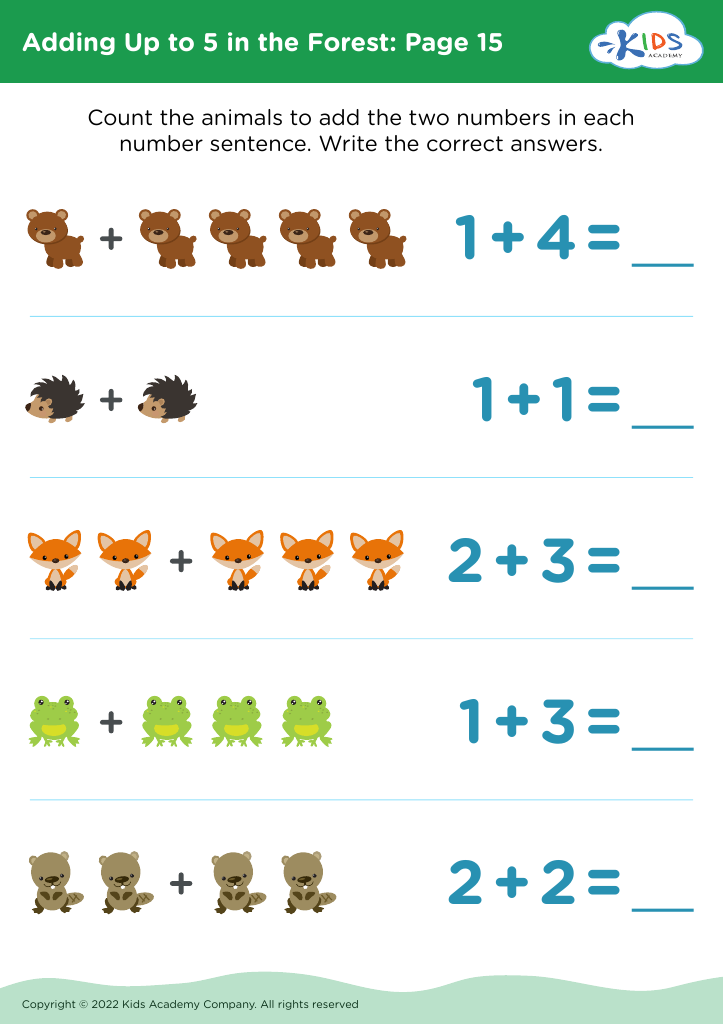
Worksheet
Adding Up to 5 in the Forest: Page 15
Worksheet


Visual Learning Adding Up to 5 for Ages 3-7 is crucial for several reasons. At this developmental stage, children are highly visual and concrete thinkers, meaning they understand the world better through images and physical objects rather than abstract concepts. Visual learning techniques, such as using pictures, counters, or number lines, leverage this natural preference to make learning engaging and intuitive.

Counting and adding up to 5 are foundational math skills. Early mastery of these basics builds confidence and sets the stage for more complex arithmetic operations. Visual methods help children see the relationship between numbers and quantities, reinforcing their understanding. For example, when children use objects like blocks to add numbers up to 5, they can physically group and count, making abstract ideas more tangible.

Moreover, visual learning promotes an inclusive educational environment. Children develop at varied paces, and visual aids can accommodate different learning styles and speeds, reducing frustration and encouraging persistence.

Parent and teacher involvement in this learning process is critical. Joint activities that incorporate visual learning not only reinforce math skills but also strengthen the parent-child or teacher-student relationship. Engaged learning experiences foster a positive attitude towards education, making visual learning practices invaluable in the early academic journey.