Filters

20 filtered results

Clear all filters
Favorites
With answer key
Interactive

20 filtered results

Difficulty Level

Grade


Introduce your child to the exciting world of math with our “Visual Learning Adding with Busy Bugs Worksheets” designed for ages 3-7! These engaging worksheets use colorful, fun busy bug illustrations to help children grasp the fundamental concept of addition. Perfect for visual learners, each worksheet provides interactive activities that promote hands-on learning and critical thinking skills. Your child will cultivate a love for numbers while enhancing their visual recognition and problem-solving abilities. Ideal for home or classroom use, our worksheets make math enjoyable and accessible, ensuring foundational skills for future academic success. Start your child’s math journey today!
Check out this FREE Trial Lesson on Adding with Busy Bugs for age 3-7!

L

Favorites
With answer key
Interactive
  • 3-7
  • Visual Learning
  • Adding with Busy Bugs
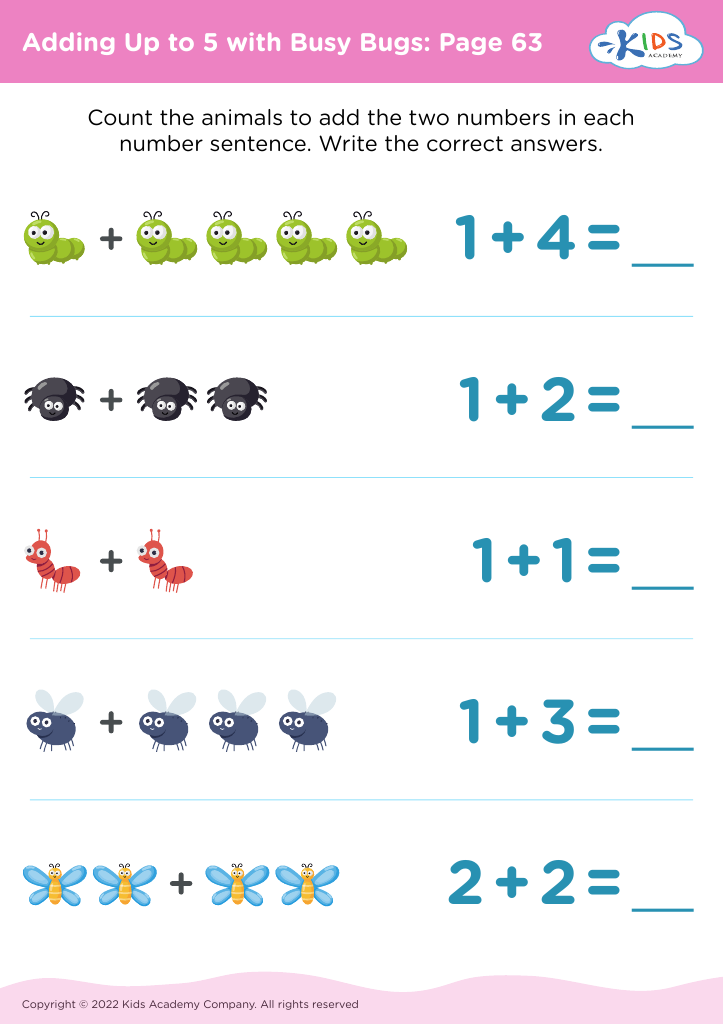
Adding Up to 5 with Busy Bugs: Page 63
Worksheet
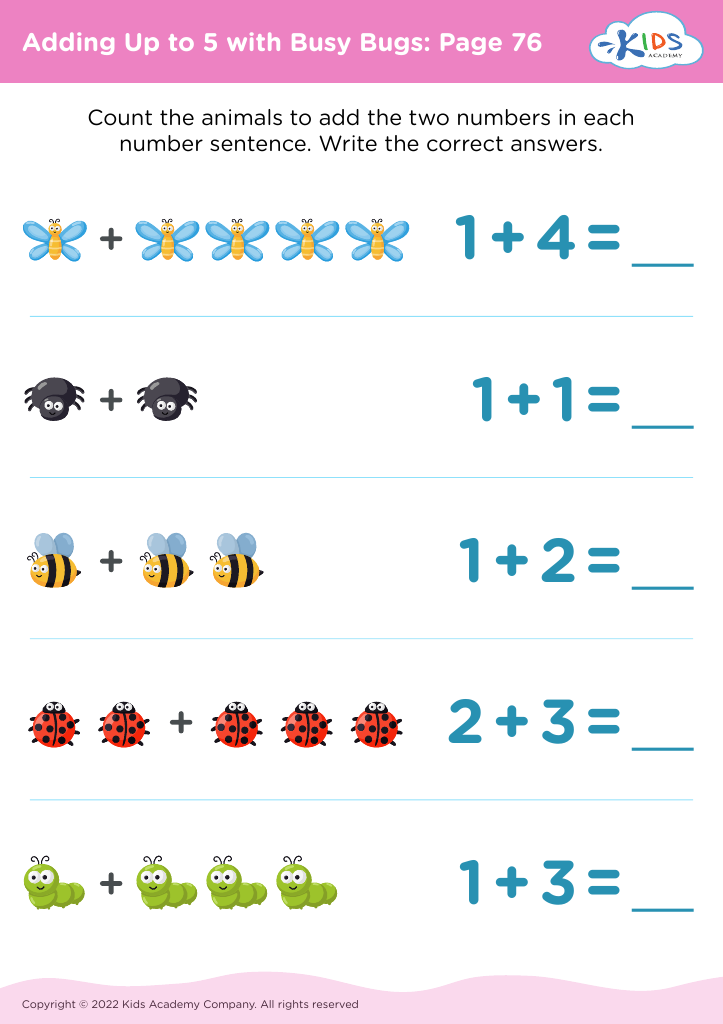
Adding Up to 5 with Busy Bugs: Page 76
Worksheet
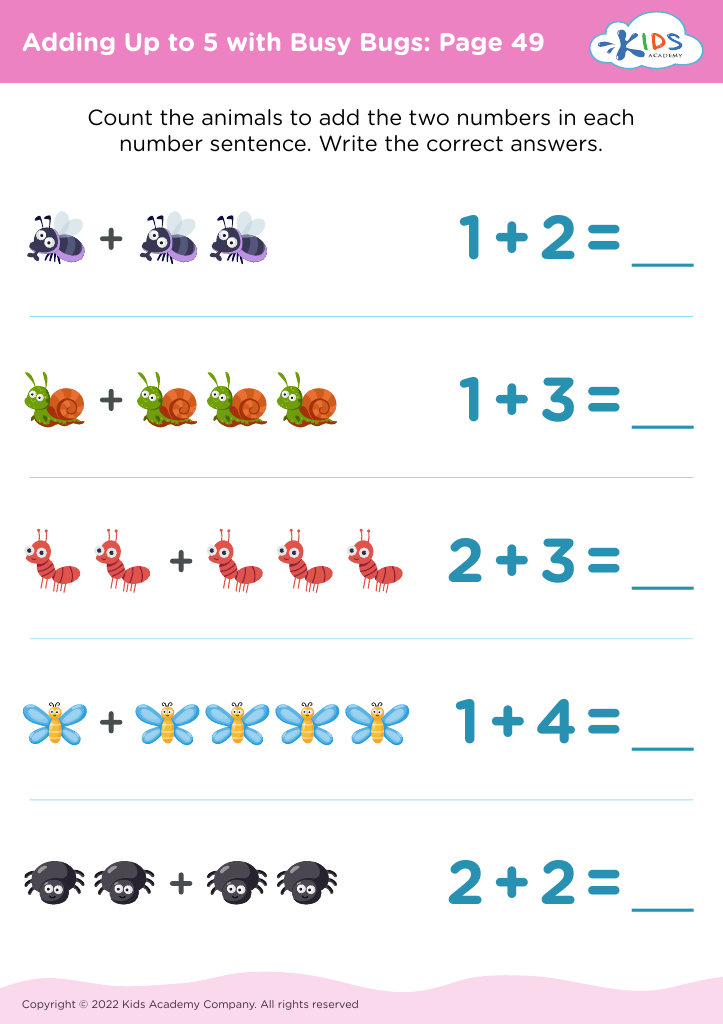
Adding Up to 5 with Busy Bugs: Page 49
Worksheet
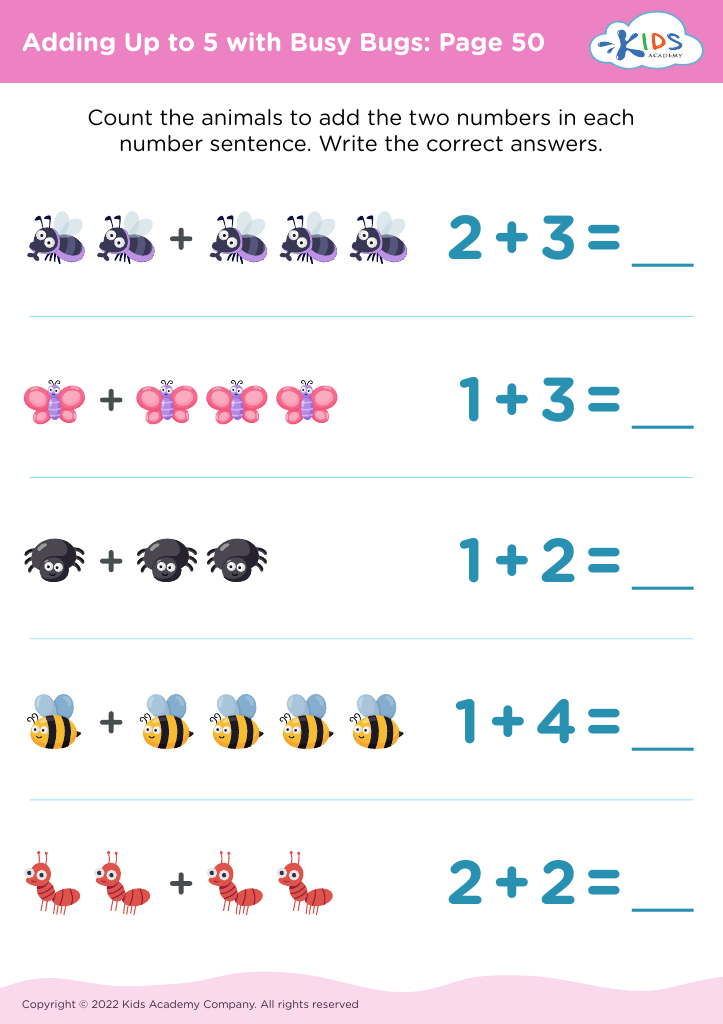
Adding Up to 5 with Busy Bugs: Page 50
Worksheet
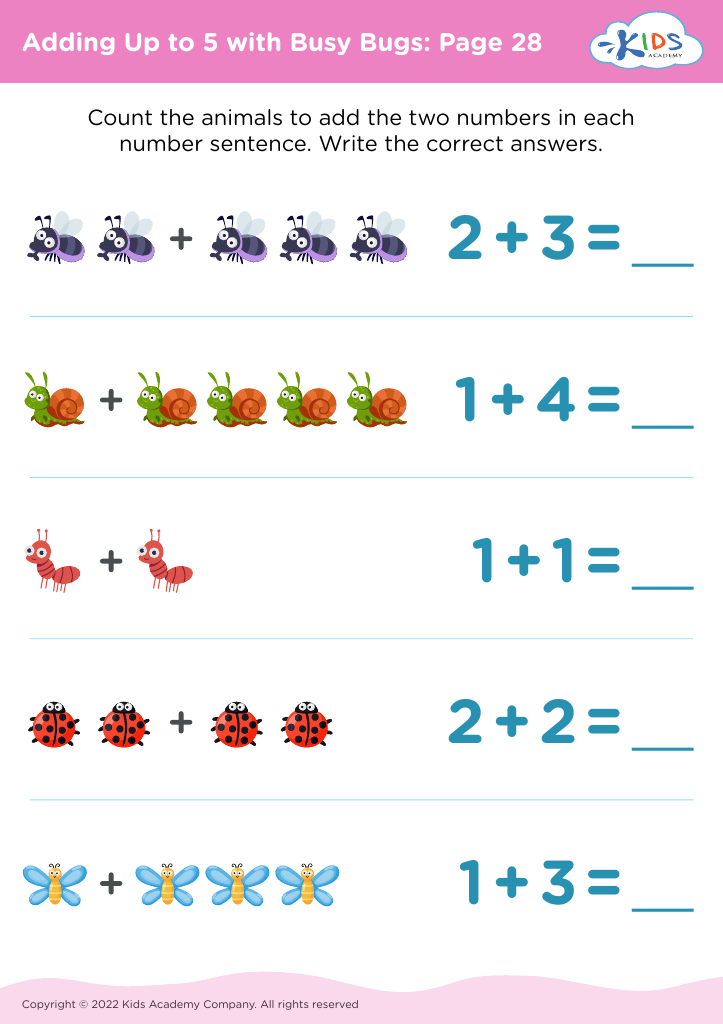
Adding Up to 5 with Busy Bugs: Page 28
Worksheet
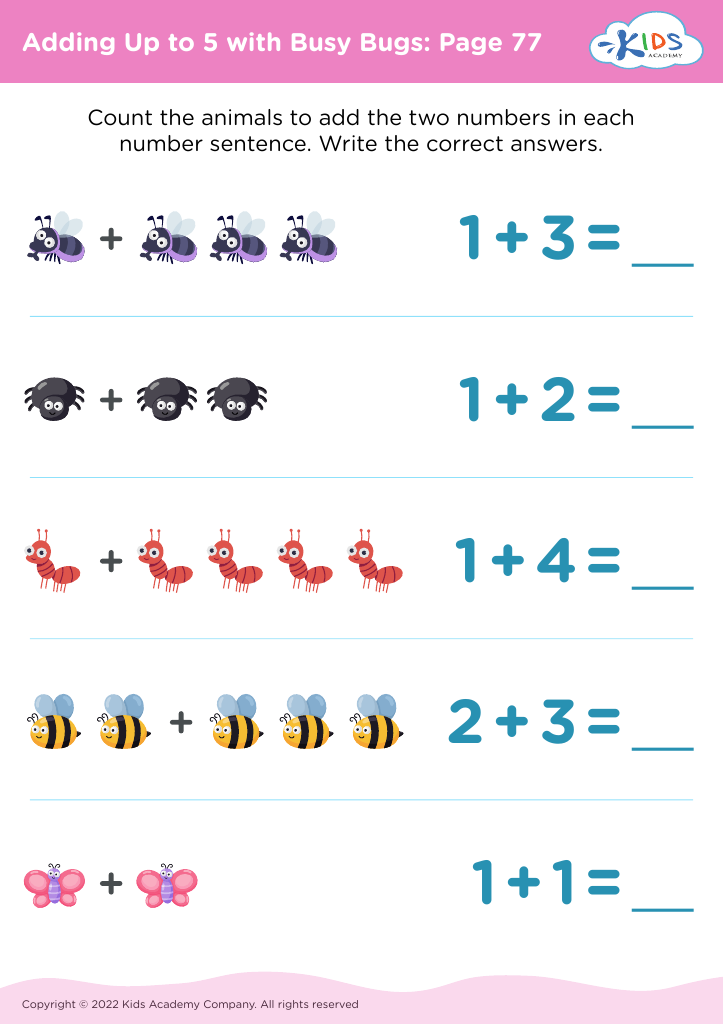
Adding Up to 5 with Busy Bugs: Page 77
Worksheet
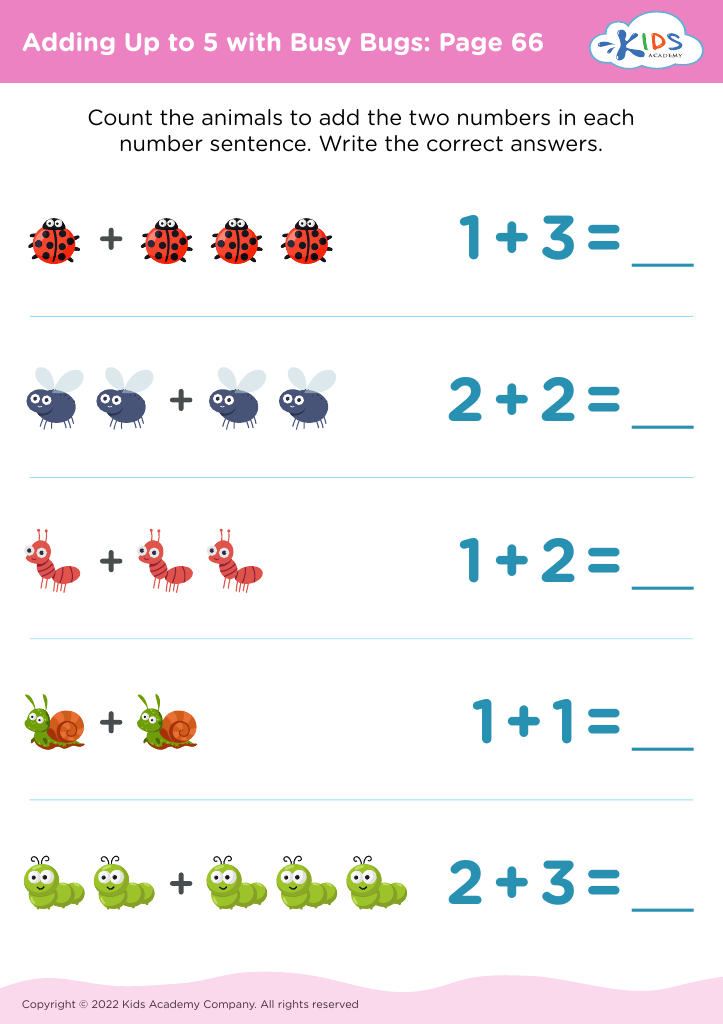
Adding Up to 5 with Busy Bugs: Page 66
Worksheet
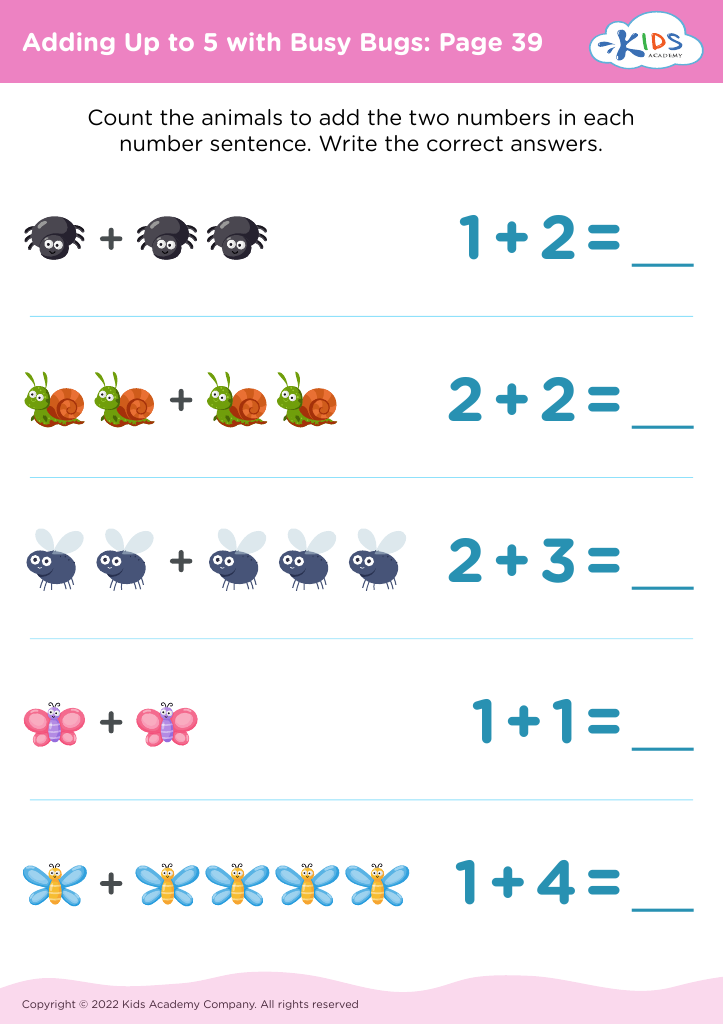
Adding Up to 5 with Busy Bugs: Page 39
Worksheet
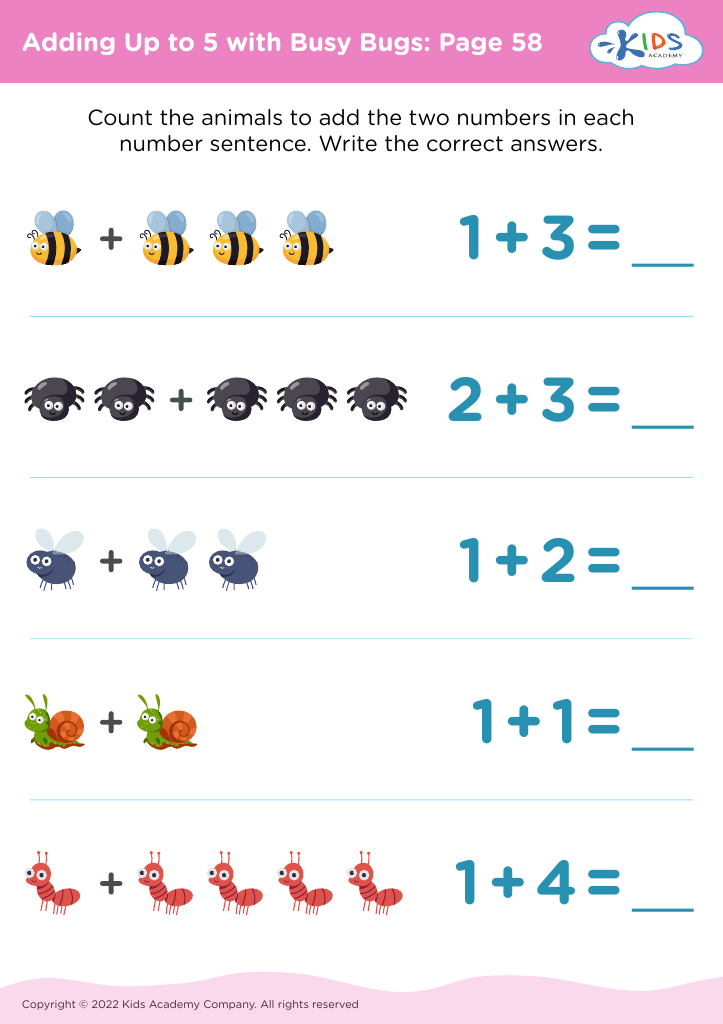
Adding Up to 5 with Busy Bugs: Page 58
Worksheet
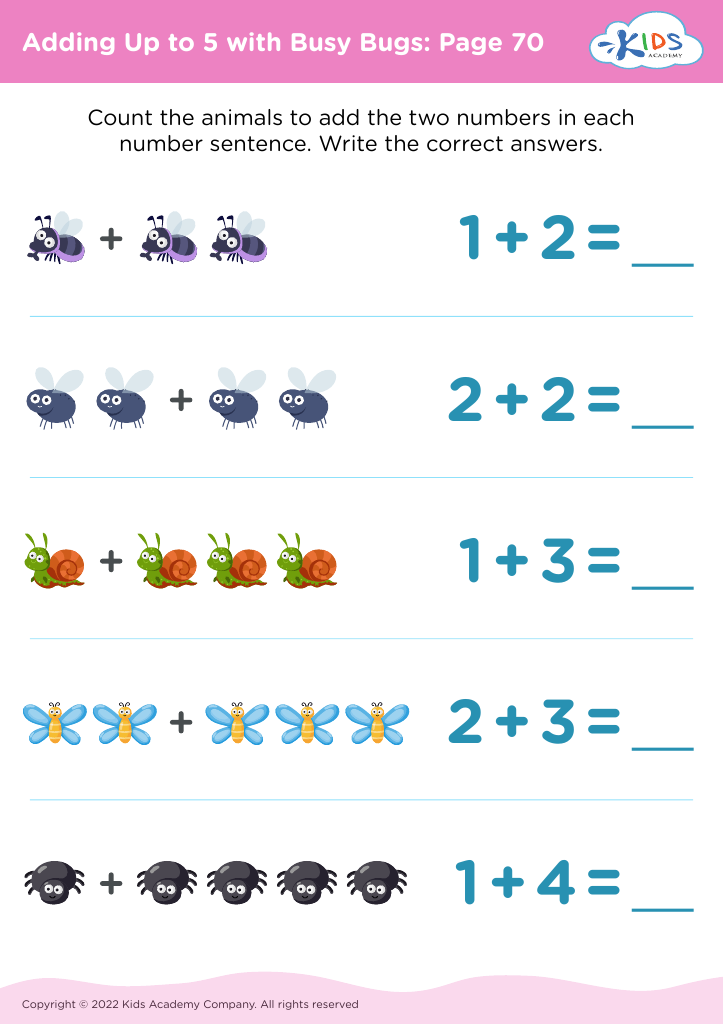
Adding Up to 5 with Busy Bugs: Page 70
Worksheet
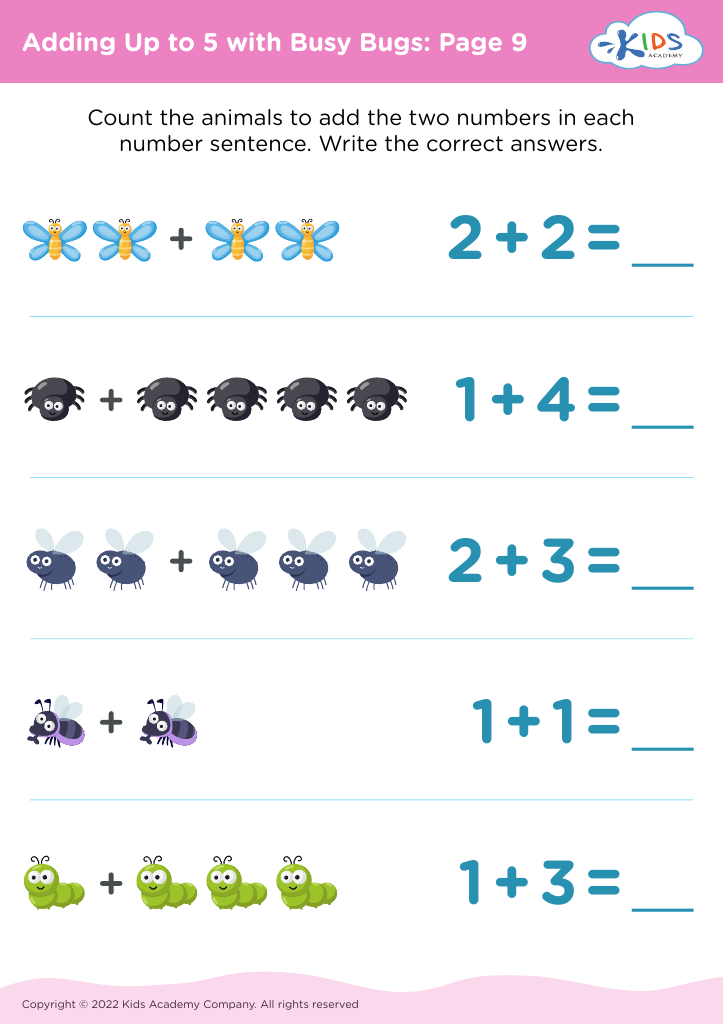
Adding Up to 5 with Busy Bugs: Page 9
Worksheet
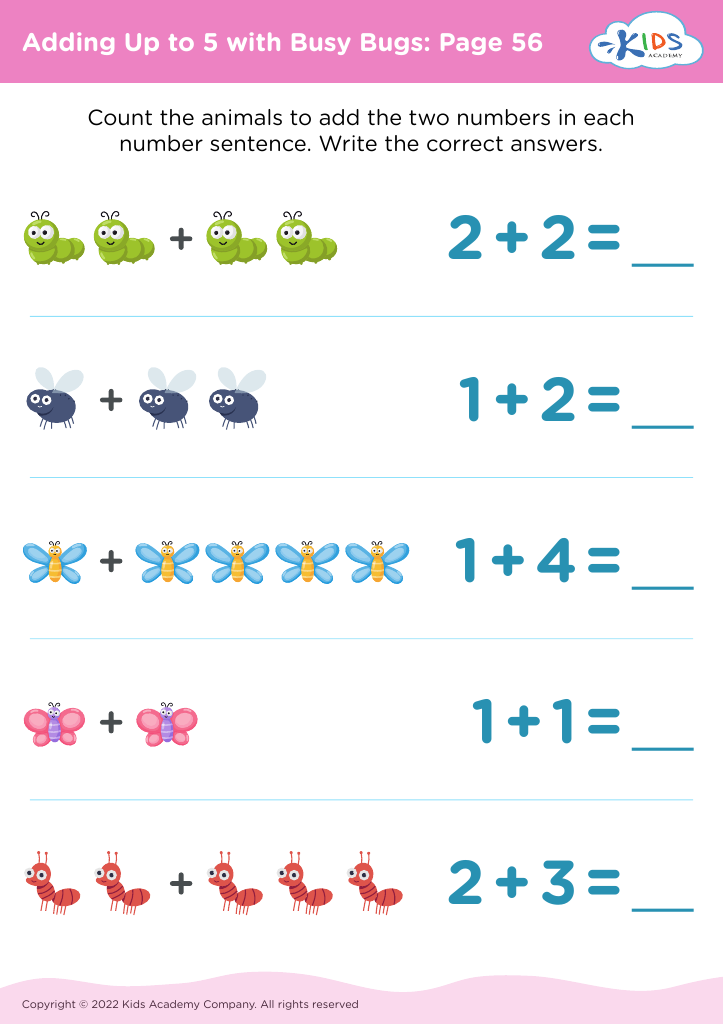
Adding Up to 5 with Busy Bugs: Page 56
Worksheet
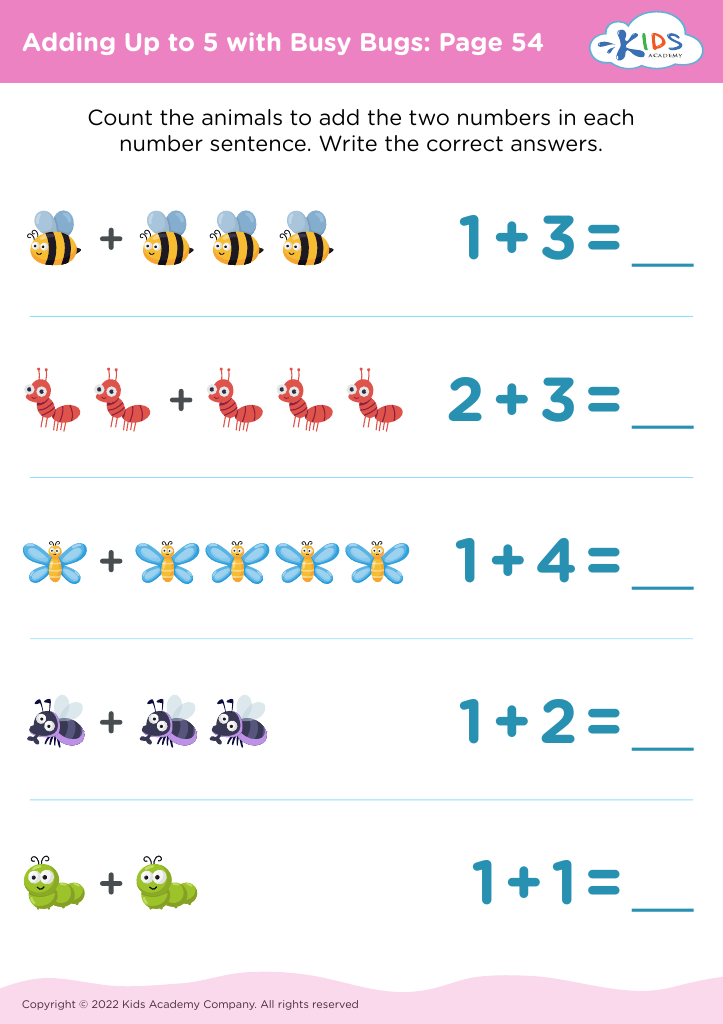
Adding Up to 5 with Busy Bugs: Page 54
Worksheet
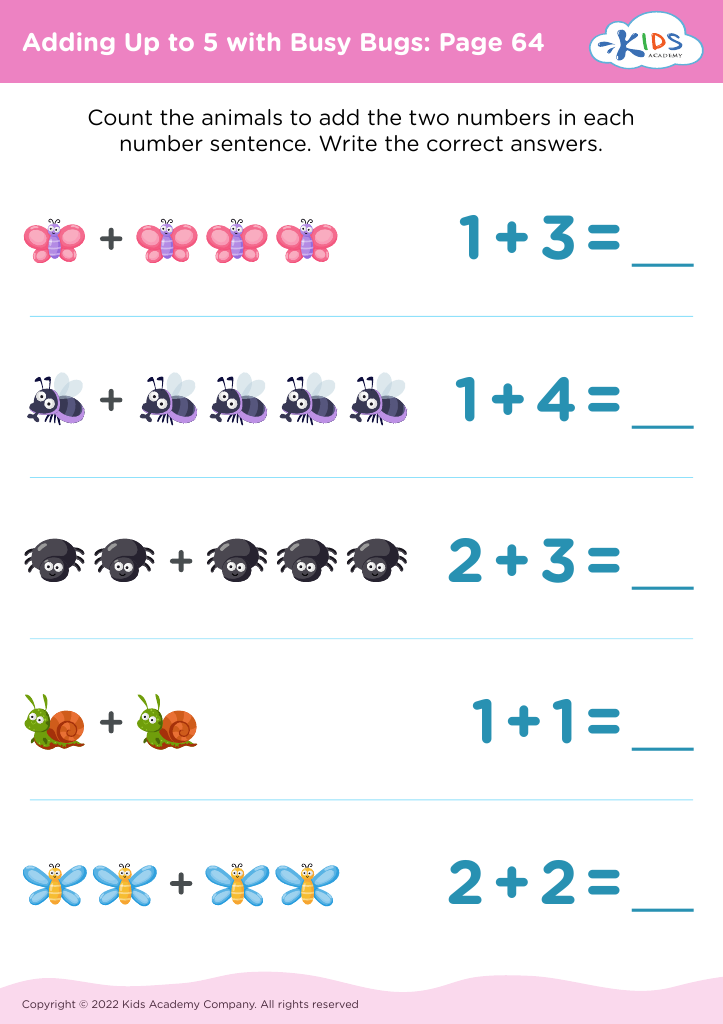
Adding Up to 5 with Busy Bugs: Page 64
Worksheet
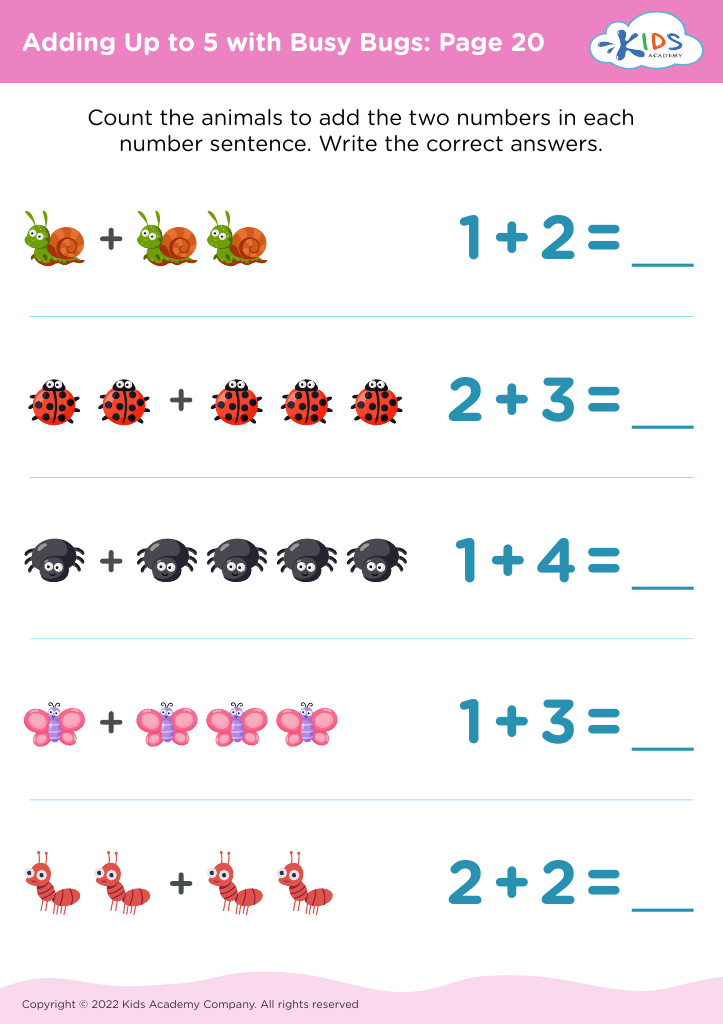
Adding Up to 5 with Busy Bugs: Page 20
Worksheet
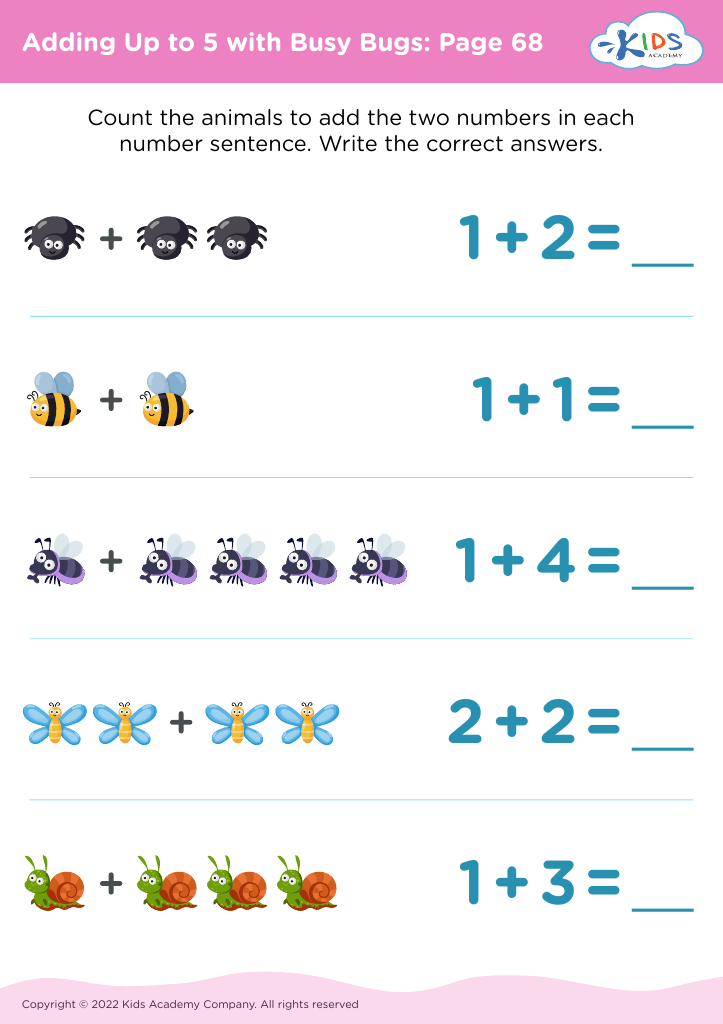
Adding Up to 5 with Busy Bugs: Page 68
Worksheet
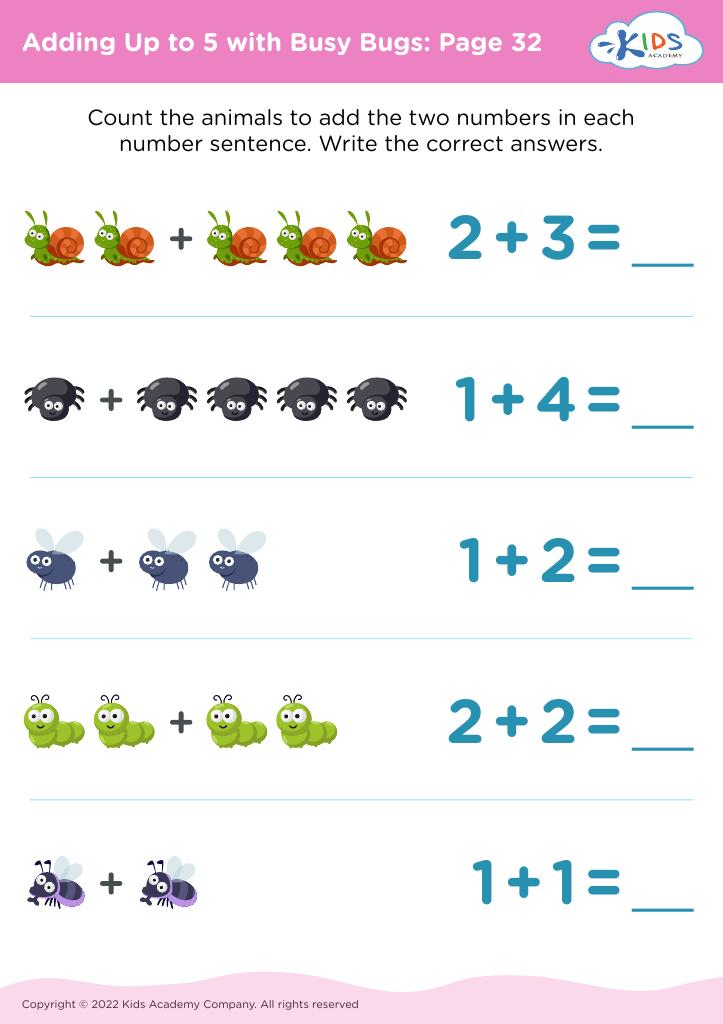
Adding Up to 5 with Busy Bugs: Page 32
Worksheet
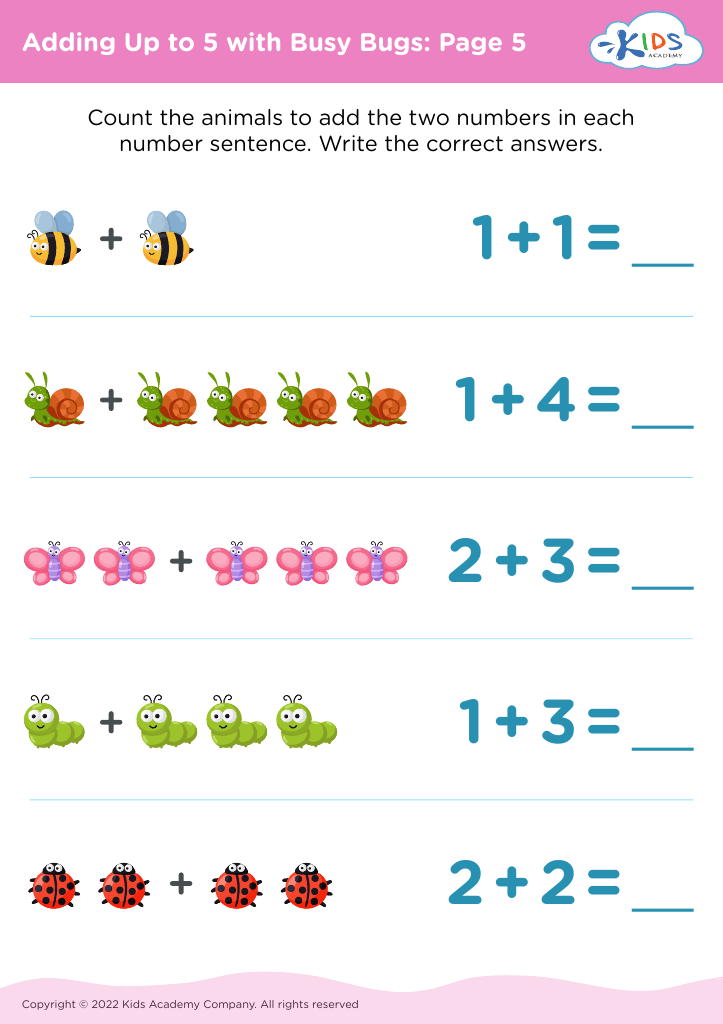
Adding Up to 5 with Busy Bugs: Page 5
Worksheet
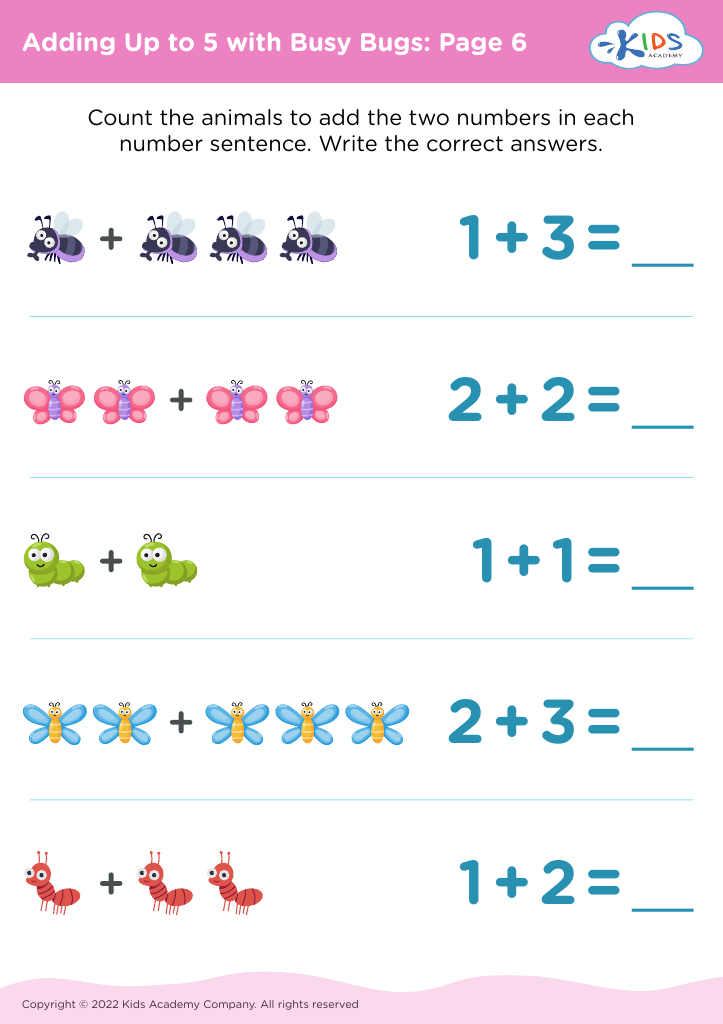
Adding Up to 5 with Busy Bugs: Page 6
Worksheet
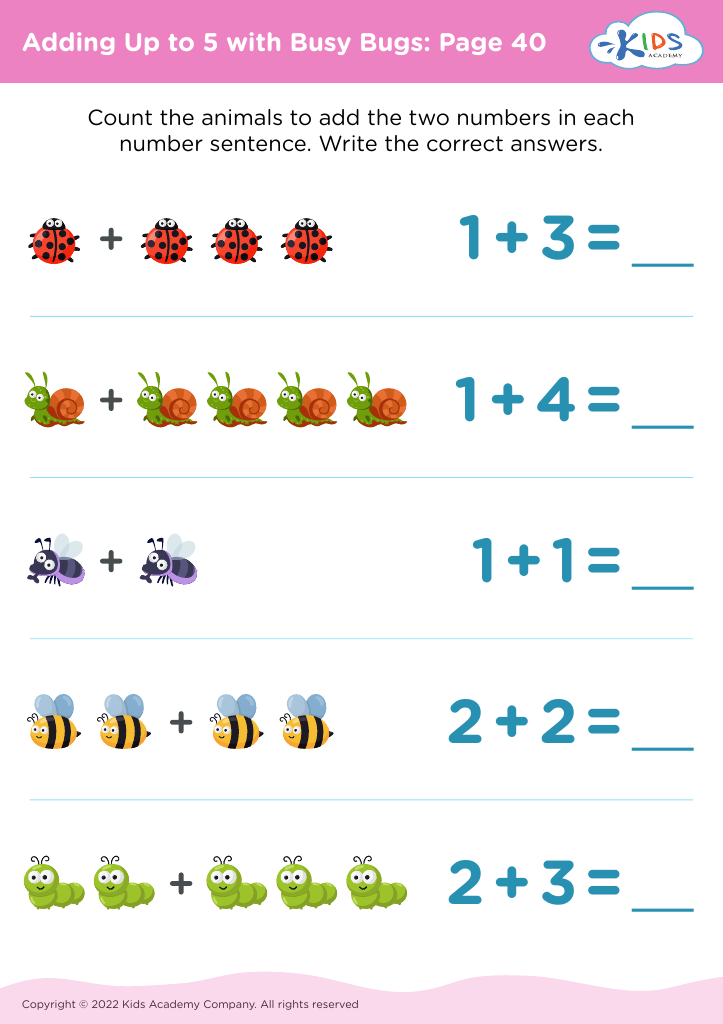
Adding Up to 5 with Busy Bugs: Page 40
Worksheet


Visual learning is a crucial approach, especially for children aged 3-7, as it aligns with their natural tendencies to learn through observation and interaction. Parents and teachers should care about incorporating visual learning methods, such as "Busy Bugs," because such tools stimulate cognitive development and enhance comprehension. Busy Bugs, often colorful and engaging, capture children’s attention and foster the perception of new concepts in an enjoyable way.

These visual materials promote creativity and imaginative thinking, enabling children to make connections between ideas and develop critical problem-solving skills. Engaging with visual learning also facilitates better retention of information since children are more likely to remember concepts they’ve seen or created rather than those presented solely through text or spoken words.

Moreover, integrating these visuals allows educators to cater to diverse learning styles, as not all children absorb information equally. Some may learn better through auditory instructions, while many remember better through visual stimuli. By employing visual learning techniques, teachers and parents can create a more inclusive and effective learning environment. This not only supports academic success but also instills a love for learning at an early age, preparing children for future educational endeavors.