Explore our engaging Basic Addition Practice worksheets tailored for ages 3-7! These fun and interactive resources are designed to help young learners master essential addition and subtraction skills. Each worksheet features colorful visuals, easy-to-follow instructions, and a variety of exercises that promote a solid understanding of math concepts. Perfect for both classroom and home use, our worksheets boost confidence and make learning enjoyable through playful themes. From counting objects to solving simple equations, children will develop their math abilities in a stress-free environment. Download and watch your little ones excel in their early math journey today!
Check out this FREE Trial Lesson on Addition & Subtraction for age 3-7!

Enrichment

Favorites
With answer key
Interactive
  • 3-7
  • Basic addition practice
  • Addition & Subtraction
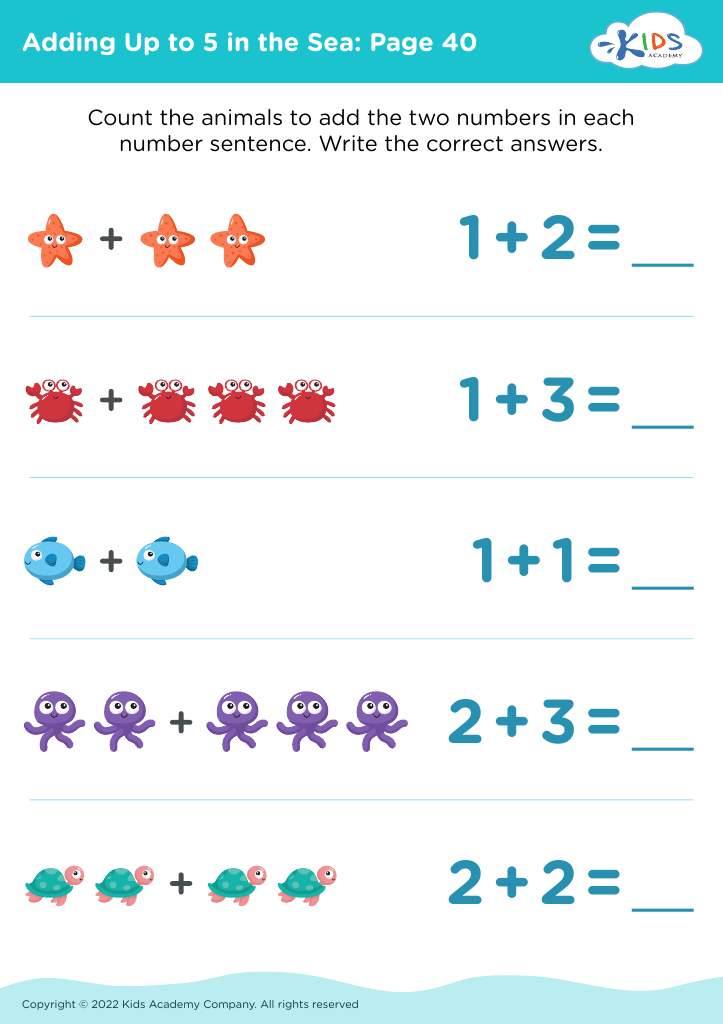
Adding Up to 5 in the Sea: Page 40
Worksheet
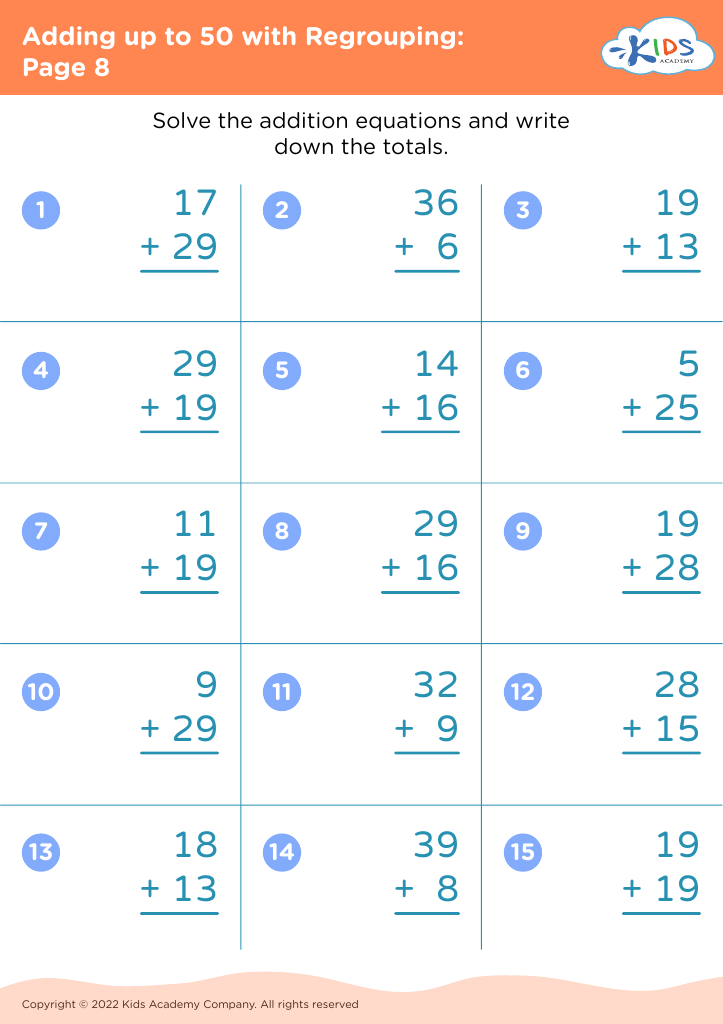
Adding up to 50 with Regrouping: Page 8
Worksheet
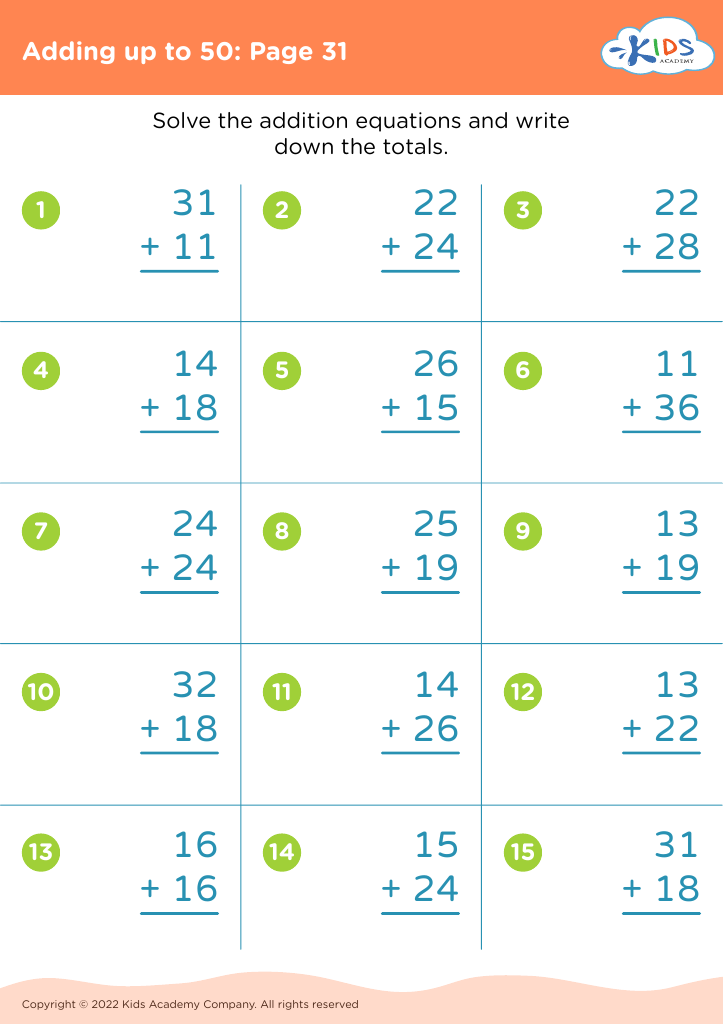
Adding up to 50: Page 31

Adding up to 50: Page 31

Adding up to 50: Page 31
Worksheet
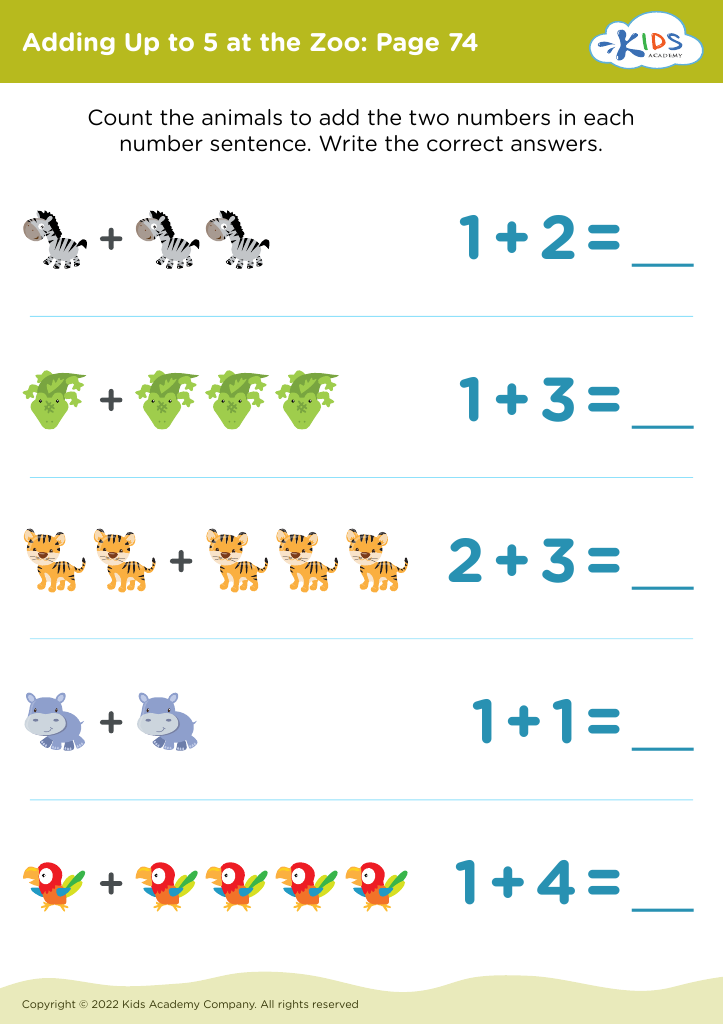
Adding Up to 5 at the Zoo: Page 74
Worksheet
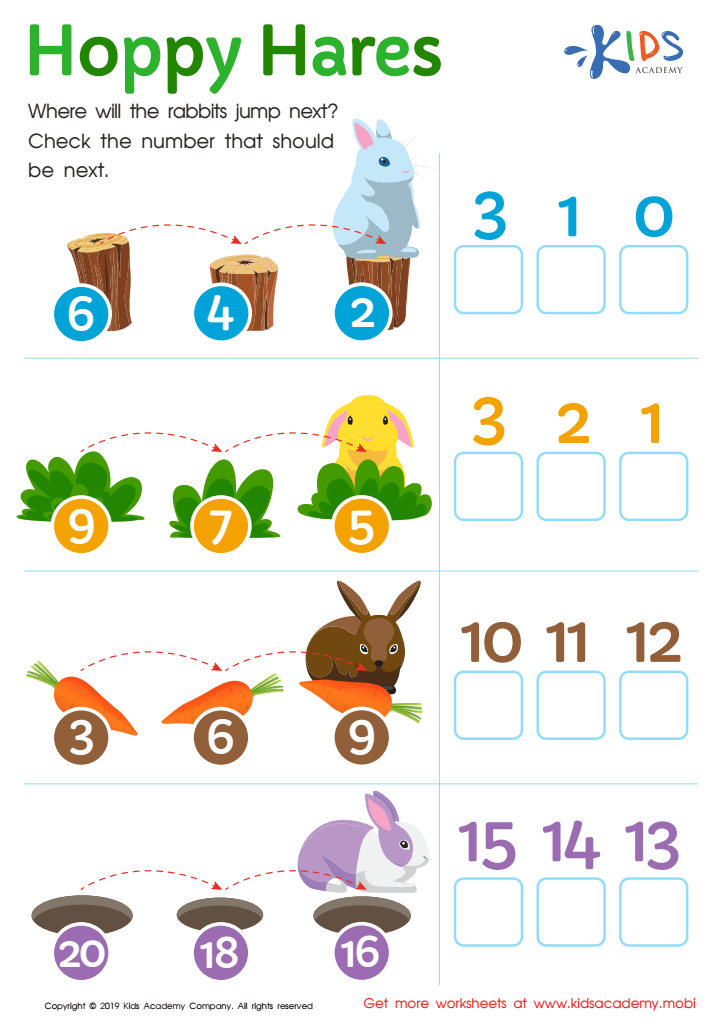
Hoppy Hares Worksheet

Hoppy Hares Worksheet

Ask your kids if they can identify the rabbits in the picture, then help them solve the math problems. The rabbits need to hop from place to place, so look at the numbers and help your kids figure out the next one. These cute and friendly little animals make great pets. Have fun solving this worksheet together!
Hoppy Hares Worksheet
Worksheet
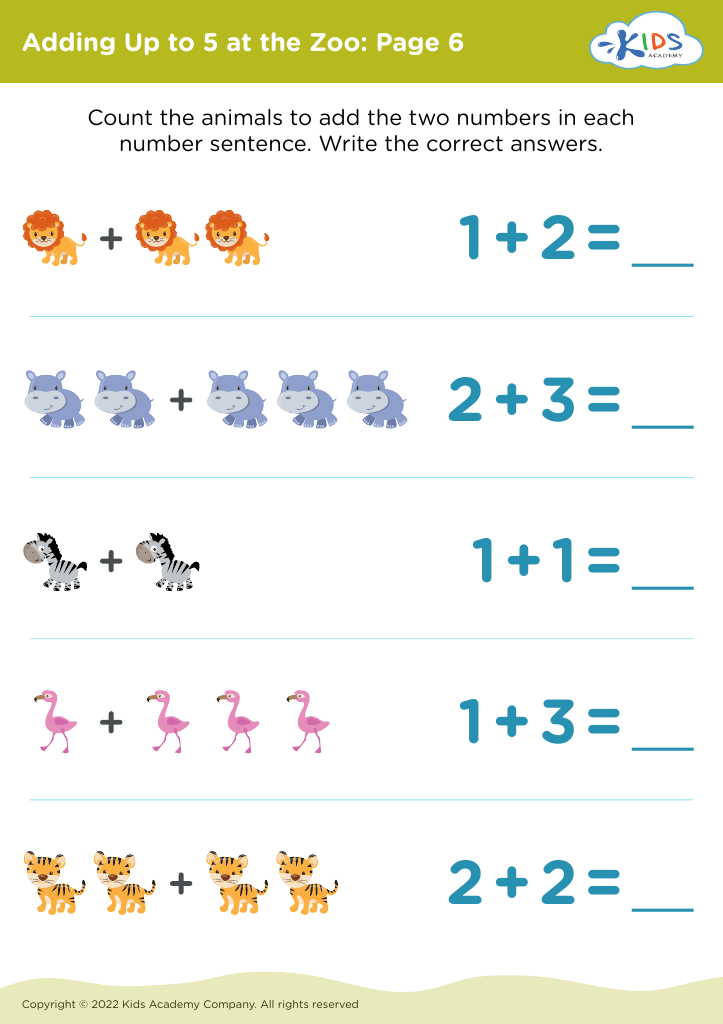
Adding Up to 5 at the Zoo: Page 6

Adding Up to 5 at the Zoo: Page 6

Adding Up to 5 at the Zoo: Page 6
Worksheet
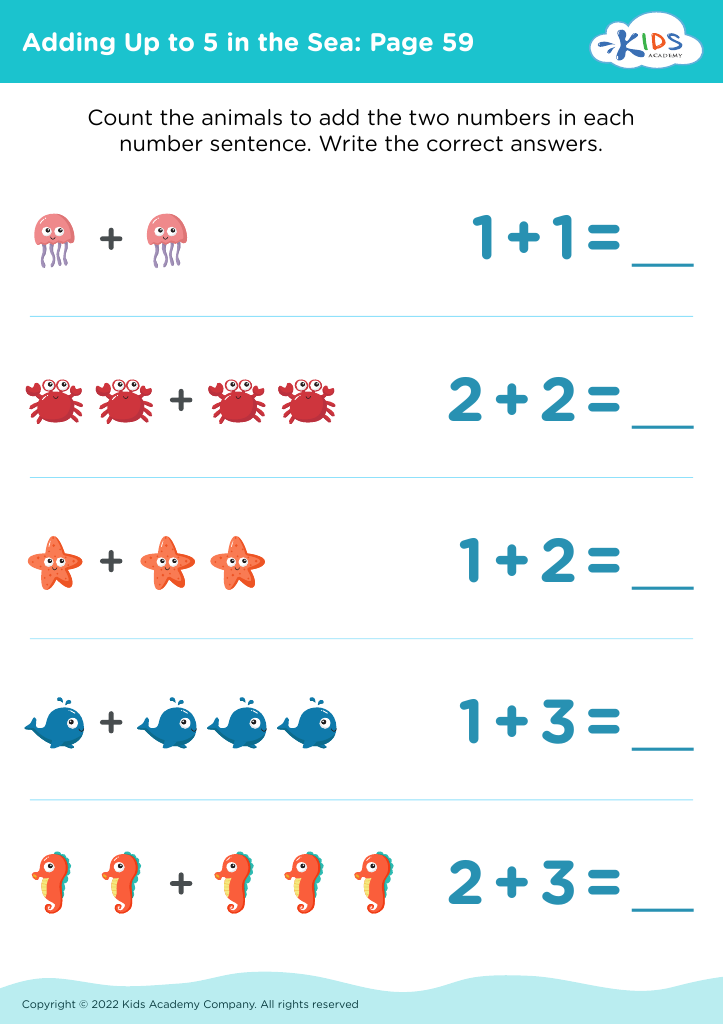
Adding Up to 5 in the Sea: Page 59
Worksheet
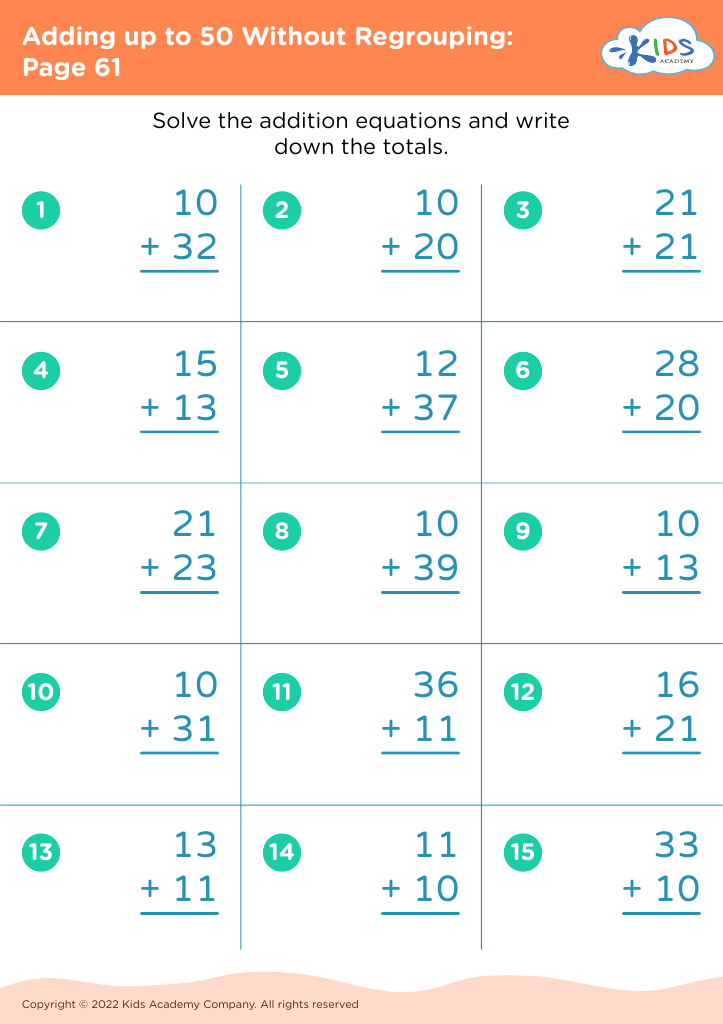
Adding up to 50 Without Regrouping: Page 61
Worksheet
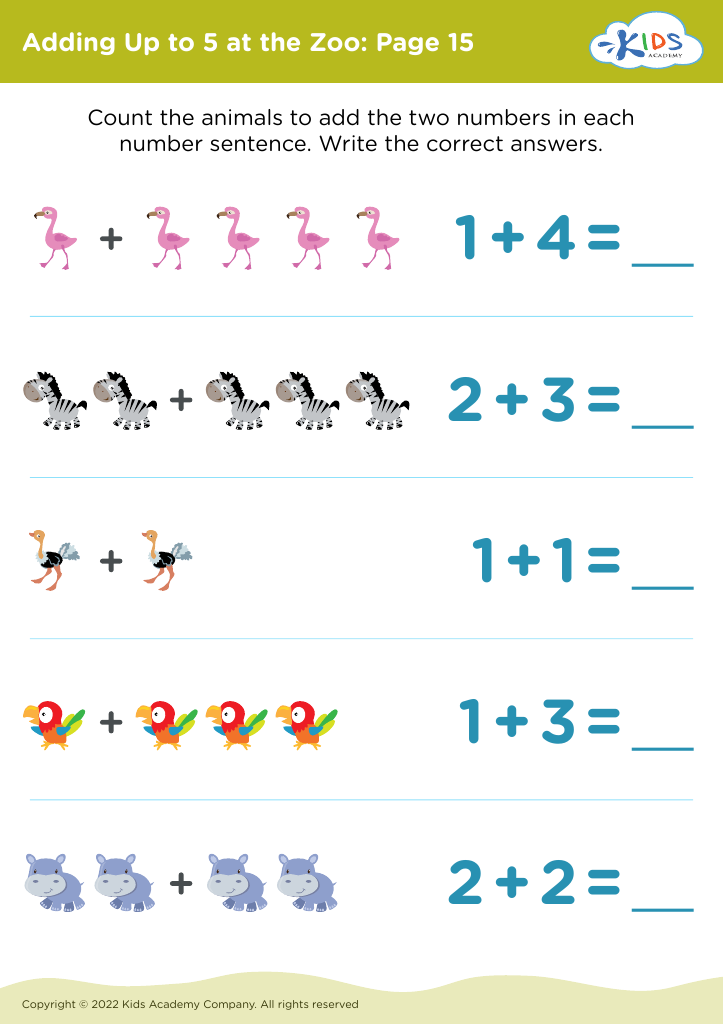
Adding Up to 5 at the Zoo: Page 15
Worksheet
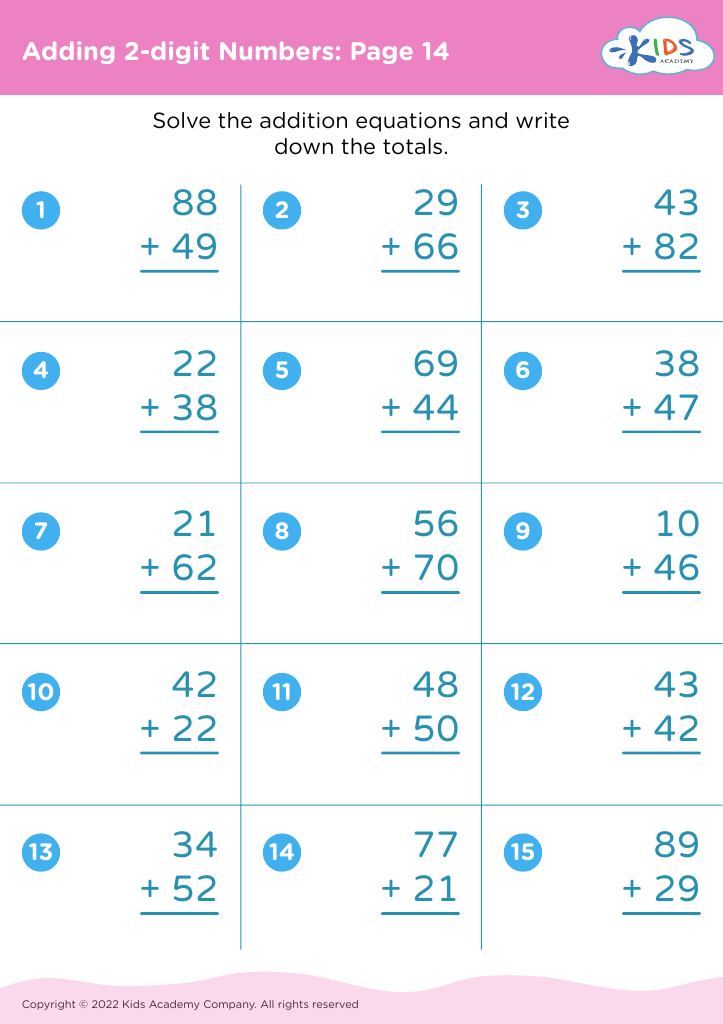
Adding 2-digit Numbers: Page 14

Adding 2-digit Numbers: Page 14

Adding 2-digit Numbers: Page 14
Worksheet
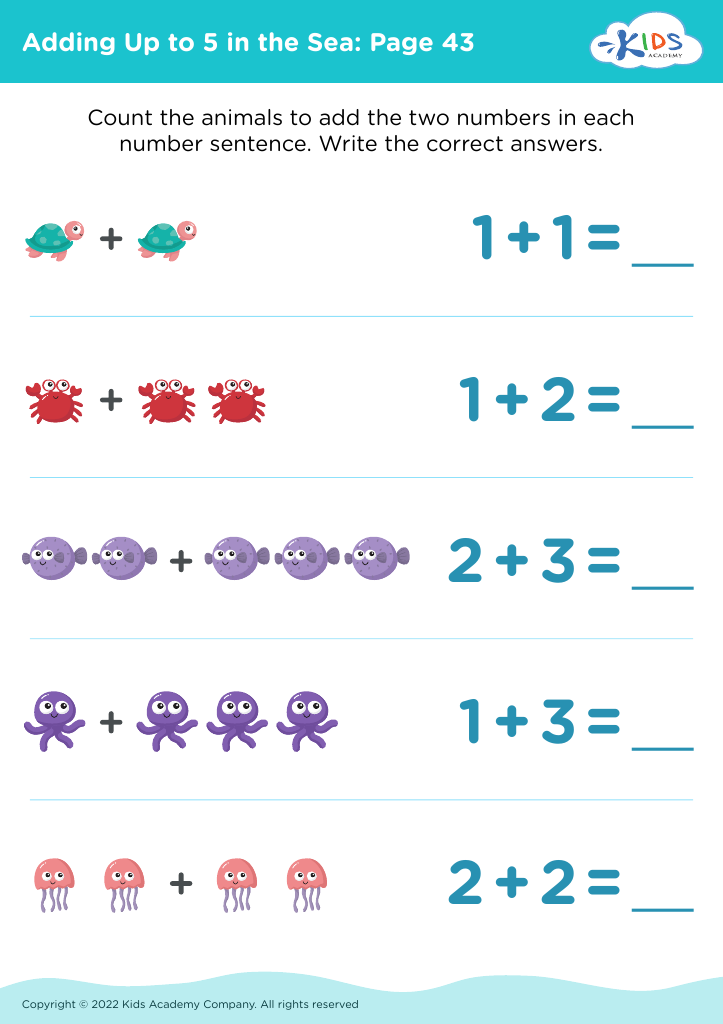
Adding Up to 5 in the Sea: Page 43
Worksheet
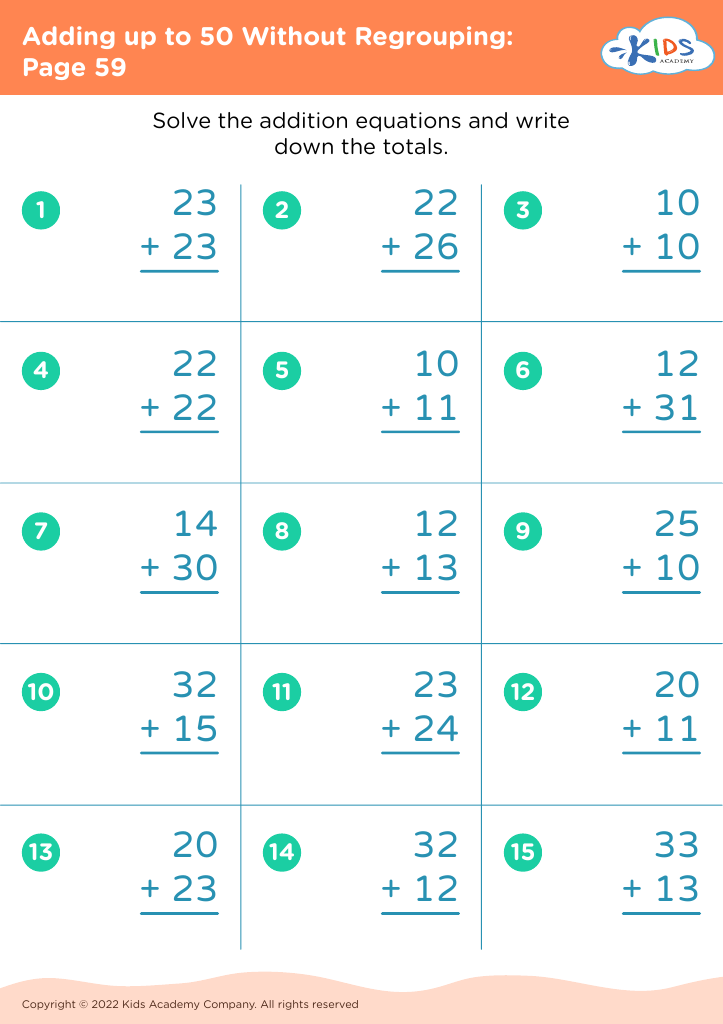
Adding up to 50 Without Regrouping: Page 59
Worksheet
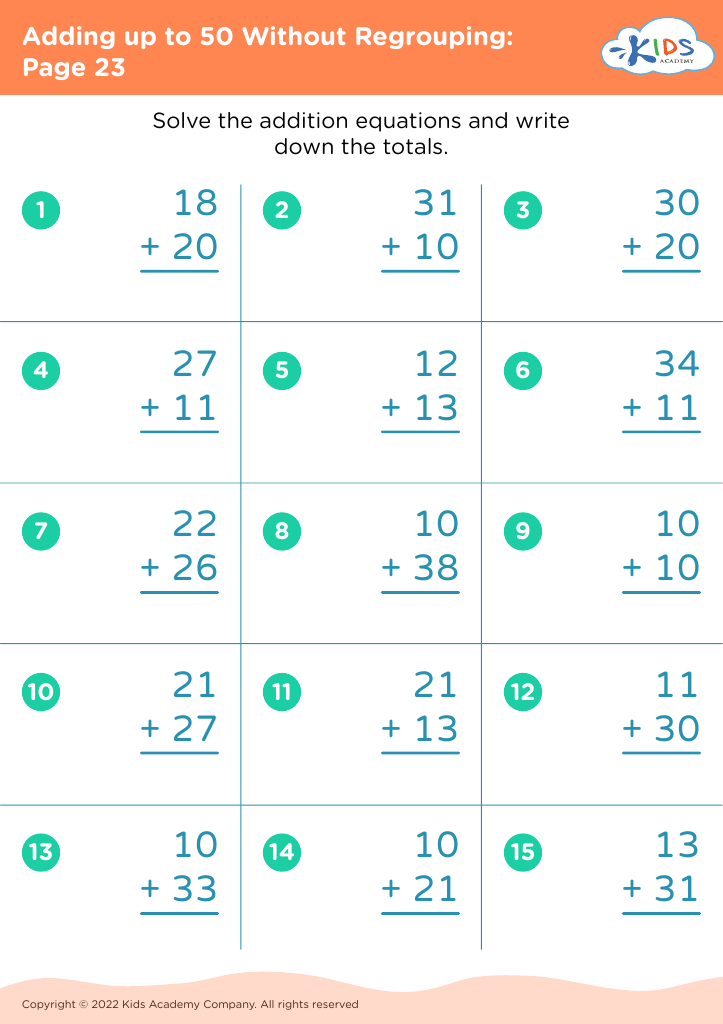
Adding up to 50 Without Regrouping: Page 23
Worksheet
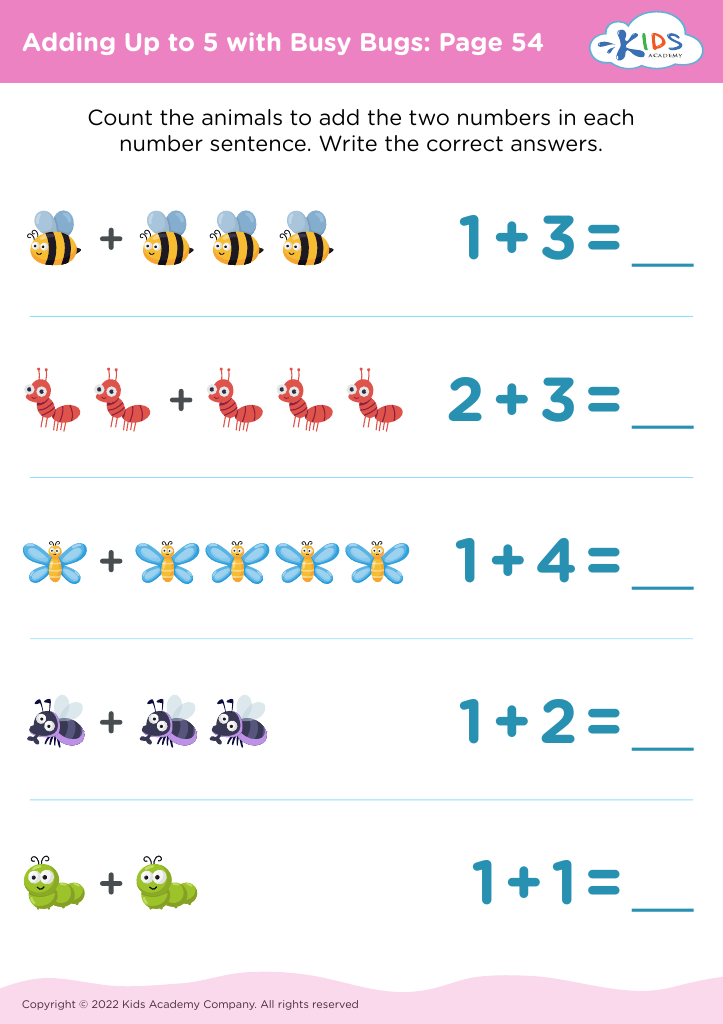
Adding Up to 5 with Busy Bugs: Page 54
Worksheet
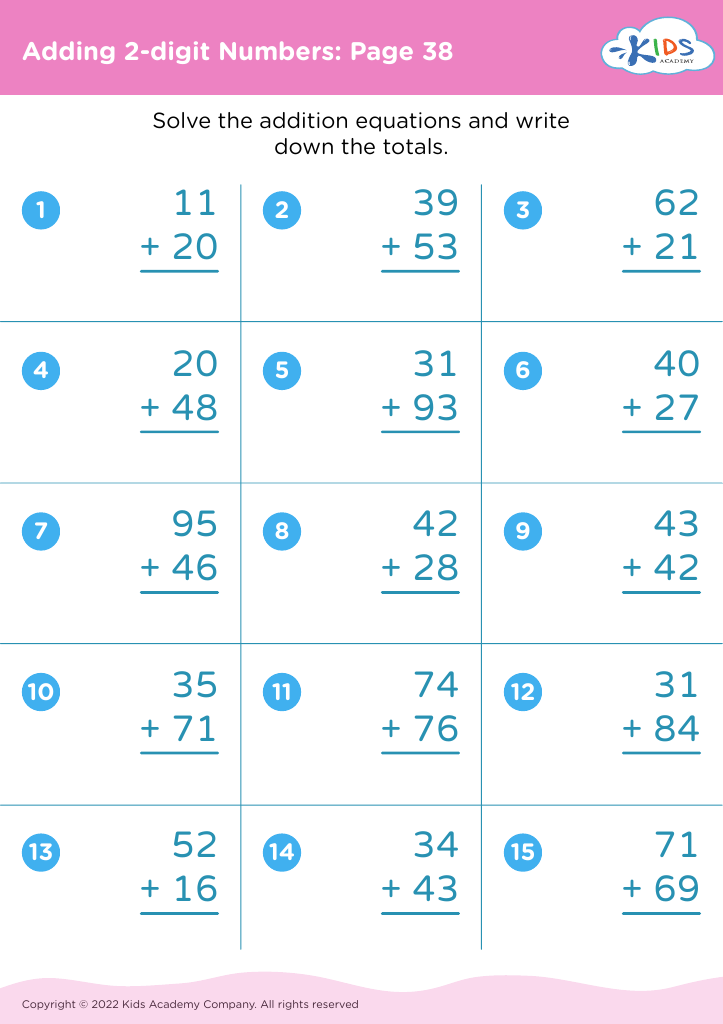
Adding 2-digit Numbers: Page 38

Adding 2-digit Numbers: Page 38

Adding 2-digit Numbers: Page 38
Worksheet
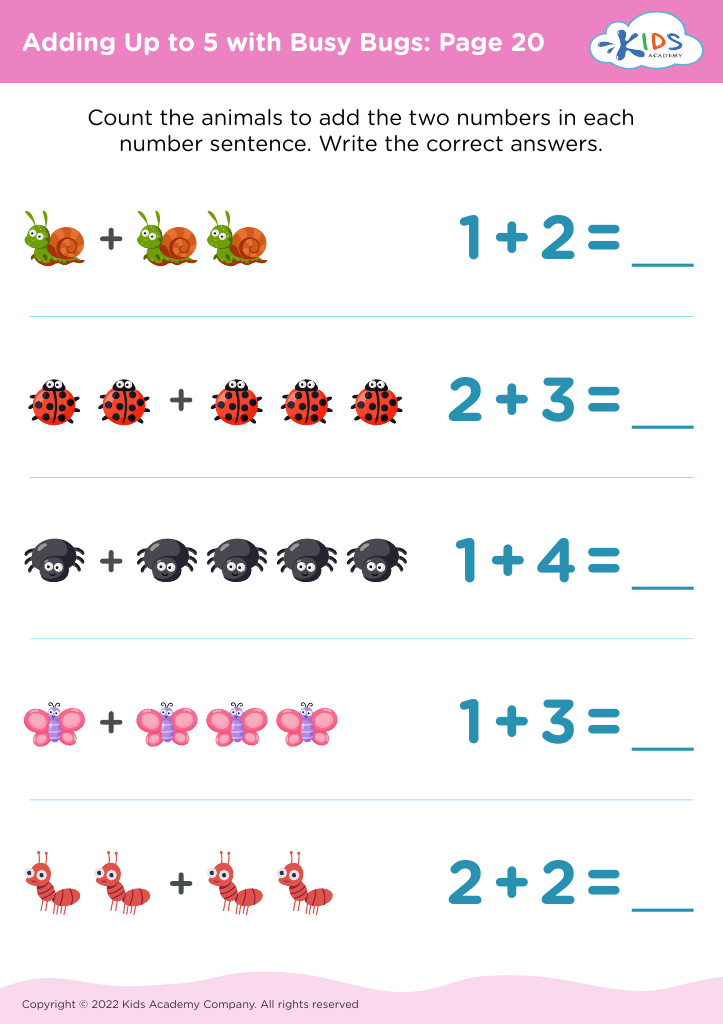
Adding Up to 5 with Busy Bugs: Page 20
Worksheet
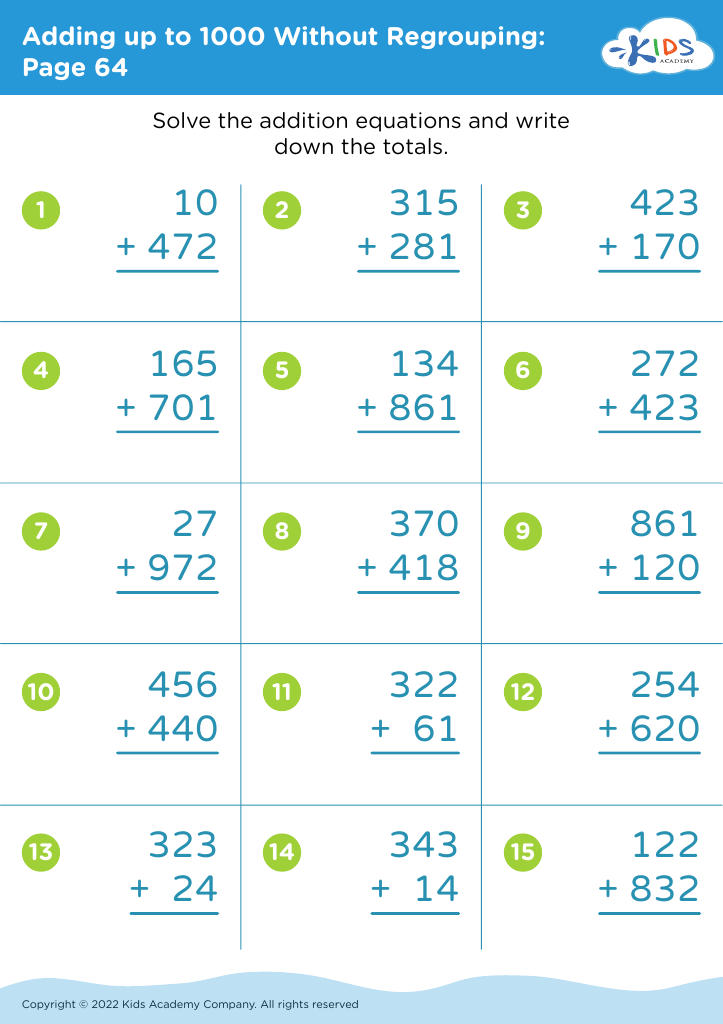
Adding up to 1000 Without Regrouping: Page 64
Worksheet
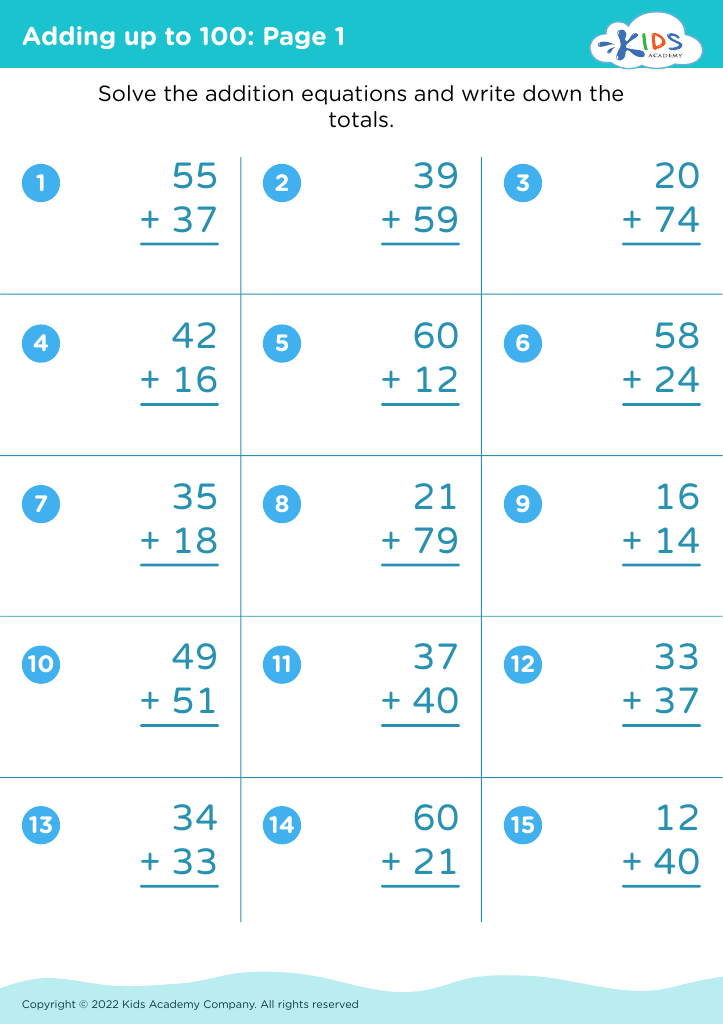
Adding up to 100: Page 1

Adding up to 100: Page 1

Adding up to 100: Page 1
Worksheet
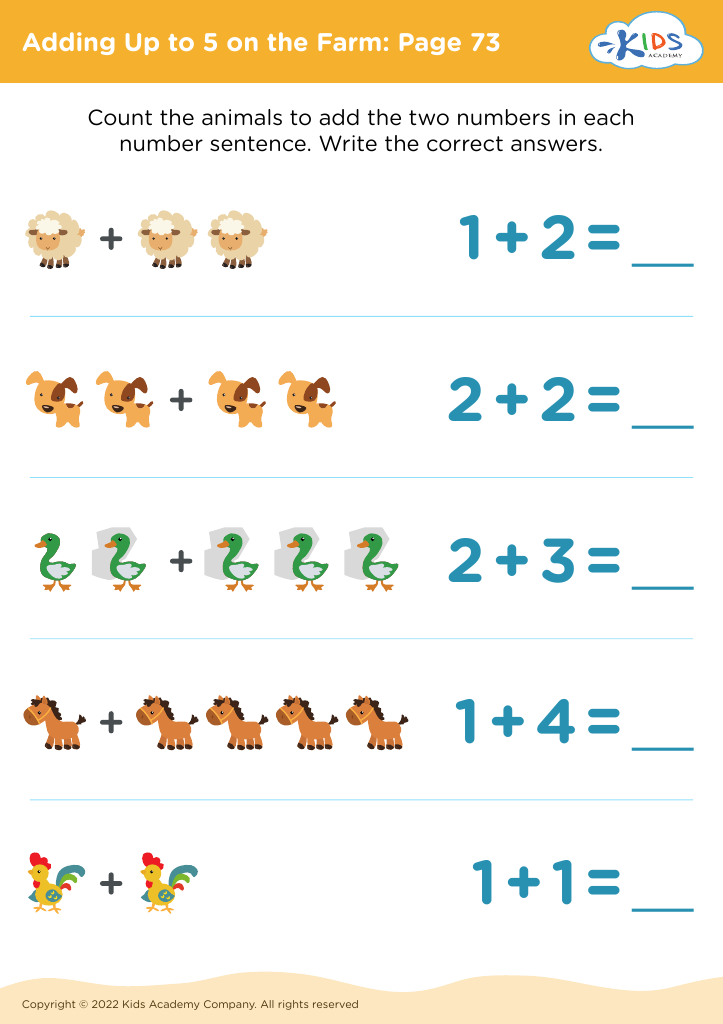
Adding Up to 5 on the Farm: Page 73
Worksheet


Parents and teachers should prioritize basic addition and subtraction practice for children aged 3-7 as it lays a foundational skill that is crucial for future mathematical understanding. During these formative years, kids are rapidly developing cognitive and motor skills, making it an ideal time to introduce mathematics in a fun and engaging manner. Mastery of basic addition and subtraction fosters problem-solving skills and critical thinking, which are essential in everyday life and academic success.

Furthermore, early math skills are strongly correlated with later achievement in school. Research indicates that children who have a solid grasp of basic arithmetic by the end of first grade are more likely to excel in math as they progress through school. This early competence can boost a child's confidence, making them more willing to tackle more challenging concepts later on.

Additionally, interactive and playful approaches to teaching these skills can enhance child-parent or teacher-child interactions, creating a positive learning environment. By integrating basic addition and subtraction into daily activities, parents and teachers can cultivate a love for math, equipping children with essential tools for life-long learning and success. Ultimately, early math education is not just about numbers; it's about building a resilient foundation for academic growth and development.