Fine motor skills (writing) Addition & Subtraction Worksheets for Ages 3-7
40 filtered results
-
From - To
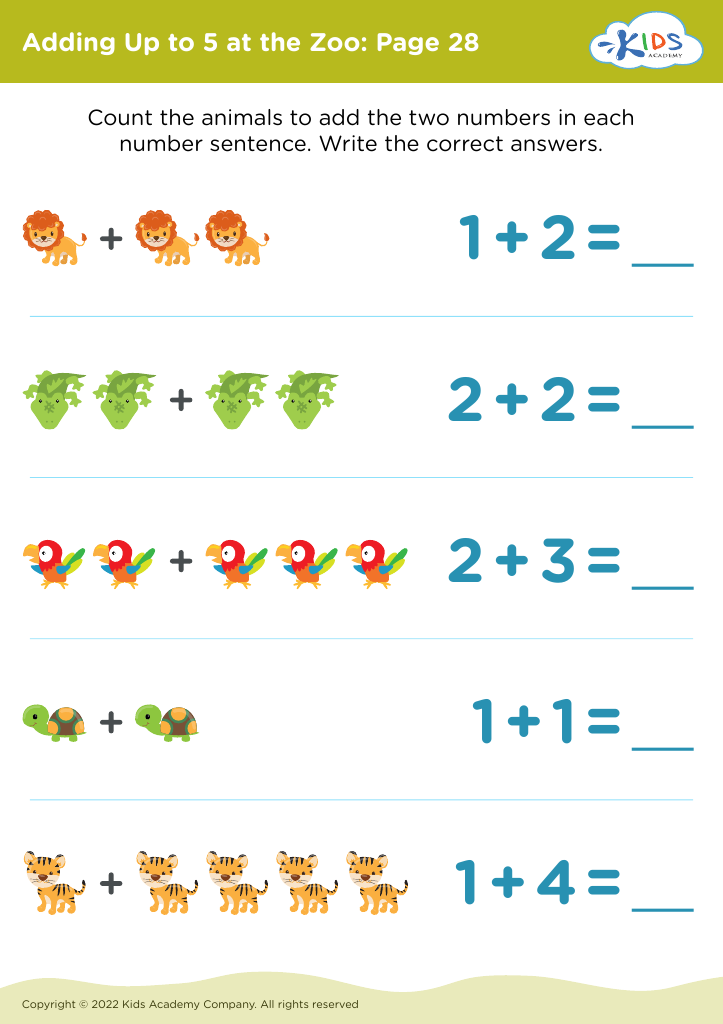
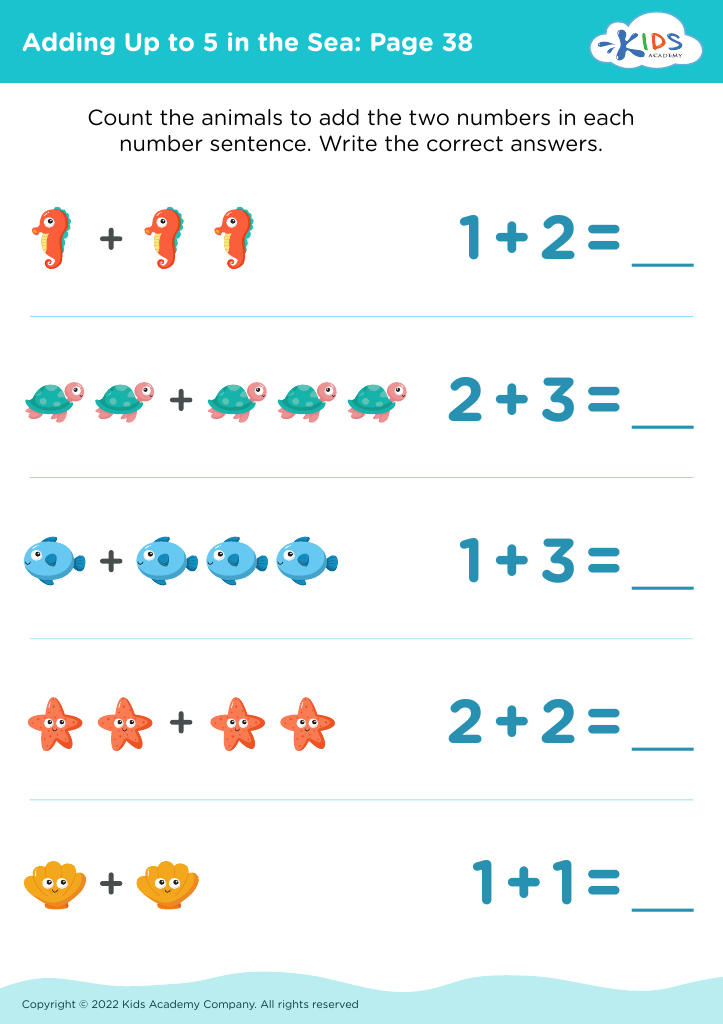
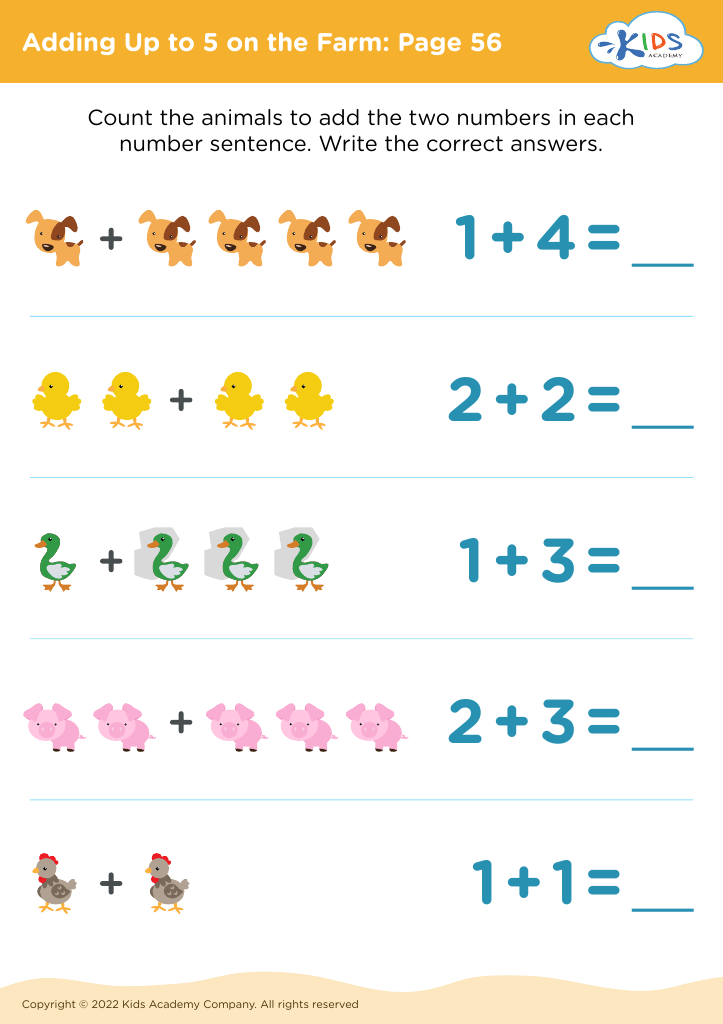
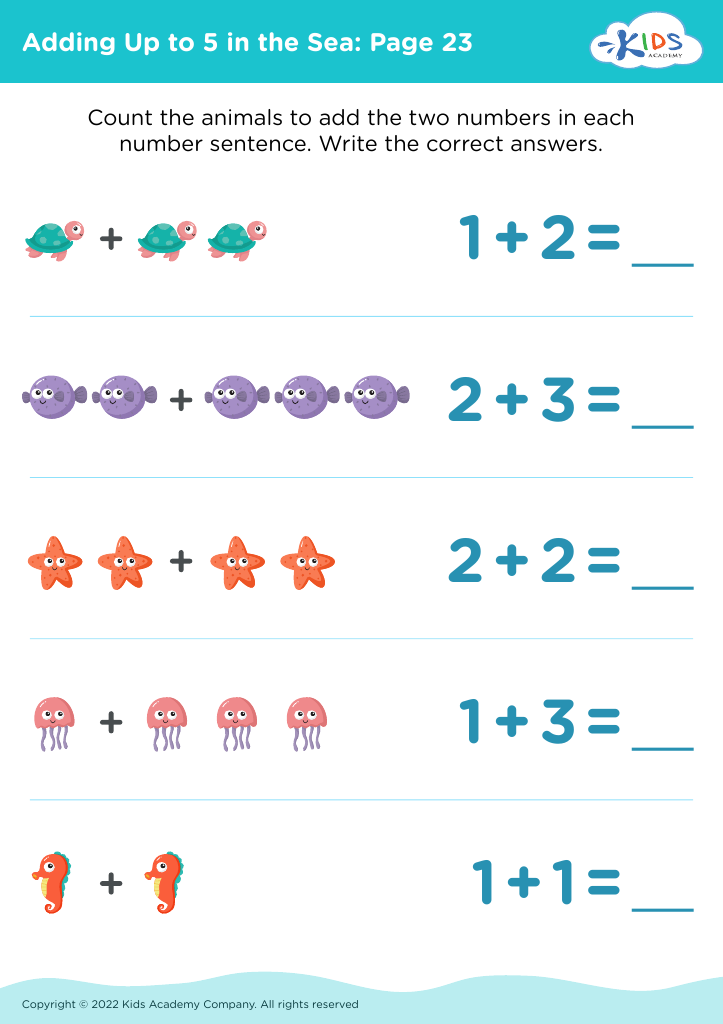
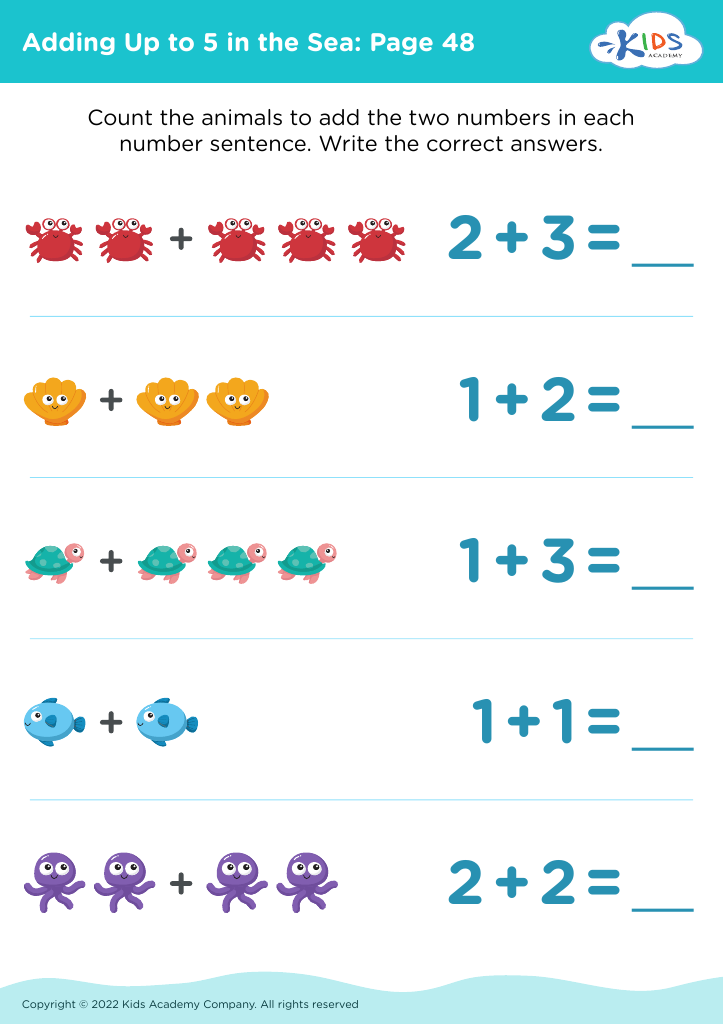
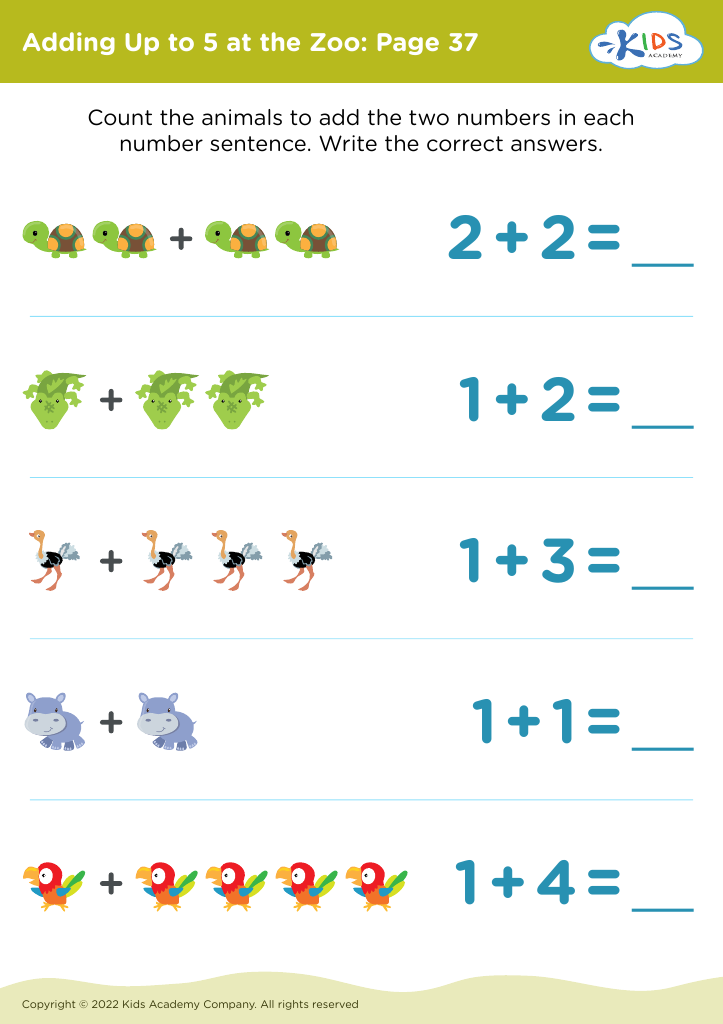
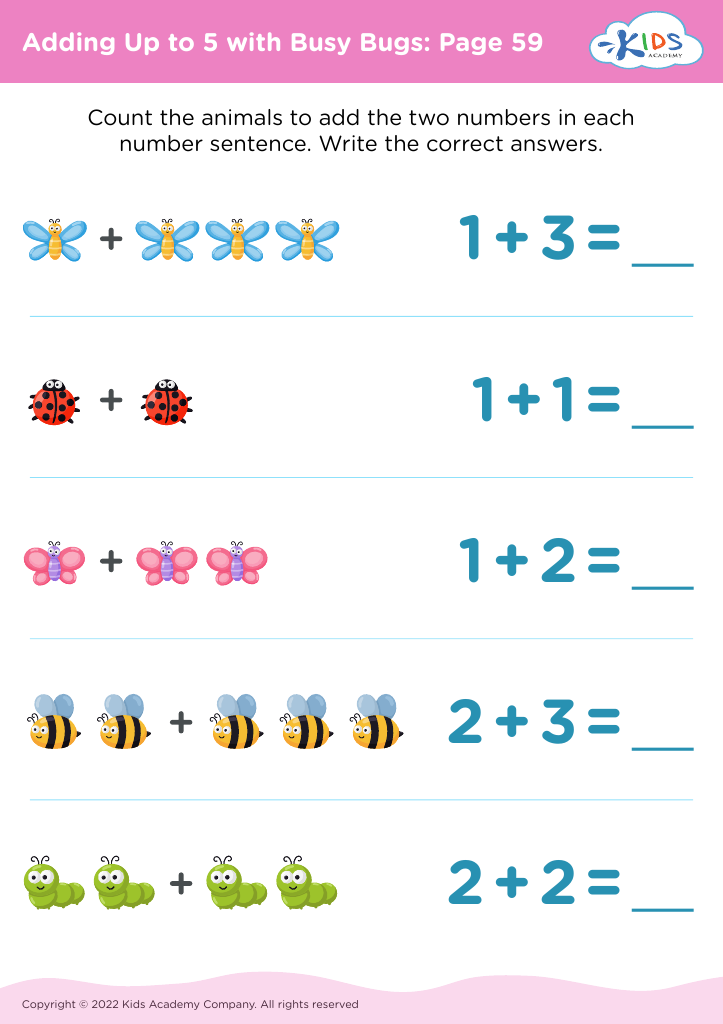
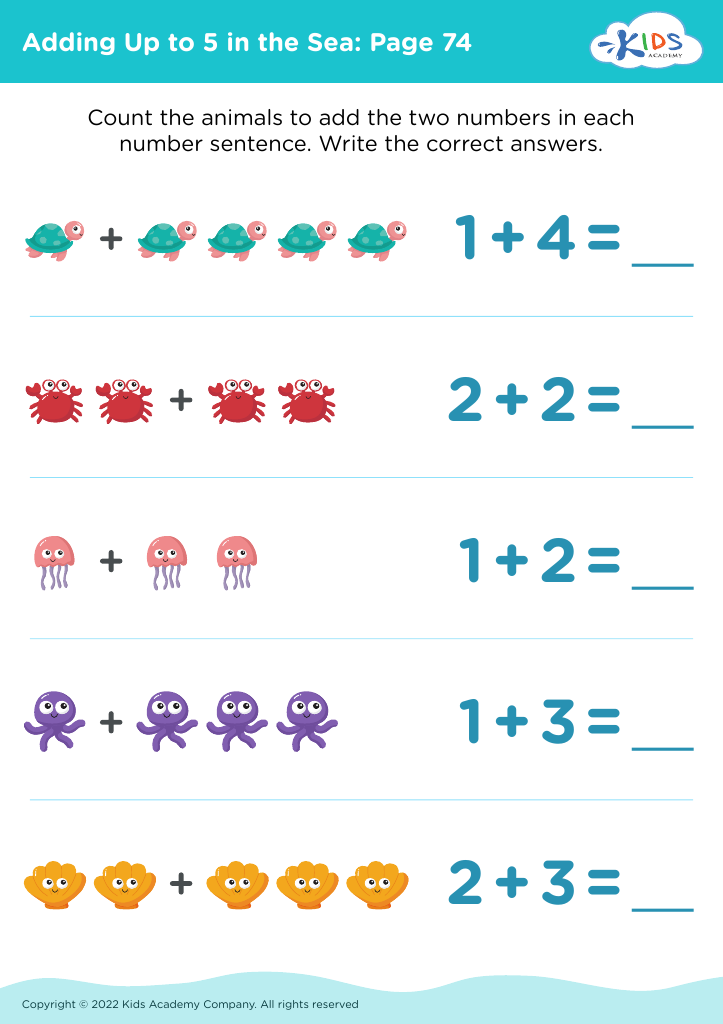
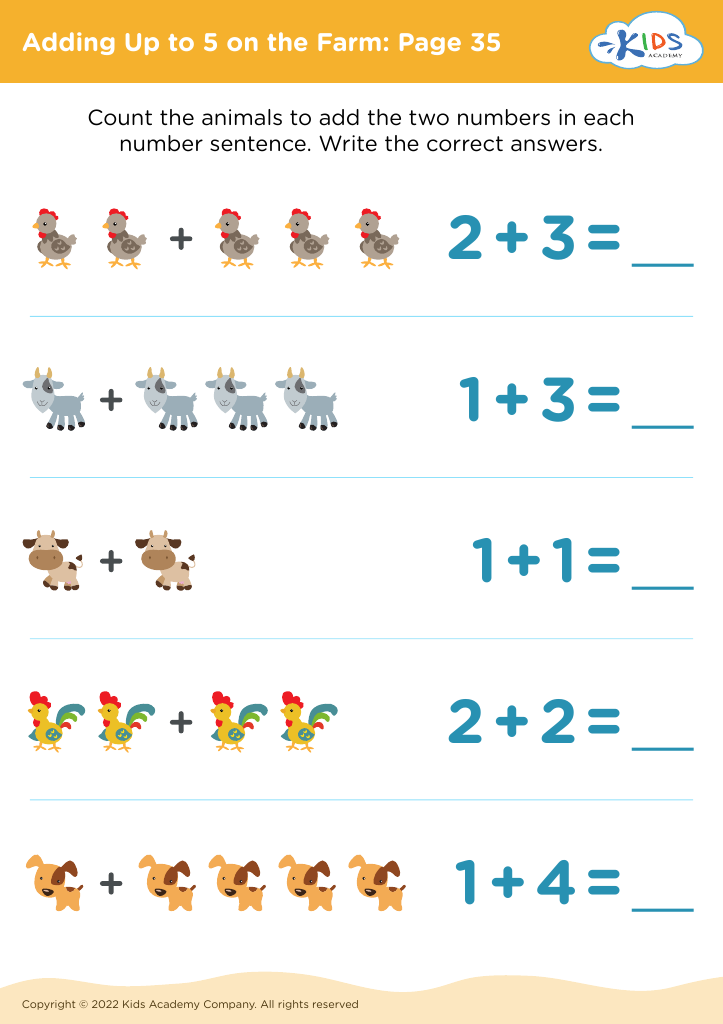
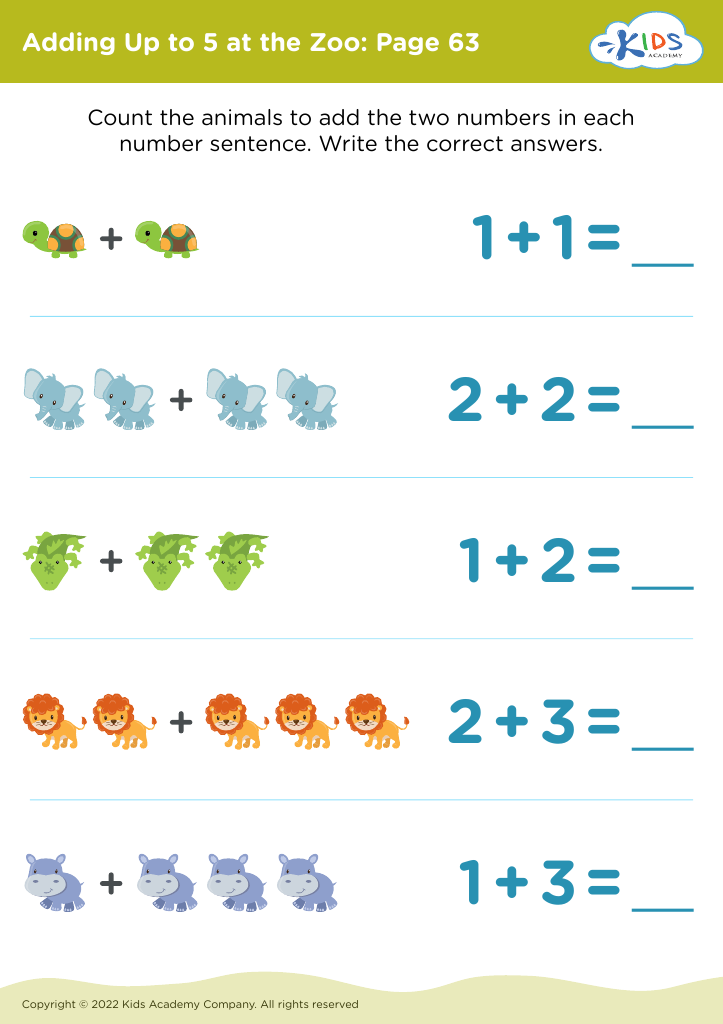
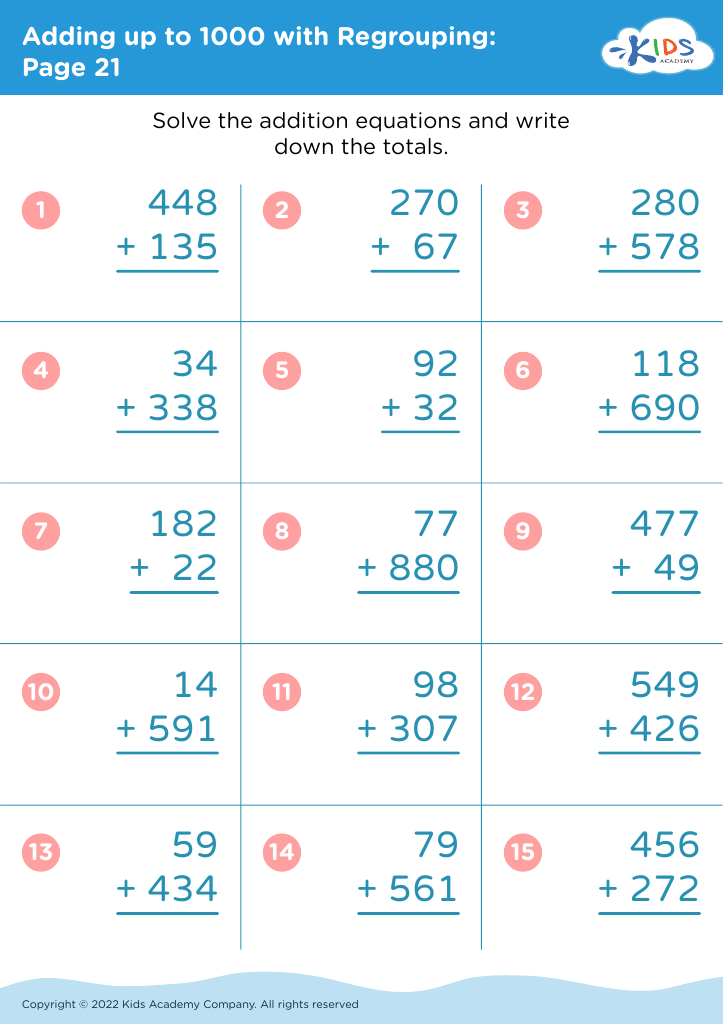
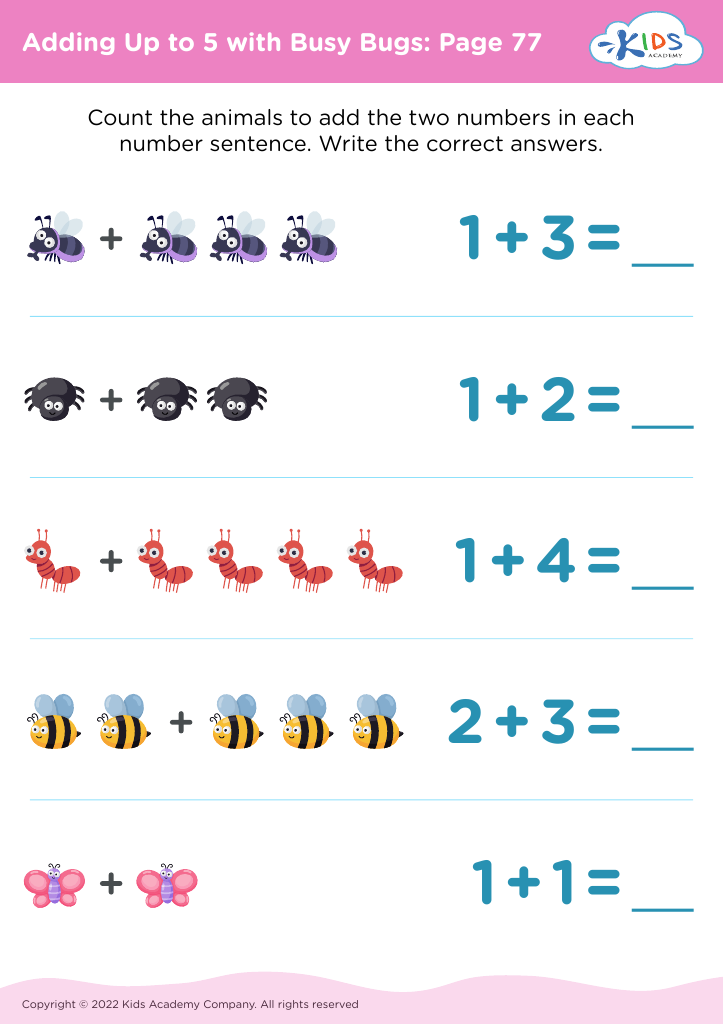
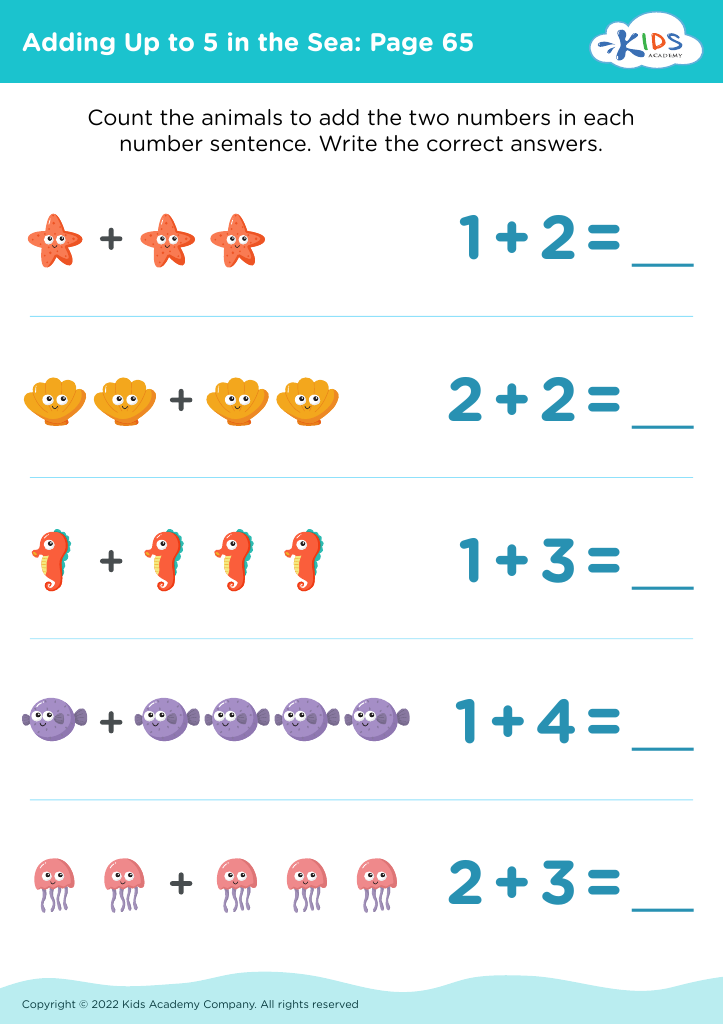
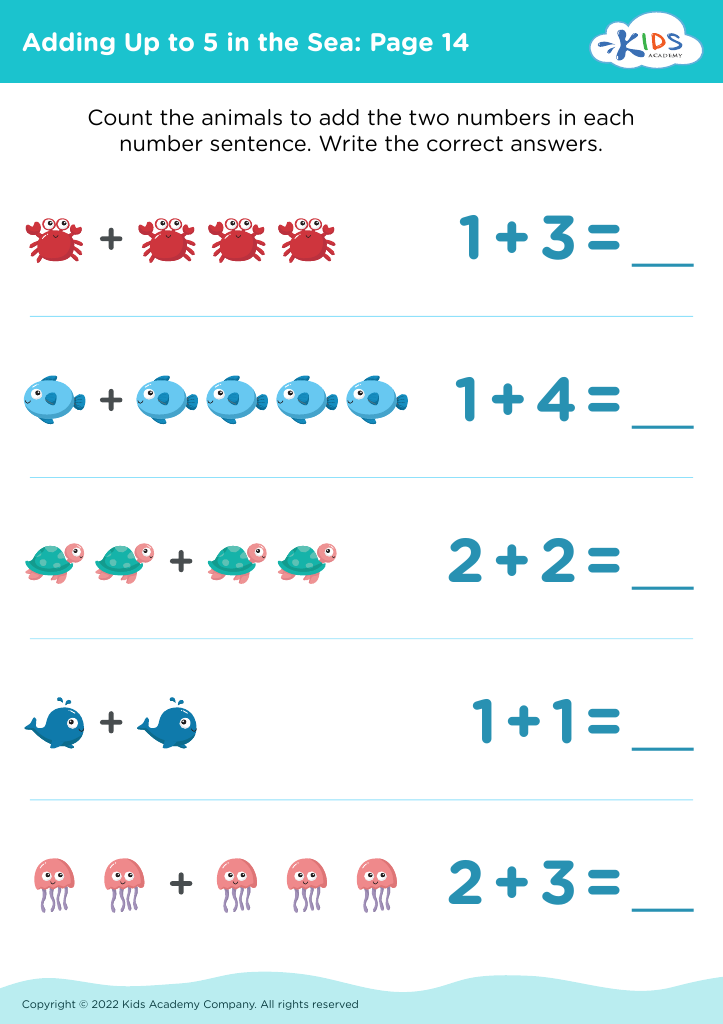
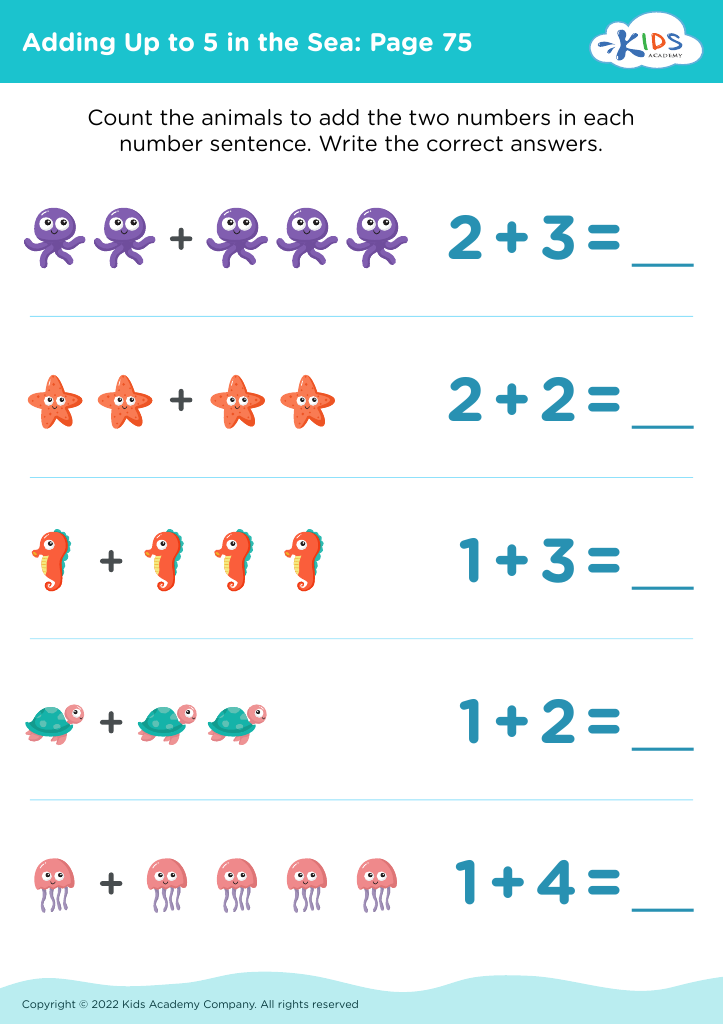
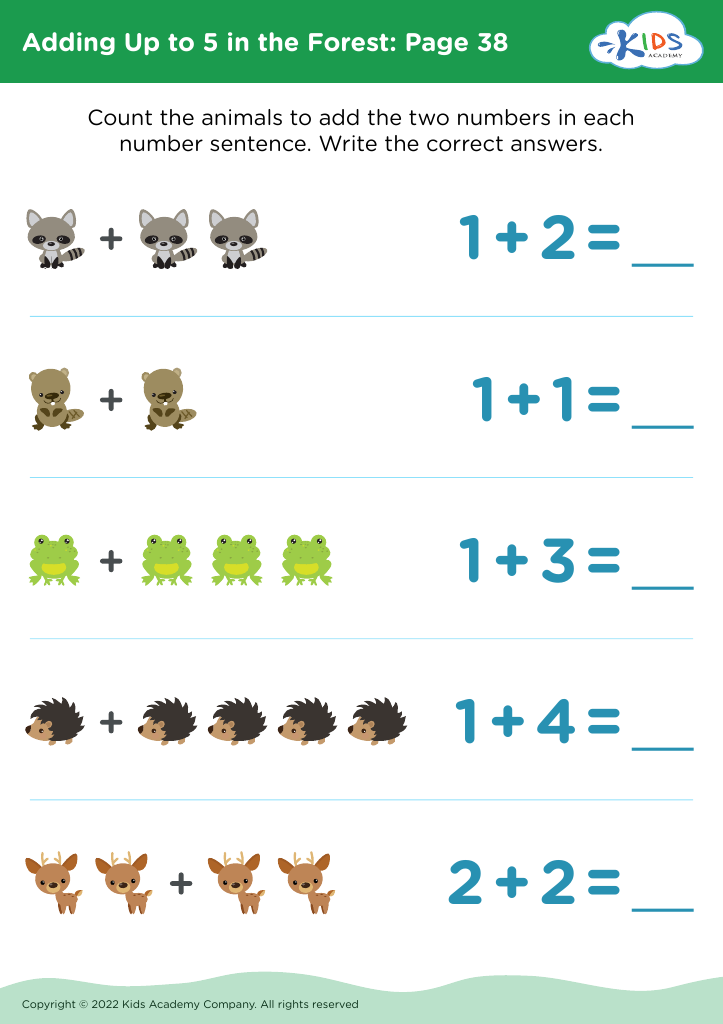
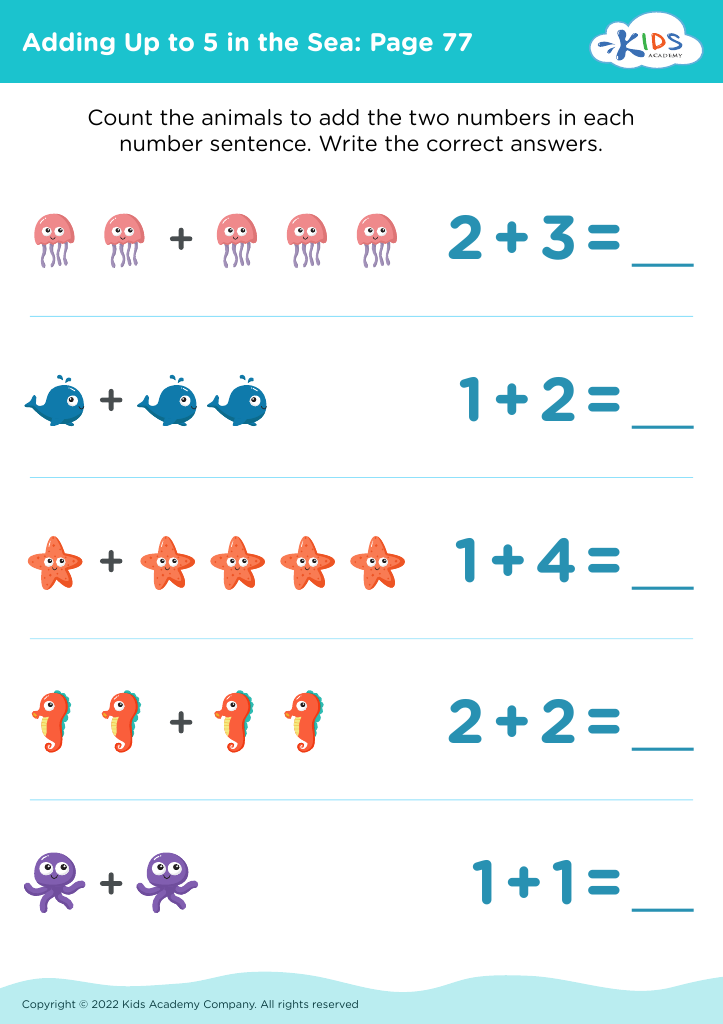
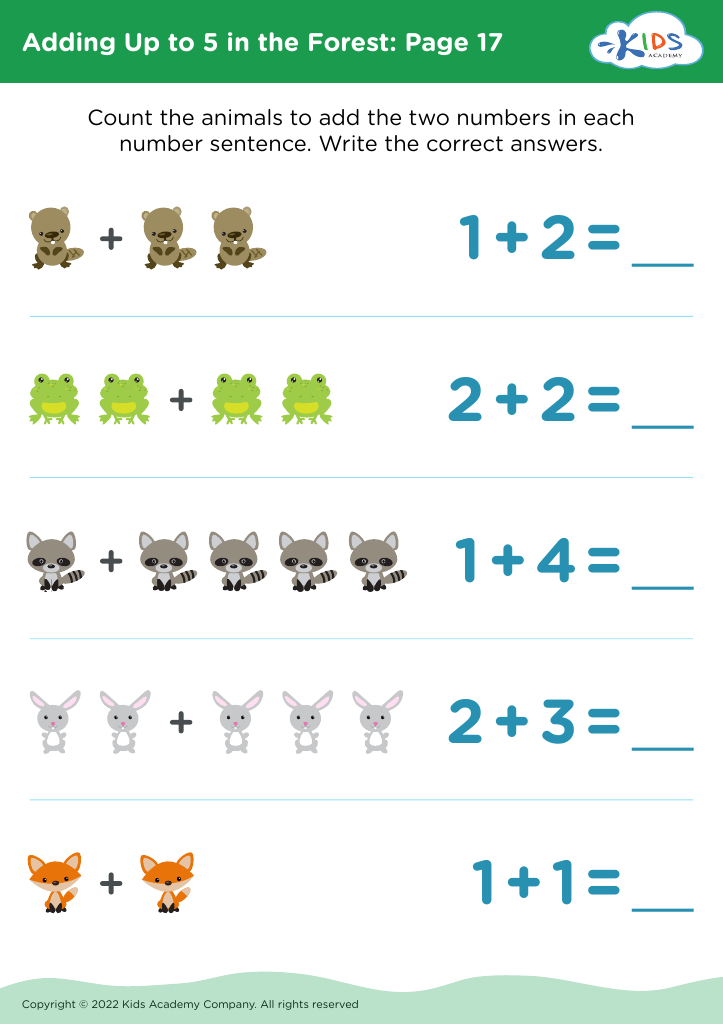
Enhance your child's fine motor skills and writing abilities with our engaging addition and subtraction worksheets designed for ages 3-7. These worksheets seamlessly blend math practice with essential fine motor skill development, encouraging children to practice tracing, writing numbers, and solving simple equations. By utilizing fun illustrations and interactive elements, your child will enjoy learning foundational math concepts while improving their grip, coordination, and dexterity. Perfect for at-home learning or classroom activities, our resources promote both cognitive and physical growth. Download our worksheets today and watch your little ones develop confidence in their math skills while honing their writing techniques!
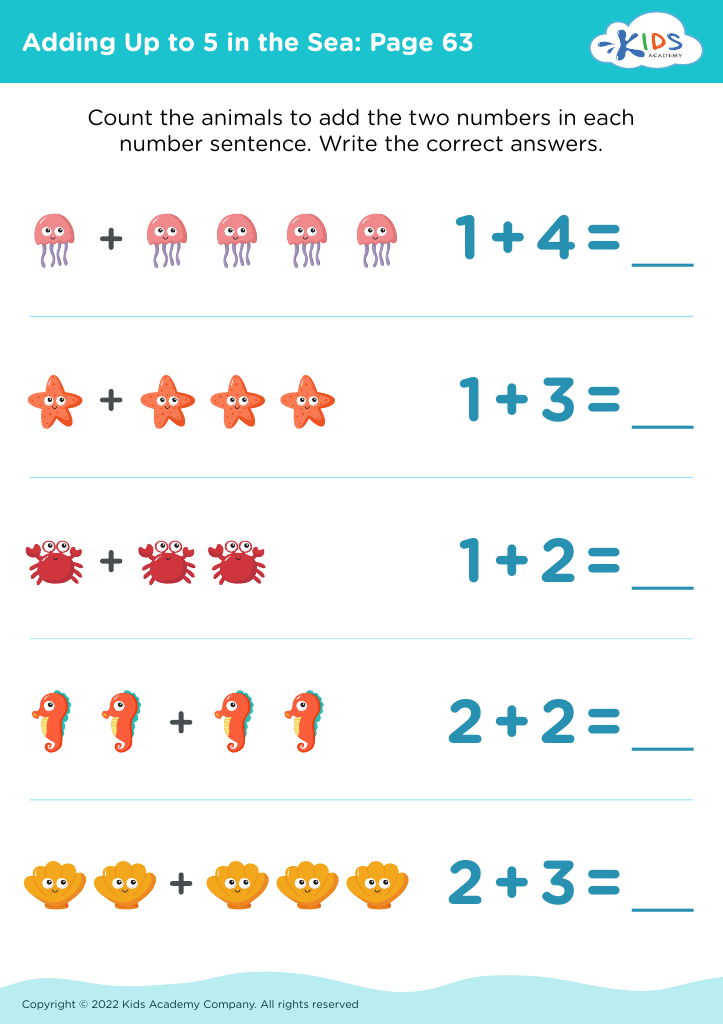
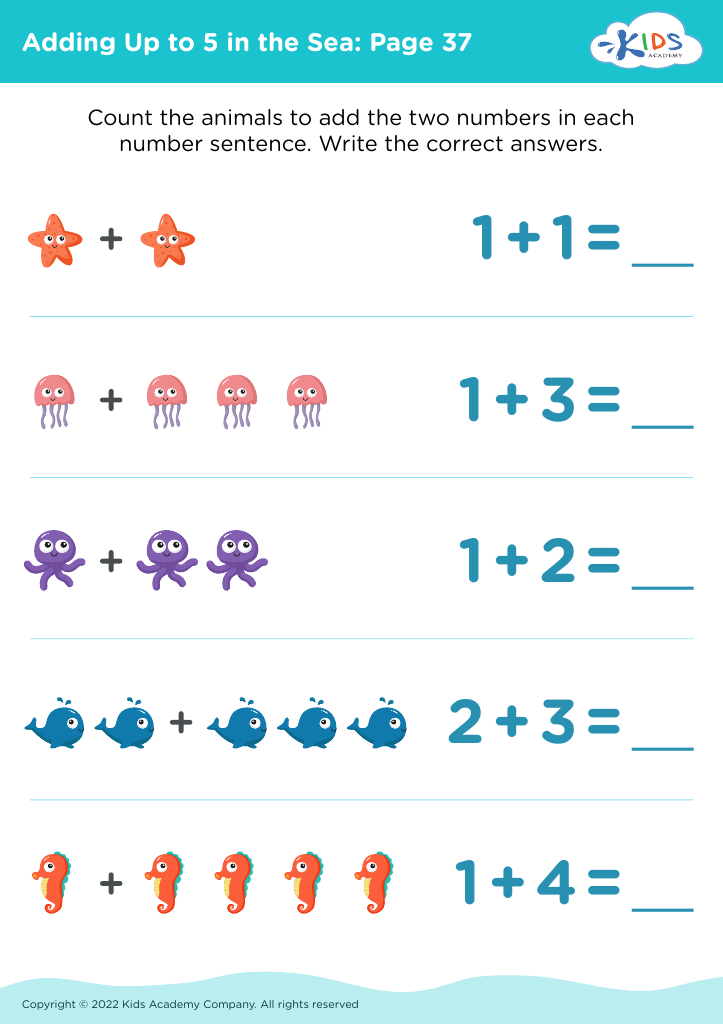
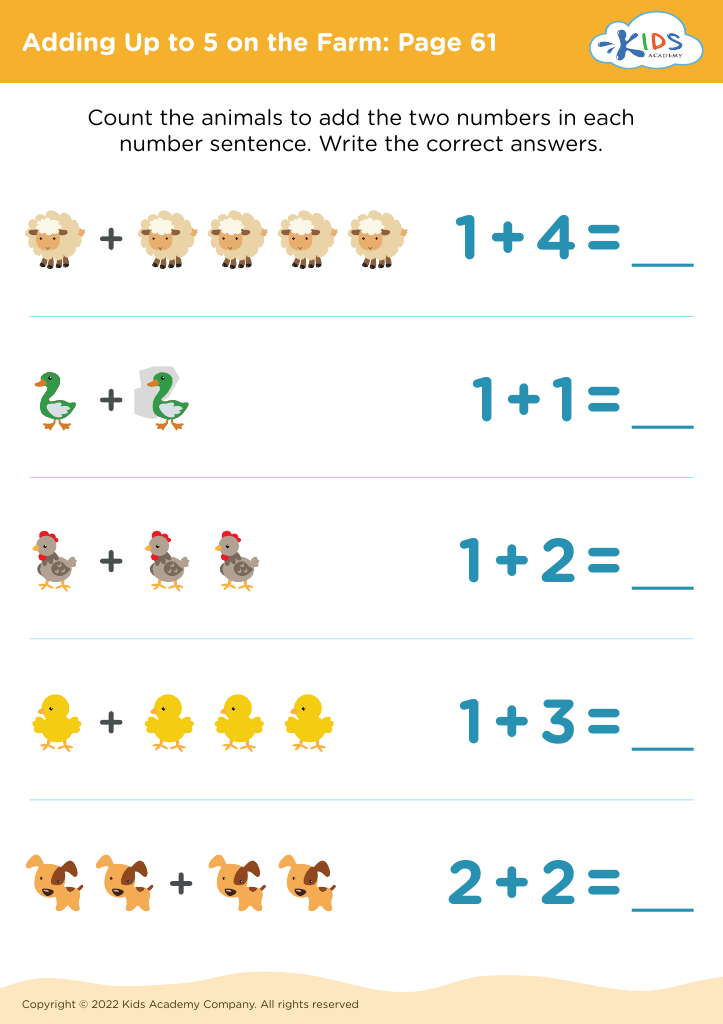
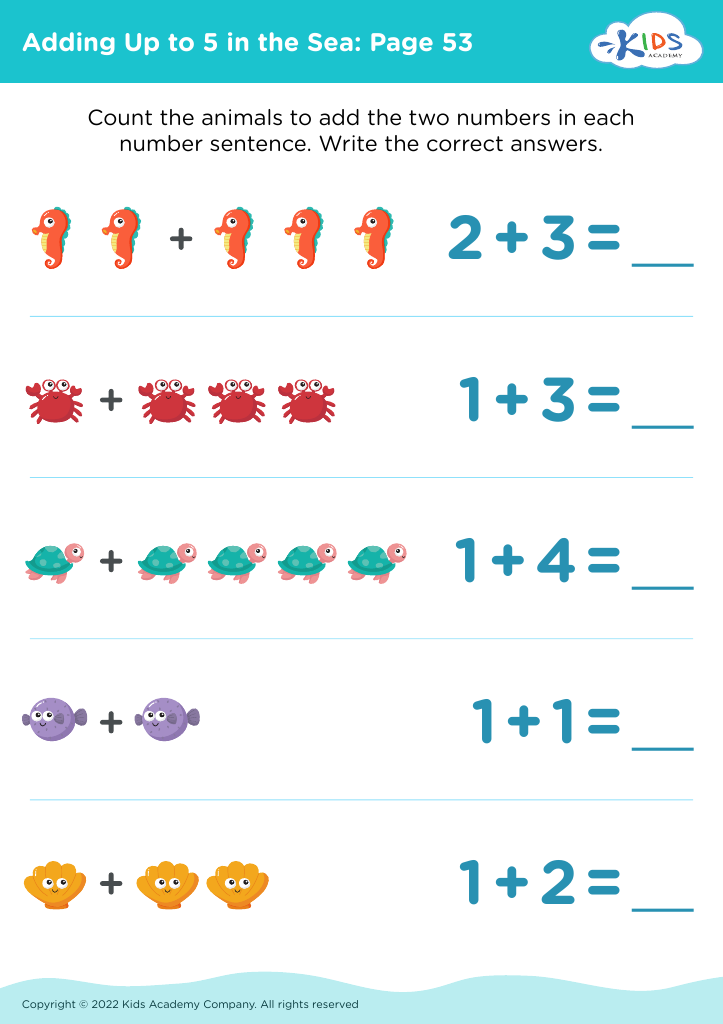

Starstruck Addition Printable
 Assign to My Students
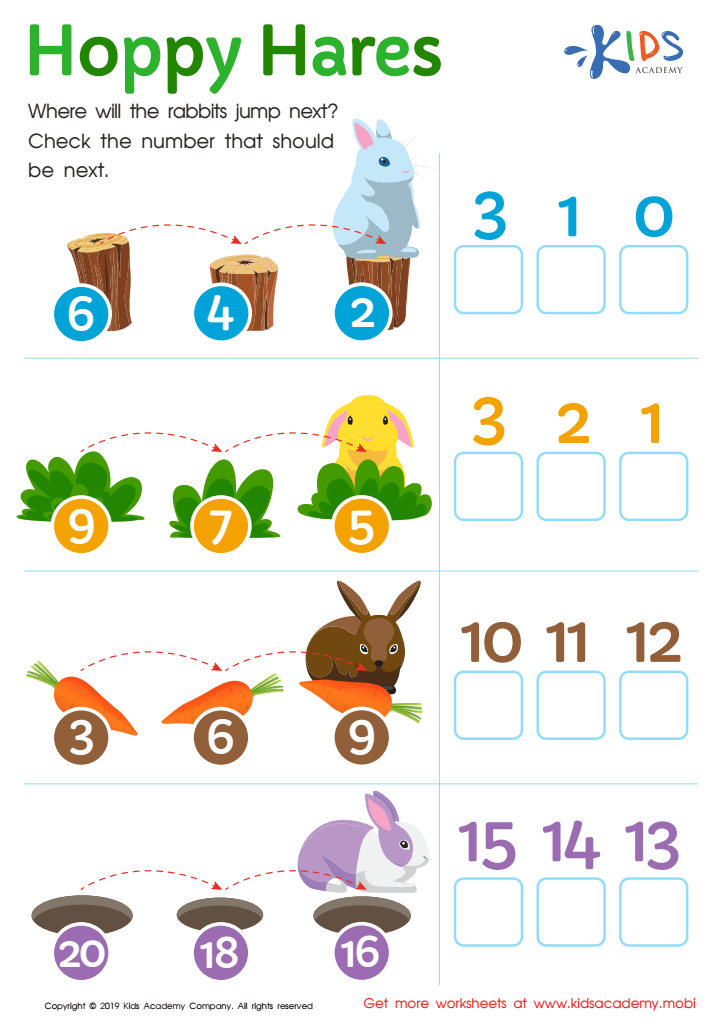
Hoppy Hares Worksheet








Fine motor skills are crucial for children aged 3-7 as they directly influence writing, addition, and subtraction abilities. During these formative years, children's hands and fingers develop dexterity, coordination, and strength through activities like holding pencils, cutting with scissors, and manipulating small objects. This skill development is essential for writing, which is foundational for academic success.
Moreover, fine motor skills play a significant role in mathematical understanding. When children can manipulate objects to represent addition and subtraction problems, they are better able to grasp these concepts. Activities such as counting objects, using fingers, or engaging in hands-on math games encourage spatial awareness and problem-solving skills.
Parents and teachers should prioritize fine motor skill activities, such as crafts, puzzles, and age-appropriate games, as they lay the groundwork for effective writing and basic math proficiency. These abilities not only serve academic purposes but also help children build confidence in their capabilities. By fostering fine motor skills early on, we can enhance children's overall learning experiences, ensuring they are well-prepared for their educational journeys and daily tasks. Engaging in these activities together can also strengthen parent-child or teacher-student relationships, making learning a more enjoyable and collaborative experience.








