Improving counting skills Addition & Subtraction Worksheets for Ages 3-7
12 filtered results
-
From - To
Boost your child’s math confidence with our "Improving Counting Skills: Addition & Subtraction Worksheets for Ages 3-7." These expertly designed exercises offer engaging activities to enhance basic math concepts, focusing on counting, addition, and subtraction. Perfect for early learners, each worksheet provides colorful, fun themes and easy-to-follow instructions, ensuring a playful yet educational experience. Our resources are tailored to align with early grade curriculums, making them an excellent tool for both classroom use and homeschooling. Support your little one’s numerical journey with our comprehensive worksheets, facilitating stronger counting abilities and foundational math skills.
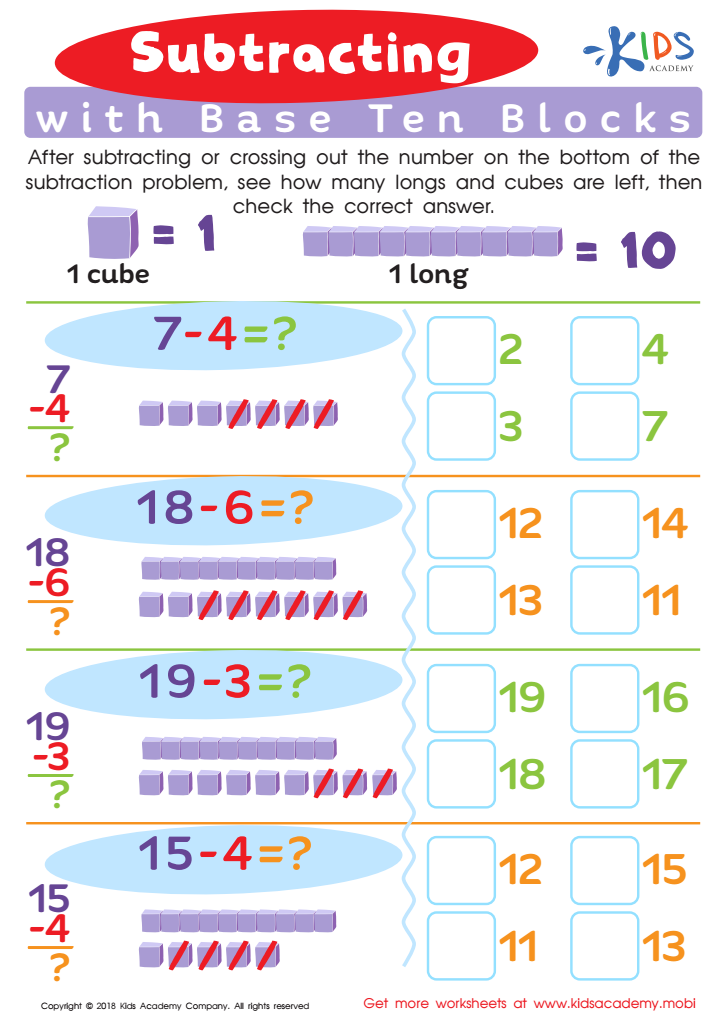
Subtracting With Base 10 Blocks Worksheet
 Assign to My Students
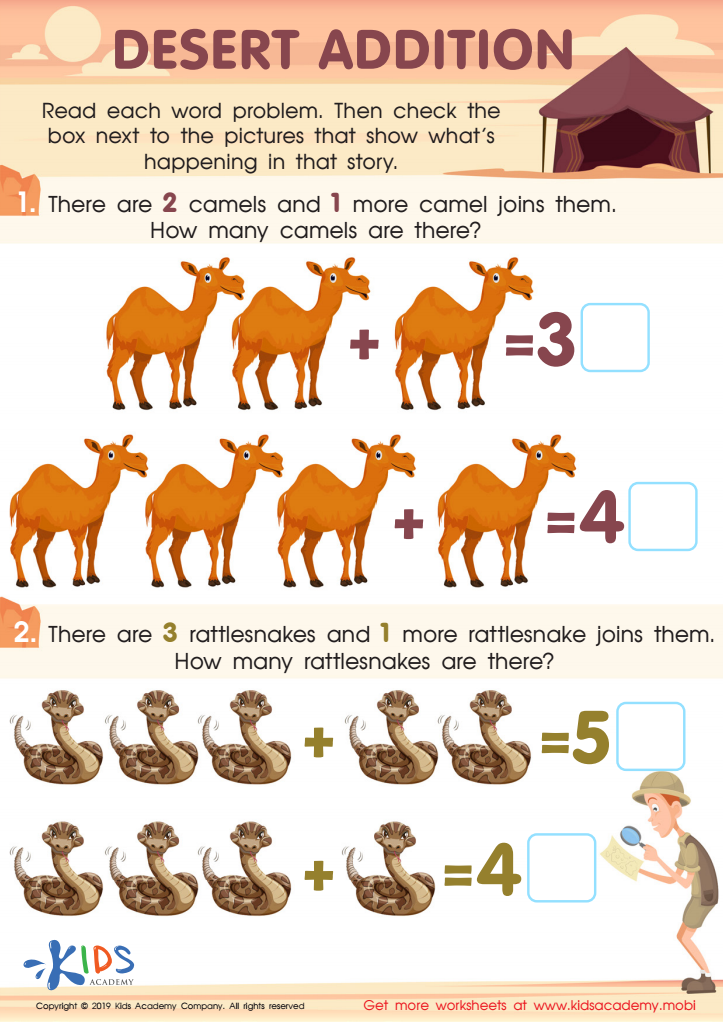
Desert Addition Worksheet
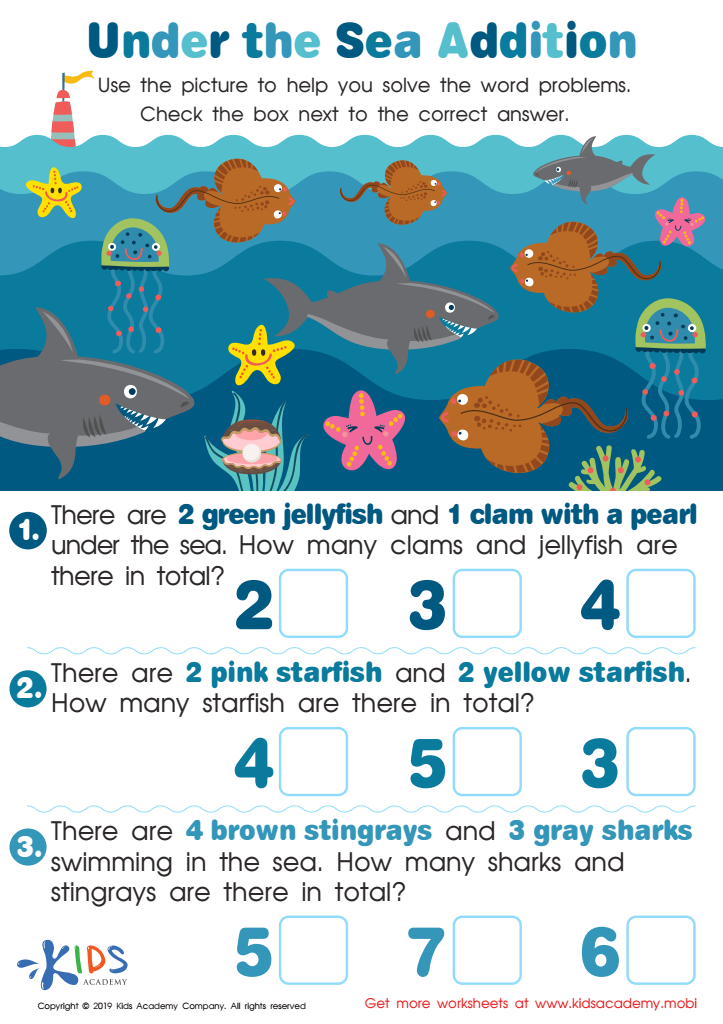
Under the Sea Addition Worksheet
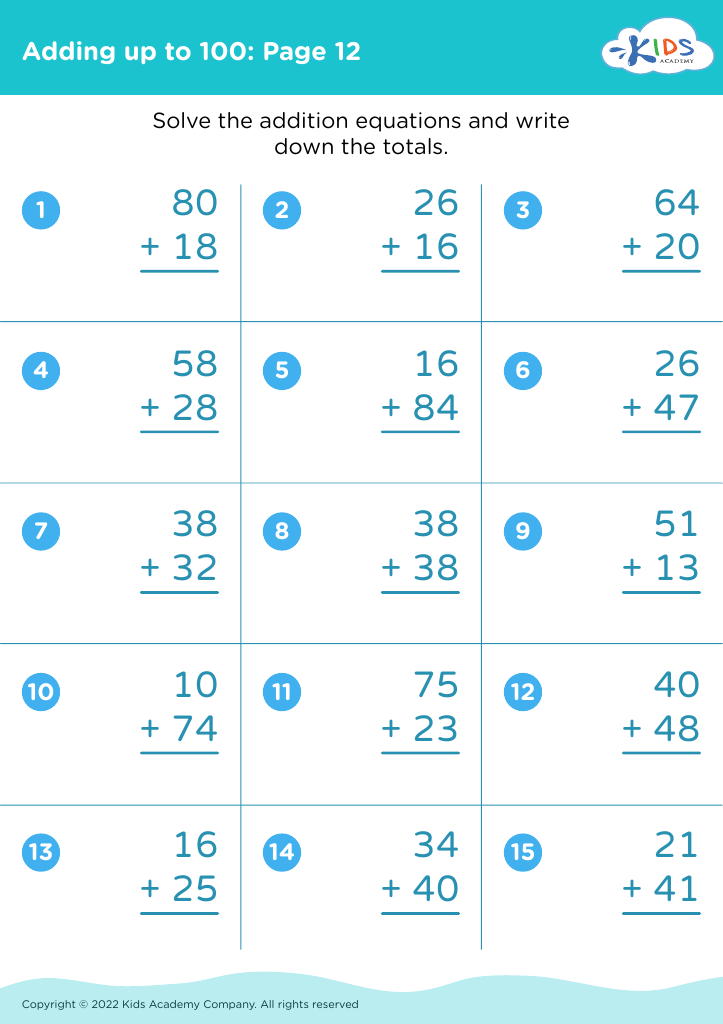
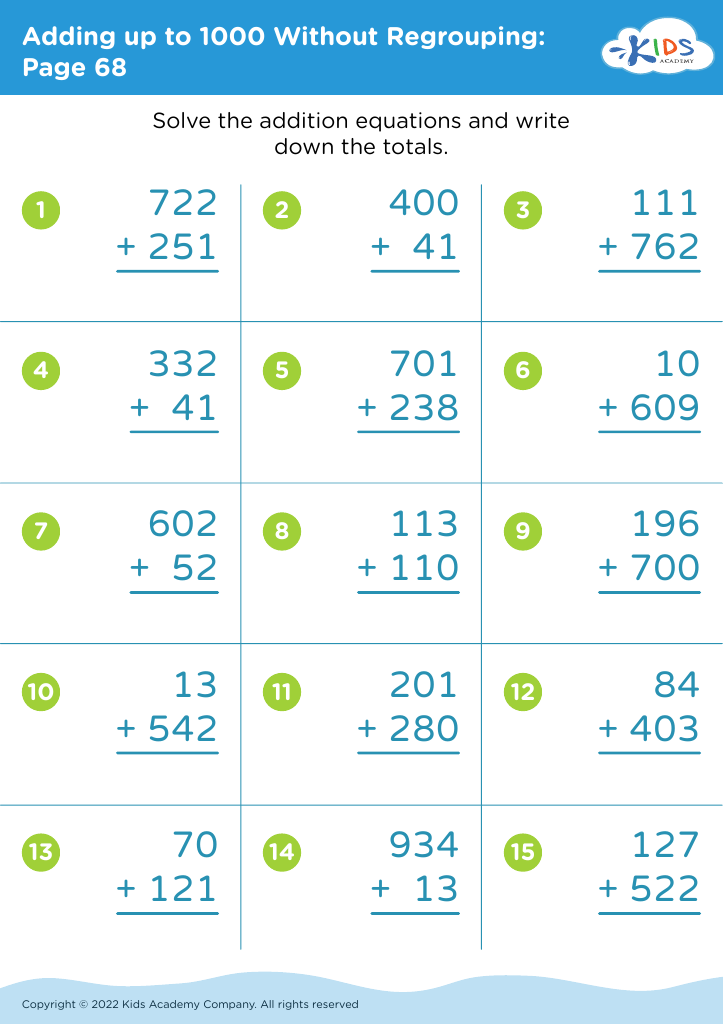
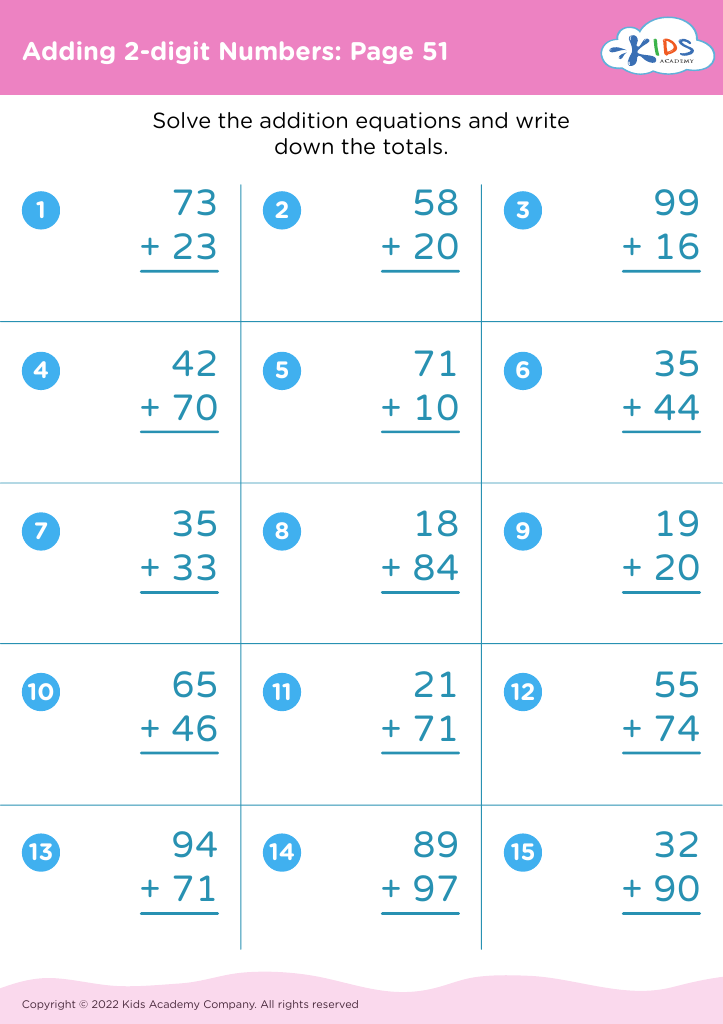
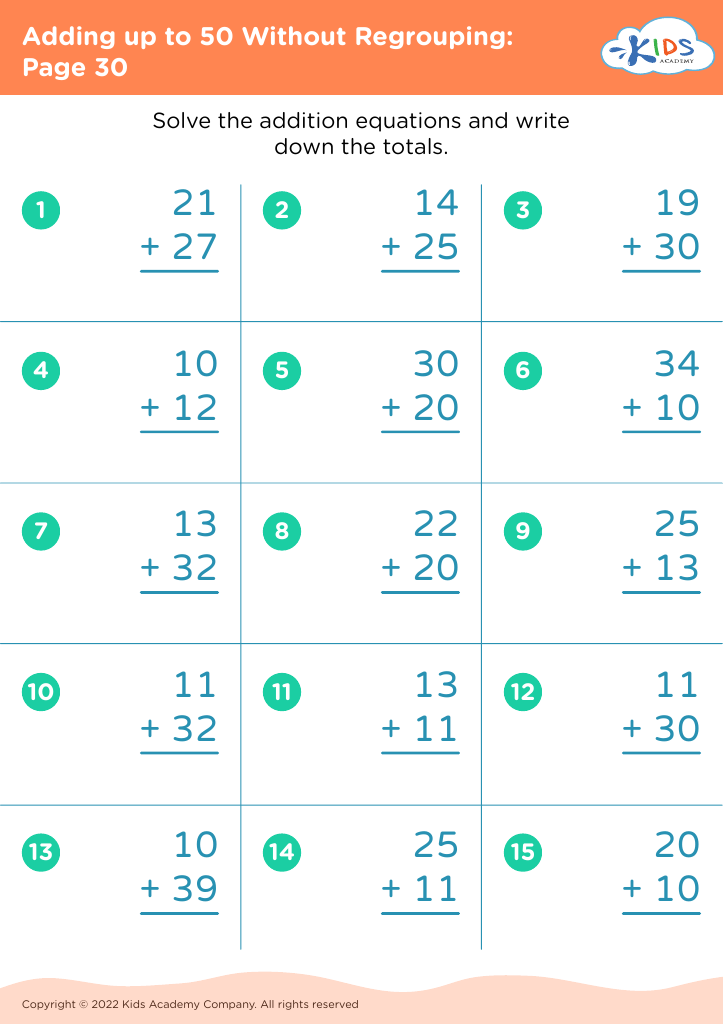








Improving counting skills, as well as addition and subtraction, during ages 3-7 is crucial because these formative years lay the foundation for a child's future mathematical understanding. Early math skills are strongly correlated with greater academic achievement in later years. When children develop a solid grasp of counting, they enhance their ability to understand more complex mathematical concepts and problem-solving strategies that will be introduced in subsequent grades.
Counting, addition, and subtraction are not just math skills; they also enhance cognitive development. Activities like counting objects, adding numbers of toys, or subtracting items from a set improve attention to detail, memory, and logical thinking. These activities also encourage perseverance and concentration, key attributes for academic success across all subjects.
Additionally, these mathematical skills enhance simple, everyday decision-making and life skills, such as sharing toys or understanding time. Providing young children with engaging, practical, and playful counting experiences helps instill a love for learning and mathematics. Parents and teachers should care about this because early engagement and competence in these areas build confidence, reducing future math anxiety and opening doors for learning success in all academic fields. Thus, fostering strong early math skills equips children with the critical cognitive and life skills necessary for personal and academic development.








