Numeracy development Addition & Subtraction Worksheets for Ages 3-7
3 filtered results
-
From - To
Enhance your child's numeracy skills with our engaging addition and subtraction worksheets, designed specifically for ages 3-7. These thoughtfully crafted resources aim to build foundational math abilities through fun and interactive exercises. With a variety of colorful and age-appropriate activities, children will develop a solid understanding of basic math concepts while enjoying the learning process. Our worksheets promote critical thinking and problem-solving, making them perfect for both classroom and home learning environments. Support your child's educational journey and encourage a positive attitude towards math with our easy-to-use addition and subtraction worksheets today! Explore the joy of learning through numbers!
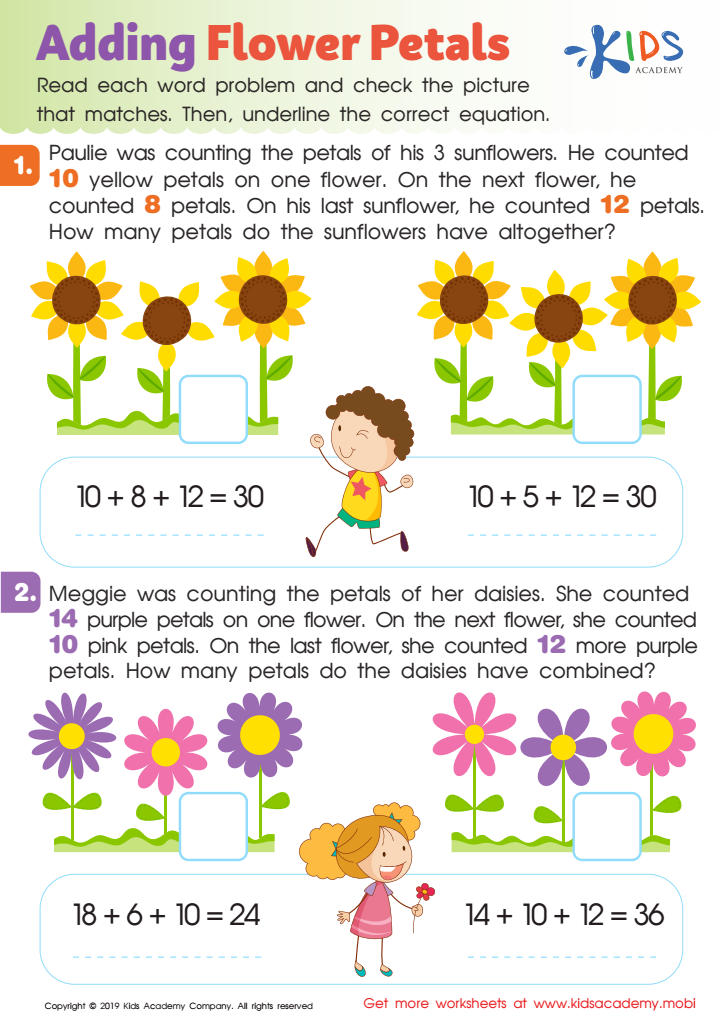
Adding Flower Petals Worksheet
 Assign to My Students
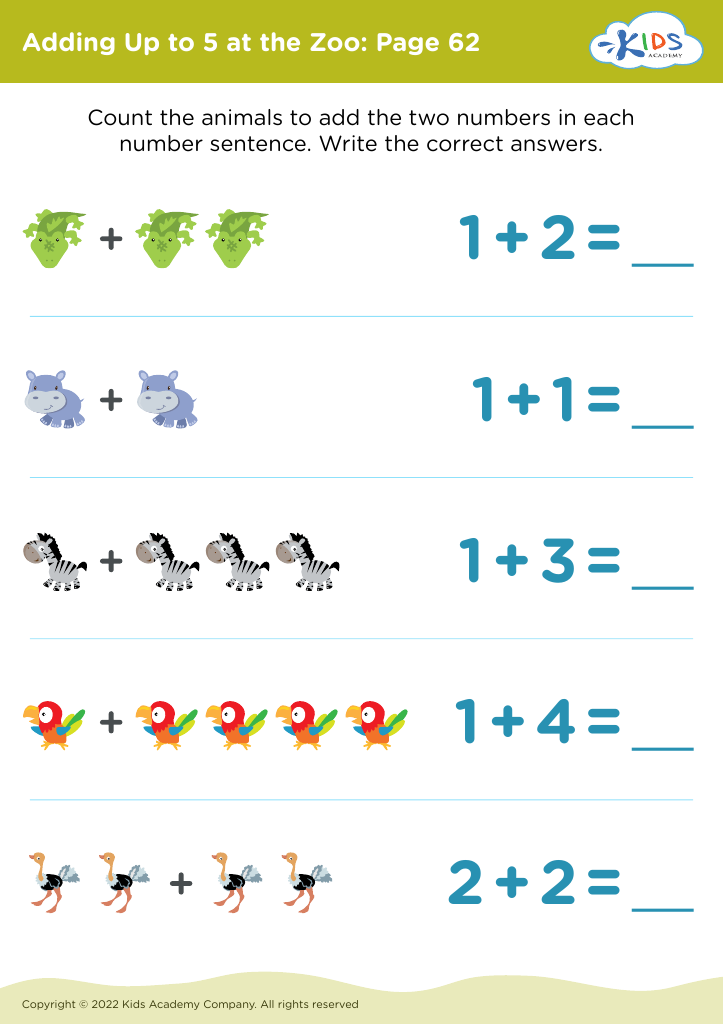
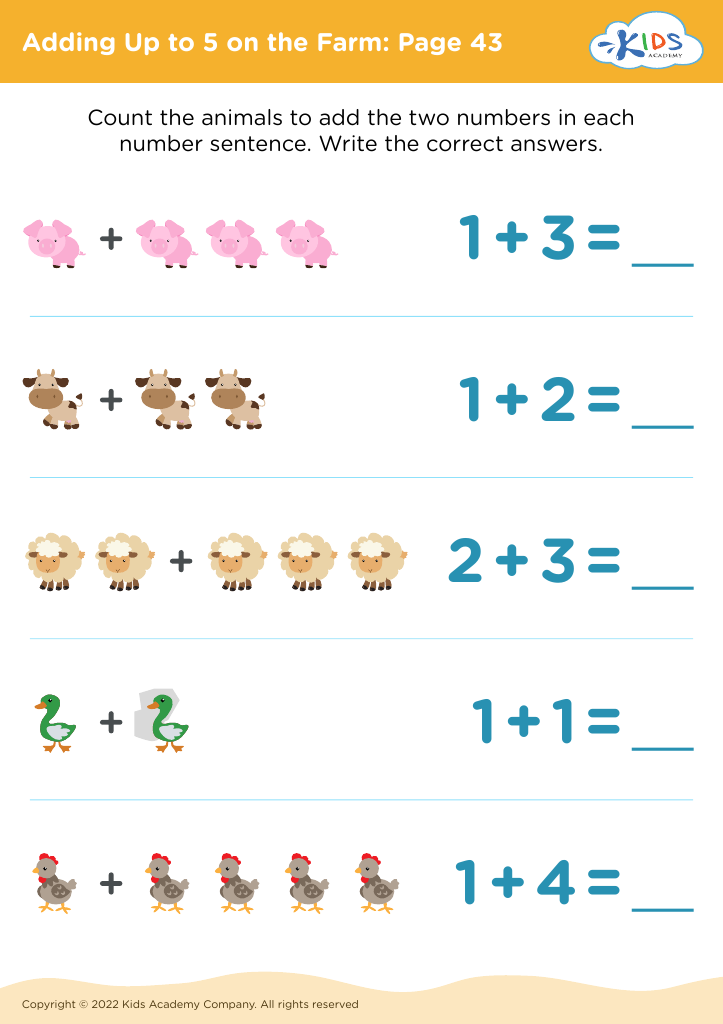








Numeracy development in early childhood, particularly in addition and subtraction, is fundamental for children's cognitive, social, and academic growth. For parents and teachers, nurturing these skills from ages 3 to 7 is crucial as this stage lays the groundwork for a child’s future math proficiency and overall critical thinking abilities.
At this age, children are naturally curious and they learn through play and exploration. Familiarizing them with addition and subtraction through interactive games, visual aids, and daily routines helps build a strong mathematical foundation. These skills are not merely about numbers; they enhance a child's ability to solve problems, recognize patterns, and develop logical thinking.
Moreover, a solid grasp of basic numeracy fosters confidence in children. When they feel competent in managing simple calculations, they are more likely to engage with larger math concepts in the future and excel academically. Socially, group activities involving addition and subtraction encourage teamwork, communication, and cooperative learning.
Ultimately, investing time and resources in numeracy development not only equips children with essential mathematical skills but also promotes a positive attitude towards learning. Engaged parents and teachers can significantly impact children’s educational trajectories, building a sturdy framework for lifelong numeracy skills.








