Practicing mental arithmetic Addition & Subtraction Worksheets for Ages 3-7
3 filtered results
-
From - To
Foster a strong foundation in math for your young learners with our "Practicing Mental Arithmetic: Addition & Subtraction Worksheets for Ages 3-7". These expertly crafted worksheets provide engaging and interactive activities designed to develop critical thinking and problem-solving skills. Tailored for young children, our exercises make learning fun and effective. Your child will enjoy a sense of achievement as they progress through increasingly challenging tasks, boosting their confidence in their math abilities. Perfect for classroom or at-home practice, these worksheets are an essential tool for learning early arithmetic concepts. Download now and watch your child's math skills flourish!
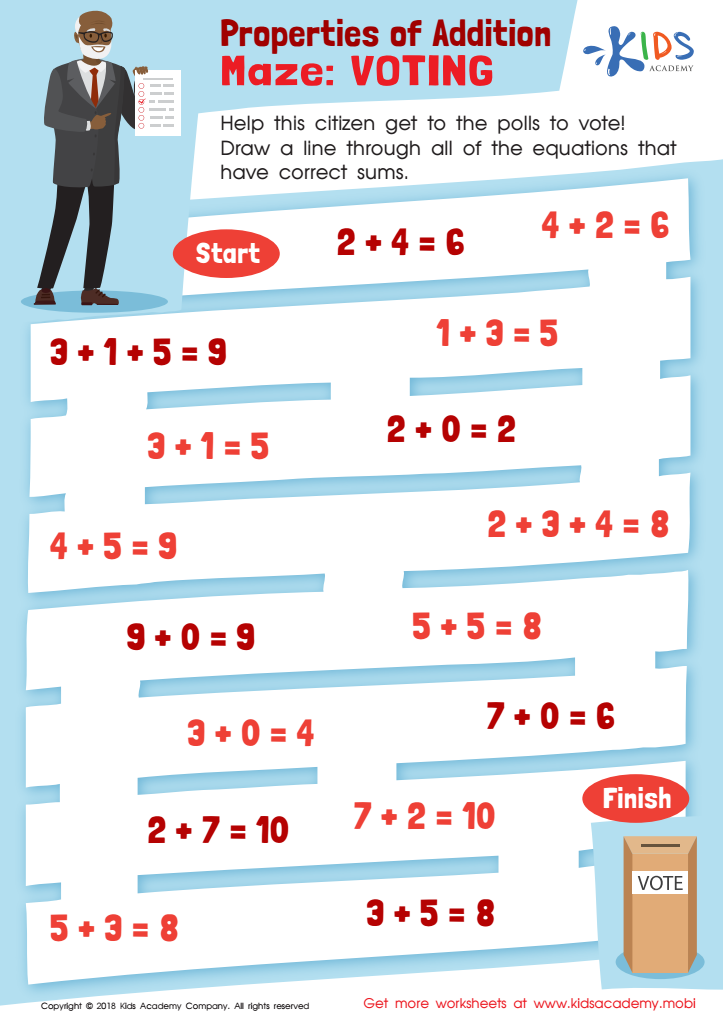
Properties of Addition Maze: Voting Worksheet
 Assign to My Students
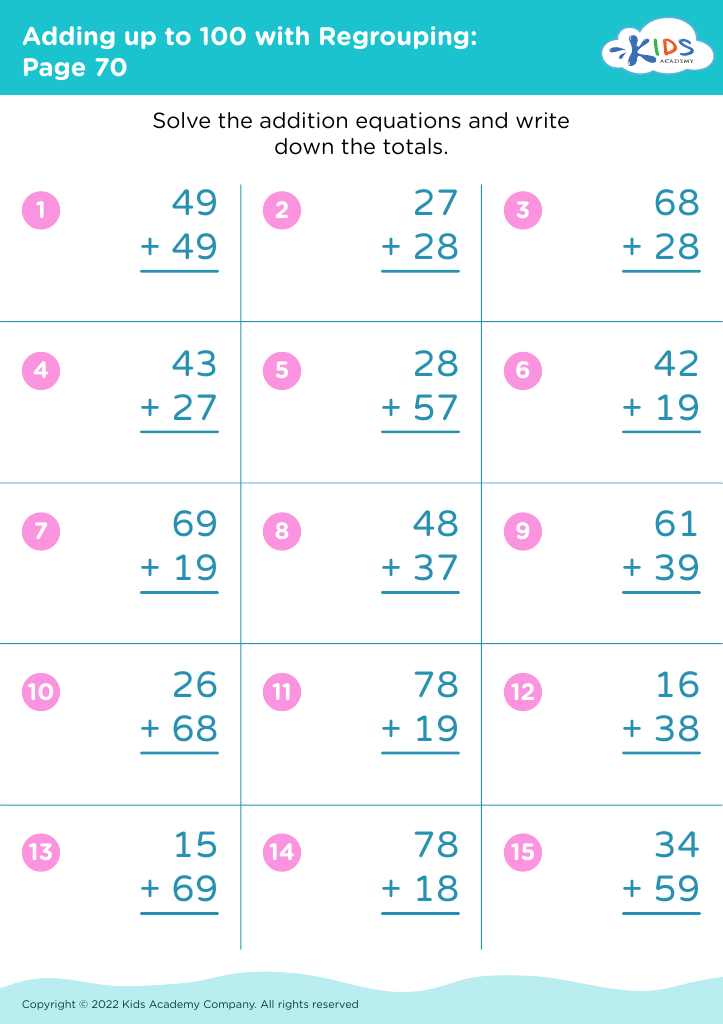
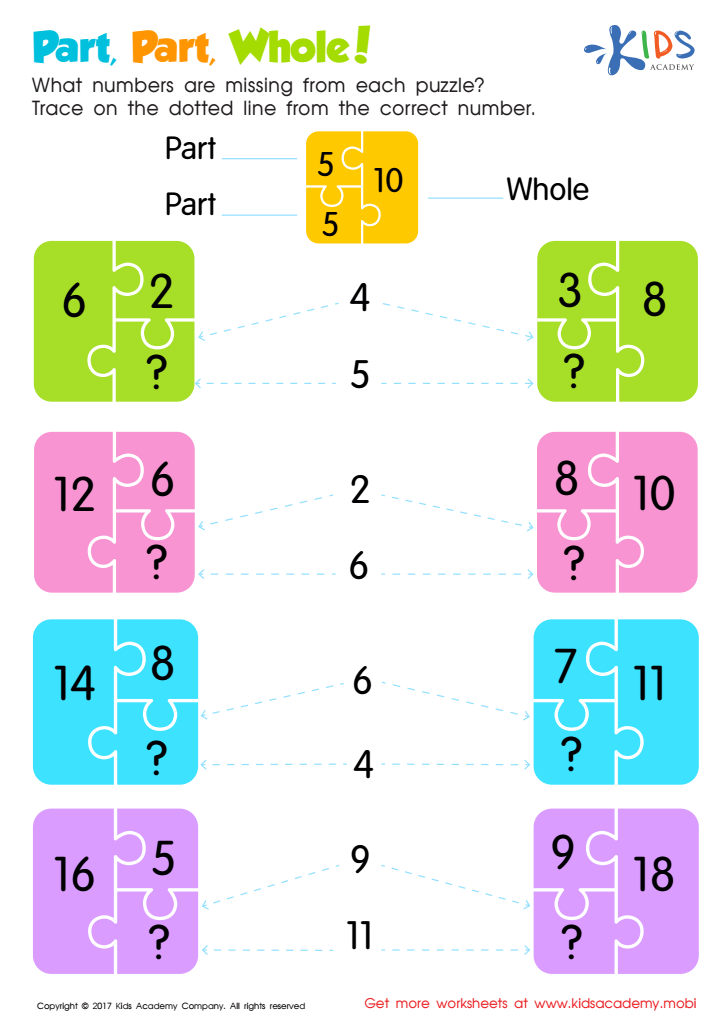
Part, Part, Whole Worksheet








Practicing mental arithmetic, particularly addition and subtraction, for children ages 3-7 is crucial for several reasons. Firstly, it lays a solid foundation for future mathematical learning and understanding. Early proficiency in these basic arithmetic skills enables children to grasp more complex math concepts more easily as they progress in their education.
Engaging young minds in mental arithmetic also sharpens cognitive abilities, including memory, concentration, and problem-solving skills. It encourages children to think logically and enhances their capability to process information quickly and efficiently. This cognitive development is not confined to mathematics but extends to other areas of learning and daily life decision making.
Furthermore, early arithmetic practice fosters a positive attitude towards mathematics. Children who gain confidence in their abilities are likely to develop a love for the subject, reducing math anxiety and promoting academic success across disciplines. Moreover, these skills are practical and useful in real-world scenarios, such as understanding money, time, and measurement, thus enhancing everyday life.
Finally, practicing arithmetic at a young age promotes collaboration and patience as children often learn through games or group activities, thus also supporting social skills development. Therefore, parents and teachers should prioritize mental math practice to nurture well-rounded, capable, and confident learners.








