Discover engaging "Simplifying Fractions Addition & Subtraction Worksheets" designed for young learners aged 3-7! Our fun and interactive worksheets help kids develop essential math skills by turning complex fraction concepts into manageable tasks. Each activity encourages children to simplify fractions before adding or subtracting, fostering a solid understanding of fractions in a playful way. With vibrant visuals and age-appropriate challenges, these worksheets make learning enjoyable while building confidence in arithmetic. Perfect for home or classroom use, our resources promote critical thinking and problem-solving skills, preparing children for future math success. Explore our collection and make math fun today!
Check out this FREE Trial Lesson on Addition & Subtraction for age 3-7!

Match Objects that Fit Together

Favorites
With answer key
Interactive
  • 3-7
  • Simplifying Fractions
  • Addition & Subtraction
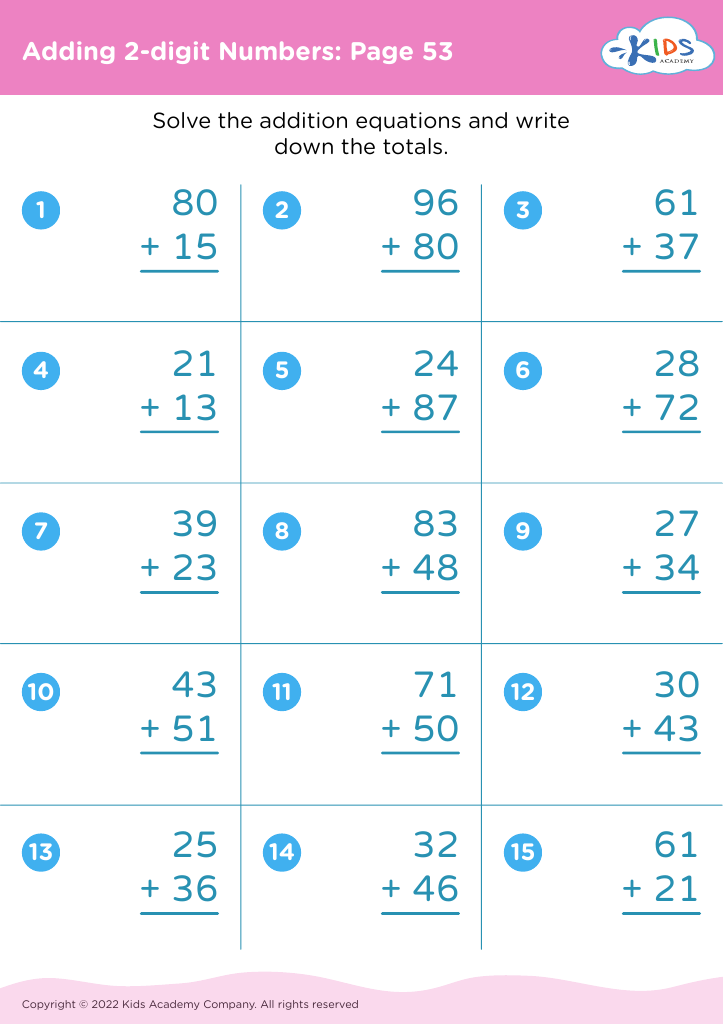
Adding 2-digit Numbers: Page 53

Adding 2-digit Numbers: Page 53

Adding 2-digit Numbers: Page 53
Worksheet
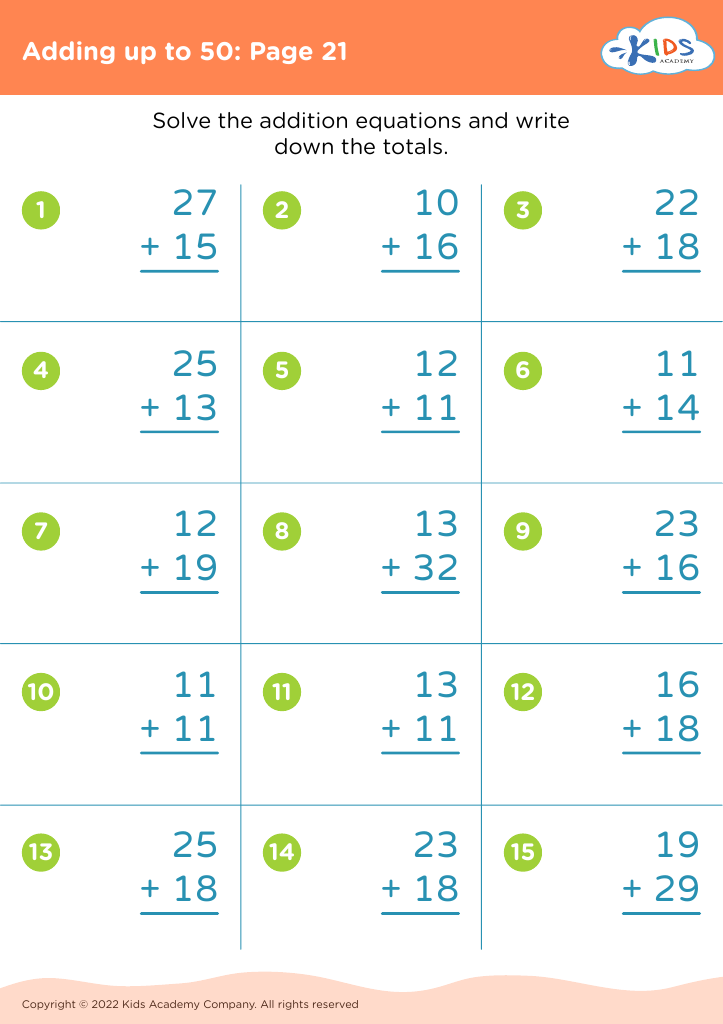
Adding up to 50: Page 21

Adding up to 50: Page 21

Adding up to 50: Page 21
Worksheet
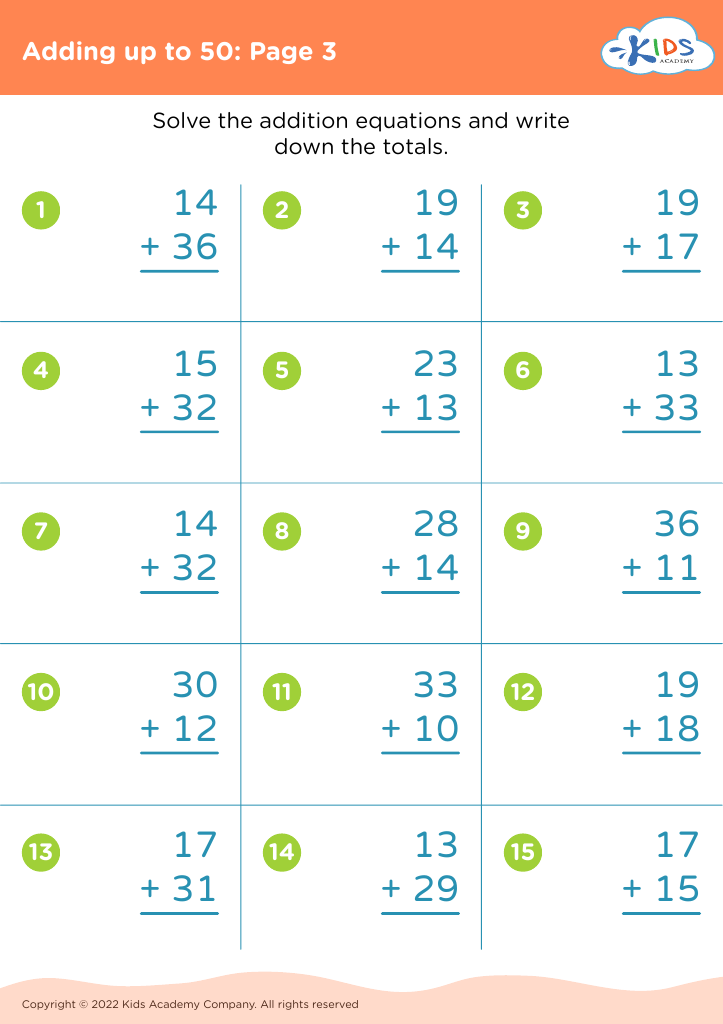
Adding up to 50: Page 3

Adding up to 50: Page 3

Adding up to 50: Page 3
Worksheet
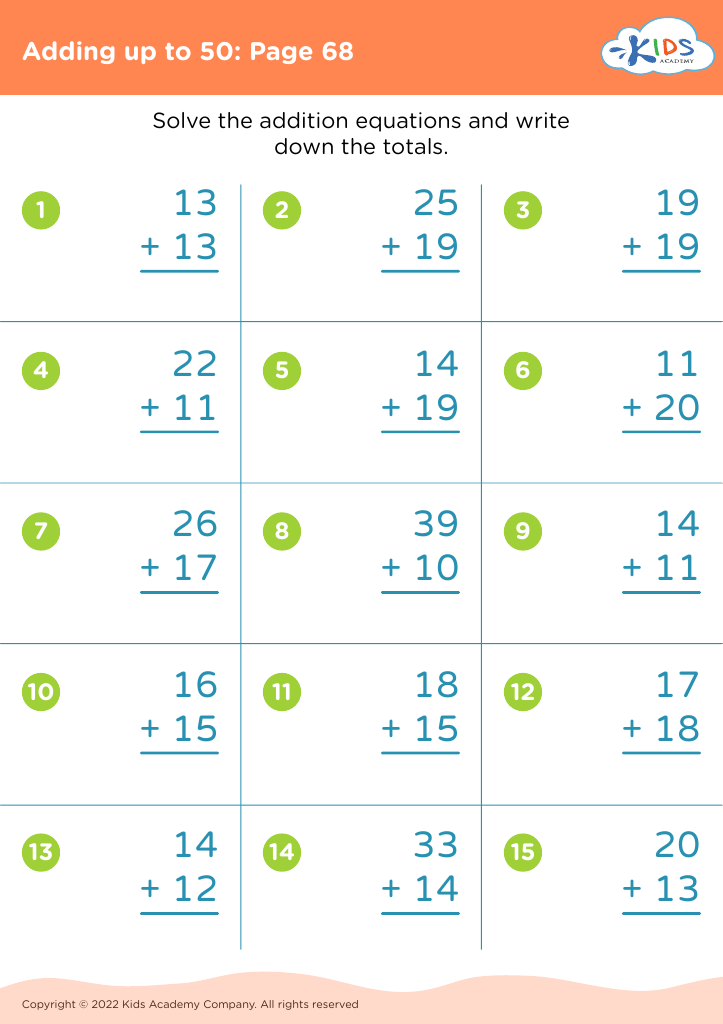
Adding up to 50: Page 68

Adding up to 50: Page 68

Adding up to 50: Page 68
Worksheet
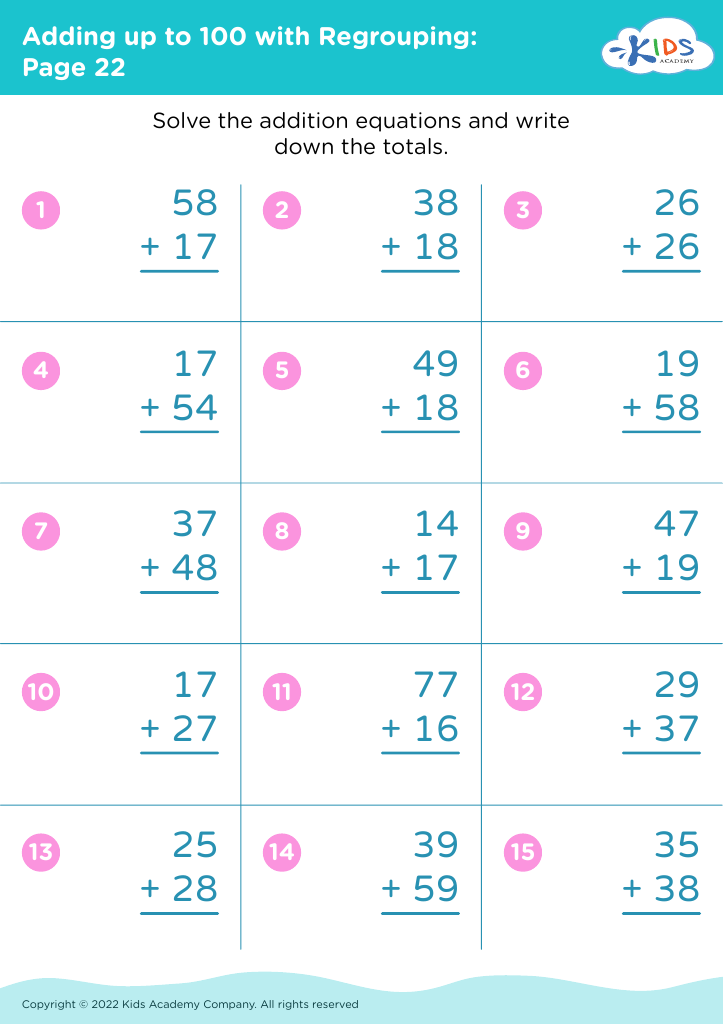
Adding up to 100 with Regrouping: Page 22
Worksheet
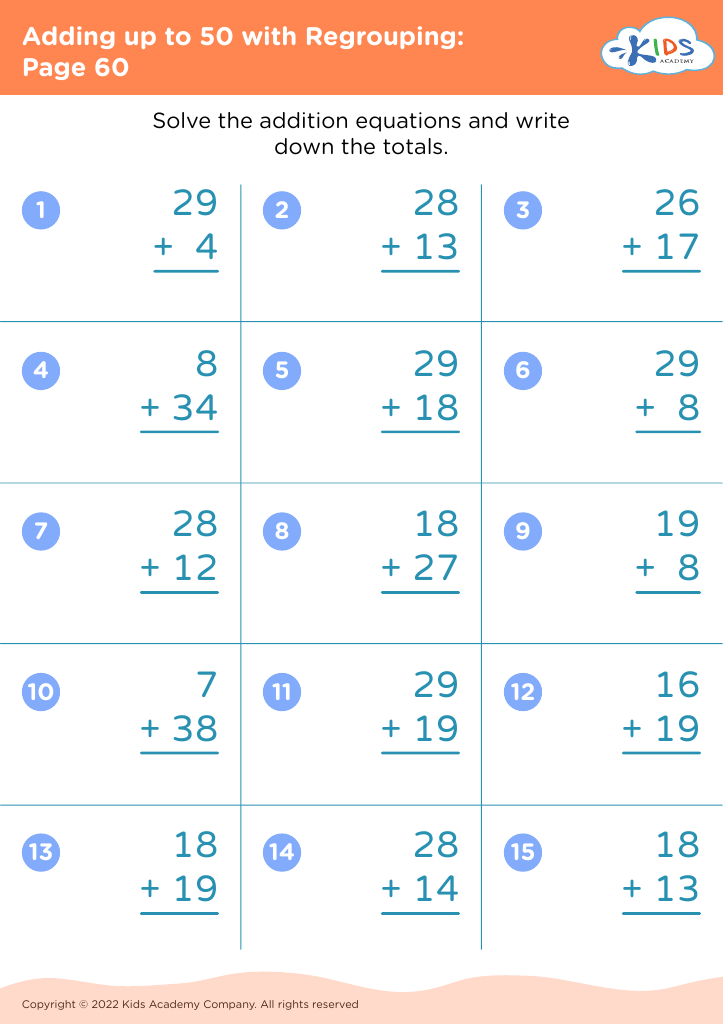
Adding up to 50 with Regrouping: Page 60
Worksheet
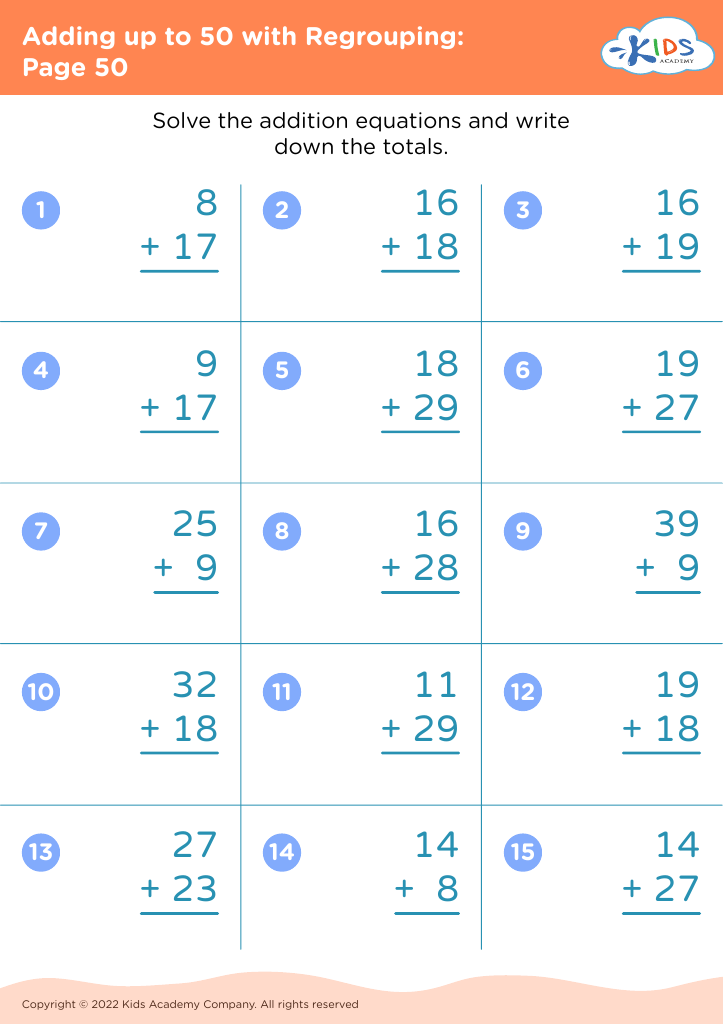
Adding up to 50 with Regrouping: Page 50
Worksheet
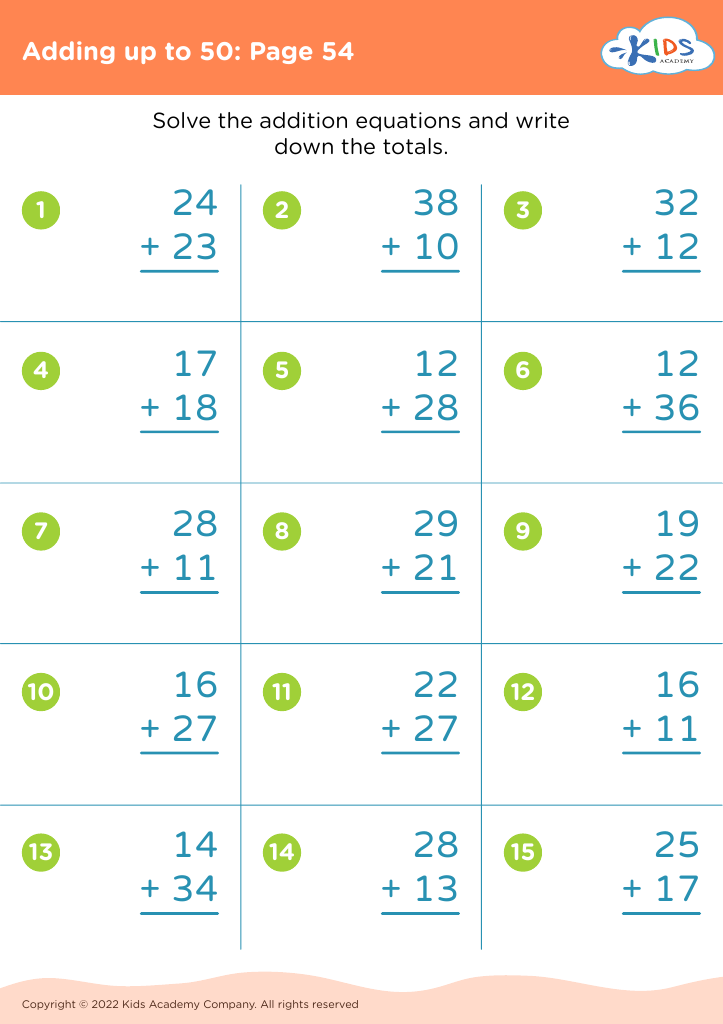
Adding up to 50: Page 54

Adding up to 50: Page 54

Adding up to 50: Page 54
Worksheet
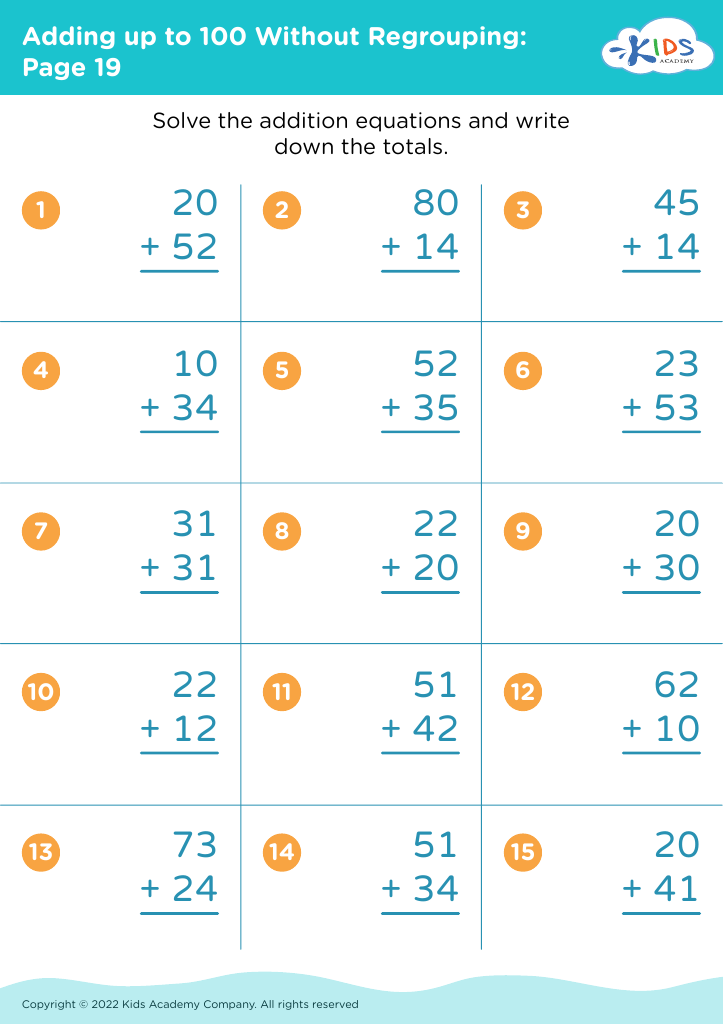
Adding up to 100 Without Regrouping: Page 19
Worksheet
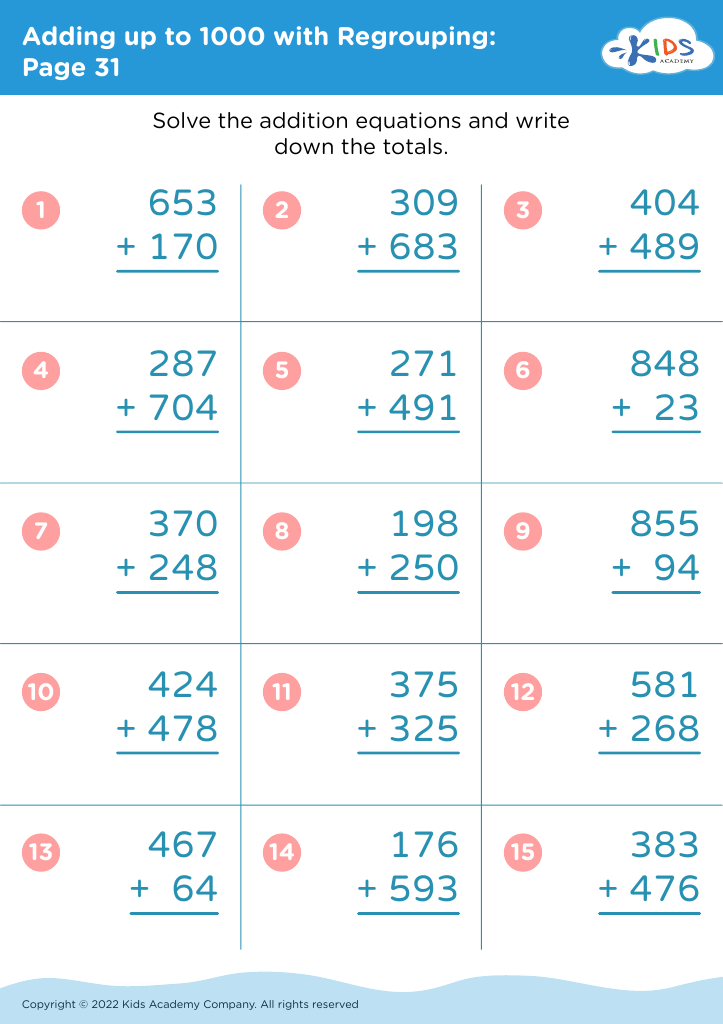
Adding up to 1000 with Regrouping: Page 31
Worksheet
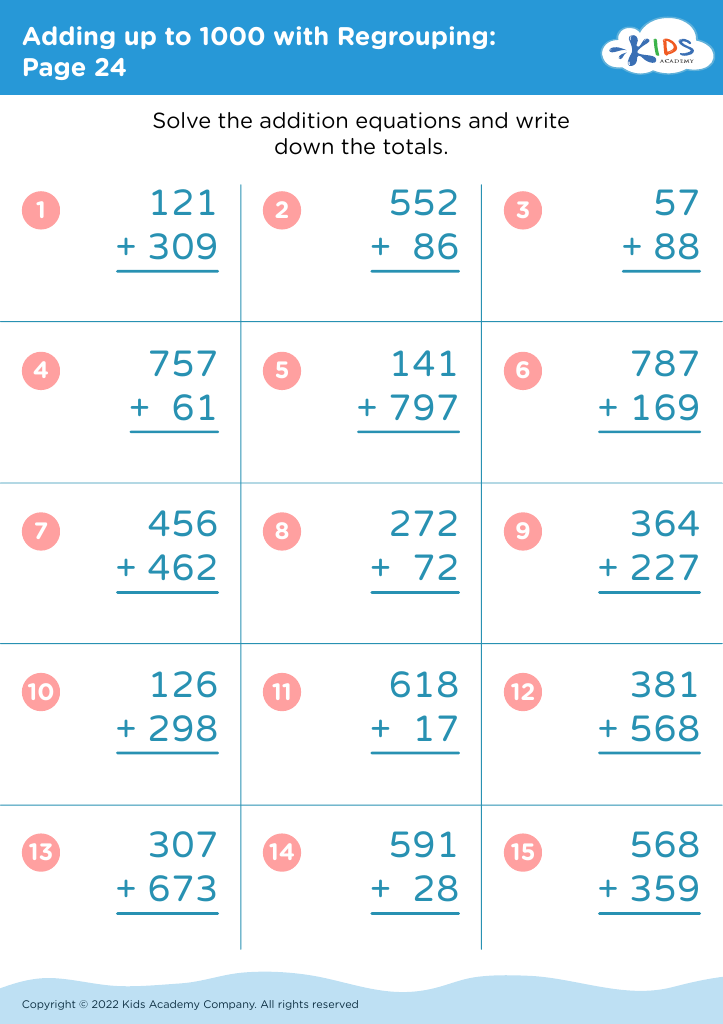
Adding up to 1000 with Regrouping: Page 24
Worksheet
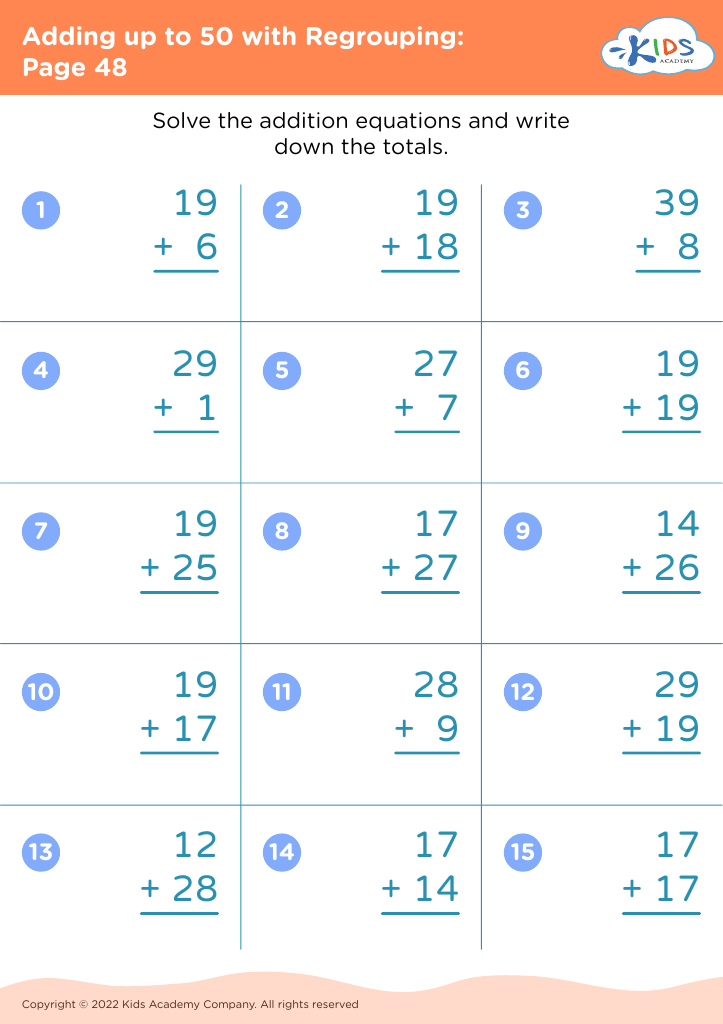
Adding up to 50 with Regrouping: Page 48
Worksheet
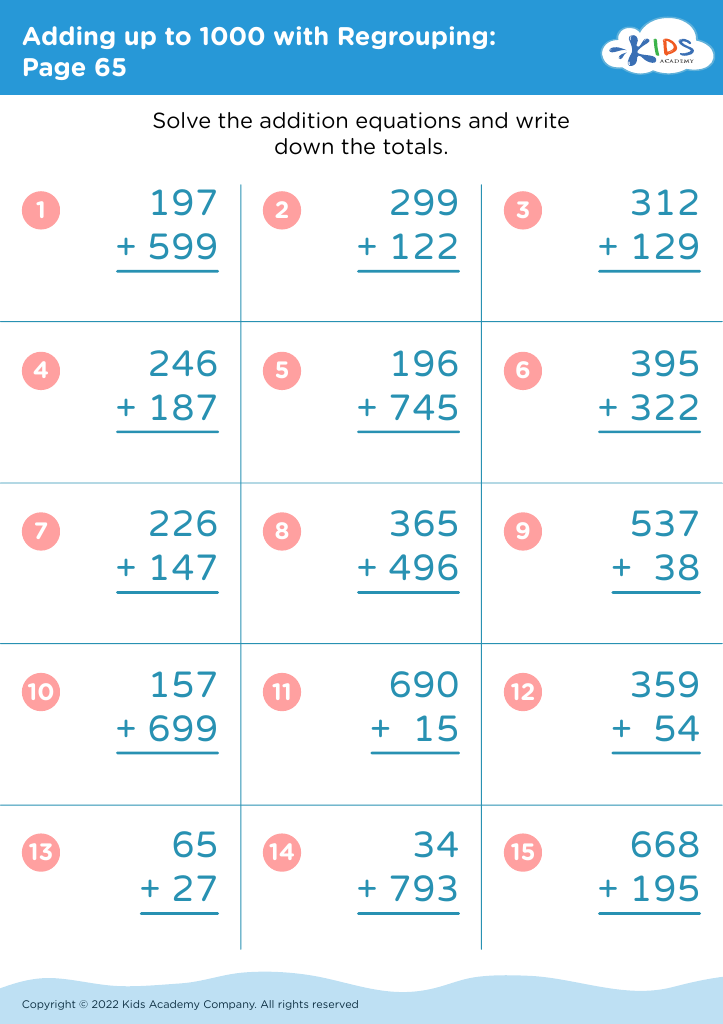
Adding up to 1000 with Regrouping: Page 65
Worksheet
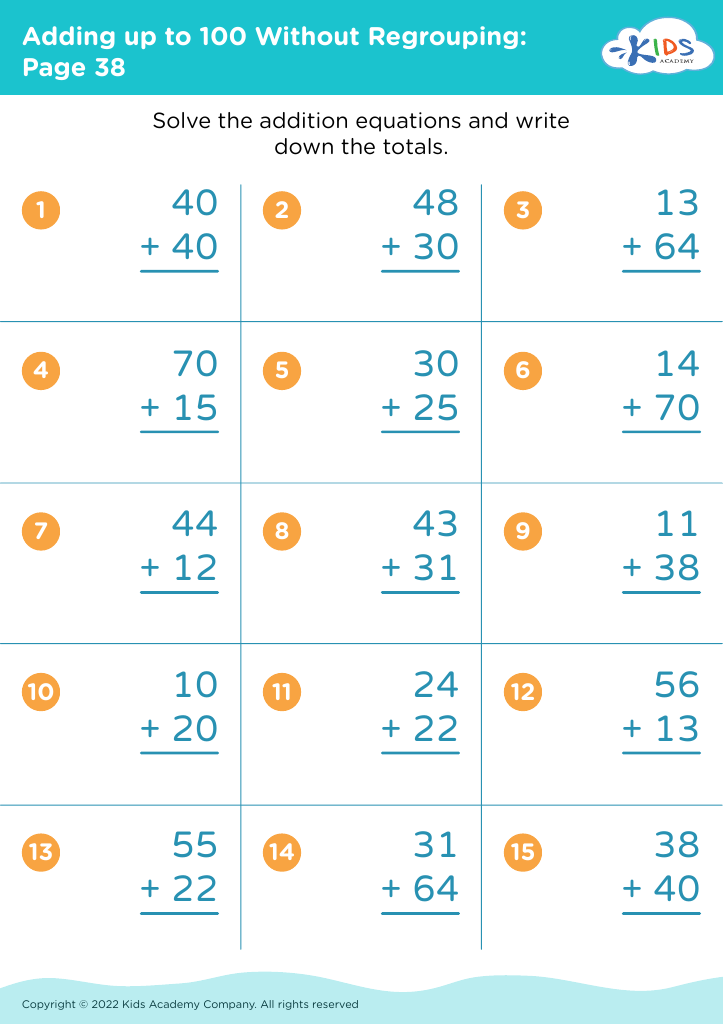
Adding up to 100 Without Regrouping: Page 38
Worksheet
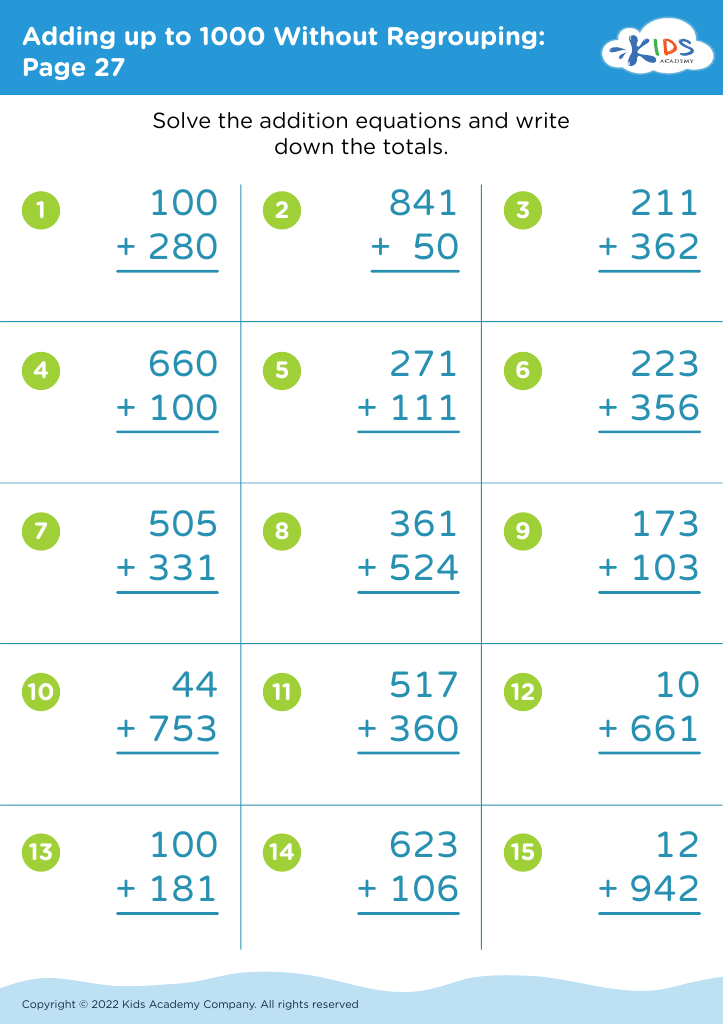
Adding up to 1000 Without Regrouping: Page 27
Worksheet
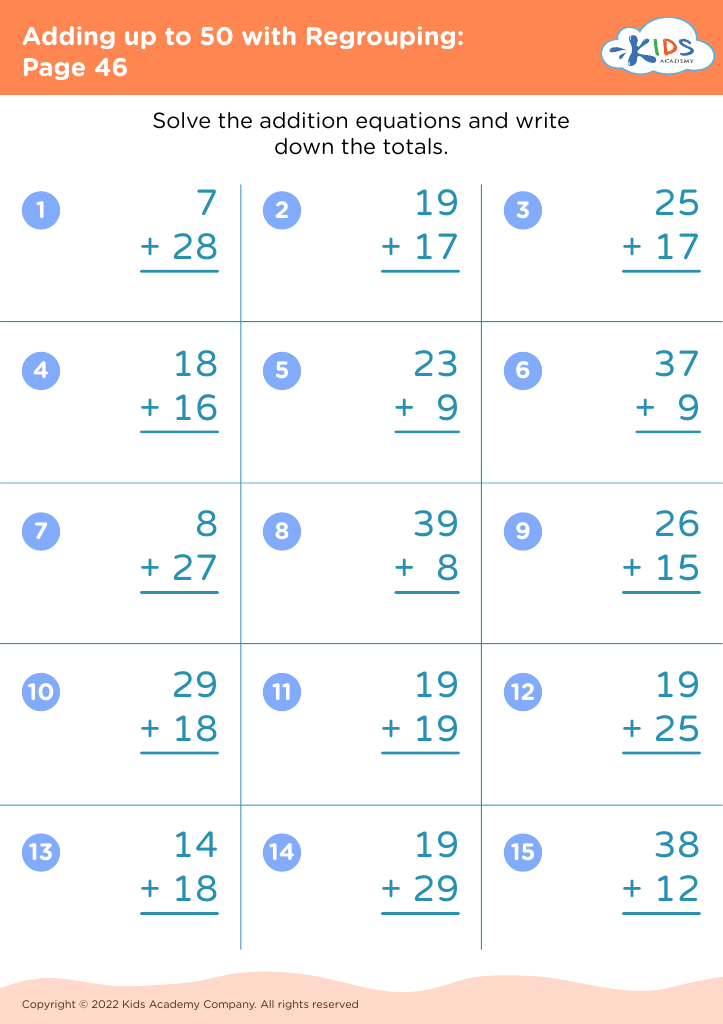
Adding up to 50 with Regrouping: Page 46
Worksheet
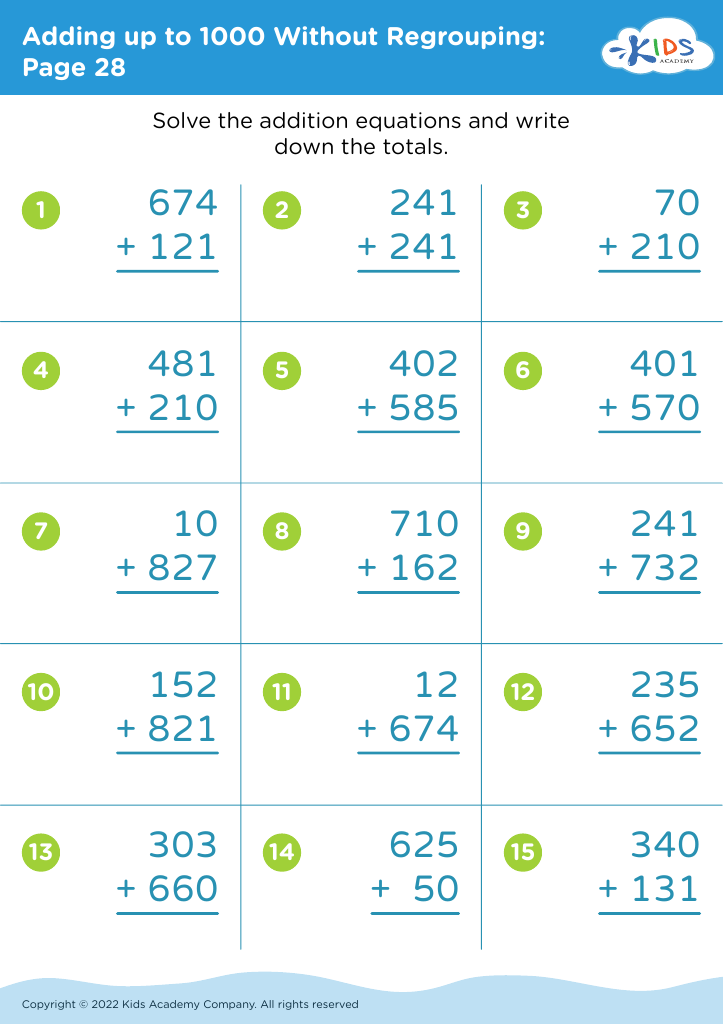
Adding up to 1000 Without Regrouping: Page 28
Worksheet
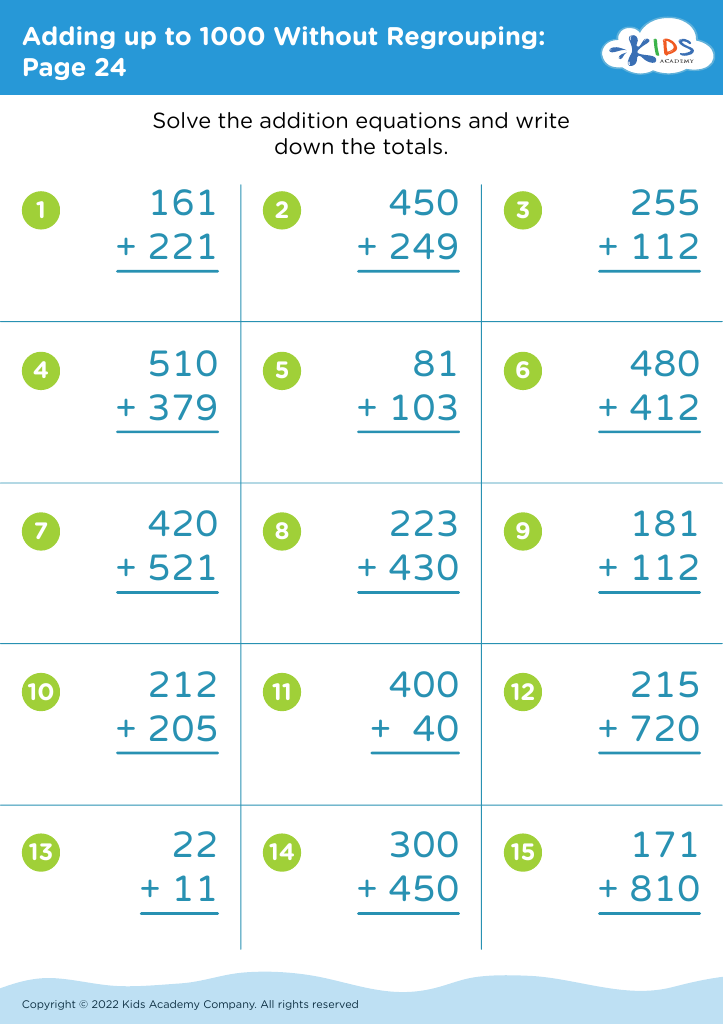
Adding up to 1000 Without Regrouping: Page 24
Worksheet


Teaching young children about simplifying fractions, particularly during addition and subtraction, is essential for several reasons. Firstly, understanding fractions lays a fundamental foundation for future math skills. It promotes number sense, mathematical reasoning, and problem-solving abilities.

For ages 3 to 7, simplification involves recognizing that fractions are part of a whole. Engaging with activities that involve combining or comparing fractions helps children conceptualize these ideas in a tangible way, making abstract mathematical principles more approachable.

Moreover, simplifying fractions encourages perseverance and cognitive development. It teaches children how to break down complex problems into manageable parts, fostering critical thinking skills that are valuable beyond math. Introducing these concepts at an early age taps into their natural curiosity and builds confidence in their abilities.

Additionally, parents and teachers play a pivotal role in creating a supportive learning environment. By prioritizing fraction activities, they can stimulate interest and lay the groundwork for future academic success, instilling a positive attitude toward mathematics as children grow. Ultimately, caring about these foundational skills equips children with the adventure of exploring math, making the learning process enjoyable and relevant.