Subtraction practice Addition & Subtraction Worksheets for Ages 3-7 - Page 4
76 filtered results
-
From - To
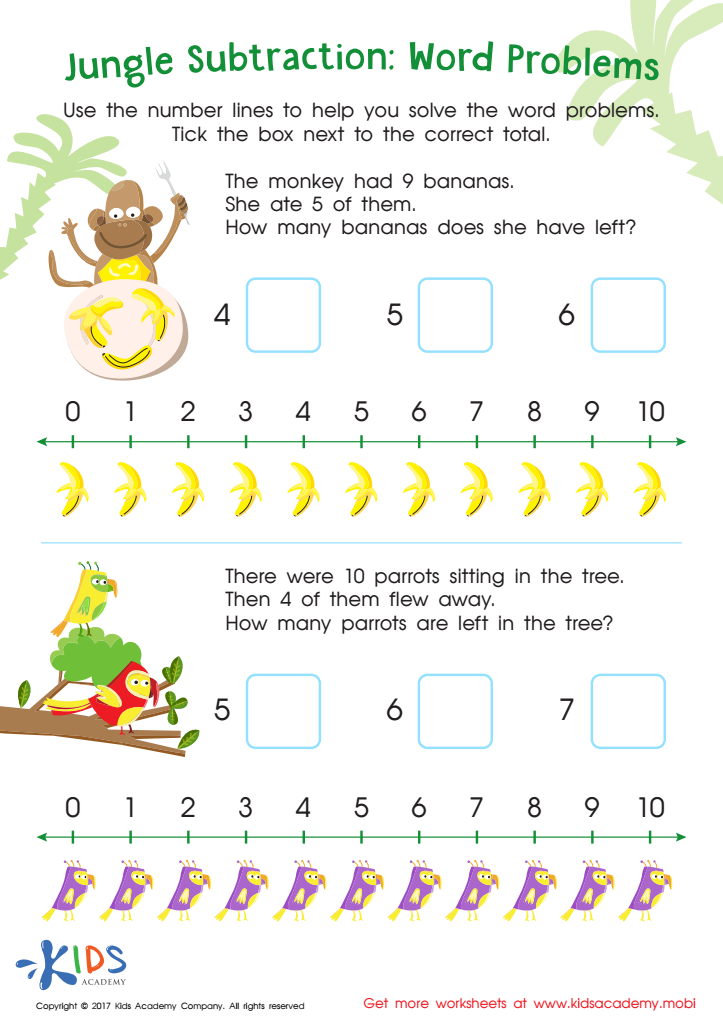
Jungle Subtraction Word Problems Substraction Worksheet
 Assign to My Students
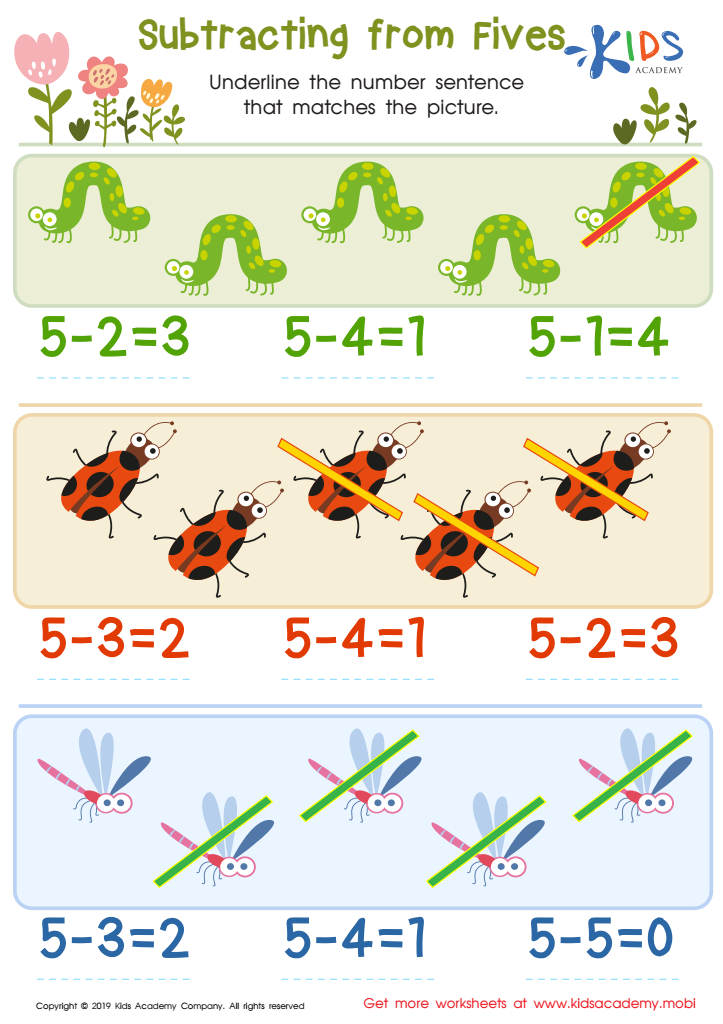
Subtracting From Fives Worksheet








Subtraction practice, alongside addition, is essential for children aged 3-7 as it lays the foundation for their mathematical understanding and problem-solving skills. During these formative years, children develop cognitive abilities crucial for grasping basic concepts in numeracy. Engaging in subtraction helps them understand the relationship between numbers, enhancing their overall mathematical fluency.
Parents and teachers should prioritize subtraction practice because it fosters critical thinking. By learning to subtract, children begin to visualize the idea of "taking away," which can be applied to everyday situations, helping to build resilience in their cognitive skills. This dual focus of addition and subtraction cultivates a comprehensive understanding of basic arithmetic and supports a balanced approach to learning math.
Moreover, engaging with subtraction promotes confidence. As children master subtraction, they experience a sense of achievement, motivating them to tackle more complex concepts in the future. It also encourages cooperation in group settings where problem-solving is necessary.
Incorporating practical scenarios, such as sharing snacks or toys, can make subtraction more relatable and enjoyable. By nurturing these skills early on, parents and teachers set the stage for a lifelong appreciation of math, preparing children to navigate more advanced mathematical concepts as they grow.








