Subtraction skills Addition & Subtraction Worksheets for Ages 3-7 - Page 2
26 filtered results
-
From - To
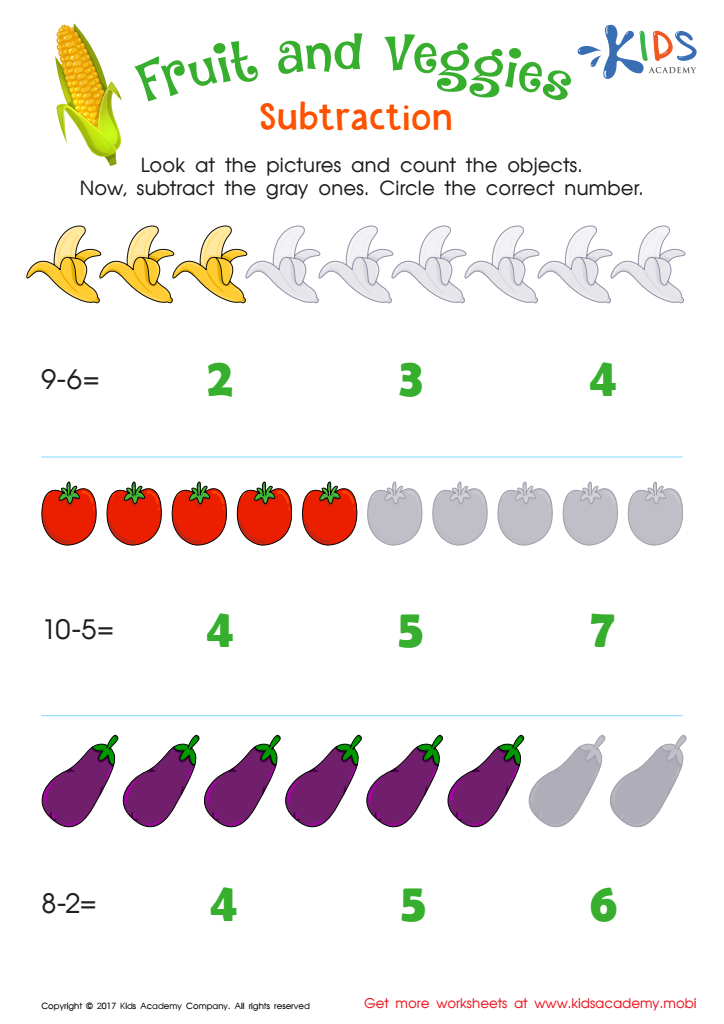
Fruit and Veggies Subtraction Worksheet
 Assign to My Students
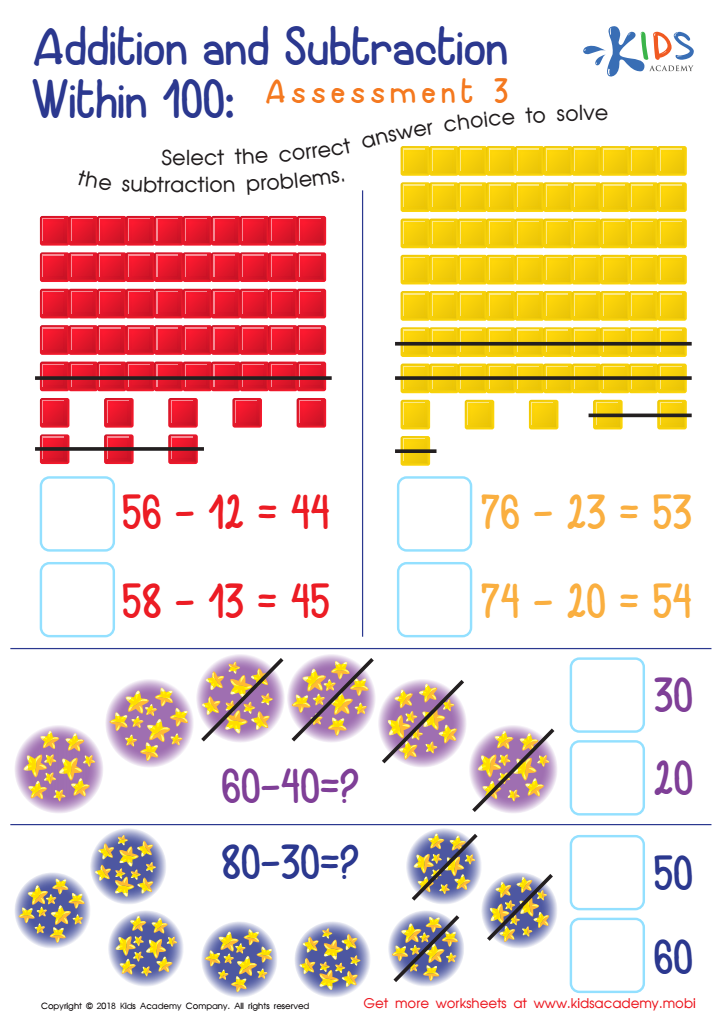
Addition and Subtraction Within 1: Assessment 3 Worksheet








Parents and teachers should prioritize subtraction skills for children ages 3-7 because these foundational math abilities significantly impact overall academic success and cognitive development. At this early age, children develop a conceptual understanding of numbers and relationships through addition and subtraction, which are essential for later math skills. Mastering subtraction enhances critical thinking and problem-solving abilities, enabling children to approach challenges with confidence.
Subtraction skills also promote logical reasoning. As children learn to subtract, they are taught to analyze situations, recognize patterns, and understand the concept of "taking away." This fosters mental agility, which is vital for their academic future.
Additionally, subtraction skills contribute to practical life experiences and social interactions, from sharing snacks to counting toys. When children grasp addition and subtraction concepts, they gain independence and improve their confidence in various settings.
Early exposure to these concepts not only makes learning enjoyable but also builds a solid foundation for more complex mathematical concepts in later grades. By fostering these skills early on, parents and teachers empower children to become competent, confident learners who can navigate the challenges of math with ease.








