Explore our engaging "Understand Fractions Addition & Subtraction Worksheets" designed for ages 3-7! These worksheets make learning fractions fun and accessible, introducing young learners to the essential concepts of addition and subtraction with fractions. Our resources feature colorful visuals, interactive exercises, and age-appropriate challenges to help kids grasp the fundamentals of fractions in a playful setting. These worksheets foster critical thinking and problem-solving skills, encouraging children to develop a strong mathematical foundation. Perfect for home or classroom use, our teaching materials ensure that early learners gain confidence in their understanding of fractions, setting them up for future success in math!
Check out this FREE Trial Lesson on Addition & Subtraction for age 3-7!

H

Favorites
With answer key
Interactive
  • 3-7
  • Understand fractions
  • Addition & Subtraction
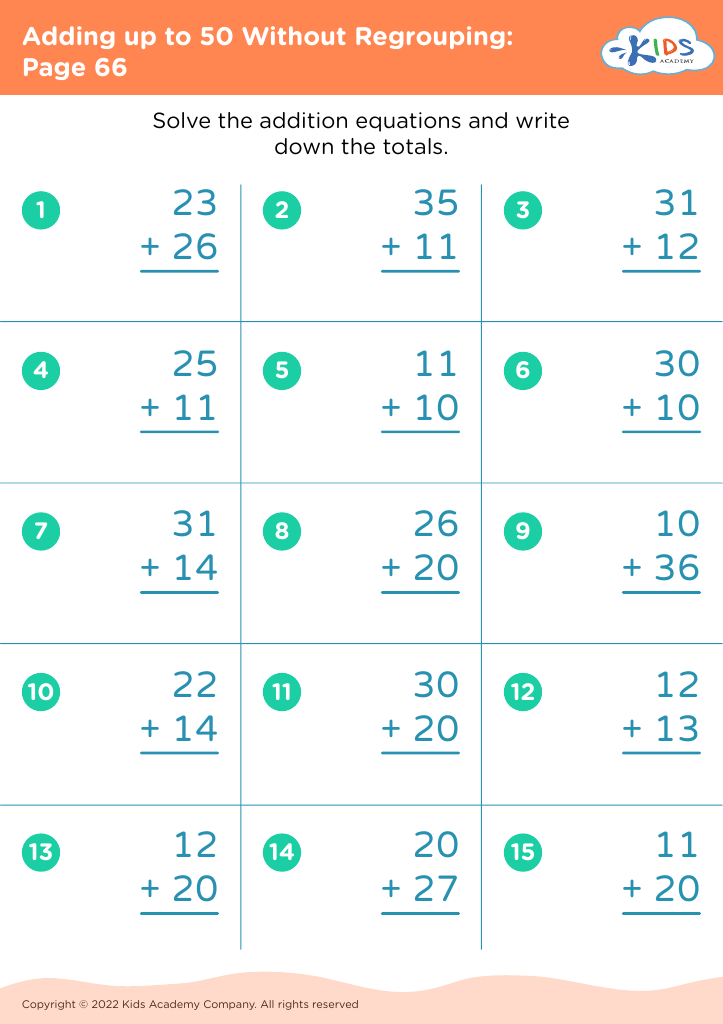
Adding up to 50 Without Regrouping: Page 66
Worksheet
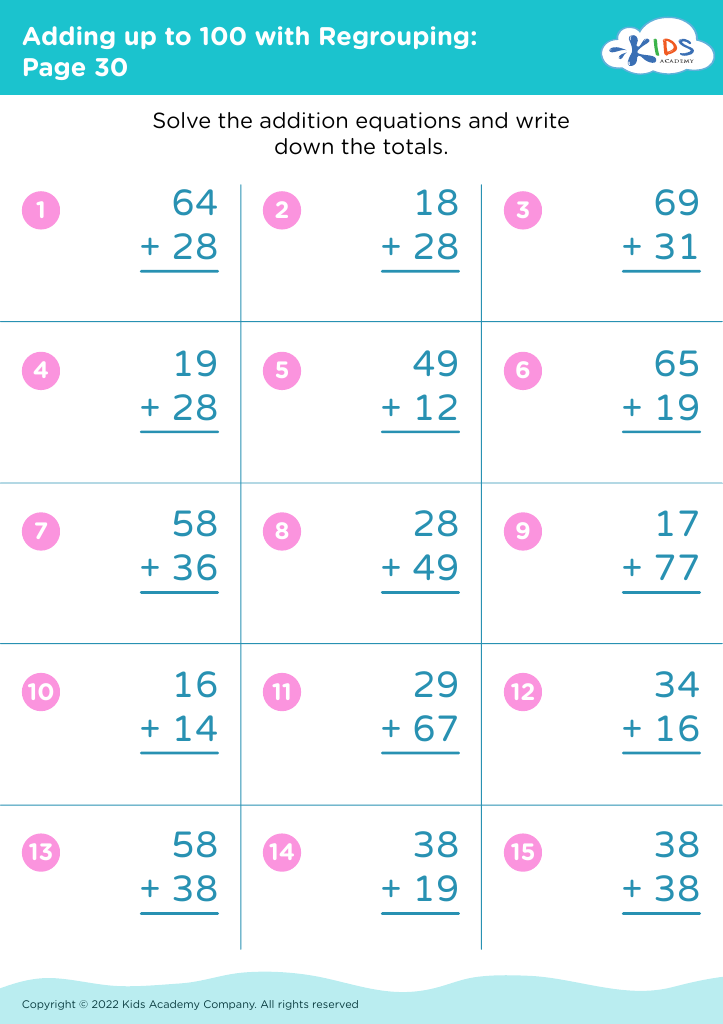
Adding up to 100 with Regrouping: Page 30
Worksheet
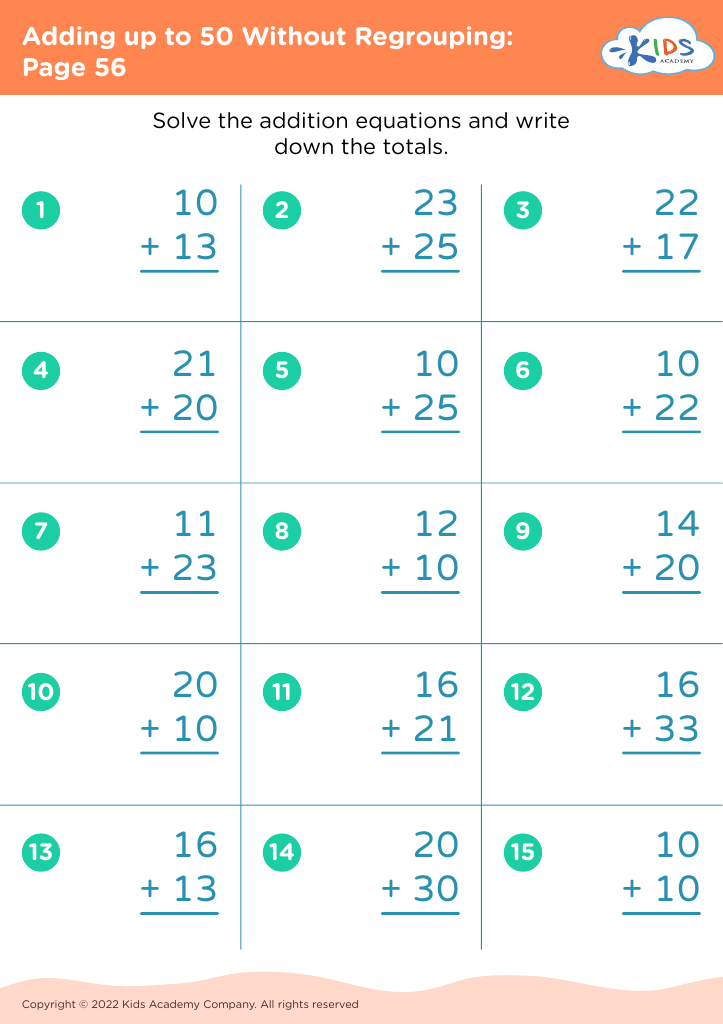
Adding up to 50 Without Regrouping: Page 56
Worksheet
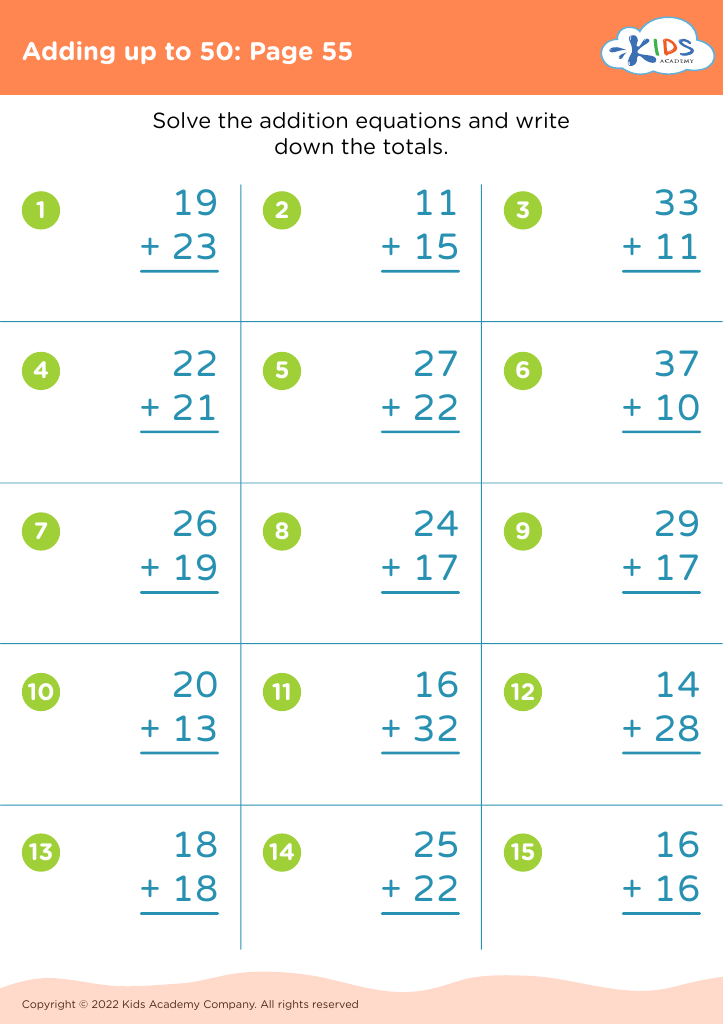
Adding up to 50: Page 55

Adding up to 50: Page 55

Adding up to 50: Page 55
Worksheet
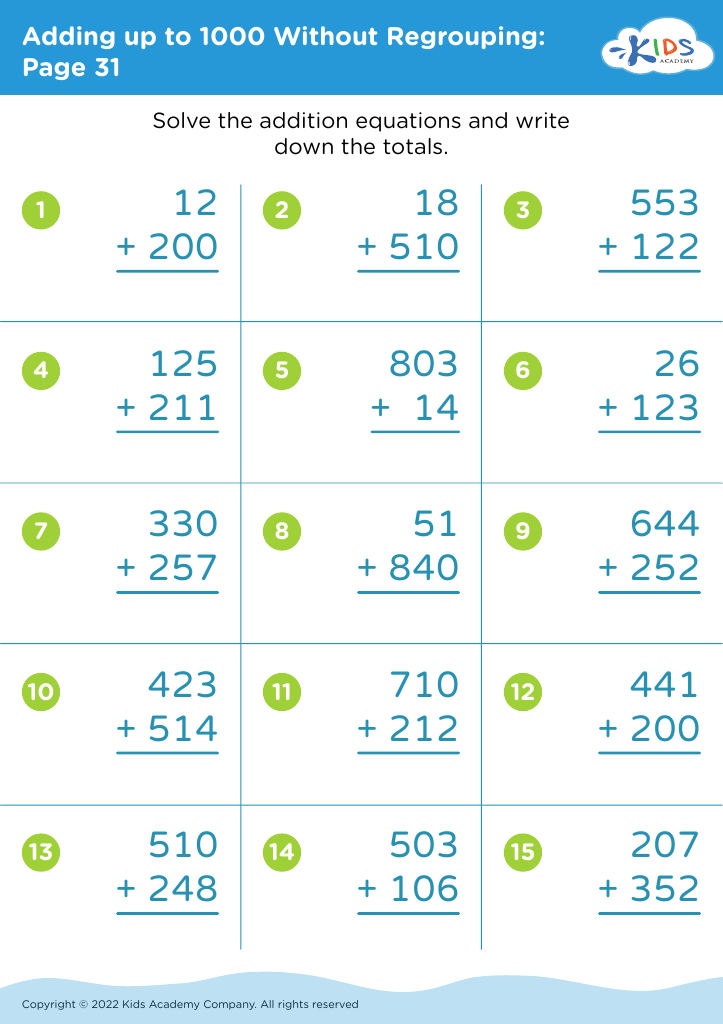
Adding up to 1000 Without Regrouping: Page 31
Worksheet
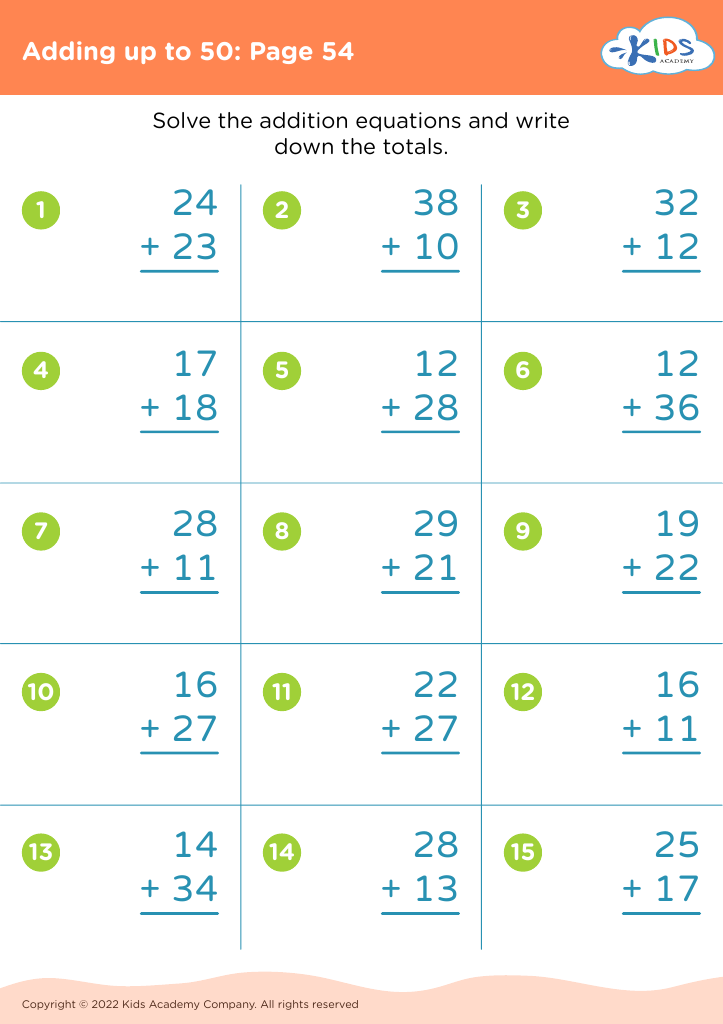
Adding up to 50: Page 54

Adding up to 50: Page 54

Adding up to 50: Page 54
Worksheet
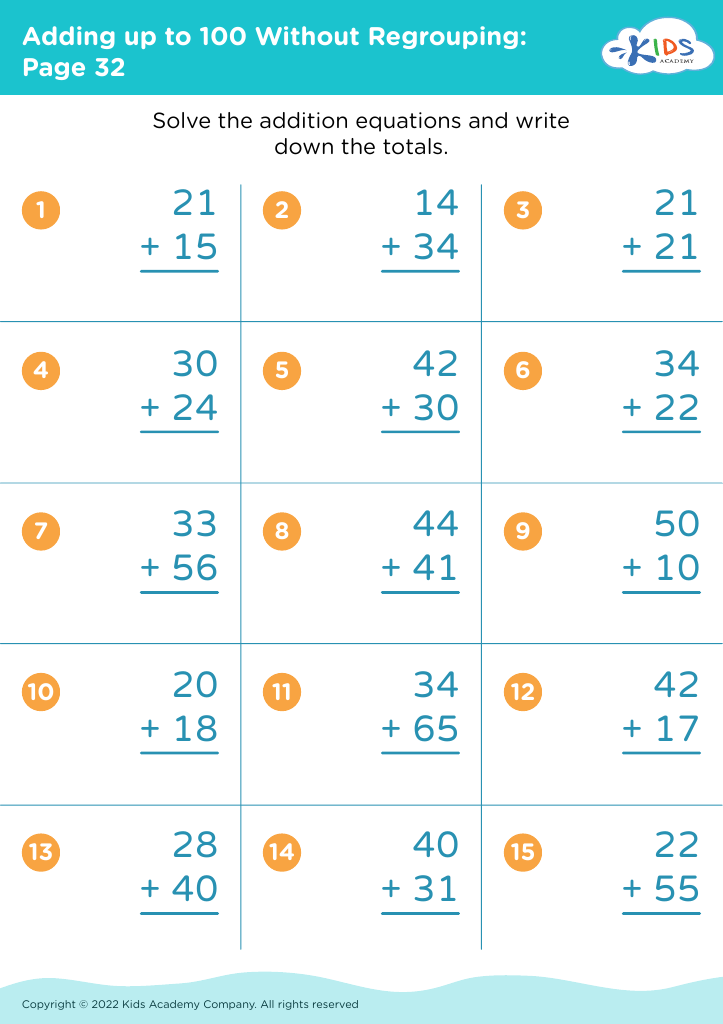
Adding up to 100 Without Regrouping: Page 32
Worksheet
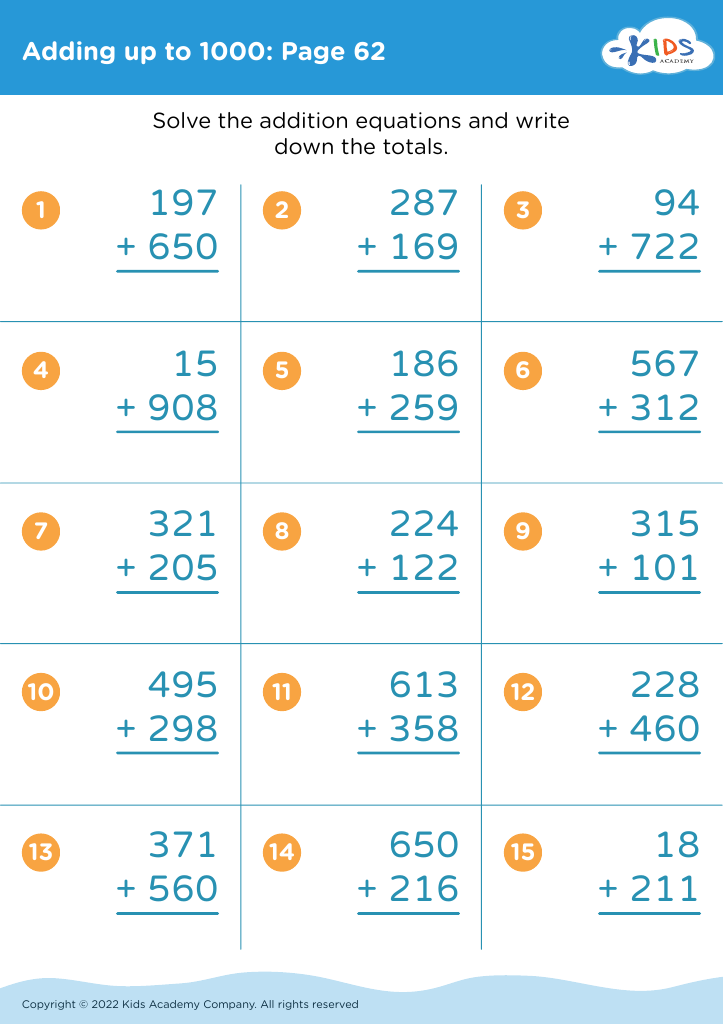
Adding up to 1000: Page 62

Adding up to 1000: Page 62

Adding up to 1000: Page 62
Worksheet
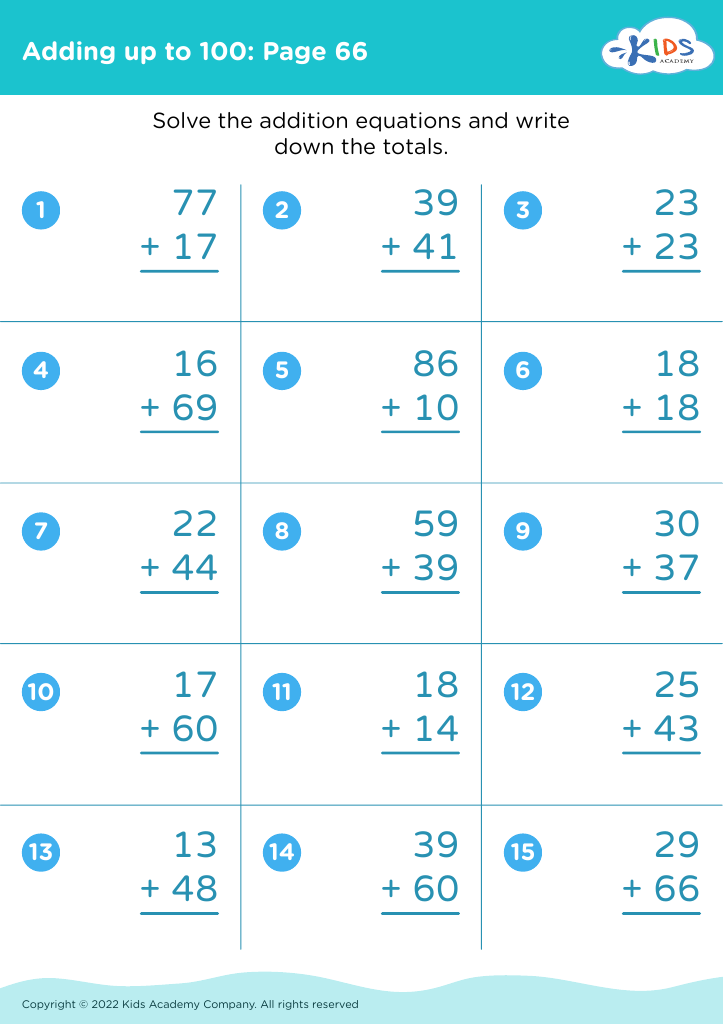
Adding up to 100: Page 66

Adding up to 100: Page 66

Adding up to 100: Page 66
Worksheet
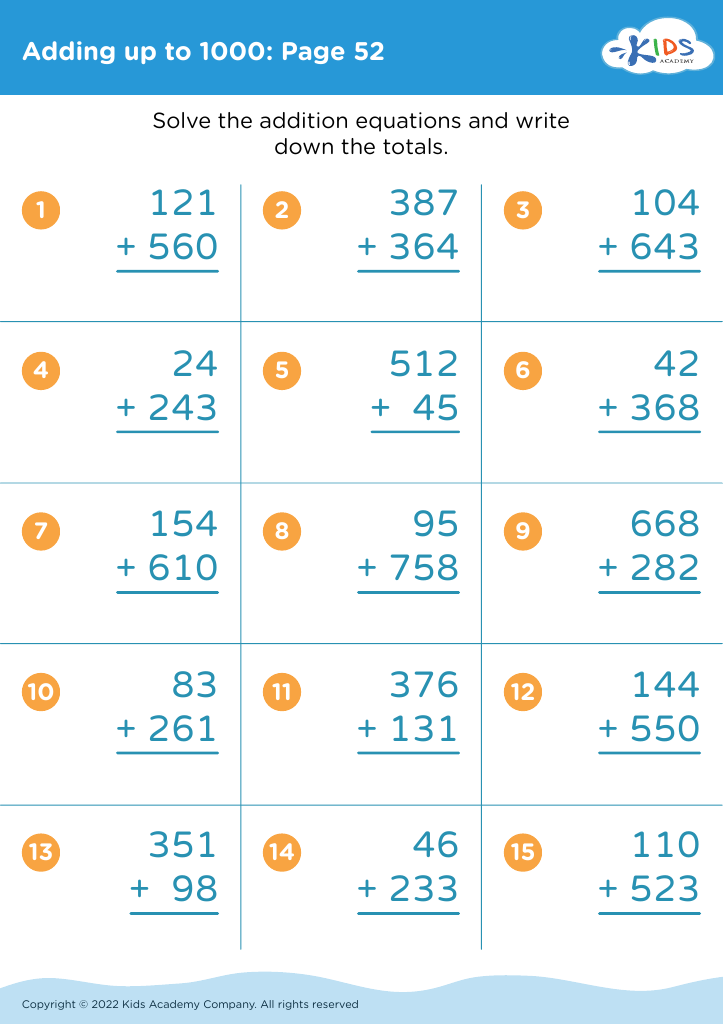
Adding up to 1000: Page 52

Adding up to 1000: Page 52

Adding up to 1000: Page 52
Worksheet
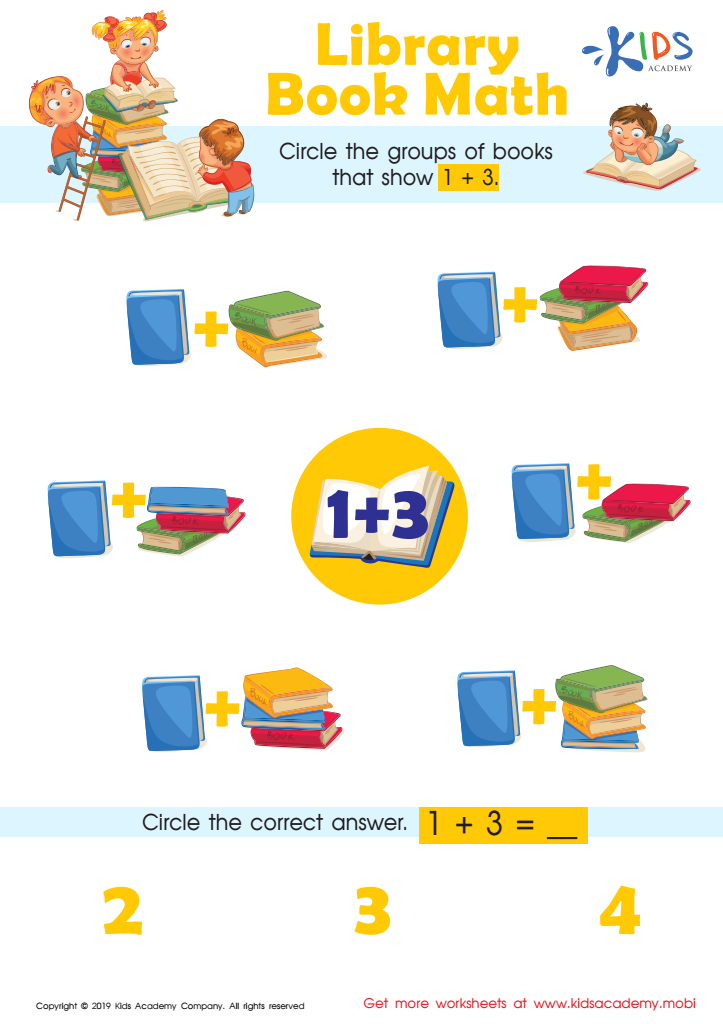
Library Book Math Worksheet

Library Book Math Worksheet

=4. It's essential for your child's growth to know how to count and add. Help them by giving simple tasks and encouraging them. This worksheet is a great tool to use. Ask your kids to name the objects in the picture and help them circle the groups of books that show 1+3=4.
Library Book Math Worksheet
Worksheet
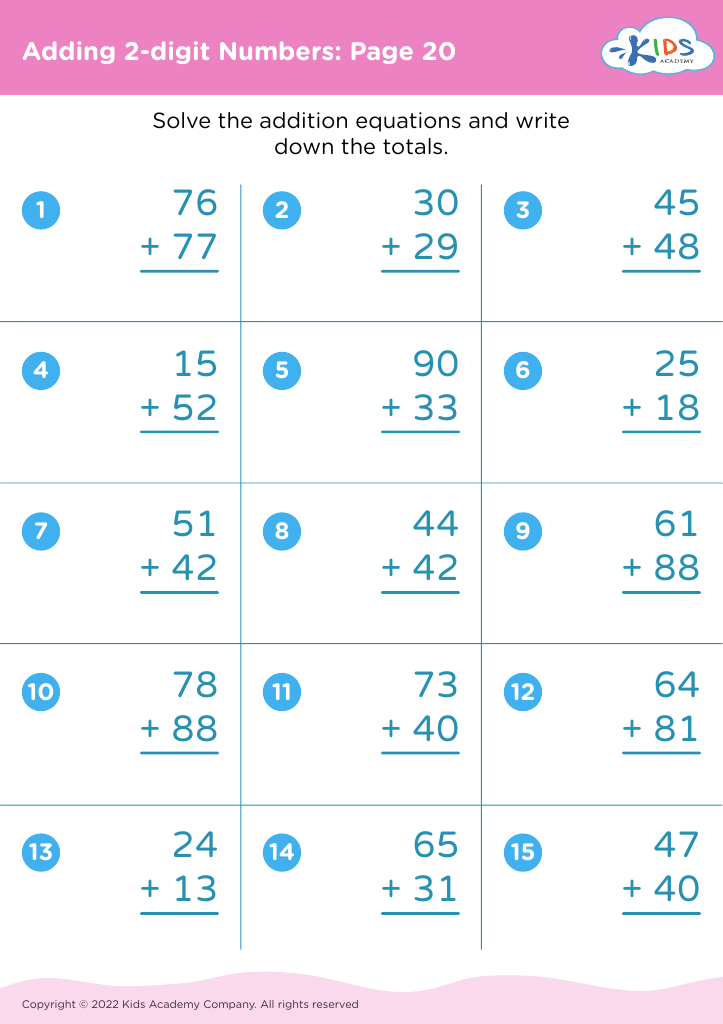
Adding 2-digit Numbers: Page 20

Adding 2-digit Numbers: Page 20

Adding 2-digit Numbers: Page 20
Worksheet
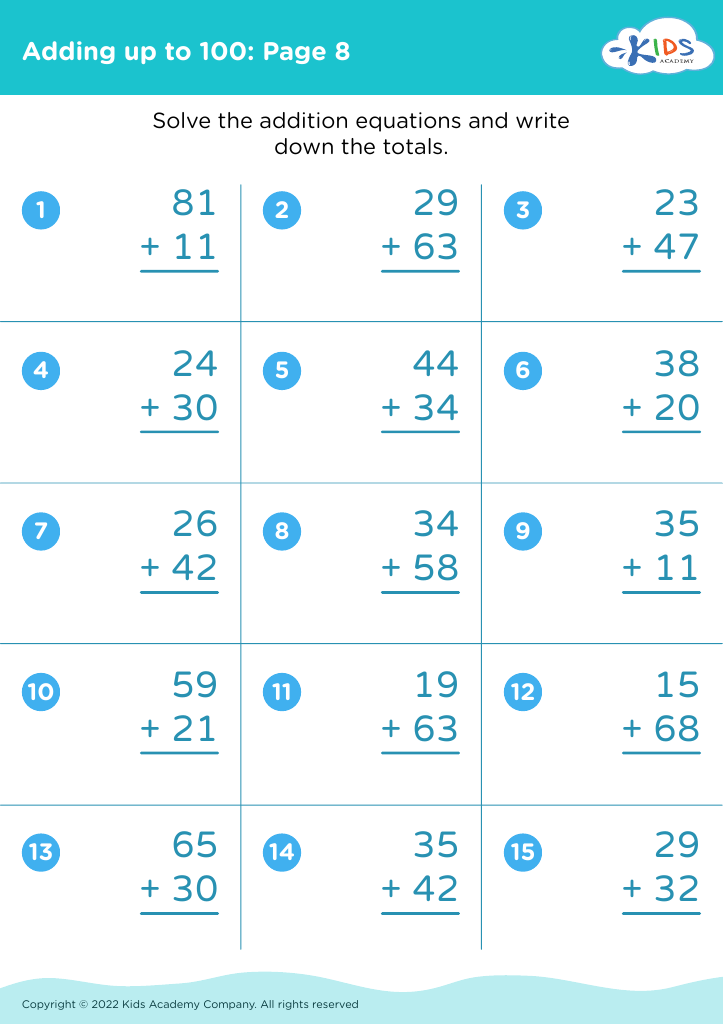
Adding up to 100: Page 8

Adding up to 100: Page 8

Adding up to 100: Page 8
Worksheet
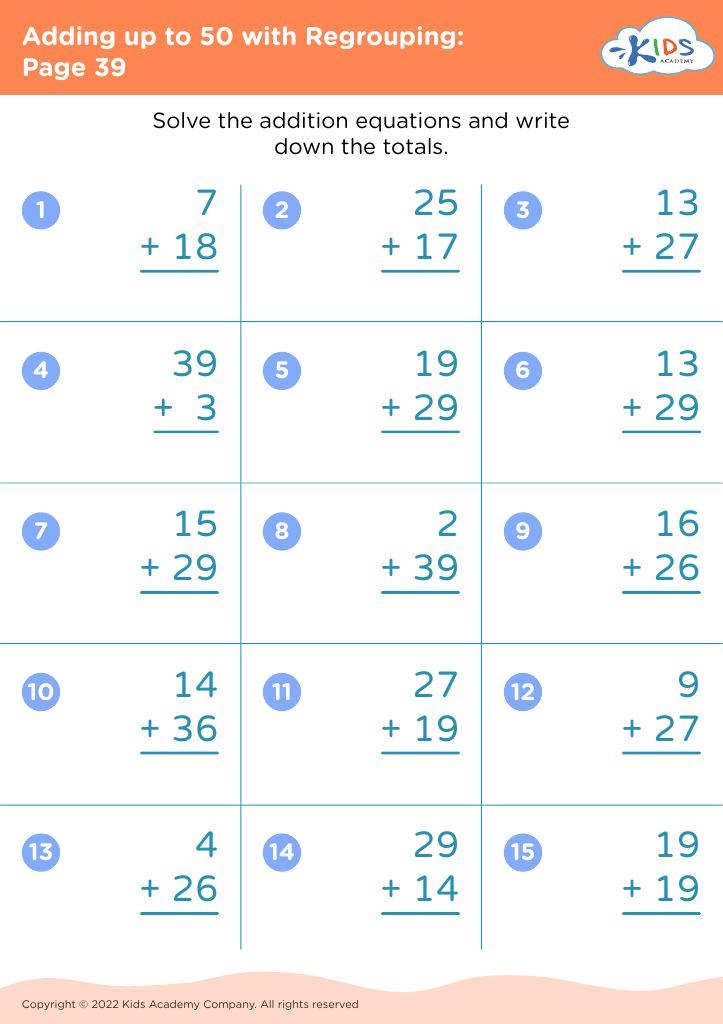
Adding up to 50 with Regrouping: Page 39
Worksheet
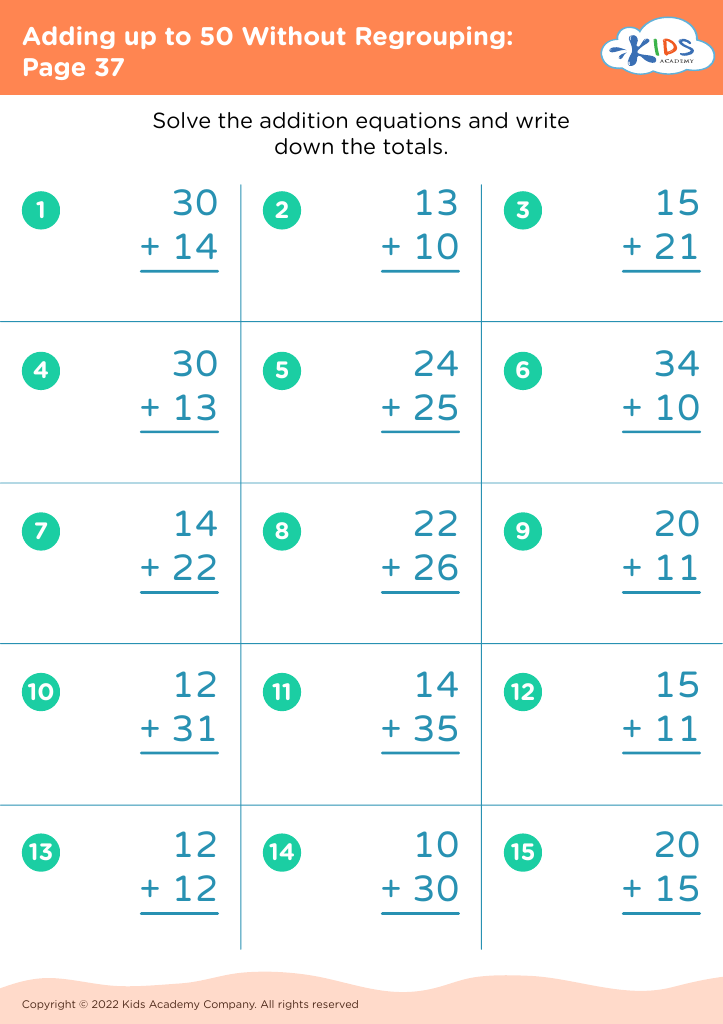
Adding up to 50 Without Regrouping: Page 37
Worksheet
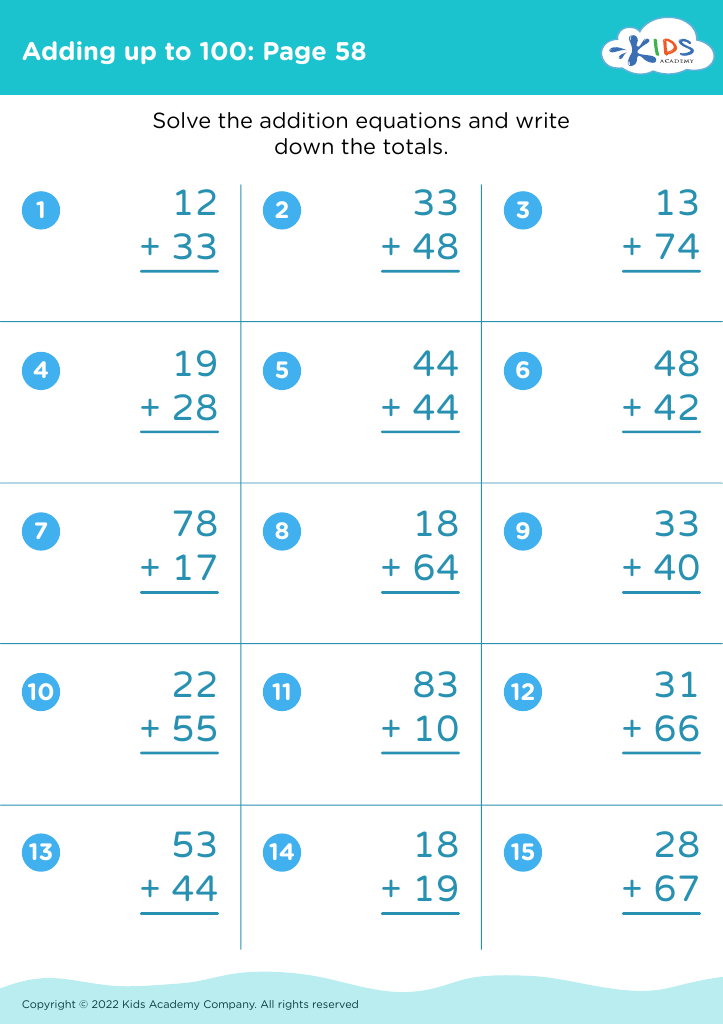
Adding up to 100: Page 58

Adding up to 100: Page 58

Adding up to 100: Page 58
Worksheet
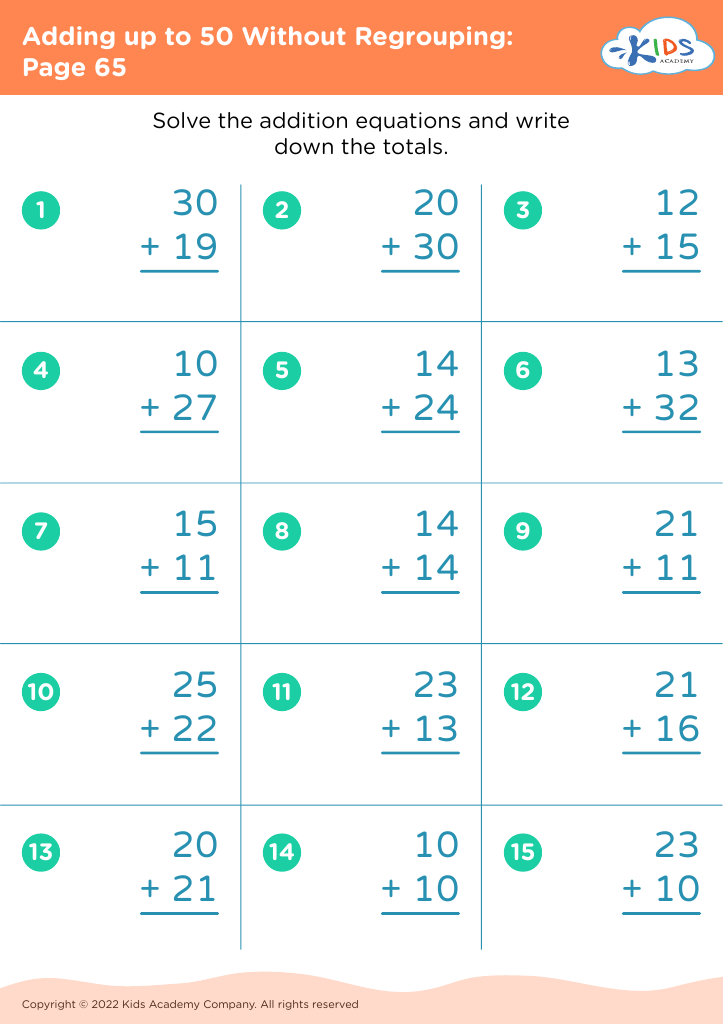
Adding up to 50 Without Regrouping: Page 65
Worksheet
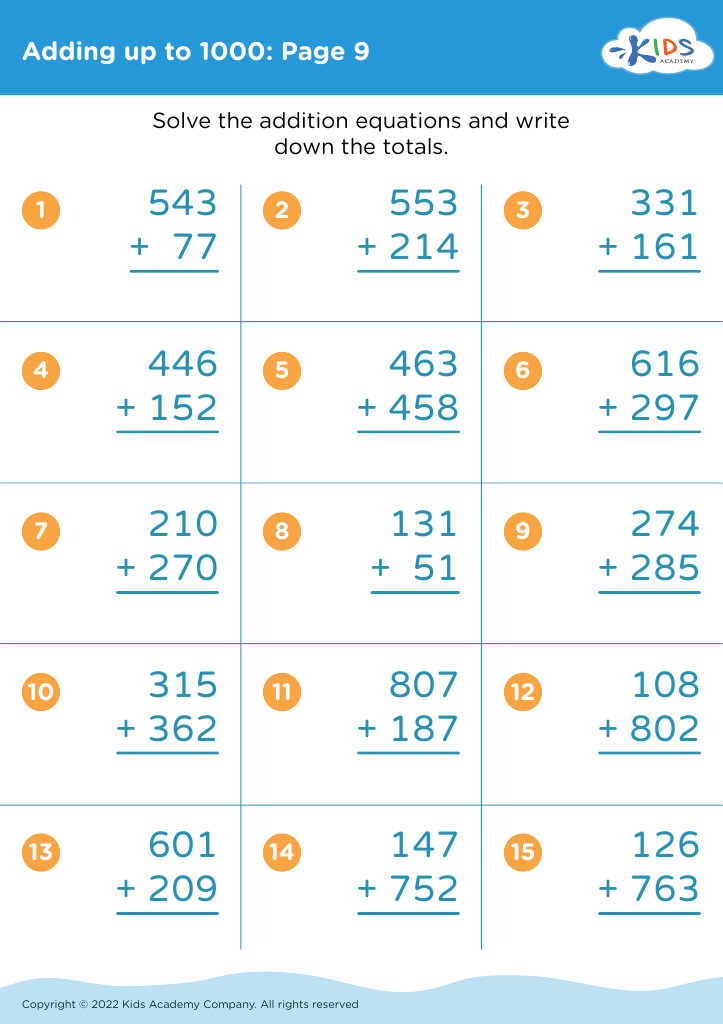
Adding up to 1000: Page 9

Adding up to 1000: Page 9

Adding up to 1000: Page 9
Worksheet
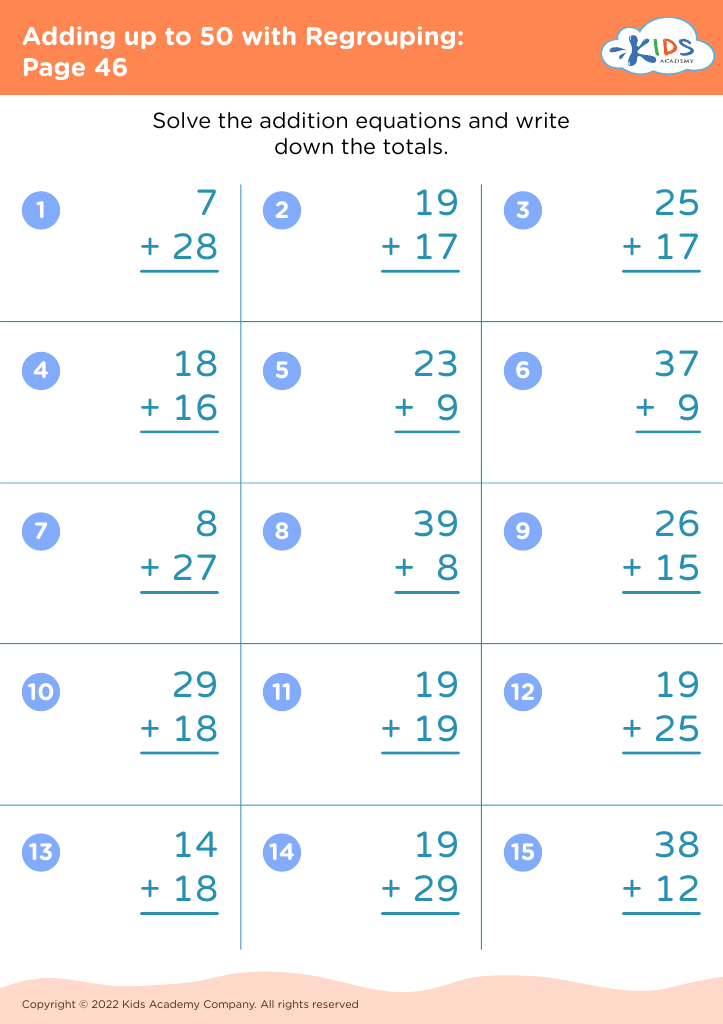
Adding up to 50 with Regrouping: Page 46
Worksheet
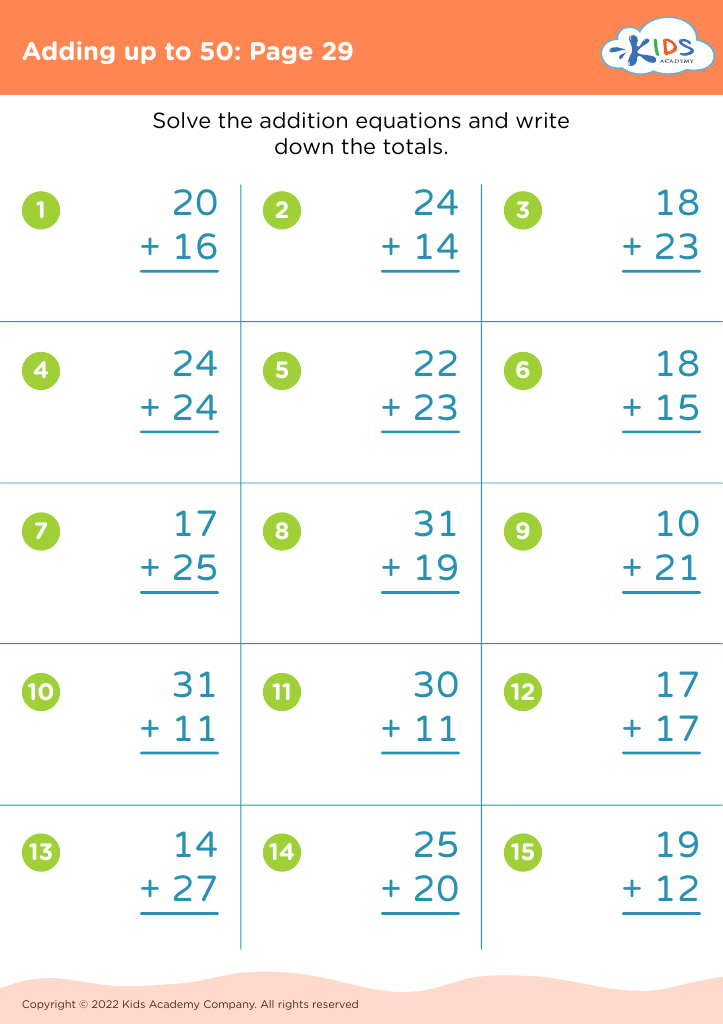
Adding up to 50: Page 29

Adding up to 50: Page 29

Adding up to 50: Page 29
Worksheet


Understanding fractions, particularly addition and subtraction, is crucial for children aged 3-7, as it lays a solid foundation for their mathematical skills. During these formative years, children are naturally curious and develop cognitive skills rapidly. Introducing fractions in a tangible way helps them grasp essential concepts of parts and wholes.

Fractions are often encountered in daily life, from sharing snacks to measuring ingredients, making it vital for young learners to comprehend these concepts. By learning to add and subtract fractions, children not only improve their problem-solving skills but also enhance their ability to understand ratios and proportions, which are fundamental in advanced mathematics.

Moreover, mental math involving fractions boosts critical thinking and cognitive flexibility. These skills are transferable and can support learning in other subjects, such as science and economics, later in life. By engaging with fractions early, parents and teachers foster a positive attitude towards math, promoting confidence and enthusiasm. Ultimately, investing time in teaching fractions helps set the stage for a child's future academic success, enabling them to navigate more complex mathematical concepts with ease as they progress through school.