Understand number relationships Addition & Subtraction Worksheets for Ages 3-7
3 filtered results
-
From - To
Nurture your child's early math skills with our "Understand Number Relationships: Addition & Subtraction Worksheets for Ages 3-7." These interactive and fun worksheets are designed to help young learners grasp basic addition and subtraction concepts, enhancing their number sense and problem-solving abilities. Each worksheet is filled with colorful images and engaging activities, making learning enjoyable and effective. Perfect for preschoolers, kindergarteners, and first graders, our expertly crafted resources provide hands-on practice to solidify foundational math skills. Support your child's educational journey with these essential tools for math success. Visit our website now to get started!
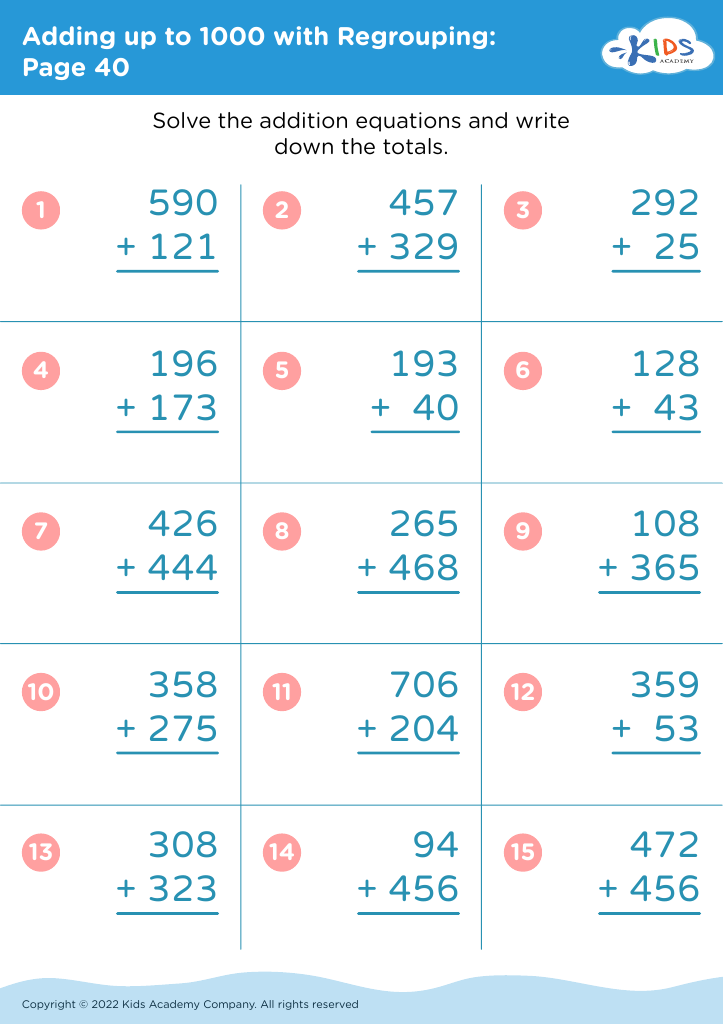
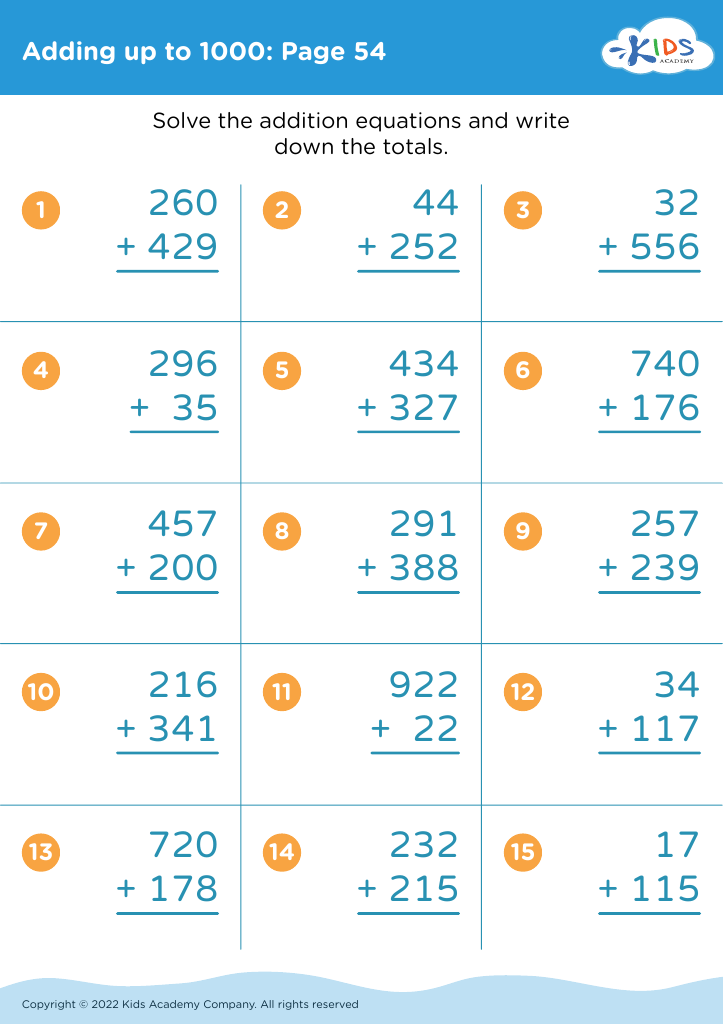
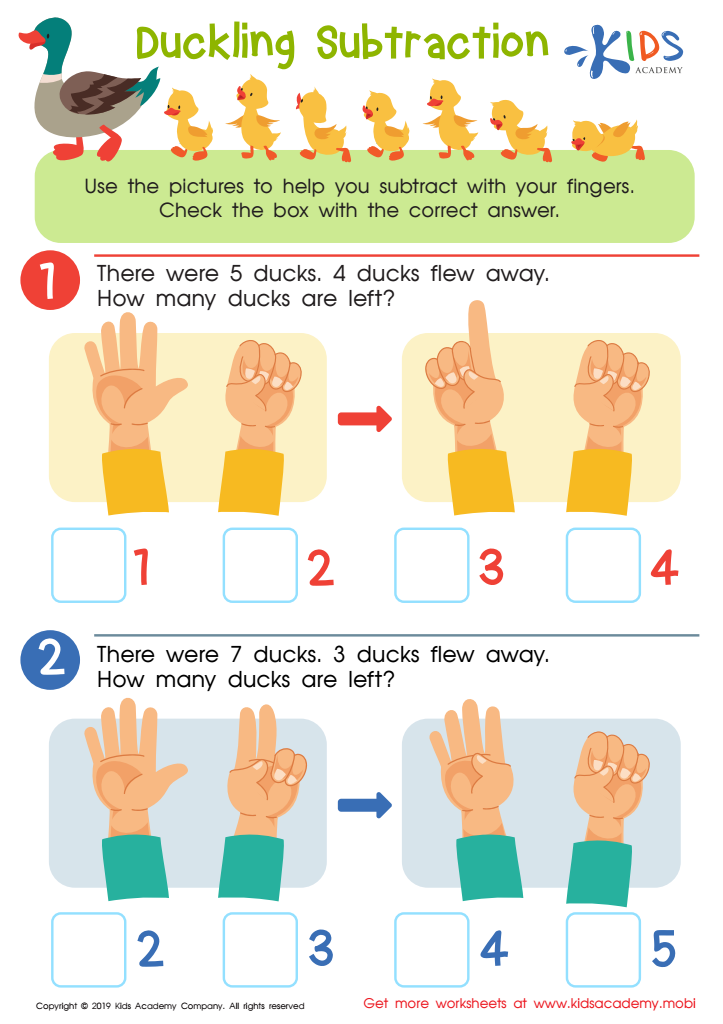
Duckling Subtraction Worksheet
 Assign to My Students








Understanding number relationships, encompassing addition and subtraction, is crucial for children ages 3-7 as it lays the foundation for their future mathematical learning. For parents and teachers, fostering these skills early on is essential because these fundamental concepts serve as building blocks for more complex mathematical reasoning and problem-solving abilities.
Firstly, comprehension of number relationships helps children grasp the concept of quantities and how they can change. Recognizing that adding one more item increases the total, or taking one away reduces the amount, introduces kids to the basic principles of how the world quantitatively works. This builds their intuitive sense of numbers, a critical stepping-stone to arithmetic.
Additionally, early exposure to these concepts enhances a child’s cognitive development. Encouraging playful yet educational activities involving counting, simple addition, and subtraction can boost memory, logical thinking, and pattern recognition. For example, using blocks or drawing visuals can make learning interactive and enjoyable, promoting active engagement.
Moreover, children who have a solid understanding of early math are more likely to excel in future education. Mastery of these fundamental skills reduces math anxiety and builds self-confidence, essential traits that support not only academic achievement but an inclination towards lifelong learning.
In summary, prioritizing the understanding of number relationships through addition and subtraction during ages 3-7 ensures that children develop essential cognitive skills and a positive attitude towards mathematics, providing a robust framework for more advanced educational endeavors.








