Understanding number patterns Addition & Subtraction Worksheets for Ages 3-7
3 filtered results
-
From - To
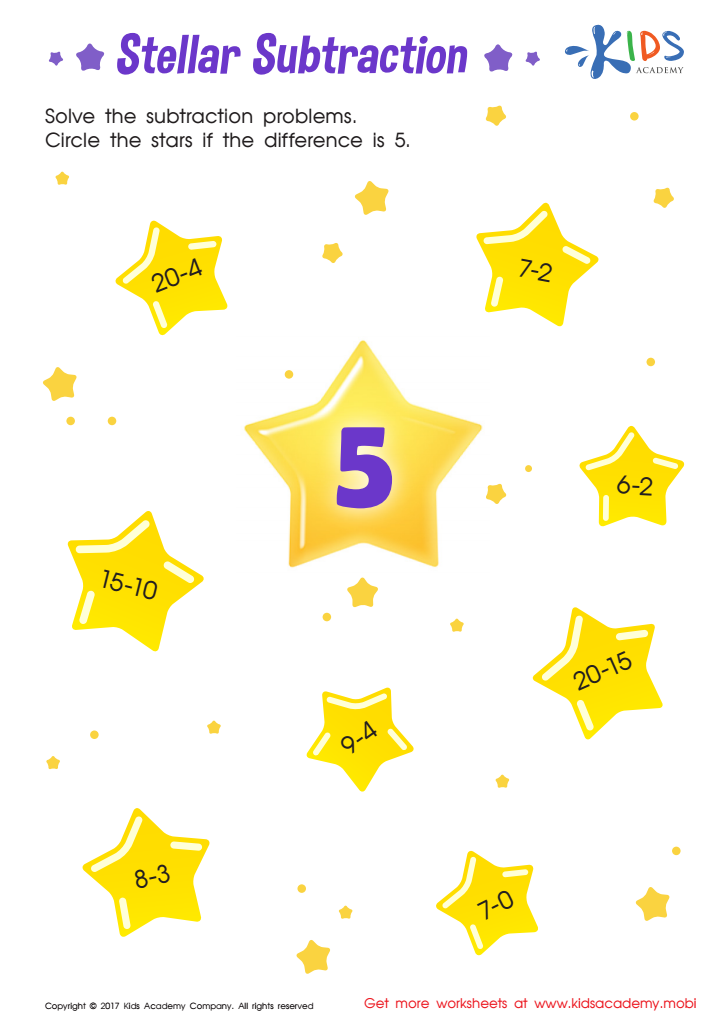
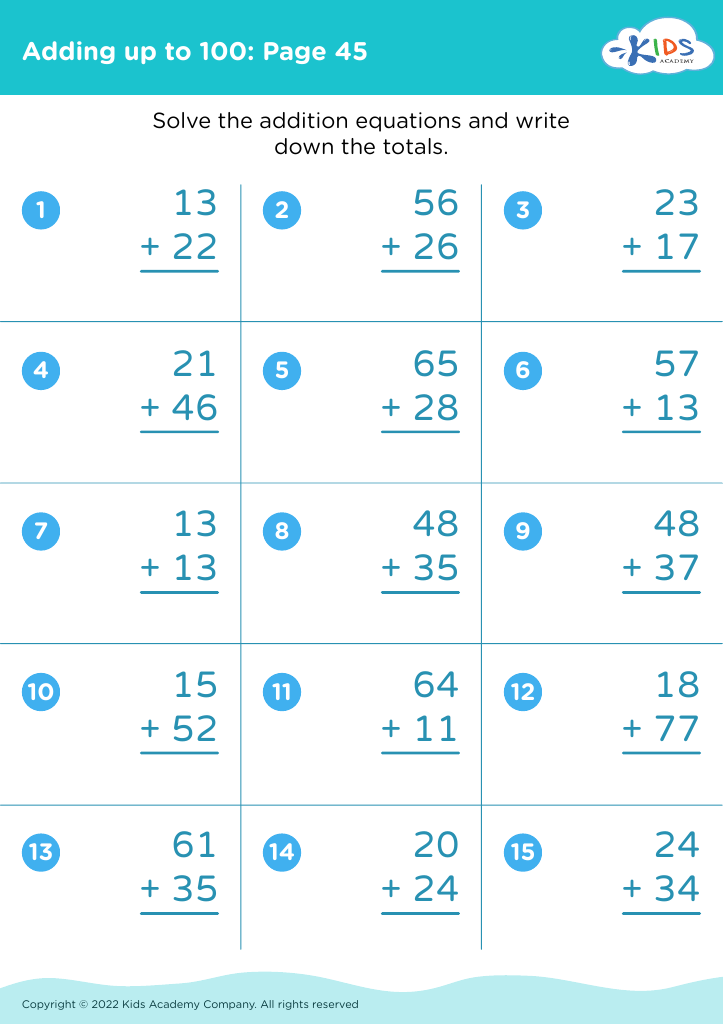
Nurture your child's math skills with our "Understanding Number Patterns: Addition & Subtraction Worksheets for Ages 3-7". These engaging worksheets are designed to help young learners identify and complete patterns using addition and subtraction. Perfect for children aged 3 to 7, the activities aim to create a fun and interactive learning experience. By recognizing patterns, kids can enhance their critical thinking and problem-solving abilities. Perfect for use at home or in the classroom, these worksheets support foundational math skills, preparing your child for future academic success. Explore a world of numbers and start your child's educational journey today!
 Assign to My Students
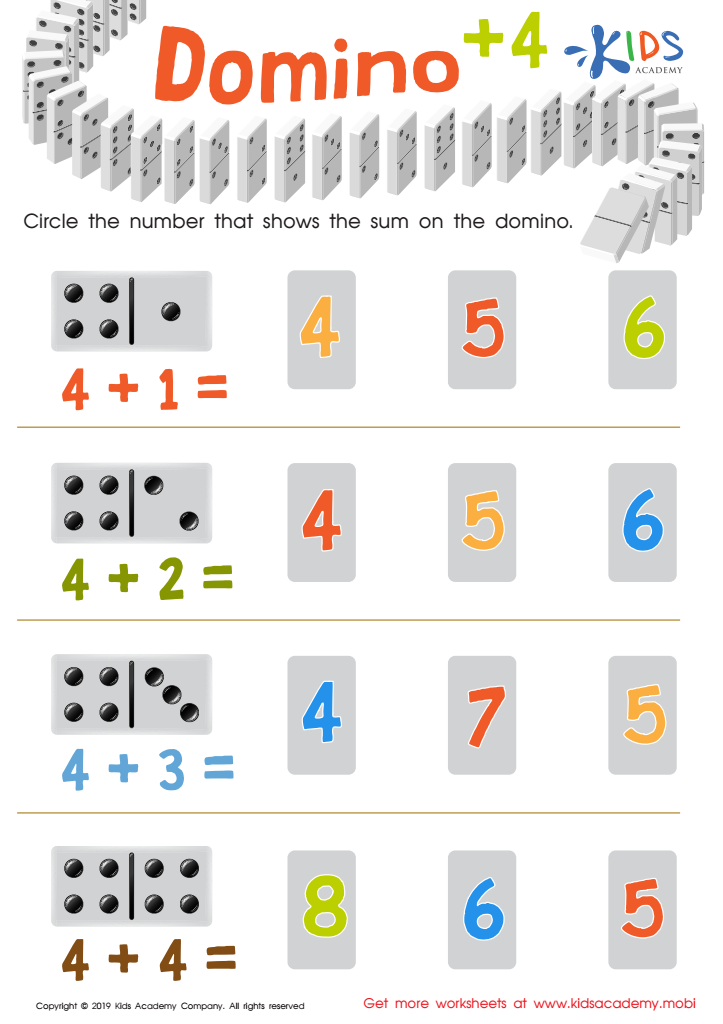
Domino +4 Worksheet








Understanding number patterns, addition, and subtraction for children ages 3-7 is critical for several reasons. At these early stages, young minds are especially receptive to foundational concepts that will shape their future academic and cognitive abilities. Introducing number patterns helps children recognize relationships between numbers, fostering critical thinking and problem-solving skills. This foundational skill aids in their overall numerical literacy, enabling them to detect regularities and predict future outcomes, both of which are vital in mathematics and real-life scenarios.
Addition and subtraction are the building blocks of arithmetic. Teaching these concepts early establishes a strong numerical foundation upon which more complex mathematical principles are constructed. When children grasp basic operations, their confidence in tackling more advanced math increases. It also enhances their ability to perform everyday tasks, such as counting toys, sharing items evenly, or measuring ingredients during cooking.
Moreover, early engagement with mathematical concepts promotes cognitive abilities like memory, attention to detail, and logical thinking. In an increasingly STEM-focused world, these skills are invaluable. Therefore, by prioritizing number patterns and basic arithmetic in early childhood, parents and teachers equip children with critical tools for their academic journey and daily life.








