Filters

16 filtered results

Clear all filters
Favorites
With answer key
Interactive

16 filtered results

Difficulty Level

Grade


Enhance your child's early math skills with our Basic Addition Worksheets, designed specifically for ages 3-7. These engaging, printable resources help young learners grasp the fundamentals of addition through colorful and interactive exercises. Perfect for home or classroom use, the worksheets promote number recognition and simple equation solving, making early math fun and educational. Each activity fosters critical thinking and problem-solving abilities, catering to various learning styles. With easy-to-follow instructions and various difficulty levels, these worksheets are perfect for guiding your child's mathematical journey. Start building a strong foundation in addition today! Perfect for keeping kids engaged and excited about math.
Check out this FREE Trial Lesson on Addition for age 3-7!

P

Favorites
With answer key
Interactive
  • 3-7
  • Basic Addition
  • Addition
Adding 2-digit Numbers: Page 23

Adding 2-digit Numbers: Page 23

Adding 2-digit Numbers: Page 23
Worksheet
Adding up to 1000: Page 8

Adding up to 1000: Page 8

Adding up to 1000: Page 8
Worksheet
Adding up to 100: Page 4

Adding up to 100: Page 4

Adding up to 100: Page 4
Worksheet
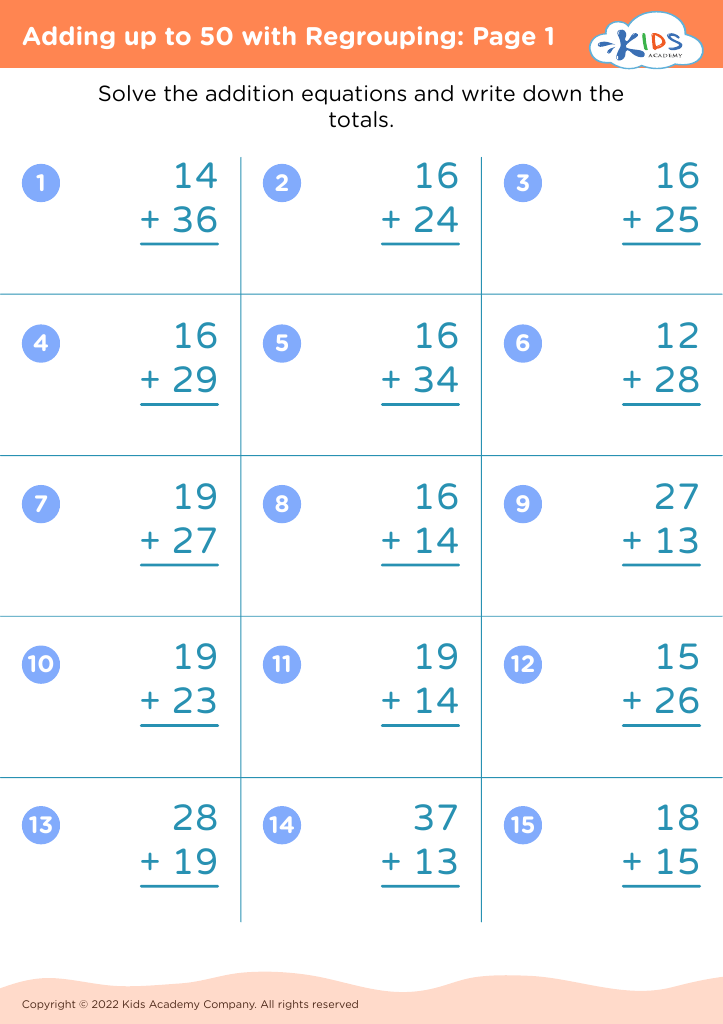
Adding up to 50 with Regrouping: Page 1
Worksheet
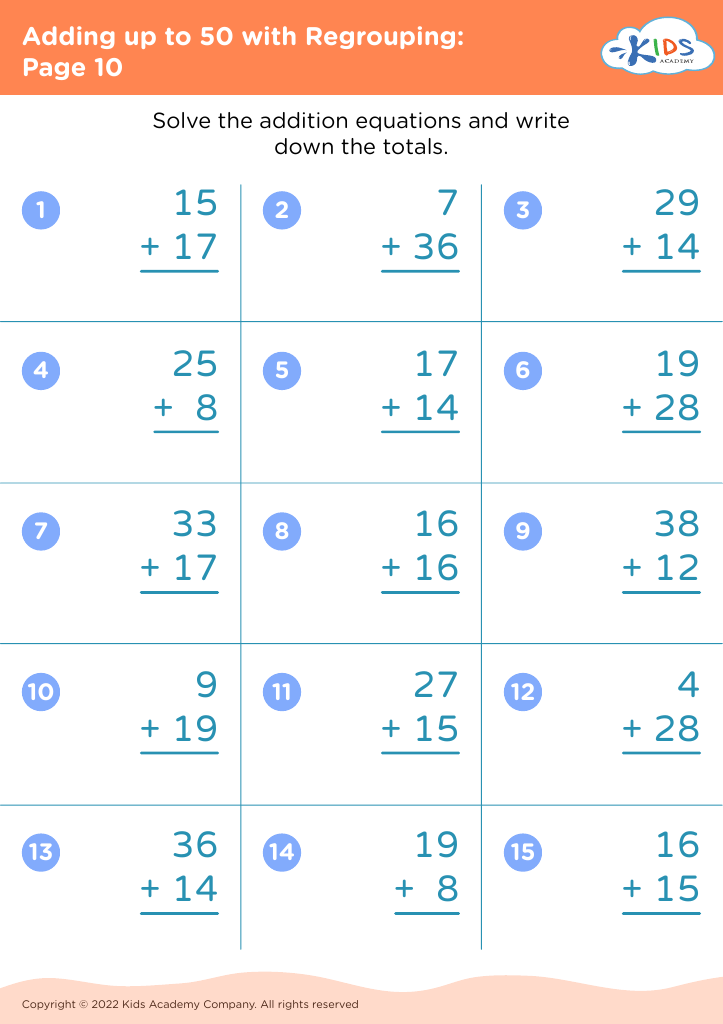
Adding up to 50 with Regrouping: Page 10
Worksheet
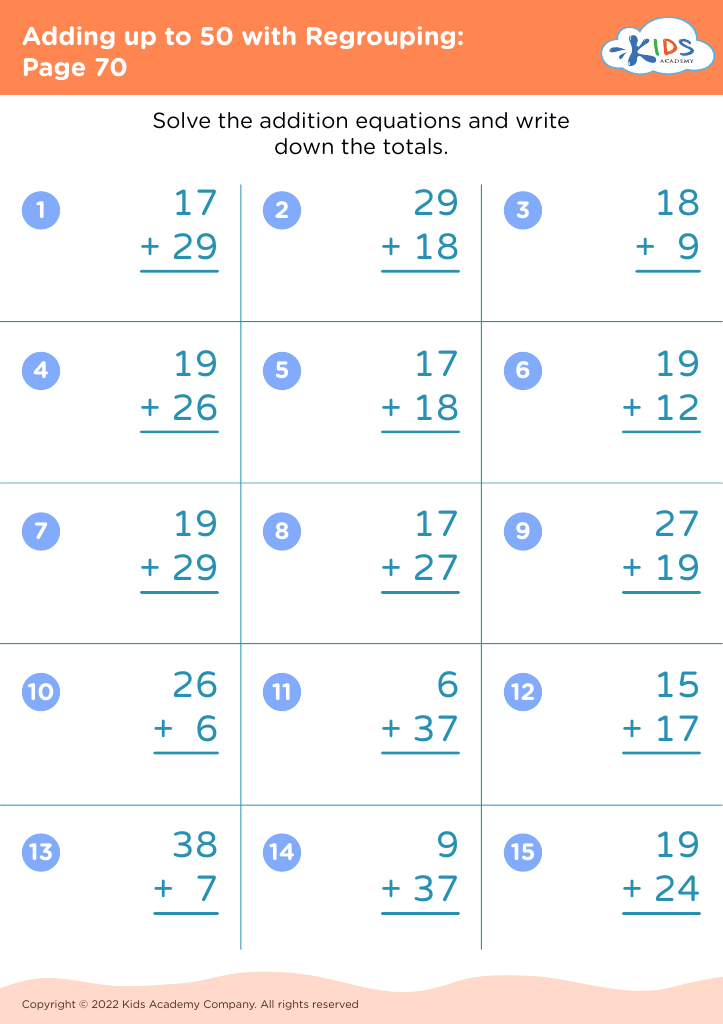
Adding up to 50 with Regrouping: Page 70
Worksheet
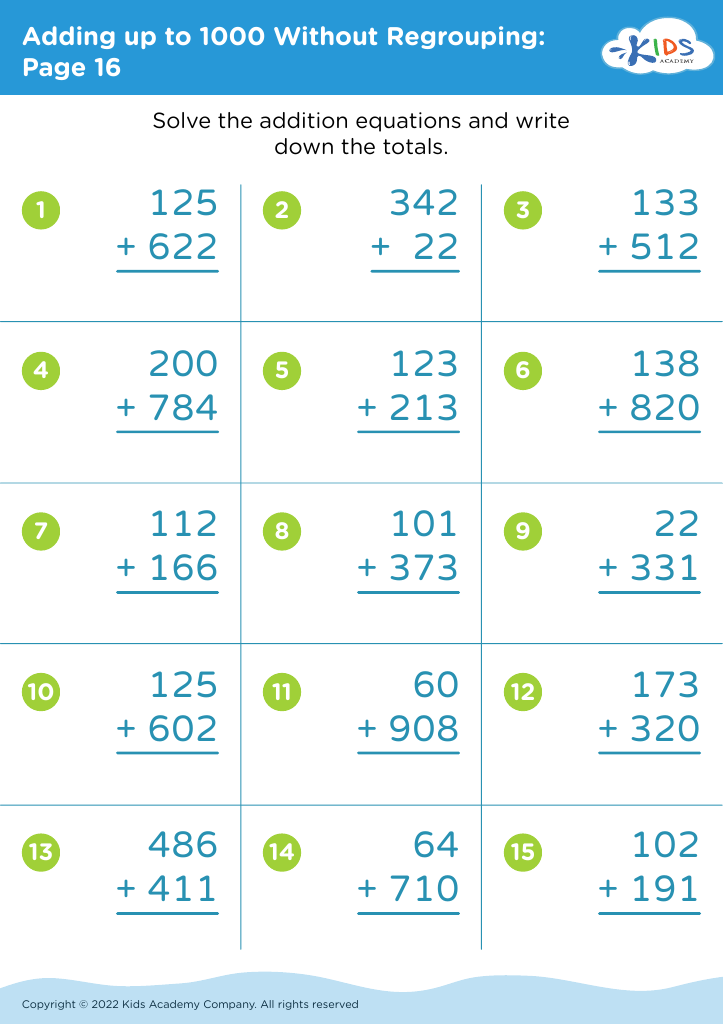
Adding up to 1000 Without Regrouping: Page 16
Worksheet
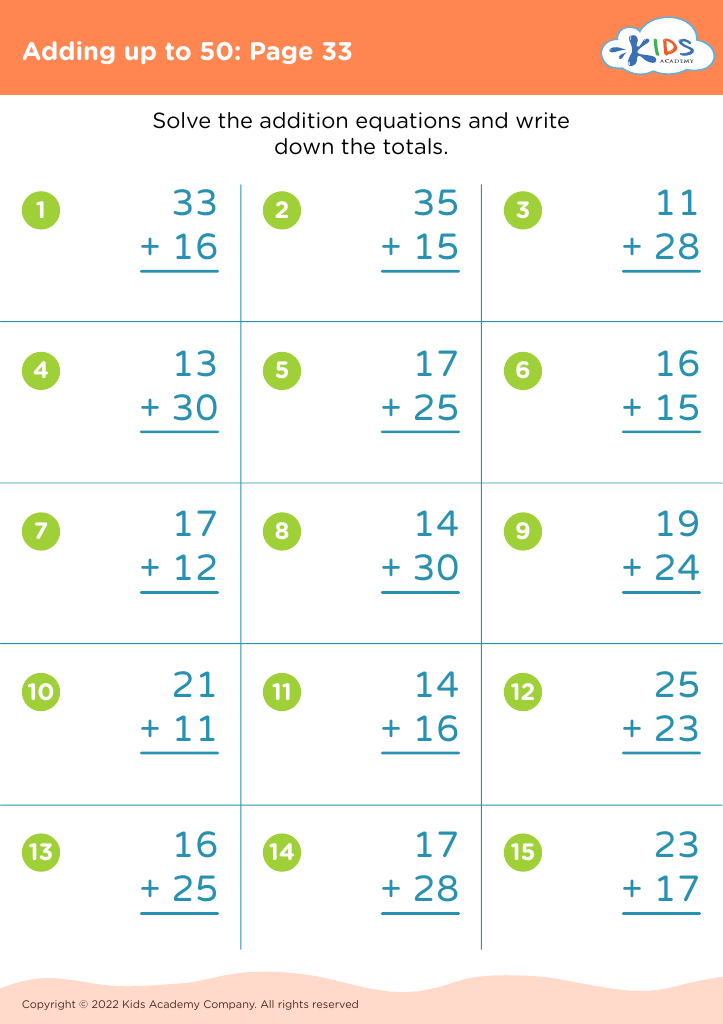
Adding up to 50: Page 33

Adding up to 50: Page 33

Adding up to 50: Page 33
Worksheet
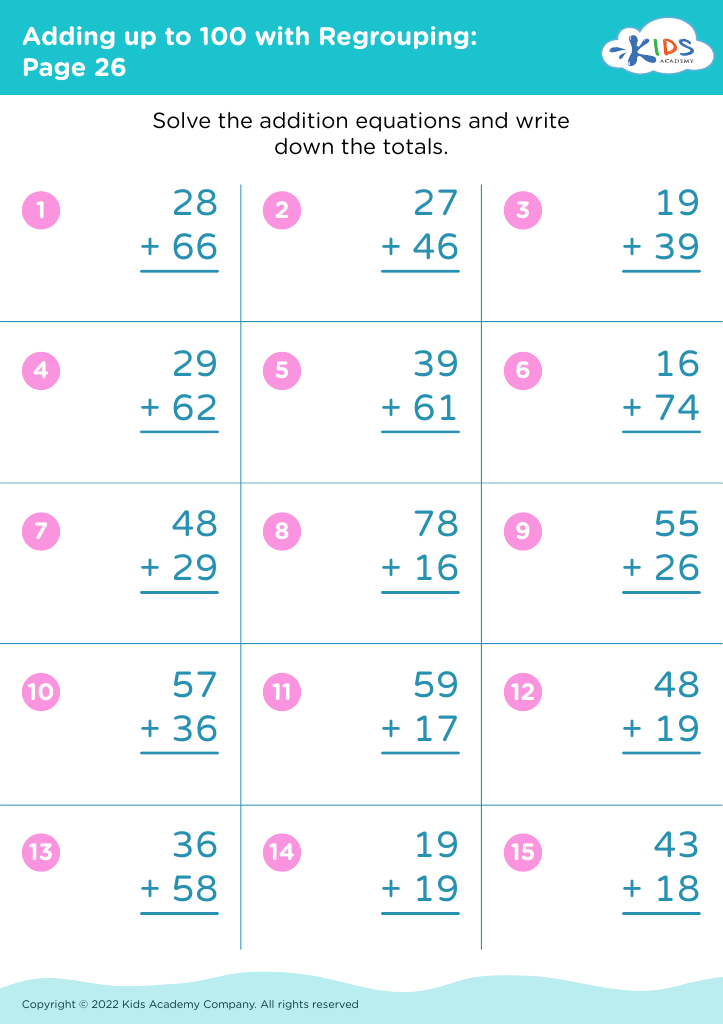
Adding up to 100 with Regrouping: Page 26
Worksheet
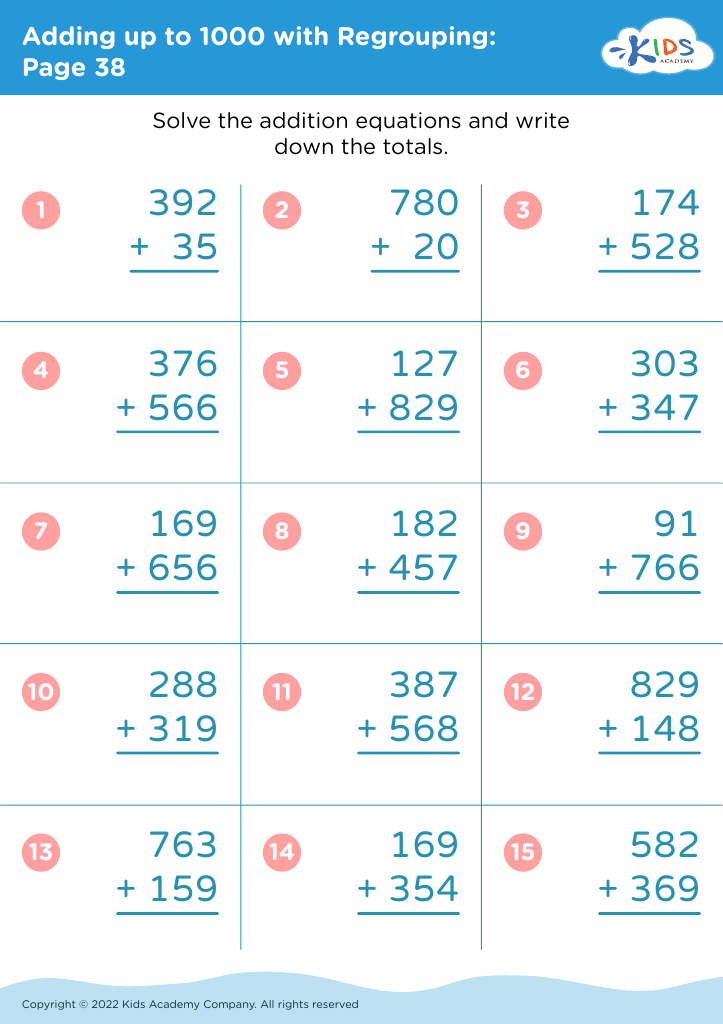
Adding up to 1000 with Regrouping: Page 38
Worksheet
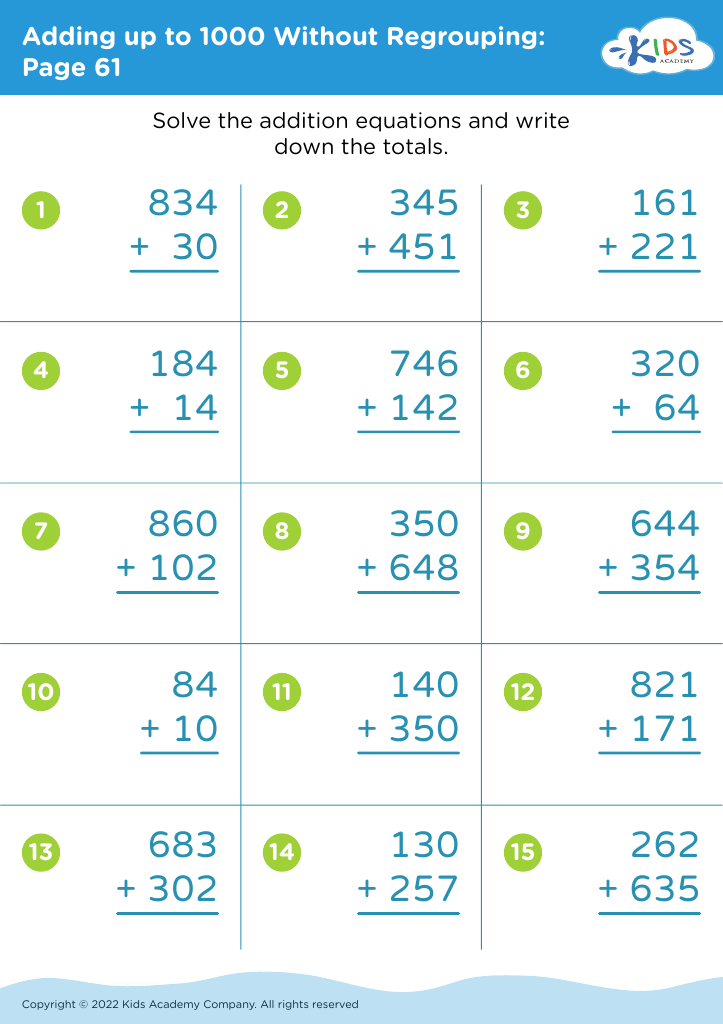
Adding up to 1000 Without Regrouping: Page 61
Worksheet
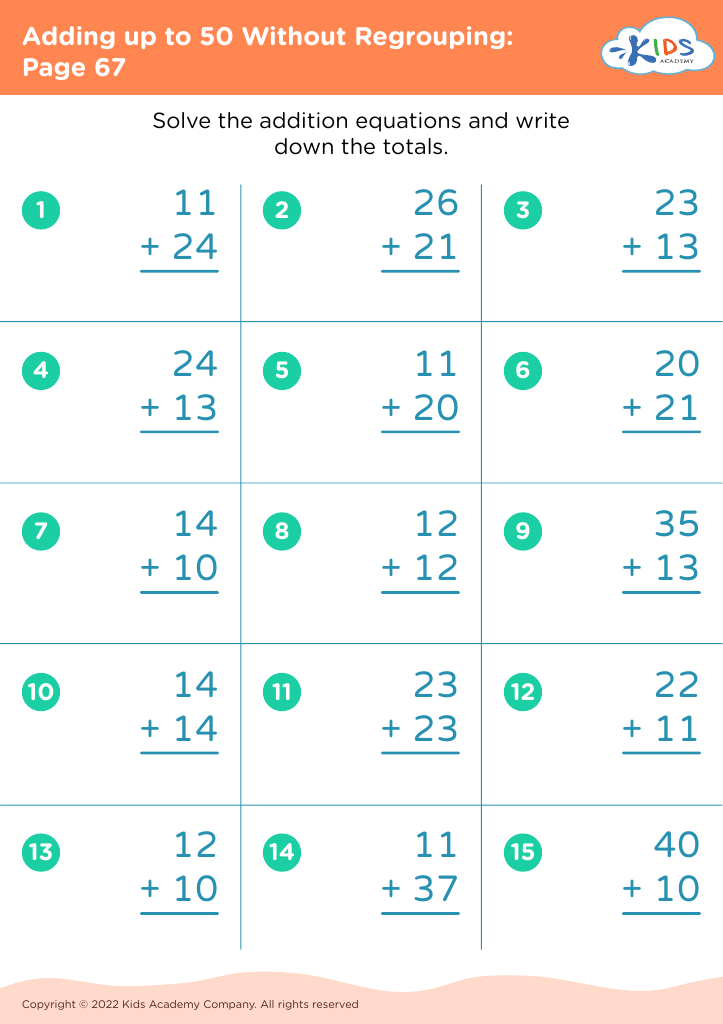
Adding up to 50 Without Regrouping: Page 67
Worksheet
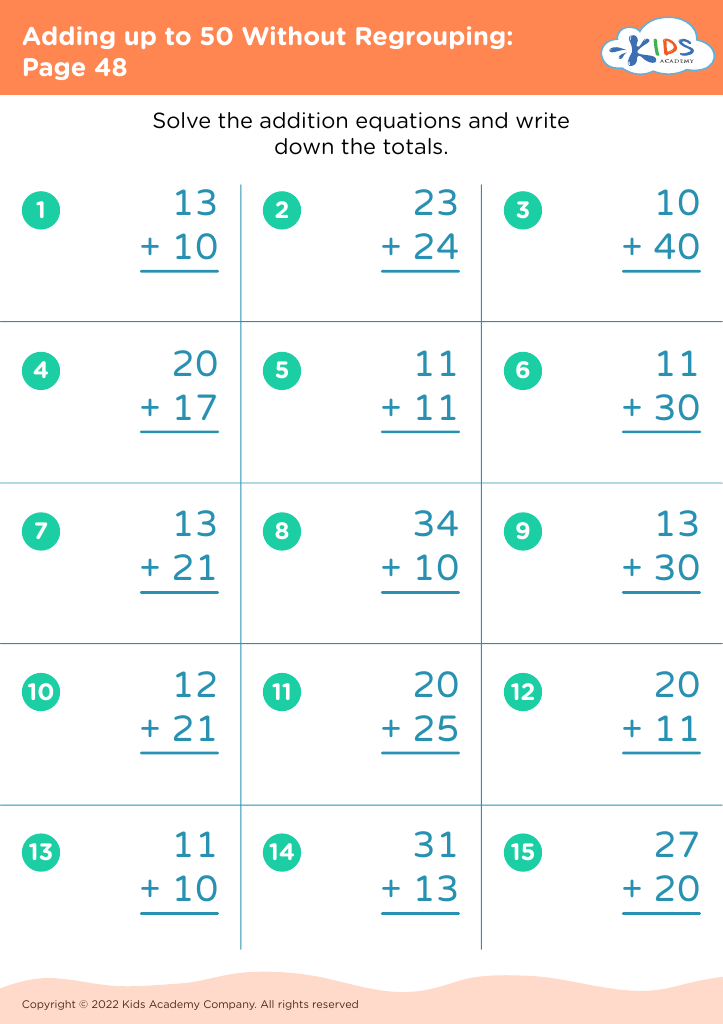
Adding up to 50 Without Regrouping: Page 48
Worksheet
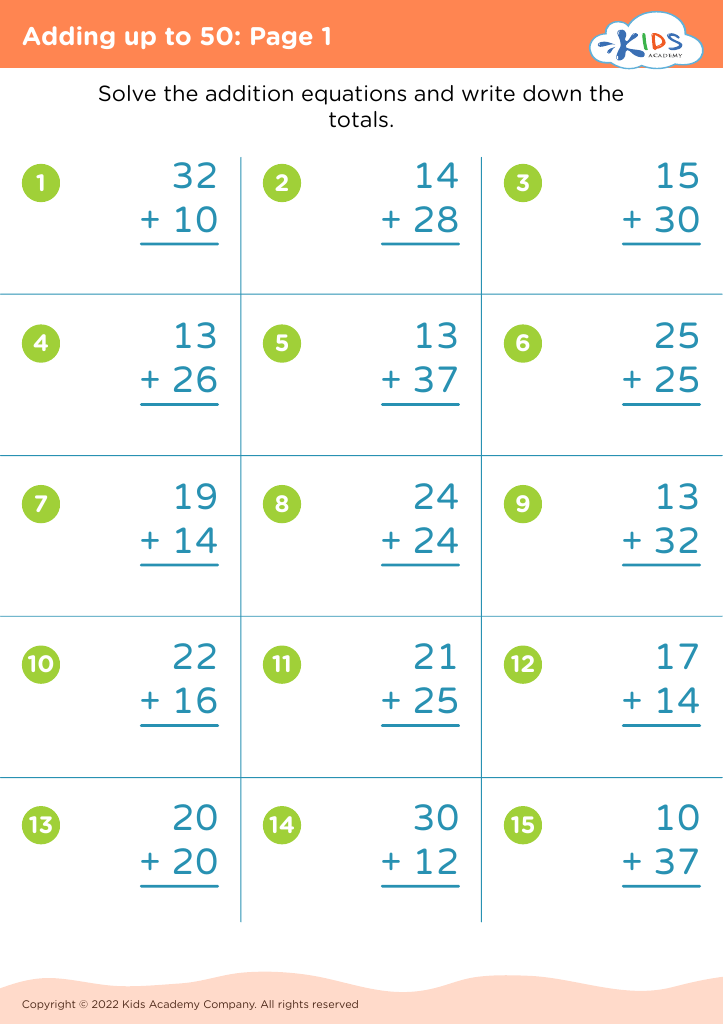
Adding up to 50: Page 1

Adding up to 50: Page 1

Adding up to 50: Page 1
Worksheet
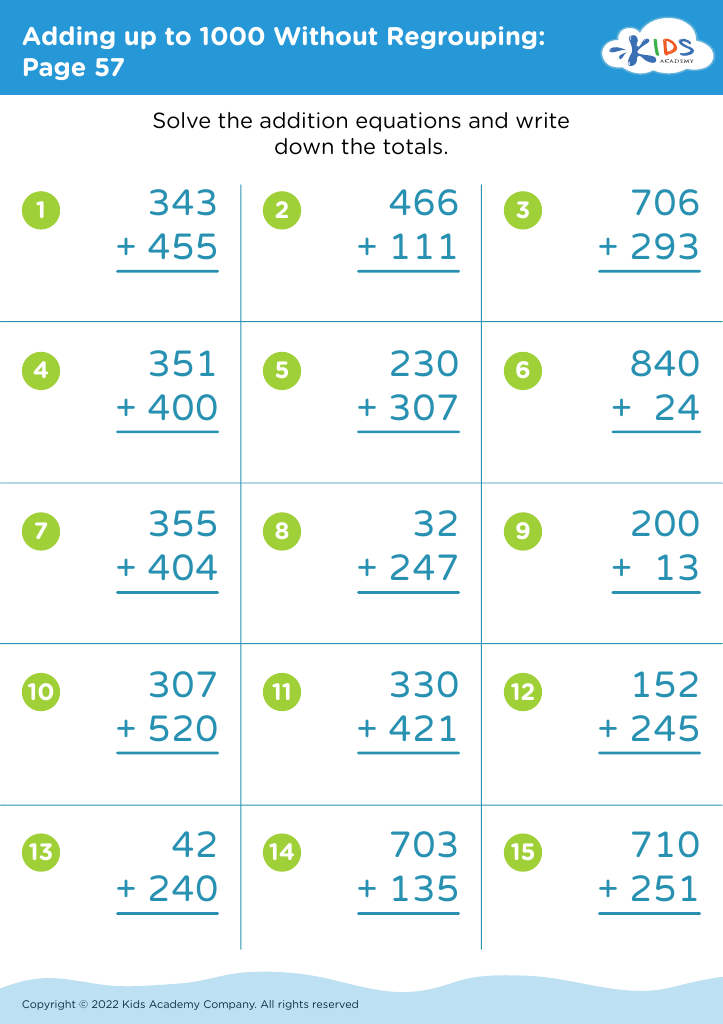
Adding up to 1000 Without Regrouping: Page 57
Worksheet
Adding up to 1000 Without Regrouping: Page 70
Worksheet


Basic addition is a fundamental skill that lays the foundation for a child's future learning in mathematics and problem-solving. For children aged 3-7, mastering basic addition not only aids in their numerical understanding but also enhances critical cognitive and social skills. At this age, children are naturally curious and eager to learn, making it an ideal time for introducing mathematical concepts.

Parents and teachers should prioritize teaching basic addition because it fosters a sense of accomplishment in young learners. When children grasp the concept of adding numbers, they gain confidence in their abilities, which encourages a positive attitude towards learning. Furthermore, early exposure to addition supports the development of logical thinking, enabling children to tackle more complex mathematical problems in later grades.

Additionally, basic addition has real-world applications. Children learn to apply math skills in everyday situations, such as counting fruits during shopping or sharing toys, which reinforces their understanding. It also promotes group activities and cooperative play, helping to build social skills as children learn to interact with peers.

In essence, nurturing math skills in young children lays the foundation for lifelong learning and equips them with the tools necessary for academic success.