Filters

39 filtered results

Clear all filters
Favorites
With answer key
Interactive

39 filtered results

Difficulty Level

Grade


Introduce your child to the exciting world of math with our Basic Arithmetic Addition Worksheets designed for ages 3-7! Our engaging and educational worksheets capture young learners' interest through fun exercises, colorful visuals, and interactive problems. These printable worksheets are perfect for early childhood education, allowing children to develop foundational addition skills in a step-by-step manner. Each activity is tailored to enhance critical thinking, number recognition, and problem-solving abilities. Ideal for both classroom and at-home learning, these worksheets provide an enjoyable pathway to mastering basic arithmetic. Unlock your child's potential and boost their confidence in math today!
Check out this FREE Trial Lesson on Addition for age 3-7!

Match Exactly the Same

Favorites
With answer key
Interactive
  • 3-7
  • Basic Arithmetic
  • Addition
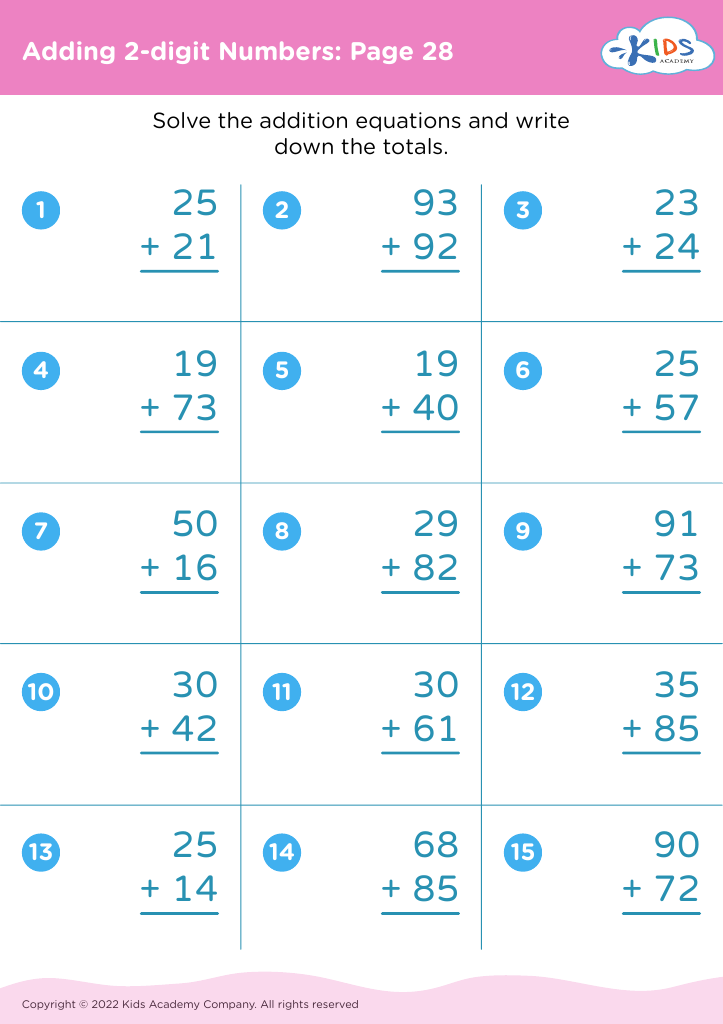
Adding 2-digit Numbers: Page 28

Adding 2-digit Numbers: Page 28

Adding 2-digit Numbers: Page 28
Worksheet
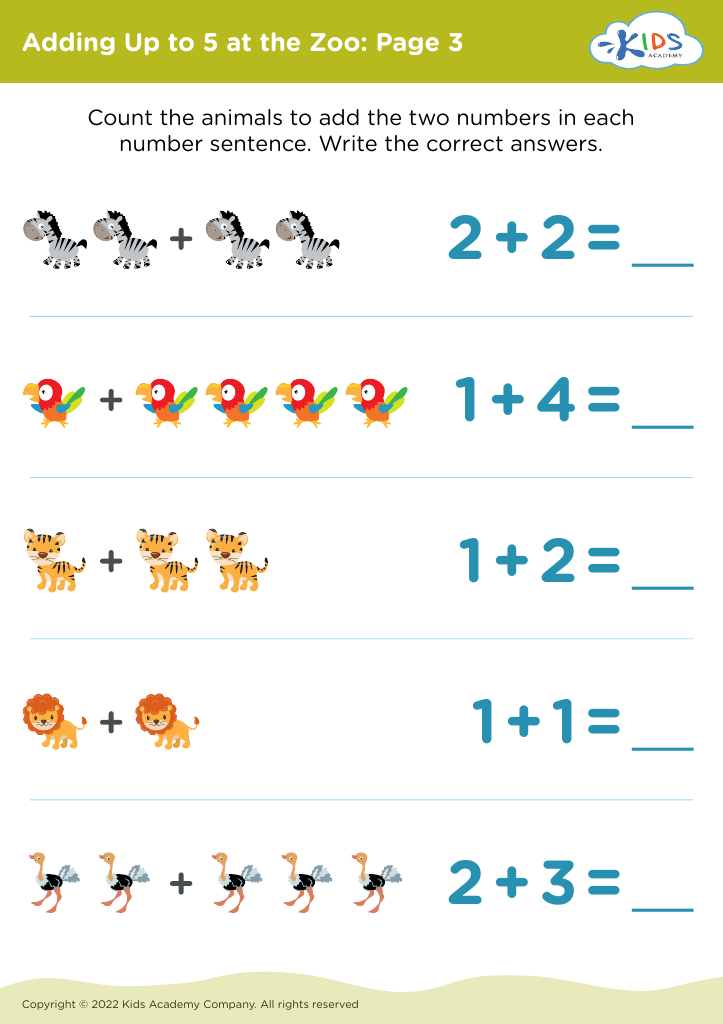
Adding Up to 5 at the Zoo: Page 3

Adding Up to 5 at the Zoo: Page 3

Adding Up to 5 at the Zoo: Page 3
Worksheet
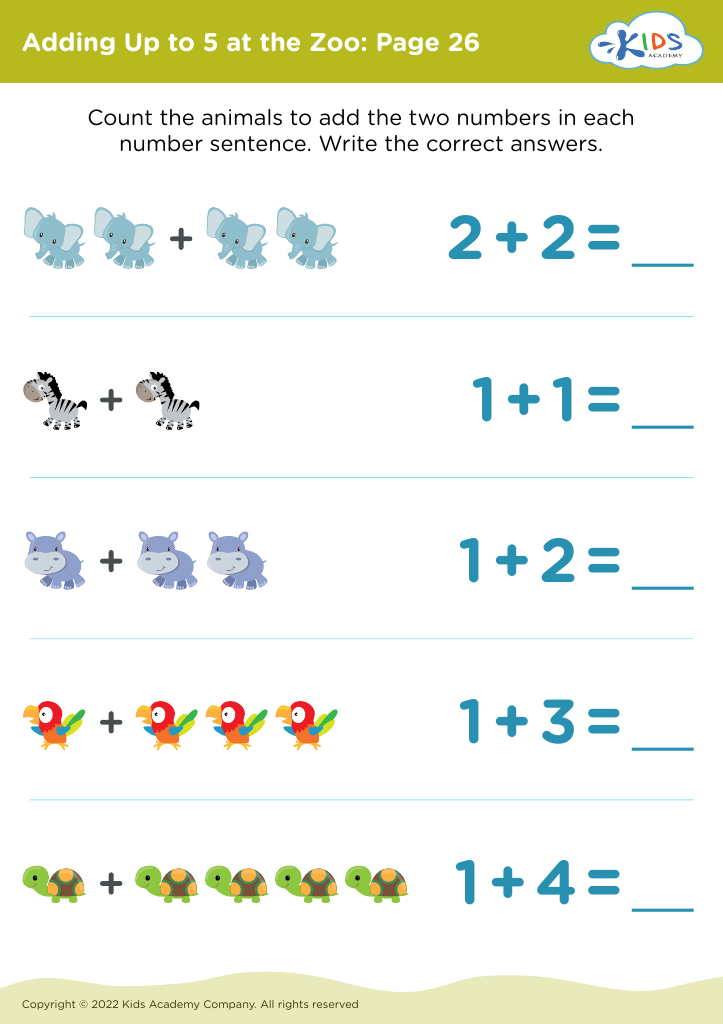
Adding Up to 5 at the Zoo: Page 26
Worksheet
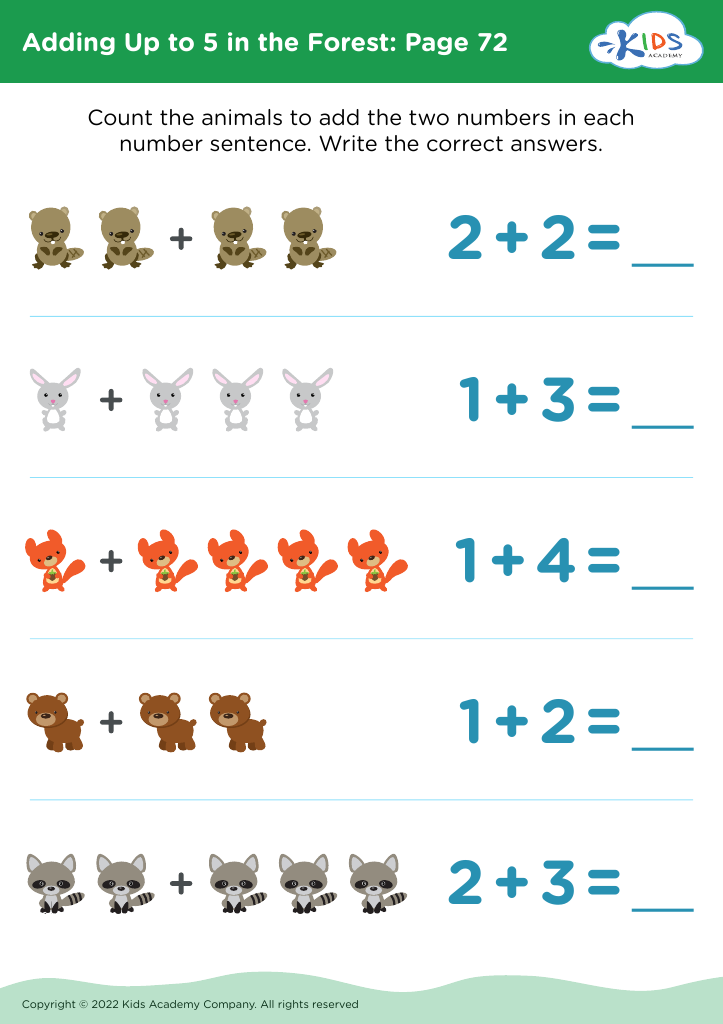
Adding Up to 5 in the Forest: Page 72
Worksheet
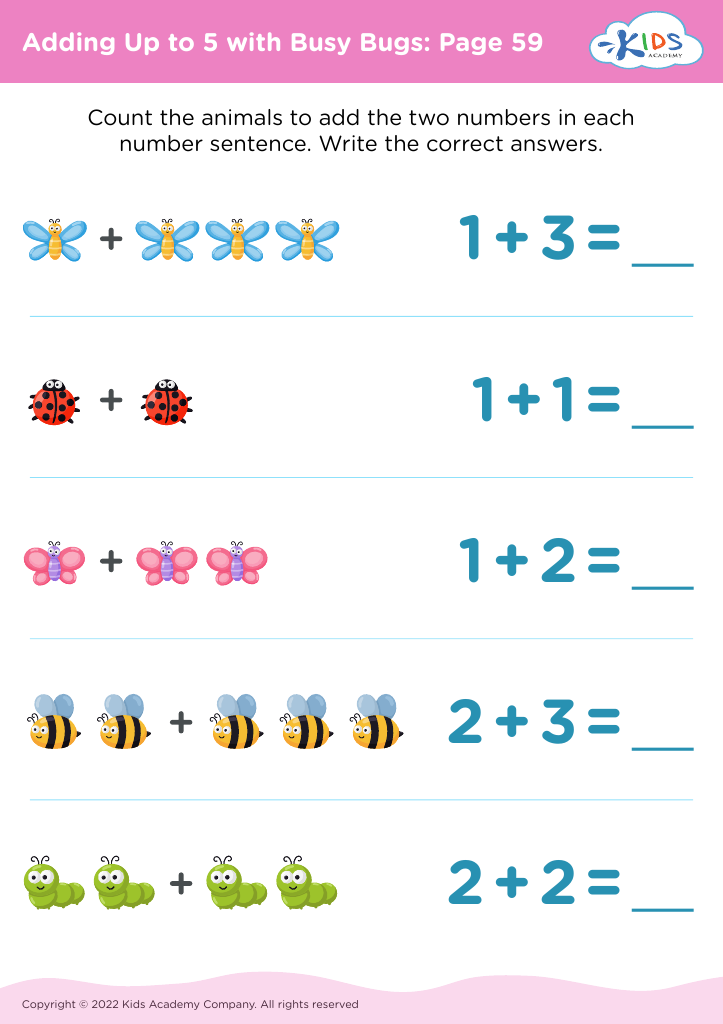
Adding Up to 5 with Busy Bugs: Page 59
Worksheet
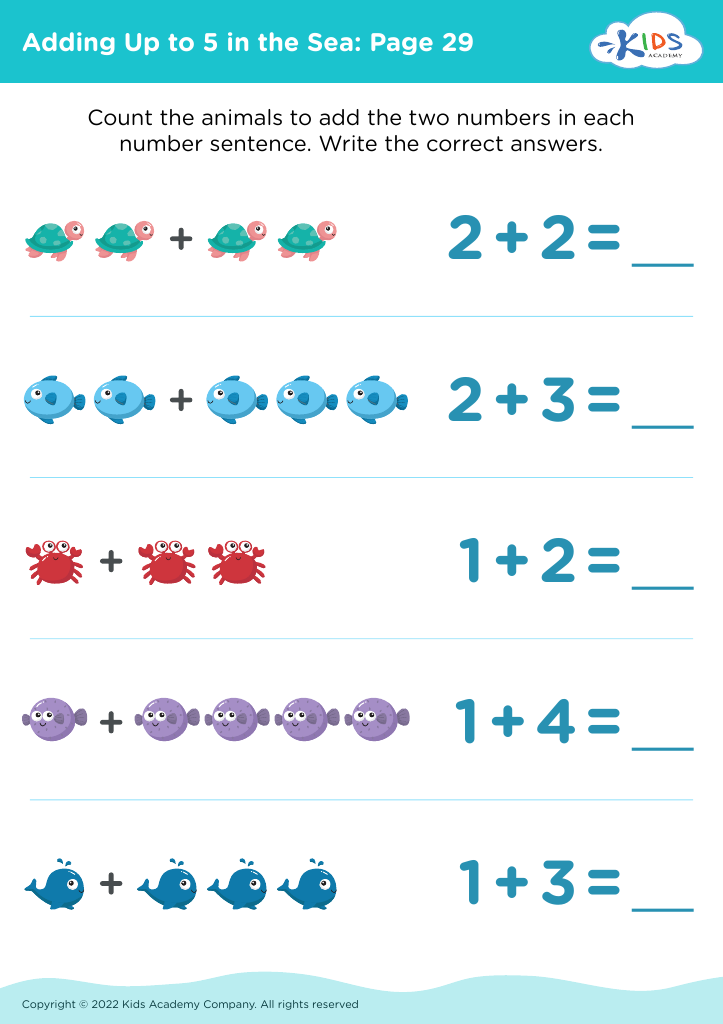
Adding Up to 5 in the Sea: Page 29
Worksheet
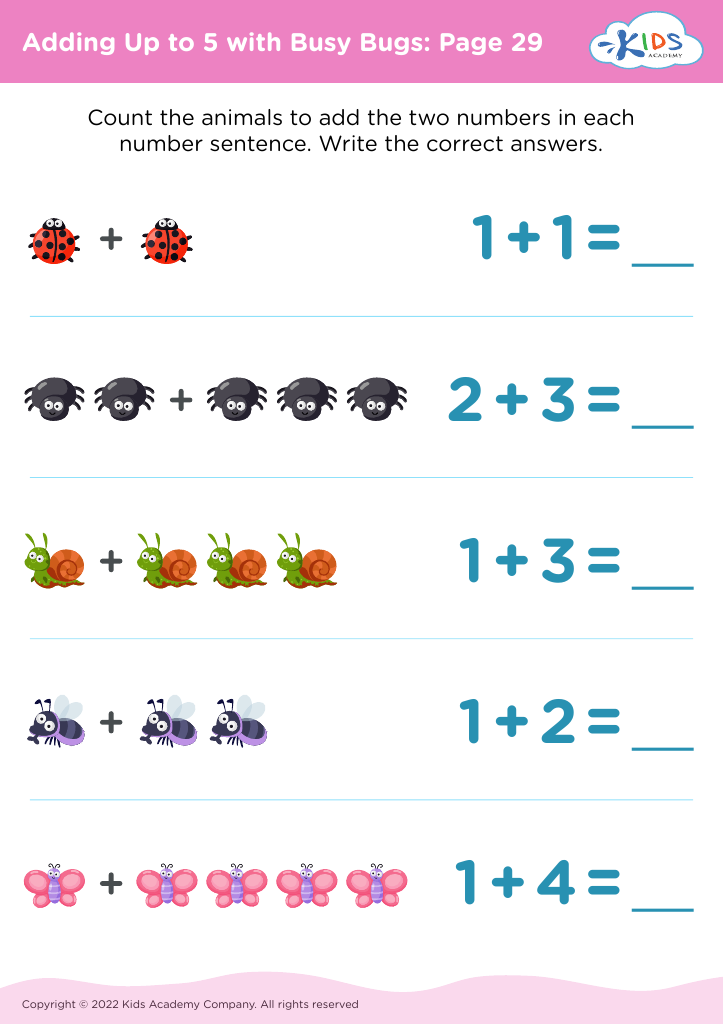
Adding Up to 5 with Busy Bugs: Page 29
Worksheet
Adding up to 100 with Regrouping: Page 16
Worksheet
Help the Warthog Count the Grubs Worksheet

Help the Warthog Count the Grubs Worksheet

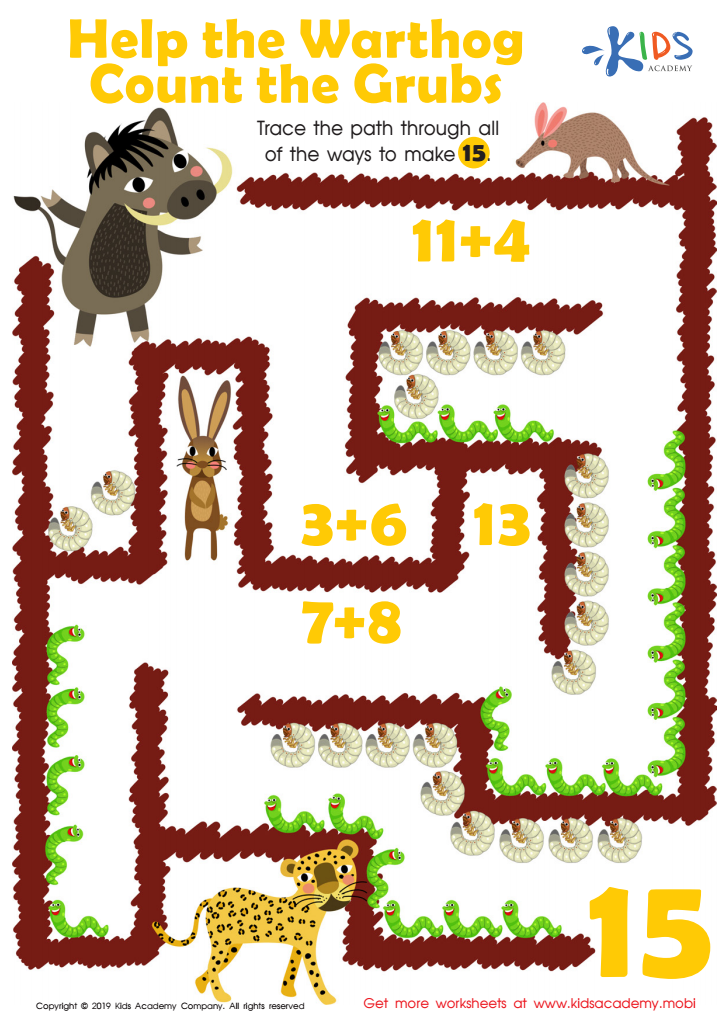
Test your kids' knowledge of wild animals. Ask them to name some they know, then have them identify the animals on this worksheet. If they can't, take the time to tell them the names. Finally, trace the warthog's path through the maze by solving the equations and going through paths that make 15.
Help the Warthog Count the Grubs Worksheet
Worksheet
Adding Up to 5 with Busy Bugs: Page 74
Worksheet
Adding Up to 5 on the Farm: Page 77
Worksheet
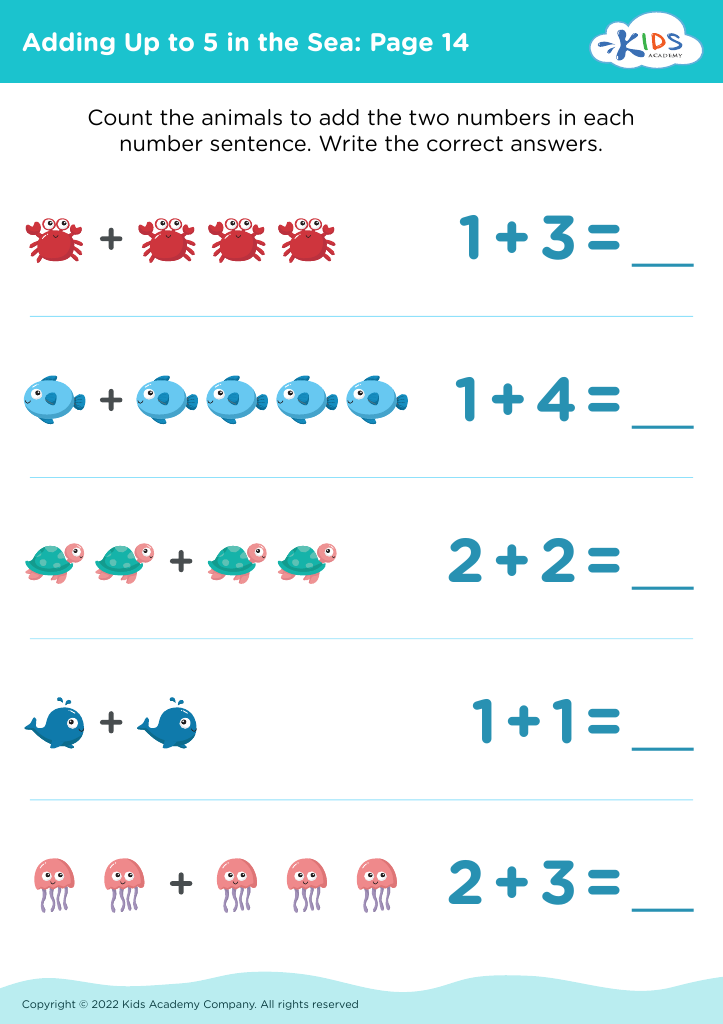
Adding Up to 5 in the Sea: Page 14
Worksheet
Adding Up with Old MacDonald Worksheet
Adding Up with Old MacDonald Worksheet
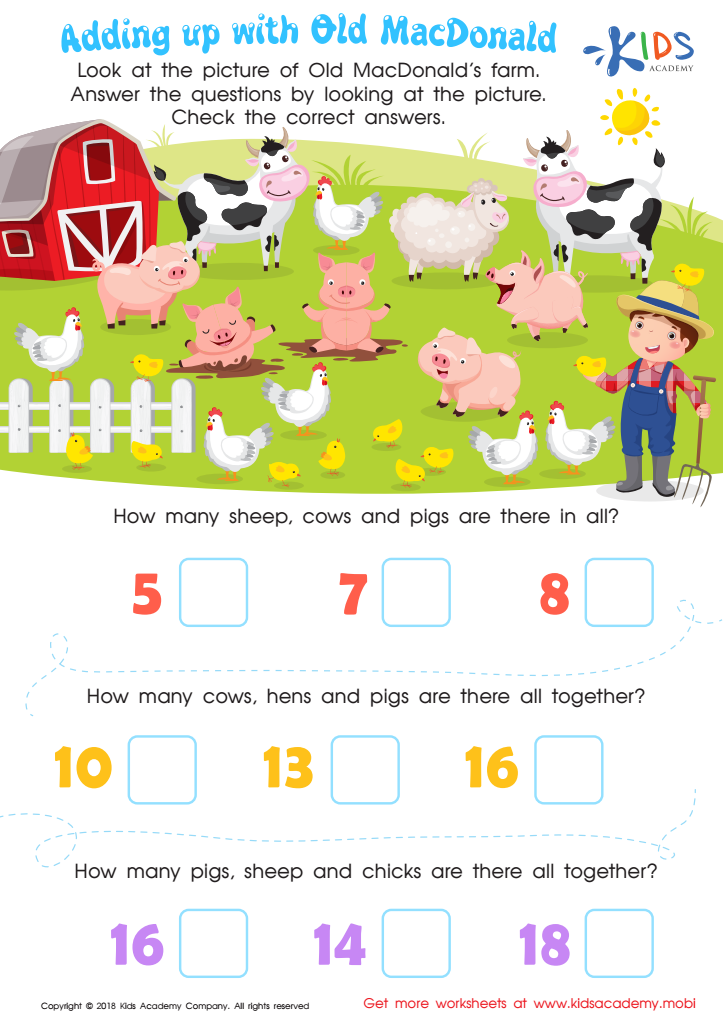
Old MacDonald needs help counting his animals! Give your little math whiz a fun challenge with a free PDF worksheet. They'll love counting the animals and doing basic addition with two or three addends. Who knew math could be so much fun on the farm?
Adding Up with Old MacDonald Worksheet
Worksheet
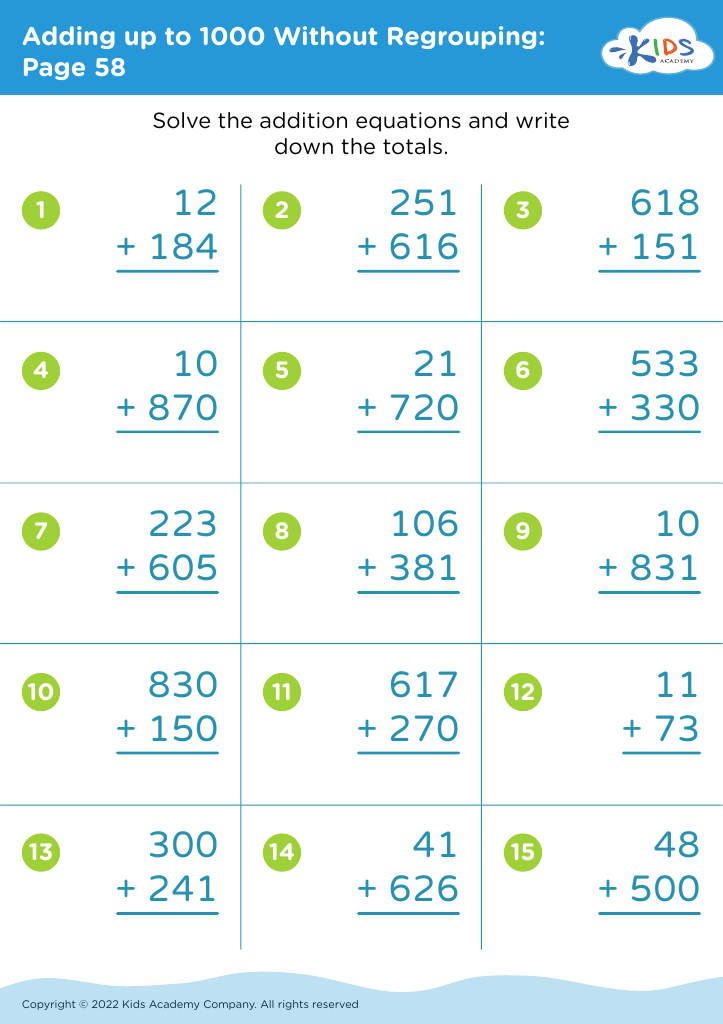
Adding up to 1000 Without Regrouping: Page 58
Worksheet
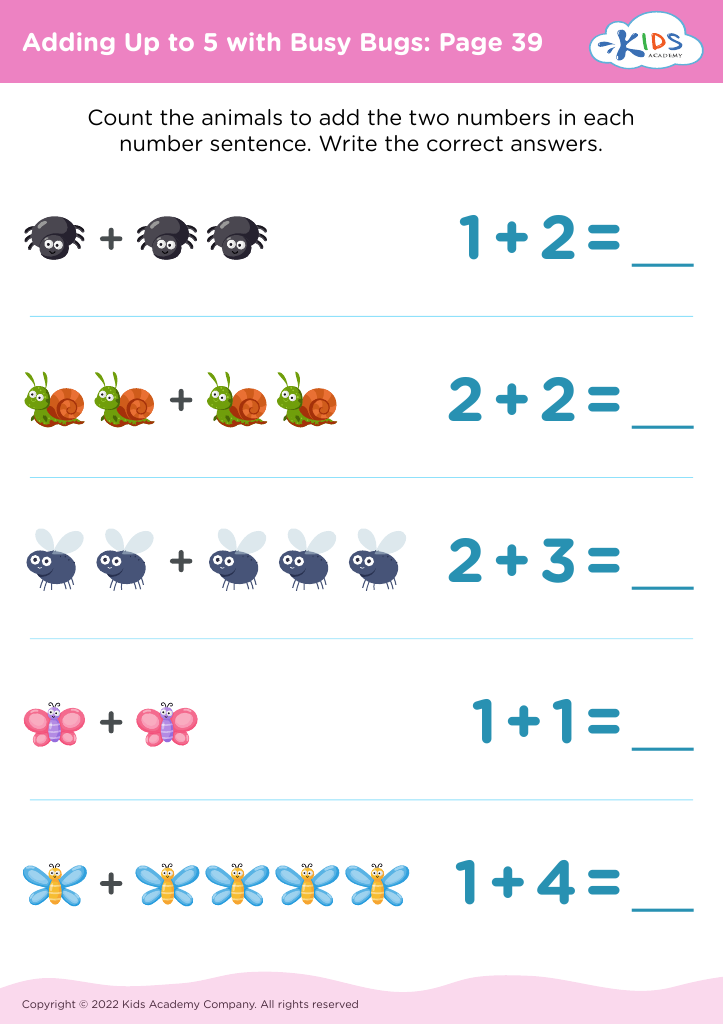
Adding Up to 5 with Busy Bugs: Page 39
Worksheet
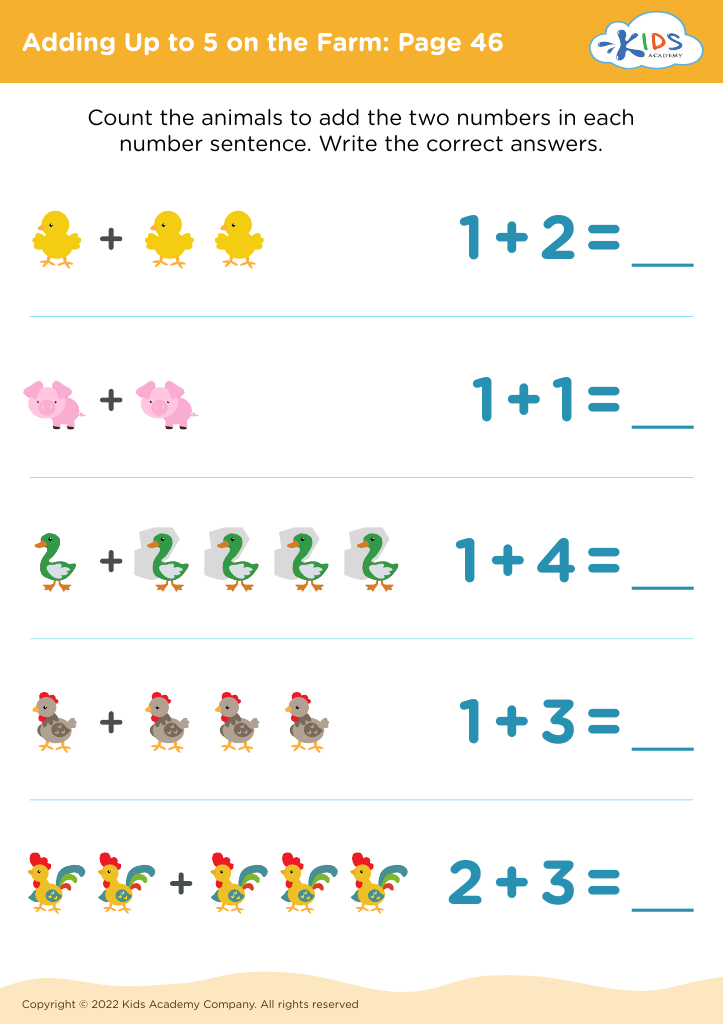
Adding Up to 5 on the Farm: Page 46
Worksheet
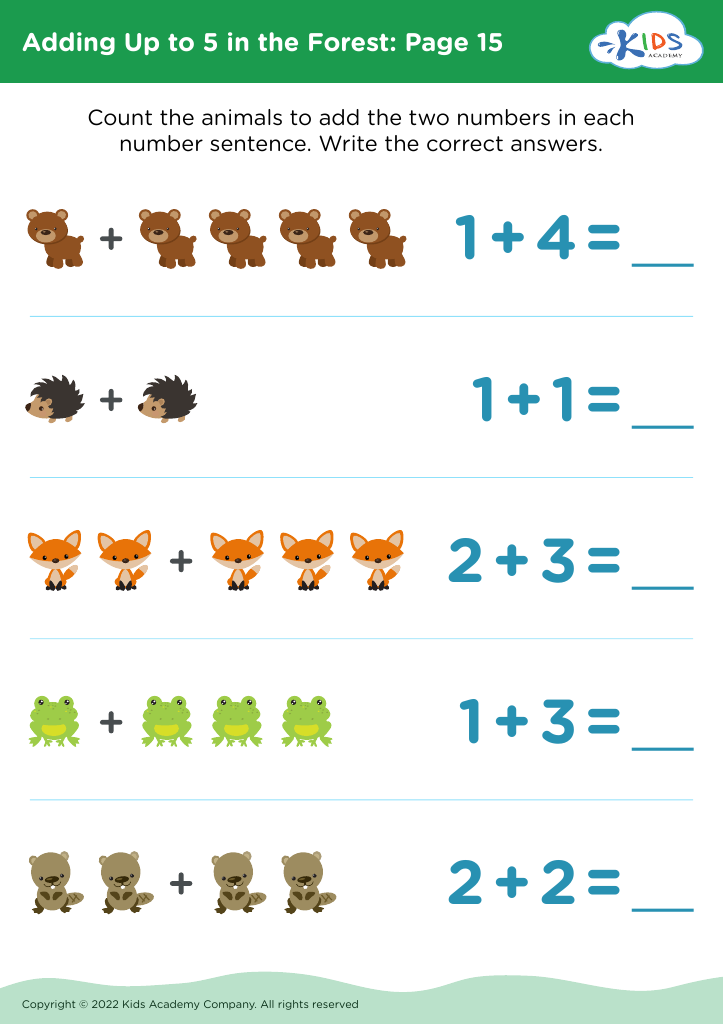
Adding Up to 5 in the Forest: Page 15
Worksheet
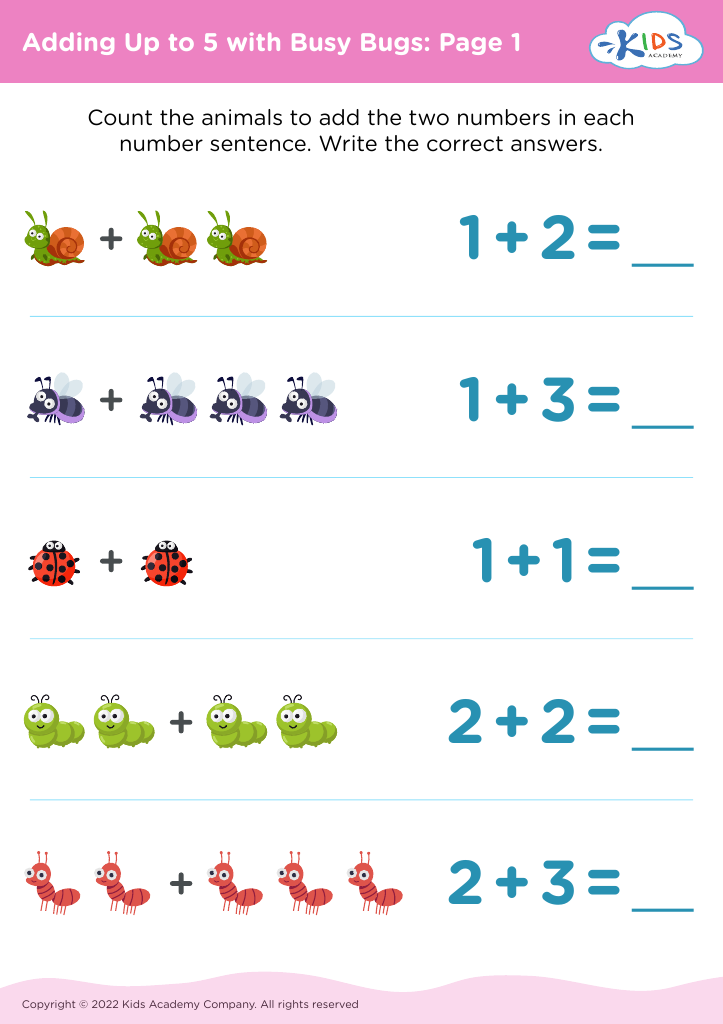
Adding Up to 5 with Busy Bugs: Page 1
Worksheet
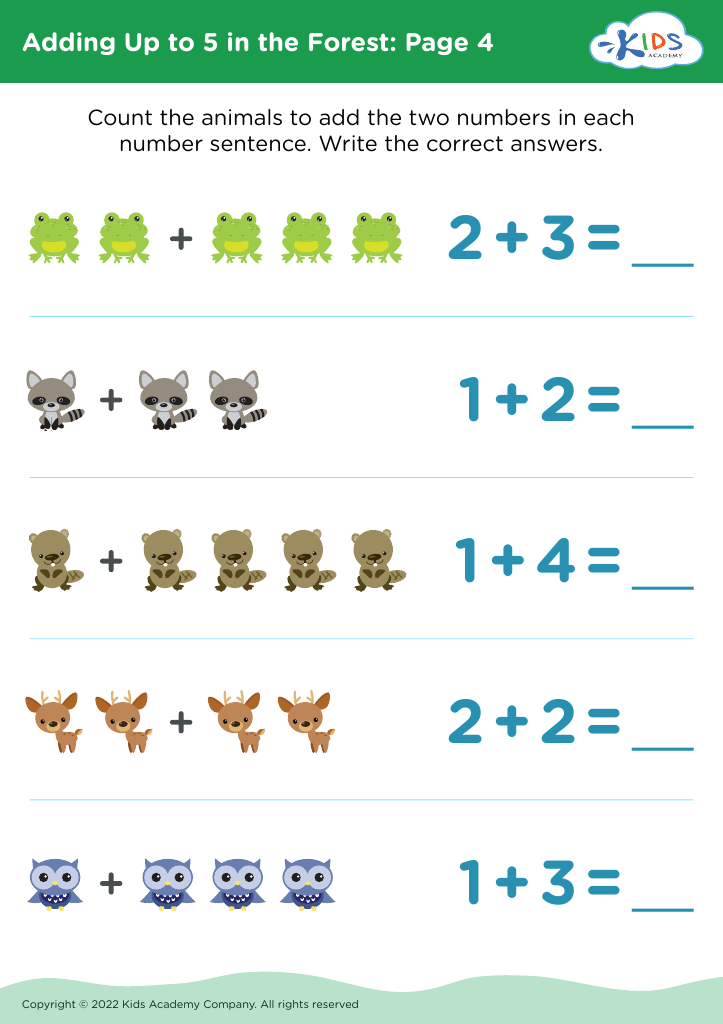
Adding Up to 5 in the Forest: Page 4
Worksheet
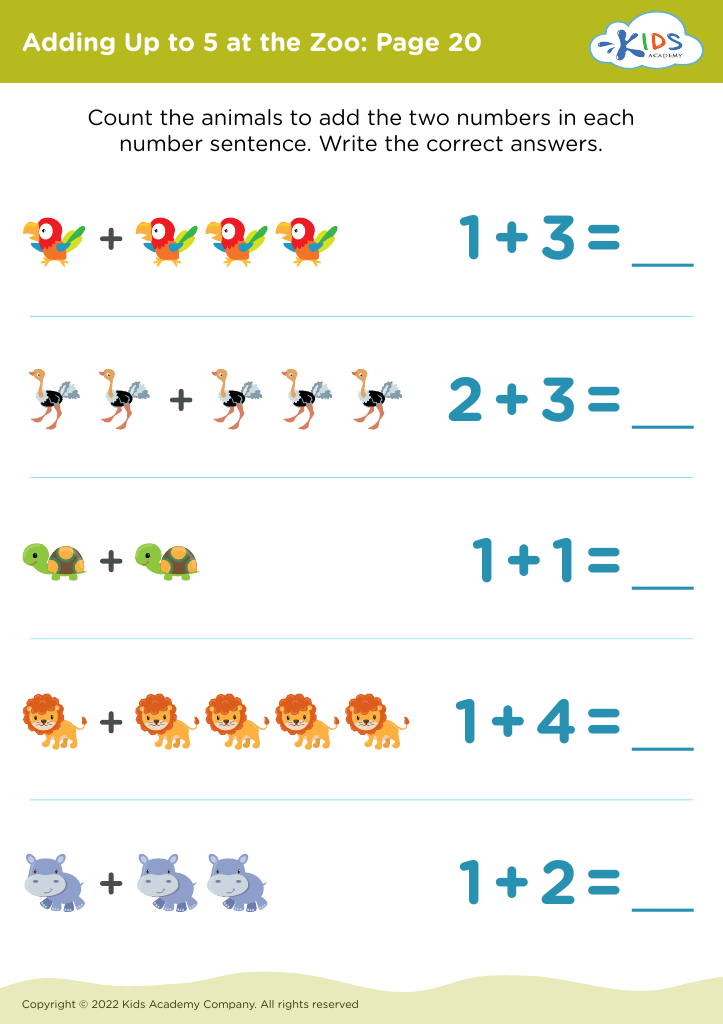
Adding Up to 5 at the Zoo: Page 20
Worksheet
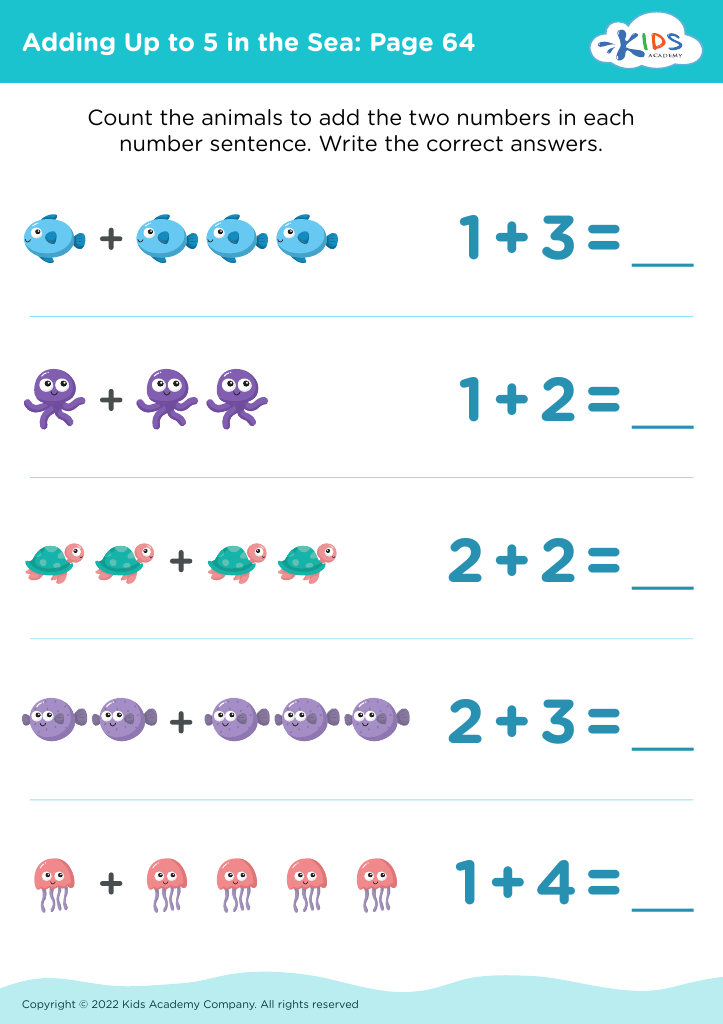
Adding Up to 5 in the Sea: Page 64
Worksheet
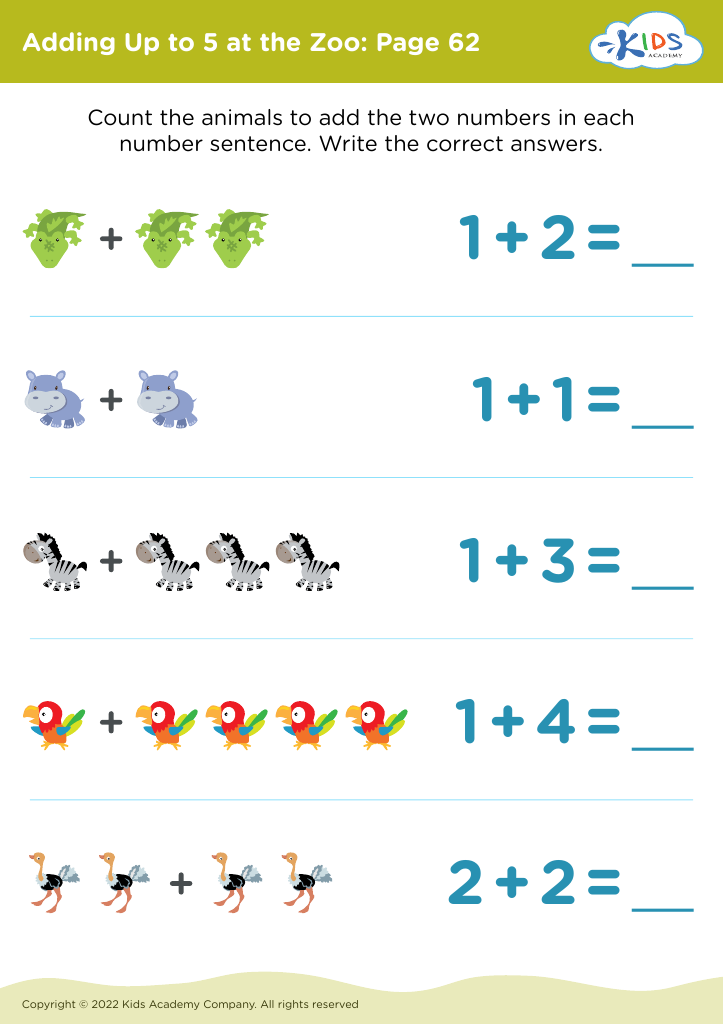
Adding Up to 5 at the Zoo: Page 62
Worksheet
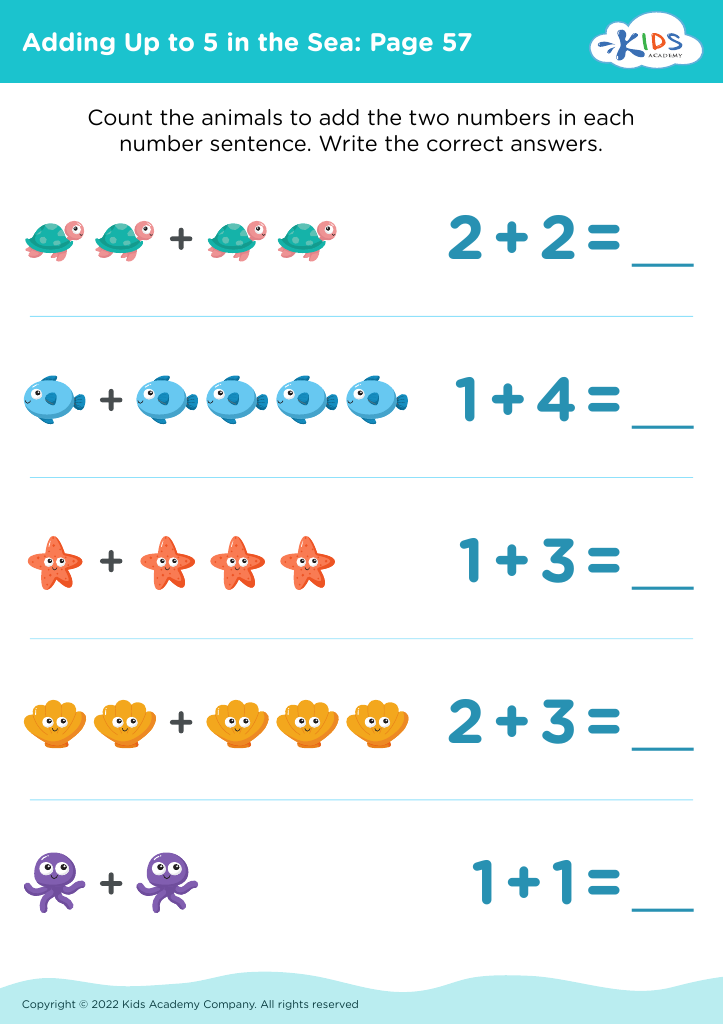
Adding Up to 5 in the Sea: Page 57
Worksheet
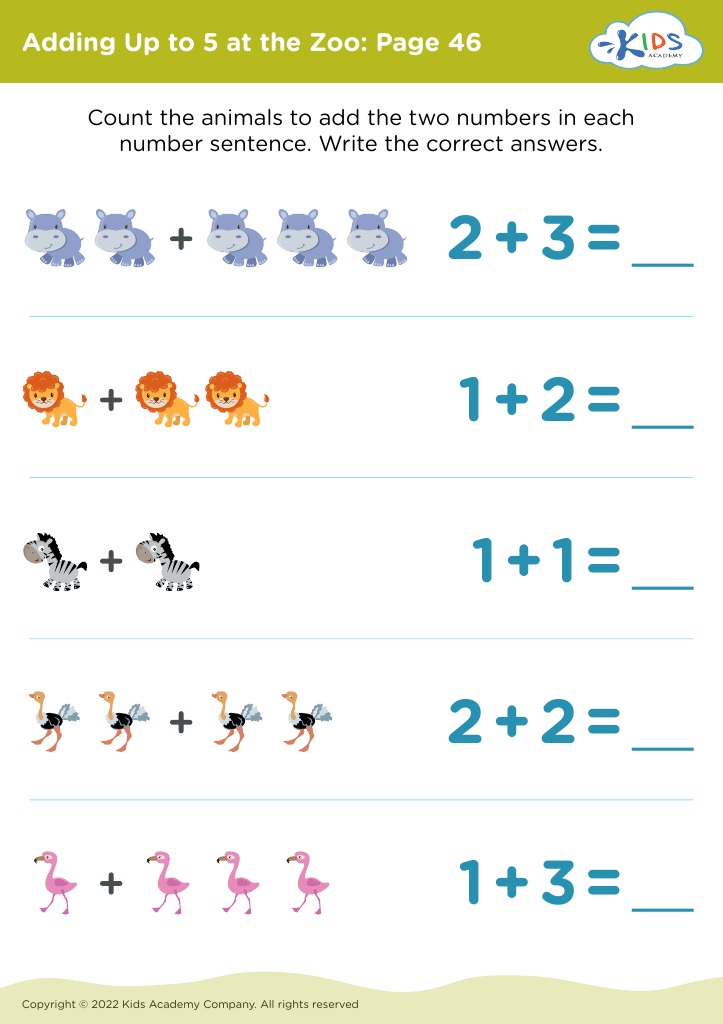
Adding Up to 5 at the Zoo: Page 46
Worksheet


Parents and teachers play a crucial role in a child's early education, and ensuring that young children grasp basic arithmetic addition is vital for several reasons. Firstly, arithmetic is a fundamental building block for all future math learning. Mastering basic addition sets the stage for understanding more complex mathematical concepts like subtraction, multiplication, and division.

At ages 3-7, children are in a critical developmental period when their cognitive abilities are rapidly growing. Early exposure to addition helps stimulate these cognitive processes, including logical thinking, pattern recognition, and problem-solving skills. Learning to add also enhances a child's ability to follow instructions and improves attention to detail.

Moreover, arithmetic addition fosters confidence in learning. When children successfully add numbers, it boosts their self-esteem, making them more eager to tackle other academic challenges. Early success in math can set a positive tone for their entire educational journey.

Additionally, math skills are ubiquitous in daily life—from counting toys to understanding time and money. Adequate arithmetic skills ensure that children can navigate these everyday tasks with ease, making them more independent and resourceful.

Finally, early proficiency in addition can help identify learning disabilities sooner, allowing for timely intervention. Therefore, focusing on arithmetic in these formative years is not just about academics; it's about equipping children with essential life skills and a strong foundation for lifelong learning.